

Germany’s New North Sea Sentinel and the Echoes Over Wilhelmshaven
1943 proved U.S. airpower could reach German ports; 2026 shows Berlin investing in reach of its own—long-endurance SeaGuardians extending NATO’s maritime surveillance and future ASW.
“We’re thrilled that Germany has joined the list of NATO countries that have selected MQ-9B SeaGuardian.”
—GA-ASI CEO Linden Blue.
Mission Briefing
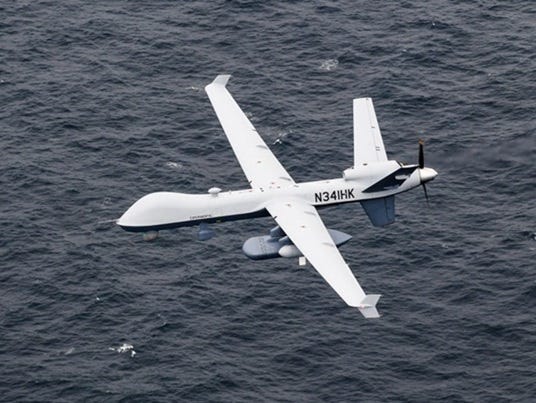
Here’s one for the logbook: Germany is bringing eight MQ-9B SeaGuardian drones and four next-gen ground stations into its arsenal, marking a new chapter in unmanned aerial power. The deal, inked through NATO’s own procurement agency, signals that the future of the Bundeswehr is taking flight—remote, connected, and ready for tomorrow’s skies.
Germany Buys Endurance: The MQ-9B Fleet
Germany has just charted a bold new course for maritime defense, announcing the acquisition of eight MQ-9B SeaGuardian drones and four certifiable ground control stations.
This isn’t just a routine procurement, handled by the Federal Office of Bundeswehr Equipment, Information Technology and In-Service Support, with the NATO Support and Procurement Agency (NSPA) steering the negotiations. It’s a strategic leap into the future of unmanned surveillance.
The first SeaGuardian is slated to touch down in German hands in 2028, putting the country on a growing roster of NATO allies that have chosen these advanced RPAs. With the UK and Belgium already operating the SeaGuardian, and Poland and Denmark soon to follow, this move strengthens a new web of allied airpower across Europe.
GA-ASI’s CEO, Linden Blue, summed up the significance: Germany joining the MQ-9B club doesn’t just bring a new capability, it creates common ground among NATO partners; especially when teamed with Germany’s new P-8A Poseidons.
The German navy, eyeing the expanse of the North Atlantic and the Baltic, knows that keeping watch over sea lanes and vital infrastructure demands a wide-angle view. One is now made possible by pairing manned patrol with these far-roaming drones.
It’s not Germany’s first foray into NSPA-negotiated drone deals—Denmark walked this path not long ago. Through the MQ-9 Support Partnership, NSPA has crafted a framework for shared procurement and support, helping NATO nations move quickly and efficiently toward interoperable, cutting-edge capabilities.
As NSPA’s General Manager, Stacy A. Cummings, put it: this partnership isn’t just about hardware. It’s about unlocking a new era of joint training, operations, and maritime security.
For Germany, the MQ-9B SeaGuardian isn’t just another aircraft; it’s a statement that the nation is ready to patrol the world’s waterways shoulder to shoulder with its NATO partners, eyes wide open to whatever tomorrow’s seas might bring.
SeaGuardian: Built for Persistence
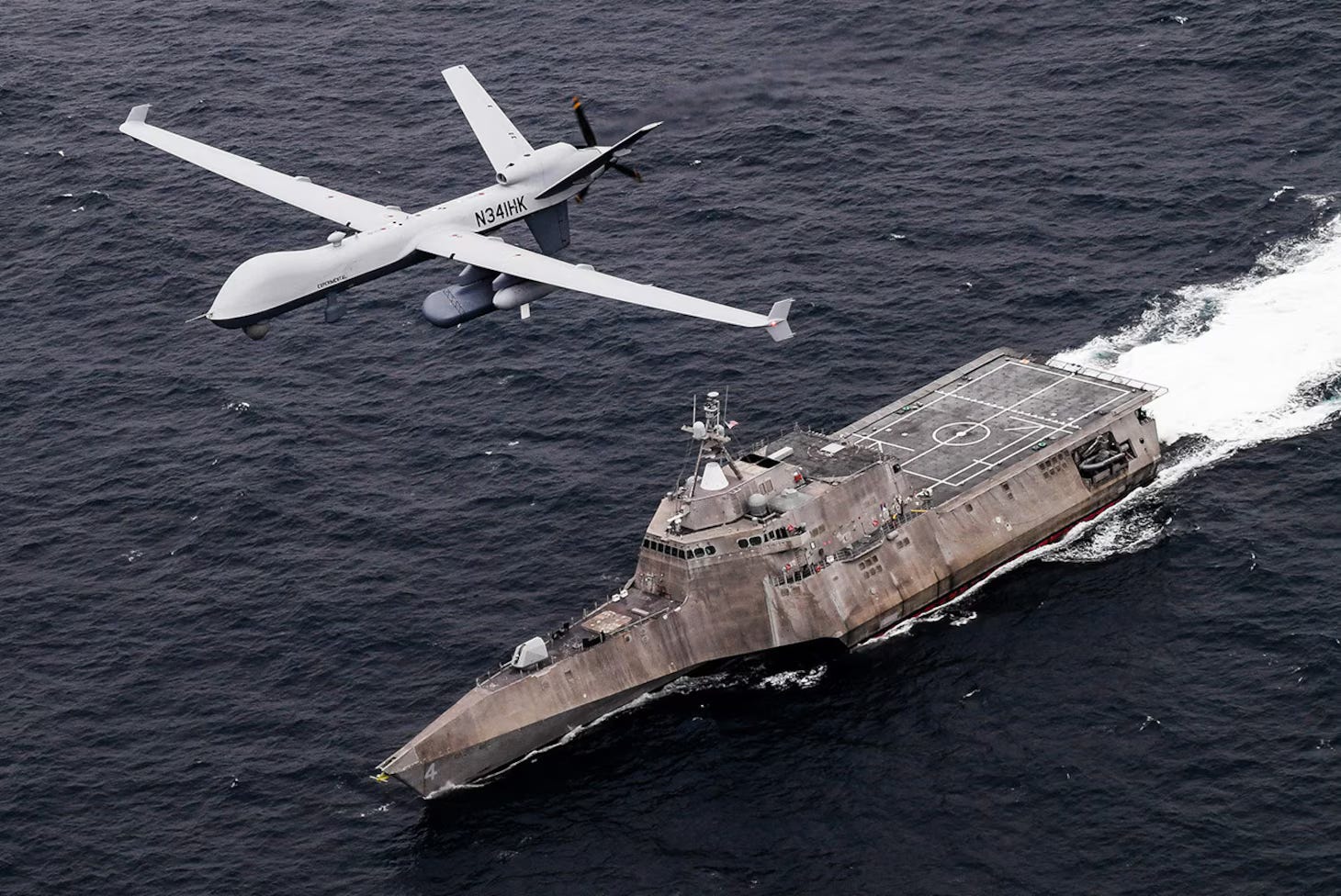
The MQ-9B SeaGuardian and its sibling, the SkyGuardian are General Atomics’ next-gen answer to the demands of a changing sky.
Born from the hard lessons of more than 8 million flight hours on predecessors like the MQ-1 and MQ-9A, these birds take persistence to a new level, offering 30 to 40 hours of unbroken intelligence, surveillance, and reconnaissance from the world’s hotspots to its quiet corners.
What sets the MQ-9B family apart is not just endurance, but muscle and brains: nine hardpoints for a hefty 4,750-pound payload, open architecture for easy upgrades, Lynx radar, and a cutting-edge EO/IR sensor suite.
From the start, these aircraft were meant to play by the rules of civil airspace, featuring satellite control, automatic takeoff and landing, and a collision-avoidance system that lets them mix safely with crewed traffic.
But the SeaGuardian brings something special to the maritime fight: Sonobuoy Dispensing System pods. These pods launch sonobuoys—DIFAR, DICASS, Bathythermograph—enabling the drone to process underwater thermal and acoustic data right onboard. That means it can hunt, track, and analyze sub-surface targets with the kind of precision that once took a whole crewed patrol squadron.
Look underneath, and you’ll spot the Raytheon SeaVue XMC radar pod, working alongside the internal Lynx Synthetic Aperture Radar and a Raytheon Multi-Spectral Targeting System.
Add in Leonardo’s ESM/ELINT gear, an AIS for ship tracking, and advanced sonobuoy processing, and you’ve got a platform that sees above, on, and below the waves, ready to write the next chapter in maritime patrol.
Allied Eyes Over Cold Water
Germany’s move to bring in eight MQ-9B SeaGuardians through the NSPA, with the first arrivals slated for 2028, isn’t just about adding another set of wings to the ramp. This is a strategic play.
It weaves Germany tighter into the fabric of NATO’s maritime watch across the Baltic and the North Atlantic. In an era where undersea cables, supply lines, and gray-zone threats are back in the headlines, having eyes and ears in the sky has never mattered more.
For the U.S. and its allies, this is another brick in the wall of “persistent, networked surveillance”, the kind of coverage only long-endurance drones can deliver, circling for over 30 hours at a stretch and feeding that all-important common operating picture. Germany’s new SeaGuardians slot right in alongside their P-8A Poseidons, creating a manned-unmanned partnership that multiplies coverage without burning out every flight crew on the roster.
But here’s the real payoff: interoperability. When another major European force trains on the same platform, leans on the same support chain, and shares data through alliance channels, you get efficiencies and habits that benefit the whole coalition.
With the SeaGuardian’s maritime focus, there’s also a clear path to future missions; think anti-submarine warfare and advanced sensing as these unmanned systems grow even smarter.
Keep your eyes on this “always-on” approach to maritime ISR. It’s about to rewrite how NATO layers its crewed patrols, drones, and undersea networks. Because the next chapter in this story isn’t just about who has the most impressive aircraft. It’s about who can lock down the kill chain when the stakes are highest out at sea.
This Week in Aviation History
US Air Force bombs Germany
During the early hours of 27 January 1943, American bombers thundered over the icy North Sea, lining up for their first-ever strike on German soil. Their target is Wilhelmshaven, a vital seaport teeming with factories and warehouses, all about to feel the fury of this bold new front.
By the time the smoke cleared, the harbor lay battered, the Luftwaffe had lost 22 planes to the Americans’ three, and the Allies had fired the opening salvo of what would become more than a hundred raids on this strategic port.
Port of Wilhelmshaven Under the Bombs
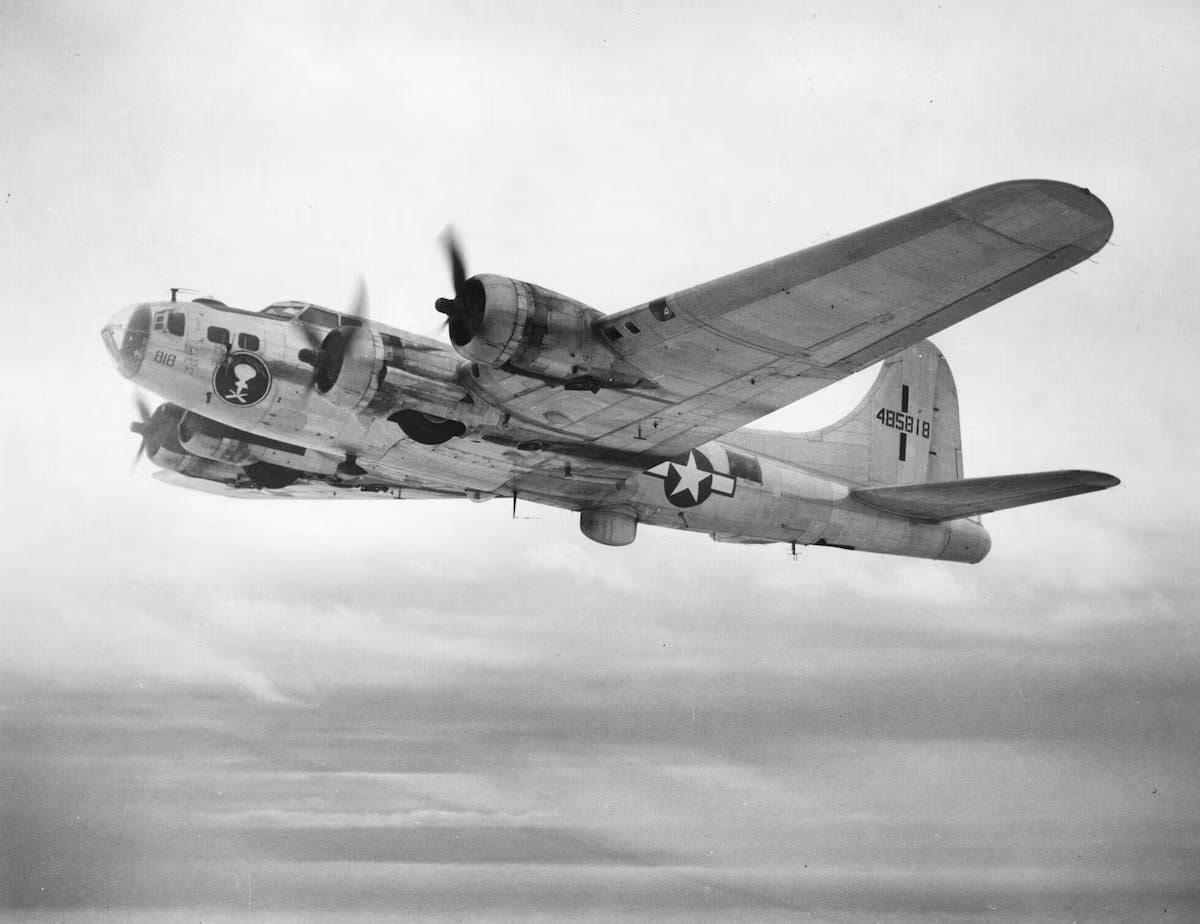
In a cold English airfield, 91 B-17s and B-24s of the 8th Air Force thundered down the runway, bound for the heart of Nazi Germany. Their target was Wilhelmshaven; the first time American bombers would strike directly at the Nazi homeland. It was more than a raid. It was a message.
Of the 91 bombers, 58 broke through the defenses and unleashed 137.5 tons of bombs on the port, hammering strategic naval facilities and sending shockwaves through the German war machine.
In the chaos of swirling dogfights, these crews faced off against a gauntlet of 50 to 75 Luftwaffe fighters. Official counts after the war credited the Americans with downing seven enemy planes that day (though the legend said 22), and, incredibly, only three bombers failed to return. It is a testament to courage and skill under fire.
These were the men who inspired “12 O’Clock High,” both the novel and the classic film. Under leaders like Col. Frank Armstrong Jr. and Maj. Gen. Ira Eaker, the 8th Air Force, made daylight bombing their signature—flying straight into the teeth of the enemy, risking everything to shatter the factories and shipyards that kept the Nazi war machine running.
You might wonder what those high-altitude duels over Germany have in common with today’s Airmen flying missions over Afghanistan or Iraq. The landscapes are different, the targets have changed, and the technology, everything from precision-guided munitions to drones, is light-years ahead.
But the thread that ties them together is as strong as ever: the valor of those who volunteer, the grit and skill it takes to complete the mission, and the Air Force values that fuel them in the face of danger.
The sacrifices echo down the years. Then, as now, Airmen leave loved ones behind, deploying far from home, knowing every sortie or patrol could be their last. Whether it was a bomber falling in flames over the Reich or a convoy struck by an IED, the risk and the loss are woven into the life of the warrior.
Maj. Gen. Floyd Carpenter, commander of the 8th Air Force, put it best: “The great professionalism, dedication and valor shown by our Airmen today are the same qualities that carried our nation to victory in WWII.”
The threats may have changed—from Messerschmitts to insurgents—but the heart of the Air Force endures. The story of Wilhelmshaven, and every mission since, is a reminder that technology changes, but it’s the spirit, courage, and values of our Airmen that carry the day, every time.
Under the Hoods of B-17 and B-24
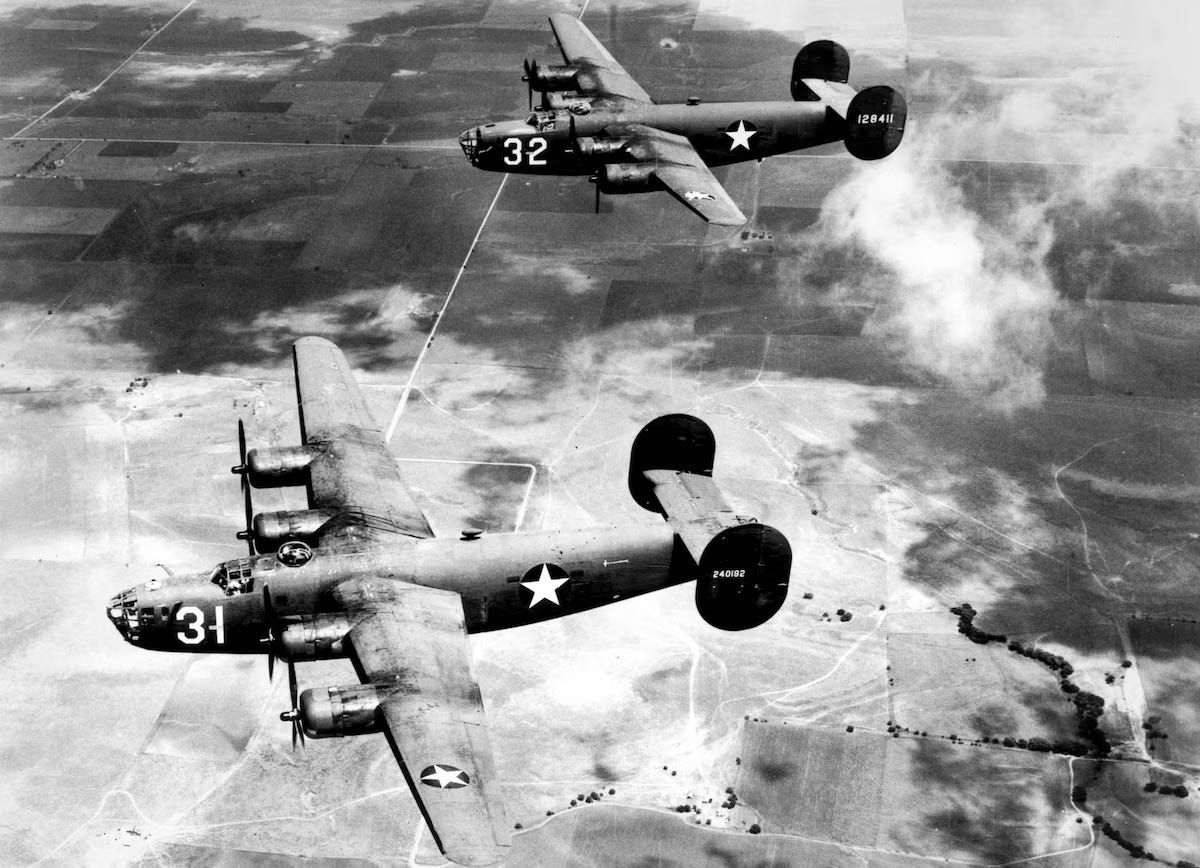
Let me give you a quick rundown of these bombing birds
B-17G Features
Dimensions:
Wing span: 103 ft. 9 in (31.6 m)
Length: 74 ft. 9 in (22.8 m)
Height: 19 ft. 1 in (5.8 m)
Wing Area: 1,420 sq ft (132 sq m)
Weights:
Empty: 32,720 lb (14,855 kg)
Normal Loaded: 49,500 lb (22,475 kg)
Maximum Overloaded: 60,000 lb (27,240 kg)
Performance:
Maximum Speed: 295 m.p.h. (472 km/h) at 25,000 ft (7,625 m)
Service Ceiling: 35,000 ft (10,670 m)
Normal Range: (normal fuel & max bombs), 1,100 miles (1,760 km) @ 220 mph (352 km/h) @ 25,000 ft (7,625 m)
Powerplant:
Four 1,200 hp Wright R-1820-97 nine-cylinder air-cooled single row radial engines. General Electric Type B-22 exhaust-driven turbo-superchargers, installed under engine nacelles.
Armament:
Thirteen 50-cal. machine-guns. Normal bomb load 6,000 lbs (2,724 kg). The largest bomb type carried is 2,000 lb (908 kg).
Features of the Consolidated B-24D Liberator
Armament: 10 .50-cal. machine guns and 8,000 lbs. of bombs
Engines: Four Pratt & Whitney R-1830s of 1,200 hp each
Maximum speed: 303 mph
Cruising speed: 175 mph
Range: 2,850 miles
Ceiling: 28,000 ft.
Span: 110 ft.
Length: 66 ft. 4 in.
Height: 17 ft. 11 in.
Weight: 56,000 lbs. loaded
Cost: $336,000
Serial number: 42-72843
First Light Over the Reich: Wilhelmshaven’s Legacy
The Wilhelmshaven raid became a defining chapter for the Eighth Air Force. It was the bold beginning of relentless American daylight bombing over Germany. This mission put the USAAF’s high-risk gamble on precision and crew discipline to the test, proving daylight raids could hit hard while revealing the brutal cost of flying through enemy skies, flak, and fighters.
Its legacy echoes not just in tactics, but in culture: the courage and leadership on those early raids inspired “12 O’Clock High,” shaping our understanding of bomber crews under fire.
As the air campaign over Germany grew, Wilhelmshaven remained the “first step” toward grinding down the enemy’s war machine. Even now, in an era of stealth jets and drones, Wilhelmshaven reminds us that it’s still courage, teamwork, and mission focus that see an aircrew through the storm.
In Case You Missed It
Photo Outlet
Every issue of Hangar Flying with Tog gets you a free image that I’ve taken at airshows:
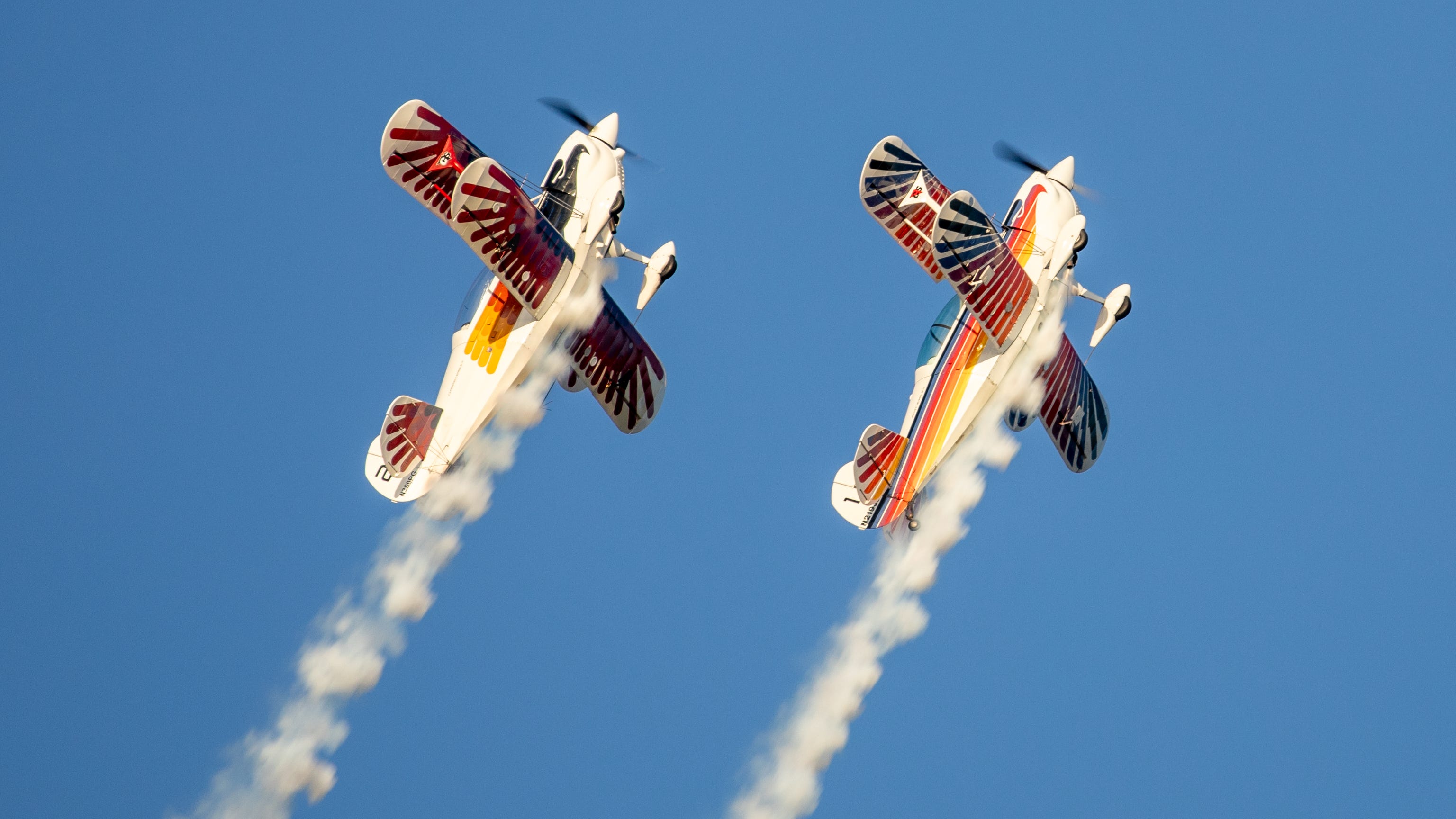
Feel free to use these photos however you like. If you choose to tag me, I am @pilotphotog on all social platforms. Thanks!
Post Flight Debrief
Like what you’re reading? Stay in the loop by signing up below—it’s quick, easy, and always free.
This newsletter will always be free for everyone, but if you want to go further, support the mission, and unlock bonus content like the Midweek Sortie, consider becoming a paid subscriber.
Your support keeps this flight crew flying—and I couldn’t do it without you.
– Tog
I had the privilege of being the first Boeing instructor to teach the P8 (737NG) airframe to German Navy aircraft maintenance technicians on their base in Germany in 2023. Throughly enjoyed the experience. The Air Museum at the entrance to the base is a “must do” if you’re ever in that part of the country. https://aeronauticum.de/
Great article. I got to walk through and tour the B-17 Sentimental Journey at an airshow. Love those things.