

XRQ-73 SHEPARD Prototype Took Flight and the Birth of the US Marine Corps
From Cunningham’s first Marine aviation duty to DARPA’s XRQ-73, military airpower keeps advancing through risky prototypes that redefine battlefield reach.
We recently flew the XRQ-73 hybrid-electric unmanned aircraft in collaboration with @AFResearchLab and @northropgrumman at Edwards Air Force Base, Calif. Part of the SHEPARD program, the flight proves the military utility of hybrid-electric propulsion.
—DARPA Twitter Post
Mission Briefing
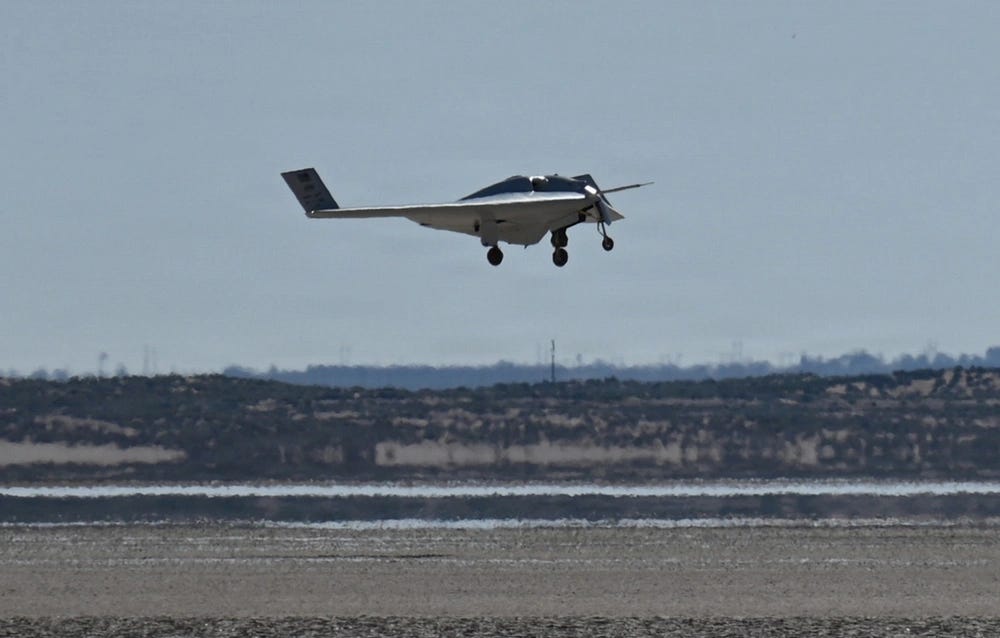
Northrop Grumman and Scaled Composites teamed up to craft the XRQ-73, an unmanned bird with a whisper-quiet engine that runs on electricity spun from a gas turbine. When it lifted off from Edwards Air Force Base in April 2026, DARPA called that maiden flight a leap toward proving just how game-changing hybrid-electric power could be for the future of military aviation.
DARPA’S SHEPARD Prototype Takes Flight
Born from DARPA’s bold SHEPARD program, the XRQ-73 is the next act in a saga that began with the secretive XRQ-72 Great Horned Owl.
This aircraft, shrouded in mystery, made its maiden flight on 14 April 2026: well past its original 2024 target, with the news trickling out only weeks after the fact. That’s just how things go in the world of black projects: milestones are celebrated in whispers, not headlines.
Tipping the scales at around 1,250 pounds, the XRQ-73 sits comfortably in the U.S. military’s Group 3 Uncrewed Aircraft System class. That puts it alongside stalwarts like the RQ-21 Blackjack and RQ-7B Shadow, built to operate up to 18,000 feet and dash along at speeds hitting 250 knots.
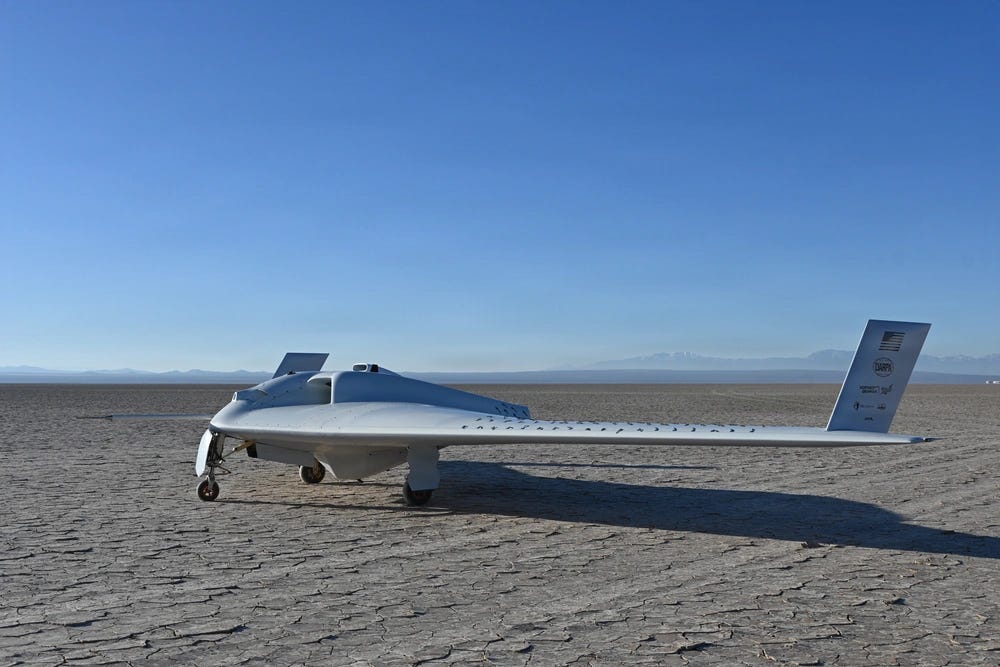
Northrop Grumman’s team has clearly kept busy since we first glimpsed the design in 2024. Spotters note new vertical stabilizers at the wings’ tips, a revised air inlet up top, and some fresh blade antennas. There’s even a mysterious forward-facing gadget between the main intakes, possibly a camera or sensor, hinting at advanced situational awareness.
The large belly fairing remains, likely hiding the true heart of the XRQ-73: state-of-the-art ISR (intelligence, surveillance, and reconnaissance) payloads, perfectly matched to its stealthy flying wing and whisper-quiet, low-heat hybrid-electric propulsion.
Test flights are marked by the little details; a scatter of black airflow indicators taped to the wings, destined to be peeled off once the engineers have their data. The official photos?
They show the XRQ-73 not on some glamorous runway, but resting quietly on the cracked expanse of Rogers Dry Lake at Edwards Air Force Base. It’s a legendary spot, having welcomed everything from the X-15 to the Space Shuttle, and now it hosts this latest chapter in the evolution of silent, persistent flight.
According to Lieutenant Colonel Clark McGehee, SHEPARD’s program manager, this first flight is just the beginning. “The architecture proven by the XRQ-73 paves the way for new types of mission systems and delivered effects,” he says. This isn’t just a test. It’s a launchpad for tomorrow’s battlefield tech, promising capabilities that are still hidden behind the classified curtain.
So don’t expect splashy airshows or public unveilings anytime soon. The XRQ-73 is likely to remain a ghost on the windswept desert, its advances unfolding quietly, far from the spotlight—just how the best stories in aviation often begin.
Inside the SHEPARD Program
Think of the SHEPARD program as DARPA’s fast-track, risk-busting answer to the Air Force’s Great Horned Owl project: a real-world testbed built on the X-Prime playbook, where fresh tech gets pushed out of the lab and onto the runway in record time.
Instead of endless tinkering, SHEPARD’s mission is clear: take the hybrid-electric bones and key tech from the GHO, fuse them into a new, mission-driven aircraft, and get it flying within just 20 months.
The result? The XRQ-73 SHEPARD—bigger than the earlier XRQ-72, loaded with real-world fuel and mission systems, but still light enough to stay under the Group 3 drone weight limit. Northrop Grumman’s ace team pulled out all the stops in autonomy, design, and rapid prototyping to get this demonstrator airborne.
For them, SHEPARD isn’t just another drone. It’s a leap into the future, a chance to cement their lead in hybrid-electric tech and set the stage for the next era of uncrewed military aviation.
SHEPARD’s Silent Climb: Hybrid-Electric Airpower and the Next Allied Edge
The XRQ-73 SHEPARD isn’t just a new drone. It’s a glimpse into an aviation future that’s quieter, smarter, and tougher to spot. When this hybrid-electric marvel took to the skies over Edwards Air Force Base in April 2026, it wasn’t just about showing off a fancy propulsion system.
DARPA, working alongside AFRL and Northrop Grumman, set out to test how this tech could transform the very way unmanned aircraft deliver effects and adapt to tomorrow’s missions.
For the U.S., SHEPARD hints at a new breed of drone: one that can loiter longer, whisper instead of roar, and slip through contested airspace to gather intelligence without giving away its position. Aviation watchers see the XRQ-73 as the next evolutionary step from the Great Horned Owl, while Northrop Grumman calls it a leap toward lighter, more autonomous systems.
For allies, the promise is even bigger. Imagine sharing a stealthy eye in the sky that can watch vast seas, track shadowy threats, and provide real-time targeting, all without drawing unwanted attention.
SHEPARD’s first flight isn’t just another milestone; it’s a signal that tomorrow’s airpower will be shaped by persistent, discreet machines quietly changing the game before a single missile launches. The future, it seems, is already airborne.
This Week in Aviation History
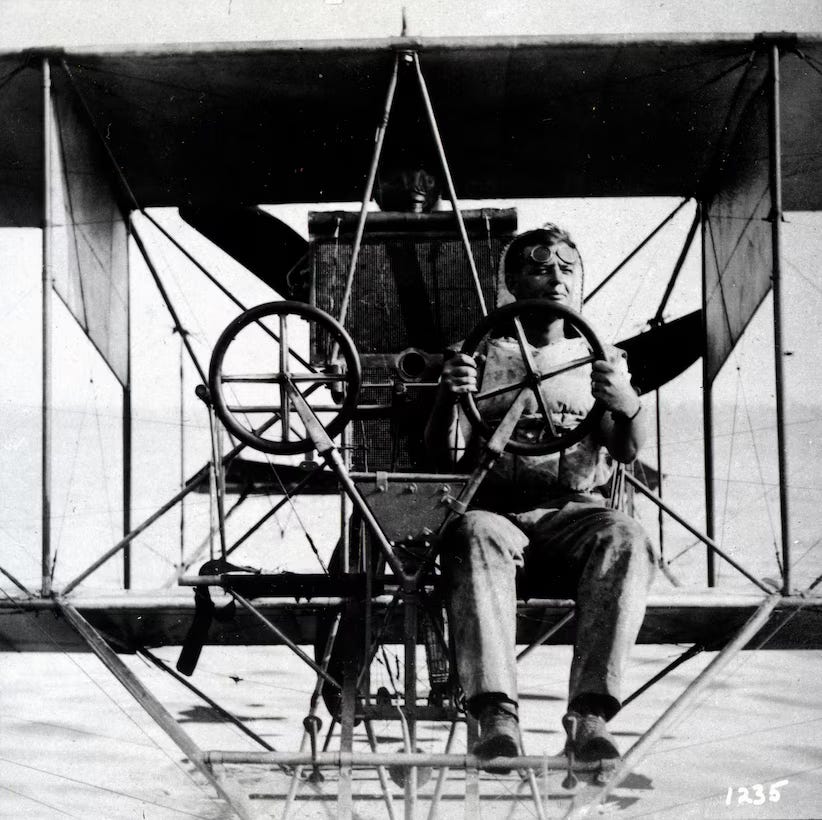
Marine aviation took flight on 22 May 1912, when First Lieutenant Alfred A. Cunningham arrived at Naval Aviation Camp in Annapolis, eager to join the ranks of early aviators. After just two hours and forty minutes of training in a Wright Model B-1, Cunningham soared solo and earned the distinction of Naval Aviator No. 5.
As more Marines learned to fly, their ambition for independence grew, fueling a push to carve out their own path. That vision took shape on 6 January 1914, when First Lieutenant Bernard L. Smith was sent to Culebra, Puerto Rico, to launch the Marine Section of the Navy Flying School—a bold new chapter for Marine aviation.
A Century of Marine Aviation in the Fight
Marine aviation’s story begins at the dawn of American flight. A time when the Wright brothers had just shown the world what powered wings could do at Kitty Hawk, and the Navy was eager to join the airborne revolution.
Under the guidance of aviation pioneer Glenn Curtiss, the Navy started acquiring its first aircraft, training pilots, and experimenting with bold new ideas: bombing runs, shipboard takeoffs and landings, even the earliest carrier operations.
These early daredevils laid the groundwork for aircraft to become an essential arm in the combined fight.
On 22 May 1912, First Lieutenant Alfred A. Cunningham reported for aviation duty at Annapolis, Maryland, eventually earning the title of Naval Aviator No. 5. Just two years later, the Marines began forging their own path when they established the Marine Section of the Navy Flying School; a sign that Marine aviation was ready to carve out its own legend.
Since those early years, two things have defined Marine aviation: its tight partnership with naval aviation and its relentless focus on helping Marines on the ground.
By 1915, the Corps stood up its first aviation company, and by the time World War I arrived, Marine aviation had grown from a handful of enthusiasts into a fighting force.
Through the 1920s and ‘30s, Marine pilots flew missions over Haiti, the Dominican Republic, China, and Nicaragua, where they honed the close air support tactics that would become a Marine trademark.
World War II was Marine aviation’s crucible, with pilots flying into the teeth of battles at Wake Island, Midway, Guadalcanal, and beyond. The F4U Corsair, with its gull wings and roaring engine, became a symbol of Marine grit and airpower.
In Korea, Marines brought jets and helicopters into the fight, pioneering medevac and troop mobility on rugged terrain, while Vietnam saw Marine Phantoms and Skyhawks, along with helicopters, flying constant support for ground troops from Da Nang to Khe Sanh. Marine aviation’s reach even extended into space, with Marines like John Glenn and Charles Bolden trading cockpits for rockets.
In the decades since, the Corps has kept pushing the envelope. The Harrier jump jet gave Marines the power to take off from tiny ships or rough patches of land, while the MV-22 Osprey blended helicopter lift with airplane speed.
Unmanned drones like the RQ-7 Shadow and ScanEagle joined the lineup, and the F-35B ushered in stealthy, short-takeoff combat power. Through every chapter, Marine aviation has been defined by its mission: to back up the Marine infantryman, whether in canvas-winged biplanes, helicopters, Ospreys, or lightning-fast jets.
That unbreakable bond—sky supporting ground—remains the true heart of Marine aviation.
US Marine Corps Today
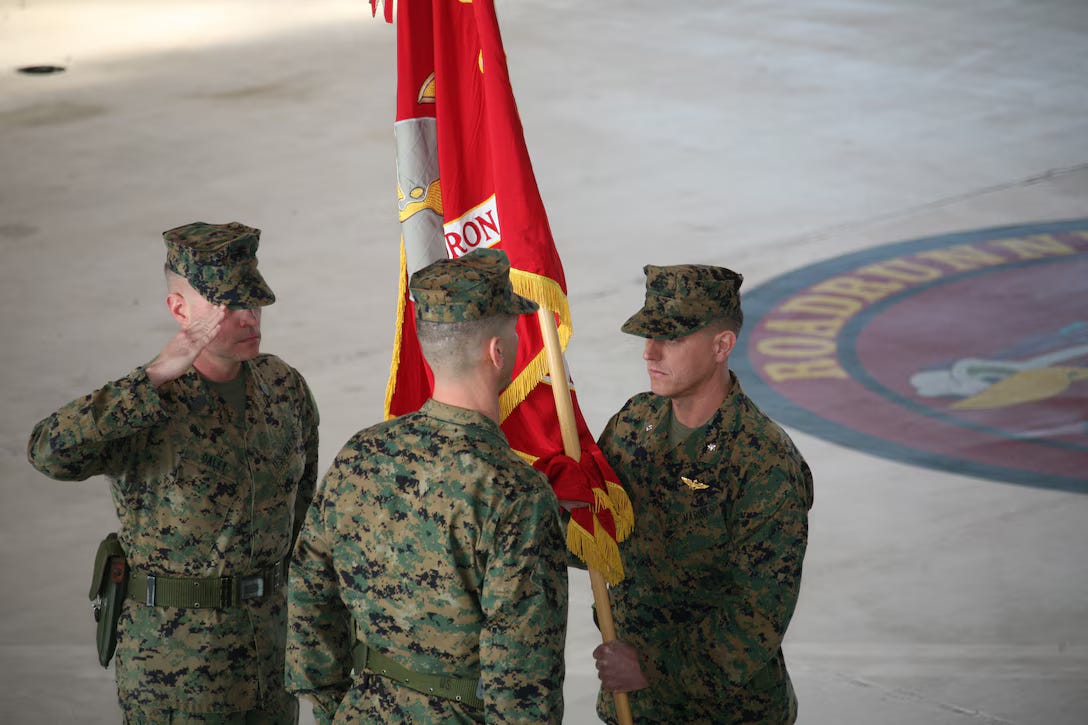
The U.S. Marine Corps operates under the Department of the Navy, yet its structure runs more like the Army’s; with a few signature twists.
The Corps is famously organized around the “rule of three,” and its fighting force is built from four main pillars: the operating forces (the tip of the spear), the headquarters (the brains), the supporting establishment (the backbone handling logistics), and the Marine Corps Reserve (the strategic backup).
When big trouble breaks out, the Marines deploy their heavyweight champs—the Marine Expeditionary Forces, or MEFs. There are three MEFs, each a self-sustaining team of ground troops, aircraft, and logistics, ready to take on crises anywhere, whether it’s storming beaches or holding the line at sea.
These MEFs aren’t just for show—they’re designed to fight alone for up to 60 days and act as standing Marine air-ground task forces, ready in both peace and war.
I MEF calls Camp Pendleton, California home and supports the US Indo-Pacific and Central Commands. It’s made up of the 1st Marine Division, 3rd Marine Aircraft Wing, 1st Marine Logistics Group, and its own Information Group, with a track record stretching from Desert Storm to Iraq and Afghanistan. Across the country, II MEF is based in North Carolina, made up of the 2nd Marine Division, 2nd Marine Aircraft Wing, 2nd Logistics Group, and its Information Group, with its focus reaching across the Atlantic to Europe and Africa.
III MEF stands apart, forward-deployed in Okinawa, Japan—America’s tip of the spear in the Pacific—with the 3rd Marine Division, 1st Marine Aircraft Wing, 3rd Logistics Group, and the III MEF Information Group.
Marine aviation has its own unique structure, organized into squadrons (the basic unit), which combine into groups, and then into wings. Each level scales up the Corps’ airpower and flexibility.
Legacy and Lessons of Marine Aviation
The true legacy of Marine aviation isn’t just measured in decades, aircraft models, or battle honors. It’s the unbreakable connection between those who fight on the ground and those who fly above. Since First Lieutenant Alfred A. Cunningham’s first day on aviation duty in 1912, every evolution in Marine aircraft has circled back to one mission: support the Marine infantryman, no matter the theater or era.
From the canvas-and-wood biplanes of the early days to the roar of Corsairs in the Pacific, the thunder of Phantoms and Harriers over Vietnam, the innovative Osprey, versatile drones, and the cutting-edge F-35B, Marine aviation’s heartbeat has always been close to the front lines.
The core lesson is that real innovation in the Corps isn’t about gadgets for their own sake, but about meeting the Marines’ needs on the battlefield. Whether it was pioneering close air support in Nicaragua, providing lifelines with helicopters in Korea, or launching jets from improvised landing sites in Vietnam, Marine aviators have stayed with the fight.
Even as technology leaps forward, the mission holds steady: assault support, offensive strikes, reconnaissance, and guarding the force.
Adaptation is the Marine aviation way, never losing sight of its roots. The story even rockets into space with Marine astronauts John Glenn and Charles Bolden. Through all the changes, one promise endures. Wherever Marines deploy, their wings go with them, linking generations in a legacy of loyalty and purpose.
In Case You Missed It
Photo Outlet
Every issue of Hangar Flying with Tog gets you a free image that I’ve taken at airshows:
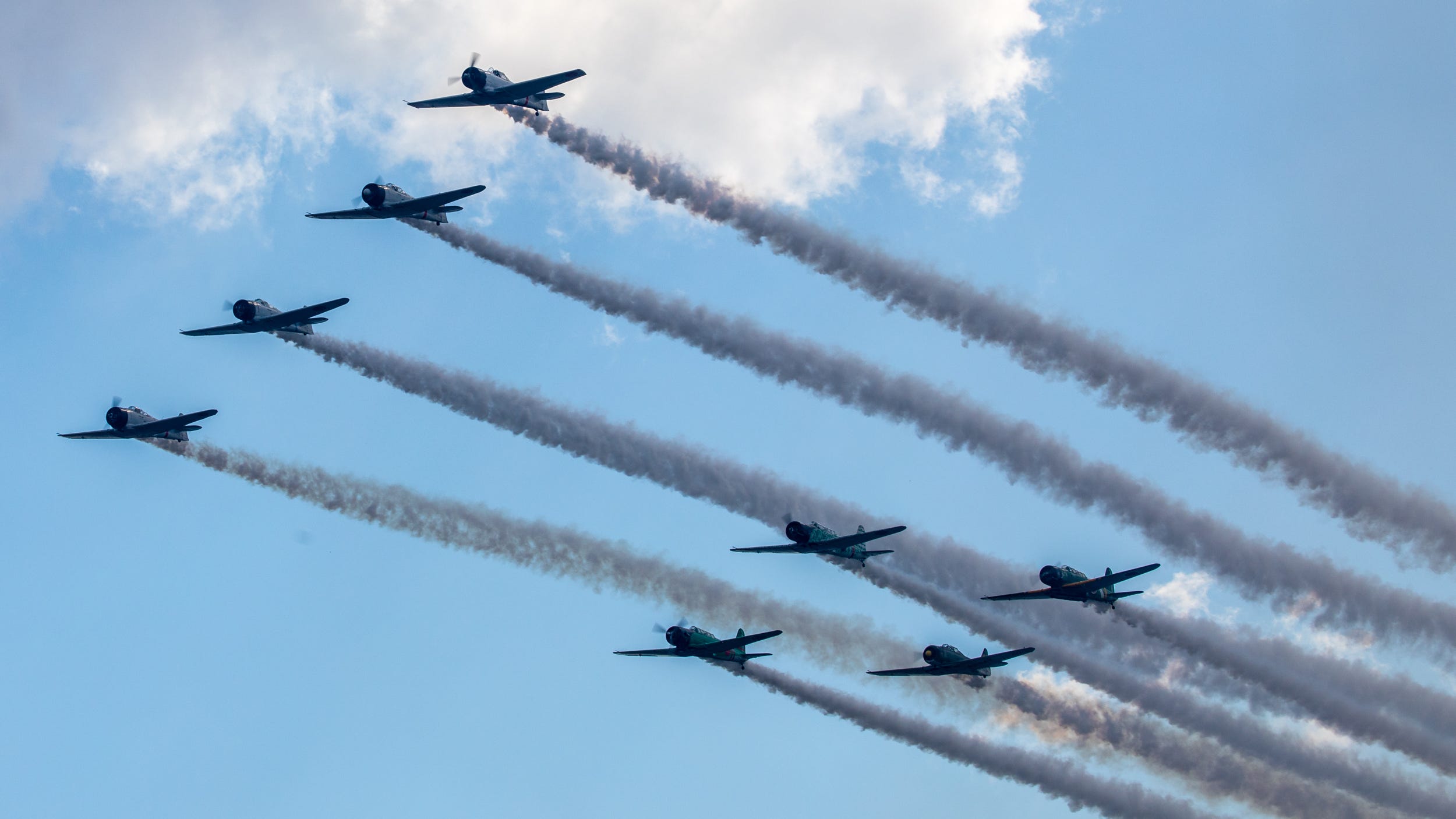
Feel free to use these photos however you like. If you choose to tag me, I am @pilotphotog on all social platforms. Thanks!
Post Flight Debrief
Like what you’re reading? Stay in the loop by signing up below—it’s quick, easy, and always free.
This newsletter will always be free for everyone, but if you want to go further, support the mission, and unlock bonus content like the Midweek Sortie, consider becoming a paid subscriber.
Your support keeps this flight crew flying—and I couldn’t do it without you.
– Tog