

An ability to send large numbers of small unmanned air systems (UASs) with coordinated, distributed capabilities could provide U.S. forces with improved operational flexibility at much lower cost than is possible with today’s expensive, all-in-one platforms—especially if those unmanned systems could be retrieved for reuse while airborne.
—DARPA
Mission Briefing
A C-130, specially outfitted for the mission, banks at the edge of hostile airspace and sends a swarm of X-61 Gremlins darting into the heart of a modern SAM bubble. Suddenly, the sky becomes a swirling storm of electromagnetic chaos. These ghostly drones are jamming, spoofing, and painting the radar landscape as they go. It’s not about fireworks or flattening defenses; it’s about crafting a fleeting, precious gap in the enemy’s vision. A corridor of confusion where real pilots can race through, unseen and untouched, while the SAM network chases shadows and noise.

Ghosts of the Air Defense
In today’s world, long-range Russian and Chinese surface-to-air missile systems have turned the first moments of any air war into a deadly gamble. These so-called A2/AD “bubbles” dare us to send in our best pilots and accept heavy losses, or to rethink the entire game plan for breaking through those initial lines.
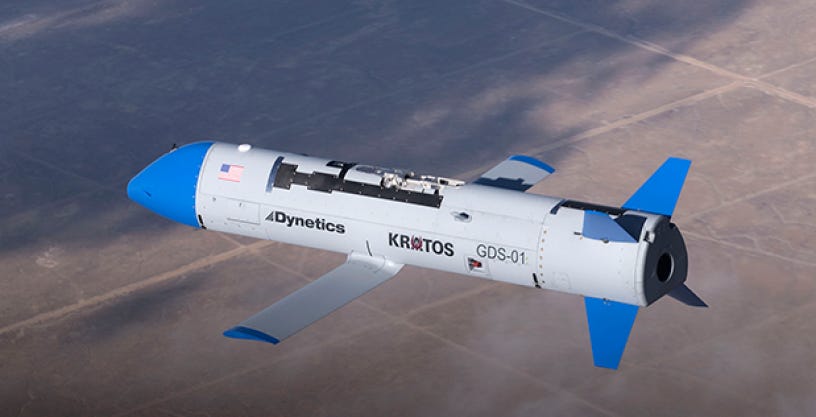
Enter the X-61 Gremlin, a clever twist on old-school tactics. Instead of risking a multi-million-dollar manned jet at the front of the fight, we send in a pack of nimble, recoverable drones.
These aren’t just throwaways. They’re built to dart into contested airspace, survive just long enough to do their job, and then return to the fold. And unlike single-use kamikaze drones, Gremlins are designed for repeat missions. They launch from a mothership (a modified C-130 most of the time) and get plucked out of the sky mid-flight by a mechanical capture rig, ready for another run. That trick alone slashes costs and lets us fly bolder, riskier profiles.
Packing modern electronic warfare gear is no easy feat. The Gremlins have to supply up to 1.2 kilowatts to power jammers and synthetic aperture radar, meaning dense wiring, high-capacity batteries, and careful heat management. Too much heat, and they light up on enemy sensors; too little, and the electronics won’t do their job.
Their main mission? Offensive electronic warfare. The Gremlins’ jammers are built to scramble enemy radar: masking targets, breaking up the enemy’s picture, and making everything on the ground more complicated. By flooding multiple frequencies, they force enemy operators to switch tactics, shorten their reach, or turn on backup sensors, each move revealing something we can use.
When they fly in swarms, the X-61s become a moving fog of confusion. Each drone jams, listens, decoys, and relays information. From the ground, it’s impossible to tell what’s a real threat and what’s just noise.
This isn’t about blowing up radars; it’s about creating openings. The Gremlins slip to the edge of the danger zone, jam and bait the enemy to react, and every radar that blinks on becomes a target for follow-on forces.
Sometimes, they’ll even mimic the radar signature of a fighter or incoming missile, burning up the enemy’s limited resources. The endgame isn’t destruction, but opportunity: brief, precious windows where manned aircraft or standoff weapons can get through with less risk. That’s the new logic of airpower. Let the Gremlins take the first punch, so our people don’t have to.
Gremlins: The Features of these Silent Saboteurs
The X-61 stretches about 4.5 meters from nose to tail and tips the scales at just 680 kilograms at takeoff. Its greatest challenge? Every mission-critical component (sensors, processors, antennas, and cooling systems) must fit into a tiny 66-kilogram payload bay. There’s no room for luxury; every ounce is weighed, every watt of power fiercely managed.
Energy is the Gremlin’s lifeblood, and it doesn’t come easy. Its electronic warfare suite and SAR radar draw up to 1.2 kilowatts, demanding a power-dense electrical system, high-capacity batteries, and meticulous cooling. Too much heat, and the drone glows on enemy sensors; too little, and its powerful jammers can’t do their job.
The onboard SAR radar offers a crucial edge, letting the Gremlins spot and map enemy radar sites, feeding that intelligence back to waiting strike aircraft. The trick is to use it sparingly; just enough to gather intel without painting a big electronic bullseye in the sky.
What the Gremlin finds, it relays through secure data links, acting as a forward sensor; expendable, if need be, but ideally recoverable for another round. Still, even this clever system has its limits. In a fight where the airwaves are jammed and signals are contested, the Gremlin may have to rely on its own wits, operating more autonomously but with less punch.
Despite its flight recovery successes, the Gremlin is still a pioneer, not quite a frontline regular. Its future depends on system reliability and how smoothly it fits into the broader battle plan.
Trailblazers of Electronic Warfare: The Gremlin’s Legacy
The Gremlins’ legacy is woven into doctrine, not dogfights. Instead of sending pilots and billion-dollar jets straight into the meat grinder of enemy air defenses, we’re now leading with swarms of expendable, recoverable machines; treating the electromagnetic spectrum as the true front line.
Gremlins became the poster child for this pivot: an aircraft you could send deep into the belly of an A2/AD “bubble,” jam the enemy’s eyes and ears, collect vital data, and then—if fortune favors—bring back home, ready to do it all again.
The beauty of the Gremlin isn’t just persistence; it’s the ability to confuse and overwhelm, not with brute force, but with a “Ghost Swarm” of electronic deception. Picture multiple drones weaving through hostile skies, jamming and spoofing, each working together to blur the lines between real and phantom threats.
Add in the finesse of onboard SAR mapping, used sparingly to avoid painting a target on their backs, and suddenly you have a tool that doesn’t just survive. It creates fleeting, precious gaps in the enemy’s armor. Through these corridors, manned jets and stand-off weapons can slip, striking before the adversary even knows what’s real.
Sure, there are hurdles, including the need for reliable data links and the challenge of scaling up from a demonstrator to a frontline staple. But that’s the nature of innovation in airpower: every new breakthrough brings new questions.
The Gremlins have shown us that tomorrow’s dominance in the sky won’t hinge solely on speed or firepower, but on who masters the networks, the algorithms, and the invisible battles for the spectrum. And as the story of these ghostly pioneers closes one chapter, you can bet the next issue will bring fresh tactics and bolder machines, always one step ahead in the ever-changing dance above the battlefield.
This Week in Aviation History
Blériot XI’s First Flight
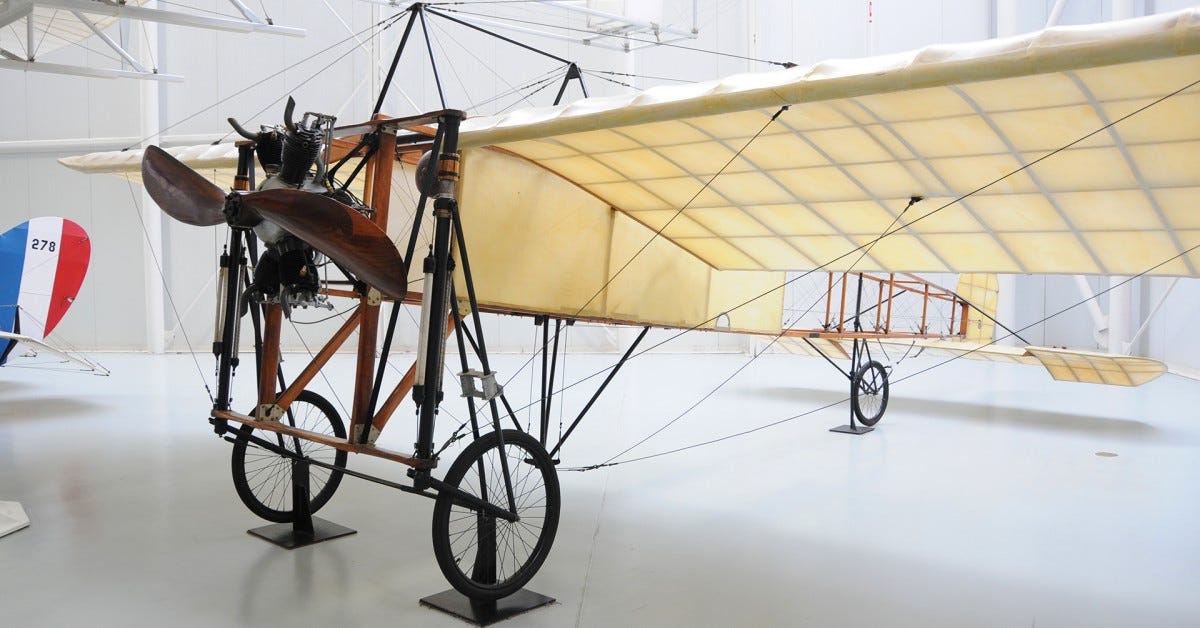
Let me take you back to 23 January 1909, when the Blériot XI first took shape. It is a true collaboration between Raymond Saulnier’s engineering mind and Blériot’s own hands-on spirit, building on a lineage of earlier flying machines. Its maiden flight lifted off from the grass at Issy-les-Moulineaux, a parade ground turned testing field, on a crisp January morning. Over that spring, the aircraft saw trial after trial, each tweak and adjustment bringing it closer to the legend it would soon become.
The Monoplane That Made “Across” Possible
A few months after its first flight last January, by late May 1909, Blériot’s craft was sporting a 25-horsepower, three-cylinder Anzani engine. Now, the Anzani wasn’t exactly a marvel of smooth engineering. Truth is, it was a little rough around the edges, but it had something more valuable than polish: reliability. That steady heartbeat was just what Blériot needed for the next big leap.
Around July 1909, the English Channel glinting in the summer sun, and Louis Blériot, eyes fixed forward, takes his Type XI aloft from Calais. The world holds its breath as he aims for Dover across 25 miles of open water. Thirty-six and a half minutes later, he lands on English soil, having made history as the first person to conquer the Channel by airplane.
It wasn’t the longest or fastest flight of its day, but none before had carried such symbolism. The London Daily Mail, having offered a $2,500 prize for the feat, paid up, and Blériot’s name was etched into legend. Today, that very aircraft rests in Paris at the Conservatoire des Arts et Métiers, a relic of aviation’s coming of age.
The aftermath of that crossing was electric. Orders for the Type XI began pouring in, and soon the Blériot firm, along with builders across Europe and America, were churning out variants by the hundreds. The design was so sound, so ahead of its time, that it carried aviators right into the First World War. Some of the era’s greatest flyers cut their teeth on a Blériot.
One such machine, built in 1914 at the Blériot Aéronautique works in Levallois, found its way into the hands of John Domenjoz, a Swiss pilot and renowned daredevil. This particular Type XI was equipped with a punchier 50-horsepower Gnôme rotary engine, wing-warping for roll control, and a special undercarriage that could handle tricky crosswind landings.
Domenjoz, always one for showmanship, had it specially reinforced and rigged with a heavy harness. He intended to take it upside down.
When the drums of war sounded in Europe, Domenjoz packed up his Blériot and headed for South America. There, he wowed crowds with stunts no one had dared attempt. Flying inverted for over a minute, and in Buenos Aires, looping the loop forty times in less than half an hour.
Folks called him “upside-down Domenjoz,” and he wore the name like a badge. He brought the act back to New York and then barnstormed across the American South and Midwest, even making a stop in Havana before heading north again.
His journey didn’t end there. Domenjoz returned to France in 1916 to serve as a test pilot and instructor, then hopped back to the U.S. for another round of exhibitions in 1917. After the war, he did one last barnstorming tour in 1919 before stowing his beloved Blériot on a Long Island farm and heading home to France for nearly two decades.
As the years rolled by, the old bird changed hands to cover storage costs, landing in a museum at Roosevelt Field. There she stayed until 1950, when the Smithsonian came calling, snatching up the Blériot and two other pioneers for its collection. In 1979, after a full restoration, she took her place in the Early Flight gallery; a living memory of those days when crossing the Channel was a dare, and every flight was a step into the unknown.
Canvas Wings, Rotary Heart: Features of the Blériot XI
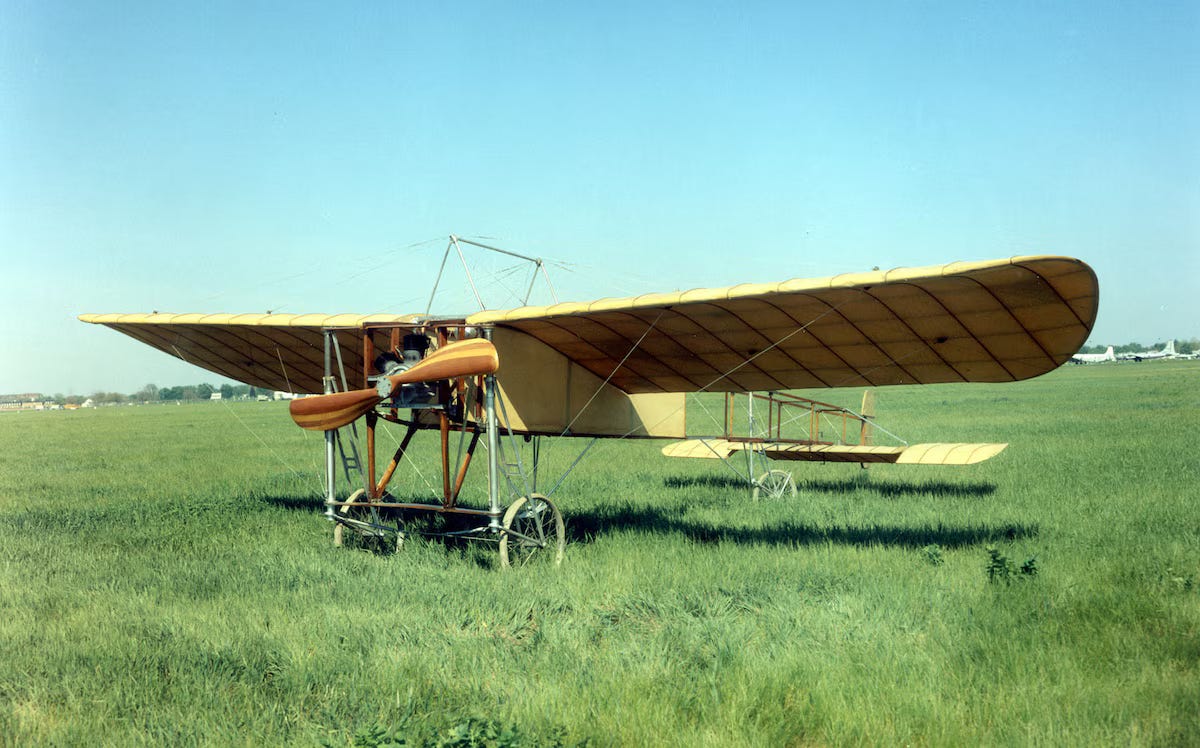
Below is the rundown of the monoplane that made “across” possible.
Engine: Anzani 3-cylinder of 20 hp
Maximum speed: 45 mph
Span: 28 ft. 6 in.
Length: 25 ft. 3 in.
Height: 8 ft. 4 in.
Weight: 700 lbs. loaded Airframe: Wood Covering: Fabric Country: France Manufacturer: Blériot Designation: XI Type: Sport Production Dates: 1908 to 1914
The Monoplane’s Enduring Contrail
When Louis Blériot soared across the English Channel, he didn’t just win a prize; he shattered the idea that flight was limited to short, cautious hops. Suddenly, the Channel didn’t look so wide, and the old boundaries including the borders, coastlines, the comfort of “safe distance” felt a little smaller, a little less certain.
In the public’s imagination, the Blériot XI became more than a machine; it became the symbol that air routes and international flight were not just possible, but inevitable.
But the Blériot’s story didn’t end with that famous crossing. What makes its legacy endure is how it bridged the gap from wild experiment to reliable industry. The Smithsonian’s beautifully preserved 1914 example, powered by a 50-horsepower Gnôme rotary, shows us a matured design. It is proof that Blériot’s success wasn’t a one-off spectacle, but a leap that shaped the course of aviation.
And here’s the magic: the Blériot XI still draws breath. The world’s oldest airworthy Blériot XI is flown on rare occasions, limited to brief hops to preserve its fragile structure. That careful stewardship isn’t just nostalgia.
It’s a living connection to the dawn of flight, a way to keep the spirit of those pioneering days alive for every new generation, past and present (even the future) that dares to dream of the sky.
In Case You Missed It
The B-47 is an often overlooked bomber:
Photo Outlet
Every issue of Hangar Flying with Tog gets you a free image that I’ve taken at airshows:

Feel free to use these photos however you like. If you choose to tag me, I am @pilotphotog on all social platforms. Thanks!
Post Flight Debrief
Like what you’re reading? Stay in the loop by signing up below—it’s quick, easy, and always free.
This newsletter will always be free for everyone, but if you want to go further, support the mission, and unlock bonus content like the Midweek Sortie, consider becoming a paid subscriber.
Your support keeps this flight crew flying—and I couldn’t do it without you.
– Tog