


“The Eagle II isn’t replacing a legend—it’s what happens when a legend evolves.”
— Col. David “Hawk” Iverson, USAF (Ret.)
On my last flight before Thanksgiving a few years back, I remember leveling off above a scattered layer just as the sun started breaking through. The clouds below looked like a blanket stretched to the horizon, and for a moment the whole cockpit (its still called a cockpit in a 172 - right?) felt quieter than usual—almost like the world had paused long enough to remind me why this season hits differently. It’s a time when even the busiest ramps slow down, squadrons gather for turkey and tall tales, and families wait a little longer for their aviators to walk through the door.
As we head into the holiday, I want to open today’s newsletter by simply saying thank you. This community—your curiosity, your passion for aviation, your support—makes all of this possible. Whether you’re traveling, working a duty shift, or settling in with family and friends, I hope this Thanksgiving brings you a moment of calm skies and gratitude.
Let’s dive into today’s issue.
Mission Briefing
Back in 2021, the desert dusk at Eglin base brought a chill that crept right into your bones, but that first F-15EX glowed under the floodlights—its metallic skin almost warm to the touch, humming with new potential. Around it, ground crews moved with the practiced rhythm that only comes from years on the line, while a pair of veteran Eagle drivers watched quietly, seeing their own history and the Air Force’s future reflected in the jet’s silhouette. When the old Eagles are running on borrowed time and the next scramble could come any minute, a squadron needs a machine that’s ready on day one. That’s the promise the F-15EX brought to the ramp.
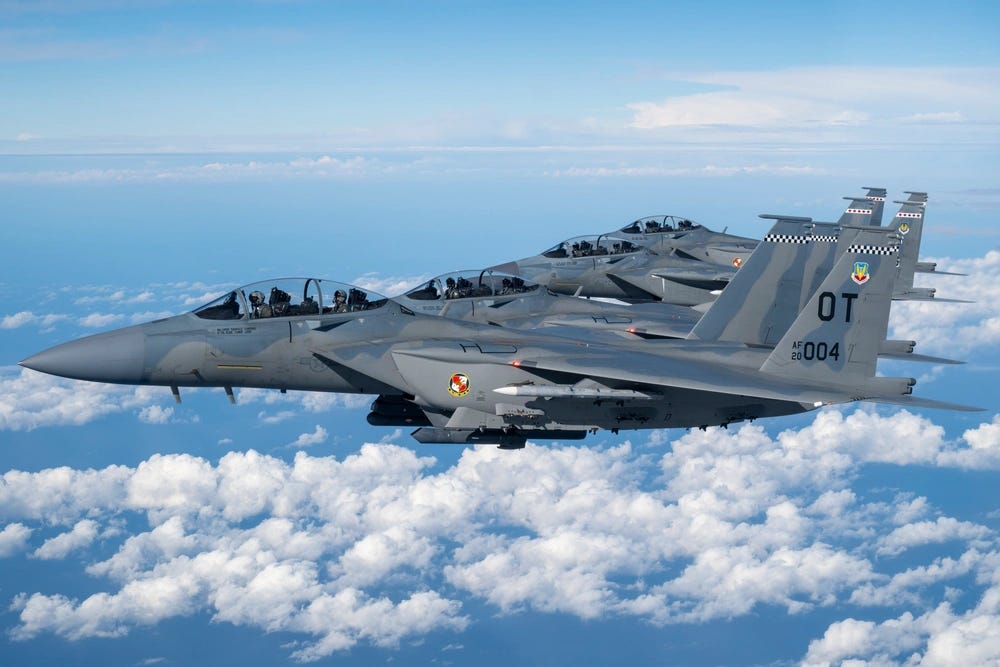
Out with the Old, In with the EX (or Eagle II)
A row of old Eagles catching the morning light, ground crews swapping stories, pilots who’ve felt the stick rattle in their hands. That’s the scene as Brig. Gen. Scott Cain steps up, voice steady, and paints the big picture—how the F-15 earned its stripes as the very definition of air superiority.
For decades, the Eagle’s silhouette alone could send a message, sometimes without ever having to fire a shot. But even legends can’t fly forever. Lt. Gen. Richardson didn’t sugarcoat it: most of the F-15C/D fleet is flying on borrowed time, metal fatigue creeping in, some of them already grounded for good. Pouring money into patching up these old birds would cost more than rolling a brand-new jet off the line, and every year, the gap in combat readiness gets wider.
That’s where the F-15EX comes in—same unmistakable shape, but under the skin, it’s pure twenty-first century muscle. They’ve got a weapons bay that’ll swallow up tomorrow’s missiles, a cockpit that feels more like the bridge of a spaceship, and U.S.-only gear that gives her an edge no one else can match. The beauty is in the handoff: no need for squadrons to reinvent the wheel, no mad scramble for new hangars or extra maintenance hands. The pilots wheel the EX onto the line, and the mission rolls on.
When Boeing landed that $1.2 billion contract for the first eight jets, it wasn’t just a business deal—it was a promise. As Gen. Mike Holmes said, the Eagle II is ready to fight the moment she touches down, carrying forward a legacy built on air dominance and the men and women who make it real.
Features: New Eagles on the Flight Line
Down at Eglin, with the sun blazing off the tarmac and banners fluttering for the legends who came before us, they rolled out the F-15EX—Eagle II—like a prizefighter stepping into the ring for a new era. It wasn’t just a ceremony and speeches; it was a hard-eyed reckoning that even the champions can’t outrun the clock forever.
Brig. Gen. Scott Cain stood up and told it straight: the F-15 has been the backbone of American airpower, from the Cold War’s tense standoffs to today’s unpredictable skies. But as Lt. Gen. Duke Richardson put it, the old birds are showing their age—three-quarters flying past their expiration date, a tenth already parked for good. No one can’t win tomorrow’s fight with yesterday’s wings.
That’s where the Eagle II roars in. She shows up in familiar colors, all business on the outside, but inside? That’s where the future lives—two seats, a panoramic glass cockpit, more computing power than you can shake a stick at, and electronic warfare gear even the spooks envy.
Pilots can team up or fly solo, and there’s no steep learning curve for the squadrons swapping over. Testing down at Eglin is relentless; they’re wringing her out so the first combat crew gets a jet that’s ready, not just new.
They’ve taken what worked from the allied Eagles, bolted on new sensors, and sent her out to meet threats we’ve only seen in briefings. The old guard hands off the torch, the crowd watches, and they realize—some legends aren’t fading away; they’re just getting started, sharper and meaner than ever.
Keeping Us (and our allies) Combat-Ready
The way the F-15 has changed over the years is something else. Back in the day, jets like the F-15C or F-16 stuck to their lanes—air superiority, maybe strike missions—always waiting for calls from AWACS or controllers on the ground.
But times have changed, and with countries like China and Russia getting clever with electronic warfare and long-range shots, that old top-down setup just doesn’t cut it anymore. Now, the Air Force is weaving together a whole network, handing out decision-making so we’re not caught flat-footed.
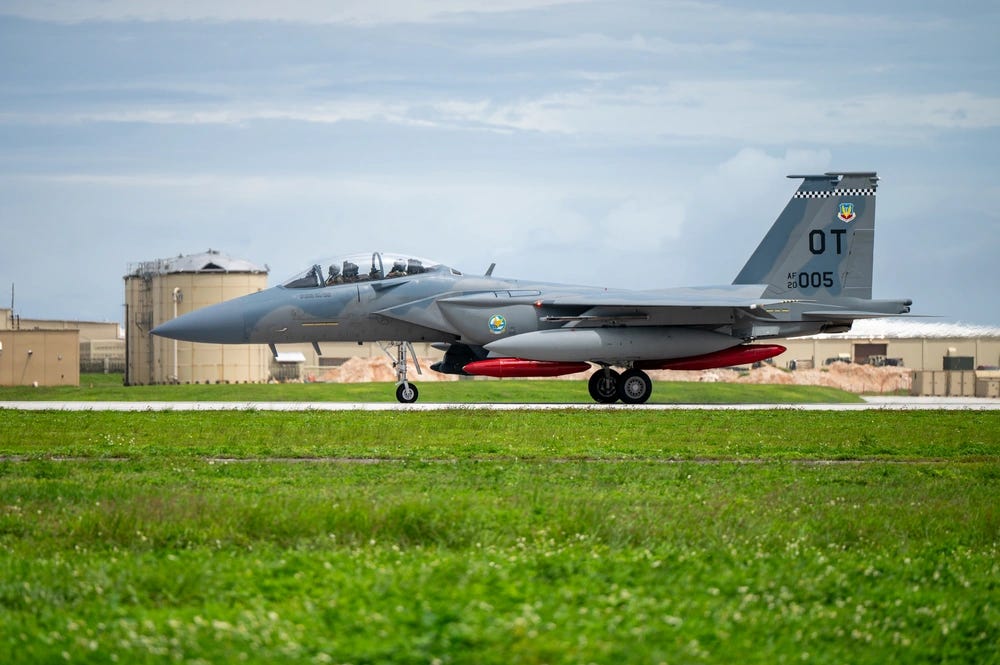
The F-15EX? She’s not just a bruiser with the range and payload to match—she’s stepping up as a flying command center, quarterbacking the fight from the front. And for our allies who already know their way around an Eagle, moving up to the EX is a breeze—no steep learning curve, no wallet-busting upgrades.
These days, it’s all about working smarter and staying connected. The Eagle II proves we’re not just chasing stealth; we’re building a team that’s flexible, tough, and always ready for what’s next.
Eagles Toward What’s Next
The Eagle II isn’t just sticking around to keep the old guard flying—it’s changing the whole game. She’s got the muscle we’ve always trusted, but now she’s wired to run the show, guiding both pilots and drones in the thick of it. Next time things get hot, it won’t just be her guns that make the difference—it’ll be how she pulls the whole team together, flying smarter and staying one move ahead of the fight.
This Week in Aviation History
26 November 1943: Hellcats Enter the Pacific Darkness
On the tense Pacific night of 26 November 1943, as the legendary USS Enterprise (CV-6) steamed silently through the sea—her crew bracing for the inevitable Japanese counterattack on the hard-won Gilbert Islands—Hellcat pilots, thick with nervous adrenaline below deck, waited for the call that would send them roaring into the void against radar-spotted bombers from the Marshalls.
The USS Enterprise stood watch near the Gilbert Islands when radar lit up with the signature of incoming Japanese bombers. In a bold experiment, the legendary carrier launched a three-plane team into the black—Lt. Cmdr. “Swede” Landreth’s TBF Avenger, its radar eyes searching the void, and two F6F Hellcats from VF-2, one flown by the famed Butch O’Hare.
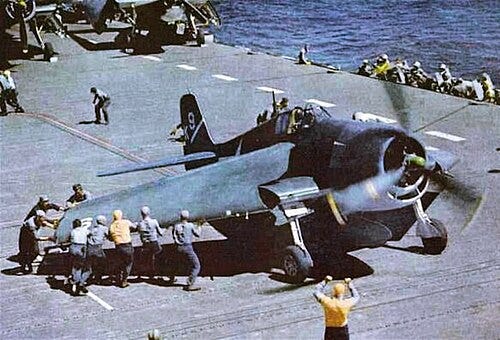
Guided only by the Avenger’s instruments, the trio hunted their quarry in utter darkness, marking the first carrier-based night-fighter interception in Navy history. Their gamble paid off: the bombers, startled by unseen attackers, broke formation and retreated, sparing the fleet a deadly blow.
But the cost was steep. Only two aircraft returned. Butch O’Hare vanished into the night. The disappearance of Butch O’Hare sent a chill through the decks of Enterprise and echoed across the Pacific fleet. O’Hare wasn’t just any pilot—he was a Medal of Honor recipient, a legend who had already become part of naval lore.
His loss was more than personal—it was a stark reminder that even the most skilled aviators were vulnerable in the uncharted world of night combat. The stakes were enormous: mastering night interception would mean the difference between survival and surprise attack for an entire task group.
Anatomy of a Killer: The Technical Power Behind the F6F Hellcat
They say the F6F Hellcat wasn’t just another fighter rolling out of Grumman’s doors—it was forged with a single purpose in mind: to go head-to-head with the Zero and come out on top. The Navy needed a carrier bird that could outclimb, outrun, and outfight anything the enemy threw their way, and the Hellcat answered that call.
Under the cowling, a Pratt & Whitney R-2800 Double Wasp engine churned out 2,000 horsepower, pushing the Hellcat past 380 miles per hour—a beast in a blue suit. Its broad wings made for steady landings, its landing gear soaked up the hardest carrier arrivals, and armor wrapped around vital spots gave pilots a fighting chance when flak or tracer found its mark.
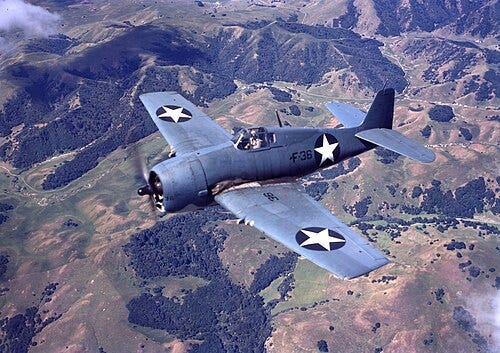
Up in that raised cockpit, pilots scanned the horizon over that long nose, six .50-caliber machine guns locked and loaded in the wings. When called for, rockets and bombs turned the Hellcat into a fleet’s best friend—defender, striker, workhorse in one package.
Yet for all that muscle and firepower, what won over aviators was how forgiving she was in the groove, easy to handle even when nerves ran high. In the Pacific, that blend of brute force, protection, and pilot-friendly design made the Hellcat a legend in its own right.
Legacy: The Warbird That Changed Everything
They say when the F6F Hellcat first touched down on those restless carrier decks in ’43, no one could’ve guessed how it would turn the tide in the Pacific. That machine wasn’t just another fighter rolling off the line—it was the answer the Navy needed, hammered together from every lesson the early war had to offer.
With broad wings that forgave rough landings and a Pratt & Whitney R-2800 engine that roared with authority, the Hellcat proved the perfect steed for both the old hands and the new kids fresh from training. She could take a bruising, give it back with those six .50-cals, and—most important—she brought her pilots home.
The numbers told the tale: Hellcat squadrons flew over 66,000 sorties, notched more than 5,000 victories, and made up the lion’s share of the Navy’s air kills. A kill-loss ratio pushing 19-to-1, the kind of record that turned aircraft into legends.
But her brilliance ran deeper than combat scores. She was a maintainer’s dream, simple to fix and quick to turn around, with Grumman rolling out over 12,000 in just two years—keeping those carrier decks full and ready.
With Hellcats in the air, American task forces became nimble, mobile strike groups, and carrier aviation took center stage in modern naval warfare. Even after the last mission, the lessons learned at her controls shaped the future of naval aviation—aircraft, tactics, and the unbreakable spirit that still echoes through every squadron patch and ready room story.
In every sense, the F6F Hellcat became a benchmark—a standard by which the future would be measured, and a legend etched across the skies of the Pacific.
In Case You Missed It
More about the F-15EX which became the Eagle II:
Photo Outlet
Every issue of Hangar Flying with Tog gets you a free image that I’ve taken at airshows:
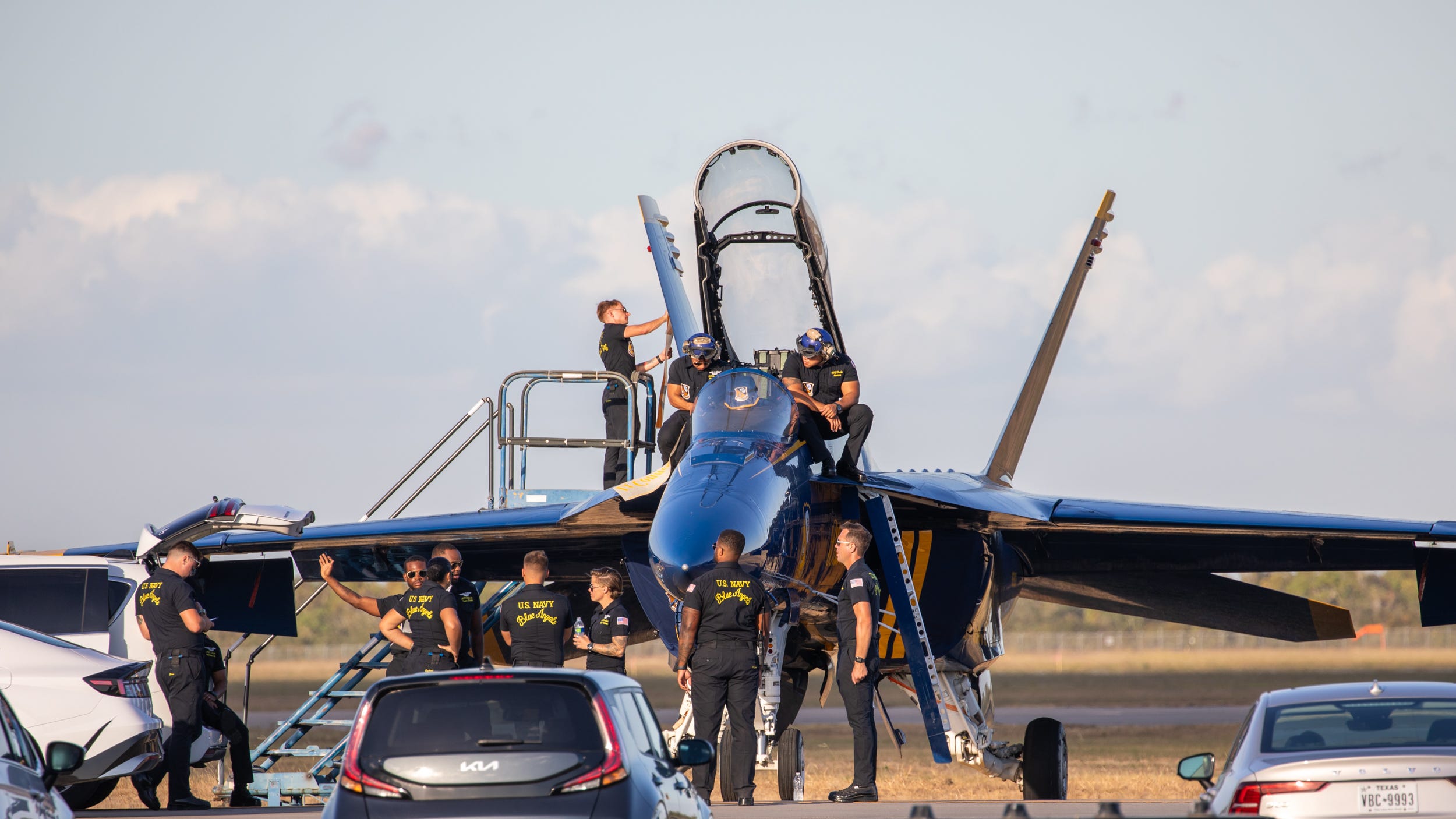
Feel free to use these photos however you like, if you choose to tag me, I am @pilotphotog on all social platforms. Thanks!
Post Flight Debrief
Like what you’re reading? Stay in the loop by signing up below—it’s quick, easy, and always free.
This newsletter will always be free for everyone, but if you want to go further, support the mission, and unlock bonus content, consider becoming a paid subscriber.
Your support keeps this flight crew flying—and I couldn’t do it without you.
– Tog