

“Aircraft to be reconfigured between boom and probe refueling capability based on mission requirements.”
—The Air National Guard Air Force Reserve Command Test Center
Mission Briefing
Little more than a month after that first daring test flight, the A-10C now roars over Middle Eastern sands, sporting its new Probe Refueling Adapter. Thanks to this upgrade, the Warthog can top off its tanks from the HC-130J mid-air, using the probe and drogue system, just like the big birds do. It’s a whole new chapter for close-air support, and the sky’s never looked better.
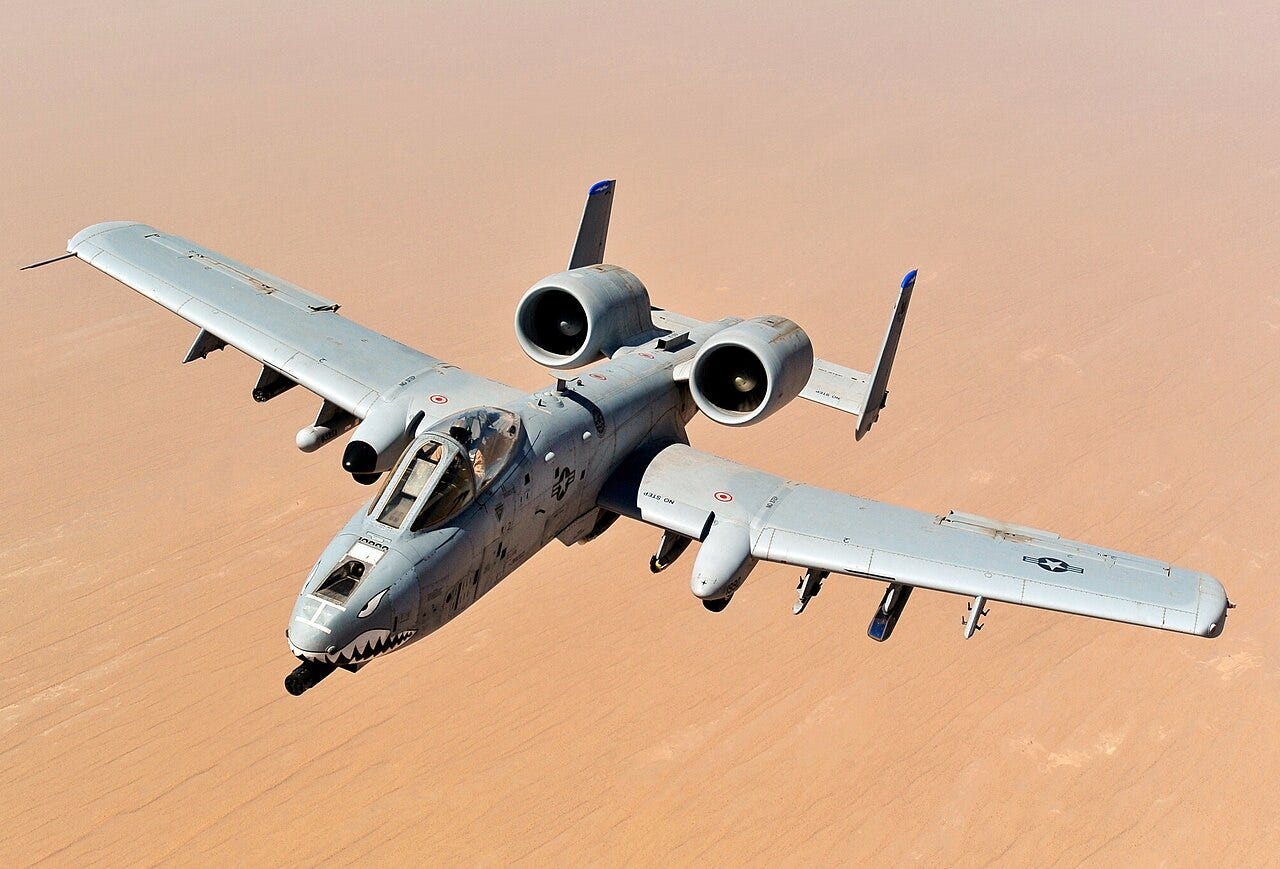
A10s Now Have New Refueling Probe and Angry Kitten EW Pod
The curtain lifts over the Middle East, and the first dramatic stills emerge: the A-10C Thunderbolt II, affectionately known as the Warthog, is caught mid-tango with an HC-130J Combat King II, sipping fuel through its brand new Probe Refueling Adapter.
This valuable upgrade, first trialed in early April, unlocks a whole new world of refueling possibilities for the battle-hardened A-10, which until now had to rely on the lumbering KC-135 Stratotanker and couldn’t yet belly up to the futuristic KC-46 Pegasus.
The brass saw a problem: without more refueling options in theater, the Warthog’s operational leash was just too short. Enter the C-130-based tankers, ready to keep the A-10 in the fight.
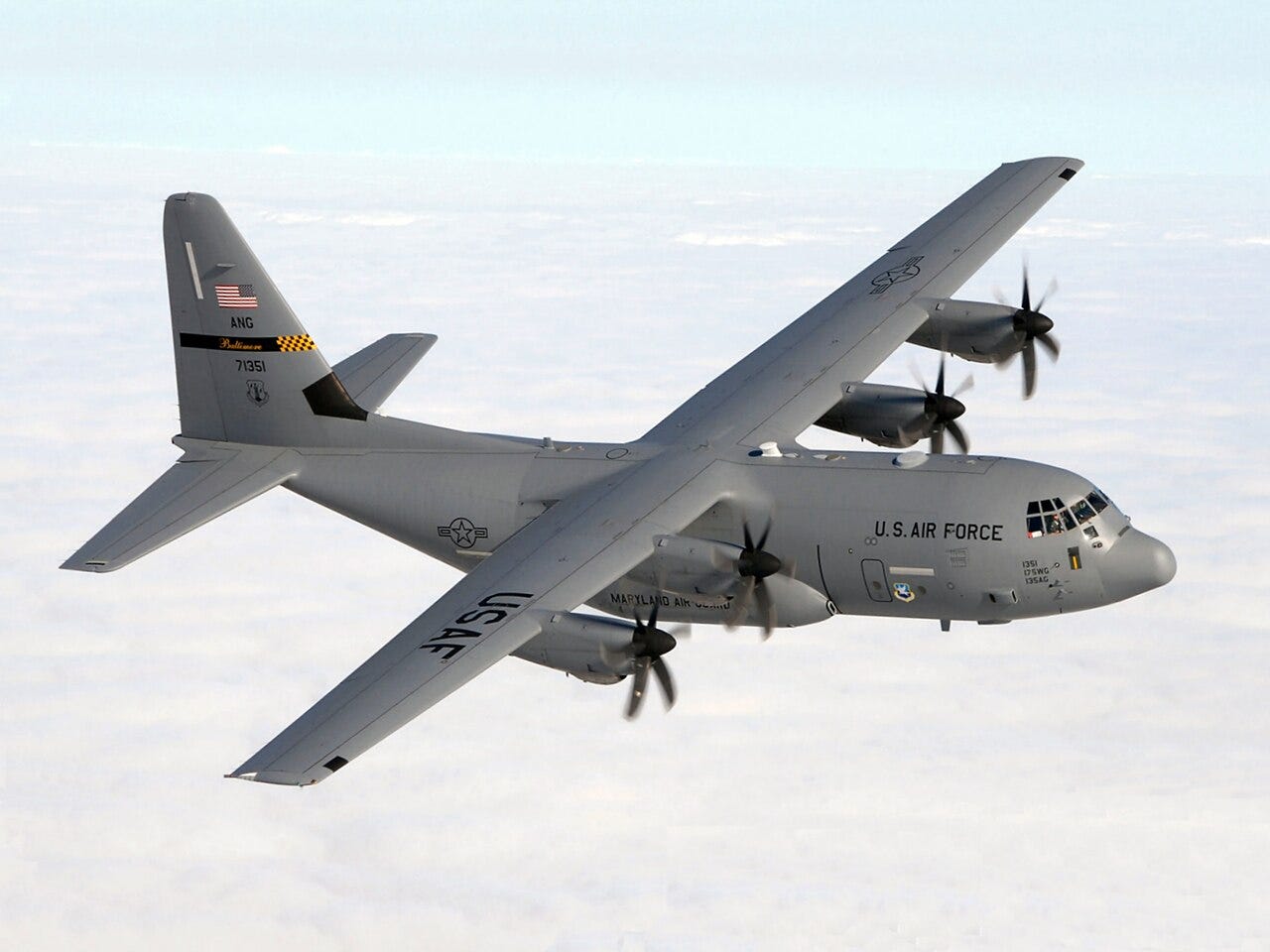
The photos, dropped on 21 May 2026, freeze the action: 107th Fighter Squadron Warthogs, Michigan-bred and fresh in theater since April, trading fuel with the HC-130J over the U.S. Central Command’s vast domain.
But look closer, and you’ll spot another twist. These A-10s are sporting the Angry Kitten electronic warfare pod, a gadget that made its combat debut on F-16s during Operation Epic Fury but has never before been spotted on A-10s overseas. For the Warthog, it’s a new chapter of adaptability and grit, with the sky as its stage.
The Pod and the Probe
If you ever catch a glimpse of the A-10C Thunderbolt II on the ramp, you’ll spot its trademark air refueling receptacle right on the nose, just forward of the cockpit. It is a design tailored for the classic flying boom, where the tanker’s operator guides the fuel probe home.
But as the old KC-10 tankers faded into history and the advanced KC-46 certification lagged behind, the Warthog’s world started shrinking. Tethered to the aging KC-135s, planners found their mission map severely restricted, the A-10’s range at the mercy of limited refueling options.
That’s when the call came down for a solution. The answer: a Probe Refueling Adapter, designed and tested at breakneck speed, first trialed on April 2, 2026. This ingenious device slips right into the A-10’s nose receptacle, transforming the jet from a boom-only bird to one ready for probe and drogue refueling, the kind C-130 tankers deliver.
The best part? The adapter is field-configurable. According to the Air National Guard Air Force Reserve Command Test Center, flight line crews can install it in just a few hours—no need for depot downtime. Now, mission planners can switch the A-10 between boom and probe refueling modes on the fly, tuning each jet to the demands of the day’s fight.
But there’s more to this new act than just fuel. If you look closely at those fresh photos, you’ll spot the Warthog sporting the Angry Kitten electronic warfare pod, a gadget with a story of its own. Originally hatched from the AN/ALQ-167 as a humble training pod, Angry Kitten has grown into a modular, digital EW powerhouse.
Its journey began with the South Carolina Air National Guard’s F-16s, headed for the Middle East and Operation Epic Fury. Born from Georgia Tech Research Institute’s vision back in 2013, Angry Kitten was designed to deliver ‘cognitive EW’—a system smart enough to analyze enemy signals and choose its own tailored response, even adapting on the fly to new threats.
Since those early days, Angry Kitten has flexed its digital claws on the A-10, MQ-9 Reaper, F/A-18 Hornet, and C-130 Hercules.
Now, it’s front-line ready. The Navy highlights its core: the Technique Description Language (TDL), a hybrid architecture fusing high-speed hardware with adaptable software—giving the Warthog a new edge in the ever-evolving aerial fight.
A-10’s New Tricks in the Desert Fight
Out in the shifting sands of the Middle East, the A-10 Warthog refuses to fade quietly into history. With its brand-new refueling probe and the Angry Kitten EW pod riding shotgun, the Warthog is proving it’s anything but outdated.
Recently, Aviationist’s lens caught A-10Cs refueling from an HC-130J Combat King II, using the probe for drogue refueling and flexing electronic muscle with Angry Kitten, all on May 9, 2026.
That probe isn’t just a gadget. It’s a ticket to a wider world of tankers. No longer bound to the old boom-only crowd, the A-10 now taps into drogue refueling, giving it more fuel sources and longer legs for close air support, rescue ops, convoy protection, and quick-response missions.
Pairing up with the HC-130J, a specialist in forward-area support and coalition operations, the Warthog gains an expeditionary boost, ready to roam wherever the fight calls.
For America’s allies, these upgrades are a promise: the U.S. still brings relentless, low-flying firepower to the region, and the Warthog is now tuned to face modern electronic threats. Angry Kitten shines brightest here, with rapid software updates between flights, letting crews swap tactics as enemy radars evolve.
Big picture? Washington is wringing more combat utility from its reliable old warriors even as new jets are stretched thin across the globe. Allies see a steady hand; adversaries see legacy aircraft transformed—networked, refueled, and digitally sharpened for today’s fight.
This Week in Aviation History
In the quiet hours just past midnight on 31 May 1967, two HH-3E Jolly Green Giant helicopters lifted off from New York, chasing the horizon in a bold, non-stop dash across the Atlantic. Their engines hummed all the way to Paris, touching down at Le Bourget for the air show just before 2 p.m. on June 1. It was a transatlantic feat that turned heads and wrote a new chapter in aviation history.
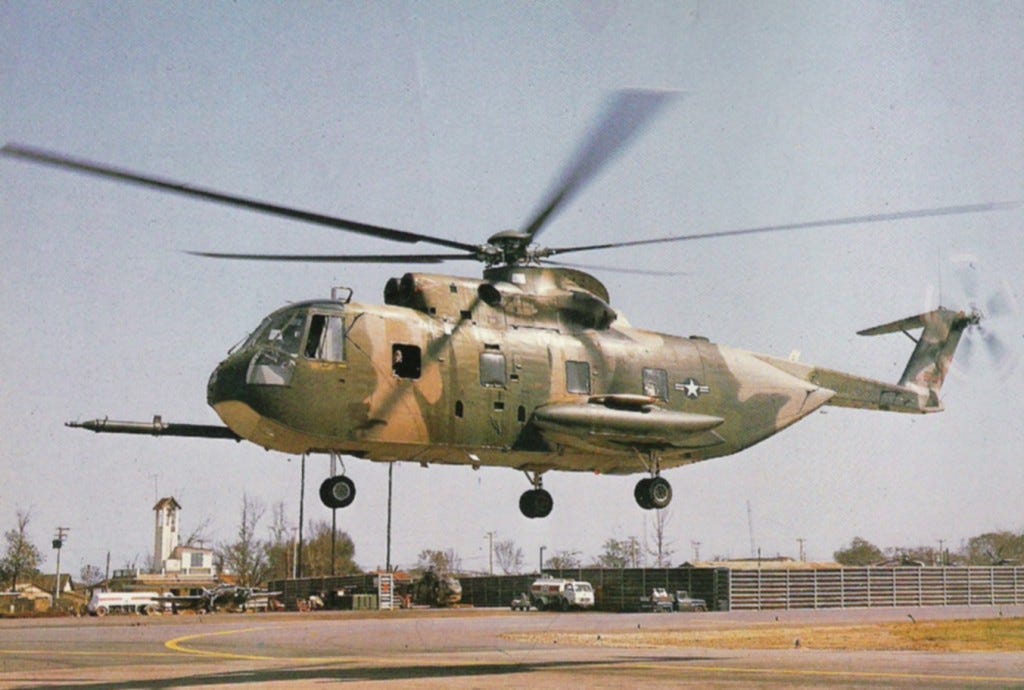
Jolly Green Giant’s Non-Stop Transatlantic Flight
The epic flight spanned 4,271 miles, nearly 31 hours of relentless rotor thunder, requiring a staggering nine midair refuelings from HC-130P Combat King tankers.
At the controls were Majors Herbert Zehnder and Donald B. Murras, each commanding a Jolly Green Giant helicopter with a five-person crew. On this journey, Major Zehnder, flying H-211, set an FAI world speed record for helicopters, averaging almost 190 kilometers per hour. It is a record that still stands, a testament to both machine and aviator.
But these weren’t just record-setters, they were warriors. Both Jolly Green Giants, tail numbers 66-13280 and 66-13281, went on to serve with the 37th Air Rescue and Recovery Squadron in Vietnam, where their fates became part of Air Force legend.
“Jolly Green 27” crashed at Kontum in 1970, its pilot, Captain Travis H. Scott, Jr., lost in the inferno, while Major Travis Wofford braved the flames to pull survivors from the wreckage, earning the Air Force Cross and Cheney Medal for his valor. Scott, too, was posthumously awarded the Air Force Cross for his heroism.
Meanwhile, “Jolly Green 28” faced its own trial by fire—shot down over Laos in 1969, her crew rescued before the bird was destroyed to deny it to the enemy. Technical Sergeant Donald G. Smith, the pararescueman, was decorated with the Air Force Cross and the Airman’s Medal for saving the downed pilot of “Misty 11.”
Major Zehnder’s daring didn’t stop with records. He would later pilot another HH-3E on a high-stakes crash landing inside Sơn Tây Prison Camp near Hanoi, earning the Silver Star for his actions.
The Sikorsky HH-3E (nicknamed the Jolly Green Giant) became a legend in its own right. Born from the CH-3C transport, this twin-engine, heavy-lift helicopter was built for Combat Search and Rescue, with a rugged crew of pilots, mechanic, and gunner.
With its massive main rotor, retractable landing gear, rear cargo ramp, and inflight refueling boom, the Jolly Green Giant was always ready for the next impossible mission, no matter where the call came from.
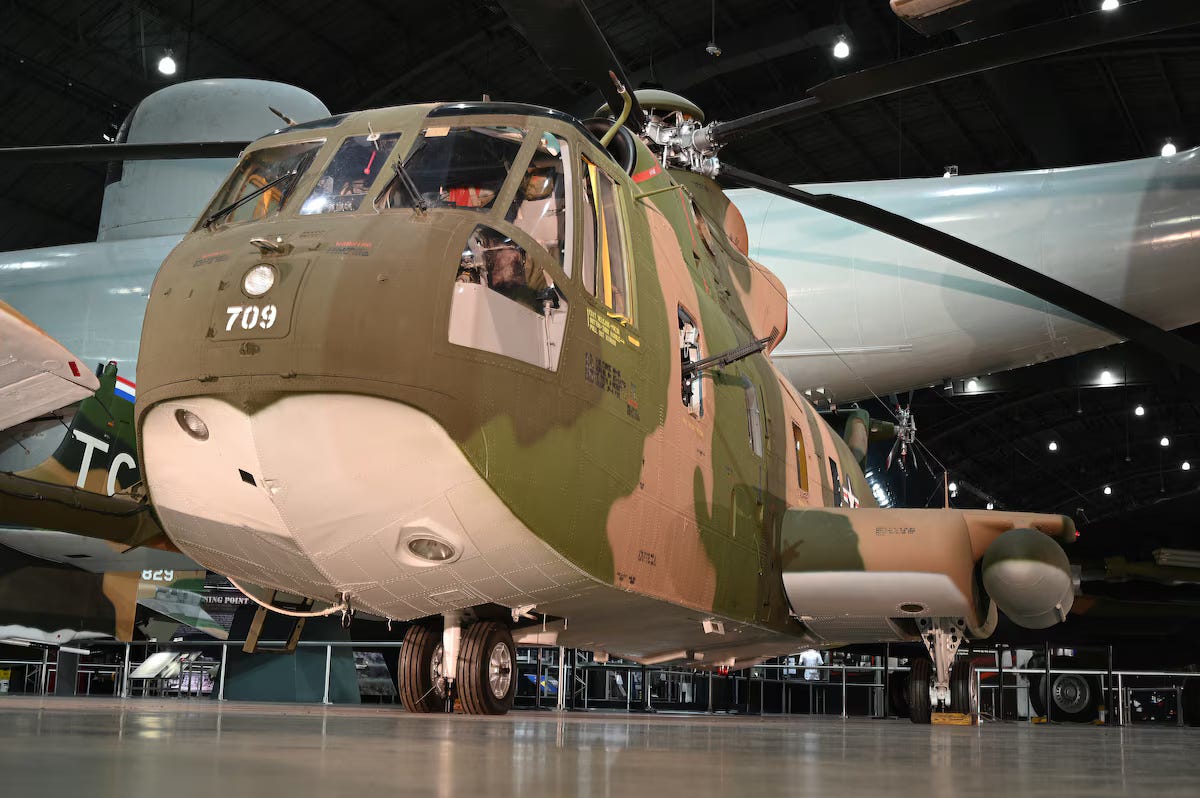
The Rescue Chopper Built to Reach Beyond the Front Line
Picture the HH-3E Jolly Green Giant on the ramp, rotors spinning like a windstorm. She stretches out a majestic 72 feet, 7 inches long and stands 18 feet, 10 inches tall, a true colossus of the rescue world. Her five-bladed main rotor sweeps a massive 62-foot circle overhead. Each blade is nearly half a meter wide, churning the air at a steady 203 rpm, counter-clockwise from above, with the advancing blade slicing right.
Out back, the tail rotor, also five-bladed, spins a 10-foot arc and hums at a fierce 1,244 rpm, balancing the beast with clockwork precision.
Even empty, the Jolly Green tips the scales at over 13,000 pounds, but she’s built for battle, maxing out at just over 22,000 pounds when fully loaded for action.
Her heart beats in tandem with two General Electric T58-GE-5 turboshaft engines, each pumping out up to 1,500 shaft horsepower, enough grunt to muscle through the roughest combat zones. The transmission can take 2,500 horsepower, channeling pure force to the rotors.
In the air, she cruises at 154 miles per hour, can dash up to 177, and reach altitudes of 14,000 feet. Fill her tanks (external tanks included), and you’ve got a range of 779 miles; long enough to cross borders or seas for a rescue. For defense, she can bristle with a pair of M60 machine guns, ready to lay down cover on the way in or out.
Born from the CH-3 transport line, just 14 were built new as HH-3Es, while dozens more were converted with extra armor, self-sealing fuel tanks, and a rescue hoist.
With a watertight hull, she could set down on water, and her big rear ramp made loading wounded or weary aviators a breeze. Over 170 S-61Rs in her family tree, but the HH-3E was the Air Force’s dedicated Combat Search and Rescue (CSAR) hero.
Her legend was forged in the fires of Vietnam. First arriving in 1967, flying out of Udorn and Da Nang. She pulled off long-range rescues across Southeast Asia, even landing in history with the daring Son Tay prison raid.
Her crews walked tall: one Medal of Honor, twenty-four Air Force Crosses, over 190 Silver Stars. She even answered the call in Desert Storm and stood ready during the early Space Shuttle days. By 1995, the last Jolly Greens retired, but their stories still echo wherever aviators need saving.
The Rescue Footprint That Outlived Vietnam
The legacy of the HH-3E Jolly Green Giant isn’t just counted in hours flown or missions chalked up on a clipboard. It’s measured by the creed every rescue crew carries into the fight: “That Others May Live.”
Born from the sturdy Sikorsky CH-3, the HH-3E was transformed into America’s go-to combat search-and-rescue bird during the crucible of the Southeast Asia War, purpose-built to snatch downed airmen from the jaws of danger. At places like Da Nang, legends like Jolly Green 22 proved their worth, not in headlines, but in the mud and fire of real combat.
The Jolly Green’s reach became the stuff of legend in 1967, when two of these giants pulled off the first nonstop helicopter crossing of the Atlantic, an audacious journey powered by aerial refueling and grit. No longer just battlefield workhorses, these birds became strategic assets, able to push beyond the horizon.
Culturally, the HH-3E left its mark as well. The famous “green feet” symbol—born from the impressions made by its massive landing gear in Vietnam’s paddies—became the unofficial badge of the rescue community, a quiet nod to those who bring others home.
From those first green footprints in Southeast Asia to the rescue squadrons of today, the HH-3E’s spirit lives on. The mission endures: go farther, risk everything, and never leave a comrade behind.
In Case You Missed It
Photo Outlet
Every issue of Hangar Flying with Tog gets you a free image that I’ve taken at airshows:
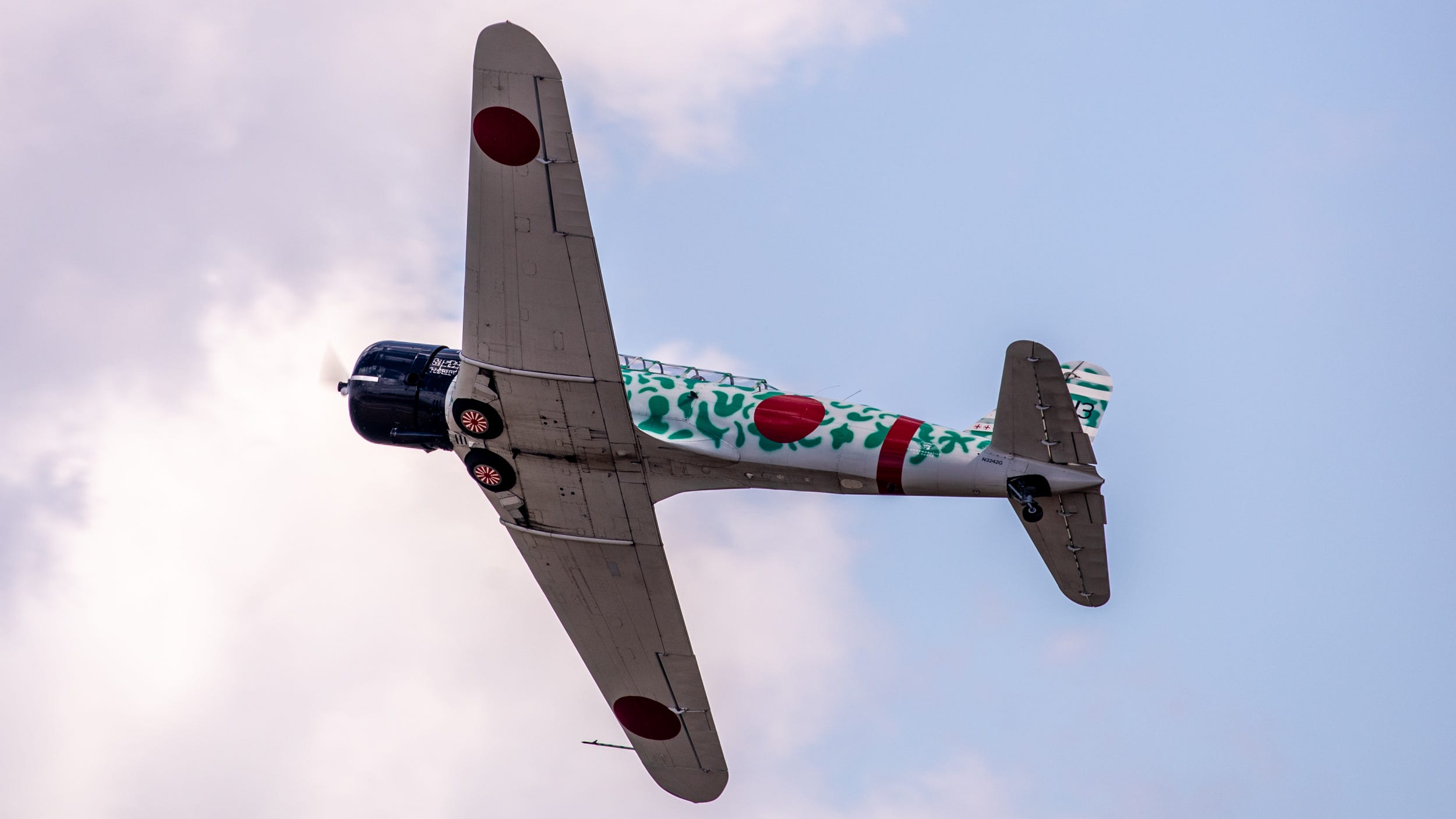
Feel free to use these photos however you like. If you choose to tag me, I am @pilotphotog on all social platforms. Thanks!
Post Flight Debrief
Like what you’re reading? Stay in the loop by signing up below—it’s quick, easy, and always free.
This newsletter will always be free for everyone, but if you want to go further, support the mission, and unlock bonus content like the Midweek Sortie, consider becoming a paid subscriber.
Your support keeps this flight crew flying—and I couldn’t do it without you.
– Tog
My favorite bird. My Dad was a combat decorated pilot and he’d have loved the A-10…