

USAF Needs 500 Aircraft to Counter China and Remembering When a Civilian Broke the Sound Barrier
From the first rocket-powered hop to today’s stealth-and-bomber build-ups, the real leap involves new propulsion and airborne support that reshape reach, options, and deterrence across the map.
Now is the time to rebuild the U.S. Air Force’s long-range combat forces to defeat threats that are “the most serious and most challenging the nation has encountered since 1945.”
—Quote from Mitchell Institute Policy Paper
Mission Briefing
Picture this: a new report from the Mitchell Institute has sent ripples through the aviation world, declaring that the U.S. Air Force needs 500 more combat aircraft to stay ahead of China by 2030.
This isn’t about sheer numbers. It’s about keeping the skies open in a future where a shorthanded fleet could mean stalemate in the Western Pacific. The study’s authors aren’t mincing words: they want to see at least 300 F-47 fighters and 200 B-21 Raider bombers soaring, far beyond today’s modest plans.
It’s a bold vision, drawn with urgency, as if the next chapter in airpower history is waiting just over the horizon.
A Shocking Study Calls for Hundreds of F-47 and B-21 Raider
The phrase “500 additional aircraft” isn’t tossed around lightly. It lands with the weight of a thunderclap—a shot across the bow for anyone paying attention in the world of airpower. In early 2026, the Mitchell Institute’s report, “Strategic Attack: Maintaining the Air Force’s Capacity to Deny Enemy Sanctuaries,” threw that number into the air like a challenge, painting a stark picture of the widening gap between what America’s Air Force aspires to do and the reality of its current procurement plans.
At the heart of the recommendation is a simple, urgent logic. To keep the initiative against a peer adversary—especially one as formidable as China—the United States needs a force capable of punching deep into the enemy’s heartland. The aim isn’t just to score a dramatic raid, but to disrupt the tempo of enemy air and missile salvos, to knock the adversary off balance and keep them guessing day after day.
The report calls for a minimum of 200 B-21 stealth bombers, built to endure and persist, and 300 F-47 fighters, a new breed designed to be “campaign-compatible”; not just impressive in isolation, but ready to fight, regenerate, and return for another round.
The numbers may make headlines, but it’s the diagnosis that should give every strategist pause. The Air Force, the authors suggest, is built for exceptional raids—those daring, surgical strikes that make for riveting headlines. But what about the long haul? There’s a world of difference between a “raid force” and a “campaign force.” The former dazzles with a single operation; the latter endures the grind of sustained conflict. That’s the chasm the report warns against a fleet that shines in a flash, but falters when the fight drags on.
It’s easy to confuse an impressive inventory with genuine power, but real airpower is what can take off, fight, survive losses, and keep coming back. Here’s the cold reality: the US Air Force’s total fleet hovers around 5,025 aircraft. But look closer—mission availability averages about 62%, a figure that’s set off alarm bells in the aviation press. That means roughly 1,900 aircraft could be grounded at any moment. In the vast Indo-Pacific theater, where distances stretch logistics to the breaking point and sustained operations wear down even the best-maintained jets, that’s a sobering handicap.
And then the politics come into play. Every time a jet is retired early “to finance the future,” the operational mass shrinks. Fewer planes in the sky means commanders get cautious, risking rare birds less, keeping them farther from the action, and ceding initiative to an enemy content to wage war from behind thick layers of protection. This, the report argues, is the danger. Without a surplus to absorb losses and keep the fight going, strategy becomes timid; just as the adversary bets on speed and surprise.
The Mitchell Institute’s analysis isn’t fixated on the sheer number of Chinese jets. Instead, it focuses on operational reality: China is shaping its mainland into an invulnerable rear base, a sanctuary shielded by dense, modern air defenses and bristling with long-range strike weapons: ballistic, cruise, and even hypersonic missiles that threaten every base and runway in the region.
The Pentagon’s own reports echo the warning. China is advancing rapidly, fielding new air-to-air missiles like the PL-15, rolling out cutting-edge platforms at airshows in Zhuhai—the J-35A, the J-15D—and signaling an industrial engine determined to build, iterate, and deploy at speed.
A Closer Look at F-47 and B-21 Raider
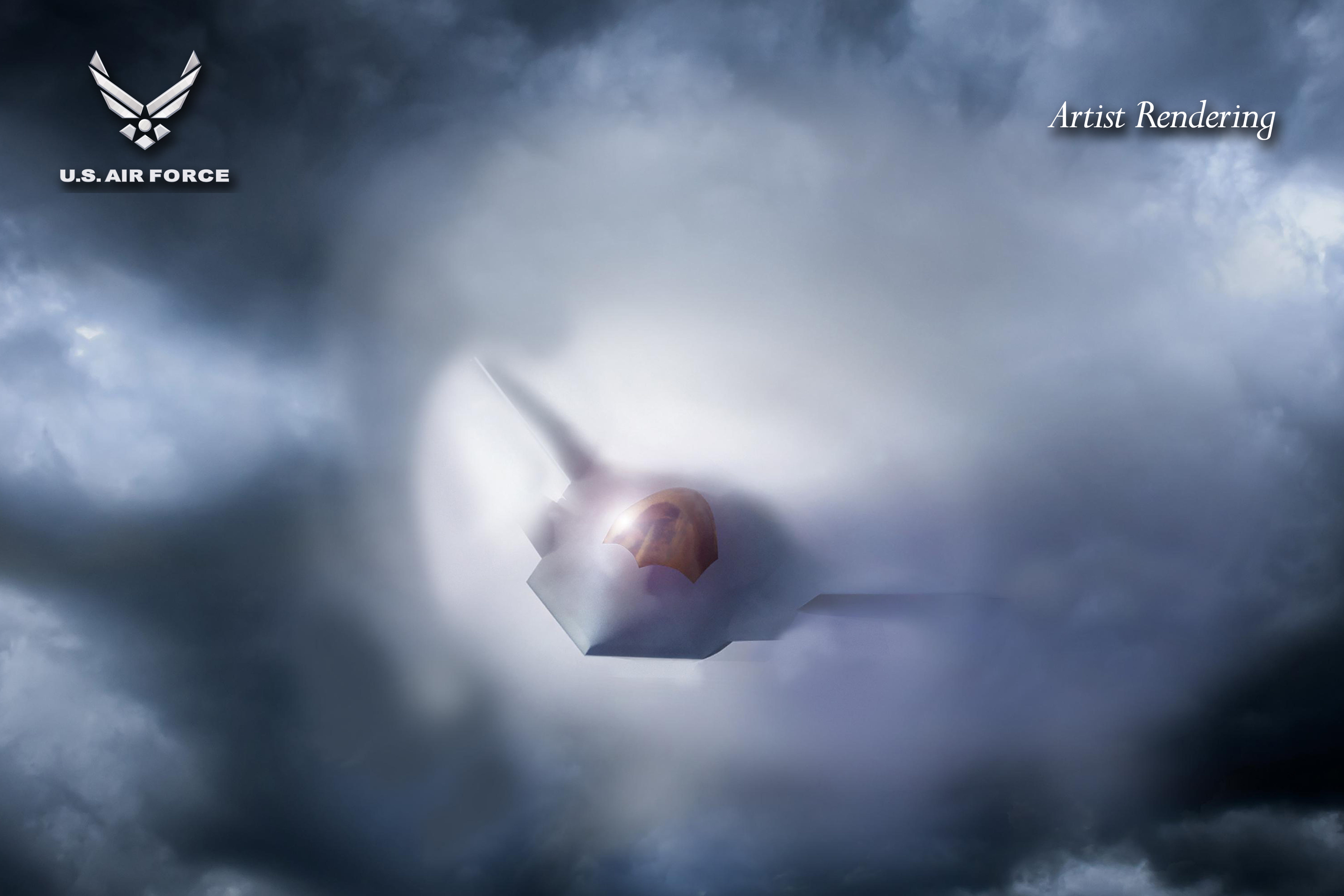
The Air Force’s F-47 is set to rewrite the playbook, flying nearly 70 percent farther without refueling than the legendary F-22.
That means tankers can hang back, safely out of harm’s way—a crucial edge for any campaign across the vast Pacific, where every mile matters and every risk is magnified.
Thanks to its advanced design, the F-47 will boast a combat radius of more than 1,000 nautical miles—leaving the F-22’s 590 miles and the F-35’s 670 in the dust. And with speeds topping Mach 2 and “stealth++” features, this sixth-generation fighter offers more than just range.
It brings a level of survivability and lethality that’s been the subject of quiet briefings and whispered speculation among those in the know. General Allvin’s recent infographic gives us a rare glimpse behind the curtain, hinting that the F-47 isn’t just a step ahead. It’s a leap.
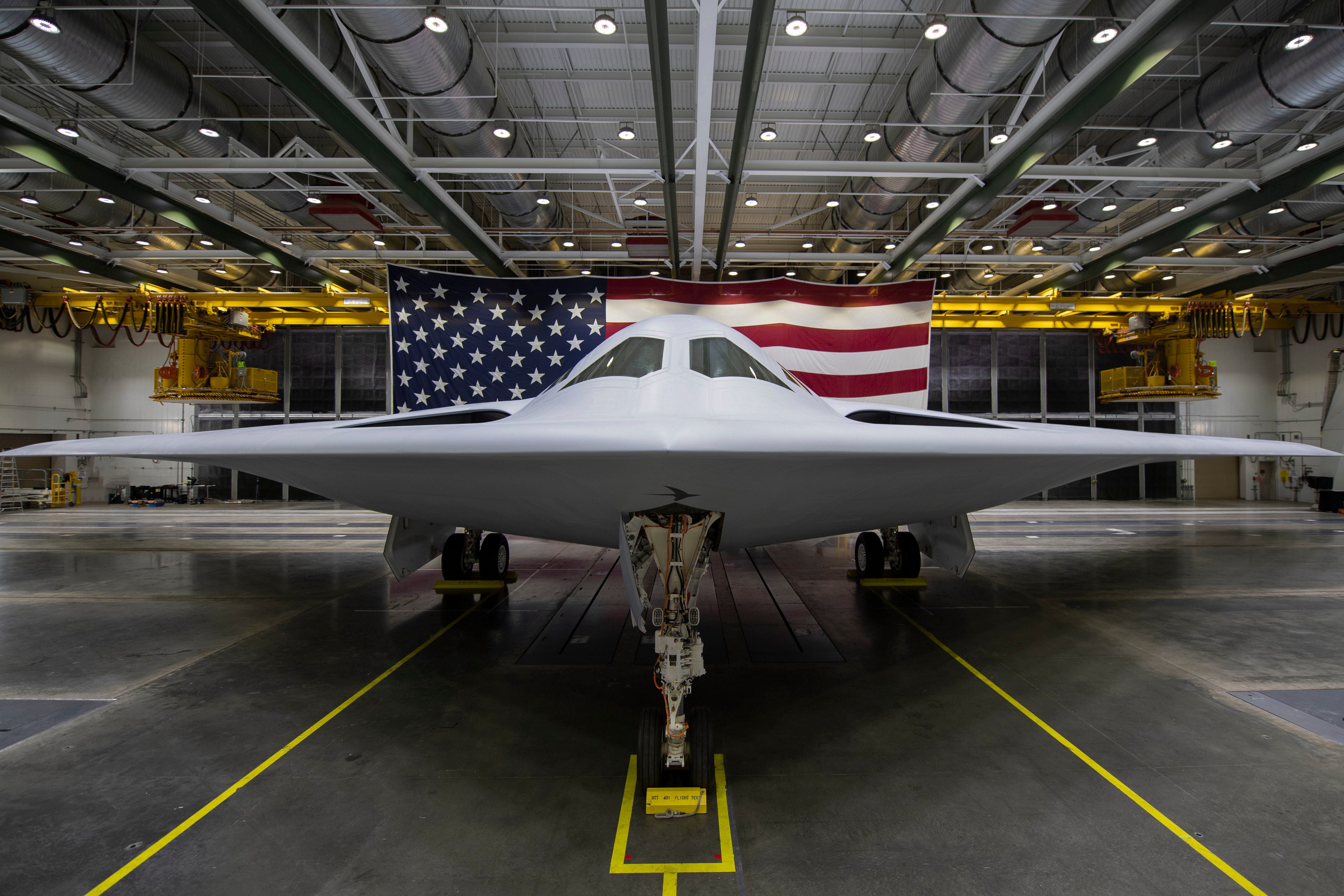
But the future of airpower doesn’t rest on fighters alone. The B-21 Raider is poised to become the backbone of America’s bomber force, a dual-capable ghost built for both conventional and nuclear missions.
The Raider isn’t just a bomber. It’s the centerpiece of a family of systems that includes intelligence gathering, electronic warfare, and long-range strike capabilities, able to operate with or without a crew on board. From stand-off missiles to direct-attack munitions, the B-21 brings versatility and resilience, ready to breach even the most sophisticated defenses.
Allied Airpower and the 500-Aircraft Debate
In the Indo-Pacific, sheer airpower quality is no longer a guarantee. Without enough combat mass and ready jets, even the finest aircraft can’t tip the balance. That’s the heart of the Mitchell Institute’s warning: America’s current plans may fall short for a drawn-out campaign against China’s well-protected mainland, with its dense air defenses and long-range missile threat.
The question is shifting from “Can we strike?” to “Can we endure—absorbing losses, regenerating sorties, and sustaining relentless pressure?” A force tailored for headline-grabbing raids, the report argues, can still be too small for the grind of real war. Readiness and availability matter; what’s on the ramp is more important than what’s on paper.
This isn’t just America’s challenge. In the high-stakes Pacific, credible deterrence is a team effort. If the U.S. needs more stealthy, penetrating aircraft, then allied basing, rapid dispersal, runway repair, tanker support, munitions stockpiles, and interoperable fighters all become critical.
It is also crucial to “bridge” solutions, like F-35 and F-15EX buys and collaborative combat aircraft, underscoring the urgency for allied coordination now, not just when the latest platforms are fielded.
The bottom line? The next chapter of deterrence will hinge not only on breakthrough jets but also on whether America and its allies can muster resilient, sustainable combat power before a crisis puts their preparations to the ultimate test.
This Week in Aviation History
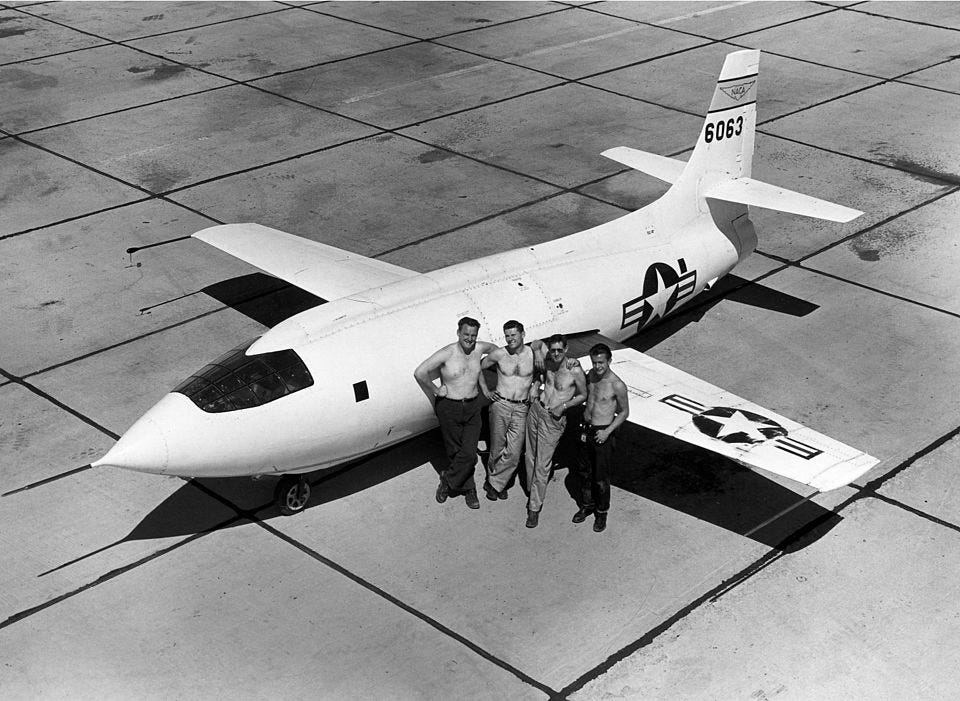
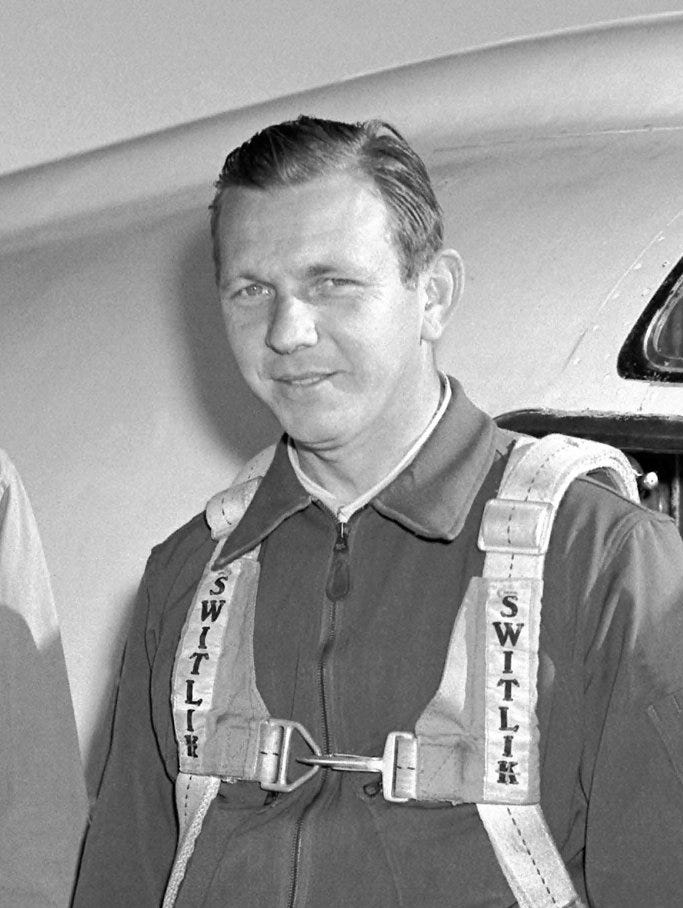
On March 4, 1948, NACA test pilot Herbert H. Hoover etched his name in history, becoming the first civilian to shatter the sound barrier aboard the X-1-2 rocket plane. The X-1 program would go on to push the envelope even further, with Chuck Yeager blazing past Mach 2.4 thanks to improved machines and fuel systems. By the program’s close in November 1958, 27 daring pilots had logged 238 flights across several X-1 variants, each sortie a bold step into the unknown.
A First for Supersonic Research
The dream of rocket-powered flight was first sparked not in the skies, but on the ground; born in the daring world of auto racing. That bold vision took flight on June 11, 1928, when the Lippisch Ente soared into history as Germany’s first rocket-propelled aircraft.
Stateside, the quest for speed intensified in the early 1940s as pilots and engineers grappled with a new frontier: the mysterious, turbulent air near the speed of sound. The National Advisory Committee for Aeronautics (NACA)—which would later become NASA—and the U.S. Army Air Forces (USAAF) joined forces to conquer this transonic barrier. Their goal was clear: push aircraft beyond Mach 1 and unlock the secrets that lay beyond.
On March 16, 1945, Bell Aircraft was tasked with building three experimental planes to probe the transonic regime. Thus, the X-1 was born, powered by a formidable XLR-11 rocket engine from Reaction Motors Inc., which burned a volatile cocktail of alcohol, water, and liquid oxygen. Air-launched from the belly of a lumbering B-29 Superfortress, the X-1 would ignite its rockets and tear through the thin skies above.
The first X-1, delivered in December 1945, made its debut glide at Pinecastle Field, Florida, before the program shifted to the sun-baked expanse of Muroc Field in California’s Mojave Desert. By mid-1947, two X-1s were flying: one for the Air Force, hell-bent on smashing Mach 1, and one for NACA, devoted to meticulous transonic research.
It was on October 14, 1947, that Chuck Yeager etched his name into legend, pushing the X-1 to Mach 1.06 and becoming the first human to break the sound barrier. Just months later, on March 4, 1948, NACA’s Herbert H. Hoover followed suit, the first civilian to cross into supersonic territory.
With upgrades and new fuel delivery systems, the X-1 eventually reached speeds of Mach 2.44. By the time the program closed in November 1958, an elite cadre of 27 pilots had flown 238 sorties, each flight a step deeper into the unknown.
The quest didn’t stop there. Between 1959 and 1968, 12 test pilots took the X-15 rocket plane—another marvel of American engineering—on 199 breathtaking flights, pushing the envelope of hypersonic flight and skimming the very edge of space itself.
What is Bell X-1-2?
The first generation of X-1 aircraft didn’t just break the sound barrier. They shattered the conventions of how we explore the skies. These were not warbirds or airliners, but pure research machines, built with a single purpose: to chase the unknown and gather the data that wind tunnels and theory could no longer provide.
The X-1’s legacy is more than speed; it’s the birth of the experimental aircraft, dedicated solely to pushing the boundaries of flight, unburdened by the needs of the battlefield or the marketplace.
In the late 1930s and early 1940s, aircraft designers faced a daunting new frontier. As planes crept faster, their wings began to encounter both subsonic and supersonic airflow, creating a host of unpredictable and often dangerous problems—compressibility effects, surging drag, wild trim changes, turbulence that rattled teeth, and sudden losses of control.
Even the best wind tunnels of the day couldn’t accurately capture what was happening at these speeds; their own data became unreliable as models approached the sound barrier.
Visionaries like John Stack of the NACA, Ezra Kotchner of the Army Air Forces, and Walter Diehl of the Navy recognized that only a specialized research aircraft. The one built to fly directly into the teeth of these mysteries. It could unlock the secrets of supersonic flight.
The Army Air Forces handed the challenge to Bell Aircraft, tasking the company with building three experimental planes that would become the X-1 fleet.
The X-1’s shape was inspired by something already proven stable at supersonic speed: the .50 caliber machine gun bullet. Its fuselage mirrored this form, while its wings were straight and thin for minimum resistance.
The X-1-1 carried an 8 percent thickness-to-chord wing; the X-1-2’s was slightly thicker at 10 percent. Propulsion came from the XLR-11 rocket engine, a four-chambered powerhouse burning a volatile mixture of liquid oxygen and alcohol-water.
Rockets were still a controversial choice. Many at NACA and the Navy preferred jet propulsion, but the Army Air Forces were determined to bet on rocket power.
Bell delivered the first X-1 in December 1945, and soon after, NACA was asked to oversee instrumentation and data analysis. This brought a sharp team of engineers into the heart of the project.
The first glide flight—no engine, just pure aerodynamics—took place on January 19, 1946, at Pinecastle Field in Florida, with Bell’s Jack Woolams at the controls. Ten more glide flights followed, each one testing the X-1’s handling near the ground, before the aircraft went back to Bell for its rocket engine installation.
By October 1946, the X-1-1 was delivered to what’s now NASA’s Armstrong Flight Research Center at Edwards, California—then known as Muroc Flight Test Unit. NACA engineers arrived that September to prepare for the X-1-2’s debut.
On October 11, Bell test pilot Chalmers “Slick” Goodlin took the X-1-2 on its maiden glide flight, moving on to powered runs by December, reaching Mach 0.79. By June 1947, both X-1s had proven their mettle up to Mach 0.8, at which point Bell’s contract was fulfilled.
That summer, a new agreement shaped the X-1 program’s next phase. The Army Air Forces would use the thinner-winged X-1-1 to push hard for Mach 1.1, aiming to break barriers quickly with NACA’s technical support.
Meanwhile, NACA would take the thicker-winged X-1-2 on a more deliberate path, gathering the detailed, methodical data needed to understand the treacherous transonic regime. The age of the research aircraft and the supersonic era had truly begun.
From Breakthrough to Blueprint: The X-1-2 Legacy
The X-1-2 may not have the fame of “Glamorous Glennis,” but its legacy runs deeper—transforming the triumph of breaking the sound barrier into the science of making supersonic flight routine.
When the aircraft passed to NACA, it became a true flying laboratory, probing the tough questions that followed the first Mach 1 milestone: How do you control a plane when shock waves rule the airframe? What happens in steep turns or sudden pull-ups?
NACA pilot Herbert H. Hoover took the stick in late 1947, methodically flying research missions and, by March 4, 1948, nudging the X-1-2 to Mach 1.029; not in pursuit of glory, but to collect hard data.
Hoover’s flights marked a crucial shift: the X-1 series was no longer just about speed records, but about launching a new era of experimental, purpose-built research aircraft.
The X-1-2’s influence only grew as it was later rebuilt as the X-1E, pushing further into the high-Mach unknown and building on lessons from every setback. Its greatest legacy isn’t a single headline, but a philosophy—measure, learn, refine, fly again—the very foundation of modern flight testing that propels aviation innovation to this day.
In Case You Missed It
Photo Outlet
Every issue of Hangar Flying with Tog gets you a free image that I’ve taken at airshows:
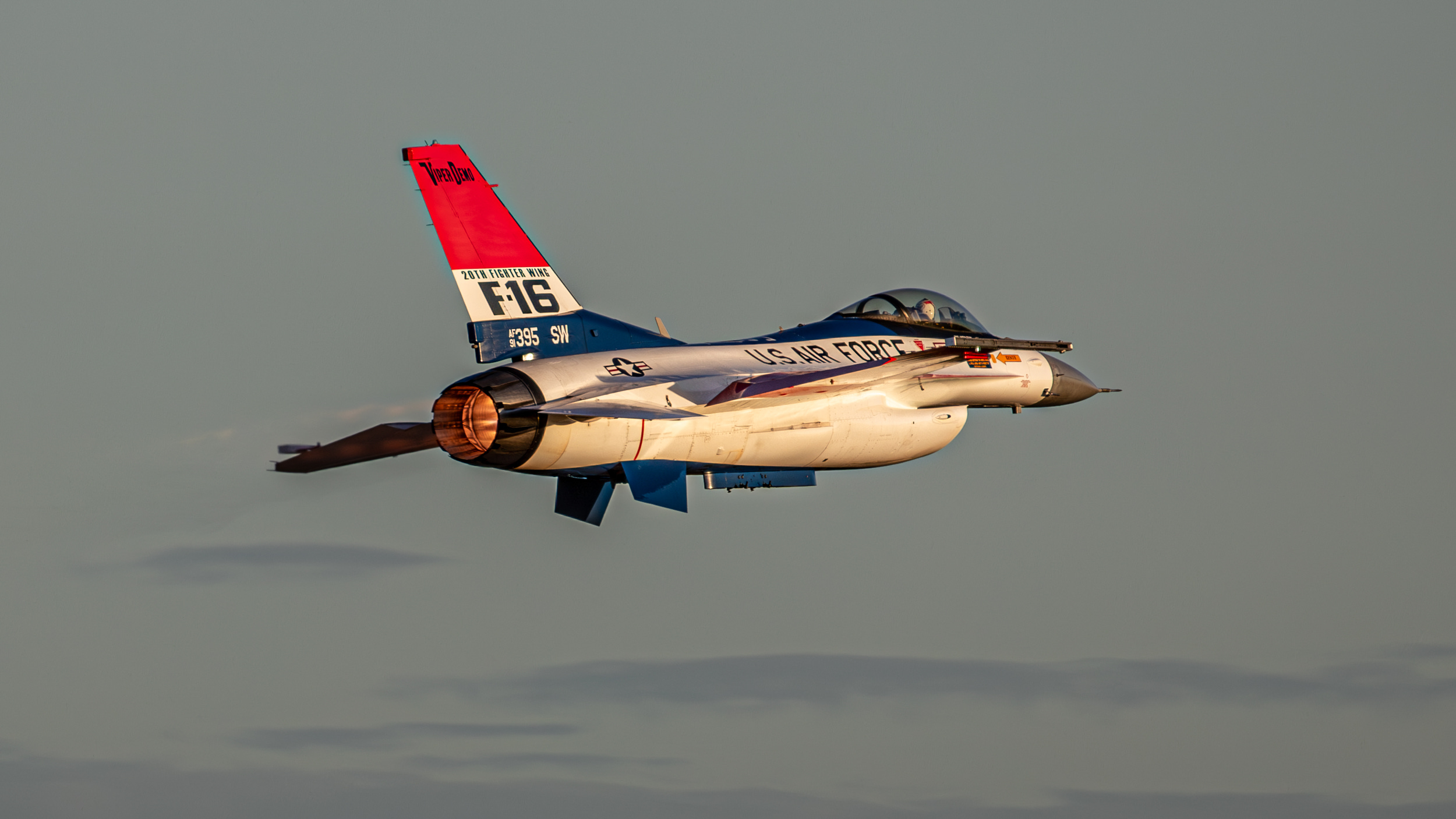
Feel free to use these photos however you like. If you choose to tag me, I am @pilotphotog on all social platforms. Thanks!
Post Flight Debrief
Like what you’re reading? Stay in the loop by signing up below—it’s quick, easy, and always free.
This newsletter will always be free for everyone, but if you want to go further, support the mission, and unlock bonus content like the Midweek Sortie, consider becoming a paid subscriber.
Your support keeps this flight crew flying—and I couldn’t do it without you.
– Tog