

“Now in our 5th week of the campaign, it is my operational assessment that we are making undeniable progress. We don’t see their navy sailing. We don’t see their aircraft flying, and their air and missile defense systems have largely been destroyed.”
—CENTCOM Chief Adm. Brad Cooper
Mission Briefing
Fifteen years after a secretive U.S. RQ-170 Sentinel crash-landed in Iran, its mysterious clone finally met its end; caught in a cinematic explosion captured by CENTCOM’s cameras. The footage, straight out of an action flick, shows the destruction of this stealthy doppelgänger, easy to spot thanks to its compact flying-wing shape and those quirky twin humps on its wings. Like a scene from a high-stakes spy drama, the saga of the Iranian-made Sentinel closes with a bang, not a whisper.
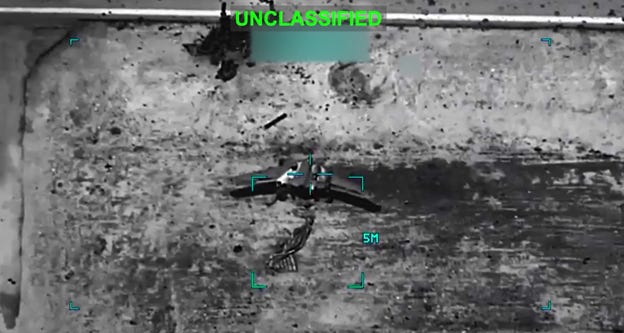
Iranian-made Sentinel Destroyed in U.S. Strikes
Since the RQ-170 crash landing, Iranian engineers have reverse-engineered and tweaked their own versions of the drone, occasionally rolling them out in IRGC promo videos during their annual Strait of Hormuz exercises; showcasing a blend of bravado and technical prowess.
But in a recent CENTCOM video that feels straight out of an espionage thriller, we see one of these Sentinel clones, along with a light tactical vehicle and a surface-to-air missile launcher—possibly a Servom Khordad or Ra’ad, both Iranian spins on the Russian Buk-M2—lined up in the crosshairs.
The footage is pure cinematic suspense: targets are painted with a pulsing laser, likely courtesy of an MQ-9 Reaper’s electro-optical sensor, as the camera hones in for the kill. Moments later, precision-guided munitions like the GBU-12 or GBU-49 Paveway II, or maybe even an AGM-114 missile, streak in.
Explosions light up the frame, but for all the drama, there’s a twist; the SAM system’s destruction doesn’t trigger the telltale secondary blasts you’d expect from a live warhead or propellant. The video cuts away before the smoke clears, leaving us with a cliffhanger: were these real targets, or just decoys meant to draw fire?
CENTCOM chief Adm. Brad Cooper, sounding every bit the calm pilot after a successful sortie, declared, “We are making undeniable progress. We don’t see their navy sailing. We don’t see their aircraft flying, and their air and missile defense systems have largely been destroyed.”
In the ongoing campaign, the line between reality and showmanship is as thin as the drone’s shadow over the desert.
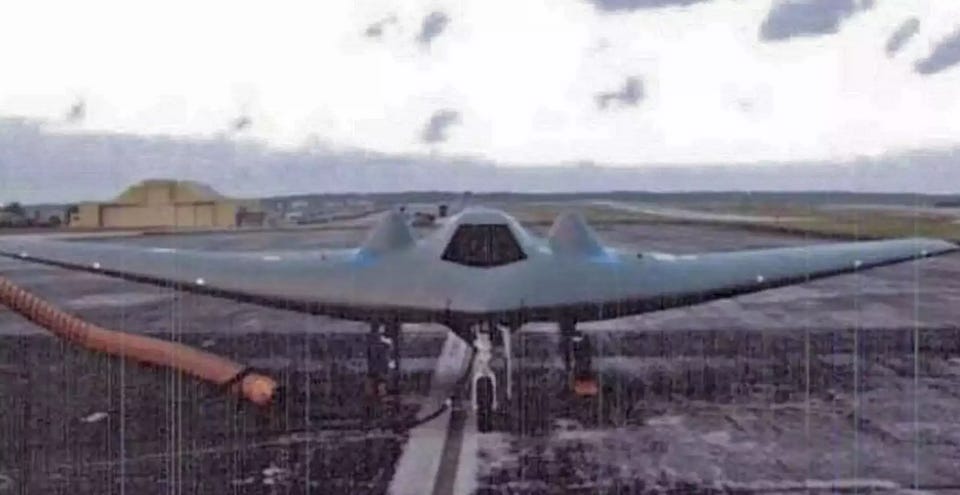
The American RQ-170 Sentinel and its Iranian Counterpart
The aircraft spotlighted in the recent footage carries a legacy stretching back to December 2011, when an American RQ-170 Sentinel—flying a covert mission near Afghanistan—unexpectedly ended up in Iranian hands.
Iranian officials insisted they’d used electronic warfare wizardry to hijack the drone’s navigation, while others quietly chalked it up to a possible technical hiccup. Either way, Tehran got its hands on one of America’s most elusive recon drones, a low-observable marvel built for peering into hostile territory from high above, bristling with sensors and wrapped in radar-evading curves.
The RQ-170, a product of rapid innovation from Lockheed Martin’s famed Skunk Works and the U.S. government, was designed to collect crucial battlefield intelligence. Pilots from Air Combat Command’s 432nd Wing at Creech Air Force Base and the 30th Reconnaissance Squadron at Tonopah Test Range have been flying these stealthy birds since 2007, delivering eyes-in-the-sky support to commanders around the globe.
Fast-forward to 2014, and Iran rolled out what it claimed was a homegrown copy—the Shahed-171 Simorgh—showcasing the drone in parades and promotional reels. Iranian footage over the years has revealed a cottage industry of reverse-engineered Sentinels, assembled from composite materials, packed with custom electronics, and even sporting both propeller and jet-powered variants.
While these Iranian drones looked smaller and simpler than their American muse, the resemblance was unmistakable, right down to their flying-wing silhouettes. The family grew to include the nimbler Shahed-191 Saeqeh and other offshoots, with propaganda clips showing launches from flatbeds and supposed regional missions, though Western analysts remain skeptical about their real combat punch.
So when CENTCOM’s video captures the destruction of an Iranian Sentinel clone, it’s more than just a single strike. It’s a snapshot of a technological relay race. High-tech designs leap borders, get reimagined and rebuilt, only to find themselves back in the crosshairs years later, shaping the evolving drama of twenty-first-century aerial warfare.
More than a Drone Kill
The reported takedown of an Iranian RQ-170 clone isn’t just another notch on CENTCOM’s scoreboard. It’s a high-stakes signal flare to both friends and rivals.
In striking not only launchers and ammo dumps but also one of Iran’s more advanced flying-wing drones—born from the infamous 2011 Sentinel incident—the U.S. is showing it’s willing to go after the brains of the operation, not just the fists.
This drone wasn’t a random target: it was a deliberate hit on the backbone of Iran’s surveillance and air defense web.
For U.S. allies, especially those counting on clear shipping lanes and strong deterrence, the strike is double-edged. It reassures them that Washington can still find and swat down high-value tech, but it’s also a wake-up call; proof that Iran has come a long way since capturing that American drone, spinning it into a whole fleet of homegrown operators.
This is more than just a flashy explosion on a desert plain; it’s a reminder that adversaries have their own playbook, learning and adapting with every encounter.
So, while the dust settles and analysts pore over the footage, the real story is about what comes next. Is this a one-off victory, or just the opening scene in a bigger campaign aimed at blinding and dismantling the surveillance-strike networks underpinning Iran’s regional ambitions? Only time—and the next chapter—will tell.
This Week in Aviation History
In April 1943, American codebreakers cracked Japanese naval transmissions and uncovered the travel itinerary of Japan’s top admiral—the architect of Pearl Harbor. With this intelligence, the stage was set for a dramatic payback mission straight out of a wartime thriller.
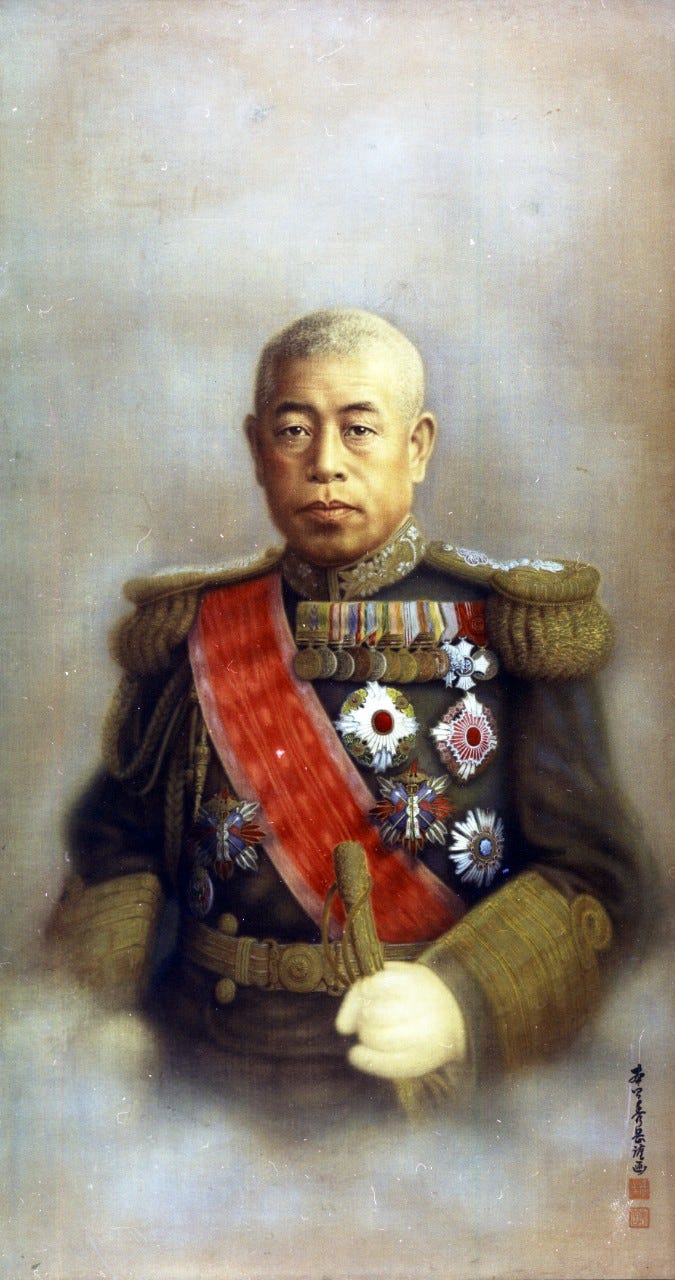
The Killing of Isoroku Yamamoto
Operation Vengeance reads like a page torn from a wartime thriller, set in motion on April 18, 1943, when the U.S. set out to intercept and kill Admiral Isoroku Yamamoto: the mastermind behind Pearl Harbor and the face of Japanese naval power.
This was no ordinary mission: it was a masterclass in intelligence-enabled air warfare, blending codebreaking sleuth work, bold long-range fighter tactics, and split-second timing to strike at a target whose loss would shake the Japanese war effort.
The whole operation hinged on a single decrypted Japanese message, a rare stroke of luck that revealed Yamamoto’s Solomon Islands inspection itinerary down to the minute—departure time, route, destination, even the makeup of his flight.
The Americans instantly grasped the magnitude of the opportunity, but also the risk: acting too obviously could tip off the Japanese that their codes were cracked, jeopardizing a priceless intelligence advantage.
With Yamamoto deep inside enemy territory, only the P-38 Lightnings of the 339th Fighter Squadron had the range for the job. Major John W. Mitchell led his squadron on a demanding overwater approach, navigating with the precision of a watchmaker to avoid detection and reach the ambush point at just the right moment.
When Yamamoto’s two twin-engine bombers, protected by fighter escorts, appeared near Bougainville, the Americans struck. In the ensuing dogfight, both bombers were shot down. Yamamoto died in the jungle, his death shrouded in subsequent Japanese censorship and American mythmaking.
For Japan, the loss was a thunderbolt; for the U.S., it was a symbolic victory, proof that American reach could extend into the enemy’s inner sanctum.
Yet the story didn’t end with the dogfight. Decades of debate followed over who fired the fateful shots. Captain Thomas Lanphier was credited, but Rex Barber and others long contested the claim, showing how the fog of war can leave even legendary missions with unresolved details.
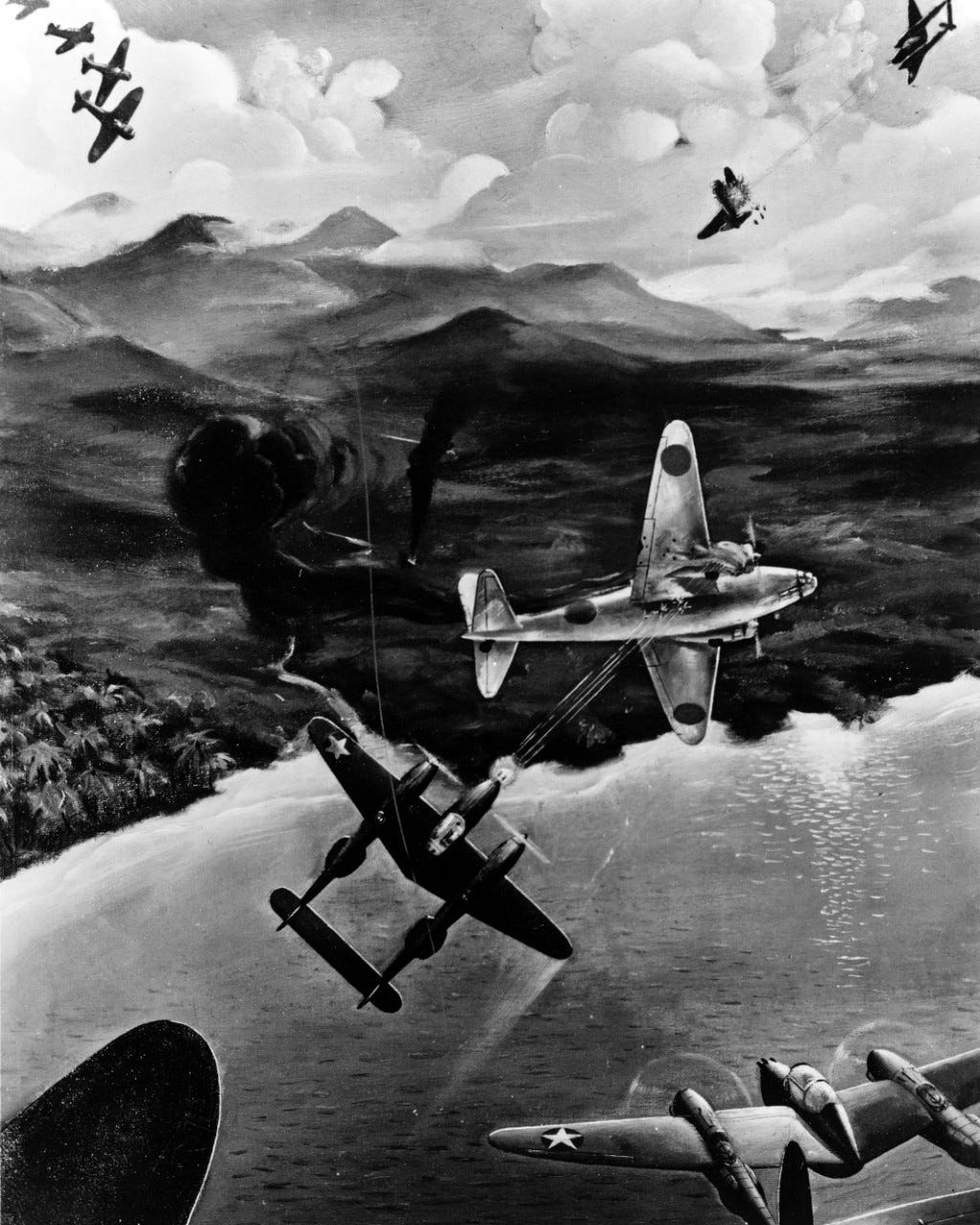
The Anatomy of the Killer Lightning
The P-38 Lightning took shape as a bold experiment in twin-engine interceptor design, its sleek lines and twin booms promising both speed and innovation. Back in February 1939, Lt. Ben Kelsey rocketed a prototype across the country in a record-shattering 7 hours and 48 minutes; a feat that ended with a crash landing, but didn’t stop the Lightning’s momentum.
Development pressed on, and by September 1940, the first batch of YP-38s was in the air. Early models had their share of quirks—turbulent airflow over the tail and scary moments at high dive speeds, where compressibility threatened to tear the aircraft apart—but persistent engineering ironed out those wrinkles.
The P-38E marked the Lightning’s first major production run, swapping out the original 37mm cannon for a 20mm powerhouse and rolling off the line in late 1941. The P-38F followed, adding pylon racks for bombs or drop tanks, stretching the Lightning’s legs for long-range missions.
More tweaks came with the P-38G and H, the latter packing an upgraded Allison engine for extra punch. By August 1943, the P-38J arrived with cockpit heating (a godsend in icy altitudes), improved engine cooling, a flat bulletproof windscreen, more wing fuel, and sharper handling.
Versatility was the Lightning’s calling card. It could dive bomb, level bomb, strafe, snap photos, or escort bombers deep behind enemy lines. The Germans dubbed it “The Forked-Tail Devil” when it debuted in North Africa, and by September 1943, it was the only Allied fighter able to stick with bombers all the way to Germany.
But nowhere did the Lightning shine brighter than the Pacific, where its range and firepower made legends of seven of the top eight USAAF aces. Most famously, it was P-38s that hunted down Admiral Yamamoto in 1943, turning aviation history on its head. Until the war’s final days, the P-38 was the USAAF’s go-to fighter in the Pacific skies.
Operation Vengeance’s Legacy
Imagine the Pacific, 1943: Operation Vengeance unfolds not just as a clandestine shootout, but as a cinematic collision of brains, nerve, and timing. This wasn’t your average dogfight.
It was the moment when American codebreakers cracked the secret itinerary of Admiral Yamamoto, architect of Pearl Harbor, and turned raw intelligence into a high-stakes, pinpoint strike deep in enemy skies. Suddenly, the rules changed: with the right intel, even the most elusive figure could be hunted down, no fortress too far.
Yamamoto’s downing was a thunderclap, echoing far beyond the cockpit. In the U.S., it became a banner moment of payback and pride; in Japan, it was a shockwave that rattled the highest command, a reminder that war’s reach can be personal and precise. This single mission rewrote the playbook. Airpower wasn’t just about blowing things up, but sending a message, shifting psychology, and proving a nation’s resolve.
But the story doesn’t end in the jungle. Operation Vengeance lit a fuse that burns into today’s headlines, sparking debates about the ethics of targeting leaders, the risks to secret sources, and how we gauge the true cost of a ‘decapitation strike.’
From the South Pacific to the corridors of modern power, it’s a reminder: the might of air warfare isn’t just in destruction, but in the audacity to find, reach, and reshape the future from the sky.
In Case You Missed It
Photo Outlet
Every issue of Hangar Flying with Tog gets you a free image that I’ve taken at airshows:
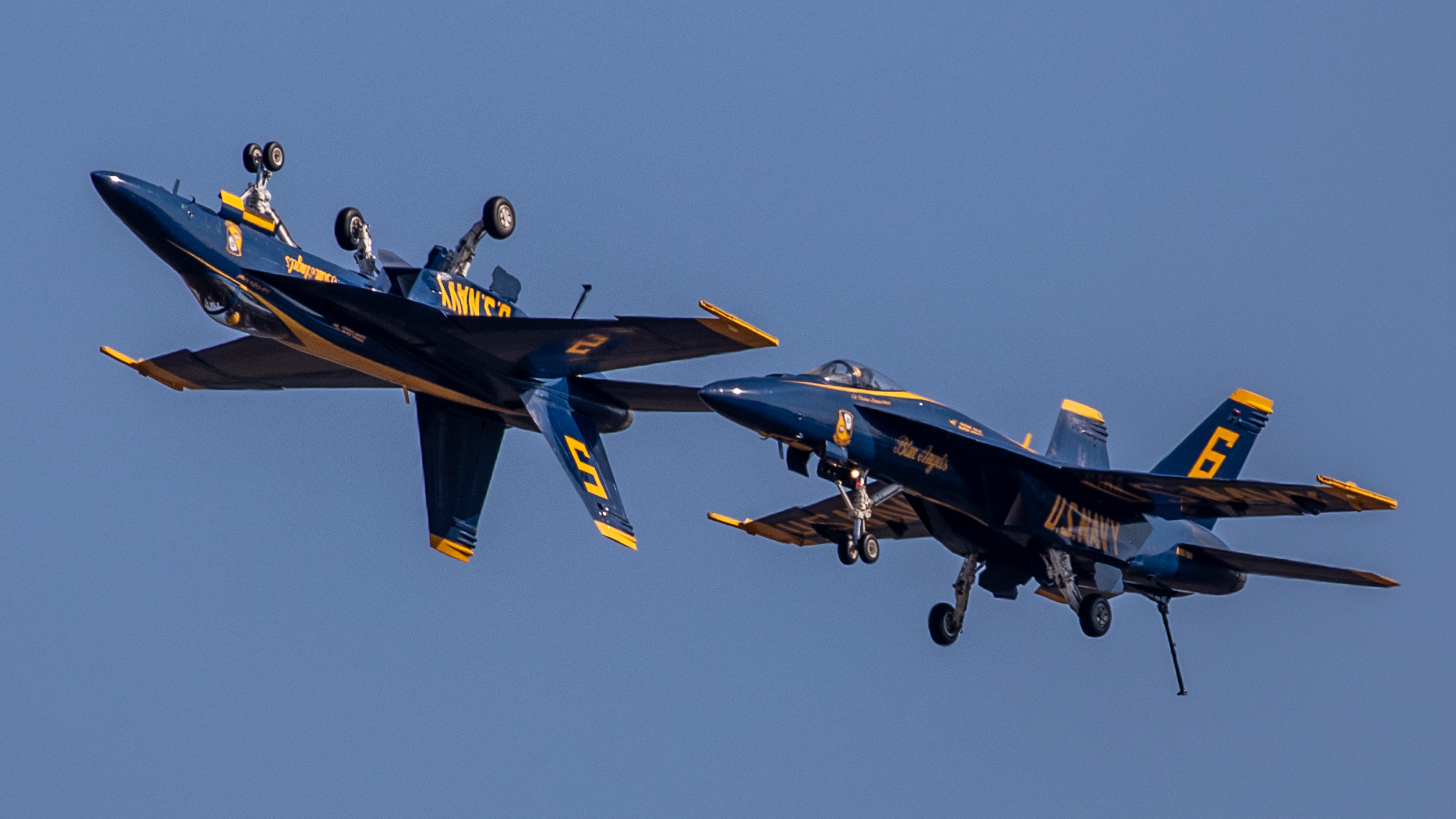
Feel free to use these photos however you like. If you choose to tag me, I am @pilotphotog on all social platforms. Thanks!
Post Flight Debrief
Like what you’re reading? Stay in the loop by signing up below—it’s quick, easy, and always free.
This newsletter will always be free for everyone, but if you want to go further, support the mission, and unlock bonus content like the Midweek Sortie, consider becoming a paid subscriber.
Your support keeps this flight crew flying—and I couldn’t do it without you.
– Tog