

U.S. Nuclear Expansion to Europe and the Superfortress Bombing of Japan
From the Pacific skies of the B-29 to NATO’s nuclear shield over Europe, airpower still turns distance into deterrence and reach into a warning.
US officials have signalled openness to talks that would potentially allow more countries to host its dual-capable aircraft, which are able to deliver nuclear strikes.
—Financial Times
Mission Briefing
According to the Financial Times, word is swirling that the U.S. is deep in talks with NATO buddies—especially Poland and those plucky Baltic states—about beefing up the Air Force’s nuclear presence in Europe. Picture tense briefings, maps sprawled across tables, and the hum of strategy in the air. It’s the kind of high-stakes negotiation that would feel right at home in a Cold War thriller, but with a modern, cockpit-casual twist.
Nuclear Wings over Europe
Let me take you up to 30,000 feet and give you a bird’s-eye view of the nuclear chessboard in Europe, a landscape that’s as cinematic as it is high-stakes. Right now, there’s an exclusive club of host nations. Think Belgium, Germany, Italy, the Netherlands, Turkey, and the UK, each playing host to U.S. nuclear bombs.
Under the broader NATO war plan, these weapons can be delivered not only by American pilots but, in some cases, by specially trained local crews. The UK, for its part, made a dramatic return to this club when it welcomed nuclear weapons back to RAF Lakenheath, ending a hiatus that started in 2008. Picture the scene: hardened bunkers, the quiet thrum of security systems, and a sense of history circling overhead.
But the script is changing. With Russia’s war on Ukraine rewriting the security calculus, NATO’s eastern flank. Poland and the Baltic states of Latvia, Lithuania, and Estonia are stepping into the spotlight.
For them, proximity to the Russian border isn’t just a line on a map; it’s a daily reality, with the distant rumble of artillery never far from mind. Now, according to reports, they’re considering joining the nuclear sharing initiative, a move that would see U.S. bombs stationed on territory that, not so long ago, was firmly behind the Iron Curtain.
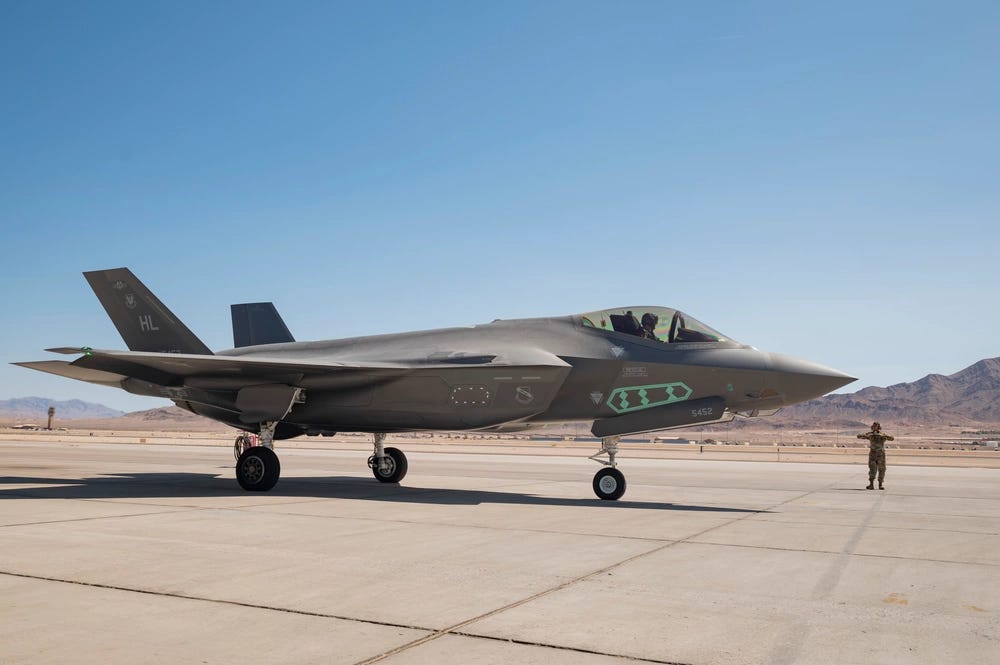
For Poland, in particular, the prospect is tangible. They fly both F-16s and the cutting-edge F-35, making them prime candidates for joining the elite group of nations cleared to deliver American nukes.
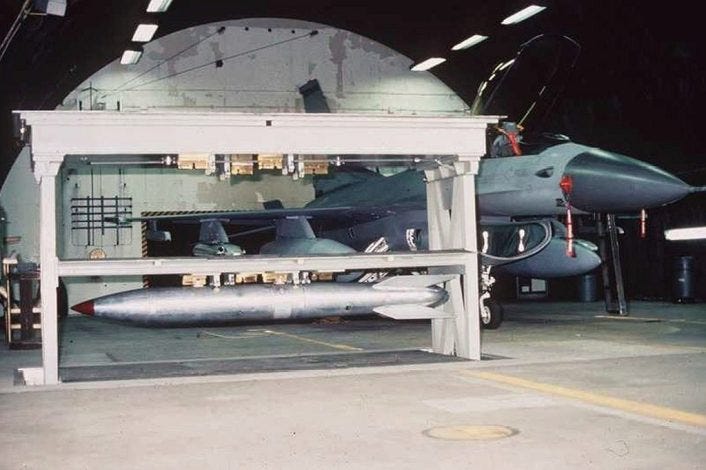
If this expansion were to happen, it’d be historic. A first for U.S. nuclear weapons to take up residence in former Warsaw Pact countries. Imagine: the very same B61 bombs, first fielded in the 1960s, potentially deployed to bases that, decades ago, would have been targets on old Cold War maps.
Of course, don’t expect a Hollywood-style arrival overnight. Even in the UK, where the infrastructure was already in place, years passed between the initial talks and the actual return of the weapons. For Poland or the Baltics, vaults (armored, tech-laden, and bristling with security systems) would have to be built from scratch before a single bomb touched down.
And there’s another wrinkle in the plot. Poland, along with other NATO partners, has signed on to France’s vision of a beefed-up French nuclear force. This could mean Rafale jets, armed with French nukes, rotating through other countries and more invitations to join France’s high-drama nuclear exercises. In the ever-shifting theater of European security, the cast keeps growing, and the stakes are higher than ever.
Major Reason Behind Expansion
Soaring above the shifting landscape of U.S. military strategy, you can see the tension playing out like a scene from a geopolitical thriller. The Trump administration has made it clear: the U.S. wants to pull some of its forces out of Europe, a move that’s got allies glancing nervously at their maps.
But here’s the twist. While boots on the ground may be on the way out, the Pentagon is weighing the cinematic option of deploying more nuclear weapons to keep the strategic balance. Unlike conventional forces, these nukes require fewer personnel, letting Washington trim its military footprint while still reassuring European partners that the cavalry (or at least the bombers) are never too far away.
As NATO allies brace themselves for the official word on troop withdrawals, the numbers are making headlines. Germany alone could lose up to 5,000 U.S. personnel, cutting deep into the American presence there.
Over in Poland, a planned rotation of 4,000 troops was suddenly called off, stirring up political drama from Warsaw to Washington. The decision was eventually reversed, with President Trump personally greenlighting a new deployment, but the whiplash left allies wary of the unpredictable winds blowing from D.C.
The repercussions ripple far beyond Europe. When the U.S. dragged its feet on a visa waiver for Bulgarians, Prime Minister Rumen Radev threatened to send U.S. forces packing, including the aircrews at Sofia International who support Operation Epic Fury. Europe isn’t just a backdrop; it’s a vital launchpad for missions stretching into the Middle East.
If countries start closing their doors, the U.S. Air Force—already hustling to keep its vast airlift fleet moving—could find its options for refueling and stopovers narrowing fast. In this high-altitude chess match, every move counts, and the room for error is getting tighter by the day.
NATO’s Nuclear Shield Takes Flight
What was once a holdover from Cold War days is now morphing into a more active response to Russia’s pressure campaign on Europe. The latest talks are about moving beyond the old nuclear-sharing playbook: Poland and the Baltic states are now in the frame as potential hosts for dual-capable jets that could carry U.S. bombs, not just the usual suspects farther west.
For NATO’s eastern members, the subtext is clear. They want real, visible proof that the American nuclear umbrella covers them too. NATO keeps emphasizing that dual-capable aircraft are the backbone of its nuclear deterrent, with Washington still firmly in charge of the bombs. Poland and Lithuania have admitted they’re in discussions about taking on a bigger role, though Poland says no nukes are coming just yet.
From the U.S. side, it’s about showing extended deterrence: even if conventional forces shift, Moscow needs to know that attacking NATO would mean consequences. The F-35A’s new certification to carry the advanced B61-12 bomb gives NATO a slick, stealthy way to deliver its message, making the deterrent posture more credible than ever.
But there’s turbulence ahead. Any expansion could be seen as provocation by Russia, and allies would need to invest in secure bases and political buy-in. With over 100 B61 bombs already on the continent, this isn’t just symbolism. It’s a real shift in NATO’s nuclear footprint, and a signal that Europe’s next airpower story might be about building a broader, modernized nuclear shield.
This Week in Aviation History
15, June 1944: The first American raid on Yawata kicked off the bold campaign to bomb Japan’s home islands from the skies. Sure, it wasn’t a smashing victory, but it proved those mighty B-29s could cross oceans and strike at the heart of enemy territory. It was the opening scene in a new chapter of aerial warfare—risky, relentless, and just getting started.
Superfortress Bombing of Japan
Back in the wild, uncertain dawn of the Pacific War, the Japanese swept across the map with the force of a tidal wave, seizing islands and outposts at a pace that left Allied commanders scrambling.
Every day, the enemy’s reach grew longer, their strongholds inching closer to the American dream of striking back. The U.S. had bombers, legendary birds like the B-17 Flying Fortress and the B-24 Liberator. But these old workhorses just didn’t have the legs for the job. The Pacific was simply too wide, its blue expanse swallowing any hope of a sustained bombing campaign on Japan’s doorstep.
Then, on the distant horizon, came the promise of something extraordinary: the Boeing B-29 Superfortress. This wasn’t just another bomber. It was an engineering marvel, a beast born from the fevered ambition of Army brass who’d been eyeing high-altitude, long-range bombers since 1938.
Before the prototype even left the ground, the Army ordered 250 of these giants from Boeing, betting the farm on a machine that would outclass anything in the skies.
When the XB-29 finally roared down the runway in September 1942, it was like something out of a pilot’s wildest dreams: nearly 100 feet long, a wingspan stretching further than a city block, and weighing in at over sixty tons when loaded for bear. Four Wright Duplex Cyclone engines, each one a snarling powerhouse, could sling the Superfortress through the clouds at up to 375 miles per hour.
Inside, the crew of eleven cruised at altitudes above 30,000 feet in pressurized comfort, while the defensive turrets bristled with .50-caliber machine guns. Best of all, she could carry a staggering ten tons of bombs, enough to leave a mark on any target below.
At first, the brass thought about sending these beauties to Europe. But by the time the B-29s were ready for action, the skies over Germany were already thick with Allied bombers. It was in the Pacific, against Japan, that the Superfortress would write its legend.
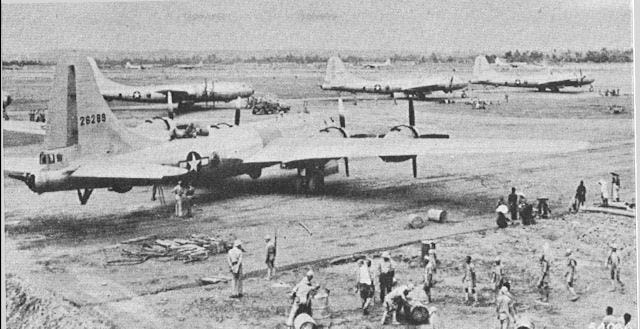
General H. H. Arnold, a man whose mind soared as high as his bombers, knew the challenge: U.S. bases in the Aleutians were too far, and the vital Mariana Islands weren’t yet in American hands. The solution was bold, base the B-29s in India, then leapfrog them over the treacherous Himalayas (the infamous “Hump”) to airfields in China, finally putting Tokyo within reach.
President Roosevelt, playing the long game, quickly approved the plan—Operation Matterhorn—in late 1943, eager to keep China’s leader, Chiang Kai-shek, in the war and give Japan a taste of what was coming. For the aviators at the tip of this spear, the very idea of a globe-spanning bombing force was the stuff of legend. The B-29 was their Excalibur.
By spring 1944, the Twentieth Air Force was formed, with Arnold at the helm and the Superfortress its crown jewel. Command was tight: no ground general, British or American, could touch the B-29s except in a true emergency. Supplies for the Chinese bases had to be flown in, often requiring seven round trips from India just to deliver enough fuel for a single bombing mission.
With the Seventy-third Bombardment Wing reassigned to the Marianas, the remaining Fifty-eighth Wing could only muster full-scale raids a few times a month; hampered by teething troubles, engine failures, and green crews pushing a brand new machine to its limits.
It wasn’t until 15 June 1944, after months of sweat, setbacks, and sky-high hopes, that the first B-29s finally lifted off for their inaugural raid on Japan.
Under the Hood of the Superfortress
The B-29 was dreamed up in 1940 as the next leap beyond the B-17 and B-24. By September 1942, she soared on her maiden flight, a gleaming promise of what was to come. Fast forward to December 1943, and the U.S. Army Air Forces brass decided Asia was where this long-range titan would shine, especially for those marathon flights over the Pacific toward Japan.
By the end of 1944, B-29s thundered off runways on Saipan, Guam, and Tinian, bringing the war right to Japan’s doorstep. When the Korean War erupted in June 1950, the Superfortress was called back into action, ready for another round.
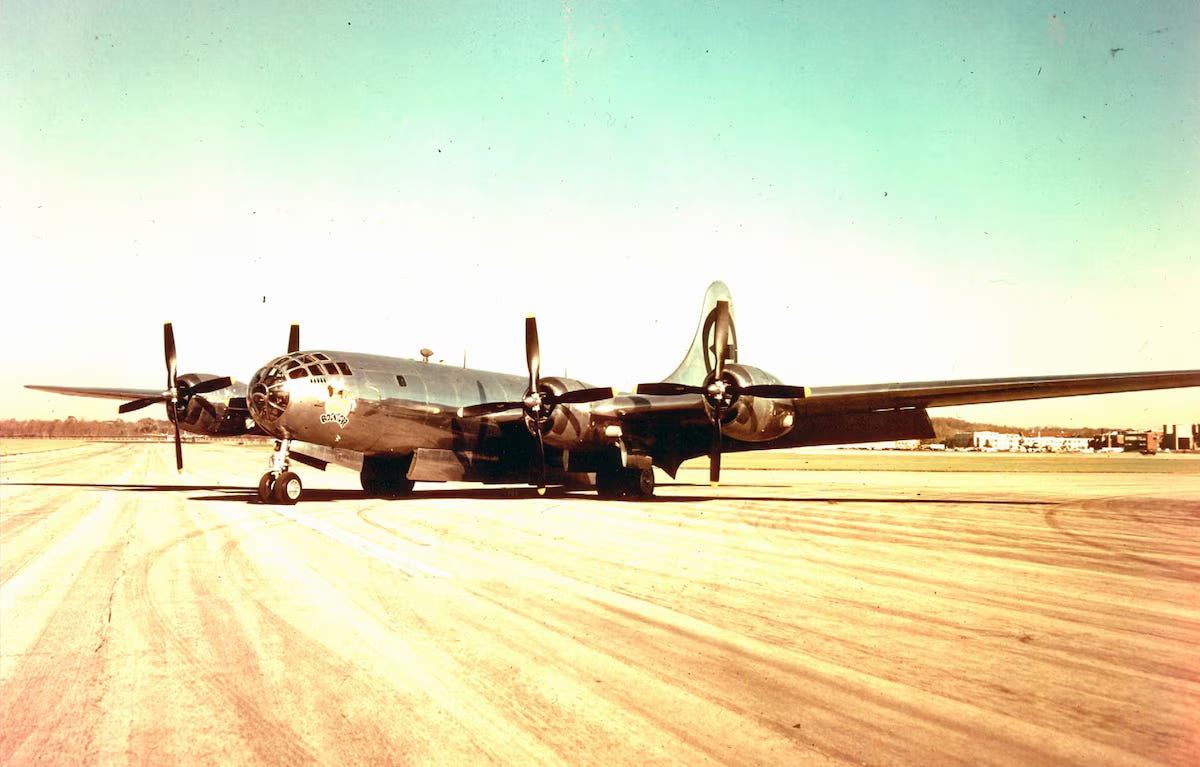
She had her share of close calls, dodging MiG-15 jets, but still packed a punch against a variety of enemy targets. One storied B-29, Bockscar, wrapped up her journey with a final flight to the museum on September 26, 1961. That marked the close of an era, but her legend still echoes across aviation history.
TECHNICAL NOTES:
Armament: Eight .50-cal. machine guns in remote controlled turrets plus two .50-cal. machine guns and one 20mm cannon in tail; 20,000 lbs. of bombs
Engines: Four Wright R-3350s of 2,200 hp each
Maximum speed: 357 mph
Cruising speed: 220 mph
Range: 3,700 miles
Ceiling: 33,600 ft.
Span: 141 ft. 3 in.
Length: 99 ft.
Height: 27 ft. 9 in.
Weight: 133,500 lbs. maximum
Serial number: 44-27297
B-29s Beyond the Horizon
The true legacy of the 15 June 1944 B-29 Superfortress raid on Yawata isn’t found in the battered buildings or twisted metal. It’s in the new era it launched. That night, American bombers clawed their way from India, through makeshift bases in China, to finally touch the Japanese homeland with a weapon the world had never seen: the very-heavy bomber.
Clouds, balky engines, and the vast stretch of ocean and mountains made the raid less deadly than hoped, but that wasn’t the real story. The real shockwave hit when Japan realized that nowhere was out of reach anymore.
Yawata was the first lightning flash before the storm. It showed the awesome potential of strategic bombing in the Pacific. The B-29s could fly high, fly far, and carry mountains of bombs, but they also needed rivers of fuel, expert crews, and bases that were never close enough. Operation Matterhorn laid bare the logistical mountain to climb, with every drop of fuel having to cross the Himalayas before a single bomber could launch.
Still, the raid gave the B-29 force its baptism by fire, teaching hard lessons that would shape the relentless air assaults from the Marianas later on. Yawata’s legacy is one of transformation: from a daring experiment to a full-force campaign, from desperate logistics to airpower dominance, and from Japan’s sense of safety to the undeniable fact that distance was no longer a shield.
It ushered in a new age in which long-range bombers, forward bases, and cutting-edge tech rewrote the rules of war from the sky. Even now, with stealth jets, nuclear bombers, and drones prowling the horizon, the message endures: in airpower, whoever owns the long arm of reach sends the first—and loudest—warning before the fight begins.
In Case You Missed It
Photo Outlet
Every issue of Hangar Flying with Tog gets you a free image that I’ve taken at airshows:
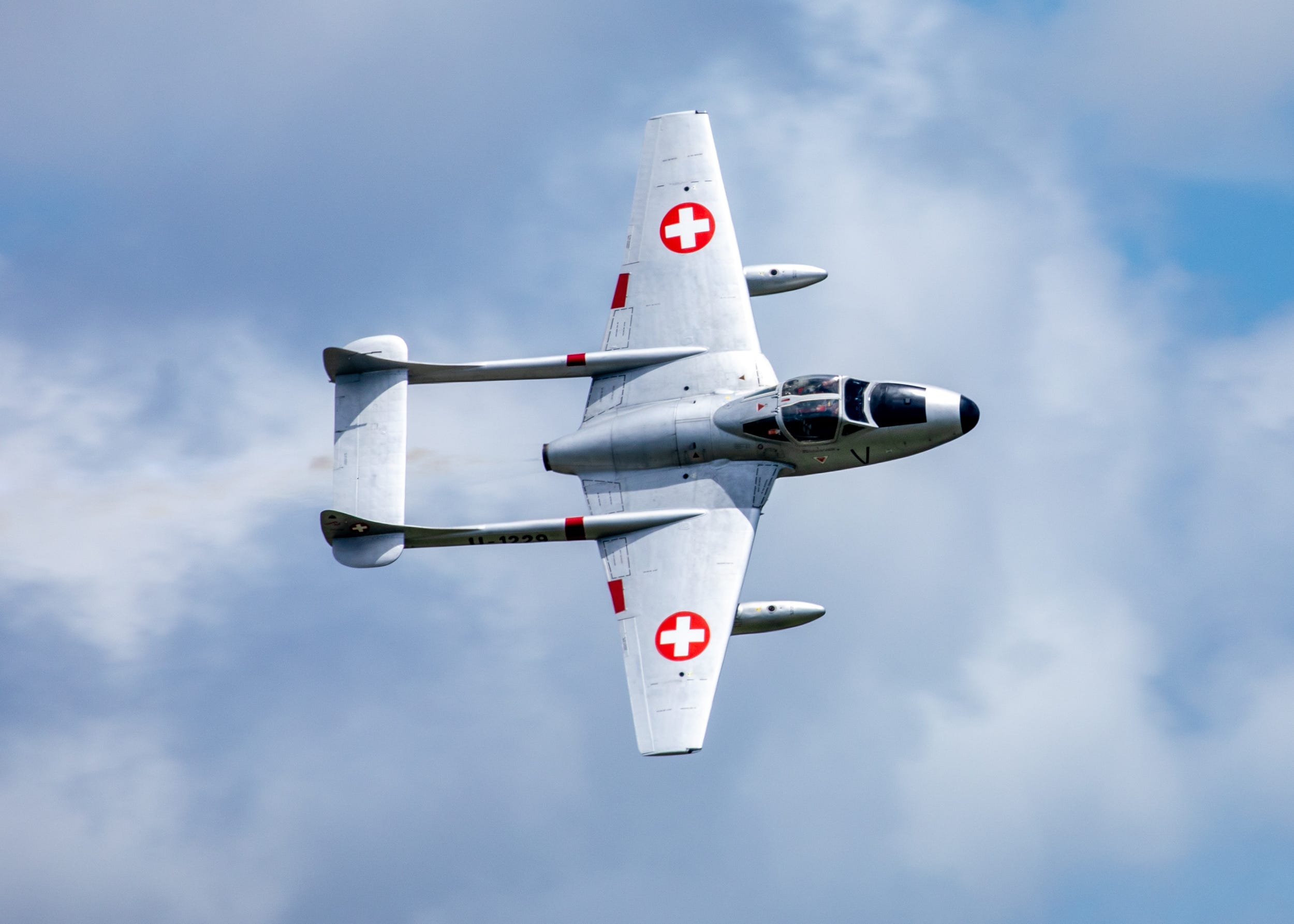
Feel free to use these photos however you like. If you choose to tag me, I am @pilotphotog on all social platforms. Thanks!
Post Flight Debrief
Like what you’re reading? Stay in the loop by signing up below—it’s quick, easy, and always free.
This newsletter will always be free for everyone, but if you want to go further, support the mission, and unlock bonus content like the Midweek Sortie, consider becoming a paid subscriber.
Your support keeps this flight crew flying—and I couldn’t do it without you.
– Tog