

US Approves the Poseidon Sale to Singapore and Looking Back at the Boeing 747’s First Flight
From the jumbo jet that made the world easier to cross to the Poseidon that helps keep key sea lanes secure, airpower’s biggest moments are the ones that expand reach and reshape the network
“This proposed sale will enhance the foreign policy and national security objectives of the United States by improving the security of a strategic partner that is an important force for political stability and economic progress in Asia.”
—Defense Security Cooperation Agency
Mission Briefing
Big news on the horizon: The U.S. has greenlit a $2.3 billion deal to deliver up to four Boeing P-8A Poseidon patrol jets and MK 54 torpedoes to Singapore. Congress received the official heads-up on January 20, 2026.
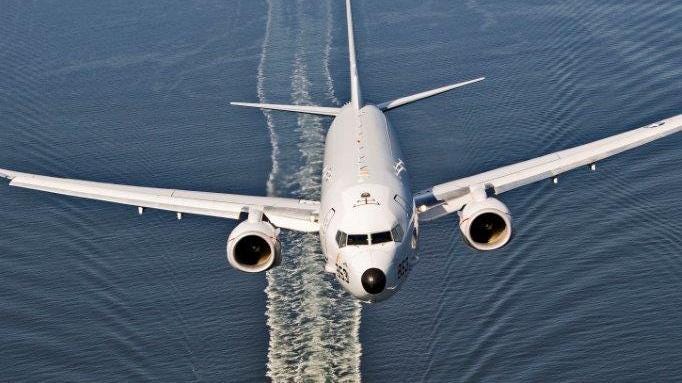
Poseidon Cleared: Singapore’s Maritime Shield
The U.S. State Department’s approval of a Foreign Military Sale to Singapore marks a pivotal chapter in the island nation’s journey to modernize its maritime patrol fleet.
While the ink is not yet dry on a final contract, this green light signals a new era for Singapore’s airborne maritime security, a mission that has been evolving for years.
The planned acquisition? Up to four Boeing P-8A Poseidon aircraft, poised to take over from the five aging Fokker 50s that have watched over Singapore’s waters since 1993.
Peering into the details, the Defense Security Cooperation Agency (DSCA) outlines a robust package: not just the four P-8As, but also a full arsenal of sensors, defensive suites, mission software, and logistics support.
Eight MK 54 Mod 0 lightweight torpedoes are included in the deal, all primed for anti-submarine warfare.
The package is thorough, think Guardian Laser Transmitter Assemblies for missile warning, cutting-edge electro-optical and infrared systems, acoustic arrays, advanced AN/APY-10 radar, and early warning management. It’s a technological leap worthy of the Poseidon’s reputation.
Boeing, the Poseidon’s manufacturer, will helm the aircraft delivery, while the majority of torpedoes will come straight from existing U.S. Navy stocks. A small army of subcontractors, already in step with the Navy, will provide the remaining components and support.
Alongside the hardware, Singapore will receive the usual U.S. government and contractor engineering, technical, and logistics support—ensuring the transition is as smooth as a well-executed carrier landing.
Though timelines remain unconfirmed, history suggests the first Poseidon might touch down in Singapore around 2029 or 2030, ready to take its place at Changi (West) Air Base.
That’s the same airfield where the Fokker 50s have long operated, not only for national defense but as part of the “Eyes in the Sky” patrols—a regional effort spanning Indonesia, Malaysia, and Thailand to keep a watchful gaze over vital sea lanes.
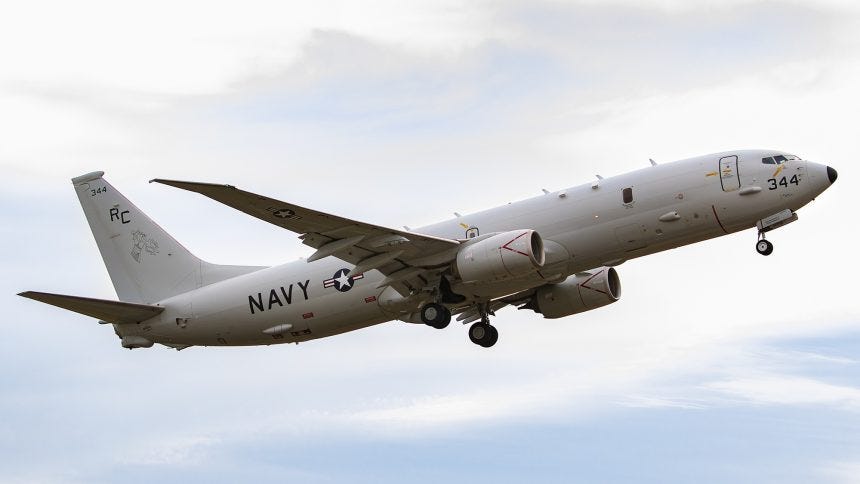
Singapore’s Ministry of Defence weighed its options, considering both the Poseidon and Airbus’s C-295 maritime patrol variant, before announcing the P-8A selection after a high-profile visit to the Pentagon in September 2025.
Unveiling Poseidon’s Edge
The P-8A Poseidon stands as the U.S. Navy’s sentinel of the seas—a multi-mission maritime patrol and reconnaissance aircraft built for the demands of a new era.
Designed to take the baton from the venerable P-3C Orion, the Poseidon brings together advanced technology and unmatched versatility, ready to hunt submarines across the open ocean, track hostile ships, gather vital intelligence, and sweep vast stretches of water in search and rescue missions.
What sets the P-8A apart is its blend of efficiency and power. With a leaner crew, it flies farther, carries more, and soars higher than its predecessor.
Its open-systems architecture means it can evolve with each new threat, and its payload options give commanders a flexible edge, whether patrolling lonely stretches of the littoral or scanning deep blue horizons.
Beneath its sleek frame, the Poseidon is packed with the latest tech. Synthetic aperture radar, an electro-optical and infrared sensor turret, and cutting-edge acoustic systems work in concert, allowing the crew to detect, classify, and engage targets above and below the waves, often simultaneously.
Its nimble software and hardware design keep it ready for future upgrades, ensuring it stays ahead of adversaries as anti-submarine warfare grows ever more complex.
The Poseidon is more than just an aircraft. It’s the linchpin of an evolving web of manned and unmanned systems, seamlessly interoperable with allied fleets and ready to respond wherever the mission calls.
With ongoing investments in training, maintenance, and capability upgrades, the P-8A is primed to keep watch, maintain the edge, and ensure that America’s maritime reach is always one step ahead.
Specifications
Propulsion: 2 CFM 56-7B engines with 27,300 lbs. thrust each
Length: 129.5 feet (39.47 meters)
Height: 42.1 feet (12.83 meters)
Wingspan: 123.6 feet (37.64 meters)
Maximum Gross Takeoff: 189,200 pounds (85,820 kilograms)
Crew: Nine
Armament: Torpedoes, cruise missiles
Contractor: Boeing Defense, Space and Security
Ensuring readiness across the board
For the U.S. and its allies, greenlighting Singapore’s potential $2.3 billion acquisition of up to four P-8A Poseidons and eight Mk 54 Mod 0 torpedoes is more than a sale. It’s a boost to shared security at one of the world’s busiest and most strategic maritime crossroads, where the Strait of Malacca meets the South China Sea.
This move accelerates Singapore’s leap from a handful of aging Fokker 50s to a new era of maritime patrol, enhancing not just national defense but regional cooperation—especially alongside Indonesia, Malaysia, and Thailand in the “Eyes in the Sky” joint patrols.
The approved package is packed with advanced gear: top-tier sensors like the AN/APY-10 radar, MX-20HD EO/IR systems, acoustic arrays, and layered defensive suites.
Together, they promise a dramatic upgrade in maritime domain awareness and anti-submarine warfare, all designed for seamless integration with U.S. and allied tactics.
By joining the P-8 community, Singapore will also streamline training, maintenance, and secure data-sharing—strengthening the connective tissue that holds coalition operations together.
Though the deal awaits a final contract and delivery won’t likely begin until 2029 or 2030, the approval alone signals deepening trust and partnership.
In the coming years, watch for Singapore’s Poseidons to turn that promise into persistent patrols, tighter data links, and a more resilient allied sensor web—proving that in today’s contested seas, victory belongs to those who see first and share fastest.
This Week in Aviation History
Over fifty years ago, in 1969, the Boeing 747 thundered into the sky for its very first flight. Its towering tail is as high as a six-story building, capturing everyone’s awe on the ground. That day wasn’t just a test flight; it was the birth of the jumbo jet era, a bold leap that forever changed the horizon of aviation.
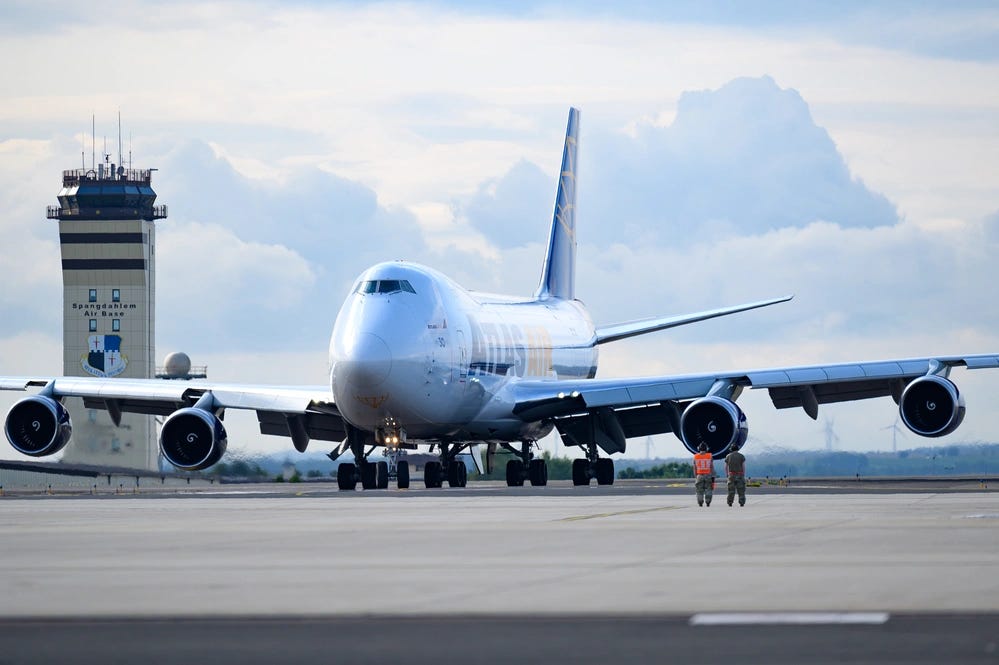
City of Everett’s Maiden Flight
Bearing the registration N7470 and proudly nicknamed the “City of Everett,” the very first Boeing 747 to leave the assembly line was destined for greatness, even before its wheels ever left the ground.
This was the test-bed, the prototype that would shoulder the hopes of a new era in flight. On the morning of February 9, 1969, excitement crackled in the chilly air at Everett’s Paine Field as crowds gathered to witness history in the making.
At the helm was Boeing’s Chief Test Pilot, Jack Waddell, a steady hand chosen for this monumental task. Beside him sat Engineering Test Pilot Brien Singleton Wygle and Flight Engineer Jesse Arthur Wallick—a trio entrusted with the fate of the world’s first true jumbo jet.
The weather toyed with anticipation, gray and brooding at dawn, but as 11:20 approached, clouds parted, and the runway shimmered with possibility.
Waddell eased the throttles forward, and the “City of Everett” rumbled to life, surging down the runway. At just over 260 kilometers per hour, the nose lifted, and the 747’s colossal frame soared skyward for the very first time.
Up at altitude, the crew wasted no time. The flight was about more than glory; it was a gauntlet of tests that would pave the way for FAA certification and commercial service.
The team simulated the loss of hydraulic power and recovery, pushed through cross-control maneuvers like the Dutch Roll, and Waddell, ever the perfectionist, demanded a test of the engines’ resilience, ensuring no compressor stall would catch them unawares as they pitched upward. The 747 responded with the reliability its engineers had promised.
Yet, first flights are rarely flawless. When the crew extended the flaps from 25 to 30 degrees, the “City of Everett” shuddered with an unexpected vibration. Quick-thinking, they retracted the flaps, and Wallick ventured aft to investigate.
He returned with news that a section of the right wing’s flaps had come loose; a hiccup serious enough to cut the test short.
Still, the crew seized the moment, continuing for a planned air-to-air photo session with a Boeing 727, capturing the 747’s unmistakable silhouette against the dramatic Washington landscape.
With the photographic mission complete, Waddell guided the 747 home, touching down at Paine Field just before 1 p.m. at a smooth 241 kilometers per hour. The flight had lasted less than two hours, but its impact would echo for generations.
In a post-flight interview, Waddell’s eyes sparkled as he described the 747: “It’s a pilot’s dream; a two-finger airplane.” The controls were so responsive, he needed only his forefinger and thumb to command the giant.
Though brief and not without its snags, the maiden voyage of the “City of Everett” was a soaring success.
It is a moment when the impossible became reality and the age of the jumbo jet officially began, forever changing the course of aviation.
Under the Hood of the Boeing 747
Serial Number: 20235
Registration: N7470
Wingspan: 195.67ft
Length: 231ft
Height: 63ft
Wing Area: 5 500.00ft²
Empty Weight: 370,816lbs
Gross Weight: 735,000lbs
Cruise Speed: 640mph
Power Plant: Four Pratt & Whitney JT9D, 43,500 lbs. thrust each
Range: 6,000miles
City of Everett—A Call Sign that Endures
That first test flight was more than a technical milestone; it was the threshold to an entirely new scale of air travel.
The 747’s debut marked the arrival of the wide-body airliner age, with NASA noting that its innovative two-aisle layout and iconic upper deck allowed airlines to seat around 450 passengers, a leap that redefined what a single flight could accomplish.
The program’s trajectory was astonishingly swift: conceived in 1966, airborne by 1969, and carrying fare-paying passengers by 1970. For an aircraft of such ambition and complexity, this was nothing short of remarkable.
Yet, the true legacy of the 747 lies not just in its commercial prowess, but in its adaptability and sheer presence. The jet’s size and range made it a platform for far more than passengers.
NASA transformed several 747s into Shuttle Carrier Aircraft, giving the world a surreal sight; space shuttles riding piggyback as the jumbo ferried them between landing sites and Cape Canaveral.
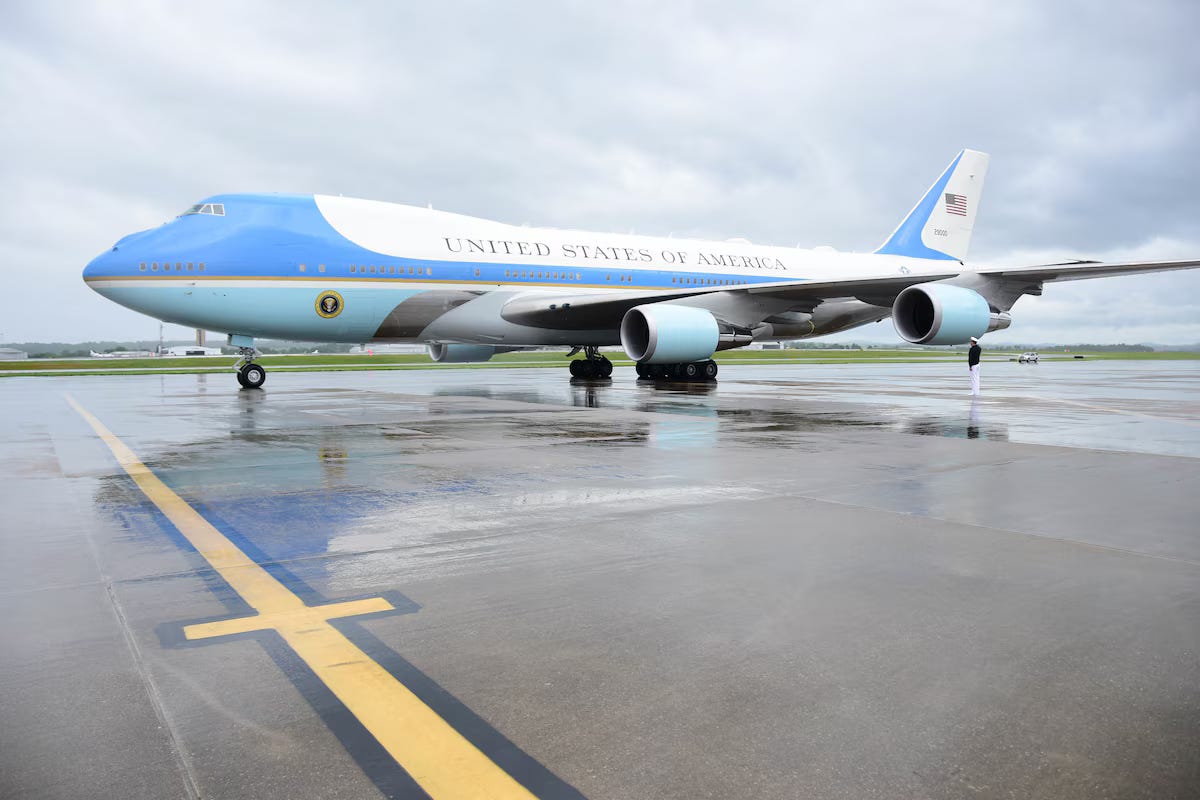
Meanwhile, the U.S. Air Force reimagined the 747-200B as the VC-25A, or Air Force One, outfitting it with secure communications, self-contained air-stairs, and even in-flight refueling to serve as the flying White House.
From that maiden flight in ’69 to its specialized roles today, the Boeing 747 stands as proof that when aviation dreams big, the entire map of what’s possible shifts. Its wingspan didn’t just lift a jet—it lifted the boundaries of the world itself, making the once-unreachable, reachable.
In Case You Missed It
The airplane that the P-8 replaced is a legend:
Photo Outlet
Every issue of Hangar Flying with Tog gets you a free image that I’ve taken at airshows:
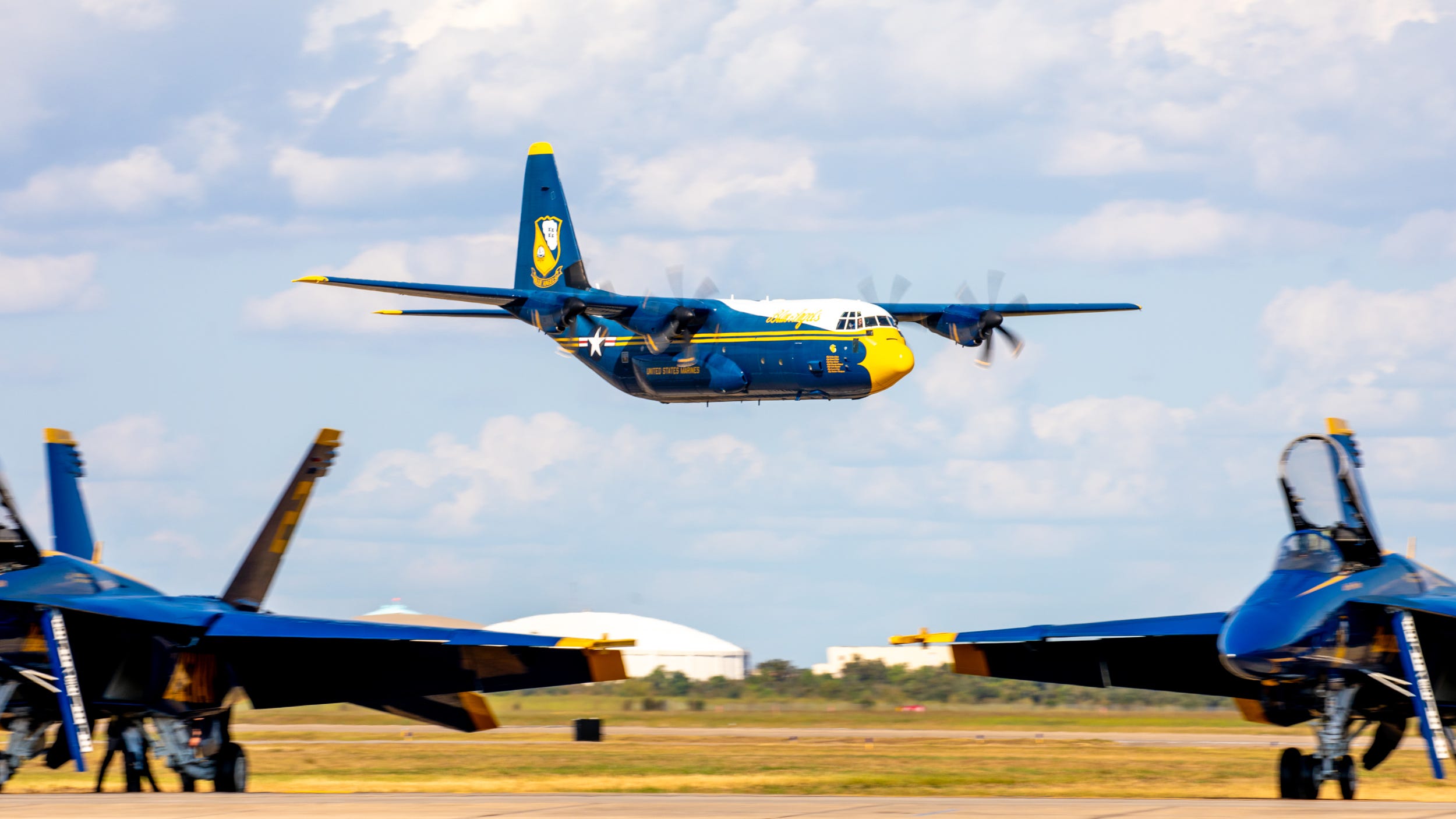
Feel free to use these photos however you like. If you choose to tag me, I am @pilotphotog on all social platforms. Thanks!
Post Flight Debrief
Like what you’re reading? Stay in the loop by signing up below—it’s quick, easy, and always free.
This newsletter will always be free for everyone, but if you want to go further, support the mission, and unlock bonus content like the Midweek Sortie, consider becoming a paid subscriber.
Your support keeps this flight crew flying—and I couldn’t do it without you.
– Tog