

The drone uses a “rocket-like” airframe with X-shaped wings and electric motors at the tips, though key systems – such as target guidance – remain classified.
-Defense Express Quote
Mission Briefing
On 27 November 2025, inside a meeting hall humming with anticipation, Ukrainian and British officials ink a deal destined to change the face of European air defense. Around battered workbenches, engineers pore over OCTOPUS drone blueprints. Thousands of these nimble defenders will roll off the line each month, bound for Ukraine’s front lines. But make no mistake, this was more than aid; it was London lighting the beacon for a new era of NATO airpower.
Octopus: A Low-Cost Response to Russian Threats
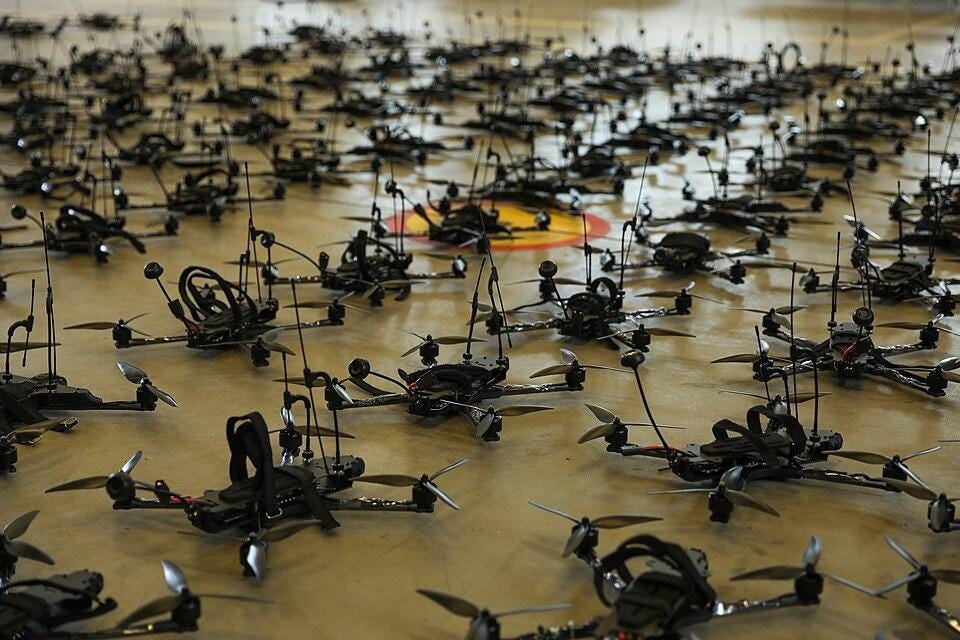
Ukrainian and British officials recently shook hands on a deal to mass-produce the OCTOPUS drone on British soil. The numbers are staggering. Some say up to 2,000 drones a month, all rolling out from a converted facility in Mildenhall under the watchful eyes of Ukrspecsystems engineers. Every one of those drones is bound for Ukraine’s embattled airspace, a nimble defender against relentless Russian attacks.
But here’s the twist: this isn’t just about helping Kyiv weather the storm. The UK is weaving its defense industry, logistics, and tech muscle into a broader strategy, one eye fixed firmly on the horizon. The Ministry of Defense is already picturing OCTOPUS as a cornerstone in a NATO “drone wall”—an interconnected shield to blunt any future drone onslaught along the alliance’s eastern flank.
What makes the OCTOPUS so compelling? Cost. For less than a tenth of the price of what it destroys, this interceptor is rewriting the playbook on air defense economics. It’s a smart answer to Russia’s nightly drone barrages; sometimes 800 strong, with September’s record at over 800 in a single night. Ukrainian Prime Minister Shmyhal says soon they’ll be able to launch at least 1,000 OCTOPUS drones daily, flipping the script on Russian tactics.
Still, the real challenge isn’t just building drones. It’s integrating them with advanced radars, ground control, and AI targeting. That’s the frontier now, and it’s where this new chapter in air defense is being written, one sortie at a time.
Low Altitude Assassin: Meet OCTOPUS Up-Close
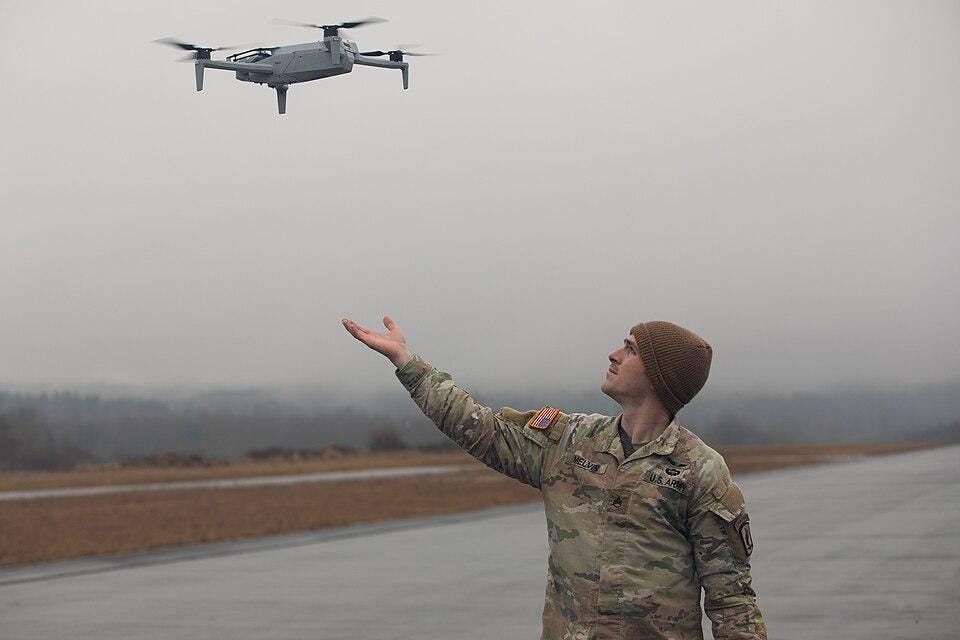
The OCTOPUS drone is a homegrown marvel from Ukraine, crafted by Ukrspecsystems and fine-tuned with British engineering know-how. But this isn’t your ordinary drone. It’s an interceptor, built not for striking the ground, but for hunting down enemy drones like the infamous Shaheds that prowl the night.
Picture a rocket-shaped body with X-shaped wings, electric motors at the tips, and a guidance system sharp enough to navigate the electronic fog of war. It hugs the earth at low altitudes, flying day or night, even when the enemy tries to jam its signals—a perfect match for the unpredictable threats that define today’s battlefields.
OCTOPUS is all about agility. Its modular, lightweight frame means it can launch from almost anywhere, whether pop-up bases, moving trucks, or whatever patch of ground the front lines demand. That’s the kind of flexibility modern warfare craves.
But let’s not kid ourselves. OCTOPUS isn’t a cure-all. Details about its speed, range, and endurance are still under wraps, making it tricky to judge exactly what it can do against everything from spy drones to cruise missiles.
Against swarms of Shaheds, it shows promise. But facing heavier, faster, or stealthier threats, its true mettle remains untested. Only the chaos of real combat will reveal its full potential.
And there’s the matter of logistics. Batteries, guidance units, control stations—keep that supply line humming, and you’ve got a winner. But one break in the chain, be it sabotage or electronic warfare, and even the best drone can be grounded. In this new age of drone warfare, the OCTOPUS is a bold contender, but the skies remain as unpredictable as ever.
Let us take a closer look at the OCTOPUS
Diameter: 1.15 meters
Power System: 4800, Electric Brushless
Empty Weight: 4.5 kg. excluding Battery and Payload
Take Off Method: Auto Take-off
Height: 0.55 m.
Disk Area: 126 dm2
Environment: Snowfall, Light Rain
Max Payload: 3000 grams.
Landing Method: Auto Landing
MTOW: 15 kg.
What does OCTOPUS mean to the Alliance?
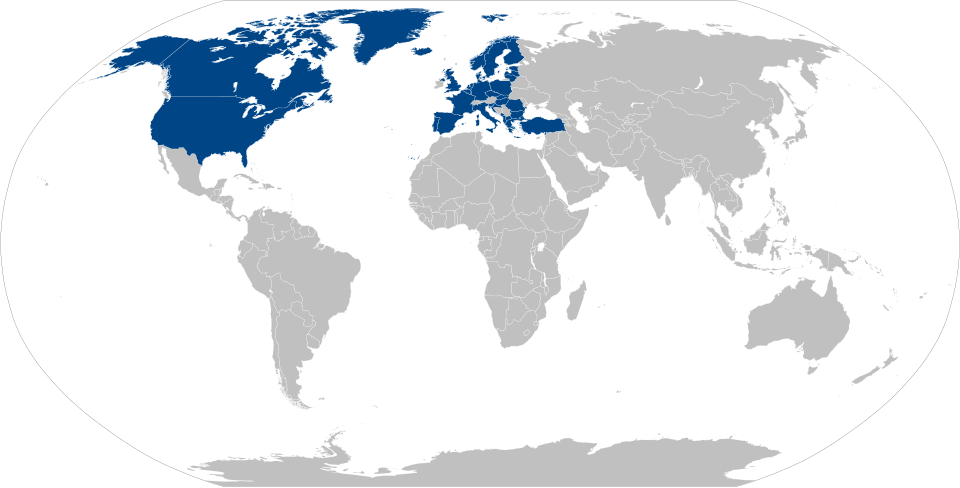
British-Ukrainian drones from the Octopus project are gearing up for a starring role in NATO’s (North Atlantic Treaty Organization) ambitious “drone wall” strategy. This drone wall is a shield meant to counter the rising tide of Russian drone incursions across Europe. Word from The Telegraph is that these nimble, cost-efficient UAVs are now seen as essential players in this new defense doctrine.
The idea really took flight back in May 2024, when Lithuania’s interior minister floated the concept. It didn’t take long for heavyweights like Germany, Poland, Finland, and the Baltic states to get on board, seeing the potential to fortify their eastern skies. Russia’s increasing hybrid tactics, especially drone attacks, spurred NATO’s Operation Eastern Sentry and the EU’s own plans for a sweeping Drone Wall and Eastern Flank Watch.
Of course, there’s plenty of debate—some worry about the cost and whether a barrier of drones can truly hold the line. Still, members of the European Parliament are leaning in, condemning Russia’s airspace violations and backing these initiatives as vital to protect every EU member, north or south.
They’re also calling for deeper collaboration with Ukraine, especially when it comes to drone tech and countermeasures through programs like EDIP and SAFE.
In this new era of digital dogfights and shifting alliances, these drones could be the unseen sentinels keeping a restless sky just a little bit safer, today and tomorrow.
This Week in Aviation History
December 1941: USS Enterprise, through Dauntless, sank a Japanese Submarine
Japanese submarines prowling Hawaiian waters as the Sixth Fleet raced to intercept U.S. carriers returning to the Pacific. In December 1941, Enterprise’s Dauntless dive bombers struck I-70, marking the first Japanese warship sunk by American aircraft in the war.
Where Sky Meets Sea: Dauntless vs. I-70
Let me take you back to December 1941, when the Pacific was a chessboard and every move counted. The Japanese, determined to keep tabs on American carriers, unleashed a pack of submarines into Hawaiian waters.
One of them, I-70 under Commander Sano Takao, lurked just miles off Diamond Head, eyes fixed on the horizon. On December 9th, Sano radioed in—he’d spotted a U.S. carrier slipping into Pearl Harbor, the Enterprise itself threading its way back to the open ocean.
Meanwhile, I-6 was watching from the north, tracking a Lexington-class carrier and a pair of heavy cruisers. These reports set the Japanese Sixth Fleet into motion, launching their subs in pursuit of America’s flat-tops.
The next day, fate favored the hunters in the sky. Ens. Teaff, piloting an SBD-3 Dauntless from Enterprise, caught sight of I-70 on the surface northeast of Molokai. He released a bomb that shook the submarine, damaging it enough to keep it from diving to safety.
Hours later, Lt. Dickinson, in another Dauntless, tracked I-70 again. As he dove from 5,000 feet, the submarine’s gunners opened up, but Dickinson pressed in, releasing a 1,000-pound bomb that detonated close amidships. The blast tossed gunners into the sea and left I-70 dead in the water, sinking in less than a minute—the first Japanese warship sent to the bottom by U.S. aircraft.
Dickinson circled the wreck, watching four survivors struggle in the oil-slicked waves. Rescue for I-70 never came; the Japanese classified the boat and her 92 crew as lost. For his courage in that fateful attack, Dickinson earned a Gold Star, etching his name into the annals of naval aviation history.
The destruction of I-70 was more than just a tally in the scorebook. It demonstrated to the world that carrier airpower could track down and destroy submarines deep in enemy waters, not just engage in surface-to-surface combat with enemy ships.
With one bomb run, the Enterprise’s Dauntless crews didn’t just take out a submarine. They cut a link in Japan’s supply chain, proving airpower could choke off enemy logistics as well as sink steel.
That day rewrote the playbook, making it clear that whoever ruled the skies could shape the fight above and below the waves for the rest of the war.
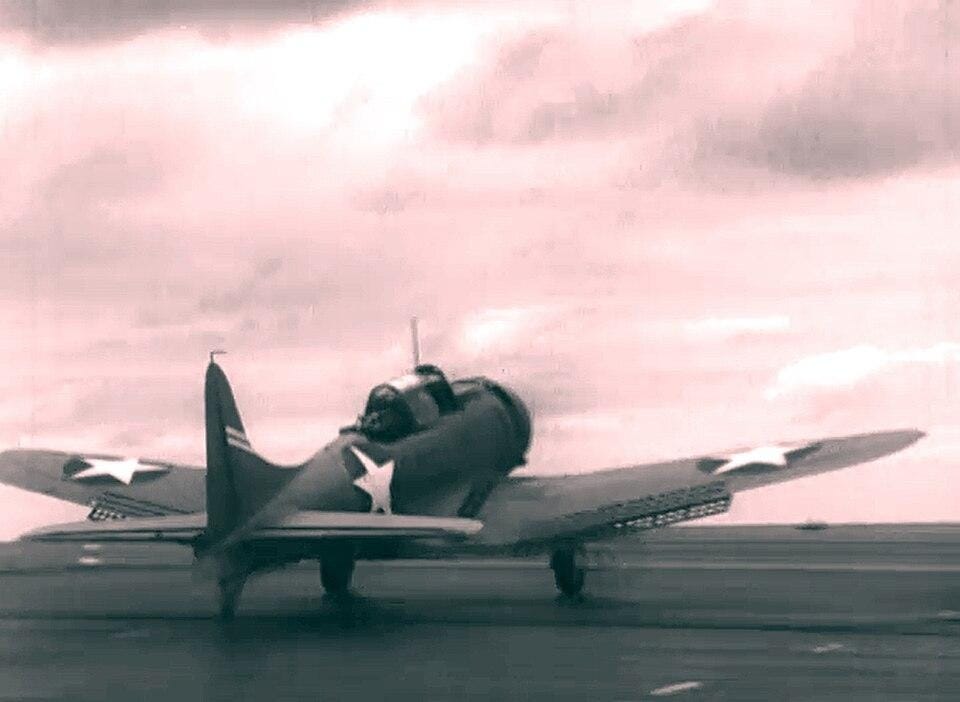
Anatomy of the Killer: Dauntless Dive Bomber
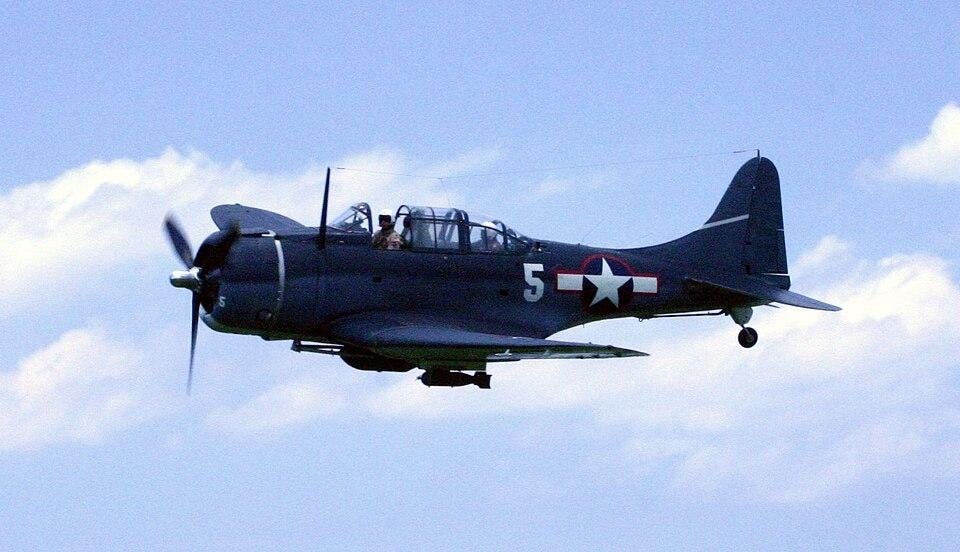
Dive bombing isn’t for the faint of heart. It takes nerves of steel and pinpoint control to steer your bird nearly straight down and hit a target on the move. The Douglas SBD Dauntless was built for just that: it was tough enough to dive at a breathtaking 80-degree angle.
Not to mention, it is relatively cheap to produce. Some even call it “Slow But Deadly bargain.” The last SBD-6s is worth $29,000 in 1944, around $425,000 today.
Furthermore, she was the Navy’s workhorse at the start of the war, earning her stripes at Midway by helping send four Japanese carriers to the bottom; a feat that cemented her legend. Some say the Dauntless put more enemy ships under than any other plane out there.
Take SBD-3, Bureau Number 06508, for example. Born in El Segundo, she saw combat over Guadalcanal before flying with Bombing Squadron 10 off the Enterprise. Later, she trained new pilots back home at NAS Glenview, carrying the marks of the Pacific and the lessons of war in every rivet.
Let me give you a quick rundown of her features:
Crew: 2 (Pilot, Radioman/Gunner)
Wingspan: 42 feet
Length: 33 feet
Maximum Speed: 250 miles per hour
Cruising Speed: 173 miles per hour
Maximum Range: 950 miles
Engine: Wright R-1820-52 (1,000 hp)
Maximum Bomb Load: 1,000 pounds
Armament: Two .50 caliber and two .30 caliber machine guns
The Dauntless—A Call Sign That Endures
When the SBD Dauntless sent I-70 to the bottom, it did more than notch a victory. It proved that a carrier’s reach wasn’t just about slugging it out with enemy ships, but hunting submarines lurking far beyond the horizon.
Here’s the thing: the Dauntless did not require a hefty price tag. But that tough little dive bomber showed the world that even simple, rugged airframes could protect convoys and choke off enemy supply lines, turning the carrier into a true multi-mission powerhouse.
Suddenly, pilots weren’t just dogfighters. They were sub-hunters, and the seas felt a whole lot smaller for anyone trying to slip beneath them.
The Dauntless etched a new doctrine in salt and sky: airpower, when wielded with creativity, could rule above and below the waves. And she does not have to be expensive.
We can see that lesson alive today; every successful sortie does not require a Ferrari.
In Case You Missed It
Interested in the F-35? Have 2 hours to spare?
Photo Outlet
Every issue of Hangar Flying with Tog gets you a free image that I’ve taken at airshows:

Feel free to use these photos however you like, if you choose to tag me, I am @pilotphotog on all social platforms. Thanks!
Post Flight Debrief
Like what you’re reading? Stay in the loop by signing up below—it’s quick, easy, and always free.
This newsletter will always be free for everyone, but if you want to go further, support the mission, and unlock bonus content like the Midweek Sortie, consider becoming a paid subscriber.
Your support keeps this flight crew flying—and I couldn’t do it without you.
– Tog