

The Speedy Evolution Toward Aerial Miniaturization and Remembering the A-10’s First Combat During Operation Desert Storm
Desert Storm’s A-10 story was about winning the close fight by persistence; miniature drones are that same doctrinal impulse—just shrunk, multiplied, and pushed into spaces where jets can’t follow
Through this exploration, the program aims to develop and demonstrate the capability for small (i.e., able to fit through windows) autonomous UAVs to fly at speeds up to 20 m/s (45 mph) with no communication links to the operator and without GPS guidance.
—DARPA
Mission Briefing
A hornet-sized drone slips through a window, paints the room in 3D, and turns a “secure” building into open airspace. The front line doesn’t move anymore. It leaks, as centimeter-class scouts and micro-effectors saturate the battlespace faster than radar can even notice. And once GPS goes dark and autonomy takes the stick, the strike isn’t a loud arrival. It’s a silent contact, delivered by something as small as a bee.
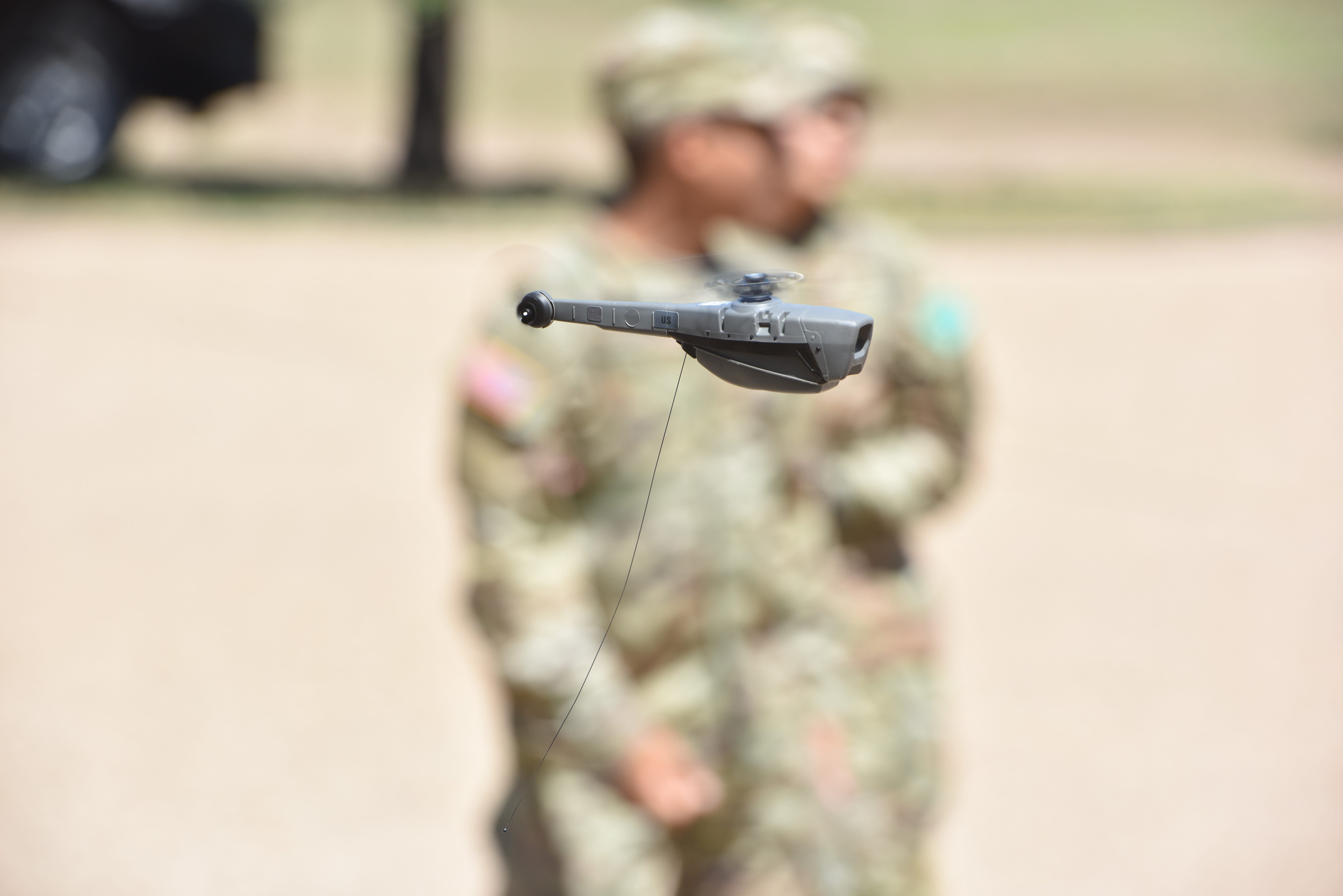
The Rise of Tactical Miniature Drones in Modern Warfare
In modern warfare, brute force has given way to stealth and surgical precision. The latest leap? The rise of drones so small you could mistake them for insects—machines with wingspans no longer than a finger and weighing less than two coins in your pocket.
These mini marvels can do what cruise missiles never could: navigate the tightest spaces, slip past barriers, and turn the battlefield into a web of invisible sensors and silent effectors.
Urban combat, with its blind corners and hidden dangers, poses some of the greatest risks to infantry. In these high-stakes settings, knowledge is survival. Here, micro-drones shine.
Imagine a drone the size of a hornet darting through a ventilation shaft or an open window, its miniaturized LiDAR mapping every nook and cranny in three dimensions. For special forces, this is like having X-ray vision—planning raids with a level of detail that was once unthinkable.
Engineers are now looking to nature’s own flyers for inspiration. Teams at MIT and Harvard are crafting “RoboBees,” tiny drones powered by artificial muscles made from special piezoelectric materials.
When jolted with electricity, these materials contract, flapping wings at a blur: over 120 times a second. Mimicking insects gives these drones a unique edge; they can dart, dodge, and hover in turbulent air where a regular quadcopter would tumble. Picture a hallway or tunnel, buffeted by shifting currents; a place where agility is everything.
What once belonged to science fiction is now within reach of engineering. The idea of a wasp-sized drone delivering a toxic payload isn’t just a movie plot anymore. Thanks to microfluidics and microelectromechanical systems, a tiny drone can carry milligrams of a potent agent, striking with precision instead of blast.
The next frontier is even smaller: research is pointing toward nanorobots, machines invisible to the eye, capable of entering the bloodstream and targeting organs or causing undetectable harm.
In this new age, the future of aerial warfare may not roar overhead. It may buzz, unseen, just out of sight.
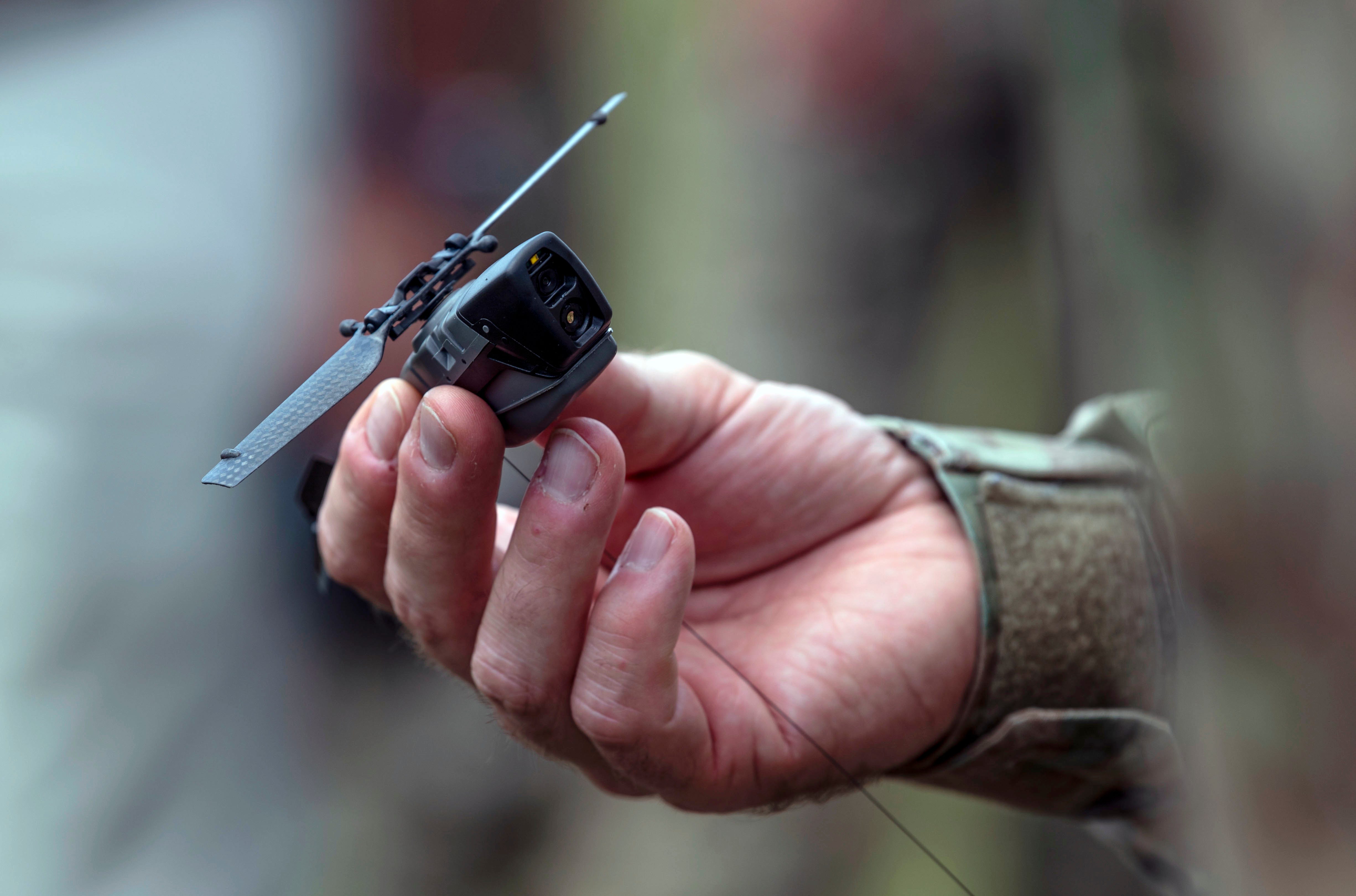
Pocket-Sized Airpower: The Features That Drive the Invisible War
The Black Hornet 3 is a true marvel in the world of miniature aviation and a testament to what American innovation can achieve. Weighing in at a featherlight 33 grams and stretching just over six inches, this drone is no bigger than the palm of your hand, yet it’s already become an essential tool for the U.S. Army and NATO troops on the ground.
With a flight time of 25 minutes and a range of two kilometers, the Black Hornet 3 is a reconnaissance ace, giving soldiers a set of eyes that can slip over hills, around buildings, or deep into the unknown—all without risking a life.
But the future promises even more. Thanks to DARPA’s Fast Lightweight Autonomy program, there’s work underway to make these little wonders truly independent. Imagine a drone that navigates unknown territory not with GPS or constant commands, but with its own onboard artificial intelligence. This machine reads the world in real time and chooses its own flight path, just like a living creature with pure machine instinct.
The Black Hornet 3’s kit is a pilot’s dream of portability and efficiency. The micro-drone comes with its own docking station for charging, and a monitor about the size of a tablet. The whole package—drone, station, and monitor—barely tips the scales at three pounds, making it easy for soldiers to carry on the move. While the Black Hornet is in the air, a spare battery can be charging back in the dock, always ready for the next flight.
Security is top-tier, too. All wireless commands and data between the operator and the drone are encrypted, keeping the system safe from hackers. The Black Hornet wasn’t built for hours-long surveillance, but rather to give troops a quick peek over the next hill or behind that wall, making it an invaluable tool for instant reconnaissance.
Learning to fly this tiny aviator takes just 16 hours of training, and the controls are as intuitive as starting up a favorite gadget. Just a couple of twists in your hand, and the rotors spin to life. Soldiers report the drone is reliable, easy to steer, and maintains its command links without a hitch.
Stealth is its secret weapon. Painted a muted gray, the Black Hornet blends right into forests and jungles. It’s so quiet and unassuming that, during tests, one soldier never noticed it hovering just feet away—mistaking it, perhaps, for nothing more than a passing bird or oversized insect. That’s the future of reconnaissance: silent, unseen, and always watching.
The Invisible Wings: What Miniature Drones Mean for U.S. and Allied Power
Imagine this: airpower, once the domain of sprawling runways and massive carrier decks, now fits in the palm of a soldier’s hand. Miniature drones give every squad its own set of wings—launching tiny eyes and sensors that slip through alleys, skim treetops, and even dart through open windows.
The high ground? It’s wherever you need it to be, delivering instant surveillance and targeting.
For the U.S. and its allies, this means smaller units can spot, track, and strike faster, compressing the kill chain and relying less on scarce, expensive aircraft. When coalition partners speak the same data language and share tactics, that advantage multiplies across borders.
But this revolution cuts both ways. The same small drones that give us eyes everywhere also jam the skies with cheap, swarming adversaries. Suddenly, the question isn’t just “who has the best drone,” but who can sort, identify, and counter this flood of flying machines, even when GPS is jammed, and communications are under attack.
The U.S. treats these small drones as both an asset and a challenge, building layered defenses and joint strategies to keep ahead.
For alliances like NATO, the real test is interoperability. How do you defend against swarms without breaking the bank? How do you link sensors and defenses across nations?
As drones evolve from pocket-sized scouts to networked swarms, winning tomorrow’s invisible war will hinge not just on more drones, but on smarter collaboration and resilient, scalable command.
This Week in Aviation History
On February 24, the coalition unleashed a ground assault that swept across the desert with relentless force, quickly outmatching Iraq’s aging and under-equipped military. By nightfall, the Iraqi army had collapsed—10,000 troops captured, and a U.S. air base firmly planted deep in enemy territory. In less than four days, Kuwait was freed, and most of Iraq’s forces had been shattered, surrendered, or driven back across their own border.
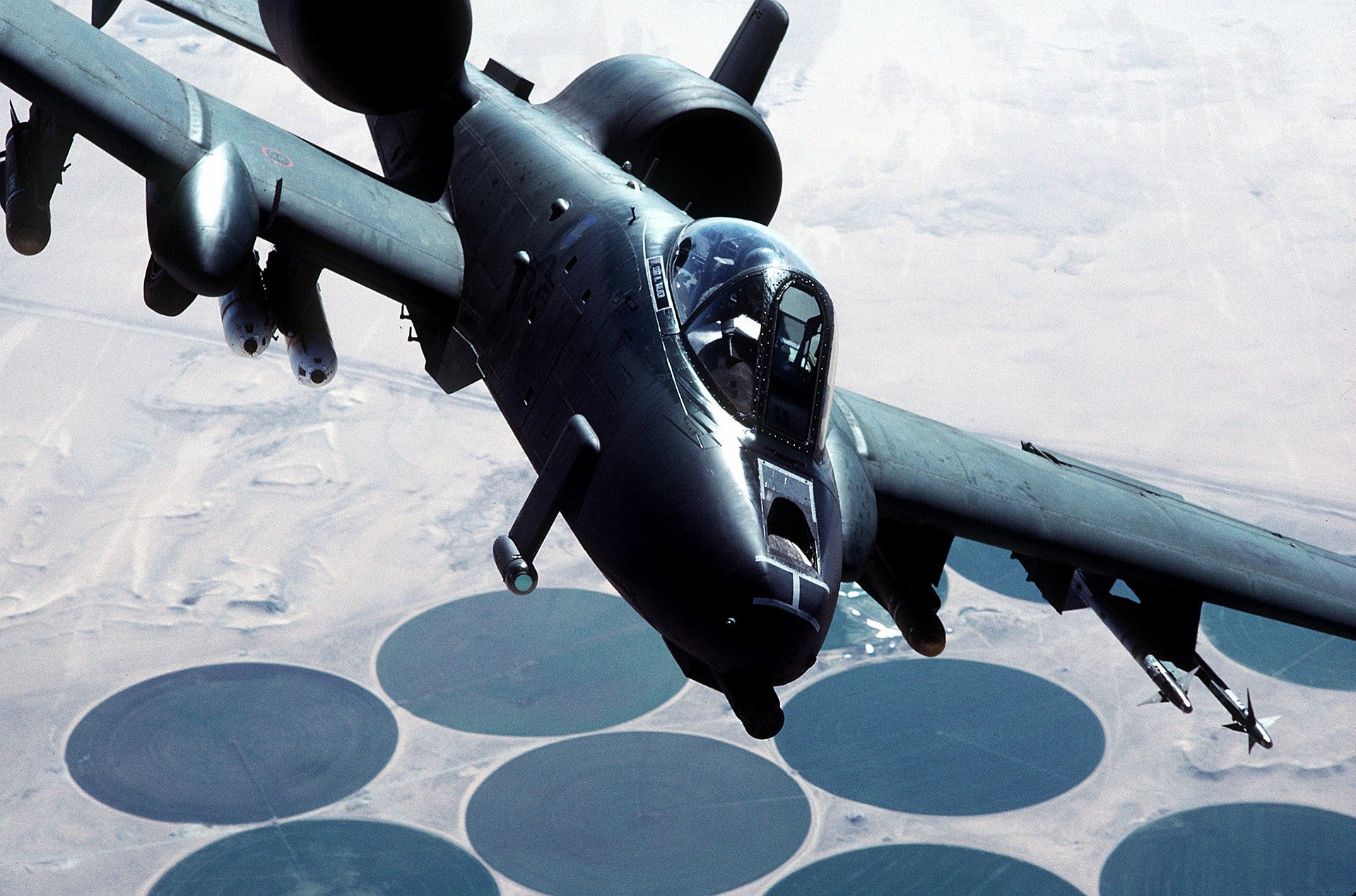
Operation Desert Storm
Operation Desert Storm was a true display of international resolve, commanded by U.S. General Norman Schwarzkopf and drawing together 32 nations, Britain, Egypt, France, Saudi Arabia, Kuwait, and more, into a coalition force.
For six weeks, allied airpower thundered above Iraq, dismantling military and civil targets while encountering little resistance from Iraqi fighters below. On the ground, Saddam Hussein’s forces were largely paralyzed, his desperate salvo of Scud missiles aimed at Israel and Saudi Arabia failing to ignite the wider regional conflict he hoped for. Israel, at America’s urging, stayed out of the fight.
Then, on February 24, the coalition launched a ground offensive that swept across the desert like a sandstorm. Iraq’s outdated, poorly equipped army crumbled almost instantly. By nightfall, 10,000 prisoners had been taken and a U.S. air base established deep inside Iraqi territory.
In less than four days, Kuwait was free and most of Iraq’s forces had been destroyed, captured, or sent fleeing for home. President George Bush declared a cease-fire on February 28, with Iraq agreeing to coalition and U.N. terms. American sacrifices were real—125 killed, 21 missing—but the swift victory was decisive.
It was also the first combat test for the A-10 “Warthog.” The results were legendary: over 900 tanks, 2,000 vehicles, and 1,200 artillery pieces destroyed. That the Warthog still flies nearly three decades later speaks volumes about its rugged power.
Still, the skies were not without danger: 39 fixed-wing aircraft and five helicopters fell to Iraqi air defenses, including six A-10s. A flight commander, Captain Dale Storr, was shot down over Kuwait and presumed lost until his release from captivity after the war. We knew every sortie carried risk, but we flew on, driven by duty and trust in the machines beneath our wings.
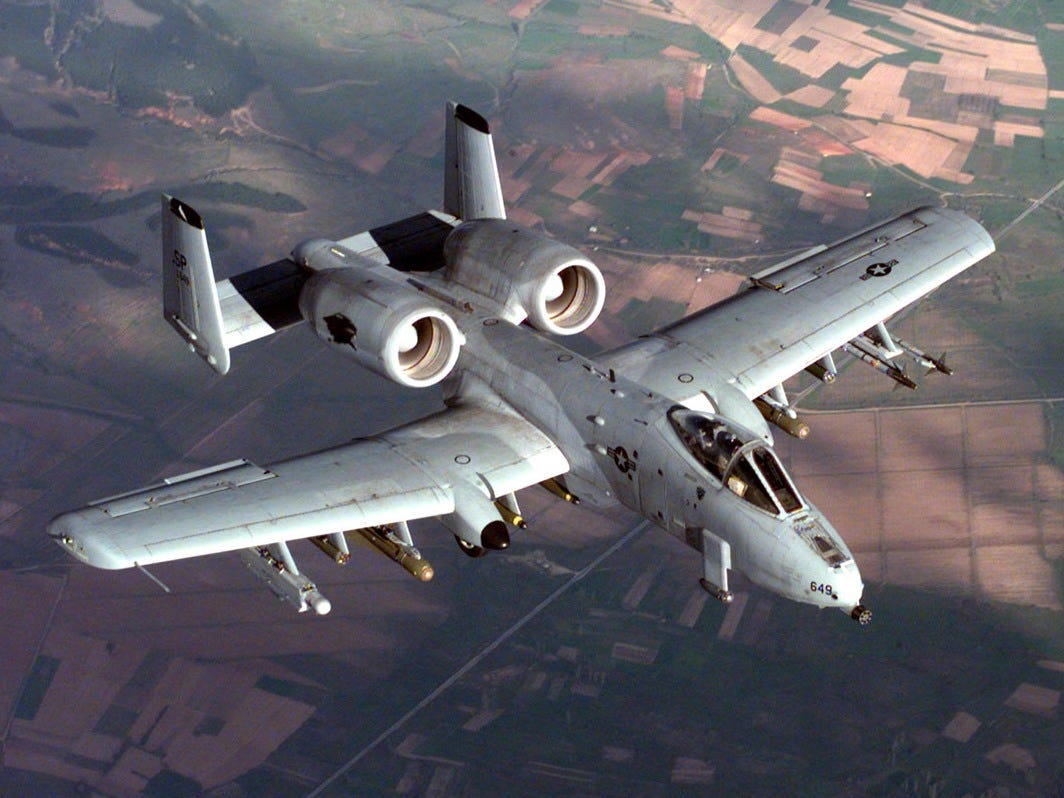
Under the Hood of the A-10
The A-10C Thunderbolt II isn’t just another aircraft. It’s the pilot’s best friend down low and slow, hugging terrain with remarkable agility and pinpoint accuracy. This bird can linger over the battlefield for hours, swooping in from rough, makeshift strips close to the front lines, and operating in weather so thick you can barely see a mile ahead.
Whether unleashing precision-guided or old-school unguided munitions, the A-10C delivers its payload in any condition—above, below, or right through the clouds. Nightfall is no obstacle; with night vision goggles and advanced cockpit systems, these pilots own the darkness.
Step inside the cockpit and you’ll find a single seat up front, wrapped in a titanium “bathtub” that shields the pilot and vital controls. The panoramic bubble canopy gives unmatched visibility, while the Helmet Mounted Cueing System lets the pilot lock eyes and weapons on any threat.
The Thunderbolt’s rugged design means it can take a beating—shrugging off direct hits from 23mm rounds, self-sealing its fuel tanks, and relying on manual backups if hydraulics fail. In the heat of close air support, when survival and precision matter most, the A-10C stands alone, built to bring its pilot home.
Let me give you a short rundown of this legendary bird.
Primary Function: A-10 -- close air support, airborne forward air control, combat search and rescue
Contractor: Fairchild Republic Co.
Power Plant: Two General Electric TF34-GE-100 turbofans
Thrust: 9,065 pounds each engine
Length: 53 feet, 4 inches (16.16 meters)
Height: 14 feet, 8 inches (4.42 meters)
Wingspan: 57 feet, 6 inches (17.42 meters)
Speed: 420 miles per hour (Mach 0.56)
Ceiling: 45,000 feet (13,636 meters)
Maximum Takeoff Weight: 51,000 pounds (22,950 kilograms)
Range: 800 miles (695 nautical miles)
Armament: One 30mm GAU-8/A seven-barrel Gatling gun; up to 16,000 pounds (7,200 kilograms) of mixed ordnance on eight under-wing and three under-fuselage pylon stations, including 500 pound (225 kilograms) Mk-82 and 2,000 pounds (900 kilograms) Mk-84 series low/high drag bombs, incendiary cluster bombs, combined effects munitions, mine dispensing munitions, AGM-65 Maverick missiles, laser-/GPS-guided bombs, unguided and laser-guided 2.75-inch (6.99 centimeters) rockets; infrared countermeasure flares; electronic countermeasure chaff; jammer pods; illumination flares and AIM-9 Sidewinder missiles.
Crew: One
Date Deployed: March 1976
Unit Cost: $9.8 million (fiscal 98 constant dollars)
Inventory: Total Force – approximately 281
Desert Thunder: Airpower and the Legacy of Desert Storm
Operation Desert Storm’s true legacy isn’t just a headline victory from 1991—it’s the moment when the U.S. reimagined how to shape the Middle East from the sky.
The campaign kicked off with a dazzling show of precision: jet fighters and cruise missiles hammering Iraqi targets, setting the tone for a six-week air assault that crippled enemy units and command centers before most coalition boots even touched the ground.
The world took notice. America’s pinpoint strikes and overwhelming airpower changed military thinking everywhere. Realizing they couldn’t match the U.S. in open battle, rivals shifted their focus to asymmetric strategies; developing ballistic missiles, nuclear deterrents, and tactics designed to blunt America’s technological edge.
Insurgents in later conflicts like Somalia, Afghanistan, and Iraq found new ways to complicate the high-tech advantage, while major powers like China and Russia poured resources into narrowing the gap, inching ever closer over the decades.
Desert Storm proved that air dominance could flip the script on day one. Yet, the region’s story didn’t end there. The choices made high above the desert shaped every chapter that followed, leaving a long shadow over the Middle East; one that still stretches across today’s evolving skies.
In Case You Missed It
The unsung hero of airlift:
Photo Outlet
Every issue of Hangar Flying with Tog gets you a free image that I’ve taken at airshows:
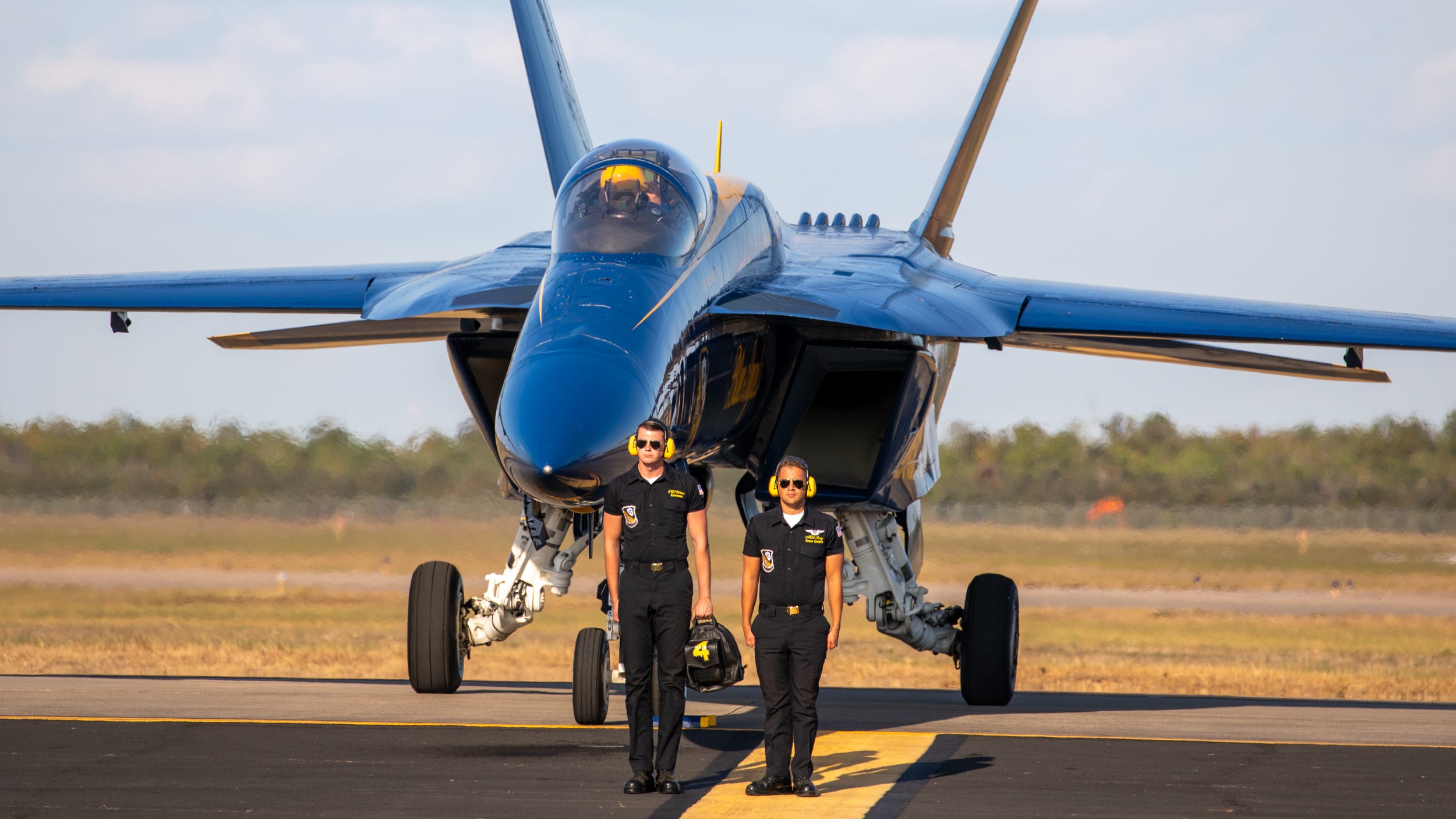
Feel free to use these photos however you like, if you choose to tag me, I am @pilotphotog on all social platforms. Thanks!
Post Flight Debrief
Like what you’re reading? Stay in the loop by signing up below—it’s quick, easy, and always free.
This newsletter will always be free for everyone, but if you want to go further, support the mission, and unlock bonus content like the Midweek Sortie, consider becoming a paid subscriber.
Your support keeps this flight crew flying—and I couldn’t do it without you.
– Tog