

The Obsession Towards 6th Generation Fighters and Remembering the Operation Frequent Wind
From Saigon’s rooftop evacuations to drone-linked stealth fighters, the theme is the same: aviation matters most when the battlespace is unstable, contested, and moving faster than anyone planned.
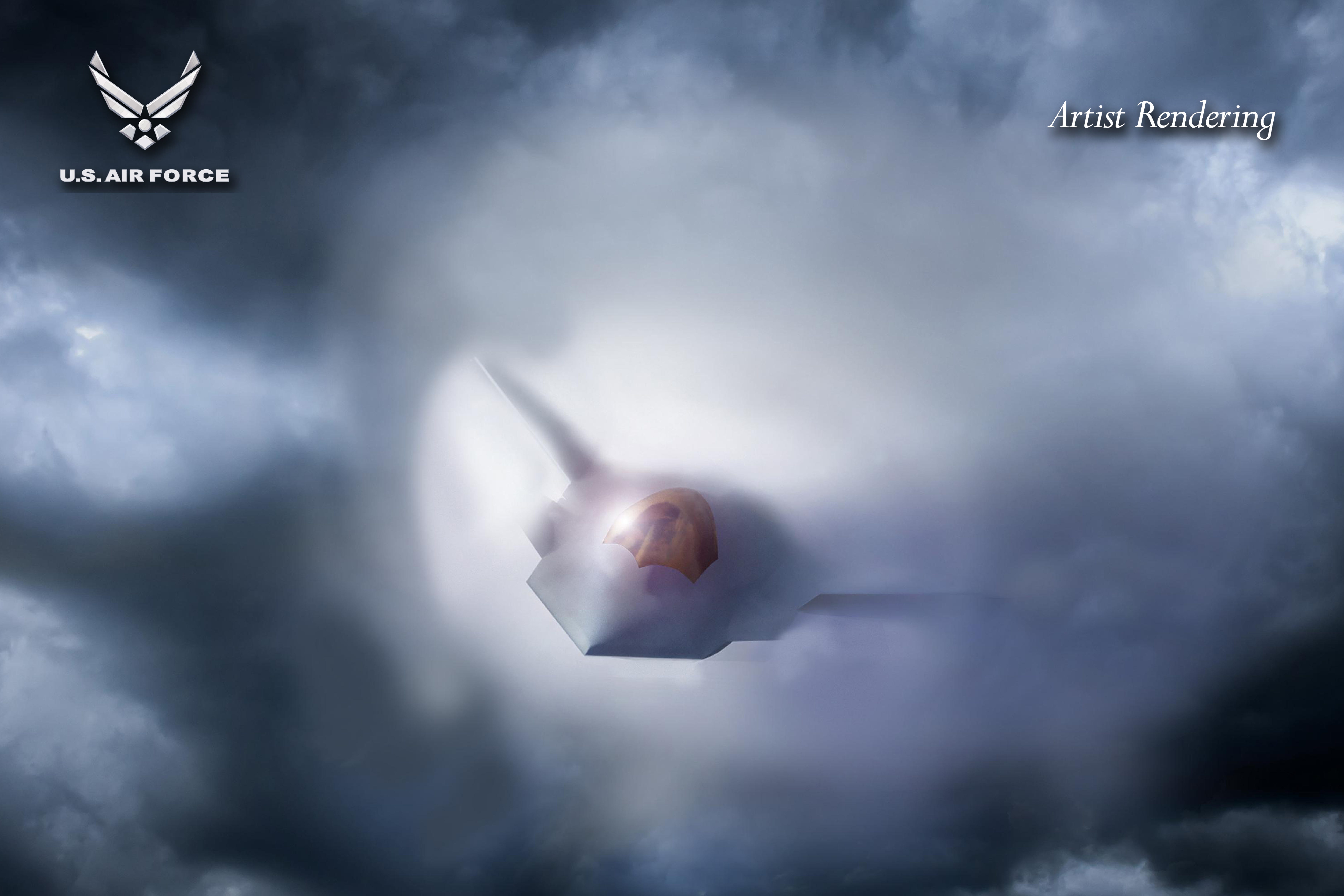
“With the F-47, we are not just building another fighter – we are shaping the future of warfare and putting our enemies on notice. This platform will be the most advanced, lethal, and adaptable fighter ever developed – designed to outpace, outmaneuver, and outmatch any adversary that dares to challenge our brave Airmen.”
—Chief of Staff of the Air Force Gen. David Allvin
Mission Briefing
The race for the sixth-generation fighter jet isn’t about bragging rights, it’s about tackling a real and relentless challenge. Modern battlefields are a jungle of radars, long-range missiles, jamming, cyber threats, drones, and hypersonic weapons, making survival tougher for even the most cutting-edge jets.
That’s why tomorrow’s fighter isn’t just a lone wolf anymore. It’s transforming into the beating heart of a sprawling air combat system. Teaming up with escort drones, scattered sensors, encrypted data links, electronic warfare, and a torrent of data crunching, all working together to outfox whatever the skies throw its way.
A Response to Concrete Military Problem
Let’s set the record straight: there’s no official playbook that spells out exactly what makes a fighter jet “sixth-generation.” The label is really shorthand for a new breed of aircraft that leap past the F-22s, F-35s, J-20s, and Su-57s of today.
It’s not just about better stealth—it’s about reinventing the very rhythm of air combat. These jets aren’t just flying sensors and missile trucks anymore; they’re becoming orchestrators, commanding swarms of drones, blending data from every corner of the battlespace, jamming enemy signals, and outmaneuvering threats in a storm of electronic warfare.
To talk about the next-gen fighter is to stop thinking of it as a lone wolf. Whether it’s American, British, Japanese, or European programs, they all use different jargon—collaborative combat, combat cloud, advanced human-machine teaming—but they’re singing the same tune: the pilot can’t do it all alone when the sky fills with threats.
Now, aviators need remote sensors, algorithmic copilots, and robotic wingmen to keep up.
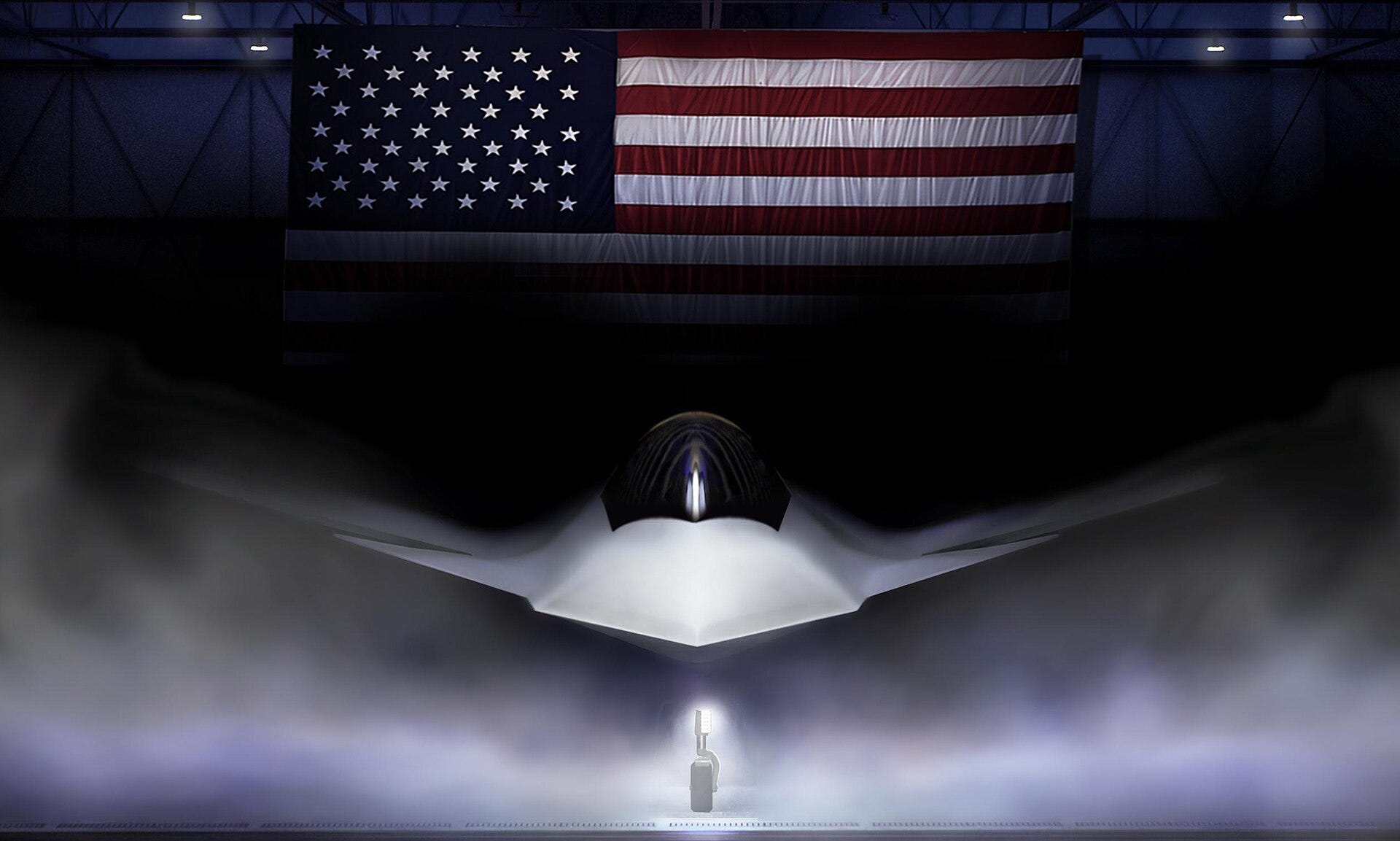
Right now, the U.S. is out in front. In March 2025, the Air Force handed Boeing the keys to the Next Generation Air Dominance Platform—now called the F-47—officially declaring it the first sixth-gen fighter.
But the real mission isn’t just to outdo the F-22; it’s about building a force where piloted jets and smart drones fight together, with plans for more than 185 crewed aircraft and their robotic partners.
Hot on America’s heels is Team GCAP, a coalition of the UK, Italy, and Japan, targeting service entry around 2035 (though Japan has voiced doubts about the timeline). The trio has set up a joint government group and, as of June 2025, launched Edgewing, the industrial team driving development.
Their vision? A fighter at the heart of a network of sensors, secure links, and unmanned effectors. Meanwhile, France, Germany, and Spain are chasing their own dream with the SCAF/FCAS program, aiming for a holistic air combat system by 2040. But political friction and industrial rivalries—especially between Dassault and Airbus—have clouded its future, leaving the program’s fate uncertain as of late 2025.
Reasons Behind Such Development
When we talk about stealth in the world of sixth-generation fighters, we’re not just dusting off an old playbook. Gone are the days when hiding from radar by minimizing your jet’s profile was enough.
Now, stealth is a multi-layered art: it’s about masking not only radar signatures, but also managing your heat trail, scrambling your electromagnetic footprint, and staying under the radar—literally and figuratively—even while your jet is buzzing with sensors and streaming data.
The paradox of tomorrow’s jet is that it needs to be hyper-connected, sharing information across the battlespace, without becoming so noisy that it paints a target on its own back. In the 2030s, stealth is a balancing act: comprehensive, relentless, and far more demanding than ever before.
But the real sensory overload comes from the second frontier: sensors and data fusion. The challenge isn’t a shortage of intel, but the flood of it. A sixth-gen pilot faces a torrent of information pouring in from radar systems, electronic warfare suites, infrared detectors, drones, satellites, wingmen, and command posts.
It’s no longer humanly possible to keep up. That’s why manufacturers are racing to build adaptive cockpits, digital copilots, and immersive displays. Cockpits where algorithms don’t just shout warnings, but actually help the pilot make sense of chaos, suggesting the right move at the right moment. Airbus, for instance, imagines a flight deck where the pilot can delegate whole tasks to a drone with just a glance or a gesture, all within a futuristic, augmented-reality interface.
Third, there’s the invisible war raging across the electromagnetic spectrum. In a real fight between heavyweights, comms will get jammed, spoofed, or blacked out entirely. So tomorrow’s jet must be able to survive and fight in the dark, leveraging electronic warfare and robust connectivity to stay ahead. As recent war reports make clear, dominance here isn’t just a bonus. It’s a lifeline.
Finally, the crown jewel: collaborative combat. Loyal wingmen—unmanned escort drones—aren’t here to steal the show from human pilots, but to have their backs. These robotic partners can scout ahead, draw fire, jam enemy radars, launch munitions, or absorb risks too great for any aviator.
The US Air Force is already flying these collaborative combat aircraft, aiming to protect pilots and supercharge the entire force by blending manned and unmanned power in the sky.
Network Supremacy: Redefining Airpower for the Sixth-Generation Battlespace
The real fascination with sixth-generation fighters is less about shiny new jets and more about surviving—and dominating—a battlespace that’s merciless to anything slow, short-legged, or flying solo.
The next breed of combat aircraft won’t just sneak through radar; they’ll be deeply networked and ready to command swarms of drones, never fighting alone. That vision is at the heart of the U.S. Air Force’s F-47 and the broader NGAD program: a long-range, stealthy, and modular machine designed to be the conductor of an entire high-tech orchestra, with collaborative drones as its wingmen.
For America, air superiority is shifting from the old “top gun wins” mindset to a new era where the best network—one that adapts and learns on the fly—wins the day.
The Air Force is making it clear to friends and rivals alike: deterrence in the future won’t rest on just having the flashiest piloted jets, but on the ability to blend sensors, hit targets from afar, and seamlessly mesh manned and unmanned teams, especially in the fiercely contested skies of the Indo-Pacific or Europe, where distance and electronic warfare make old strategies risky.
Allies are picking up the signal, but it’s a double-edged call. Initiatives like GCAP show a real hunger among partners for shared next-gen capabilities and a robust defense-industrial backbone by the 2030s.
Yet the struggles of FCAS are a reminder: it’s not just about aerodynamics or cutting-edge tech; politics, industrial teamwork, and digital integration are just as crucial. In the end, the future of allied airpower may depend less on any single super-jet and more on whether coalitions can actually stitch together truly interoperable, adaptable combat networks; on time and under pressure.
What comes next may matter even more than the aircraft itself: the real contest could be over who fields the most resilient combat cloud, the smartest drone partners, and the industrial base strong enough to keep upgrading them before the next crisis arrives.
This Week in Aviation History
When Commander Task Force 76 got the green light for Operation Frequent Wind, it wasn’t just another mission. It was the final, urgent call to evacuate Americans and South Vietnamese whose loyalty had put them at risk. As the helicopters lifted off and the last refugees cleared the rooftops, the Vietnamese Navy set course for safer shores in the Philippines and Guam under Operation New Life. With that, the long chapter of U.S. Navy involvement in Vietnam quietly closed after a quarter-century of struggle and sacrifice. The last flights marked not just the end of an operation, but the final bow of America’s naval commitment to a nation fighting for its very survival.
Operation Frequent Wind
More than 58,000 names are etched into the polished black granite of the Vietnam Veterans Memorial in Washington, D.C. Stand in that quiet, reflective space long enough and the wall itself seems to change.
It stops being cold stone and starts to feel like you’re walking an empty flight line after the day’s last sortie. Every name a call sign, a crew chief, a wingman, a story that ended mid-mission but never really faded away. And near the close of that long, bitter conflict, the final chapter unfolded fast, hot, and utterly chaotic above the rooftops of Saigon.
The last Americans to fall in Vietnam were Marines: Cpl. Charles McMahon Jr. and Lance Cpl. Darwin Judge, killed by a rocket attack at Tan Son Nhut Air Base on April 29, 1975, less than 24 hours before Saigon itself fell.
That same desperate window claimed two more Marines in the air—Capt. Craig Nystul and 1st Lt. Michael Shea—when their CH-46 Sea Knight helicopter plunged into the South China Sea, just short of recovering aboard USS Hancock. Even as the end drew near, the war was still exacting its price in blood and saltwater.
By then, America’s big ground war was already history. The combat troops had pulled out years before, but South Vietnam was unraveling faster than anyone in Washington dared believe.
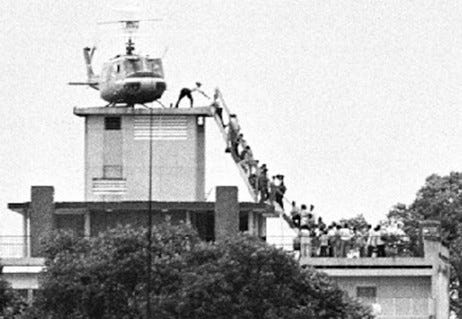
What remained was a mad scramble: evacuate Americans, get vulnerable Vietnamese and foreign nationals out, and do it before the final curtain dropped. That became Operation Frequent Wind—the biggest helicopter evacuation ever seen—playing out over April 29 and 30, 1975.
The signal to go didn’t come as a bugle or a shouted command. Instead, it drifted through the airwaves: American Forces Radio played Bing Crosby’s “White Christmas,” followed by a weather forecast for a blistering 105 degrees.
It was a code, absurd and surreal: a Christmas song in the humid heat of Saigon spring. But if you knew, you knew: time to move, time to run for your extraction point. The city was on the edge, with no tickets, no guarantees, and no time to spare.
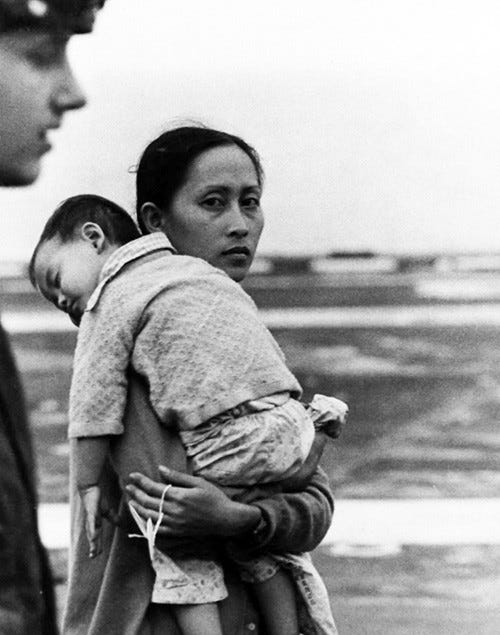
Evacuations had been underway for weeks by then. Fixed-wing flights had already carried out tens of thousands through Tan Son Nhut, but on April 28 enemy fire made the airport too dangerous for anything with wings.
The job now belonged to the helicopters: whirring rotors, rooftop landings, flight decks stacked with refugees, and nerves stretched to the breaking point.
Out at sea, near Vung Tau, an armada waited: carriers, amphibs, destroyers, support ships: a floating lifeline in the South China Sea, thrown out to catch those fleeing the collapse.
Fighters flew overhead, scanning for threats. Marine, Air Force, and South Vietnamese choppers flew round after round, plucking evacuees from rooftops and hustling them out to the ships. The tempo was manic. Decks jammed with helicopters, some shoved overboard to make room for more, others ditched in the sea so the next bird could land. Sentiment had no place here. Every minute saved could mean another life.
And then came one of the war’s defining images. At 7:53 a.m. on April 30, a Marine CH-46 lifted the last embassy guards from the roof of the U.S. Embassy. Master Sgt. Juan Valdez, who had served an earlier tour in Vietnam, was the last to climb aboard: closing the door on a war he had seen from beginning to end. That detail lingers: one man, two tours, the last witness to a nation’s long goodbye.
Still, not everyone made it out. The window was too narrow, the crowds too thick. Some fled later by boat, picked up at sea; others were left behind. In the end, nearly 140,000 evacuees made it to the United States.
Forty-nine Americans stayed behind or were unaccounted for. Aircraft from Australia, Indonesia, Iran, Poland, Britain, France, and more joined the frantic rescue. Each nation scrambling to pull its people clear.
Even as choppers roared away from Saigon, officials in Washington were still struggling to grasp how quickly it had all unraveled. They’d expected danger, not sudden collapse. Saigon didn’t fade gently. It shattered.
And so the war’s final act was written not with parades or speeches, but with overloaded helicopters, a Christmas song on the radio, and a last desperate liftoff into the hazy morning sky.
The Task Force 76: The Armada at the Edge of Chaos
Admiral Maurice F. Weisner, commander of the Pacific Fleet, gave the order: the 7th Fleet’s amphibious task force—Task Force 76—was to steam into position, thirty miles off Vietnam’s southern tip, and stand by for the signal to begin evacuations.
Rear Admiral Donald Whitmire helmed the operation from the USS Blue Ridge, orchestrating a powerful flotilla. Alongside the carriers Midway, Hancock, and Okinawa, thirteen amphibious ships stood ready, each with helipads and room to shelter hundreds of refugees. Onboard those ships, 6,000 Marines from the 9th Marine Amphibious Brigade, led by Brigadier General Richard Carey, were prepped to storm ashore if the situation on land turned catastrophic.
In the wings, carriers Coral Sea and Enterprise prowled nearby, ready to unleash combat air support at a moment’s notice, all shielded by a perimeter of destroyers and frigates.
Altogether, this Navy–Marine Corps team—the muscle behind Operation Frequent Wind. Counted over 29,400 sailors and 6,000 Marines, a formidable force poised on the edge of chaos in the South China Sea.
But as this armada moved into position, trouble brewed at the U.S. Embassy in Saigon. Ambassador Graham Martin, seasoned and stubborn, refused to prepare for evacuation. As the President’s man on the ground, Martin outranked even the admirals; his word was law.
At 64, Martin clung to the hope that South Vietnam’s ARVN forces could hold the line or that a last-minute peace deal could be brokered with Hanoi. He feared that any hint of evacuation would ignite panic in the city. Martin’s resistance ran deep. He wouldn’t even allow the embassy’s great tamarind tree to be cut down to clear a landing zone for helicopters.
The Operation Frequent Wind’s Legacy
Operation Frequent Wind’s legacy lives on in two worlds: the realm of memory and the pages of military doctrine. For many, it’s the haunting, cinematic finale of America’s long ordeal in Vietnam; the desperate helicopter lifts, the embassy rooftop, the chaos in Saigon’s streets.
But for strategists and planners, it’s also a hard-won lesson in what happens when airpower, sea power, and political choices all collide as the ground shifts beneath your boots. In just forty-eight hours, U.S. forces airlifted 1,373 Americans and 5,595 Vietnamese and third-country nationals to safety, marking the largest helicopter evacuation in history and the closing chapter of America’s military presence in Vietnam.
The operation’s ties to the past are clear. Frequent Wind marked the end of more than twenty years of American involvement, and its frantic pace spotlighted the danger of misjudging how quickly an ally can fall once the tide turns. Even seasoned U.S. leaders underestimated how fast the North Vietnamese advance would unravel the South’s defenses.
Yet Frequent Wind’s lessons reach forward, too. It became the benchmark for noncombatant evacuations, interservice teamwork, and embassy crisis planning. It drove home a painful truth: sometimes, the most important fight comes not on the battlefield, but in the scramble to get your people out when the plan falls apart. In those moments, it’s the ships offshore, the choppers overhead, and the discipline of crews under pressure that form the last lifeline between disaster and deliverance.
That’s why Frequent Wind still echoes today. Not just as the end of a war, but as a warning for every planner that the hardest mission might just be the last one out.
In Case You Missed It
Photo Outlet
Every issue of Hangar Flying with Tog gets you a free image that I’ve taken at airshows:
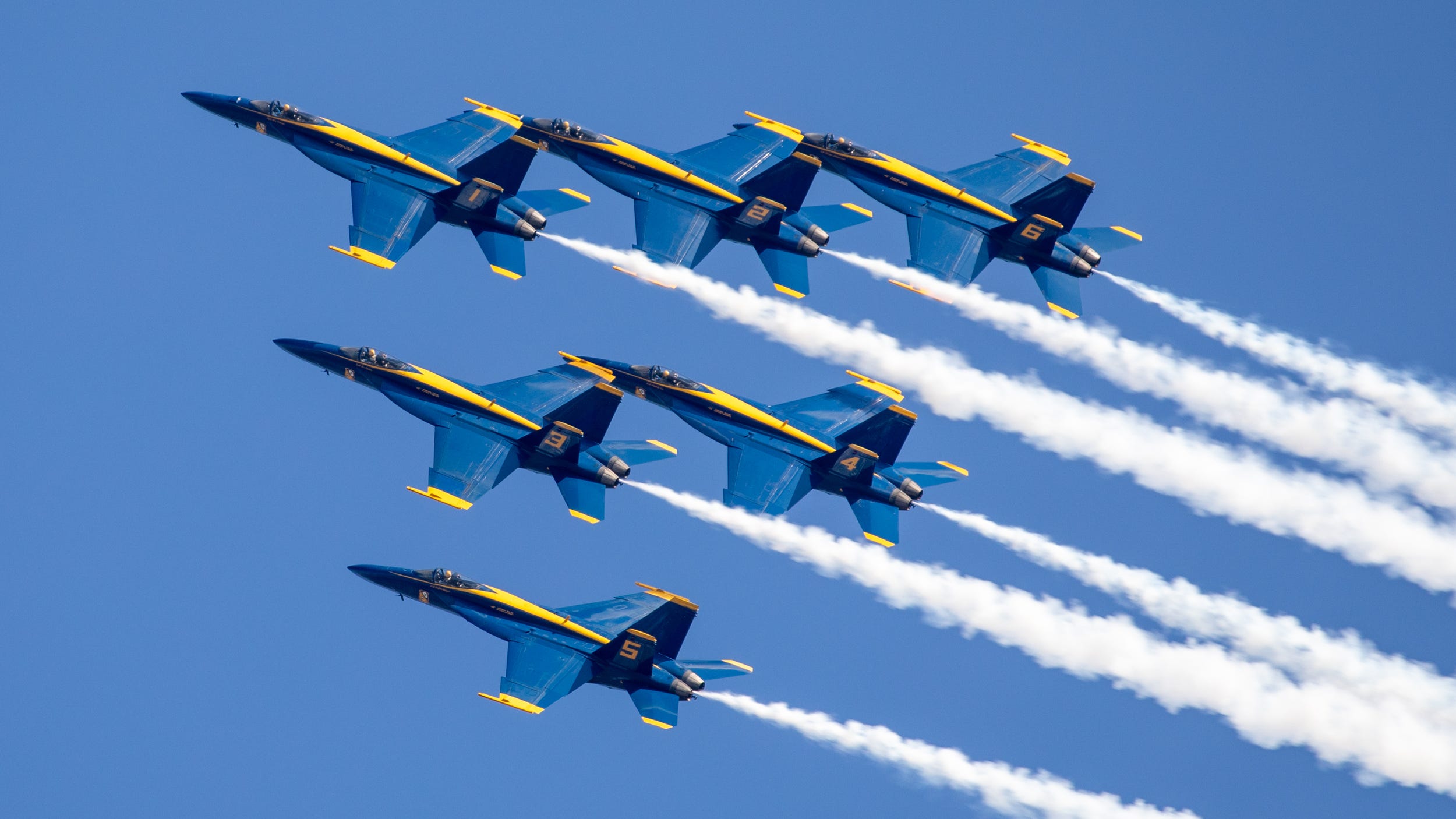
Feel free to use these photos however you like. If you choose to tag me, I am @pilotphotog on all social platforms. Thanks!
Post Flight Debrief
Like what you’re reading? Stay in the loop by signing up below—it’s quick, easy, and always free.
This newsletter will always be free for everyone, but if you want to go further, support the mission, and unlock bonus content like the Midweek Sortie, consider becoming a paid subscriber.
Your support keeps this flight crew flying—and I couldn’t do it without you.
– Tog
I agree with the writers points. But we're going to be in sad shape with Allies, since the current administration is shedding them at a fast rate. We may need to let Europe be the leader and we provide cover as an Allie to them.
The other thing..... China has the same intentions. We have the lead, but it appears it won't last long. The world situation, caused by questionable leaders, is already impacting the things required to maintain the lead.