

“At 0956z it made a right-hand turn off it’s track back to Sigonella and back out into the Persian Gulf. Two minutes later at 0958z it began a descent from 50,000ft down to 9,500ft by 1011z, at which point @flightradar24lost it’s signal.”
—Armchair Admiral Twitter Post
Mission Briefing
High above the shimmering expanse of the Persian Gulf, the MQ-4 Triton glides on its patrol run, slicing through the morning haze. Suddenly, its transponder crackles out a warning, a communication blackout. With the pilot’s voice lost to the wind, the big bird banks gently and begins a silent, self-directed descent, the fate of its mission now hanging in the balance.
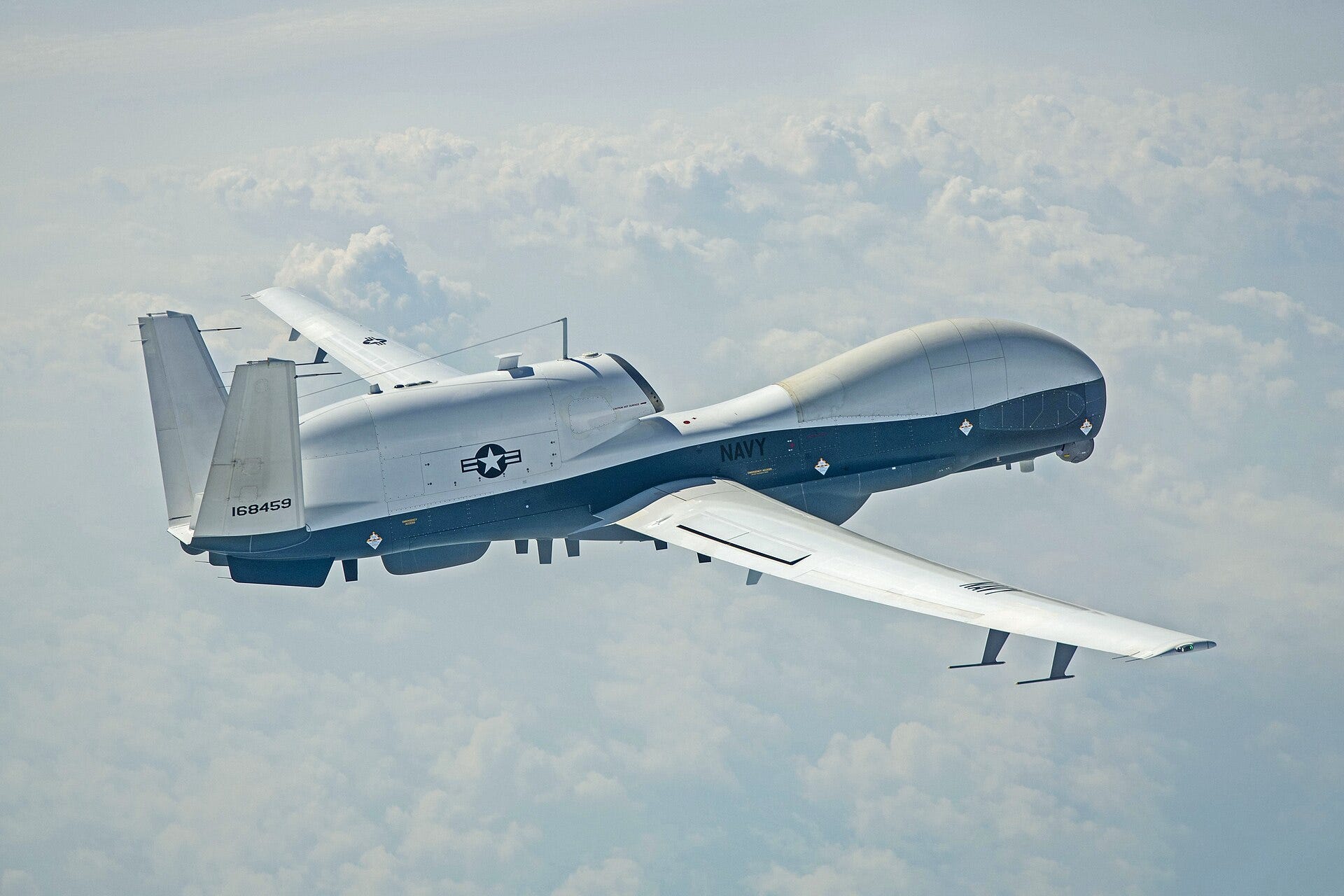
MQ-4 Triton Disappears over Persian Gulf
The evening skies over the Persian Gulf had a story to tell on 9 April, 2026. High above the blue, a U.S. Navy MQ-4C Triton drone—one of those silent aviators that fly without a pilot onboard—vanished from the digital gaze of flight trackers.
One moment it was cruising at a breathtaking 52,000 feet, bound for its home base at Naval Air Station Sigonella in Italy. The next, it began a slow, dramatic descent, dropping to 9,500 feet in just under fifteen minutes. On its way down, the drone’s transponder blinked out a 7400 code: a silent SOS to the world, signaling that its remote pilot had lost contact.
But the drama didn’t end there. As the Triton continued its descent, it reportedly switched to a 7700 squawk, the universal sign for a full-blown emergency. In those tense final moments, the drone appeared to veer toward Iranian airspace before its signal faded for good.
No official word has come from the Navy yet, and the fate of the Triton remains shrouded in mystery. Did it crash into the Gulf’s waters? Was it somehow intercepted, jammed, or brought down by unseen hands? The only certainty is uncertainty, though history does offer clues.
The U.S. has lost several drones over the years in the region, including at least sixteen MQ-9 Reapers. Back in 2019, Iran shot down a similar RQ-4A over international waters. These drones are programmed to circle and wait if they lose their link home, not to land, leaving them vulnerable in the vast, contested skies.
For now, the Triton’s last flight is just another chapter in the tense, cinematic saga of unmanned flight over the Gulf.
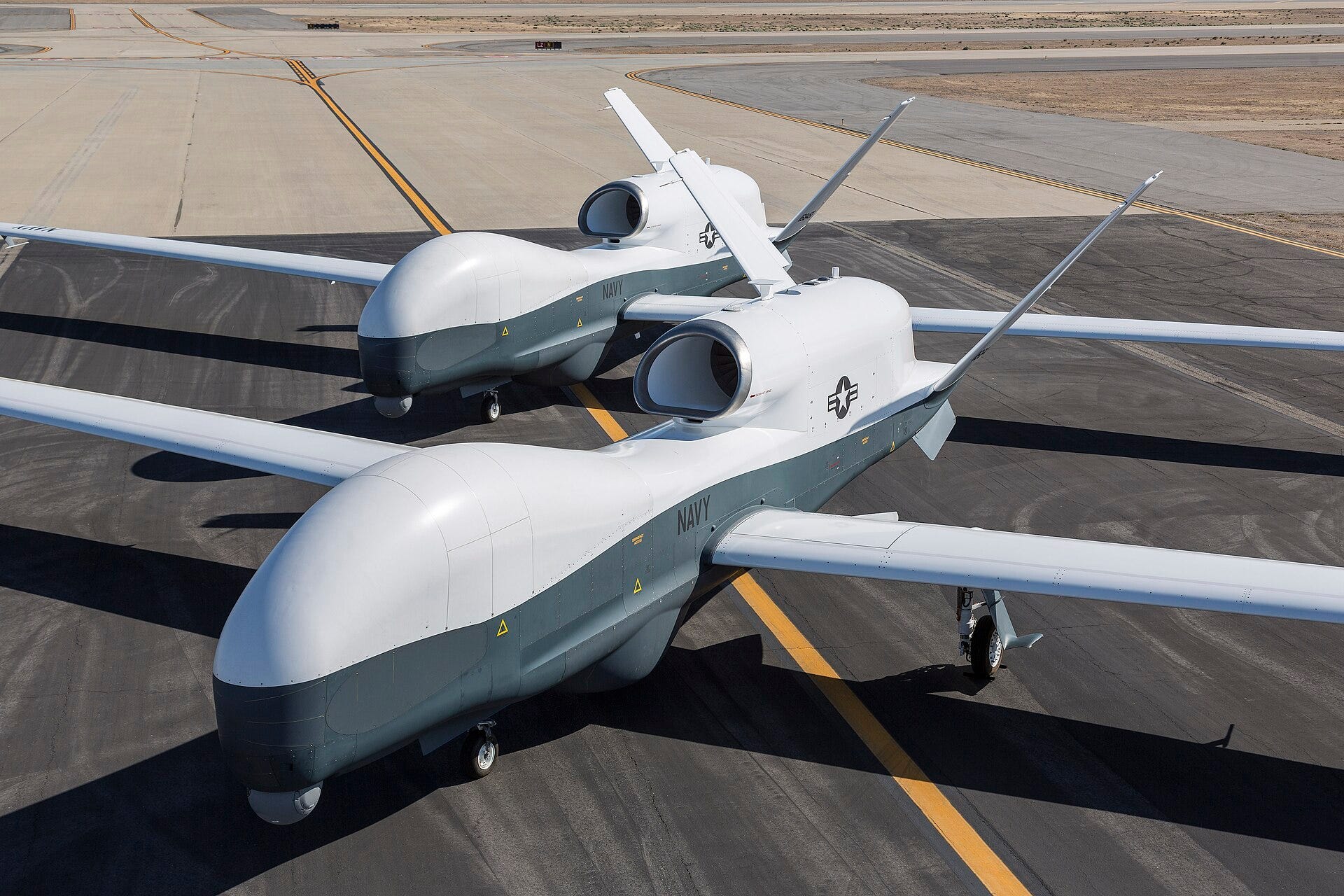
A Closer Look at the Triton
The Triton is no ordinary machine, but a relentless storyteller in the sky. Soaring above 50,000 feet, it sees farther, lingers longer, and moves with effortless grace. It’s the aviator’s answer to the world’s wildest oceans; a sentry that never tires, keeping watch for over 24 hours at a stretch, covering 7,400 nautical miles on a single mission.
Triton isn’t just watching; it’s narrating the unfolding story of the sea below, tracking ships, spotting threats, and relaying every detail to its crewed allies in real time. The data flows fast—across domains, across continents—giving decision-makers the edge to act before danger even shows its face.
It’s Northrop Grumman’s legacy of high-flying autonomy, now sculpted into a winged guardian that warns of missiles, hunts for hidden dangers, and brings home the big picture from a safe distance.
With its ultra-long endurance and sharp senses, Triton is more than a scout. It’s a sentinel for homeland defense, always present, always vigilant, always ready for the next chapter.
Primary Function: Persistent Maritime ISR
Contractor: Northrop Grumman
Propulsion: Rolls-Royce AE3007H
Length: 47.6 feet (14.5 meters)
Wingspan: 130.9 feet (39.9 meters)
Height: 15.4 feet (4.7 meters)
Weight: Max design gross take-off: 32,250 pounds (14,628.4 kilograms)
Crew: 5 per ground station (Air Vehicle Operator, Tactical Coordinator, 2 Mission Payload Operators, SIGINT coordinator)
What Triton’s Disappearance Signals
Triton isn’t just a drone. It’s the Navy’s eye in the sky, a high-flying storyteller with the soul of an aviator. Imagine it soaring above 50,000 feet, keeping watch over the endless blue, its sensors sweeping vast stretches of ocean for over a day at a time.
While the world below hustles, Triton glides with cinematic calm, scanning, listening, always collecting the next chapter of the maritime saga.
When one of these silent sentinels vanishes over the Persian Gulf, the story takes a dramatic twist. This isn’t just a technical glitch; it’s a reminder that even the most advanced surveillance can be knocked off course in these tense waters.
For allies who count on Triton’s long reach and sharp vision—catching early warning signs, spotting shifting threats—its loss sends ripples through the whole network.
The big lesson? In this airborne chess game, losing a Triton means more than a blip on the radar. It raises the stakes on how we command, communicate, and secure the skies.
The Triton’s real superpower is giving everyone a heads-up before trouble erupts. Its sudden silence is a cinematic cliffhanger. It is a signal that the watchers, too, are being watched, and the contest for control overhead is only growing sharper.
This Week in Aviation History
The Red Baron—Manfred von Richthofen—soared through the clouds as the most feared ace of World War I, a legend with a flair for the dramatic. In just 19 months, this Prussian nobleman downed eighty Allied planes, his bright-red aircraft cutting a bold figure across the war-torn skies. When he took the helm of the notorious Flying Circus, his myth only grew, the stuff of dogfights and whispered campfire tales. But in April 1918, the sky wrote a new ending: the Baron was shot down over France, his cinematic journey cut short in a blaze of glory.
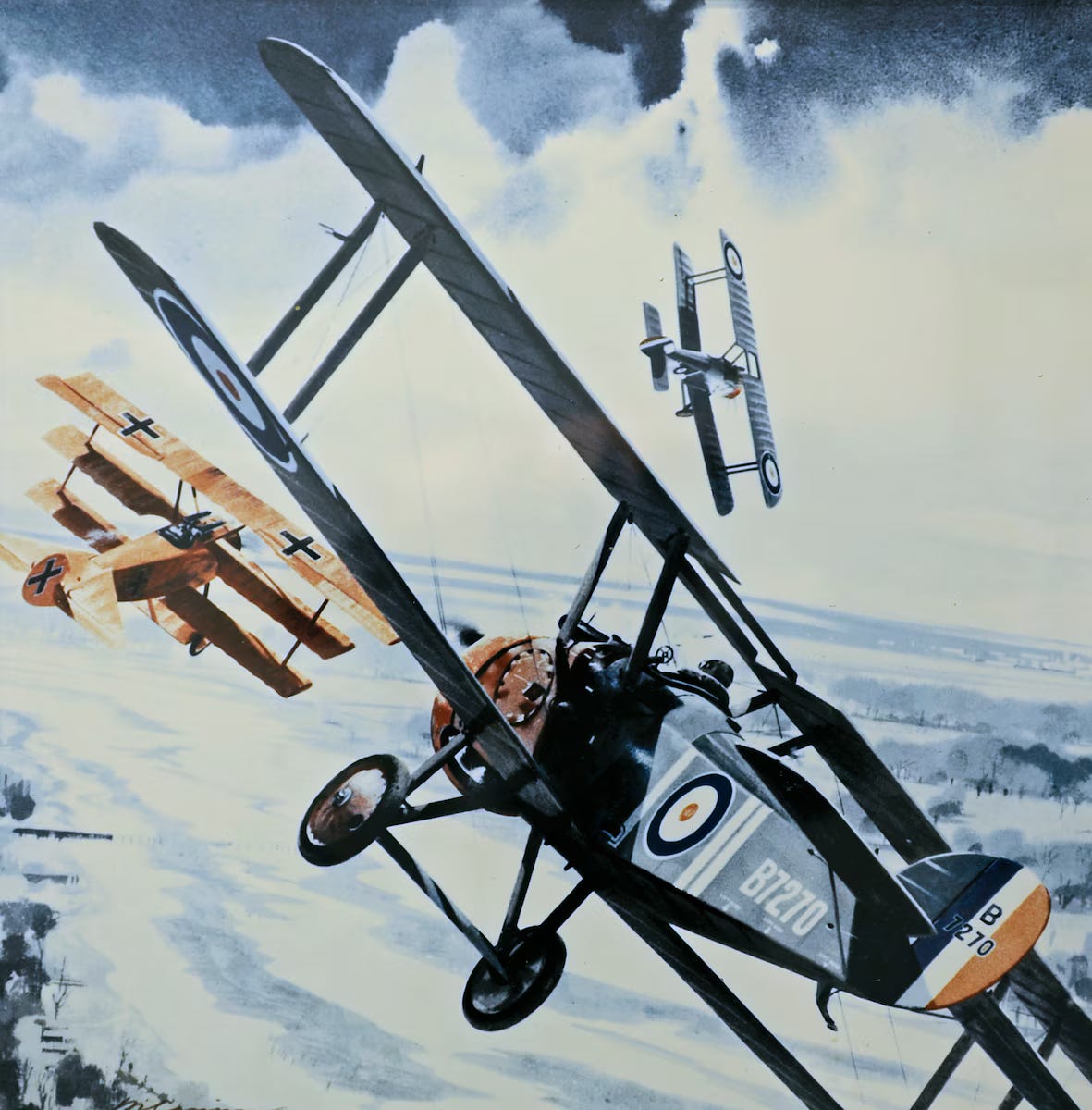
The Death of the Red Barron
Manfred von Richthofen—the legendary Red Baron—was no stranger to danger in the skies, but his luck nearly ran out in July 1917. During a fierce dogfight with British pilots, a bullet grazed his head, fracturing his skull.
He survived, but the wound haunted him. Richthofen returned to his Flying Circus within weeks, yet he was never quite the same. The headaches lingered, and some believe he battled not just physical pain, but the invisible scars of PTSD: a shadow that followed him through the clouds.
Fast-forward to 21 April 1918. Richthofen’s final chapter unfolds over the fields of Vaux-sur-Somme, France. He chased an enemy fighter low to the ground, his crimson aircraft swooping like a hawk. Suddenly, Australian machine gunners opened fire from below, and Canadian ace Arthur Roy Brown joined the fray from above. In the whirlwind of bullets, Richthofen was struck in the chest.
He crash-landed and died in the field: a cinematic end befitting an aviator’s saga. Brown was credited with the kill, but the truth is murky; historians still debate whether the fatal shot came from the air or the ground.
Allied soldiers buried Richthofen with full honors. He was just 25, but with 80 confirmed kills, he’d set a record unmatched in World War I.
The Red Baron’s legend soared long after his death, immortalized in books, movies, songs, and comic strips. His story remains the stuff of aviation lore—cinematic, mysterious, and forever flying through history.
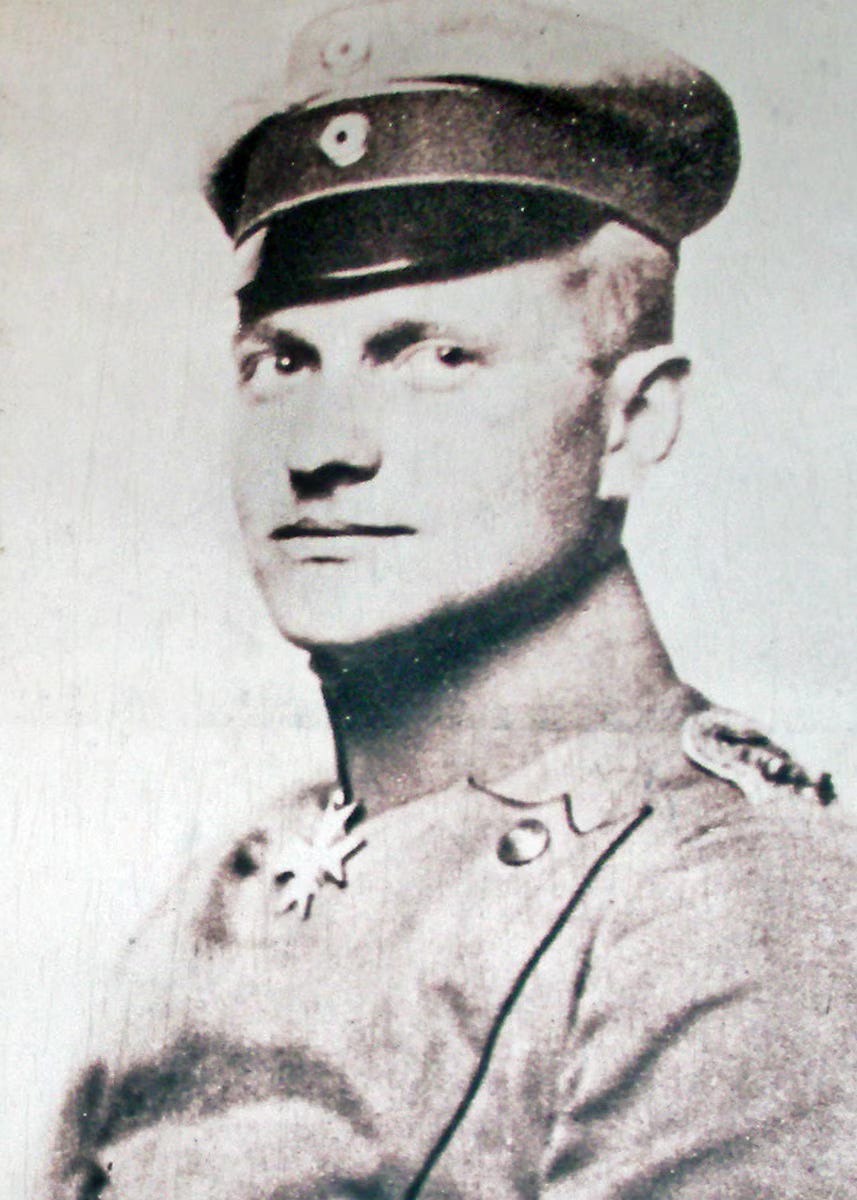
Who was the Infamous Red Baron?
It’s 2 May 1892, and a boy named Manfred von Richthofen is born into a world of privilege—a stately Prussian manor, old family crests, and rolling estates that would one day become part of Poland.
Young Manfred’s days are a blur of horseback rides, hunting parties, and lively sport, the kind of golden youth you’d expect from aristocracy. But at just 11 years old, the adventure takes a sharp turn: off to military school he goes, trading childhood games for the discipline of cadet life.
Fast forward to 1911, the age of aviation is just on the horizon, and Manfred, now a poised young officer, earns his commission with the 1st Uhlan cavalry regiment. But when the Great War erupts, the world changes overnight. He rides with his regiment across both the Eastern and Western Fronts, earning the Iron Cross for his raw courage.
Yet the trenches soon swallow the glory, and Manfred, bored stiff by supply runs, aches for something more daring. “I didn’t join up to fetch cheese and eggs,” he supposedly quips to his superiors, his eyes lifted skyward.
The fates answer. By the summer of 1915, our restless aviator is soaring above Russia. First, as a backseat observer, scanning the world below from a rattling reconnaissance plane.
He earns his wings soon after on the Western Front, where the real thrill of flight—of combat—calls to him. It’s here he crosses paths with the legendary Oswald Boelcke, who recognizes a kindred spirit and recruits Manfred into Jasta 2, Germany’s new elite fighter squadron.
Under Boelcke’s sharp tutelage, Manfred becomes more than just another pilot. On September 17, 1916, he claims his first aerial victory, sending a British craft spiraling down over France. One by one, the tally grows.
Five kills, and he’s officially a “flying ace.” Sixteen, and he’s the top living German pilot. For his precision and daring, he’s awarded the coveted Pour le Mérite: the famed “Blue Max.”
Come January 1917, Manfred is handed the reins to his very own squadron, Jasta 11, a collection of hotshot pilots that includes his own younger brother, Lothar. But it’s not just his flying that sets him apart.
Manfred’s Albatros D.III soon roars through the clouds painted a brilliant, unmistakable red: a streak of fire against the sky. The legend is born: the Red Baron. Or, as some called him, “le Petit Rouge,” “the Red Battle Flier,” and “the Red Knight.”
In the cockpit, with the wind at his back and his enemies before him, Manfred von Richthofen became the very spirit of chivalry and danger: a hero, a hunter, and the master of the skies.
The Legacy of “Ace of Aces” for Modern-Day Aviators
The legend of Manfred von Richthofen doesn’t just live on because he was World War I’s most famous ace. His last flight, a sun-drenched, adrenaline-soaked chase over the trenches, revealed the true nature of air combat at its core.
As the folks at From Balloons to Drones tell it, Richthofen wasn’t just a hotshot with a crimson triplane. He was a master of discipline, sharp thinking, and knowing exactly when to strike or when to slip away into the clouds.
But on April 21, 1918, something changed. The Red Baron pushed past his own rules, doggedly chasing Wilfrid May low over enemy territory, blind to the danger below. One moment of tunnel vision—one break in discipline—and ground fire brought down the king of the skies.
That’s the gut punch of his story. You can be the best stick-and-rudder pilot in the world, but if your judgment slips. If you let the thrill of the chase override your training, your doctrine, your survival instincts; even legends can fall.
The lesson is as clear as a summer sky: airpower is about more than machines. It’s about the person in the cockpit, their training, their tactics, their split-second choices, and their ability to learn—fast—when the world turns upside down. Richthofen’s last sortie became a textbook on why disciplined thinking and adaptability aren’t just nice-to-haves; they’re what keep you alive up there.
And then there’s the myth. The Red Baron—more than a pilot, now a folk hero with his own share of mystery. Who fired the final shot? The debate rages on, fueling his legend and cementing that last dogfight as one of aviation’s great what-ifs.
All these years later, the lesson still echoes across cockpits and command centers. Whether you’re dueling in canvas-and-wire biplanes or piloting drones by satellite, one thing hasn’t changed: airpower rewards sharp thinking and punishes even the briefest lapse.
That’s the Red Baron’s real legacy: a warning, a legend, and a story still soaring through the ages.
In Case You Missed It
Photo Outlet
Every issue of Hangar Flying with Tog gets you a free image that I’ve taken at airshows:
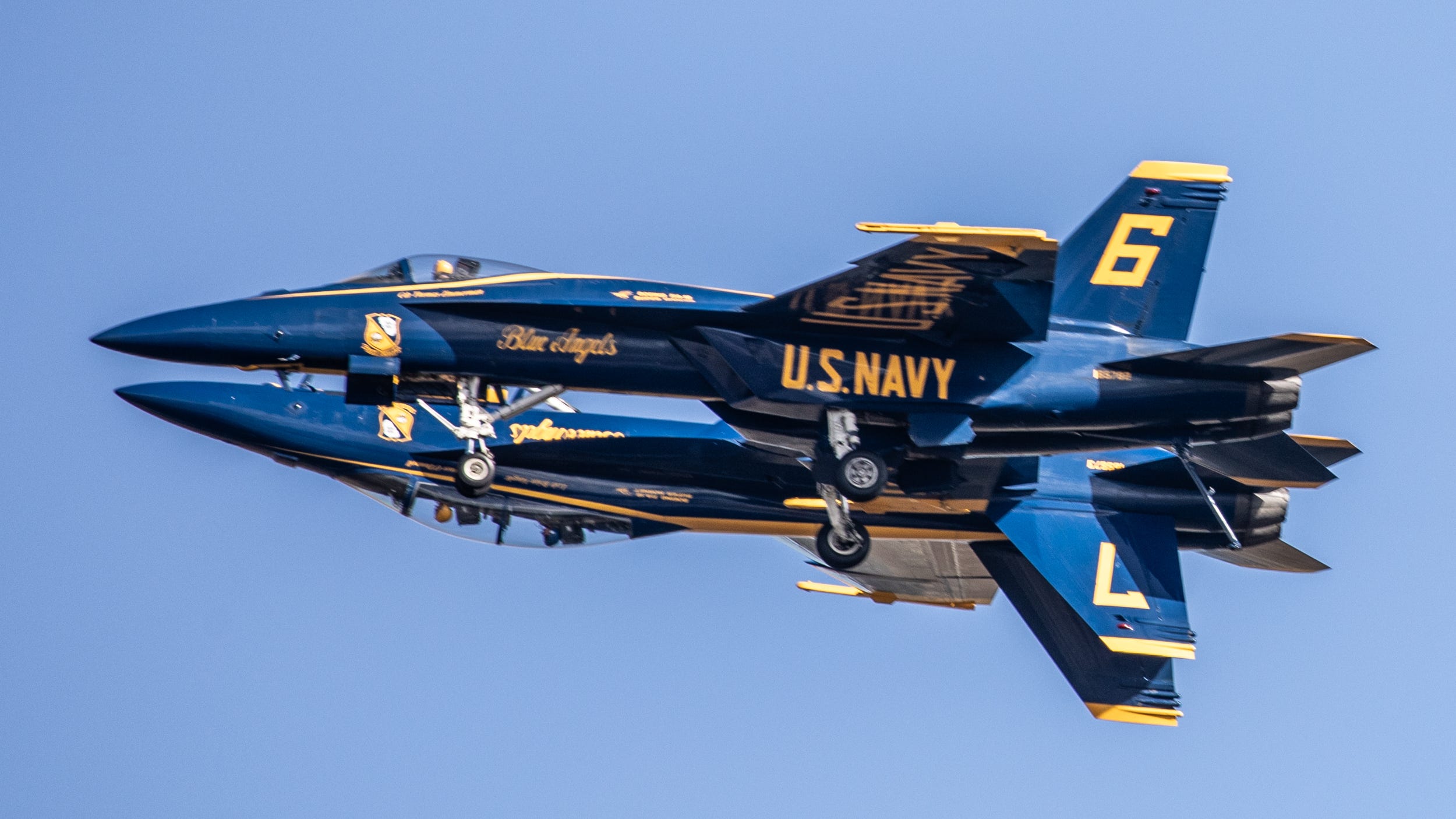
Feel free to use these photos however you like. If you choose to tag me, I am @pilotphotog on all social platforms. Thanks!
Post Flight Debrief
Like what you’re reading? Stay in the loop by signing up below—it’s quick, easy, and always free.
This newsletter will always be free for everyone, but if you want to go further, support the mission, and unlock bonus content like the Midweek Sortie, consider becoming a paid subscriber.
Your support keeps this flight crew flying—and I couldn’t do it without you.
– Tog