

The B-2 Spirit Unleashes LRASM at Sea and Remembering Its First Flight
Born as a Cold War stealth revolution, the B-2 Spirit now proves its enduring reach over Australia, linking bomber legacy to Indo-Pacific deterrence.
“The B-2’s impressive performance underscores the US military’s commitment to adaptability and flexibility in the face of emerging security challenges.”
—General Kevin B. Schneider, Commander, Pacific Air Forces.
Mission Briefing
For the first time ever, the U.S. Air Force pulled back the curtain and let the world in on a secret: the B-2A Spirit stealth bomber can now pack the punch of the AGM-158C Long Range Anti-Ship Missile. This reveal came straight out of a recent Sinking Exercise, where the B-2 showed off its new tricks. It’s the kind of headline that feels ripped from an action flick—our silent bomber just got a serious boost in firepower.
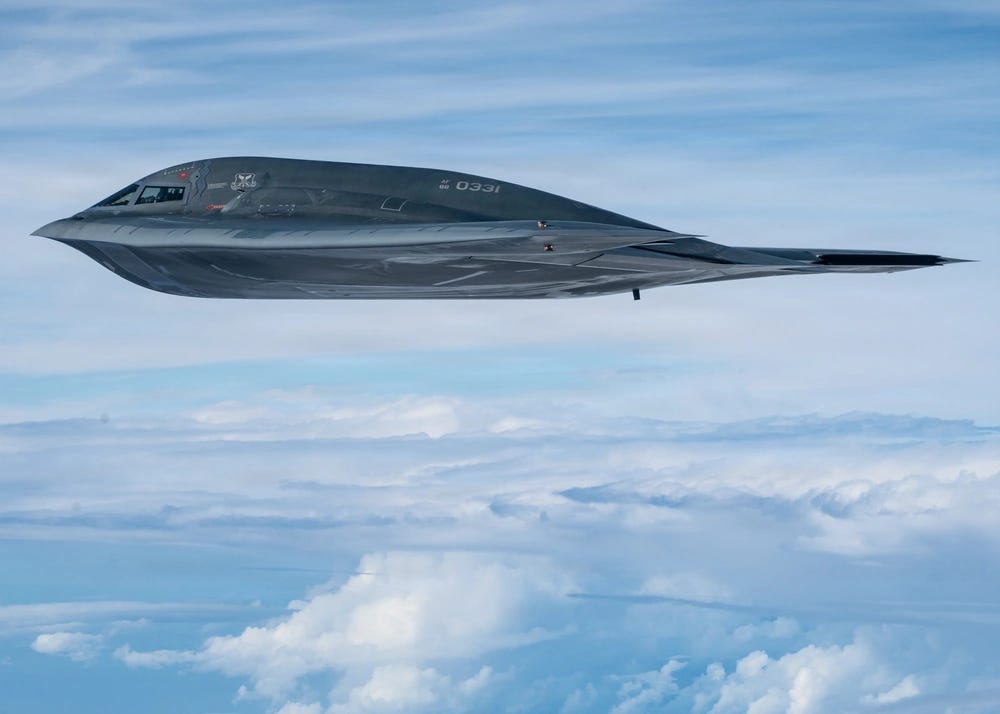
Stealth Over the Philippine Sea
High above the rolling blue of the Philippine Sea, the legendary B-2A Spirit ghosted through the clouds, its diamond-shaped silhouette nearly invisible, even as it carried out something truly groundbreaking.
The U.S. Air Force’s Pacific Air Forces just revealed that this stealth bomber didn’t just join another Sinking Exercise. This time, it unleashed the newly integrated AGM-158C Long Range Anti-Ship Missile (LRASM), a move quietly kept under wraps until now.
Now, here’s where it gets cinematic. The B-2 had already been cleared to carry the similar JASSM, making this latest upgrade a fast-track affair. Think of it as swapping out the special effects reel for something with even more punch, all thanks to the shared airframe between these two missiles.
On 27 June 2026, during Exercise Valiant Shield, the B-2 swept out over the Mariana Island Range Complex. Its target? A decommissioned Austin-class amphibious transport, the USS Juneau, floating some 200 nautical miles offshore, a ghost ship about to play its final scene.
But this wasn’t a solo performance. The sky and sea were thick with players: a Japan Maritime Self-Defense Force submarine lurked below, the USS George Washington carrier prowled nearby, and New Zealand’s P-8A Poseidon fired off Harpoon missiles in its first-ever live-fire missile run.
Before a Japanese torpedo even hit the water, the Juneau had already been hammered by at least three strikes; one likely from that B-2’s LRASM.
And the finale? It was a barrage: a JMSDF SH-60 helicopter swooped in to launch a Hellfire missile, a JMSDF destroyer sent off a Type 90 anti-ship missile, and a JASDF F-2 fighter let loose an ASM-2.
The exercise was more than a test; it was a fascinating showdown, a multinational symphony of air, sea, and stealth, all choreographed over a single, ill-fated ship.
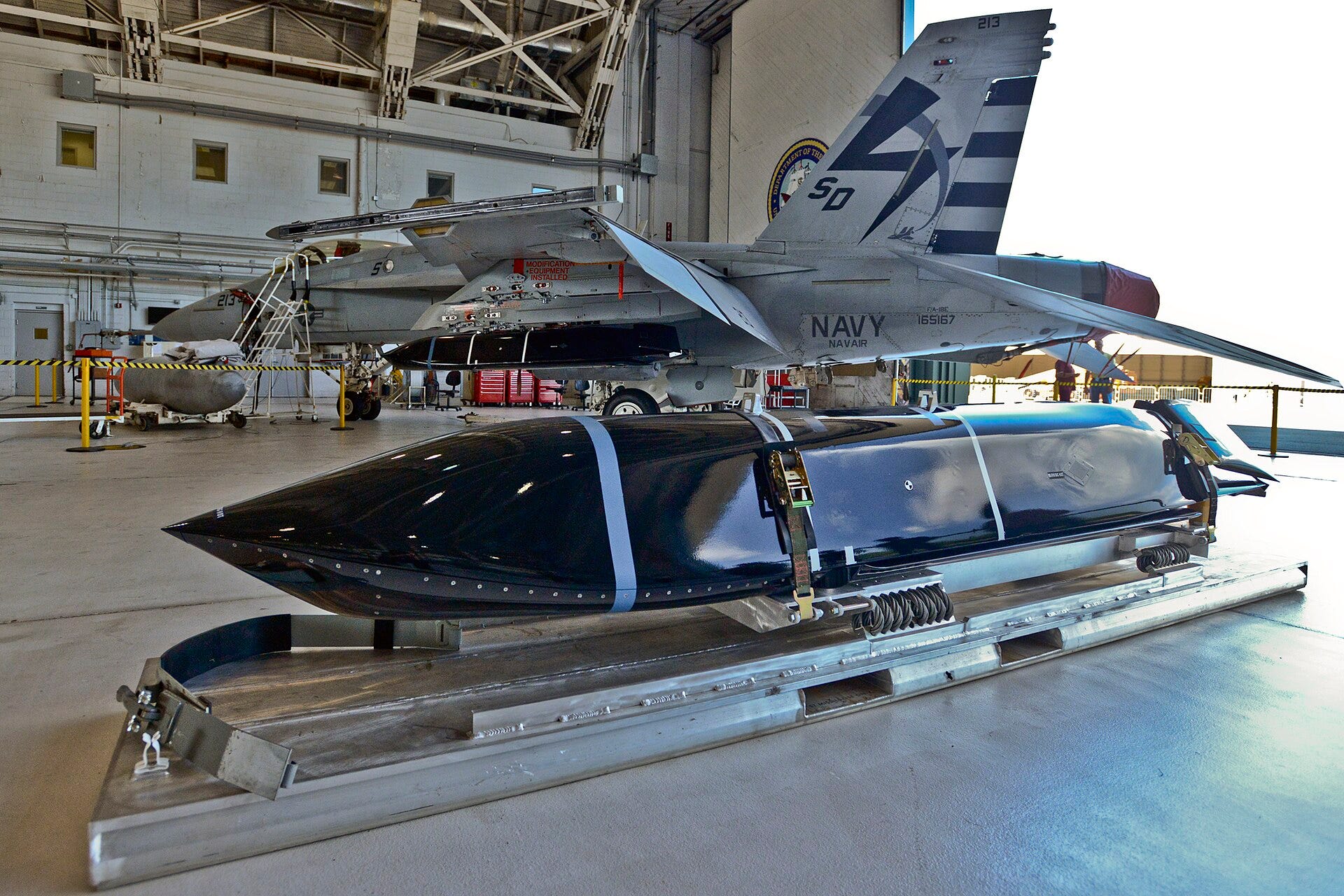
The AGM-158C LRASM
The AGM-158C LRASM isn’t just another missile. It’s the next-gen ace up the sleeve for the Air Force and Navy, built to slip through the world’s toughest defenses like a ghost in the night.
Born from the AGM-158B JASSM-ER and crafted by DARPA’s tech wizards, the LRASM is a stealthy, ship-killing cruise missile that’s rewriting the playbook for anti-surface warfare. NAVAIR frames it as the near-term answer to the military’s need for a flexible, long-range punch that can take down high-threat ships in some of the world’s nastiest waters.
Here’s where the plot thickens: in a world where jamming and electronic warfare are the norm, the LRASM isn’t shackled to constant ISR feeds or GPS networks. Once it leaves the rails, it uses GPS to get close. But then flips the switch, onboard sensors and smart algorithms kick in, letting the missile hunt, identify, and lock onto its prey all by itself.
This semi-autonomous brain means even if the targeting data is rough, the missile can still sniff out and smack the intended target, dodging the digital smokescreens of modern battle.
The LRASM family is growing, too. The original LRASM 1.0, which hit the scene in 2019, is already hanging from the wings of the B-1B Lancer and the F/A-18E/F Super Hornet.
The upgraded LRASM 1.1 came online in 2023 and is now going through its paces, with plans to arm the P-8A Poseidon as well. The horizon is getting even wider with the LRASM C-3, promising more range and an updated threat library, though the Navy has decided to double down on its anti-ship focus rather than stretch into land attack, at least for now.
Operational capability for LRASM C-3 is on deck for late 2026, bridging the gap until the next big leap—OASuW Increment 2—hits the fleet in the early 2030s.
Meanwhile, the story keeps building: in 2024 and 2025, F-35C and F-35B test pilots at NAS Patuxent River put both JASSM and LRASM variants through their first integration flights, signaling a future where stealth jets and stealth missiles team up for the ultimate maritime strike package.
What F-35C–LRASM Integration Means for the U.S. and Its Allies
From September 2024 through April 2026, the Navy’s F-35C and LRASM pairing underwent its first big round of flight-science testing—a behind-the-scenes blockbuster setting up a new era for the carrier air wing.
These weren’t just dry runs or box-checking flights; they cracked open the playbook, letting the F-35C flex its sensing muscle and battlefield smarts while hauling the AGM-158C missile on its wings, all in pursuit of full, combat-ready integration.
The implications? They’re as big as the Pacific. By arming the F-35C with LRASM, U.S. carriers suddenly get a major boost in reach and tactical flexibility, letting commanders punch at defended ships from beyond the horizon.
Sure, carrying missiles externally might dent the jet’s stealth edge a bit, but in return, the Navy gets a fifth-gen “quarterback” that can call the plays and fire the long ball. Striking high-threat targets and spreading the strike load across the air wing.
For allies, this is good news too. Coalition navies and air forces can pool their sensors and targeting, while F-35Cs launch in from the mobile deck, weaving together a tougher, more unpredictable maritime defense.
The final act? That’s still to come. But you can feel the momentum: the next-gen carrier air wing is taking shape, seeing farther, sharing quicker, and putting enemy warships on notice long before they get close.
This Week in Aviation History
A quarter-century ago, the first B-2 Spirit soared off the runway and vanished into the blue, marking a milestone that still echoes through Air Force hangars today. As she turns 25, everyone who’s ever kept her flying gets to marvel at how just 20 of these stealthy legends can tip the balance for the whole Department of Defense.
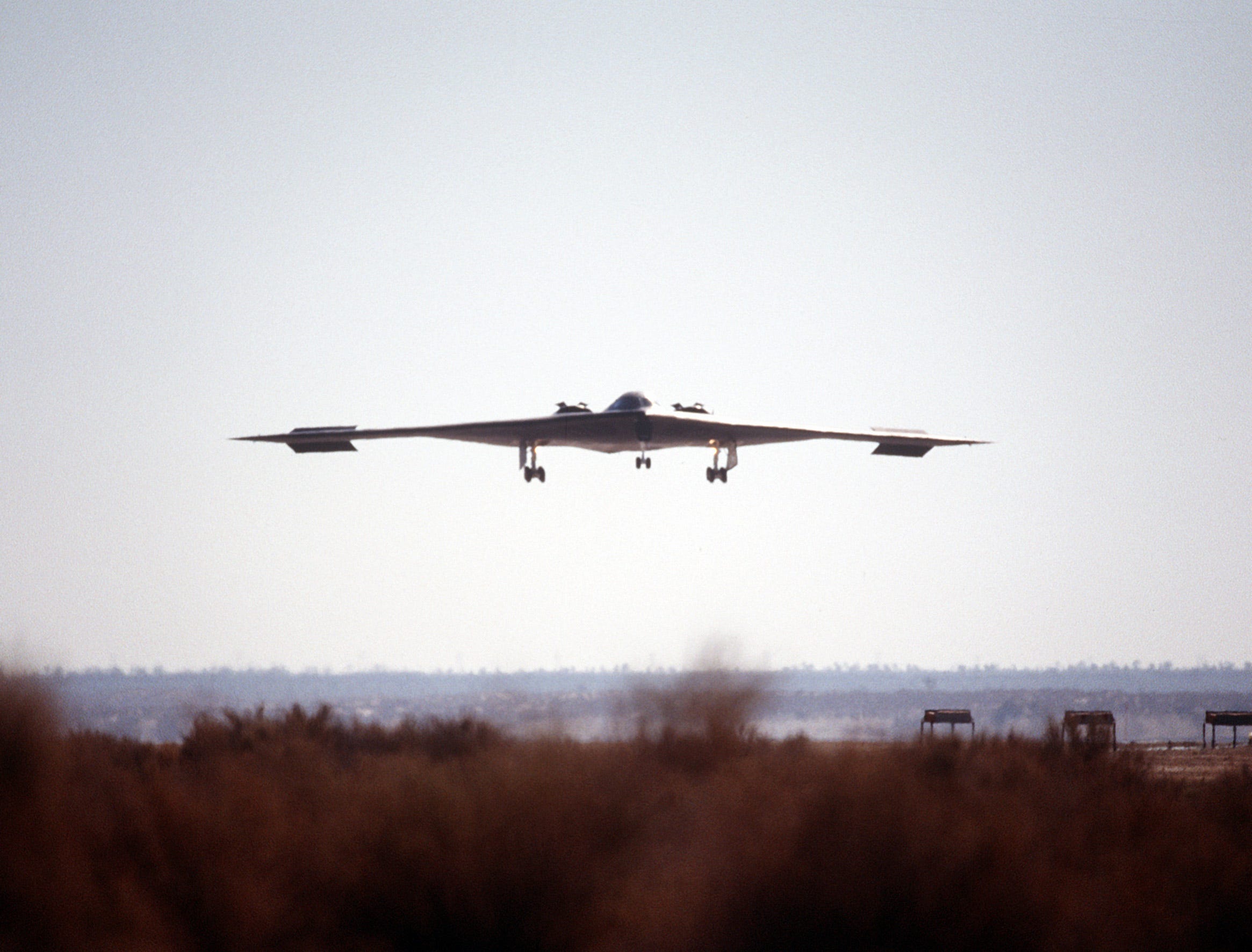
B-2 Spirit’s First Flight
Back in the shadowy days of the 1980s, when radar nets grew sharper and hostile skies bristled with missiles, the U.S. Air Force faced a chilling question: could its bombers still slip past enemy lines and reach the heart of danger? The answer wasn’t just a new bomber. It was a revolution in the sky.
Enter the B-2 Spirit, a ghostly marvel that fused the sleek, otherworldly silhouette of the flying wing with a cloak of invisibility, forged from composite materials, secret coatings, and classified tricks known only to a handful of engineers and pilots.
With stealth woven into its very bones, the B-2 turned the tables on air defenses that once seemed unbeatable, gliding through radar nets like a shadow at midnight.
The world got its first glimpse of this airpower legend on 22 November 1988, as the top-secret B-2 rolled out under the California sun at Air Force Plant 42—mystery and muscle, all wings and whispers.
The Spirit’s maiden flight soared into history on 17 July 1989, and by December 1993, the first operational B-2 took its place on the flight line, ready for anything. Home base? Whiteman Air Force Base, Missouri, a place where aircrews became legends, prepping for missions that would shape the next era of warfare.
It didn’t take long for the B-2 to prove its mettle: from the skies above Serbia in Operation Allied Force, to the mountains of Afghanistan and the sands of Iraq, this bomber showed the world it could strike anywhere, anytime, with a precision only dreamed of before.
Inside the cockpit, it’s just two aviators: pilot on the left, mission commander on the right. Their typical day on the job? A marathon, over 30 hours aloft, fueled mid-air again and again, flying halfway around the globe and back, all in a single mission. With up to 40,000 pounds of precision-guided thunder tucked away, the B-2 could erase targets from maps while most of the world slept.
Building the B-2 wasn’t just about flying. It was about surviving the extremes. Northrop Grumman built two extra airframes, stripped bare of engines and avionics, just to see how much stress the Spirit could take.
Engineers strapped them to hydraulic rigs and pushed them to the edge; the wings withstood 161 percent of their design limit before finally giving in. Early models braved the elements too: the Spirit of Ohio endured punishing heat and biting cold in the McKinley Climatic Lab, then proved itself again in the wilds of Alaska.
Technicians marked that achievement with a signature nose art—”Fire and Ice”—now a museum piece, immortalizing the B-2’s journey from classified dream to steely legend of the sky.
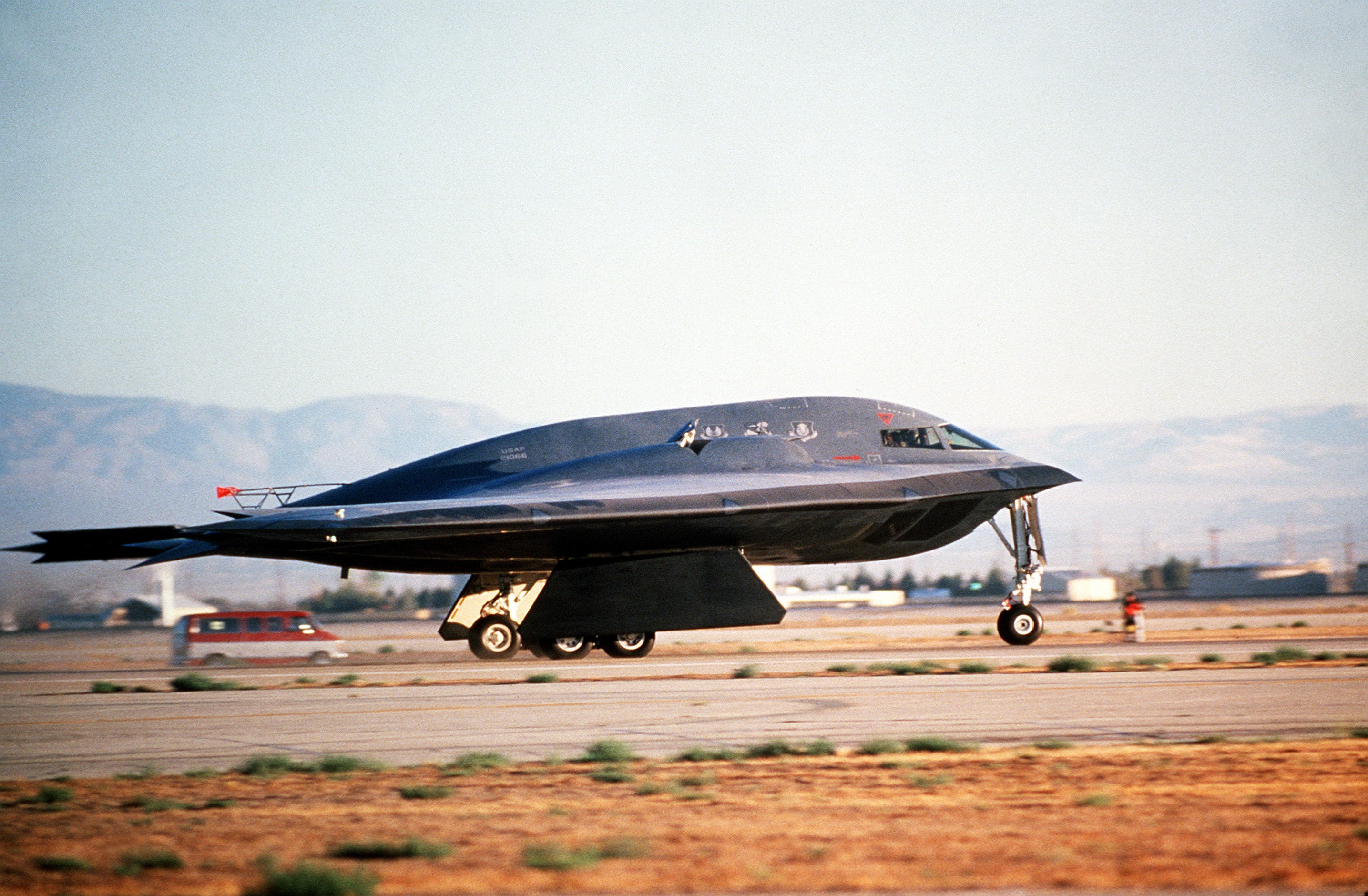
The Anatomy of the Spirit
The B-2 provides the penetrating flexibility and effectiveness inherent in manned bombers. Its low-observable, or “stealth,” characteristics give it the unique ability to penetrate an enemy’s most sophisticated defenses and threaten its most valued, and heavily defended, targets.
Its capability to penetrate air defenses and threaten effective retaliation provides a strong, effective deterrent and combat force well into the 21st century.
The revolutionary blending of low-observable technologies with high aerodynamic efficiency and large payload gives the B-2 important advantages over existing bombers. Its low-observability provides it greater freedom of action at high altitudes, thus increasing its range and a better field of view for the aircraft’s sensors. Its unrefueled range is approximately 6,000 nautical miles (9,600 kilometers).
The B-2’s low observability is derived from a combination of reduced infrared, acoustic, electromagnetic, visual and radar signatures. These signatures make it difficult for the sophisticated defensive systems to detect, track and engage the B-2.
Many aspects of the low-observability process remain classified; however, the B-2’s composite materials, special coatings and flying-wing design all contribute to its “stealthiness.”
The B-2 has a crew of two pilots, a pilot in the left seat and mission commander in the right, compared to the B-1B’s crew of four and the B-52’s crew of five.
Primary function: multi-role heavy bomber
Contractor: Northrop Grumman Corp. and Contractor Team: Boeing Military Airplanes Co., Hughes Radar Systems Group, General Electric Aircraft Engine Group and Vought Aircraft Industries, Inc.
Power plant: four General Electric F118-GE-100 engines
Thrust: 17,300 pounds each engine
Wingspan: 172 feet (52.12 meters)
Length: 69 feet (20.9 meters)
Height: 17 feet (5.1 meters)
Weight: 160,000 pounds (72,575 kilograms)
Maximum takeoff weight: 336,500 pounds (152,634 kilograms)
Fuel capacity: 167,000 pounds (75750 kilograms)
Payload: 60,000 pounds (27,216 kilograms)
Speed: high subsonic
Range: intercontinental
Ceiling: 50,000 feet (15,240 meters)
Armament: conventional or nuclear weapons
Crew: two pilots
Unit cost: Approximately $1.157 billion (fiscal 1998 constant dollars)
Initial operating capability: April 1997
The Stealthy Revolution: The Enduring Legacy of the B-2 Spirit
The B-2 Spirit didn’t just fly missions. It rewrote the entire script for what it means to wield power from the sky. When this bat-winged marvel first slipped into the clouds in 1989, it stitched together global reach, massive firepower, pinpoint accuracy, and an uncanny knack for disappearing acts.
The result? An aircraft that could sneak through the world’s toughest defenses and put any target—nuclear or conventional—squarely in its crosshairs, no matter how far away.
In real-world combat, the Spirit turned stealth into more than just a cool science project. From the Balkans to Afghanistan, Iraq, and Syria, it showed that a handful of bombers, launching from halfway around the globe and topping off on fuel in midair, could shake up entire battlefields. The B-2 didn’t just carry bombs. It carried a message: nowhere is out of reach.
It became an icon of deterrence, too, giving U.S. leaders a flexible ace up their sleeve and showing friends and foes alike that fortresses and distance are no match for a stealthy visitor.
But maybe the B-2’s greatest gift is what it leaves behind: proof that the flying wing works, and a blueprint for the next generation, the B-21 Raider. Even as the B-2 glides toward retirement, its ghostly signature lives on in the future of global airpower.
In Case You Missed It
Photo Outlet
Every issue of Hangar Flying with Tog gets you a free image that I’ve taken at airshows:
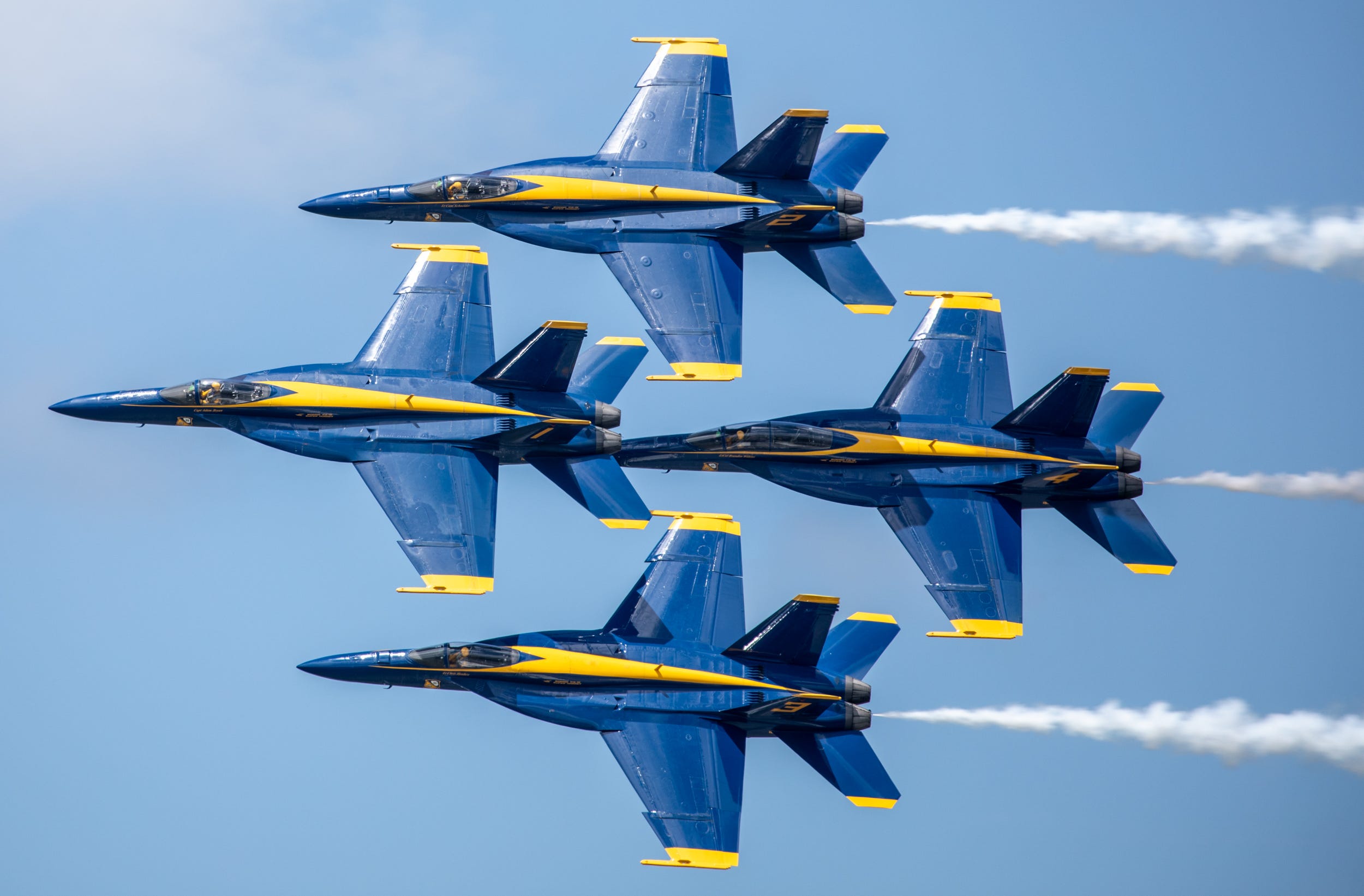
Feel free to use these photos however you like. If you choose to tag me, I am @pilotphotog on all social platforms. Thanks!
Post Flight Debrief
Like what you’re reading? Stay in the loop by signing up below—it’s quick, easy, and always free.
This newsletter will always be free for everyone, but if you want to go further, support the mission, and unlock bonus content like the Midweek Sortie, consider becoming a paid subscriber.
Your support keeps this flight crew flying—and I couldn’t do it without you.
– Tog