

“The task orders awarded in support of our mission partners, SDA and NRO, demonstrate the importance we have placed on being time efficient and cost conscious in our Phase 3 Lane 1 approach to reliably deliver space capability to the warfighter quicker and at the best value to the American taxpayer.”
—SSC’s System Program Director for Launch Acquisition Col. Matt Flahive
Mission Briefing
Nine national-security payloads just got a $739 million go-ahead, and that’s not just business as usual. It’s a thunderous signal that the pace of launches is now a weapon in its own right.
With Phase 3 Lane 1, SpaceX is stepping out of the role of mere “provider” and becoming the reflex, the muscle memory, behind America’s presence in orbit. Fast, repeatable, and always ready to light the fuse; this is the new rhythm of space power.
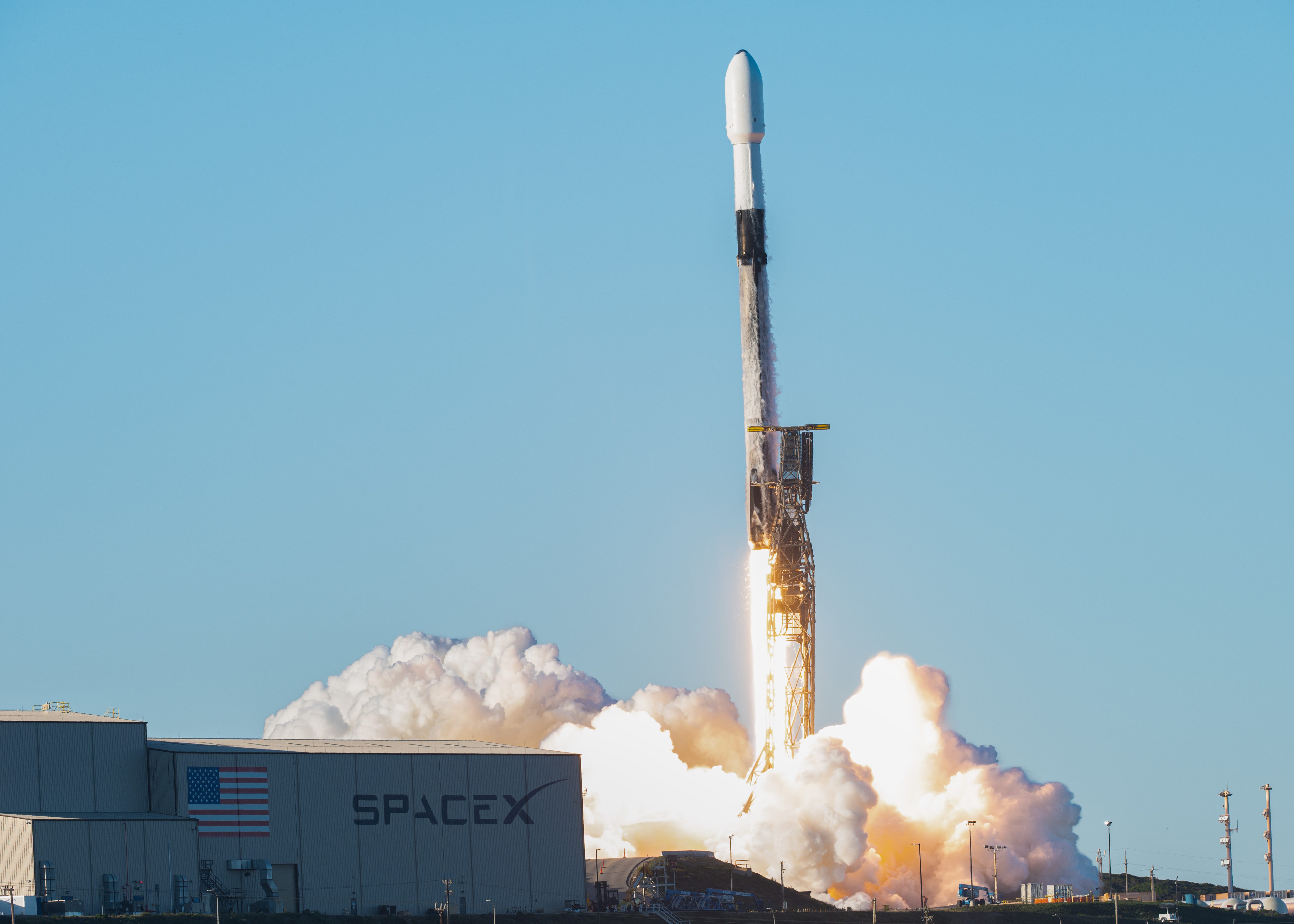
Cadence Wins: SpaceX Becomes the Backbone
Let me walk you through the story behind the Space Force’s latest contract. A deal that covers nine launch missions under the NSSL Phase 3 program, specifically in what they call Lane 1.
Now, these aren’t the most hair-raising, complex orbital profiles, but don’t let that fool you. Every one of these payloads is a piece of the national security puzzle, demanding top-shelf reliability and the kind of launch cadence that leaves nothing to chance.
The headline number is $739 million, and that covers the works: launch services, payload integration, ground ops, and all the extra precautions that come with classified cargo.
Do the math, and you get about $80 to $85 million per launch. It is a figure that’s still a bargain compared to the sticker prices of past U.S. military launches.
Two big players are at the heart of these missions. The Space Development Agency is busy building out low-Earth constellations for threat detection and tracking, while the National Reconnaissance Office is sending up the most sensitive intelligence satellites America has.
That dual focus tells you just how much trust the government is putting in SpaceX for missions that range from global surveillance to backbone comms and intel.
Why SpaceX? It comes down to sheer launch muscle and consistency. In 2024 and 2025, they’ll notch more than 90 launches a year. No one in the West even comes close. That’s thanks to a streamlined operation, standardized Falcon 9 and Falcon Heavy rockets, and the near-routine recovery and reuse of those precious first stages.
For the Space Force, that means flexibility: they can stack launches close together, reshuffle at the last minute if needed, and always have a ride ready.
SpaceX, once thought of as the maverick outsider, now boasts a Falcon 9 record with a success rate north of 98%, even on the most hush-hush missions. When your payload is worth hundreds of millions, that kind of reliability is non-negotiable.
And here’s the kicker: SpaceX’s model of reusing rockets and keeping everything in-house means they can offer prices that leave other Western launchers in the dust.
In a world where budgets are tight but the need for satellites just keeps climbing, that cost edge means the Space Force can put more birds in the sky, faster, and keep America’s orbital advantage razor-sharp.
Decoding the Dollars: The Strategic Reason for Space Force’s $739 Million SpaceX Selection
Five of the missions are earmarked for the Space Development Agency’s ambitious plan to expand its missile warning and tracking web in low-Earth orbit. This summer or fall, two launches will send up a total of 18 satellites built by L3Harris.
Another flight will carry eight Millennium Space Systems satellites designed to show they can help a weapon system track, target, and even take out a variety of missile threats. Fast forward to mid-2027, and two more launches will add another 18 Lockheed Martin-built satellites to the constellation.
As for the NRO, the specifics are shrouded in secrecy. They haven’t said how many birds will fly on their four launches in 2026 and 2028. But with the NRO’s fleet already approaching 200 satellites, these missions are likely key components of its ever-adapting intelligence network.
The dollar figure for these launches might not raise eyebrows compared to the vast military space budget, but make no mistake. It’s a flag in the ground. SpaceX has officially joined the ranks of the most trusted launch providers, standing shoulder-to-shoulder with the old guard.
This is a shift in doctrine: the Space Force is now prioritizing the ability to deliver satellites quickly and reliably, rather than splitting the workload among many providers, so long as the system itself remains robust.
Each successful launch under the NSSL program only cements SpaceX’s standing, opening the door to more complex assignments down the line and growing their share of military launches.
The new playbook for defense is all about speed and scale—populating low orbit with enough satellites to make anti-satellite attacks far less effective. No one in the West matches SpaceX’s ability to launch at this tempo, making them a cornerstone of America’s space strategy.
Through rigorous security measures, specialized teams, and seamless integration with Space Force operations, SpaceX has moved from contractor to an indispensable partner. It’s more than business. It’s a strategic partnership that’s reshaping how the U.S. keeps its edge in orbit.
Allied Eyes, U.S. Lift: The New Advantage
This new contract isn’t just about getting rockets off the ground. It’s about shifting from “can we reach space?” to “how fast and how often can we get there?”
Space Systems Command’s $739 million for nine launches under NSSL Phase 3 Lane 1 puts SpaceX squarely in the hot seat, delivering for both the Space Development Agency’s missile warning networks and the NRO’s secretive intelligence constellation, with missions running from late 2026 through 2028.
Here’s why it matters: these aren’t just flights for the sake of flying. Each launch builds out the backbone of real-time missile warning and tracking, tightening the kill chain and giving commanders a clearer, faster picture.
Five launches will stack up new eyes in low Earth orbit for the SDA, while four more will bolster the NRO’s classified assets. This is tangible muscle for the U.S. and its partners.
Strategically, the Space Force is no longer treating launches like rare, bespoke events. They’re buying speed, reliability, and price discipline, turning launch cadence into a weapon in itself. SpaceX winning these orders isn’t random; it’s about proving you can launch, recover, and repeat.
For America’s allies, it’s a powerful message: being able to refresh and expand space constellations on demand means better early warning, more resilient infrastructure, and higher-quality shared data during a crisis. It pushes partners to tie into this high-tempo network or invest in their own launch muscle.
Because in the next space race, the winner won’t be whoever reaches orbit first, but whoever can keep their eyes and warning systems online when the pressure’s on. That’s the future battlefield, and it’s coming up fast.
This Week in Aviation History
It’s 27 January 1967, and the sun is setting over Cape Kennedy as the Apollo 204 spacecraft sits poised atop the launch pad, the promise of America’s first crewed Apollo mission hanging in the air.
The crew—Virgil “Gus” Grissom, Ed White, and Roger Chaffee—run through their preflight checks, every movement steeped in the grit and anticipation that comes before making history. But in a flash, tragedy strikes. A fire erupts inside the command module, turning hope to heartbreak as all three astronauts are lost before their journey could even begin.
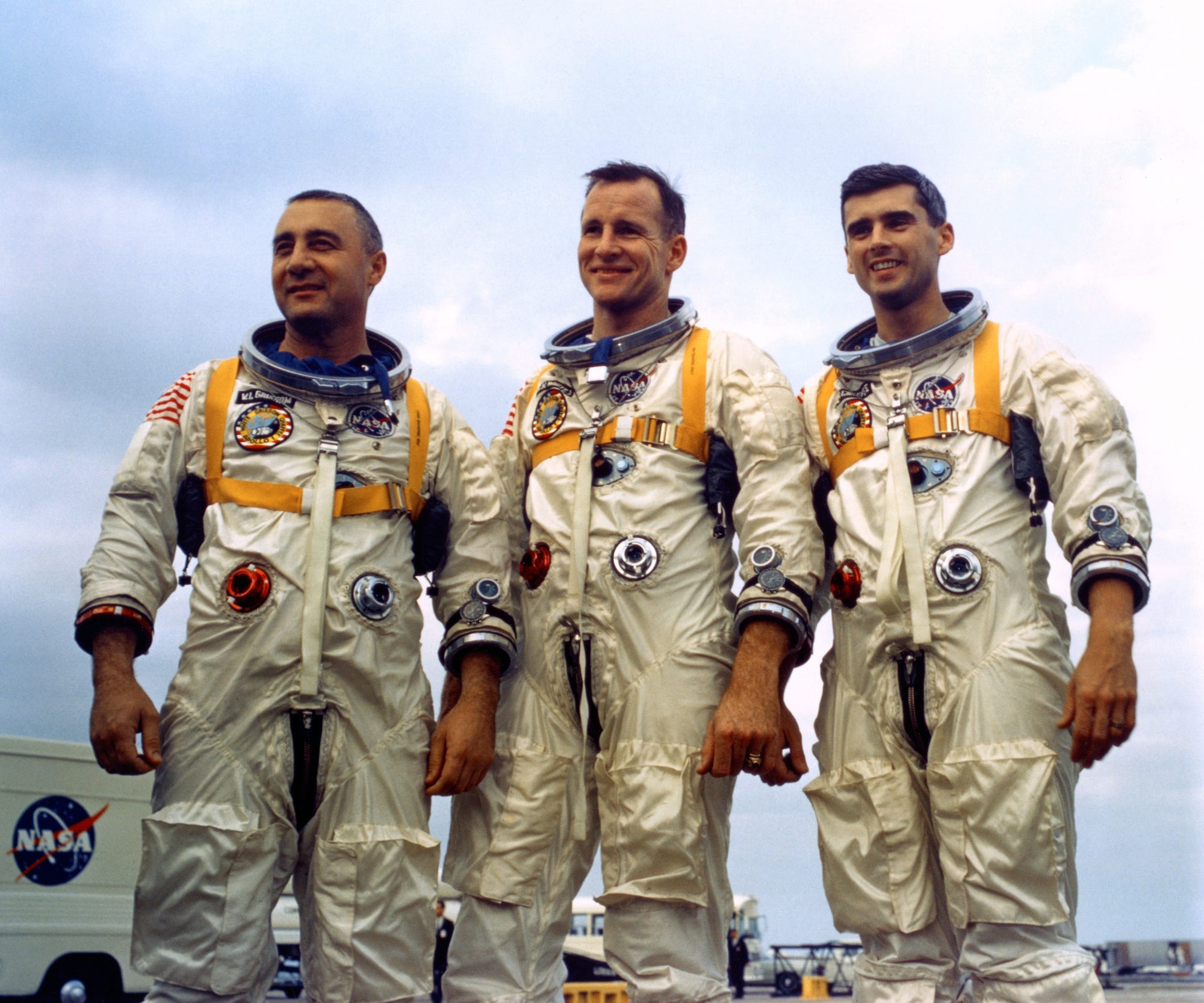
Tragedy on the Launch Pad
On 27 January 1967, at Cape Kennedy, Launch Complex 34. It is a day meant for rehearsal, not tragedy. Just 25 days before the first crewed Apollo mission was set to push America’s ambitions skyward, astronauts Gus Grissom, Ed White, and Roger Chaffee zipped up their spacesuits and climbed into the Apollo Command Module, ready for what’s called the “Space Vehicle Plugs-Out Integrated Test.”
In the cockpit, the mood was focused but routine; the idea was to run through a full launch-day countdown, with the capsule sealed, pressurized with pure oxygen, and the crew breathing the same.
Unlike the earlier “plugs-in” test—already dogged by glitches—this rehearsal would swap the spacecraft from ground power to its own, simulating the moment of liftoff. The crew, ever vigilant, had even requested an emergency escape drill at the end, a detail that would prove chillingly prescient.
That morning, the spacecraft powered up and the astronauts began breathing pure oxygen before boarding. Around 1 p.m., Grissom was the first inside. He soon caught a “sour” smell, halting progress while engineers checked the air; finding nothing amiss, they pressed on. The hatches were buttoned up, and the pressure inside climbed to 16 psi of pure oxygen, creating a tinderbox atmosphere.
The hours that followed were plagued by static and comm issues, frustration building on both sides of the glass. At one point, Grissom, ever the straight-talker, quipped that if they couldn’t talk between three buildings, how could they possibly reach the Moon? The countdown reached a hold at T-minus 10 minutes; a pause that would become infamous.
Then, at 6:30:55 p.m., engineers spotted an electrical glitch. Just moments later, shouts erupted from the crew: “Fire!” Chaffee’s voice called out the emergency as Ed White struggled to open the inward-swinging hatch.
But the fire, fed by the pure oxygen and pressurized cabin, moved with terrifying speed. In only 18 seconds, their transmissions went silent. The pressure inside soared, cracking the capsule and sending flames and smoke pouring into the service tower.
Pad crews battled the heat and smoke, desperate to open the hatches, but it took nearly five agonizing minutes to break through. By then, it was too late.
The official confirmation came from flight surgeons, and the crew wasn’t removed until the early hours of the next day. It was a heartbreaking loss and a searing reminder that even on the ground, spaceflight’s risks are all too real.
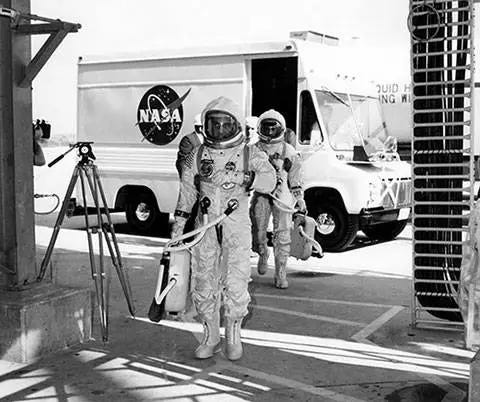
Static on the Line, Fire in the Cabin
It started quietly enough, with Gus Grissom climbing into the Apollo command module and connecting to his oxygen supply. Almost immediately, he caught a whiff of something off such as a “sour smell” in his suit’s oxygen loop. The crew paused, took a sample, and discussed the oddity with Grissom, but with no clear signs of danger, the test pressed on.
Soon, a new concern popped up: a high oxygen flow warning that kept tripping the master alarm. Environmental control specialists figured it was just the crew’s movements causing the spike, but the real cause was never pinned down. The astronauts and ground team exchanged theories, but this issue, too, remained unresolved as the rehearsal continued.
Then came the communication woes. It is a persistent static, so heavy it made the astronauts and controllers in the blockhouse and ACE room almost unintelligible to each other.
Turns out, an open microphone somewhere in the system was flooding the circuit with noise. Controllers finally halted the test at 5:40 p.m., hoping the crew could reconfigure their comms gear and clear up the channel.
At 6 p.m., despite the comm issues, Grissom was instructed to carry out a simulated hot fire of the command module’s thrusters. He pulled it off, but then, as if things weren’t complicated enough, radio chatter from Miami air traffic control suddenly bled into their frequency.
Even worse, it became clear that Grissom’s hardline comms would be lost the moment the spacecraft switched from pad power to its own systems. It is a detail that required yet another round of frustrating reconfiguration for all three astronauts.
Communications checks followed, but the problems persisted. By 6:30 p.m., the countdown had reached T-minus 10 minutes and was holding for a solution. Grissom’s patience wore thin.
“How are we gonna get to the Moon if we can’t talk between three buildings?” he snapped. Ed White echoed the frustration, and Grissom, exasperated, let out a sharp “Jesus Christ!” before repeating himself.
There was one last, ominous hurdle: emergency escape. Procedures called for a ninety-second routine, but in truth, the crew had never managed it that quickly. Grissom would have to lower White’s headrest so White could reach up and back to release the first latch with a ratchet. Reports say White had managed part of a turn before smoke overcame him.
When the fire broke out, technicians sprinted toward the sealed module, but before they could reach it, the command module ruptured. Flames and thick smoke billowed out, filling the room and bringing a new terror. The fear that the fire might ignite the launch escape system, threatening the entire service tower.
Many instinctively fled, but some pressed on, battling the heat and smoke in a desperate rescue effort. In the end, their courage wasn’t enough. The Apollo 1 tragedy was already written in the stars.
Legacy and Lessons from the Apollo 1 Tragedy
Apollo 1’s legacy isn’t just carried in sorrow. It’s etched into every control panel and checklist that followed. The tragedy exposed how even a so-called “safe” ground test can turn deadly when risks pile up: pure, high-pressure oxygen, frayed wires, and cabin materials that became tinder at test conditions.
NASA, riding the momentum of Mercury and Gemini, had grown too confident, brushing off the threat of fire as a remote worry. That hard lesson brought sweeping change. Engineers redesigned the Apollo hatch to swing outward for quick escape and replaced flammable materials with safer alternatives.
They overhauled the cabin’s atmosphere, using a nitrogen-oxygen mix before launch and only transitioning to pure oxygen at lower pressure once in flight. The transformation was so complete that Apollo 7’s flight in 1968 marked not just a technical comeback, but a cultural one—a new era of vigilance and humility.
Apollo 1 stands as a permanent reminder: real progress in space comes not just from speed, but from the discipline to identify and fix danger before it strikes. Every mission today—whether Artemis or commercial crew—carries that lesson into the stars.
In Case You Missed It
Photo Outlet
Every issue of Hangar Flying with Tog gets you a free image that I’ve taken at airshows:
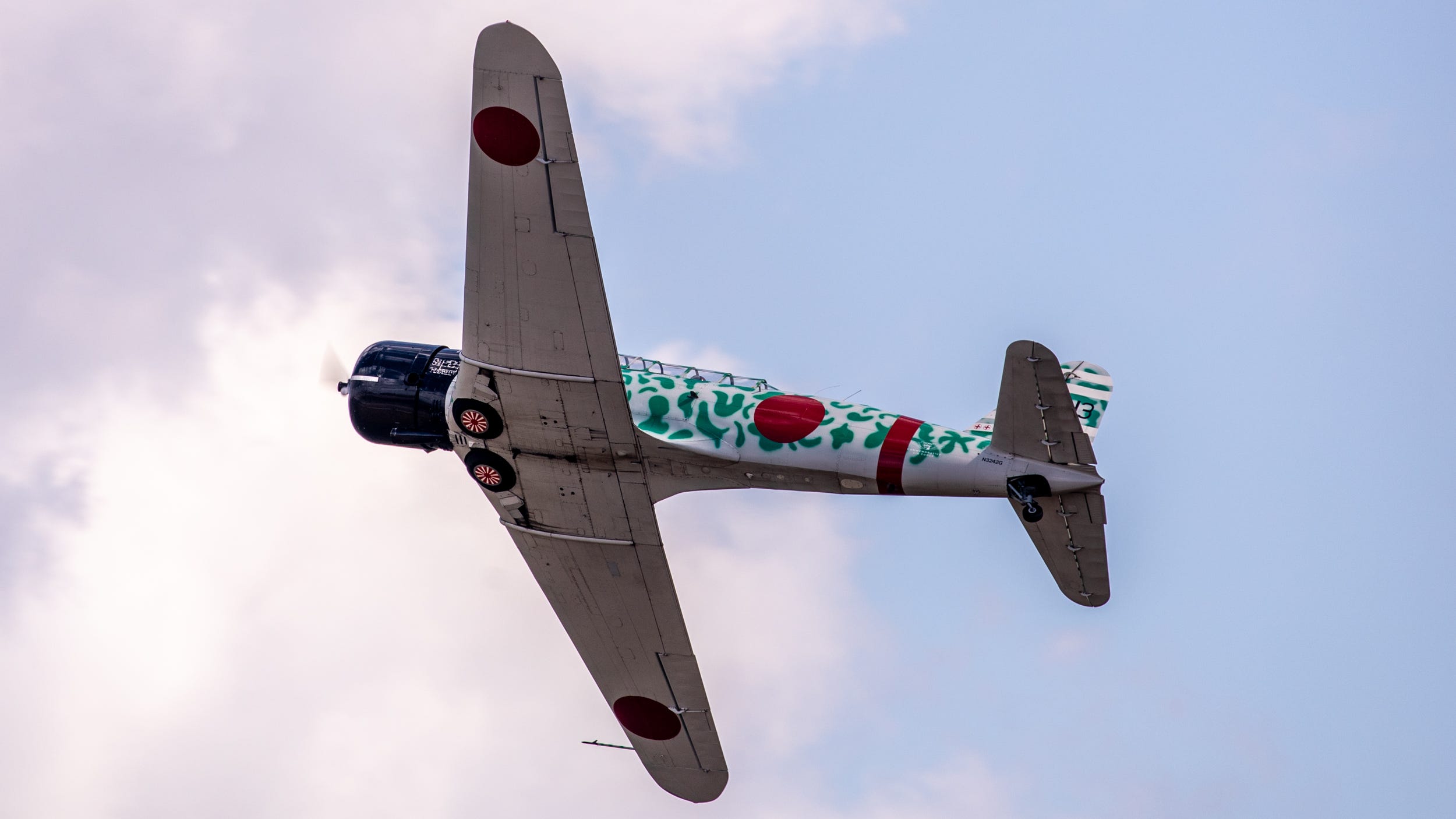
Feel free to use these photos however you like. If you choose to tag me, I am @pilotphotog on all social platforms. Thanks!
Post Flight Debrief
Like what you’re reading? Stay in the loop by signing up below—it’s quick, easy, and always free.
This newsletter will always be free for everyone, but if you want to go further, support the mission, and unlock bonus content like the Midweek Sortie, consider becoming a paid subscriber.
Your support keeps this flight crew flying—and I couldn’t do it without you.
– Tog