

Senators Aim to Boost US Airpower and Remember the Battle of the Coral Sea
From Coral Sea to the F-15EX debate, the lesson is the same: airpower only deters when it is available, survivable, numerous enough, and flown by experienced crews.
Thank you to @SenTedBuddNC and @SenatorShaheen for introducing bipartisan legislation to support our Airmen & the future of American airpower.
—Office of the Secretary of the Air Force
Mission Briefing
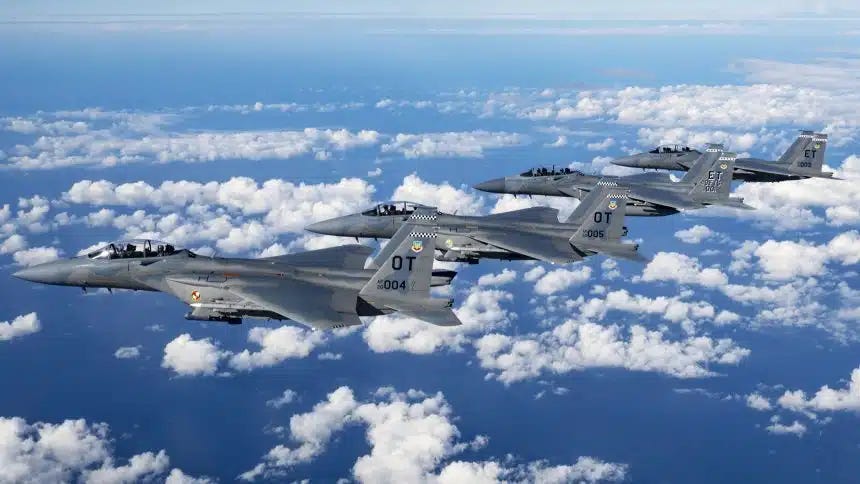
With the Air Force doubling down on the F-15EX Eagle II, Senators Budd and Shaheen are rolling out a trio of bills to beef up America’s fighter lineup and keep top pilots in the cockpit. The next chapter in U.S. airpower is taxiing to the runway.
Eagles Rising: Senators Fuel the Next Flight Crew
Strap in, because the U.S. Air Force is dialing up the afterburners on its F-15EX Eagle II program, and the story’s only gaining altitude. With plans now calling for as many as 267 of these next-gen fighters, you’d think the sky was the limit. But if a squadron of senators gets its way, this is just the first mission in a much bigger campaign.
Not long after the Pentagon dropped a jaw-dropping $1.5 trillion budget request for 2027—the biggest in U.S. history—Senators Ted Budd (Republican, North Carolina) and Jeanne Shaheen (Democrat, New Hampshire) taxied onto the legislative runway.
As key players on the Senate Armed Services Committee, they’ve rolled out three new bills, all laser-focused on making sure American air dominance isn’t just a legend of the past but the headline act of tomorrow’s fight.
Front and center is the Airpower Acceleration Act, a bill that aims to etch into law a surge in orders for both the stealthy F-35 Lightning II and the mighty F-15EX Eagle II. But here’s the kicker: this act doesn’t just lock in the current 267 jets on the books.
It pushes the throttle forward, aiming for a whopping 329 Eagles in the hangar by the 2030s. Why? To make sure the venerable F-15E Strike Eagle gets a worthy replacement and to guarantee the Air Force’s teeth stay sharp in the coming decades.
The act would put the Air Force on track to boost its combat-ready fighter fleet by 10% between 2030 and 2035, totaling at least 1,369 jets, and then crank that up to a 20% increase—1,558 fighters—from 2035 onward.
Normally, decisions about fleet size live with the Pentagon’s top brass, but Congress has been known to put its foot down. Just ask the Navy about its minimum of 11 aircraft carriers and 31 amphibious ships.
While the bill doesn’t spell out an exact number for F-35s, it’s no secret the Air Force has already signaled a hunger for more Lightnings in the 2027 shopping list. Meanwhile, defense insiders have long cheered the Eagle II’s place in the lineup, highlighting how it teams up with stealth birds like the F-22 and F-35 (and soon, the futuristic Boeing F-47) for unbeatable punch.
But it’s not just about hardware. The second bill in this legislative flight pack—the RETAIN Act—is all about keeping experienced pilots in the cockpit. It’s set to offer creative, non-monetary perks to make sure the Air Force’s best and brightest stick around for the long haul.
The next era of American airpower? It’s already rolling down the runway.
The Anatomy of the Eagles
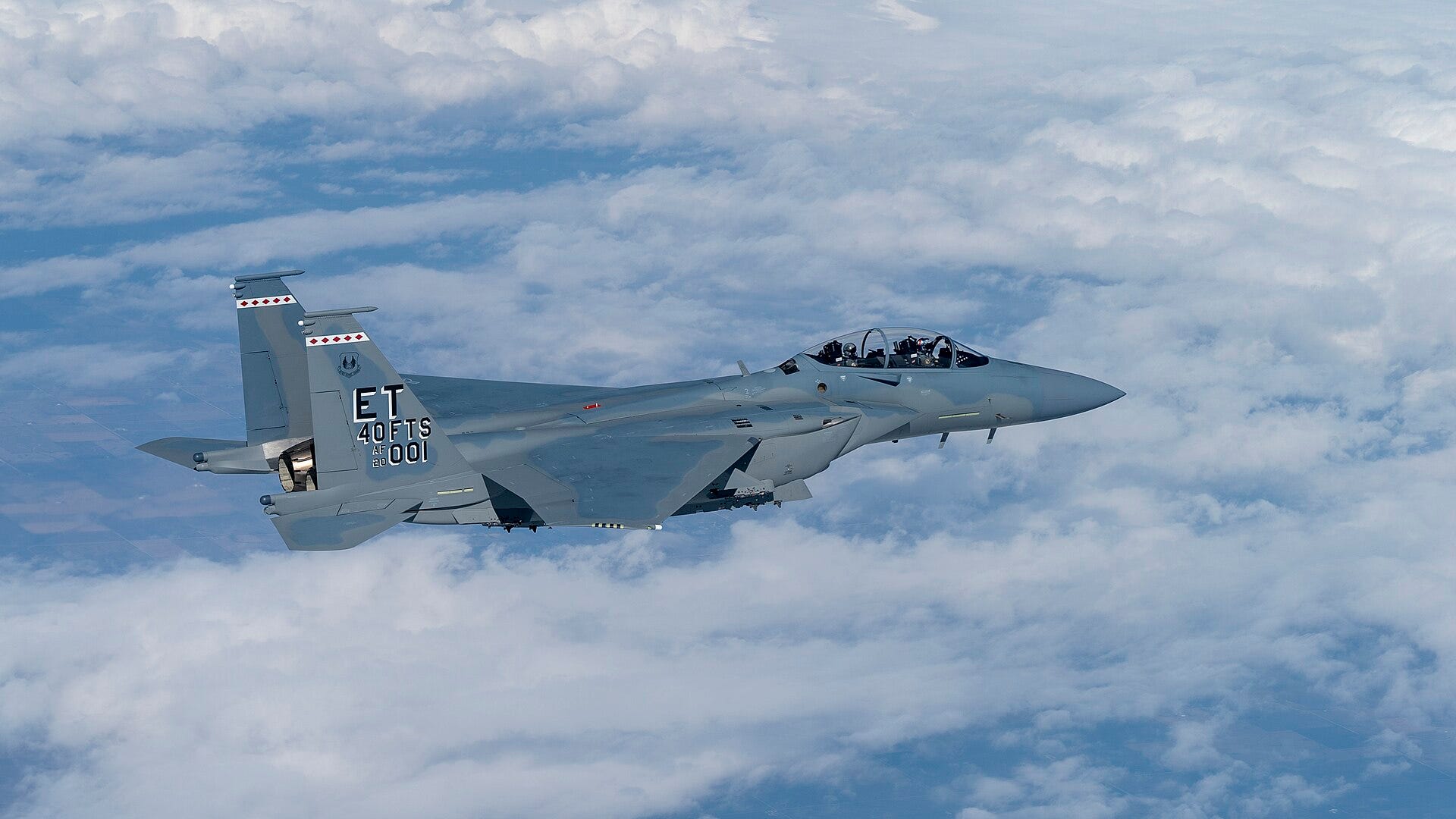
The F-15EX Eagle II is the Air Force’s most advanced Eagle, built off the F-15QA and set to replace the old F-15C/D fleet. For the first time, this USAF fighter comes with digital fly-by-wire controls and a glass cockpit that feels straight out of a sci-fi flick, complete with touch screens.
It launches with top-tier tech, including APG-82 AESA radar, the Joint Helmet Mounted Cueing System, and the EPAWSS self-defense suite. All standards from day one.
The Eagle II also breaks new ground with Open Mission System software, making upgrades and new capabilities as simple as swapping apps. Tied together with the latest Suite 9.1, it shares cutting-edge software with legacy jets, keeping the whole flock ready for whatever the skies throw at them.
Let me give you a rundown of this bird
Contractors: Boeing; BAE Systems (EPAWSS); Raytheon (AESA).
First Flight: Feb. 2, 2021.
Delivered: Mar. 11, 2021-present.
IOC: July 2023 (originally planned).
Production: 104 (planned)
Inventory: Two.
Operator: ACC, AFMC. Planned: ANG.
Aircraft Location: Eglin AFB, Fla. Planned: Fresno ANGB, Calif.; Kadena AB, Japan; Klamath Falls (Kingsley Field); NAS JRB New Orleans, La.; and Portland Arpt., Ore.
Active Variant: •F-15EX. Future F-15C/D replacement based on the F-15QA developed for Qatar.
Dimensions: Span 42.8 ft, length 63.8 ft, height 18.5 ft.
Weight: Max T-O 81,000 lb.
Power Plant: Two General Electric F100-PW-229 turbofans with afterburners, each 29,000 lb thrust.
Performance: Speed Mach 2.5, range approx. 2,762 miles (air refuelable).
Ceiling: 60,000 ft.
Armament: One internally mounted M61A1 20 mm six-barrel cannon (500 rd); combination of up to 12 AIM-9 Sidewinders or AIM-120 AMRAAMs, or combination of up to 24 air-to-ground munitions.
Accommodation: Pilot and (optional) second aircrew member on ACES 5 zero/zero ejection seats.
More Fighters, Sharper Deterrence
For the U.S., this isn’t just another political dogfight in the halls of Congress. It’s a warning light blinking on the Air Force’s dashboard. Senators Ted Budd and Jeanne Shaheen are championing a trio of bills designed to supercharge America’s fighter fleet, green-light more F-15EX and F-35s, and keep veteran pilots in the cockpit as the world gets dicey.
The Airpower Acceleration Act would raise the bar on how many fighters the Air Force must keep ready for action, while companion bills aim to stop experienced aviators from hanging up their helmets just as global competition heats up.
For allies in NATO and the Indo-Pacific, the message rings loud and clear: American jets will still be the thunder overhead when the going gets tough. A bigger, modernized fighter force means more muscle to surge forward, show up where it matters, and seamlessly team up with partner nations across the globe.
The Air Force’s own budget pitch for FY2026 says staying ahead of China’s rising military power demands aggressive modernization. Think F-35As, F-15EXs, new tankers, stealth bombers, and next-gen munitions.
The F-15EX earns its keep not as the stealthy tip of the spear, but as the heavy hitter in the lineup. The missile-hauler backing up the stealth fighters, lugging big payloads into the fight. Air & Space Forces Magazine reports the Air Force could grow its Eagle II fleet to 267, giving old warbirds a rest and slowing down the aging of the force.
But here’s the kicker: buying jets is only half the battle. The real challenge will be making sure ammo stockpiles, pilot training, base defenses, and maintenance crews are ready to keep those birds flying when the sky turns hostile.
This Week in Aviation History
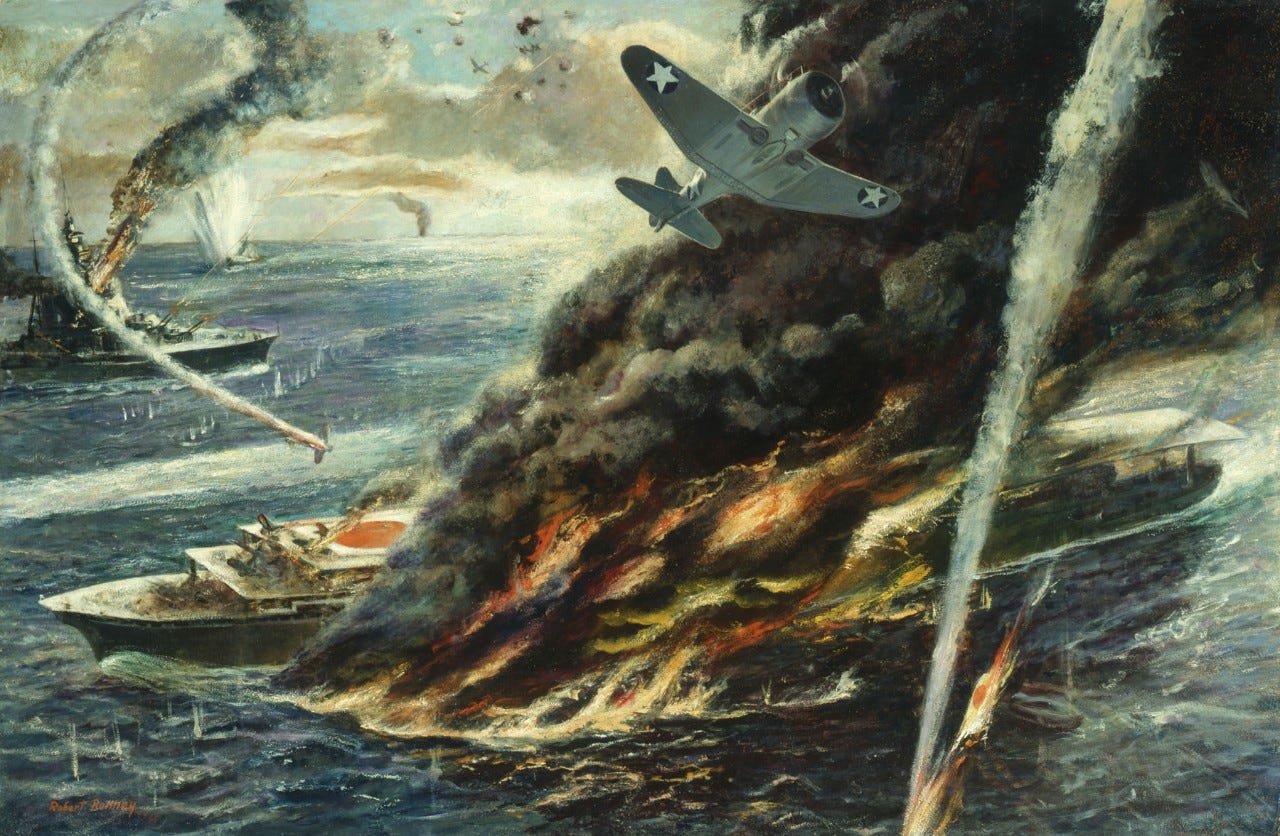
The Battle of the Coral Sea marked the first time the U.S. managed to halt Japan’s unstoppable push across the Pacific after Pearl Harbor. In a groundbreaking twist, it was also the first naval showdown where enemy ships never laid eyes on each other—every shot was called in from afar. The action wrapped up on 8 May 1942, setting a new chapter in naval warfare.
The Battle of the Coral Sea
In early 1942, as the Pacific war heated up, Japan mapped out a bold plan to push their forces south and southeast from the Bismarck Archipelago and the Solomons. Their immediate targets were Tulagi in the Solomons and Port Moresby in New Guinea. They are the key stepping stones for further expansion.
Alongside these, the Japanese eyed the phosphate-rich islands of Nauru and Ocean (Banaba) in the Gilberts chain, vital for fueling their agriculture back home.
Between 29 April and 4 May, Japanese troops stormed and occupied Tulagi, but not without a price: aircraft from the USS Yorktown swooped in, catching several Japanese warships off guard and sending them to the bottom.
With the element of surprise lost, the Japanese Carrier Strike Force surged toward the Coral Sea, eager to track down and wipe out the Allied fleet. What followed, starting on May 7, was a dramatic two-day exchange of airstrikes. Fleets launching waves of aircraft at each other, sight unseen, in a brand-new style of naval combat.
The resulting clashes saw U.S. Navy task forces, reinforced by Australian cruisers, lock horns with the Japanese carriers and their escorts. Tactically, the Japanese came out ahead: they sank the carrier USS Lexington, the destroyer USS Sims, and the oiler USS Neosho, and damaged the Yorktown.
The Allies, meanwhile, managed to sink only the light carrier Shoho and put a hurt on the fleet carrier Shokaku. Forced to withdraw, the Allied ships left the battlefield to the Japanese. But battered Japanese air groups were in no shape for further conquest, and Port Moresby remained out of their grasp.
Crucially, Shokaku was so badly damaged she couldn’t join the next major operation at Midway. Her sister carrier Zuikaku, short on planes and pilots after the heavy fighting, also sat out. When the smoke cleared, Coral Sea had reduced the number of Japanese carriers available for Midway by a third: a pivotal edge for the Allies in the coming fight.
Navy historian Samuel Eliot Morison called it “the Battle of Errors,” with both sides learning on the fly in this new era of carrier warfare. But when the dust settled, it was the Japanese who failed to capitalize on their opportunities.
Amid the chaos, four Medals of Honor were awarded for extraordinary heroism, honoring men from Yorktown, Lexington, and Neosho: some posthumously, all for bravery in the heat of battle.
Inside the Killer Dauntless
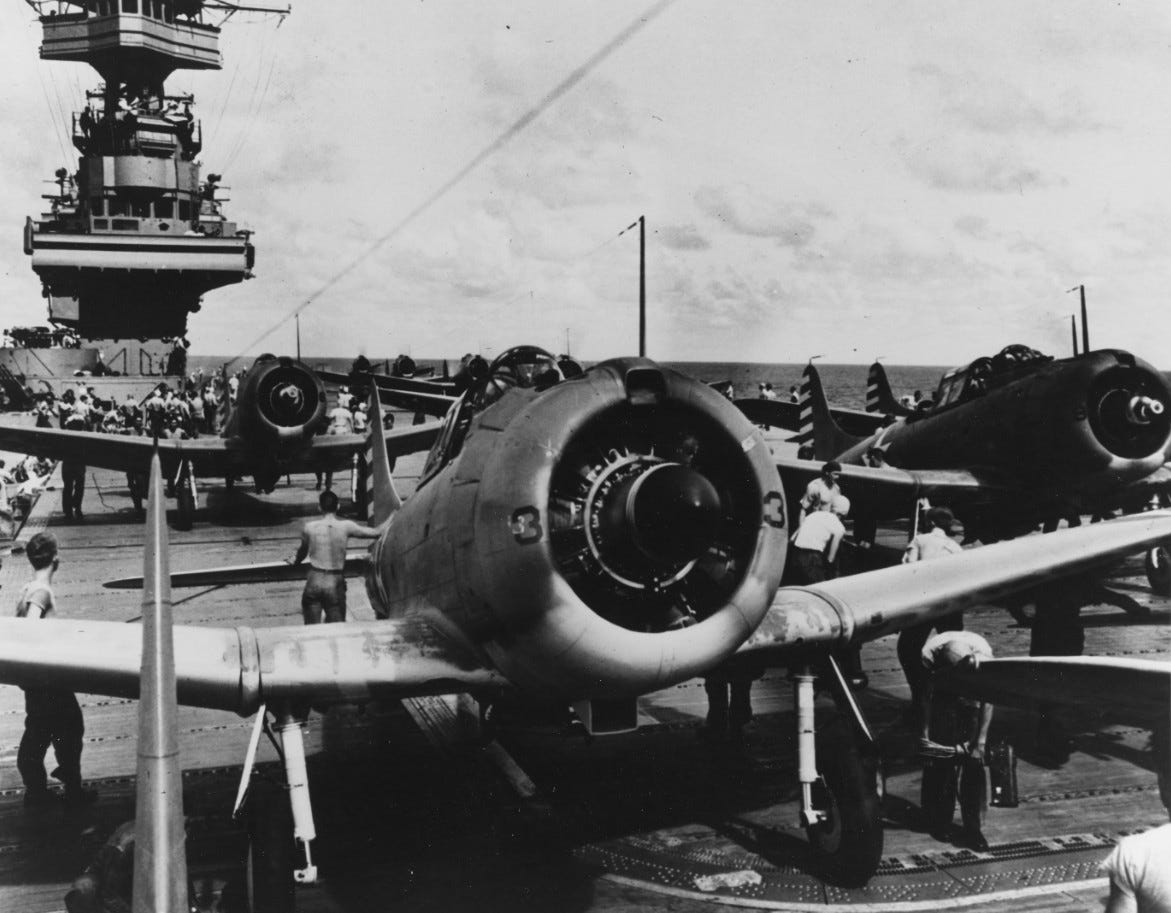
Affectionately dubbed the “Slow, But Deadly” by the Marines who flew and cared for it, the Douglas SBD Dauntless dive bomber stood as the Marine Corps’ top-of-the-line bomber when World War II erupted.
Though Dauntless production wrapped up in 1944 with about 5,400 rolling out of the factory, this plucky warbird earned a rare distinction—fighting from the first shots to the final days of WWII, and serving faithfully with the USMC throughout the entire conflict.
Besides the Battle of the Coral Sea, the SBD’s legend was cemented at the Battle of Midway in June 1942, when U.S. Navy Dauntless squadrons dealt a staggering blow to the Japanese fleet, sinking four enemy carriers in just a few hours and turning the tide of the Pacific war.
Let us take a closer look at the Dauntless
SPECIFICATIONS
Wingspan: 41’ 6”
Length: 32’ 8”
Gross Weight: 10,400 lbs.
Power Plant: Wright C Clone R-1820-52 9 cylinder, Radial Air Cooled, 1000HP
Armament: 2 .5 cal. Machine guns, 2 .3 cal. Machine guns, 1,200 lbs. of bombs
PERFORMANCE
Max Speed: 250 mph
Range: 1,345 miles
Service Ceiling: 27,100 ft.
Crew: 2
The Battle of the Coral Sea’s Legacy
The Battle of the Coral Sea rewrote the rulebook for naval warfare in the Pacific. Fought from May 4 to 8, 1942, this clash halted Japan’s drive toward Port Moresby. It is a move that could have put Australia in the crosshairs and stretched Japanese reach even further into the South Pacific.
It came at a steep price: the U.S. lost the carrier Lexington, Yorktown took a beating, and both sides suffered heavy aircraft losses. But the bigger story was this: for the first time in the Pacific War, Japanese expansion was stopped dead in its tracks.
Coral Sea was also a watershed moment for naval combat itself. For the first time, fleets never fired a shot at each other directly. Aircraft did the heavy lifting, launching strikes over the horizon while their ships remained distant sentinels.
Carrier decks, packed with bombers and torpedo planes, became the new center of gravity, and the crews who launched into the unknown became the battle’s true heroes.
That’s why Coral Sea’s echoes still roll through history. Back then, the big question was whether Allied air and sea power could find and stop an enemy before they reached their target.
Today, in the Indo-Pacific, that same challenge remains. Only now, it’s jets, drones, and digital eyes picking up the slack once handled by the likes of Yorktown and Lexington. The real legacy of Coral Sea? The hard-won lesson that whoever commands the skies can shape the fate of the seas and sometimes, the fate of nations.
In Case You Missed It
Photo Outlet
Every issue of Hangar Flying with Tog gets you a free image that I’ve taken at airshows:
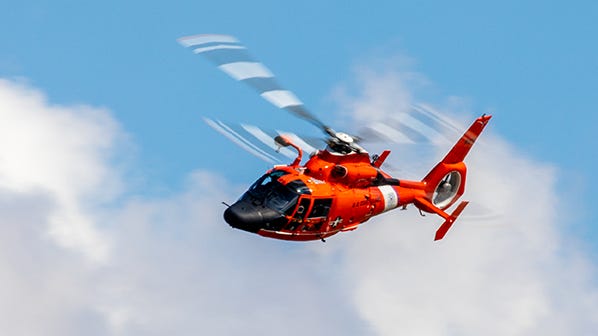
Feel free to use these photos however you like. If you choose to tag me, I am @pilotphotog on all social platforms. Thanks!
Post Flight Debrief
Like what you’re reading? Stay in the loop by signing up below—it’s quick, easy, and always free.
This newsletter will always be free for everyone, but if you want to go further, support the mission, and unlock bonus content like the Midweek Sortie, consider becoming a paid subscriber.
Your support keeps this flight crew flying—and I couldn’t do it without you.
– Tog