

Sea Guardian Hunts the Silent Depths and Remember the Bekaa Valley War
From Bekaa Valley RPVs exposing missile defenses to SeaGuardian sonobuoys hunting submarines, unmanned aircraft prove modern battles begin with sensors, persistence, and unseen control.
MQ-9B SeaGuardian® advanced intelligence, surveillance and reconnaissance #UAS with an anti-submarine warfare system enables persistent submarine tracking while simultaneously maintaining maritime domain awareness for U.S. and international forces.
—General Atomics Aeronautical Systems, Inc (GA-ASI)
Mission Briefing
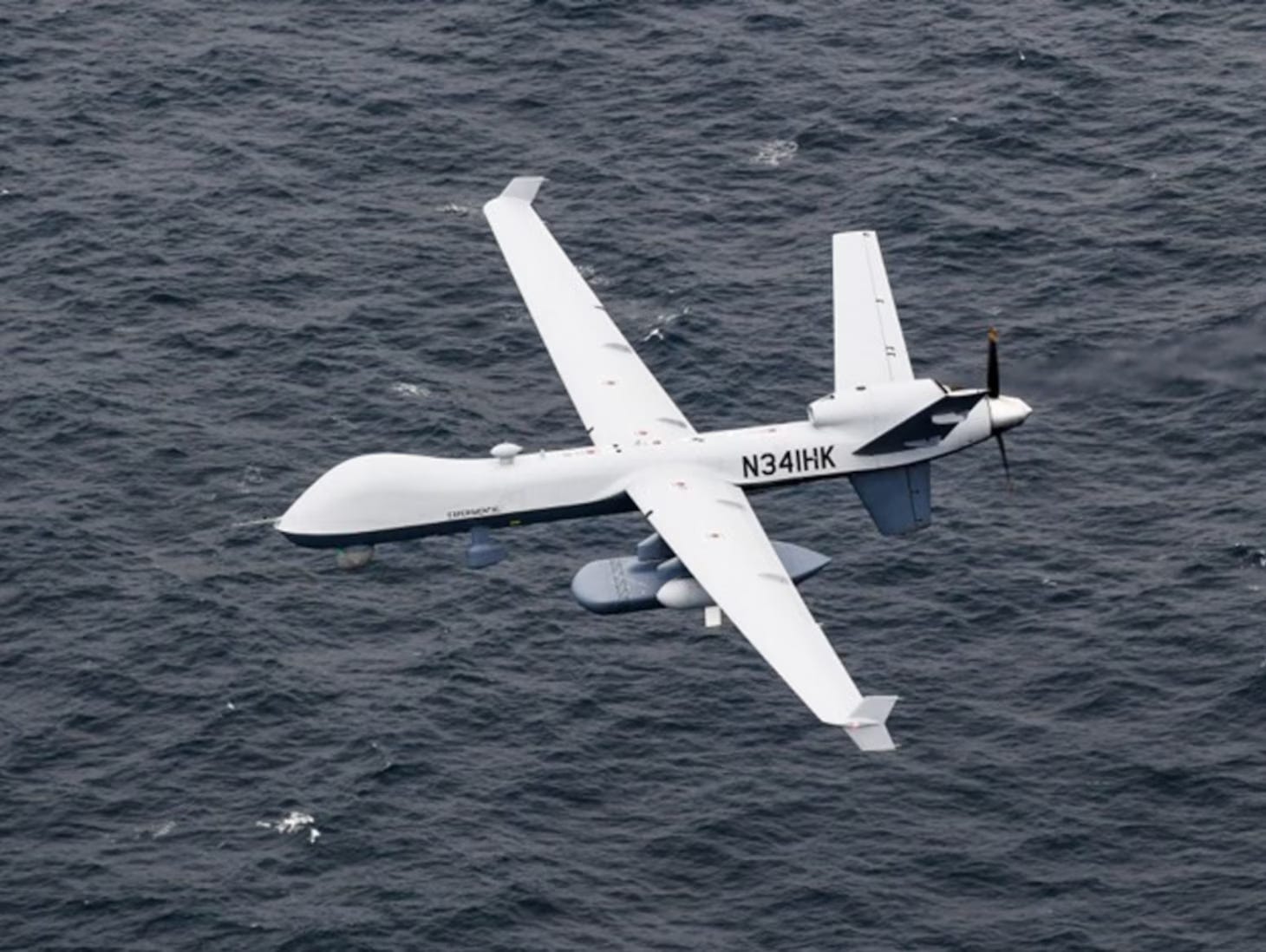
The MQ-9B, once spotted with just two Sonobuoy Dispensing System pods, now rolls out flaunting four, stepping deeper into its new anti-submarine warfare role. Imagine the transformation. One moment it’s a familiar bird, the next it’s bristling with fresh gear, ready for a different kind of hunt. It’s a crucial upgrade, the kind of twist aviators love to tell in hangar tales.
SeaGuardian’s Submarine-Hunting Edge
It’s late May 2026, and the MQ-9B Sea Guardian is making waves at the Canada Security (CANSEC) exhibition. Up front, this isn’t just any drone.
It’s the SeaGuardian, freshly outfitted for anti-submarine warfare, and for the first time, it’s showing off four Sonobuoy Dispensing System pods. Up until now, we’ve only seen her with two, so this is a big deal in the world of unmanned aviation.
A little history here: General Atomics had hinted last December that four pods might be in the cards, especially after the SeaGuardian became the first unmanned bird to drop Multi-static Active Coherent sonobuoys.
But, as things go, the official photos back then only showed two pods, leaving everyone guessing whether the four-pod setup was just a rumor or a classified secret.
Then, at CANSEC 2026, the curtain lifts. There she is, nose pointed at the camera, four pods mounted diagonally under her wings, and an extra pod slung along the centerline. Ready for a high-tech radar, either from Leonardo or Raytheon.
Previous snapshots with the radar pod always had just two SDS pods, so seeing this five-pod loadout is a true cinematic reveal. Of course, every extra pod means a trade-off: more gear in the sky, but maybe less time up there.
Even so, with the SeaGuardian’s endurance clocking in at up to 40 hours, she’s still got plenty of fuel for the hunt.
The SeaGuardian and Her Pods
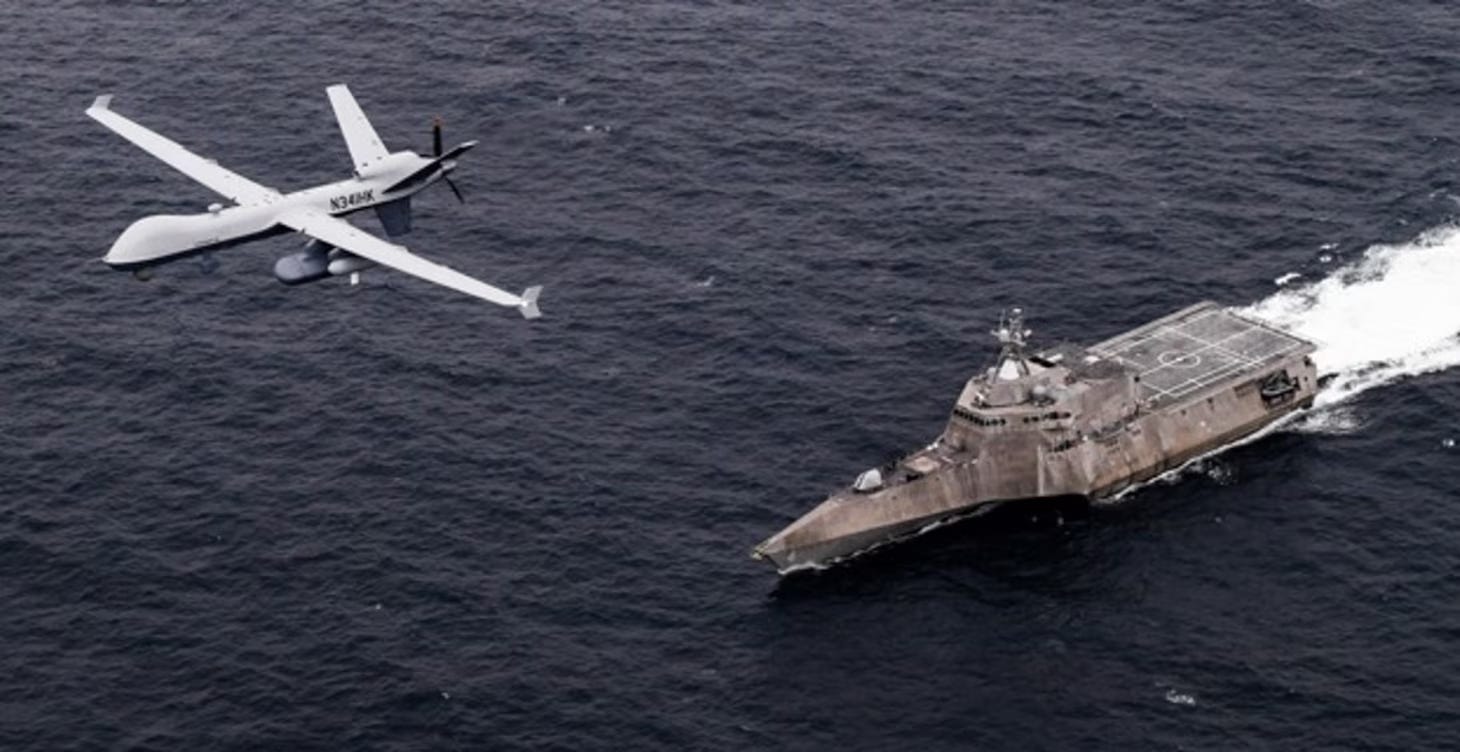
According to GA-ASI’s own product catalogue, each Sonobuoy Dispensing System (SDS) pod can carry either 10 standard-issue ‘A’ size sonobuoys or twice as many in the smaller ‘G’ size configuration.
Line up four of those bad boys under the SeaGuardian’s wings, and you’re looking at a payload of 40 ‘A’s or a whopping 80 ‘G’s. That’s a whole lot of underwater ears, ready to fan out across the ocean on command.
Just remember, these pods aren’t exactly lightweight: empty, each one weighs in at 132 kilos, but stuff it full of sonobuoys and it tips the scales at a burly 340 kg per pod.
Flash back to December 2025. GA-ASI quietly let slip that their latest test flight had more pods than ever before. Essentially doubling the number of sonobuoys the SeaGuardian could carry.
Insiders caught the hint: four pods were likely in play, even if the hangar photos from that day only showed the aircraft with two. That trial was a milestone, marking the first time any UAV had dropped the cutting-edge Multi-Static Active Coherent (MAC) sonobuoys, specifically the AN/SSQ-125 model.
And that’s not the only trick up SeaGuardian’s sleeve: previous trials tested the AN/SSQ-36 Bathythermal, the trusty AN/SSQ-53G DIFAR for passive listening, and the AN/SSQ-62F DICASS for active sub-hunting; all launched from the SDS pods.
GA-ASI’s press team loves to hype the combination of the SDS and Sonobuoy Monitoring and Control System (SMCS), and for good reason. Coupled with the SeaGuardian’s suite of multi-domain sensors, you’ve got a drone that can keep tabs on just about everything; surface ships, submarines lurking below, the whole nine yards.
That means persistent, automated sub-tracking and maritime awareness, all without risking a single pilot. In the era of high-stakes, high-tech naval ops, that’s a game-changer.
When Drones Listen Beneath the Waves.
The MQ-9B SeaGuardian, now outfitted with four sonobuoy pods, has shifted the anti-submarine game for the U.S. and its allies. Sure, the P-8 Poseidon and MH-60R Seahawk are still the heavy hitters when it comes to hunting subs, but the SeaGuardian brings something new to the table, endurance.
It can patrol vast slices of ocean, scatter acoustic sensors far and wide, and keep listening for hours on end, all without putting a human crew through marathon missions or in harm’s way.
Why does this matter? Because the underwater world is heating up. Russian subs still prowl the North Atlantic and Arctic, and China’s navy is pushing farther into the Indo-Pacific, turning surveillance gaps into big-time vulnerabilities.
With multiple pods, the SeaGuardian gives commanders an always-on eye (and ear) over key straits, carrier routes, and undersea cables.
But here’s the twist: it’s not about replacing manned aircraft. Instead, drones like the SeaGuardian are force multipliers, stretching the reach of patrol crews. They can help paint the undersea picture, tip off a P-8, back up distributed fleets, or keep tabs on areas too big for manned planes to cover nonstop.
For smaller allies, modular unmanned ASW brings a way to pitch in without breaking the bank.
Yesterday’s drones just watched the fight from above. Tomorrow’s will listen below the waves, changing the script for maritime warfare.
This Week in Aviation History
In June 1982, Israeli ground forces moved into Lebanon, determined to put an end to cross-border terror attacks. They called it Operation Peace for Galilee, but what started as a targeted push soon transformed into a drawn-out conflict with Lebanon. The results? A complicated mix. Some successes, plenty of challenges, and a legacy that’s still debated today.
How UAV Networks Took Center Stage in the Bekaa Air War
Back in June 1967, during the Six Day War, Israel’s air force was small but razor-sharp. In a feat straight out of a pilot’s dream, the IAF launched a surprise onslaught, flying over 3,000 sorties and crushing the air forces of Egypt, Jordan, and Syria.
By the time the dust settled, the Arab states had lost around 400 aircraft, and their armies were in full retreat across the Sinai, Golan Heights, and West Bank.
But dominance doesn’t last forever. When the War of Attrition kicked off in 1969, the game changed. Egypt, now flush with Soviet hardware—sleek jets and, more ominously, advanced SAMs—pushed back hard against Israeli positions in the Sinai.
The IAF found itself in a new world, one where Soviet-made surface-to-air missiles could knock out even the best pilots. Sporadic raids destroyed some SAM sites, but the losses were mounting.
Fast-forward to the years leading up to the 1982 Lebanon War. Syria started planting state-of-the-art SA-6 batteries in Lebanon’s Bekaa Valley, and Israeli aircraft took losses; including fighters, Scouts, and Mastiffs.
But this time, Israel had a new card to play: years of relentless UAV reconnaissance. When the Lebanon War erupted in June 1982, Israeli UAVs delivered real-time tactical intelligence, giving commanders a live feed of the battlefield.
The real breakthrough came in the Bekaa Valley. UAVs flew in close, luring Syrian radar to life. Decoy drones mimicked manned attacks, soaking up missiles, and then Israeli jets swooped in to finish the job. Nearly all Syrian air defenses were wiped out: a dramatic turning point for drone warfare.
Mini-UAVs then fed ground troops over-the-hill intelligence, directed artillery, and checked the aftermath of battles. For the first time since Napoleon’s day, commanders could see the real-time positions of friend and foe alike.
The clincher? These UAVs kept a constant eye on Syrian airfields, warning the IAF whenever enemy fighters scrambled. This was the dawn of true loitering surveillance—real-time, persistent eyes in the sky. Forever changing how airpower and ground operations played out on the modern battlefield.
The Tadiran Mastiff and the Mazlat Scout: Pioneers of the Modern Surveilla UAV Era
After the Yom Kippur War in 1973, Israel’s military was hungry for a new advantage. Field commanders needed a way to peek “over the hill” and see what was coming. The challenge?
Build a drone that could lug a 10-kilo payload out to 30–50 kilometers and deliver instant intel.
Tadiran Electronic Industries answered the call with the Mastiff, a compact trailblazer that first took to the skies in 1973. At just 3.3 meters long with a 4.25-meter wingspan and a pre-payload weight of 72 kilos, this little machine could cruise at 185 km/h and loiter for over seven hours.
But what really set the Mastiff apart was its tech: miniaturized electronics and a data-link system that sent back live, high-res video right to operators’ screens. For the Israeli forces, it was like having eyes in the sky, offering real-time, deep reconnaissance and the kind of on-station surveillance that simply hadn’t existed before.
In many ways, the Mastiff was the first of its kind: a true modern surveillance UAV that changed the game.
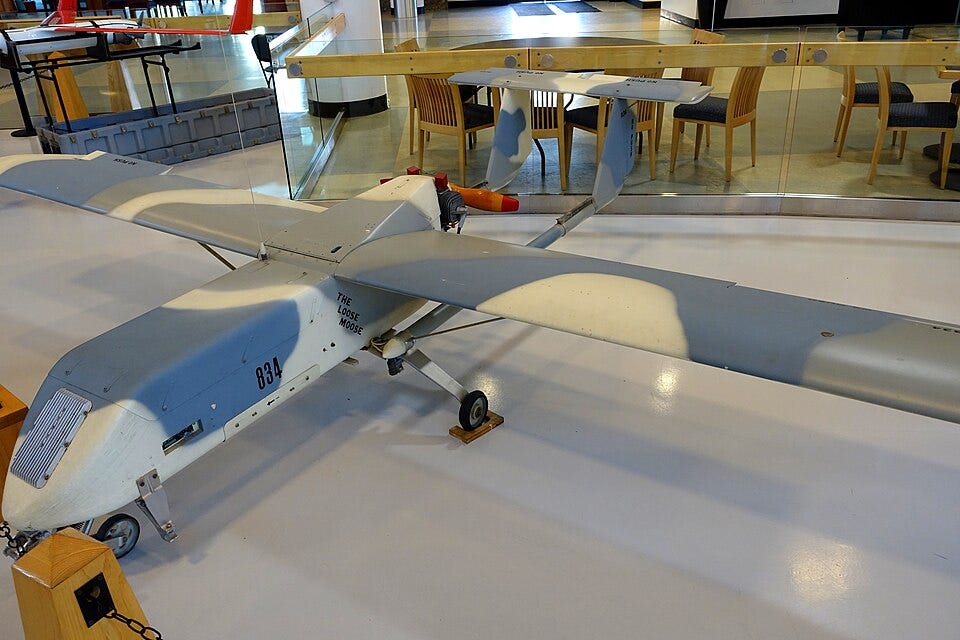
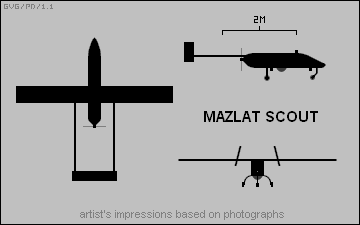
But make no mistake about forgetting another pioneer, the Mazlat Scout. Back in 1978, Israel Aircraft Industries rolled out this fiberglass-framed, piston-powered bird with a 13-foot wingspan and a radar signature so faint it was practically invisible.
Lightweight and tough to track, the Scout packed a turret-mounted TV camera that fed real-time, 360-degree surveillance back to its operators—slick, simple, and effective.
Fast forward to 1982 and the Bekaa Valley showdown. Israeli forces deployed a squadron of Scouts to sniff out Syrian missile batteries, luring enemy radars to life. The result?
Israeli bombers swept in and wiped out 15 of 17 sites, opening the skies for unchallenged air superiority. The Scout proved that sometimes, the quietest flyers make the biggest impact.
When the UAVs Changed the Battlefield
The story of the Mazlat Scout and Tadiran Mastiff in the Bekaa Valley isn’t just about missile sites reduced to rubble. It’s about the arrival of a whole new way to fight and see the battlefield.
In June 1982, Israel put these nimble, remotely piloted birds to work as serious tools of airpower. No longer experimental, the Scout and Mastiff became the eyes and ears over Syrian defenses, streaming real-time intel to commanders and goading radar crews into revealing their positions.
The Scout’s live TV feed and the Mastiff’s long-haul stamina gave Israeli planners a view earlier generations could only dream of—persistent, rolling coverage before manned jets entered the danger zone.
But their power wasn’t just in the hardware. It was psychological warfare at its best. Syrian crews on the ground had to guess: was that drone overhead just a harmless observer, clever bait, or the signal that a strike was coming? That doubt turned their defenses into targets.
The instant a radar flared to life, Israeli jets and electronic warfare teams swooped in with pinpoint timing. Drones weren’t just watching anymore. They were a living part of the kill chain.
The impact went far beyond Lebanon. The Scout and Mastiff’s success lit the path for U.S. programs like the RQ-2 Pioneer, and proved that drones could scout, deceive, direct, and survive.
Today’s SeaGuardian and Reaper owe their legacy to those early flights—the blueprint for modern unmanned airpower was written in the skies above the Bekaa Valley.
In Case You Missed It
Photo Outlet
Every issue of Hangar Flying with Tog gets you a free image that I’ve taken at airshows:
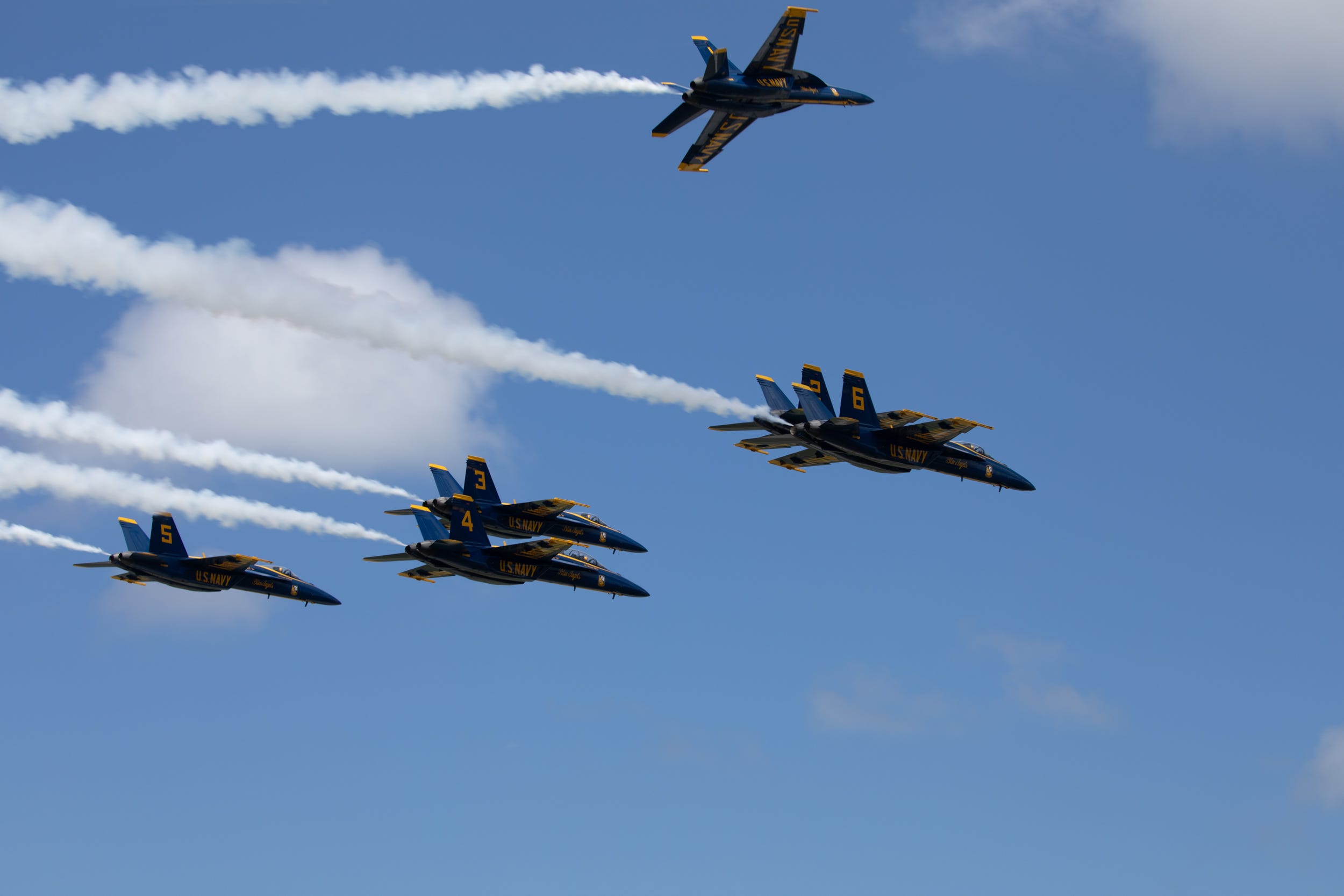
Feel free to use these photos however you like. If you choose to tag me, I am @pilotphotog on all social platforms. Thanks!
Post Flight Debrief
Like what you’re reading? Stay in the loop by signing up below—it’s quick, easy, and always free.
This newsletter will always be free for everyone, but if you want to go further, support the mission, and unlock bonus content like the Midweek Sortie, consider becoming a paid subscriber.
Your support keeps this flight crew flying—and I couldn’t do it without you.
– Tog