

Reflecting on the KC-135 loss during Operation Epic Fury, and When the Thud Destroyed a MiG-17
From Hanoi to Iraq, combat aviation keeps proving the same hard truth: whether in a strike jet or a tanker lane, mission pressure, danger, and unforgiving skies never disappear.
U.S. Central Command is aware of the loss of a U.S. KC-135 refueling aircraft. The incident occurred in friendly airspace during Operation Epic Fury, and rescue efforts are ongoing. Two aircraft were involved in the incident. One of the aircraft went down in western Iraq, and the second landed safely.
This was not due to hostile fire or friendly fire.
—US Central Command
Mission Briefing
They say the KC-135 met its fate not in hostile skies, but after a fateful encounter with another bird in friendly airspace. While the second aircraft made it home without a scratch, the tanker did not. It was during Operation Epic Fury—the news came down from U.S. Central Command on 12 March 2026—a reminder that even familiar skies can hold dangers of their own.
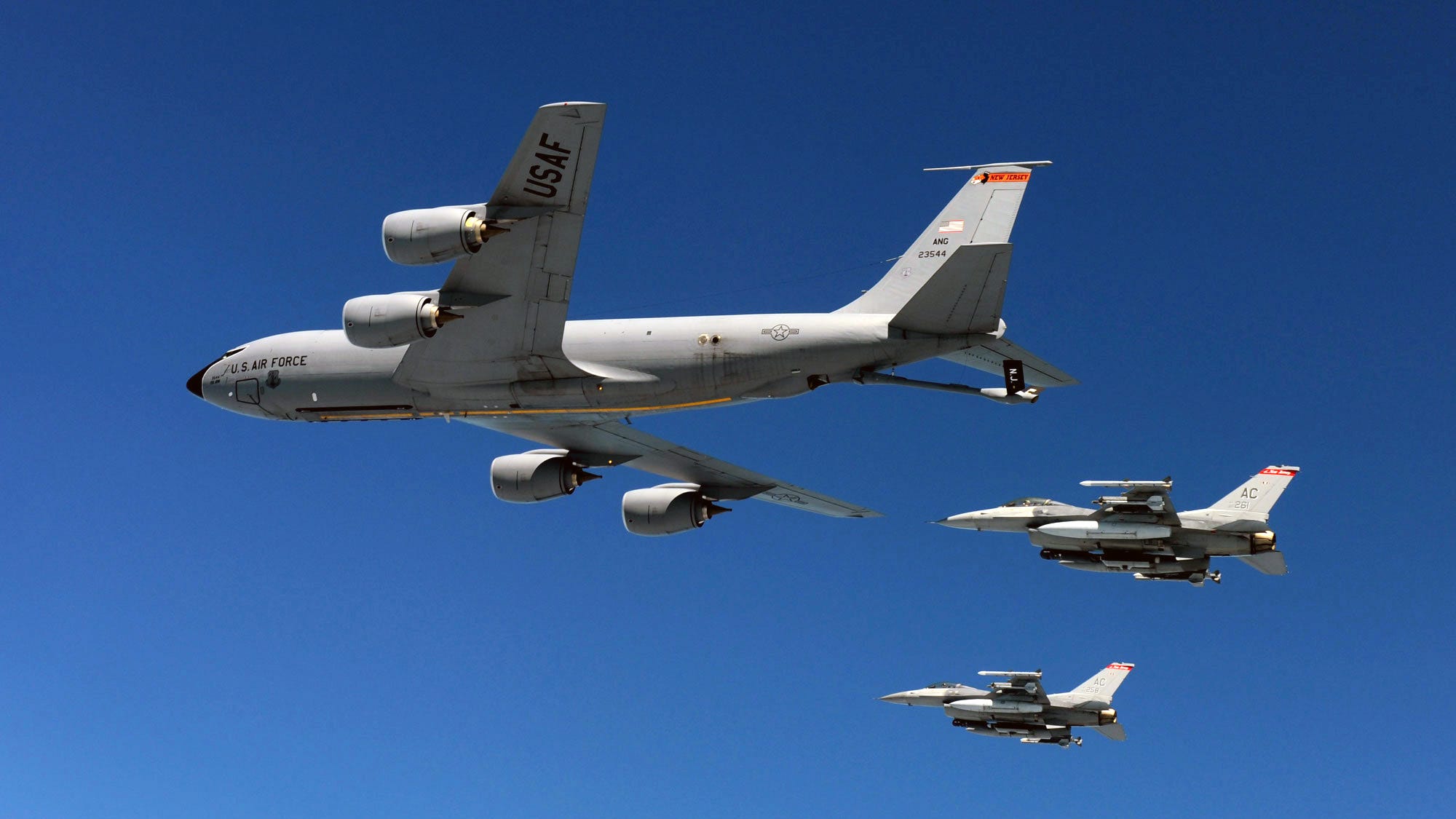
The Stratotanker Went Down in Western Iraq During the Epic Fury
Operation Epic Fury has summoned the services of many KC-135 Stratotankers. Those steadfast giants of the sky that keep our fighting force fueled and ready. In recent days, several of these tankers have been spotted weaving their way through Israeli airspace, some flashing the emergency squawk code 7700; a distress beacon every aviator knows well.
For those watching the digital trails from afar, questions immediately began to swirl: were any of these tankers in distress tied to the grim incident that soon followed off the Israeli coast? The fog of war, as always, makes details elusive.
This loss marks the first time in nearly thirteen years that a Stratotanker has failed to return home. The last time tragedy struck was on May 3, 2013, when KC-135R 63-8877 of the 22nd Air Refueling Wing left McConnell Air Force Base for the skies over Kyrgyzstan, only to meet disaster near the village of Chaldovar, a hundred miles from its point of departure. The echoes of that loss still linger in the minds of those who have worn the uniform.
This time, according to reports, it was another KC-135 that found itself entangled in the incident; a midair encounter that ended in catastrophe. Official statements have ruled out enemy or friendly fire, but the rumor mill, stoked by social media, has been quick to suggest otherwise.
As speculation spread, U.S. Central Command issued steady updates, confirming what every aviator dreads: all six crew members aboard the tanker perished. Their names now join the honored roll: Maj. John A. Klinner, Capt. Ariana G. Savino, Tech. Sgt. Ashley B. Pruitt, Capt. Seth R. Koval, Capt. Curtis J. Angst, and Tech. Sgt. Tyler H. Simmons—a team drawn from the 6th Air Refueling Wing at MacDill and the 121st at Rickenbacker, united in service and sacrifice.
Their loss brings the toll of U.S. lives claimed since the conflict with Iran ignited to thirteen: six in an Iranian strike on Kuwait, one in Saudi Arabia, and now these six souls lost in the skies. The investigation is ongoing, but officials believe a midair collision may be at the heart of the tragedy.
On the ground, Defense Secretary Pete Hegseth’s words cut through the uncertainty: “War is hell, war is chaos, and as we saw yesterday with the tragic crash of our KC-135 tanker, bad things can happen. American heroes, all of them.”
Even as details trickle out—confirmation that a second KC-135 returned safely after sustaining damage, that another tanker declared an emergency before landing in Tel Aviv. The loss is keenly felt. In the world of aviation, every scar in the sky tells a story. This one will be remembered.
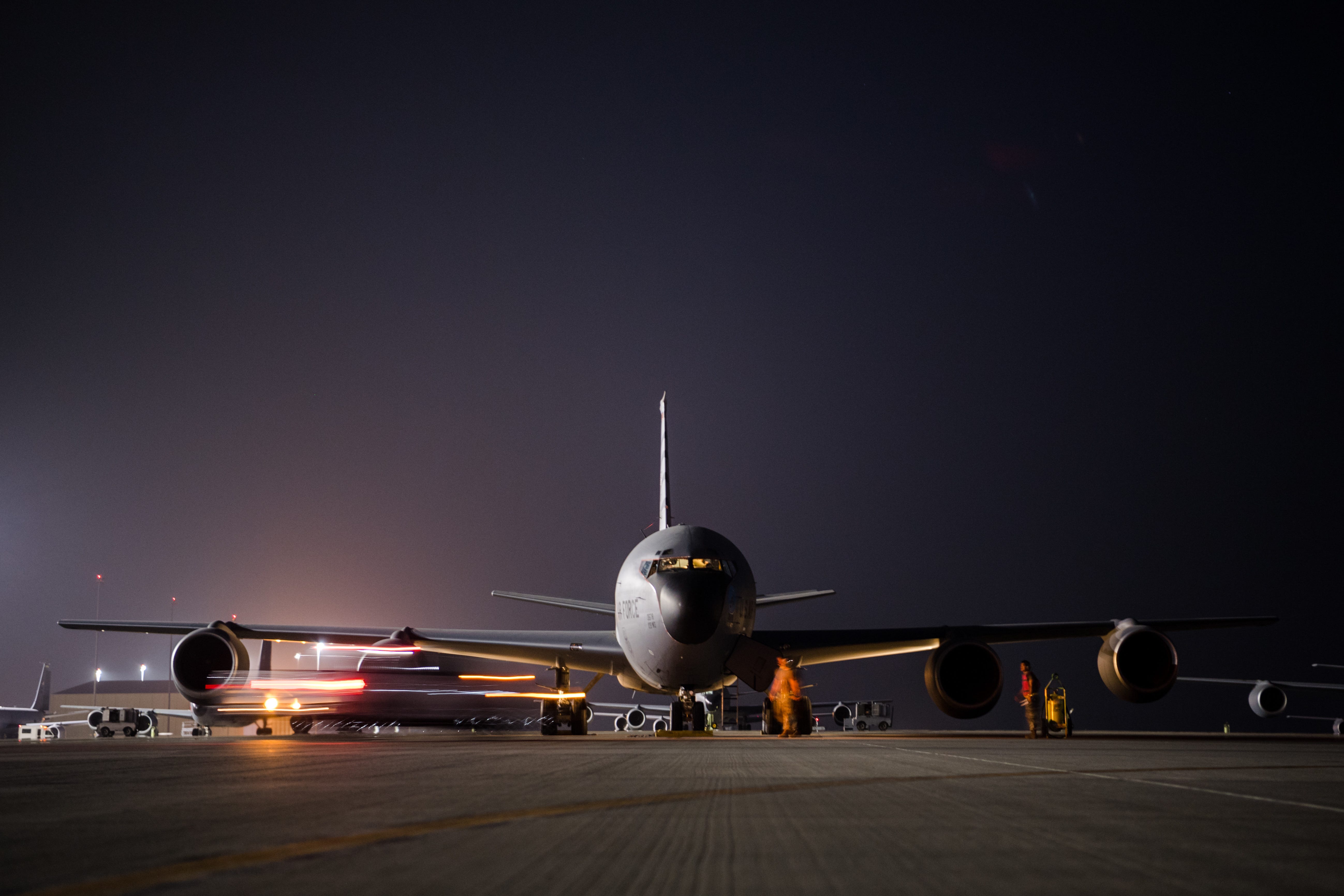
The Tanker’s Anatomy
The KC-135 Stratotanker is the quiet powerhouse of the U.S. Air Force. It is the legend that has faithfully fueled America’s global reach for more than six decades. If you picture the heart of an aerial fleet, think of the KC-135: its silhouette cutting across the sky, wings swept back at a sharp 35 degrees, four turbofans rumbling as it hauls up to 322,500 pounds into the blue.
This is no ordinary aircraft. It’s the lifeline that keeps fighters and bombers on station, that stretches the boundaries of possibility for the Air Force, Navy, Marine Corps, and even allied squadrons around the world.
But the KC-135 is more than a tanker. Its cargo deck can be pressed into service for passengers or freight. When the mission calls for it, the Stratotanker transforms into a flying hospital, ferrying wounded warriors to safety with patient support pallets strapped securely in place.
At the heart of its refueling magic is the flying boom: a marvel of midair engineering, controlled by a dedicated boom operator lying prone at the rear, guiding the fuel-laden probe into thirsty receivers.
Some KC-135s are fitted with a drogue for probe-equipped aircraft, and a few can even refuel two aircraft at once with their wingtip pods. In the world of aviation, the KC-135 is the unsung hero—steady, reliable, and always ready to answer the call.
General Characteristics
Primary Function: Aerial refueling and airlift
Prime Contractor: The Boeing Company
Power Plant: CFM International CFM-56 turbofan engines
Thrust: 21,634 pounds each engine
Wingspan: 130 feet, 10 inches (39.88 meters)
Length: 136 feet, 3 inches (41.53 meters)
Height: 41 feet, 8 inches (12.7 meters)
Speed: 530 miles per hour at 30,000 feet (9,144 meters)
Ceiling: 50,000 feet (15,240 meters)
Range: 1,500 miles (2,419 kilometers) with 150,000 pounds (68,039 kilograms) of transfer fuel; ferry mission, up to 11,015 miles (17,766 kilometers)
Maximum Takeoff Weight: 322,500 pounds (146,285 kilograms)
Maximum Transfer Fuel Load: 200,000 pounds (90,719 kilograms)
Maximum Cargo Capability: 83,000 pounds (37,648 kilograms), 37 passengers
Pallet Positions: 6
Crew: Three: pilot, co-pilot and boom operator. Some KC-135 missions require the addition of a navigator. The Air Force has a limited number of navigator suites that can be installed for unique missions.
Aeromedical Evacuation Crew: A basic crew of five (two flight nurses and three medical technicians) is added for aeromedical evacuation missions. Medical crew may be altered as required by the needs of patients.
Unit Cost: $39.6 million (fiscal 98 constant dollars)
Date Deployed: August 1956
When the Tanker Falls, the Mission Trembles
For the United States and its allies, the loss of a KC-135 in western Iraq is a sobering reminder: modern air campaigns soar not just on the wings of fighters and bombers, but on the backs of the support fleet that keeps the whole machine in motion. The reports are clear: a combat mission, two tankers in the air, and a tragedy unfolding over friendly territory, untouched by hostile fire.
Strategically, the stakes are immense. A KC-135 isn’t just a number in the inventory; it’s the lifeline that extends the reach of airpower, lets strike packages linger, and sustains the relentless tempo demanded by coalition operations.
Its loss doesn’t just echo through squadrons. It sends a signal from Washington to NATO to Gulf allies: even outside the shadow of enemy missiles, the logistics lifeblood of air war is vulnerable to chaos, chance, and the fog of conflict.
Then, there’s the human toll. All six crew members lost, raising the war’s toll and reminding us that behind every sortie is a cost measured in lives, not just flight hours. For every ally, the lesson is crystal clear: winning the skies isn’t just about sharp fighters, but about resilient command and support. The next crisis may hinge not on the flashiest jet, but on the quiet giants that keep them aloft.
This Week in Aviation History
26 March 1967: Colonel Robert Ray Scott led twenty F-105 Thunderchiefs from Takhli, Thailand, on a daring strike near Hanoi. Flying his F-105D, call sign “Leech 01,” Scott wasn’t just guiding the attack; he became part of the legend. As bombs fell and flak blossomed, he spotted a MiG-17 closing in. With a cool hand and the roar of his 20mm Vulcan cannon, Scott downed the enemy fighter, etching his name into the annals of air combat and proving once more the mettle of America’s aviators.
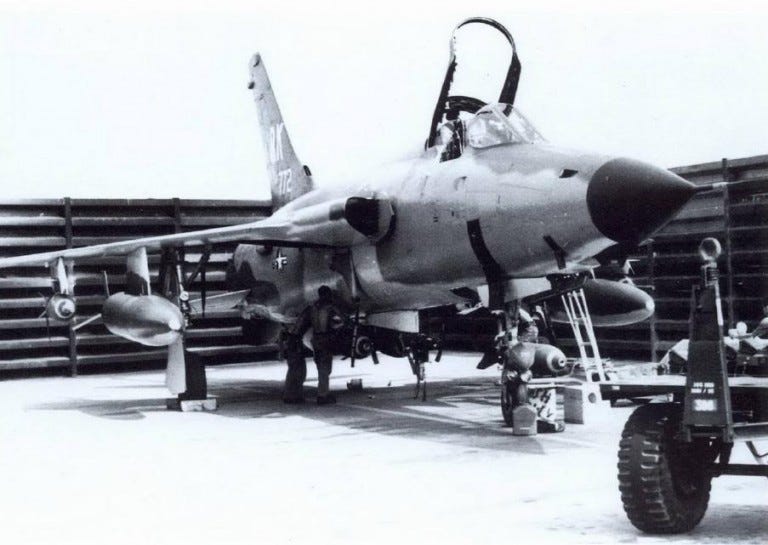
Colonel Robert Ray Shot Down a MiG using F-105
The 355th Tactical Fighter Wing, led by Colonel Robert Ray Scott, staked its claim in the skies over North Vietnam. The mission was routine at first: a strike near Hoa Lac airfield, F-105 Thunderchiefs thundering into enemy territory. But as any aviator knows, routine can turn legendary in a flash.
Colonel Scott caught sight of a MiG-17 launching from Hoa Loc airfield. With the instincts of a seasoned hunter, he banked left, ready to pursue. Three more MiGs soon revealed themselves, circling the airfield in single-ship trail; silver flashes marked with the unmistakable red star.
Scott fixed his gaze on the closest, pressed the attack, and closed the distance as the MiG tried to shake him. He fired, watching rounds tear into the left wing, debris spinning away. The MiG rolled into a desperate, low escape, but Scott pulled away, having done what few could claim: he’d bested a MiG in its own backyard. The pilot, Second Lieutenant Vũ Huy Lượng of the 923rd Fighter Regiment, did not survive.
This victory was more than a tally mark. For Scott, it was a bridge across eras. He’d flown the Northrop P-61 Black Widow in World War II, hunting in the dark skies over India and China. He’d already claimed two victories back then, and now, decades later, he joined the rarest company; becoming only the second U.S. Air Force pilot, after the renowned Colonel Robin Olds, to score kills in both World War II and Vietnam.
Scott’s own story began in Des Moines, Iowa, in 1920, the son of a railroad worker. He found his wings early, trading college for the cockpit when he enlisted as an Aviation Cadet just before America entered World War II. By the war’s end, he’d earned both the Distinguished Flying Cross and the Air Medal, his courage proven in combat.
After WWII, Scott returned home, finished his degree, and didn’t stop learning, earning two master’s degrees before returning to the sky. In 1952, he graduated from the Air Force’s test pilot school at Edwards, flying the cutting-edge North American F-86D.
But combat was never far, and Scott would eventually fly 305 missions across three wars—a career marked by valor, with four Silver Stars, three Legions of Merit, six Distinguished Flying Crosses, and sixteen Air Medals. He passed away in California in 2006, his legacy resting among heroes at Arlington.
Even the machines that carried these men found their fate in the crucible of war. Scott’s F-105D, serial number 59-1772, would claim one more victory; a month after Scott’s triumph, Major Harry E. Higgins downed another MiG-17 with its cannon. But by 1970, the Thunderchief itself was lost to anti-aircraft fire over Laos; the pilot, a testament to the skill and luck that defines aviators, was rescued.
Some stories in aviation are written in contrails and thunder, in moments where history and heroism meet. Colonel Scott’s was one of them, a reminder that every sortie has the potential to become legend.
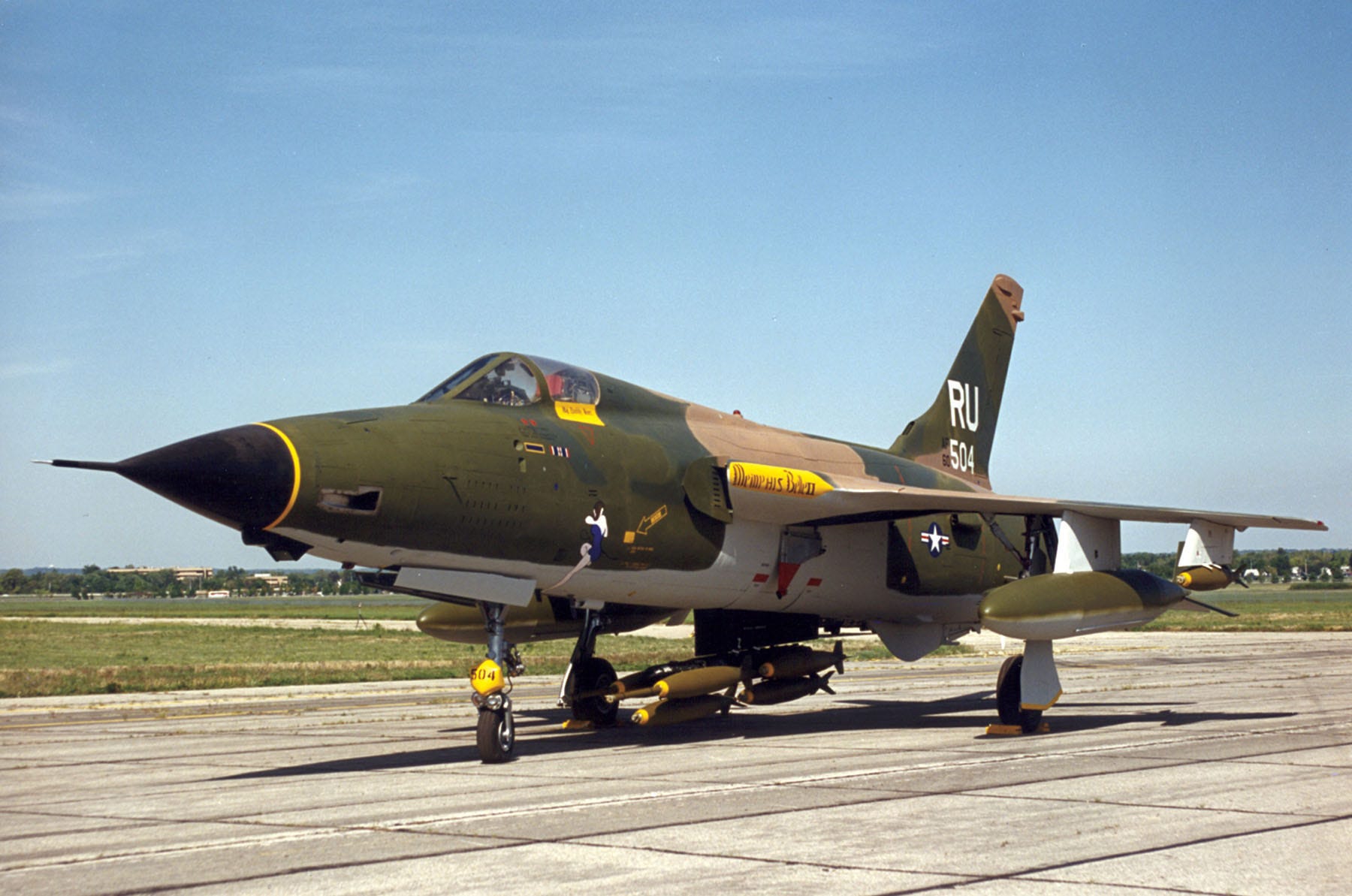
What Made the Thud stand out?
Back in 1951, Republic Aviation set out to craft a supersonic tactical fighter-bomber that would outpace the aging F-84F. Their answer was the F-105 Thunderchief—known to those who flew her as the “Thud.”
The first prototype, the YF-105A, took to the skies in October 1955, but it wasn’t until June 1959 that the F-105D made its debut. Over the years, 833 Thunderchiefs would roll off the line, with 610 of them built as the D-model, each bearing the ambition of Republic’s engineers and the hopes of every young pilot who strapped in.
When the Gulf of Tonkin incident thrust Southeast Asia into the world’s spotlight in 1964, the Air Force called upon the F-105 for its speed and muscle. The Thud played a starring role in Operation Rolling Thunder, delivering more than 12,000 pounds of conventional bombs per mission; a payload that even eclipsed the legendary B-17 of World War II.
Though born for nuclear strike, the Thunderchief proved itself a brawler in the jungles and skies of Vietnam, flying hard and hitting harder. Eventually, the F-4 Phantom took over the Thunderchief’s mantle, and by July 1980, the last F-105D had flown its final Air Force sortie.
One of these storied birds now sits on display, painted as she looked with the 357th Tactical Fighter Squadron at Takhli Royal Thai Air Base. Her name, Memphis Belle II, pays homage to the iconic B-17F and those two red stars beneath the cockpit?
They mark the MiGs she brought down in combat over Southeast Asia, a quiet testament to her legacy before she landed for good at the museum in April 1990.
TECHNICAL NOTES:
Armament: One M61 Vulcan 20mm cannon and more than 12,000 lbs. of ordnance
Engine: One Pratt & Whitney J75-P-19W of 24,500 lbs thrust
Maximum speed: 1,390 mph
Cruising speed: 778 mph
Range: 2,206 miles
Ceiling: 51,000 ft.
Span: 34 ft. 11 in.
Length: 64 ft. 5 in.
Height: 19 ft. 8 in.
Weight: 52,838 lbs. maximum
The Thud: A Call Sign That Endures
The F-105 Thunderchief—known to every pilot and crew chief as the “Thud”—earned its legend in the crucible of speed, power, and sacrifice. Born in 1951 to outrun and outgun the aging F-84F, the Thunderchief grew into much more than its designers ever imagined.
It became the workhorse of the early air war over North Vietnam, the Cold War’s answer to an urgent call for reach and muscle. Though conceived as a nuclear strike jet, the Thud carried over 12,000 pounds of bombs—more than the famed B-17s of World War II—and bore the brunt of Rolling Thunder when the conflict in Southeast Asia erupted in 1964.
But the Thud’s real story is written in the nerves of those who flew it. Take March 26, 1967: Colonel Robert Ray Scott, leading a flight of 20 Thunderchiefs from Takhli, carved a piece of history near Hanoi.
Coming off the target, he tangled with a MiG-17, downing it with the F-105’s Vulcan cannon; a weapon never meant for dogfights, but fearsome in the right hands. The Thud would notch 27 MiG kills during the war, most with the Vulcan, a fighter-bomber forced to fight as a warrior in the most contested skies of the era.
Yet every legend bears a cost. Of 833 Thunderchiefs built, a staggering 395 were lost in Vietnam; a somber testament to the danger faced by their crews.
Today, as airpower evolves into new shapes and technologies, the Thud’s story endures: in the end, range, speed, payload, and the courage of those at the controls are still what get a mission in, and hopefully, bring it home.
In Case You Missed It
Photo Outlet
Every issue of Hangar Flying with Tog gets you a free image that I’ve taken at airshows:
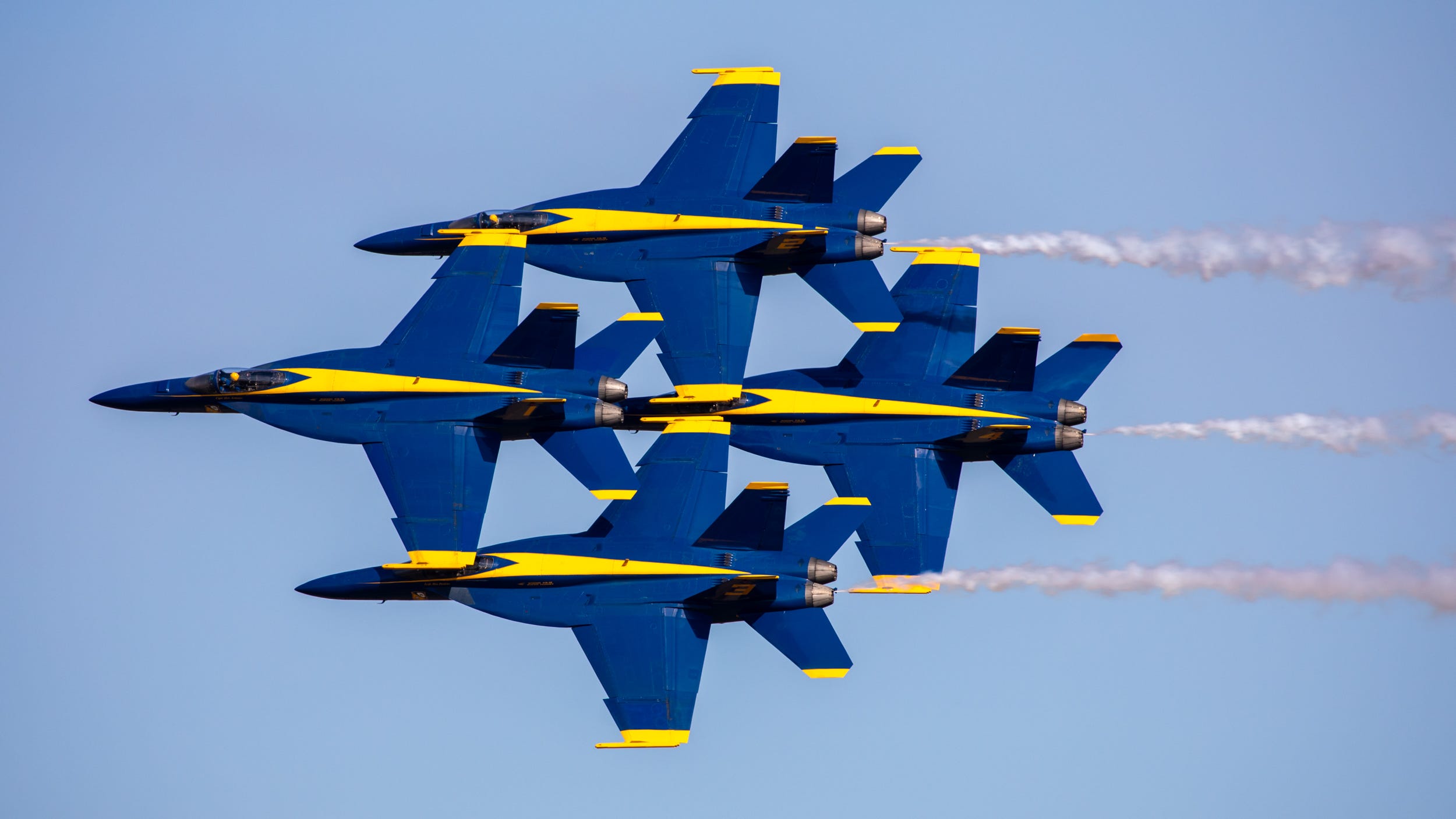
Feel free to use these photos however you like. If you choose to tag me, I am @pilotphotog on all social platforms. Thanks!
Post Flight Debrief
Like what you’re reading? Stay in the loop by signing up below—it’s quick, easy, and always free.
This newsletter will always be free for everyone, but if you want to go further, support the mission, and unlock bonus content like the Midweek Sortie, consider becoming a paid subscriber.
Your support keeps this flight crew flying—and I couldn’t do it without you.
– Tog
Good read about 2 aircraft I know well. I worked on the WC-135 weather birds at McClellan AFB in Sacramento, then moved to Beale AFB where I taught another special version of the 135, the KC-135Q. The “Q” was specifically modified to refuel the SR-71, which burned JP-7 instead of the typical fuel used (JP-4 or JP-8).
While I never worked on the “D” version of the F-105, I did work on the the F-105G, the famous Wild Weasel. It was assigned to my first base out of Avionics Tech School, George AFB (since closed) across the high desert from Edwards AFB in Southern California.