

Operation Epic Fury and Remembering the Battle of Okinawa
Both pieces revolve around the same enduring warfighting question: how far can overwhelming naval-air power carry you before strategy, endurance, and political end state become the real battle?
“The United States is conducting an operation to eliminate the threat of Iran’s short-range ballistic missiles and the threat posed by their navy… That is the clear objective of this mission.”
—Secretary of State Marco Rubio
Mission Briefing
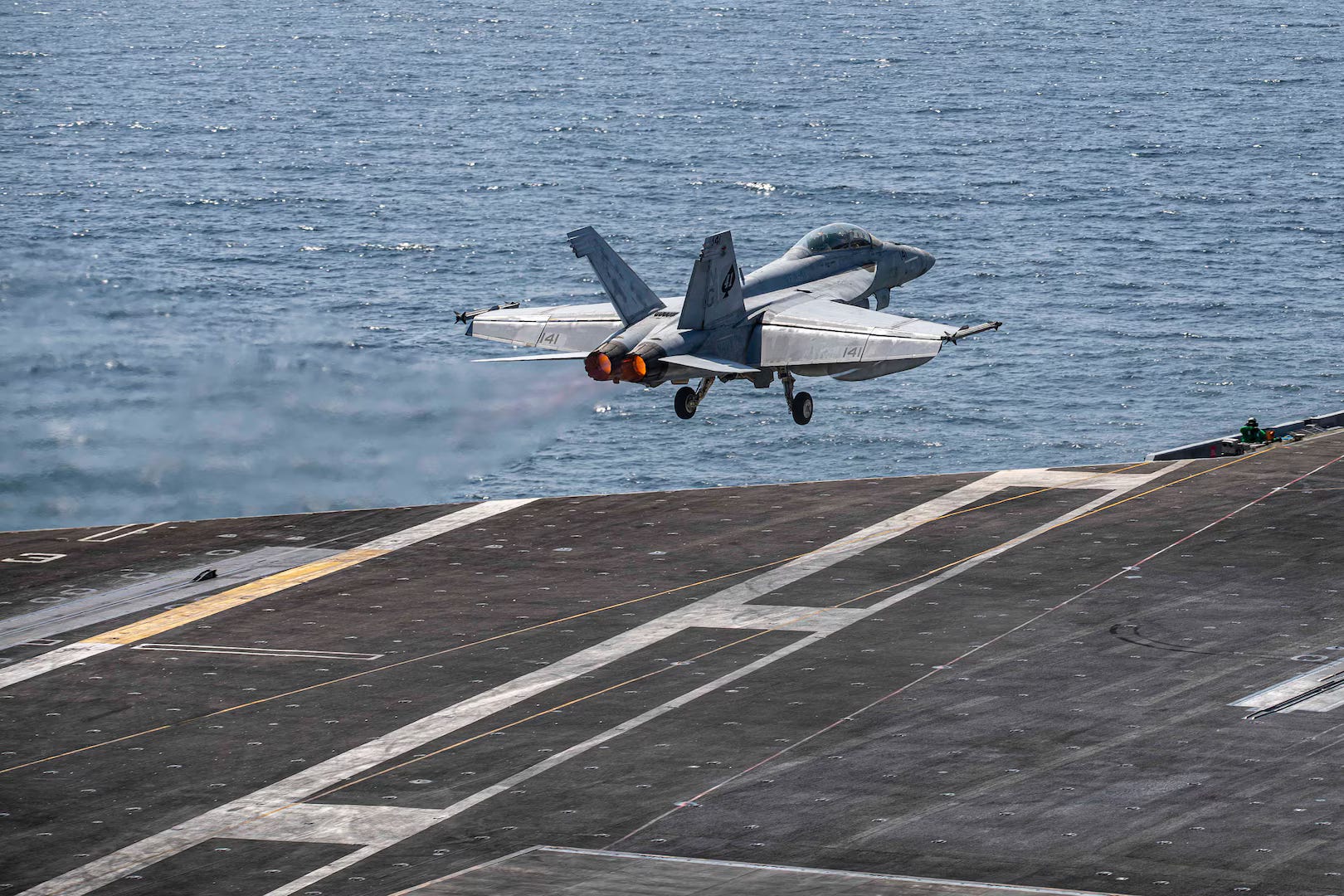
In the dark, early hours of 28 February 2026, U.S. Central Command launched a major campaign at the president’s command. CENTCOM made its intent unmistakable: to dismantle the Iranian regime’s security backbone by targeting sites deemed an imminent threat. The opening strikes fell on the Revolutionary Guards’ command centers, missile and drone launch sites, air defenses, and military airfields—linchpins of Iran’s military might. From the very beginning, this was no mere warning shot, but a calculated campaign to disrupt and unseat the adversary’s power.
What is Operation Epic Fury?
From the very beginning, this was no fleeting demonstration of might. The campaign’s intention was deep disruption—an operation designed to shake the adversary’s foundations.
Yet, as the first sorties thundered across the night sky, the political objectives began to shift beneath them. According to Reuters, the White House and Pentagon soon layered new aims atop the original mission: destroy Iran’s offensive missiles, cripple its navy, neutralize its support for regional proxies, and ensure Tehran never acquires nuclear weapons.
Each new goal added a dimension of strategic coercion, but also a layer of fragility; because, as any seasoned aviator knows, the more reasons you fight, the harder it is to recognize when you’ve truly won.
General Dan Caine’s early reports set the stage for a classic air campaign, but on a scale rarely seen in modern warfare. On February 27, before the world even knew the fight had begun, U.S. Cyber and Space Commands moved first; working to blind and disrupt Iranian detection and communications.
Then, in the darkest hours of February 28, over a hundred aircraft launched from airstrips and carrier decks, joined by Tomahawk missiles and precision rockets. The first wave struck with synchronized fury, hammering more than a thousand targets in just one day. The message was unmistakable: seize the tempo, deny the enemy a chance to regroup.
In the days that followed, command centers, intelligence nodes, missile batteries, air defenses, and naval assets came under relentless attack. The idea was simple—”stun and disorient” the adversary, as Reuters put it, while U.S. forces established air superiority overhead. This wasn’t a campaign to occupy ground, but to dominate every domain; air, sea, command, missiles, communications, and logistics.
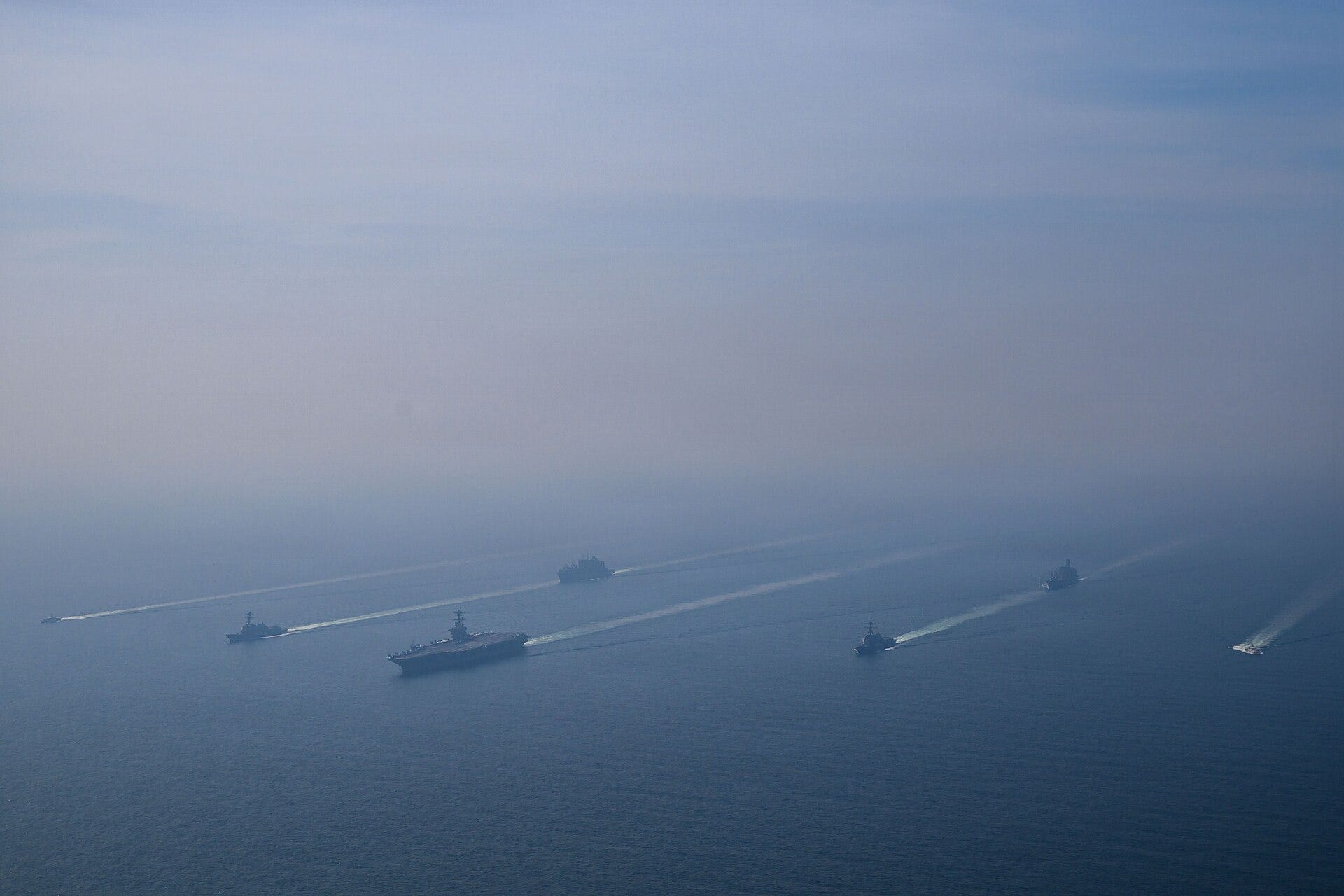
CENTCOM’s official reports, released after ten and then thirteen days, read like a roll call of American airpower. B-1s, B-2s, and B-52s thundered overhead; F-15s, F-16s, F-18s, F-22s, and F-35s patrolled the skies; electronic warfare aircraft jammed signals; advanced early warning planes and reconnaissance platforms swept the horizon; MQ-9 Reapers hunted from above.
Missile defense systems, carrier strike groups, refueling tankers, and LUCAS drones completed the picture. CENTCOM hinted at “special capabilities”—the sort aviators only speak of in hushed tones.
This arsenal wasn’t assembled for show. It represented a fully integrated architecture for strike, intelligence, command, missile defense, and logistics—sustaining a campaign meant to endure ballistic salvos, drone swarms, naval skirmishes, and regional ripples. As Reuters aptly put it, this was the largest U.S. operation since the 2003 invasion of Iraq; a testament to both the challenge at hand and the scale of America’s commitment.
Targets, Tactics, and Tempo
CENTCOM’s latest briefings pull back the curtain on a campaign that has evolved far beyond its opening salvos. Thirteen days in, the target list had grown: not just launch sites and command centers, but weapons factories, surface-to-air missile installations, and the full arc of Iran’s naval mine-laying capability; from warships to the factories and warehouses that keep them supplied.
The March 12 report tallies the cost: nearly 6,000 targets struck, with over ninety Iranian vessels hit or destroyed; more than sixty ships and thirty mine-layers among them.
This marks a clear shift; from neutralizing an immediate threat to systematically degrading Iran’s ability to project power. It’s a move any seasoned strategist would recognize. Iran’s playbook has always been layered; missiles and drones, scattered logistics, denial of the seas through mines and small boats.
Hitting launchers without shutting down the assembly lines would buy only a brief calm. Sinking warships without dismantling the mining infrastructure would leave vital oil lanes in peril. Operation Epic Fury is designed to break this cycle, dismantling the machinery that lets Tehran strike from afar. In military terms, it’s sound doctrine. Politically, it’s a heavier lift, for every new target brings new complexities.
Washington, meanwhile, points to rapid momentum. By March 2, Reuters reported that U.S. air superiority was secure, enabling deeper and broader strikes. The Pentagon announced a sharp drop in Iranian missile and drone launches as stockpiles and launch sites fell. On the tactical map, Epic Fury was doing what it set out to do: disrupt the enemy’s tempo and coordination, forcing Iran onto the defensive.
Yet, every victory comes at a price. CENTCOM’s daily bulletins tell that story, too. By March 1, three American lives had been lost; the toll climbed to seven by March 8, after a soldier wounded in Saudi Arabia succumbed.
Reuters revealed that about 140 service members were wounded in the campaign’s first ten days, most able to return to duty, but eight remained gravely injured. This is no costless exercise. It is paid for in sweat, blood, and sacrifice.
As mid-March arrives, the word from the White House is “relentless.” Ceasefire is off the table; the operation presses on, intensifying with U.S. strikes on Kharg Island—the linchpin of Iran’s oil exports.
Kharg moves nearly 90% of Iran’s oil, around 1.55 million barrels a day. The message is clear: America can strike at the heart of Iran’s economic might, signaling serious intent while holding back—at least for now—from directly crippling the oil infrastructure itself.
Operation Epic Fury and the Weight of Alliance
For America and its allies, Operation Epic Fury was more than a thunderous display of arms. It was a signal flare in the night, declaring intent to restore order in a region slipping toward chaos.
From the cockpit’s view, Epic Fury struck at the very arteries of Iran’s military machine: command centers, missile batteries, air defenses, naval forces, drone workshops, and logistics lines all came under fire. The aim was clear: paralyze Iran’s ability to threaten bases, ships, air routes, and global trade lanes, giving the U.S. and its partners time to seize back the initiative before Tehran could regroup.
For allies, especially those who rely on Gulf security and the free flow of commerce, Epic Fury was a reassurance mission as much as an offensive one. The sheer might on display—heavy bombers, stealth fighters, carriers, destroyers, missile shields, and surveillance networks—showed that the United States would shoulder risk and stand guard, wielding enough force to blunt missile barrages and keep the coalition safe.
Yet, tactical victory does not guarantee strategic control. Even as thousands of targets burned and Iran’s naval reach was curtailed, the bigger question loomed: could these battlefield gains be translated into lasting stability and a safer future for the region?
Epic Fury, then, was as much about present protection as it was about the uncertain road ahead. This campaign shielded allies today, while leaving the work of true security for tomorrow.
This Week in Aviation History
01 April 1945—a date etched into the annals of aviation and military history. On that morning, U.S. ground forces launched the Battle of Okinawa, the largest amphibious assault in the Pacific theater. For those of us who cherish the legends of the air, this was more than just another campaign; Okinawa was the last great barrier before Imperial Japan itself.
With the island secured, the stage would be set for America’s air power to reach its full, unbridled potential—strategic bombers poised to strike the Japanese mainland, supply lines strangled, and forward bases prepared for Operation Olympic, the planned final invasion set for later that year.
The Battle of Okinawa
On 15 March 1945, as Marines declared the end of organized resistance on Iwo Jima, Admiral Raymond Spruance—commander of the Fifth Fleet—was already charting a course into the unknown. Aboard his flagship, the USS Indianapolis, Spruance sailed toward the Ryukyu Islands, accompanied by Admiral Marc Mitscher’s formidable Fast Carrier Task Force 58.
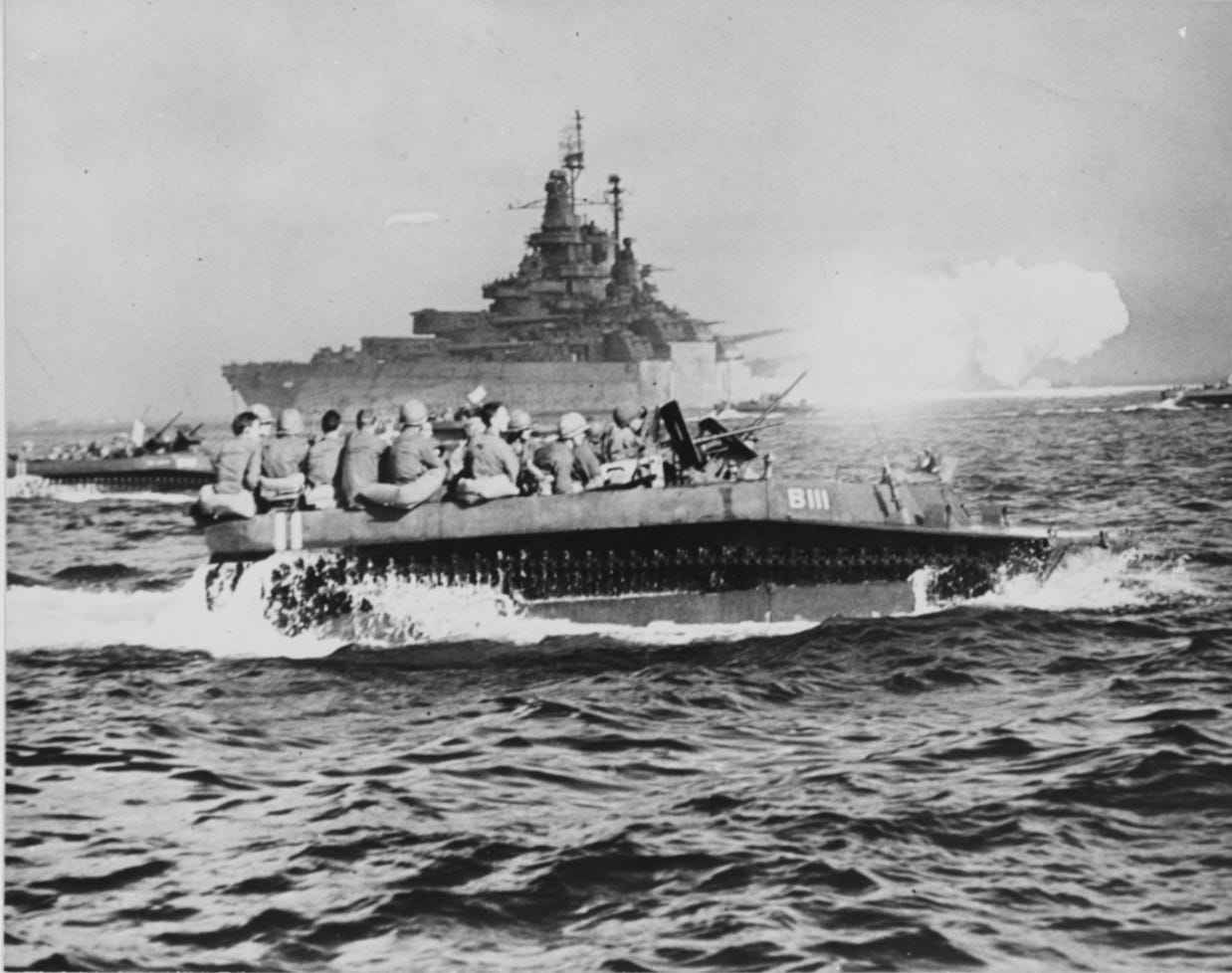
In the days ahead, the Pacific would bear witness to a gathering of might that defied imagination: over 1,600 ships and 350,000 naval personnel converging under Spruance’s command to form the largest amphibious assault force in the history of warfare. Their mission: seize Okinawa, the last sentinel before the heartland of Imperial Japan.
With Iwo Jima and soon Okinawa in Allied hands, the strategic equation shifted. The U.S. could now unleash its full arsenal—long-range bombers, relentless blockades, and newly established forward bases—preparing the ground for Operation Olympic, the final invasion of Japan set for autumn. But before that could happen, a storm of steel and sacrifice awaited.
A grim preview came on March 19, as Task Force 58 struck at Honshū and Kobe Harbor. The USS Franklin, one of America’s proud carriers, was struck by two bombs from a Japanese dive bomber. Her crew’s valor saved the ship, but the cost was staggering: over 800 sailors lost in a single morning; a stark reminder that the enemy, though diminished, was far from beaten.
Navy planners knew the closer they sailed to Japan, the fiercer the resistance would become. The enemy’s arsenal now included a new and terrifying weapon: the kamikaze. These weren’t conventional sorties; these were pilots willing to become the weapon itself. At Leyte Gulf and Iwo Jima, such attacks had been a menace, but now, within reach of the Japanese homeland, the threat loomed larger.
Estimates warned of thousands of enemy aircraft poised for suicide missions. Those estimates, grimly, would prove true. On March 31, Spruance himself felt the sting when a kamikaze struck the Indianapolis. The damage sent the flagship limping back to San Francisco, placing her on a path to her own tragic destiny.
Despite the fury from above, the invasion of Okinawa began with precision and purpose. Minesweepers cleared safe passage, warships unleashed thunderous bombardments, and carrier-based aircraft flew relentless sorties.
On April 1st (Easter Sunday) Lieutenant General Simon Bolivar Buckner Jr.’s Tenth Army landed unopposed on Okinawa’s western shores, their sights set on two vital airstrips. Astonishingly, both fell without resistance.
The ground campaign split in two: Marines pressed north, securing the lightly defended territory, while Army troops turned south toward the fortress-like Shuri Line. By mid-April, the Marines had swept their sector, but the Army’s advance slowed, grinding against entrenched defenders.
As the weeks dragged on, the lines blurred; Marines and soldiers alike locked in brutal combat, inching forward at staggering cost. By June’s end, the butcher’s bill was sobering: 49,151 American casualties, more than 12,500 killed or missing. Okinawa had become not just a stepping stone, but a crucible; proving the resolve, sacrifice, and unbreakable spirit of those who flew and fought beneath the Pacific sky.
The Importance of Real-Time Adaptation and Allied Partnership
Every day at Okinawa, the cost in lives and steel climbed higher, forcing the Navy to adapt its ways in the face of a threat few had truly anticipated. The kamikaze was unlike anything naval commanders had seen before. Pilots turning their planes into living weapons, undeterred by odds or firepower.
To meet this new reality, the Navy became a crucible of innovation: radar pickets were refined, combat air patrols adjusted, strikes against enemy airfields intensified, and small islands were seized to anchor early warning radars. In the process, sailors caught a fleeting glimpse of the future; a time when war at sea would be decided not just by bombs or torpedoes, but by guided missiles streaking in from beyond the horizon.
The radar pickets, small ships stationed far from the main fleet, became the sentinels and sacrificial shields of the armada. Their job was to spot incoming threats and sound the alarm, buying precious minutes for the larger ships to prepare. But in doing so, these pickets became the kamikazes’ first targets.
As the tempo of attacks escalated, the picket line was pushed out—from 40 miles to 60—stretching the fleet’s defenses thin, but granting more time to react. Ideally, each radar picket team would have included four to six destroyers and half a dozen supporting craft, all matched in speed and maneuverability.
In reality, losses forced the Navy to improvise, mixing ship types and requiring each group to adapt its tactics on the fly when the sky darkened with enemy aircraft.
Admiral Spruance, ever the tactician, ordered the capture of small offshore islands to extend the Navy’s reach. These outposts became hubs for fighter direction and early warning, giving the fleet a new edge in the deadly chess match over Okinawa.
After the battle, one flotilla commander would say, “Never in the annals of our glorious naval history have naval forces done so much with so little against such odds for so long a period.” Such praise became a refrain for the picket crews—stretched to the limit, yet unbroken.
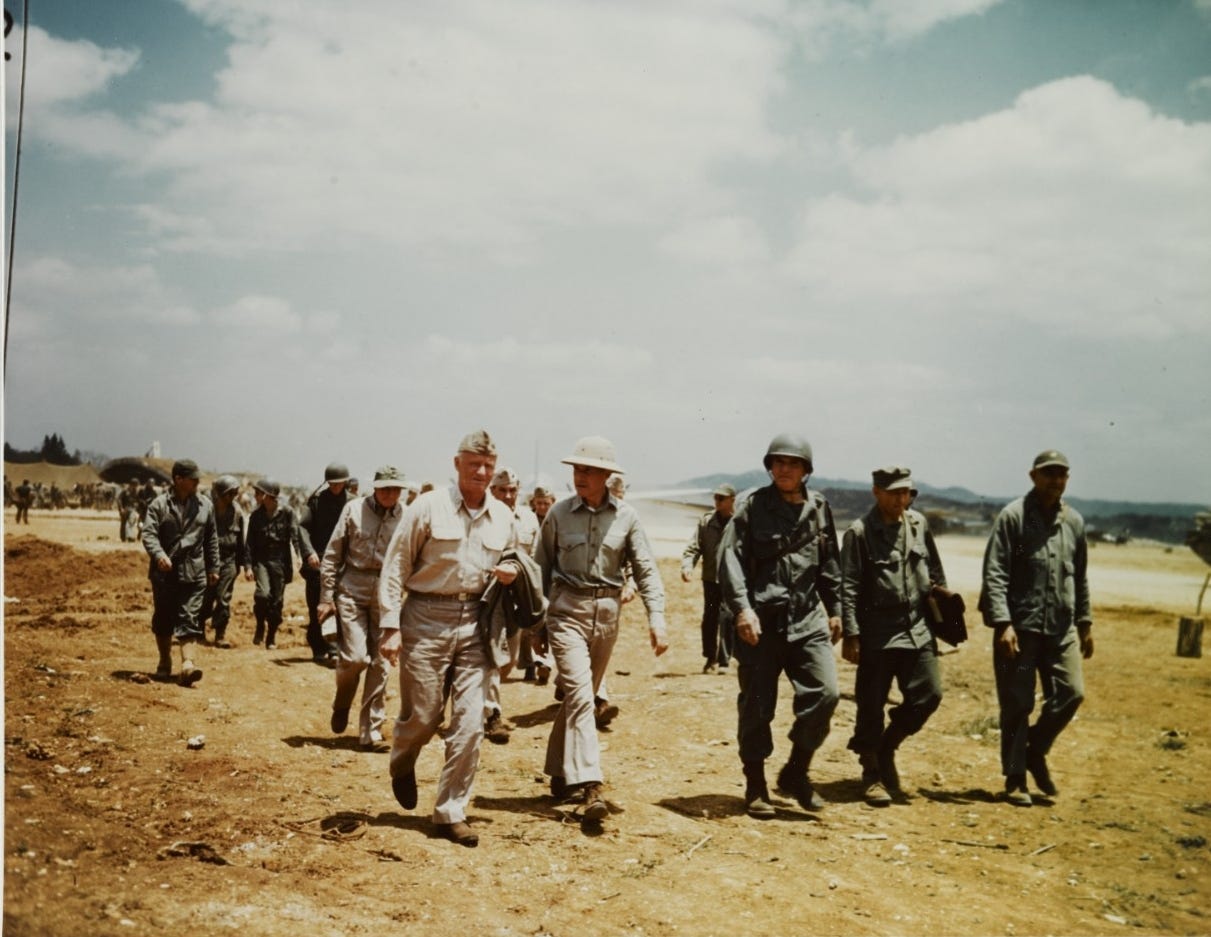
The crucible of Okinawa demanded more than tactical brilliance; it required true teamwork. The operation was a patchwork of commands and services—the overall strategy set by Admiral Nimitz, the assault led by Spruance, and the ground war waged by a joint Army-Marine Corps force under Buckner.
The complexity was staggering. Smooth cooperation meant drawing clear lines of authority, especially as the campaign shifted from sea to shore. Spruance held the power to decide when amphibious gave way to ground fighting, but even then, rivalries had to be set aside. And set aside they were, as Army, Navy, and Marine forces melded into a single, unstoppable team; proving that, even amid chaos, unity could carry the day.
The Battle of Okinawa’s Enduring Legacy
The Battle of Okinawa’s legacy is etched not just in its staggering scale, but in the truths it revealed about modern warfare’s true cost. From April to June 1945, Operation Iceberg became the Pacific’s largest, bloodiest crucible: Army, Marines, Navy, Coast Guard, and allies, all locked in a brutal campaign that demanded everything from everyone.
Victory didn’t come with the first wave ashore. Japanese defenders melted into caves and strongholds, refusing open battle and turning Okinawa into a grinding trial of endurance. Over 12,000 Americans fell. Japanese forces were nearly annihilated, and the toll on Okinawan civilians was devastating.
There were lessons, paid for in blood. Okinawa proved that winning the Pacific required more than firepower. It demanded flawless joint cooperation, mastery of amphibious landings, logistical genius, and the grit to face an enemy fighting from the shadows, willing to die rather than yield.
Kamikaze attacks, relentless and desperate, sank 26 Allied ships and damaged 168 more, a stark reminder that even the strongest fleet can be threatened by unconventional tactics.
But the deepest legacy is human. It lives in the stories of sacrifice—soldiers, sailors, Marines, correspondents, and civilians—and in acts of courage like Desmond Doss at Hacksaw Ridge. Okinawa stands as both a warning and a guide: in war, technology alone is never enough. Victory belongs to those who endure, who unite, and who find strength in the darkest hours.
In Case You Missed It
Photo Outlet
Every issue of Hangar Flying with Tog gets you a free image that I’ve taken at airshows:
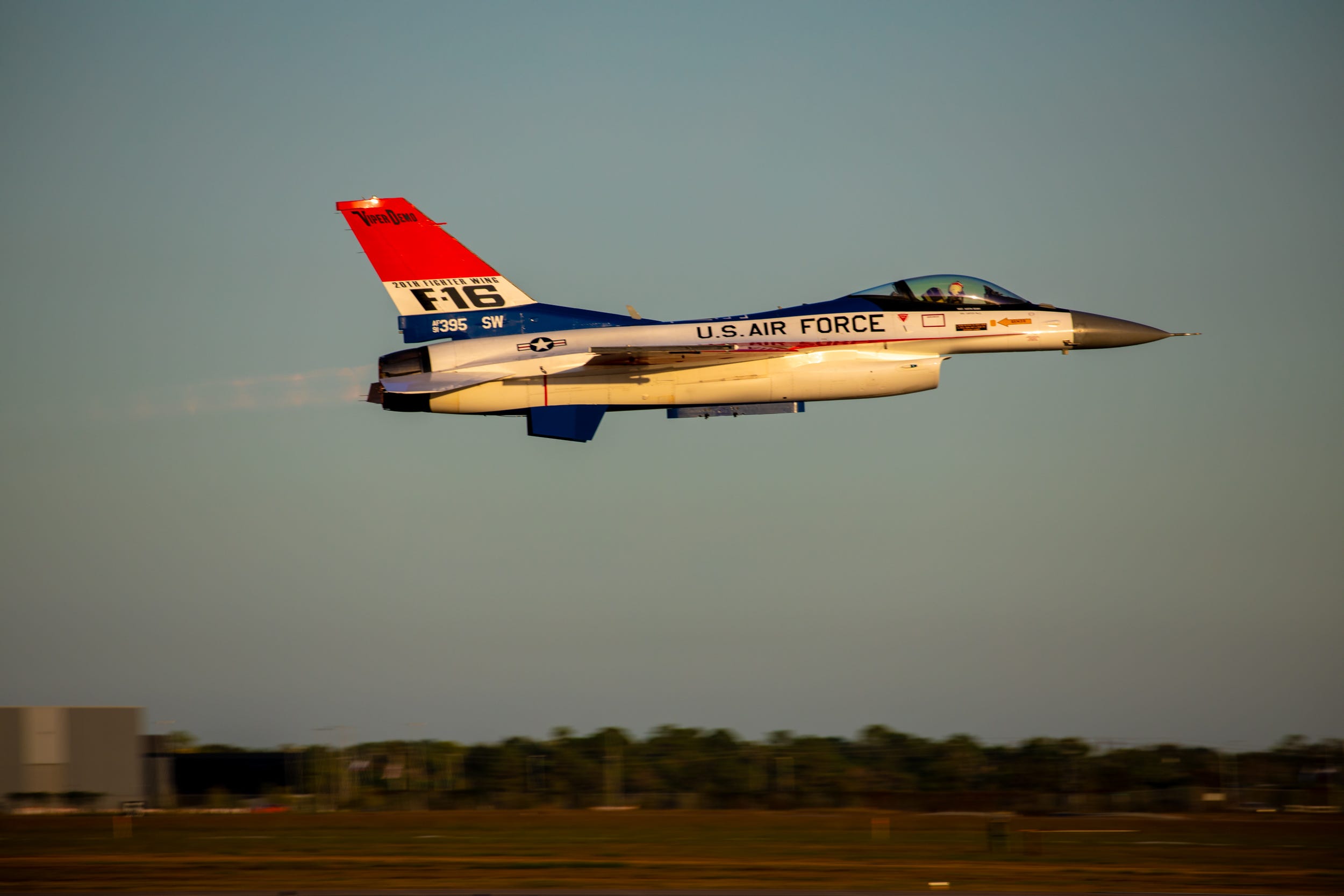
Feel free to use these photos however you like. If you choose to tag me, I am @pilotphotog on all social platforms. Thanks!
Post Flight Debrief
Like what you’re reading? Stay in the loop by signing up below—it’s quick, easy, and always free.
This newsletter will always be free for everyone, but if you want to go further, support the mission, and unlock bonus content like the Midweek Sortie, consider becoming a paid subscriber.
Your support keeps this flight crew flying—and I couldn’t do it without you.
– Tog