

Midweek Sortie 25: Fear the Bones—The Skull-and-Crossbones Legacy of the Jolly Rogers
From Corsairs to Tomcats to Super Hornets, the Jolly Rogers skull-and-crossbones became more than a squadron patch — it became naval aviation’s pirate flag.
“Fear the Bones.”
—Jolly Rogers’ Motto
Steam moves along the carrier deck, curling in the jetwash as a fighter crouches in the catapult, nose tipped at a horizon painted in battleship gray. In the cockpit, a gloved hand drapes across the throttles; on the deck, crew members ghost through the fog and shadows beneath outstretched wings.
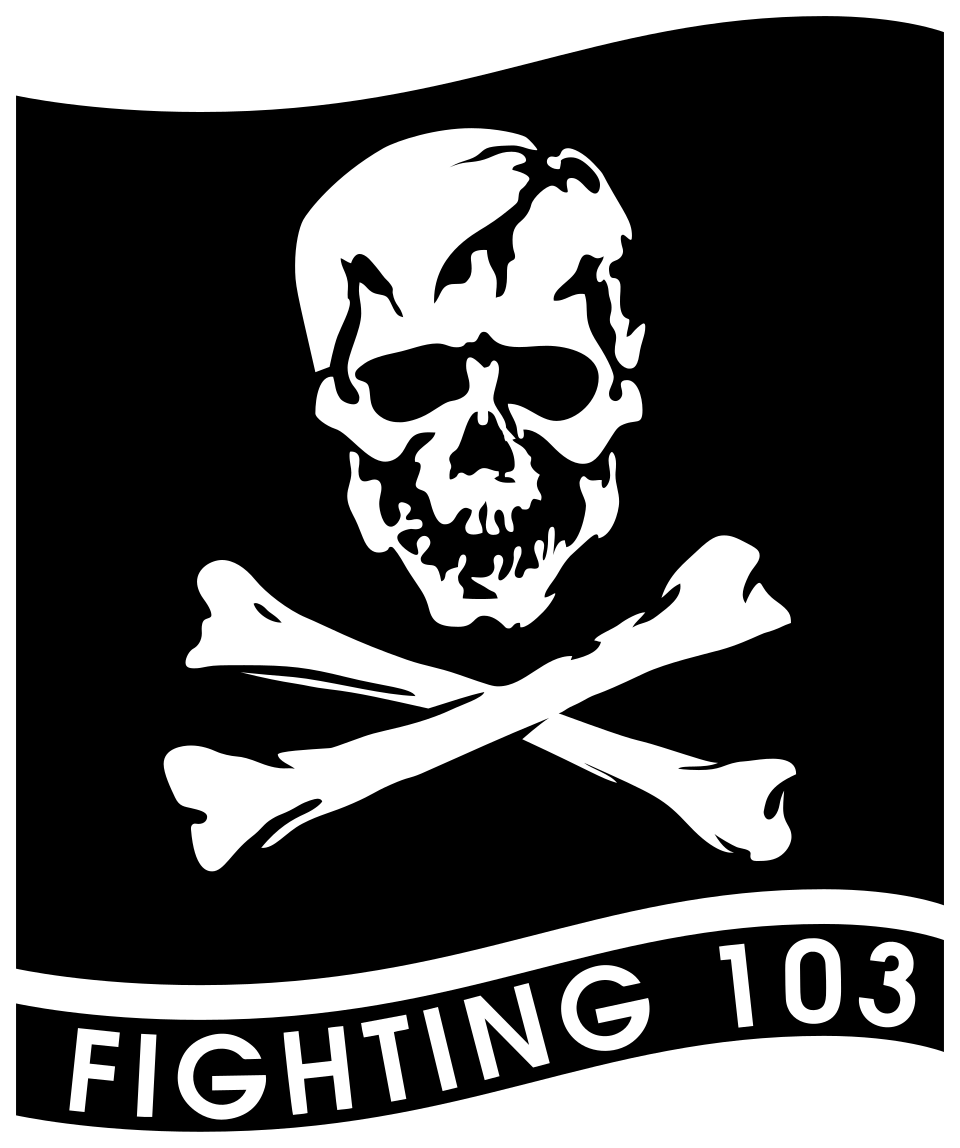
The ocean roars, the jet answers back, raw and ferocious. But before the launch officer’s hand comes down, before afterburners rip the morning open, one signal has already shattered the silence—a white skull and crossbones, grinning from a black tailfin.
Subtle? Not a chance. That was never the point.
For generations of aviators, the Jolly Rogers’ mark has meant more than danger. It’s memory in motion, flown from the bent wings of World War II Corsairs, slashing through the Cold War on Tomcats, still riding the thunder on Super Hornets today.
The bones have outlasted squadrons, aircraft, even the Navy’s bureaucracy, because some symbols refuse to fade.
This Deep Dive traces the legend: how a pirate flag became the most cinematic, swaggering, and enduring war mark in naval aviation.
Born Under the Bones
The legend of the Jolly Rogers didn’t start with quiet tradition. It began with a shot of pure defiance, painted in bone-white on the flanks of Navy fighters roaring into World War II.
