

Lockheed Lands $1B Missile-Tracking Satellite Deal and the 1943 Activation of Thirteenth Air Force
From jungle airstrips to low-Earth orbit: coordinating faster and fighting across distances now reaches space, where missile-tracking satellites sharpen warning, cue defenses, and sustain deterrence.

“These innovative approaches position Lockheed Martin to meet the warfighter’s urgent need for a proliferated missile defense constellation.”
—Joe Rickers, vice president of Transport, Tracking and Warning at Lockheed Martin
Mission Briefing
Last December 2025, Lockheed Martin charted a new course in space defense, securing a Pentagon contract that could soar past $1 billion to deliver 18 advanced missile-tracking satellites. With this mission, Lockheed joins the elite “Tracking Layer” constellation in low-Earth orbit, standing watch for ballistic, hypersonic, and cruise missiles, feeding critical trajectory data in real-time. The contract unfolds in carefully measured phases, each milestone unlocking new value as these sentinels progress from blueprint to orbit.

Lockheed Snags $1B Deal to Build Missile Detection Satellites
On December 19, Lockheed Martin found itself at the center of a new chapter in space defense, a potential $1 billion contract from the Space Development Agency to deliver 18 missile detection and tracking satellites.
The word “potential” carries weight here. This is no simple handoff; the contract is options-based, its value unfolding in phases, each one contingent on performance, schedule, and validated milestones. It’s as if the contract itself is a flight plan, with each waypoint earned through precision and reliability.
These satellites aren’t following the well-worn flight paths of geostationary early warning craft, forever stationed 36,000 kilometers above the equator. Instead, they’ll be flying much closer to home, at just 1,000 kilometers—skimming the edge of space in low-Earth orbit. This lower altitude means faster detection and sharper tracking, though it comes with the trade-off of shorter operational lives and the need for more frequent replacements.
Lockheed Martin isn’t new to this airspace; they’ve already proven themselves with contracts for other layers within the Space Development Agency’s ambitious space architecture. This latest award is a testament to the trust placed in Lockheed’s ability to deliver complex military satellites at a pace that matches the urgency of modern threats.
The mission for these new sentinels is crystal clear: spot the launch, track the missile’s twisting arc, and relay that vital data in near real time to commanders and interceptors across domains. Their true value shines brightest against the threat of hypersonic missiles; those elusive targets whose unpredictable flight paths have outpaced traditional detection methods.
Equipped with infrared sensors, these satellites catch the first flicker of a missile’s thermal signature. From that moment on, they shadow the target, even as it darts through the atmosphere at hypersonic speeds. Every scrap of data is funneled down to ground, sea, and air forces, knitting together a defense network where no satellite is merely a lone observer, but a critical link in a larger, ever-vigilant chain.
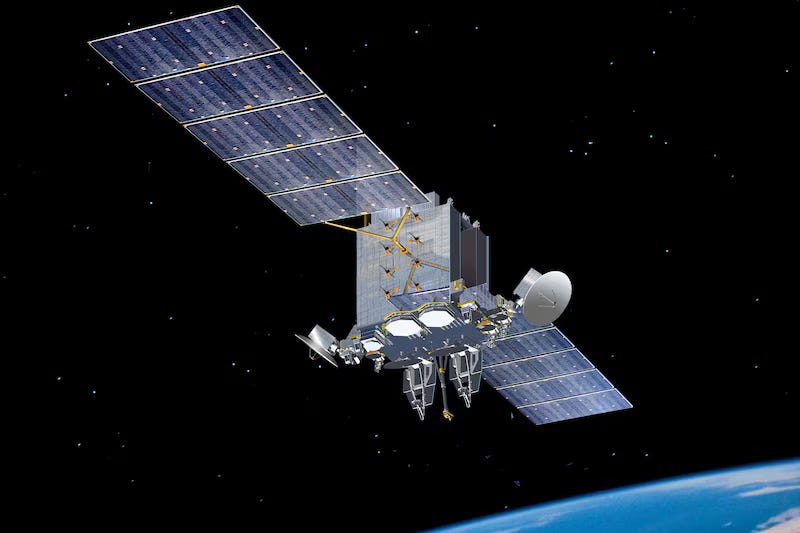
Eyes Above: How Missile Detection Satellites Will Guard the Skies?
Lockheed Martin is preparing to launch a new fleet of sentinels into the sky, each one a critical part of the Space Development Agency’s Proliferated Warfighter Space Architecture (PWSA).
These 18 newly awarded missile detection and tracking satellites will join a layered web of defense and communications assets, all circling in low Earth orbit. Once deployed, these space vehicles won’t just watch. They’ll transform real-time missile tracks into actionable intelligence, giving commanders the edge to counter threats before they cross the horizon.
This contract builds on Lockheed Martin’s earlier successes in the Tranche 2 Tracking Layer, further empowering the U.S. to maintain global vigilance. The satellites’ mission is ambitious: persistent detection, immediate warning, and continuous tracking of both traditional missiles and the new breed of hypersonic threats. Their presence means a constant watch, day and night, wherever danger might arise.
Behind this achievement lies years of Lockheed Martin’s focused investment—secure communication networks, rigorous test assets, and a dedicated small satellite production center. By integrating advanced technologies early, they’ve trimmed risk and accelerated production schedules, answering the urgent call for rapid deployment. As Joe Rickers, vice president at Lockheed Martin, puts it, these innovations are built on a steadfast commitment to the warfighter’s needs.
The supply chain, now seasoned and reliable, includes partners like Terran Orbital, whose satellite buses help keep the assembly line moving at pace. All satellites will be crafted at Lockheed’s SmallSat Processing & Delivery Center in Colorado—a hub for swift and scalable production.
With this award, Lockheed Martin’s role in the SDA’s Tracking and Transport Layers grows ever larger. In total, they are now responsible for 124 space vehicles, with 21 already launched and more on the way, each one a new guardian patrolling the orbital frontier.
Keeping the Nation (and Allies) Lock and Load
This Lockheed Martin contract is more than a handshake over blueprints. It’s a calculated move in the ever-quickening race for dominance above the clouds. As China and Russia pour fuel into their hypersonic programs, the United States answers not with rhetoric, but with action.
By reinforcing the space-based detection layer, Washington is broadcasting a message: we see the shifting threat, and we’re investing to keep pace, our resolve reflected in a steadily swelling military space budget.
For allies flying in formation alongside the U.S., the Tracking Layer award is a promise of quicker, sharper warning—especially against the elusive hypersonic menace. This network is designed to spot launches and deliver trajectory data to the whole kill chain in near real time.
It’s a coalition approach built on distributed, redundant low-Earth-orbit constellations; systems meant to be tough, adaptable, and always on watch. If allies can plug in seamlessly, deterrence is strengthened, the safety net stretched tighter.
But with opportunity comes challenge. Integration, cybersecurity, and the grind of long-term sustainment now become shared responsibilities. Budgets, networks, and defensive measures need to be aligned if the full advantages of this architecture are to be realized. Partners will have to match pace and protection to benefit from this next evolution in space defense.
This wave of U.S. investment does more than reinforce the front lines; it puts the Space Development Agency at the heart of America’s defense, sometimes eclipsing older, slower organizations. It also locks in giants like Lockheed Martin as the master builders of the nation’s orbital shield.
Still, smooth air is never guaranteed. Each new satellite adds layers of complexity—more to coordinate, more to defend, more to steer clear in crowded orbits. Every piece of hardware is a potential target for jamming or cyber mischief.
And, as every aviator knows, costs can climb with each new sortie. The real test will be whether this evolving architecture can outmaneuver ever-adapting threats in the near future, staying sharp in the endless dogfight for control of the high frontier.
This Week on Aviation History
13 January 1943: Activation of the Thirteenth Air Force (now PACAF: Pacific Air Forces)
On 13 January 1943, on the distant shores of New Caledonia, the Thirteenth Air Force sparked into existence, a bold response to a Pacific expanse far too immense for any one airstrip to command. This wasn’t a storybook lineup on polished runways, but a patchwork force drawn from scattered, isolated units stretched across islands and jungle. From that first ignition, airmen learned to use distance and isolation as their crucible, hopping from one remote outpost to another, proving that airpower could thrive even where the map ran out.

Scattered but Unbroken: The Thirteenth Air Force Lights the Pacific
The Thirteenth Air Force is a legend among numbered air forces—one that has never called the continental United States home. Its story began on January 13, 1943, in the distant reaches of New Caledonia, answering the Pacific’s vast challenge. Born as a patchwork of independent, widely scattered units, Thirteenth Air Force quickly became known as “The Jungle Air Force,” forging airstrips and operations from more than forty remote islands by war’s end.
Their job was never easy. Early on, Thirteenth AF units threw themselves into the path of advancing Japanese forces, holding the line where ocean met jungle. Once momentum shifted, these airmen became the tip of the spear; leaping from the Solomons to the Admiralties, New Guinea, Morotai, and the Philippines, flying an arsenal of legendary aircraft: B-17 Flying Fortresses, B-24 Liberators, B-25 Mitchells, P-38 Lightnings, and more. Over five operation areas and thirteen campaigns, they made sure the enemy never grew comfortable.
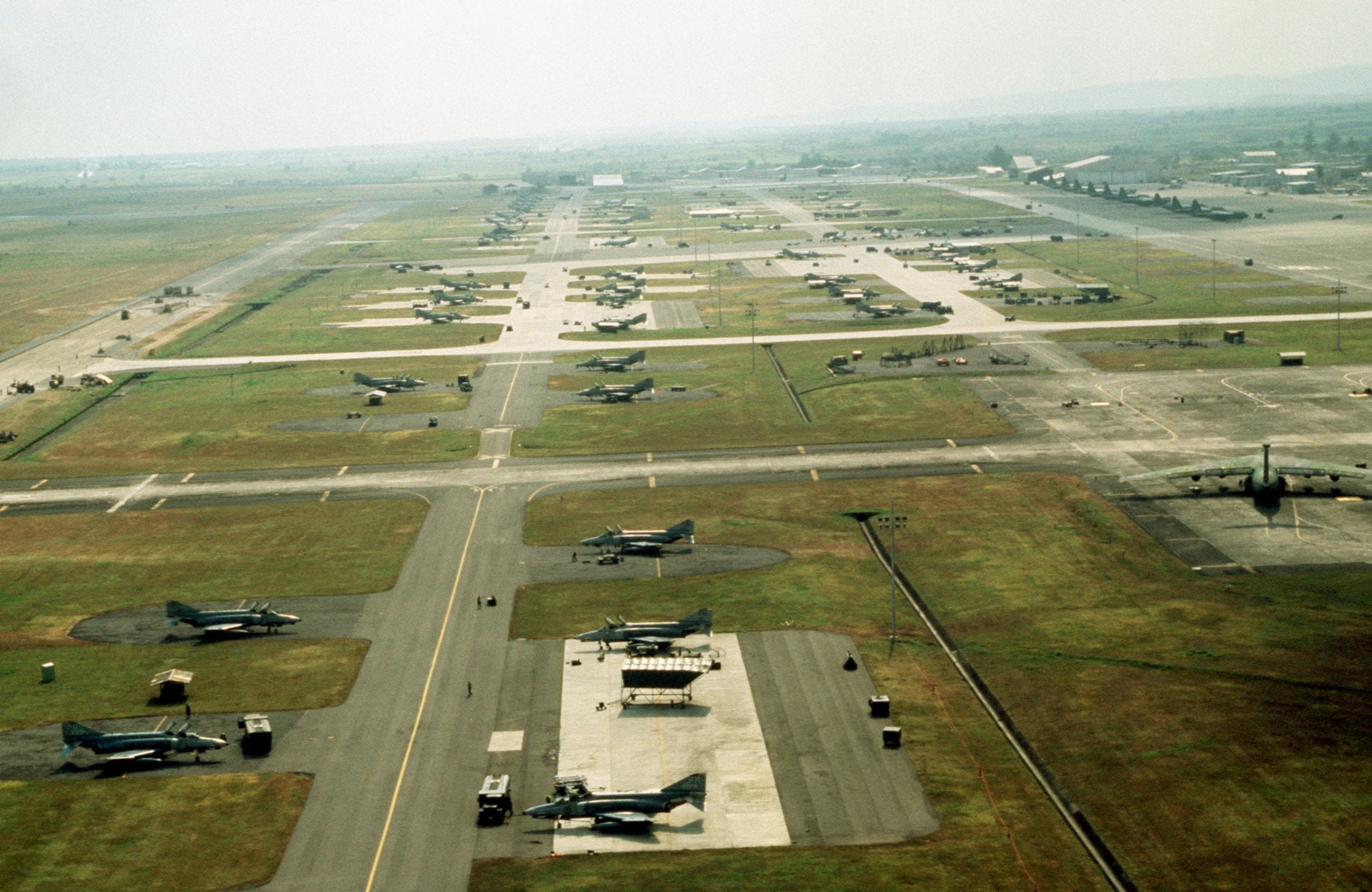
With the war’s end, the Thirteenth joined the Far East Air Forces, charged with guarding the Western Pacific and the Philippine Islands. Its headquarters at Clark Air Base became a nerve center, especially during the Korean War, as men and materiel flowed through to the peninsula. Through the 1950s and early ’60s, the command focused on training and surveillance, ever ready for the next call.
Vietnam brought a new tempo. Thirteenth Air Force became the backbone of Pacific air logistics, with combat units deployed to Thailand and an operational footprint that grew to seven wings, nine major bases, and over 31,000 personnel. The post-Vietnam decades saw a return to readiness, the command standing by for whatever crisis might next emerge.
When the world shifted in the 1990s, Thirteenth Air Force shifted with it. During Operations Desert Shield and Desert Storm, its aircraft and support staff proved vital to liberating Kuwait. In June 1991, when Mount Pinatubo’s eruption buried Clark in ash, the command led the largest evacuation in Air Force history—Operation Fiery Vigil. Forced to relocate, the Thirteenth found new ground first at Andersen AFB, Guam, then at Hickam AFB in 2005, reinforcing its role as a linchpin of Pacific airpower.
Today, as a redesignated component numbered Air Force headquarters, Thirteenth Air Force plans, commands, and controls air, space, and information operations across the Asia-Pacific—except for Korea—serving as the Air Force component to U.S. Pacific Command.
Its support even extends to Operation Deep Freeze, ensuring that American airpower reaches from the humid jungles of the Pacific to the frozen frontiers of Antarctica. Through every challenge, Thirteenth Air Force remains a testament to adaptability, resolve, and the spirit of the airmen who’ve carried its legacy across generations.
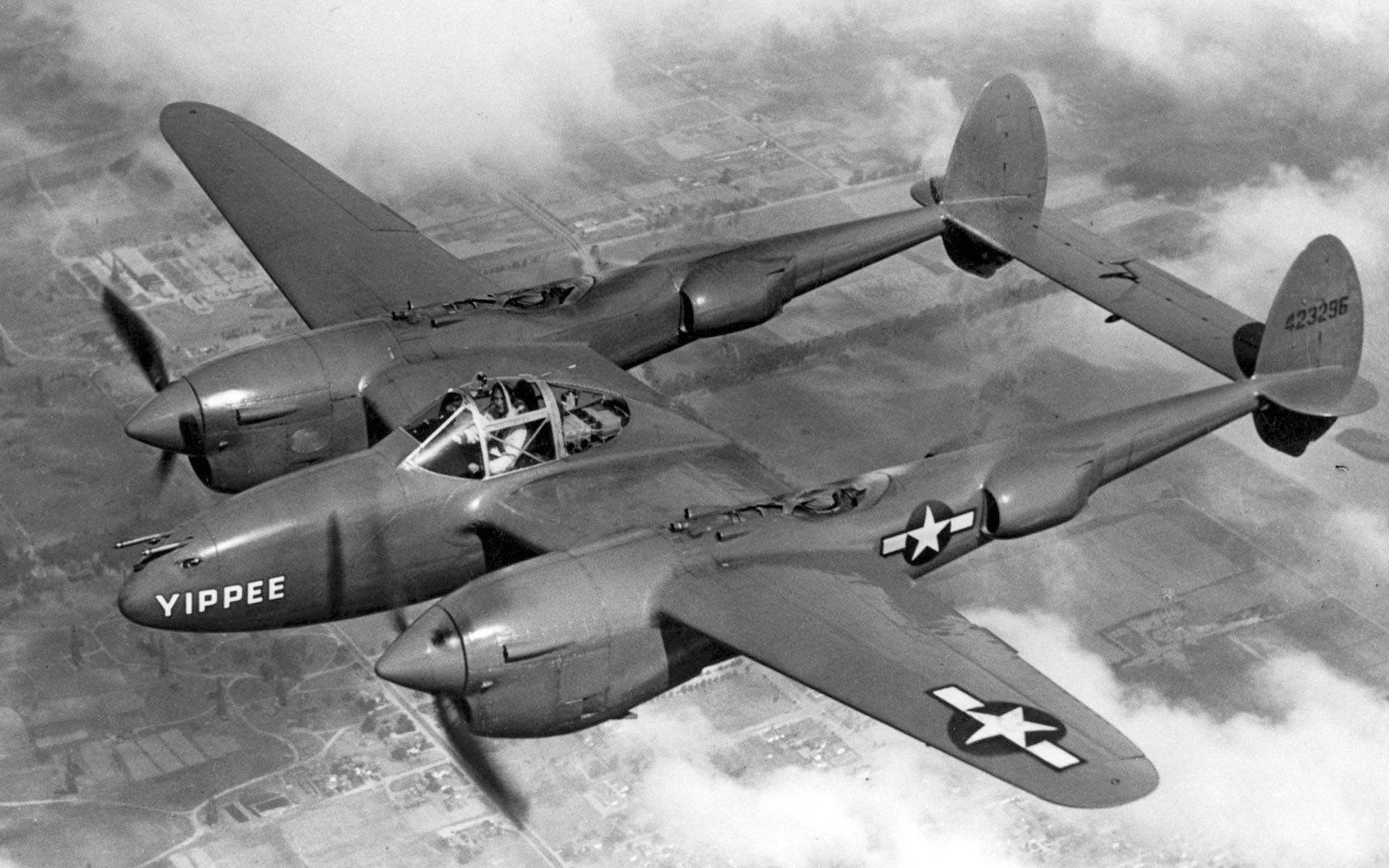
Aviators’ Companions: The Birds of the Jungle Air Force
Let me give you a rundown of the selected birds of the Jungle Air Force: the B25 Mitchell and P-38 Lightning
North American B-25 Mitchell
Type: Medium Bomber
Production
Date Introduced: 1943
Manufacturer: North American Aviation
Number Produced: 4,300+
Specifications (B-25J)
Crew: 6 (Pilot, Co-Pilot, Bombardier/Navigator, Flight Engineer, Radio Operator and Tail Gunner)
Wingspan: 68 feet
Length: 53 feet
Maximum Speed: 272 miles per hour
Cruising Speed: 230 miles per hour
Maximum Range: 1,350 miles
Engines: Two Wright R-2600-92s (1,700 hp each)
Maximum Bomb Load: 3,200 pounds
Armament: Twelve to eighteen .50 caliber machine guns
Lockheed P-38L Lightning
Armament: Four .50-cal. machine guns and one 20mm cannon
Engines: Two Allison V-1710s of 1,475 hp each
Maximum speed: 414 mph
Cruising speed: 275 mph
Range: 1,300 miles
Ceiling: 40,000 ft.
Span: 52 ft.
Length: 37 ft. 10 in.
Height: 12 ft. 10 in.
Weight: 17,500 lbs. loaded
Thirteenth Air Force’s Enduring Contrail
The story of the Thirteenth Air Force is etched across remote island airstrips and the unbroken will of its airmen. A unit born not out of ease, but out of wartime necessity. After its activation in 1943, the Thirteenth pulled together squadrons scattered over a thousand miles of open ocean. These “Jungle Airmen” became artists of adaptation, carving runways from mud and coral, fighting from islands that barely registered on any map.
Where others saw chaos and distance, they found ways to coordinate, delivering strikes, supplies, and vital reconnaissance that tipped the balance across the South and Central Pacific.
When the war ended, the Thirteenth Air Force carried its expeditionary DNA into a new era—through the Cold War, Vietnam, and humanitarian missions that called for speed and flexibility. Theirs was a legacy of mobility and resolve, proof that command and control could survive distance, disaster, and the unknown.
When inactivation came in 2012, folding the Thirteenth into Pacific Air Forces, it was not an ending, but a transformation; their hard-won mindset became the backbone of modern doctrine.
Today, the Air Force still echoes those lessons. Whether launching from coral runways or orchestrating missions in the reaches of space, the heart of the mission remains unchanged: see first, move fast, and fight across impossible distances.
The Thirteenth Air Force lives on in every projection of Pacific airpower—a lasting testament that resilience and adaptability remain the true engines of air supremacy.
In Case You Missed It
Photo Outlet
Every issue of Hangar Flying with Tog gets you a free image that I’ve taken at airshows:
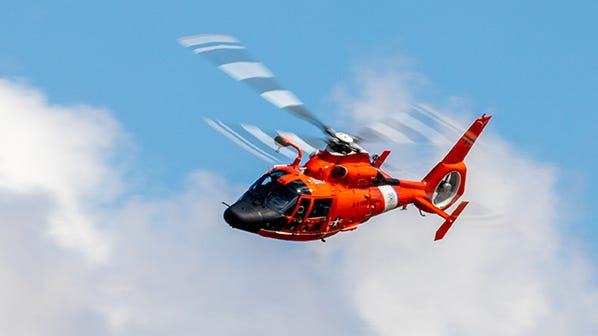
A USCG Dolphin in flight (Tog)
Feel free to use these photos however you like. If you choose to tag me, I am @pilotphotog on all social platforms. Thanks!
Post Flight Debrief
Like what you’re reading? Stay in the loop by signing up below—it’s quick, easy, and always free.
This newsletter will always be free for everyone, but if you want to go further, support the mission, and unlock bonus content like the Midweek Sortie, consider becoming a paid subscriber.
Your support keeps this flight crew flying—and I couldn’t do it without you.
– Tog