

Lancers Join the Operation “Epic Fury” and Looking Back at the Time When Operation STRANGLE was Launched
From Italy’s rail-choking air campaign to B-1B strikes in Epic Fury, both events show airpower’s enduring aim: cripple an enemy’s movement, coordination, and warfighting system before decisive action.
“At 3:38 pm, on Friday February 27, the United States Central Command, through the Secretary of War, received the final go order from President Trump.”
—Dan Caine, Chairman of the Joint Chiefs of Staff
Mission Briefing
Confirmation didn’t come with fanfare. Just a ripple among those who know what to look for. Enthusiasts, eyes on the quiet dance of flight paths and transponder blips, were the first to sense the extraordinary: USAF B-1B Lancer bombers, lifting off from the plains of South Dakota, had been called into the fray, bound for Iranian military targets.
In a moment thick with history, General Dan Caine, Chairman of the Joint Chiefs, addressed the nation. Operation Epic Fury, he revealed, was underway. The B-1B Lancers—swept-wing titans of American airpower—had struck deep into territory holding Iranian ballistic missile sites and command centers, their thunder unmistakable even to those far from the fight.
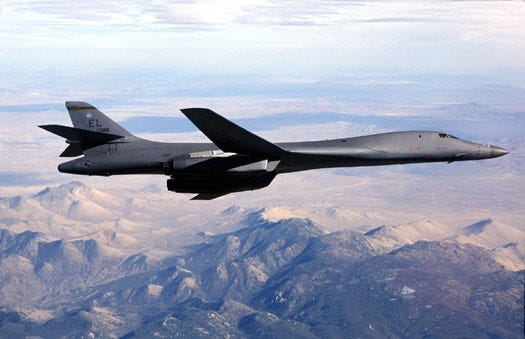
B1B Lancers Direct from Ellsworth AFB
The mission itself unfolded like a scene from a new chapter in aviation’s great drama. Just a day after B-2 Spirit bombers had carved silent paths through the night, the B-1s departed Ellsworth Air Force Base. Their route carried them from the heartland, across the Atlantic’s vast expanse, and through the Mediterranean’s storied skies. Overhead, aerial tankers kept the Lancers fueled and ready, a lifeline stretched taut across continents, ensuring these bombers could reach their distant objective and return to tell the tale.
As enthusiasts tracked the telltale signatures of B-1B bombers along the U.S. East Coast, word arrived from across the Atlantic: the United Kingdom would now open its bases—RAF Fairford and Diego Garcia included—to U.S. missions of a certain character. This subtle shift set the aviation world abuzz with speculation. Would the Lancers pause at Fairford, or strike Iran before pressing onward to the distant outpost in the Indian Ocean?
In the end, the B-1s mirrored their B-2 Spirit counterparts, tracing a round-trip arc from Ellsworth and back, their mission precise and fleeting. Yet, the newfound access to Fairford and Diego Garcia promises greater flexibility for planners charting future sorties: an ever-widening canvas for American airpower.
For all its swept-wing grace and reduced radar signature, the B-1B is no ghost; it lacks the true stealth of the B-2. The specifics of the Lancers’ payload on this mission remain cloaked, but with a quiver full of long-range stand-off weapons, the B-1 can strike from afar, keeping clear of the enemy’s most dangerous reach. The B-2, by contrast, carried 2,000-pound guided bombs, necessitating a closer approach to hardened targets.
The skies over Iran have grown hazardous for defenders. U.S. and Israeli aircraft, wielding both kinetic and electronic force, have steadily eroded Iranian air defenses. Even medium-altitude drones like the Hermes 900 now prowl deep into Iranian territory, though as ever, risk is part of the mission: one such drone was ultimately brought down by a well-placed missile.
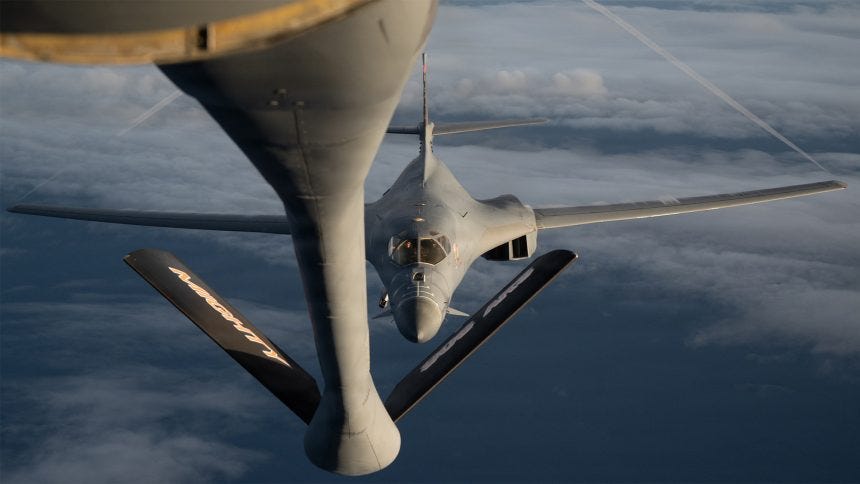
What Makes These Lancers Stand Out?
Take a moment to look upon the B-1B Lancer; not just as a machine, but as a symphony of engineering designed to thrive in the unforgiving theater of modern conflict. Its sleek, blended wing and body, those shifting, variable-geometry wings, and the pulse of its afterburning turbofan engines aren’t just for show.
They deliver a rare combination of range, agility, and raw speed, giving the Lancer the ability to outmaneuver and outpace threats, whatever the altitude or mission profile demands. Watch as its wings sweep forward for gentle landings, air refueling, or high-altitude weapon employment; then snap aft, the Lancer’s main combat stance, to slice through the air at high subsonic or supersonic speeds.
This flexibility, paired with an impressive payload and sharp radar targeting, makes the B-1B an invaluable player in any strike force, seamlessly weaving into mixed formations with the confidence of a seasoned aviator.
Step inside, and you’ll find a cockpit wired for versatility. The B-1B’s synthetic aperture radar peers through weather and darkness, tracking moving vehicles and locking onto targets with surgical precision. Its GPS-aided Inertial Navigation System frees crews from the tether of ground-based aids, enabling pinpoint strikes wherever the mission calls. Add to that a data link—Link-16—feeding real-time information from command centers, and you’ve got a warbird that can pivot on a moment’s notice, striking emerging threats with the speed of thought.
Survivability isn’t left to chance. The B-1B guards itself with a robust array of defenses: electronic jammers, radar warning receivers, chaff and flares, and even a towed decoy. It is an integrated shield that complements its already modest radar signature. The ALQ-161 system stands as a silent sentinel, detecting enemy threats and unleashing tailored jamming responses, sometimes even before the crew senses danger.
The story doesn’t stop there. Today’s B-1Bs are evolving, with upgrades to radar, cockpit systems, and communications ensuring these aircraft remain relevant on the fast-paced battlefields of tomorrow.
As older components are replaced and new capabilities come online, the B-1B continues to embody the spirit of adaptability; ready to write the next chapter whenever it’s called to fly.
B-1B Epic Fury: Long-Range Thunder, Alliance Lift—And the Middle East Network War Ahead
The appearance of the B-1B in Operation Epic Fury is no accident. It’s a clear signal that, when the stakes are high and the timeline tight, Washington turns to what the alliance trusts most: a bomber that marries range, payload, and adaptability in one formidable airframe.
These Lancers, launched from Ellsworth and fueled by an intricate ballet of aerial tankers, crossed continents to strike Iranian missile sites and command centers—no lengthy build-up or forward staging required.
For American strategists, this is about demonstrating reach and tempo, reminding the world that the U.S. can deliver decisive blows to time-sensitive targets—like missile batteries and command nodes—without waiting for the slow machinery of deployment to grind into gear. The B-1B’s relevance endures because it carries the Air Force’s heaviest conventional load and fits seamlessly into joint strike formations, always ready to be retasked as the situation evolves.
For the broader alliance, the story is bigger than the bomber. It’s about the invisible scaffolding: permissions, partnerships, and infrastructure. With the UK opening bases like RAF Fairford and Diego Garcia, the alliance turns theoretical range into operational pressure.
Yet, as each sortie launches amid escalating Middle East tensions, the challenge grows. Not just in striking targets, but in defending the vital networks of bases, tankers, and radars that make these missions possible.
The next chapter won’t be written by bombers alone, but by how alliances reinforce the web of support that makes airpower credible under fire.
This Week in Aviation History
Operation STRANGLE officially took flight on 19 March 1944; a date that marked the beginning of a relentless Allied effort to suffocate German supply lines in Italy. For nearly two months, aircrews flew mission after mission, weaving a tightening net across critical roads and railways, determined to cut off the enemy’s lifeline.
The curtain on STRANGLE officially fell on May 11, the day Allied forces surged forward with a ground offensive of massive scale against the German lines. Yet, the air campaign didn’t simply stop. It evolved. As troops pressed on, the mission continued under a new banner: Operation DIADEM, named for the ground offensive itself. In the end, STRANGLE was more than a campaign; it was the crucial overture to a broader symphony of Allied power, setting the tempo for the battles that would follow.
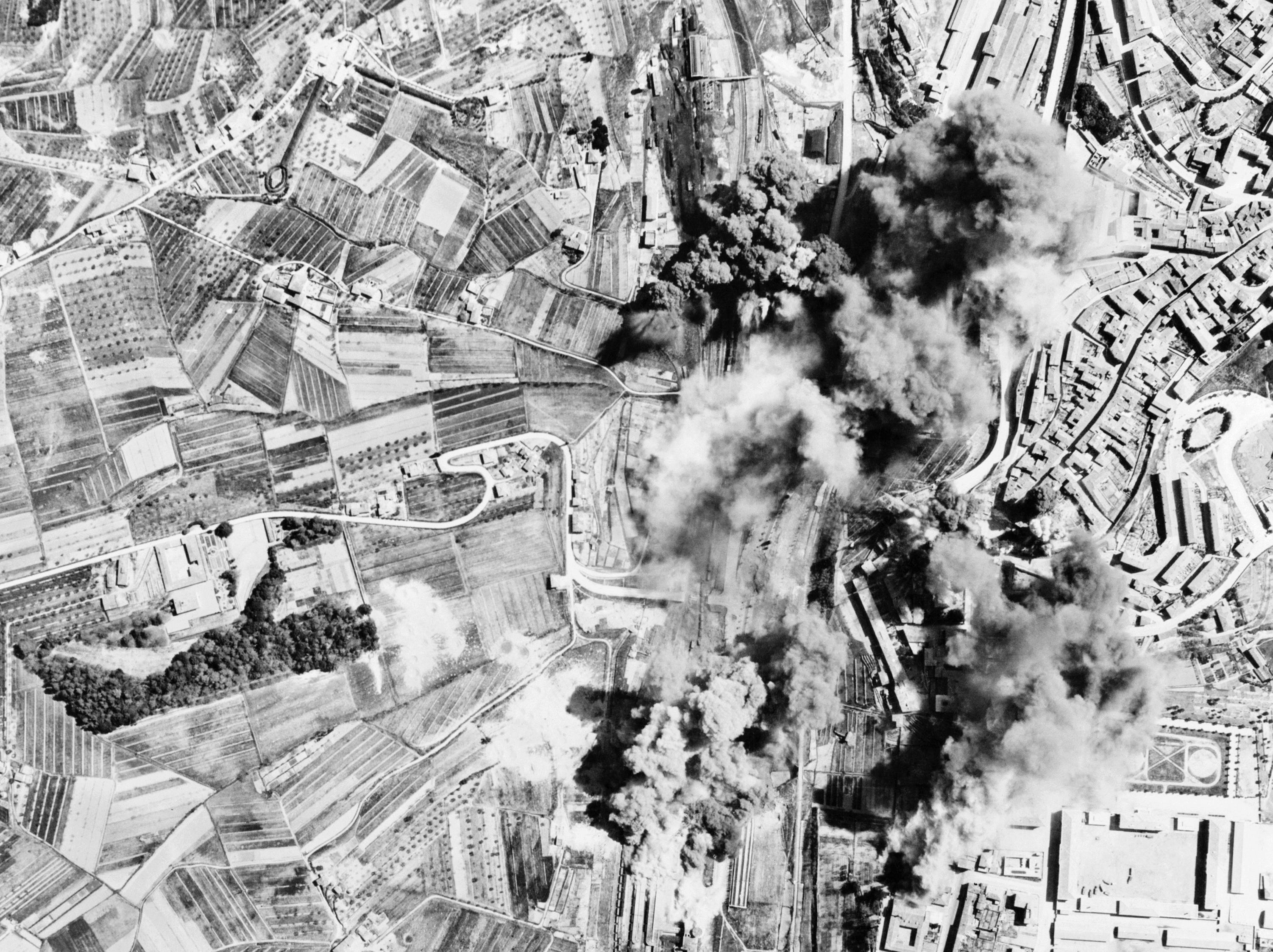
The Airman’s First Act in the Italian Campaign
Operation STRANGLE stands as one of the most instructive chapters in the tale of airpower. It is a case study in both its promise and its limits during the Italian Campaign.
The Allies, buoyed by earlier air successes and eager to break a grinding stalemate on the ground, hatched a plan as bold as it was straightforward: sever the German lifeline by bombing roads and rails into submission. The vision was simple—choke the enemy’s supplies, and the German war machine would shrink, forced to yield or retreat.
Yet, as any seasoned aviator will tell you, the sky is never as simple as the briefing room. STRANGLE’s challenge was never in the will or the sorties flown, but in the assumptions guiding them. Allied planners believed relentless bombing could cripple German logistics.
But the Luftwaffe-era dream of starving the enemy out ran headlong into a reality of German resilience. Locomotives rolled off factories with surprising speed, and rolling stock filled Europe’s rail yards. Even more critically, the Germans required far less supply than Allied intelligence estimated.
Where planners expected the enemy to need 4,500 tons per day, the real number—thanks to static defensive lines—was closer to a third of that. The brutal math meant that starving the German army was a taller task than anyone realized.
Still, STRANGLE wasn’t wasted effort. In its first week, Allied bombers slashed rail capacity from 80,000 to just 4,000 tons per day. But the shock didn’t cause an immediate collapse.
Instead, it denied the Germans the chance to stockpile fuel and ammunition for the looming Allied spring offensive—Operation DIADEM. STRANGLE’s true impact was less about triggering surrender and more about quietly undermining readiness, making it harder for German forces to mount a powerful defense when DIADEM began.
The pressure STRANGLE exerted changed German behavior. By early April, under relentless Allied air attacks, German supply convoys became nocturnal, moving only after dark, losing the efficiency of daytime round trips and the predictability vital to military logistics.
Kesselring’s staff would later admit that Allied airpower made it impossible to accurately calculate travel times. It is an invisible but decisive erosion of German command and control.
STRANGLE’s last and perhaps greatest lesson was jointness. Without coordinated pressure from Allied ground forces, airpower alone could not force a decisive break. General Ira Eaker lamented that the air campaign needed the Army to push harder, faster—to make the Germans burn through reserves and feel the full sting of interdiction.
As Air Marshal Slessor would later conclude, air strikes alone might not make the Germans withdraw, but they could make it impossible for them to resist a determined ground assault. In the end, STRANGLE set the table for DIADEM, showing that air and ground, working in concert, turn disrupted supply into battlefield victory.
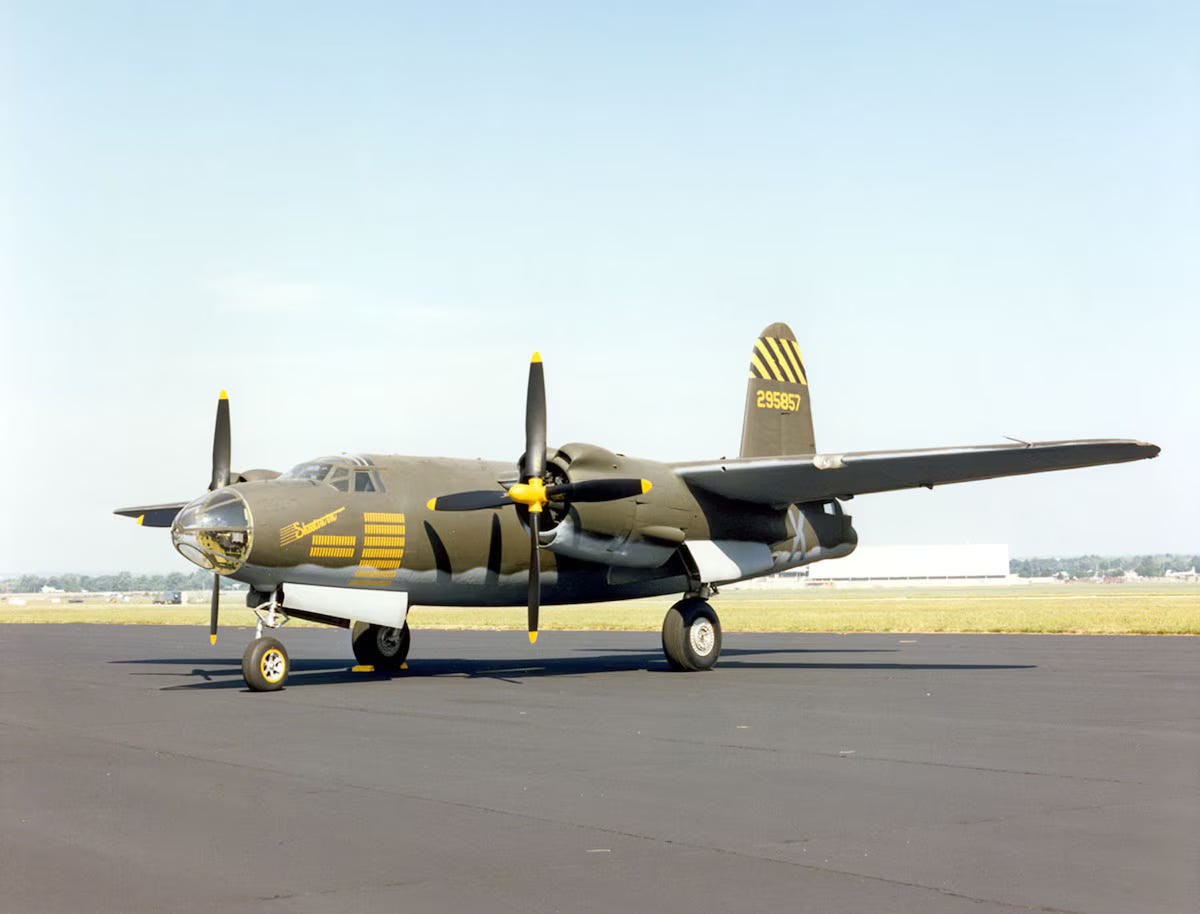
The Marauder and Operation STRANGLE
Spring 1944: the Italian peninsula is a crossroads of war, and the Martin B-26 Marauder is a familiar silhouette in the cloud-dappled sky. In Operation STRANGLE, the B-26 wasn’t chasing glory with headline-grabbing city raids.
It was flying the daily, determined grind to choke off the German army’s lifeline to the Gustav Line. This wasn’t about dropping bombs on city centers; it was about precision, about smashing bridges, marshalling yards, and rail chokepoints over and over until the enemy’s timetable was in tatters.
The Marauder’s logbook from those months is a testament to relentless purpose. Day after day, Twelfth Air Force B-26 crews were tasked with striking railway bridges near Sarzana and Viareggio, hammering tracks, and coordinating with other Allied bombers to hit critical marshalling yards. STRANGLE’s mission for the Marauder was clear: keep the arteries of enemy supply constricted, force German forces to push their supplies onto roads—routes slower, riskier, and easier for fighter-bombers to target.
Official records from this period read like a litany of bridge-breaking sorties: formations of B-26s pounding the Ligurian coastline, targeting the northern approaches to Rome, and, as noted in April 1944, repeatedly assaulting rail bridges near La Spezia. These weren’t one-and-done missions. The Marauder’s value lay in persistence, coming back again and again, “re-breaking” repaired bridges, turning every patch job into another setback for German logistics.
Operationally, the B-26 Marauder was the right tool for the job: able to deliver daylight, medium-altitude bombing with accuracy and enough punch to keep the German supply web frayed. It was not glamorous work.
The Marauder didn’t chase tanks or strafe the front lines. But as the campaign wore on, it was the unglamorous, persistent hammering of rail lines that turned Germany’s streamlined supply system into a nightly test of endurance.
Every train forced into detours, every convoy made slower and more vulnerable under the watchful eyes of Allied airmen. In Operation STRANGLE, the Marauder flew not for spectacle but for victory—one bridge, one yard, one timetable at a time.
TECHNICAL NOTES:
Armament: 11.50-cal. machine guns; 4,000 lbs. of bombs
Engines: Two Pratt & Whitney R-2800s of 2,000 hp each
Maximum speed: 285 mph
Cruising speed: 190 mph
Range: 1,100 miles
Ceiling: 19,800 ft.
Span: 71 ft.
Length: 58 ft. 6 in.
Height: 20 ft. 3 in.
Weight: 37,000 lbs. loaded
Serial number: 43-34581
Operation STRANGLE: A Call Sign That Endures
Operation Strangle’s legacy is a lesson carved in the skies over Italy. It is a proof that air interdiction can be decisive, if you set your sights on the right objective. The campaign didn’t yield its most anticipated prize: a hasty German retreat from the Gustav Line. That shortfall forced the airpower thinkers of the postwar era to abandon the alluring myth that bombing railways alone could “starve” an army out of its defenses.
Instead, Strangle’s real victory came in a subtler, more powerful form. By relentlessly battering bridges, rail yards, and chokepoints, Allied aircrews denied the Germans the ability to restock their fuel and ammunition, or to build up the reserves needed to blunt the coming Allied spring offensive. The result was not a dramatic collapse, but a slow, relentless erosion of German readiness. RAND’s later study echoed this truth: even when withdrawal didn’t come, interdiction was still delivered by forcing the enemy’s hand in ways the planners hadn’t fully anticipated.
Strangle also left a doctrine lesson that endures: under Allied air superiority, German movements grew unpredictable, convoys forced into the night, logistics thrown into disarray. Interdiction could paralyze an army’s sense of time and space, but it delivered its most lethal blows when ground offensives drove up consumption and forced movement.
The enduring message for modern air campaigns is clear. Airpower wins quickest when it attacks the enemy’s system and times its disruption to a joint offensive, turning chaos into collapse.
In Case You Missed It
Photo Outlet
Every issue of Hangar Flying with Tog gets you a free image that I’ve taken at airshows:
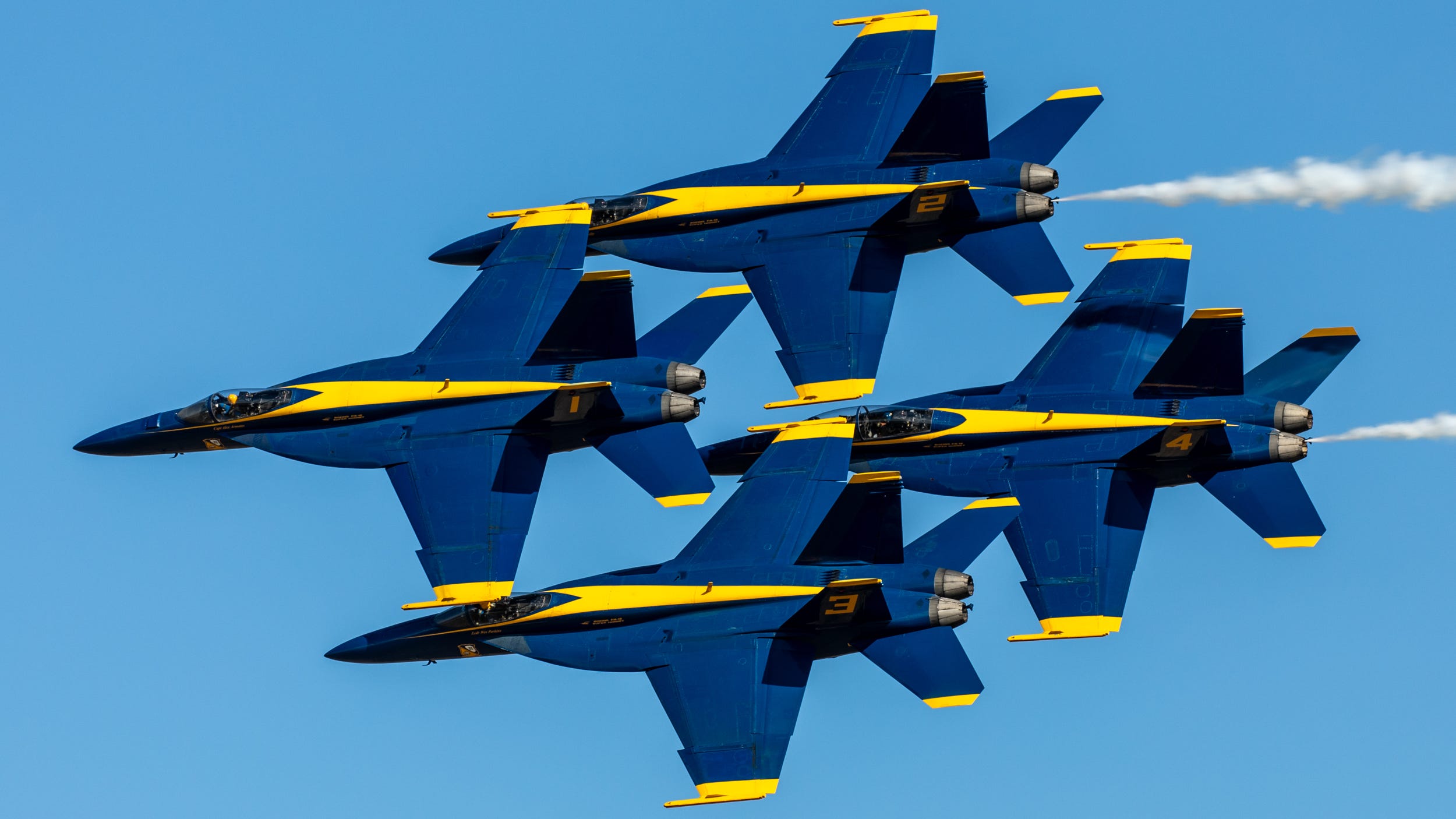
Feel free to use these photos however you like, if you choose to tag me, I am @pilotphotog on all social platforms. Thanks!
Post Flight Debrief
Like what you’re reading? Stay in the loop by signing up below—it’s quick, easy, and always free.
This newsletter will always be free for everyone, but if you want to go further, support the mission, and unlock bonus content like the Midweek Sortie, consider becoming a paid subscriber.
Your support keeps this flight crew flying—and I couldn’t do it without you.
– Tog