

KF-21 Charts New Territory with Advanced IFF System and Reminiscing P-51’s First Long-Range Flight
From the P-51’s legendary range to the KF-21’s digital combat edge, relentless innovation turns bold blueprints into mission-ready machines, each shaped by the shifting winds of global strategy.
“This new system gives fifth-generation fighter pilots an edge in air superiority missions and allows them to maintain interoperability with US and coalition partners.”
—Seth Guanu, BAE’s combat identification products program area director
Welcome to 2026! If you’re like me 2025 was an interesting year - with a few life changes along the way. Like many of you I’ve looked over the past year and sought areas that I could improve in and made some plans to implement some changes - I think most people call these resolutions - but fear not, this newsletter will continue publishing 3 times a week, 2 free issues and 1 issue for supporters.
If you are reading this, thank you for being here and all the best in 2026, and now let’s get into it:
Mission Briefing
On 15 December 2025, BAE Systems has landed an $11 million contract to outfit South Korea’s cutting-edge KF-21 Boramae jets with the advanced AN/APX-127(V)1 Identification Friend or Foe system, giving these fighters a major boost in combat recognition and situational awareness. This upgrade sets the stage for seamless operations with U.S. and allied air forces, ensuring the KF-21 will be ready for the demands of 21st-century air superiority as it heads toward production and deployment in 2026.
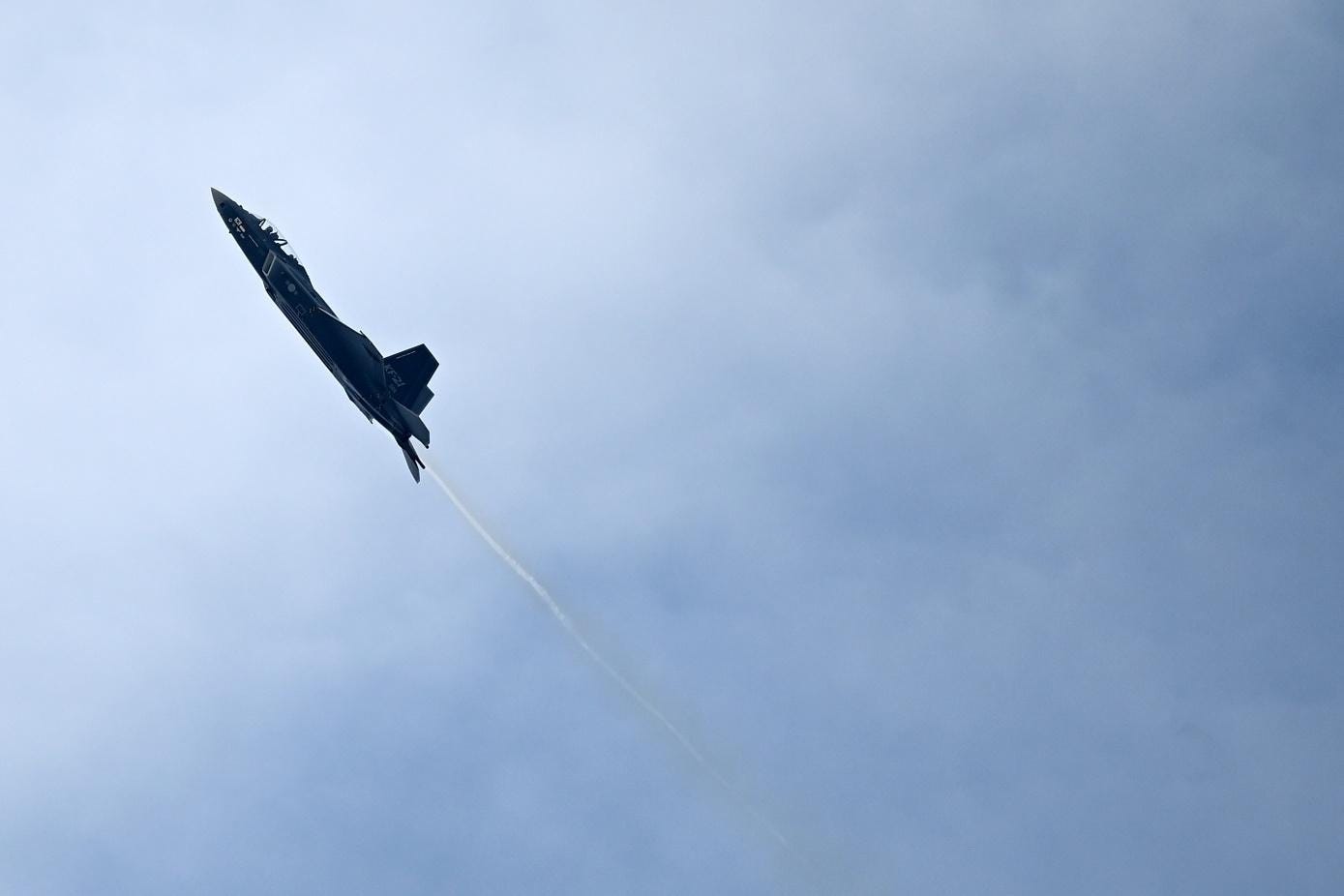
A KAI KF-21 Boramae conducts an aerial demonstration during the 2023 Seoul International Aerospace and Defense Exhibition at Seoul Air Base, Republic of Korea, Oct. 18, 2023. (U.S. Air Force)
KF-21 Boramae Hits a New Altitude with Next-Gen IFF Integration
The contract at hand brings a crucial upgrade: a new-generation identification friend-or-foe (IFF) system, the kind of radio wizardry that lets an aircraft send encrypted challenges and receive trusted replies, all in the blink of an eye.
This isn’t just technical jargon. It’s the backbone of safe, decisive action where skies are crowded, and the line between friend and foe can blur in an instant. In real-world terms, a split-second of doubt in identification can mean hesitation, a missed shot, or, at worst, a tragic case of friendly fire.
The delivery schedule speaks volumes. With units slated for arrival in 2026, South Korea is making a clear statement as it shepherds the KF-21 from the drawing board to the flight line: identification standards must be rock-solid before these jets take on real missions. This isn’t tinkering for show; it’s the careful preparation demanded by complex operations with international partners, strict engagement rules, and a web of interconnected command networks.
IFF isn’t just a badge on the nose. It’s a key link in the chain of tactical decision-making. Information flows from sensors, through data fusion, tactical links, and radar tracks, before culminating in identification. In a congested battle space, a jet can be fed data from multiple radars, platforms, or command posts. If the IFF system falters, the pilot faces a decision clouded by uncertainty; a delay that can cost precious seconds, precious miles, and sometimes even survival itself.
For coalition operations, the stakes are even higher. Allies demand standardization. Without it, an air force risks being sidelined to secondary roles. But with a modern IFF, a fighter is cleared to join the main effort—where interoperability transforms from buzzword to battlefield reality.
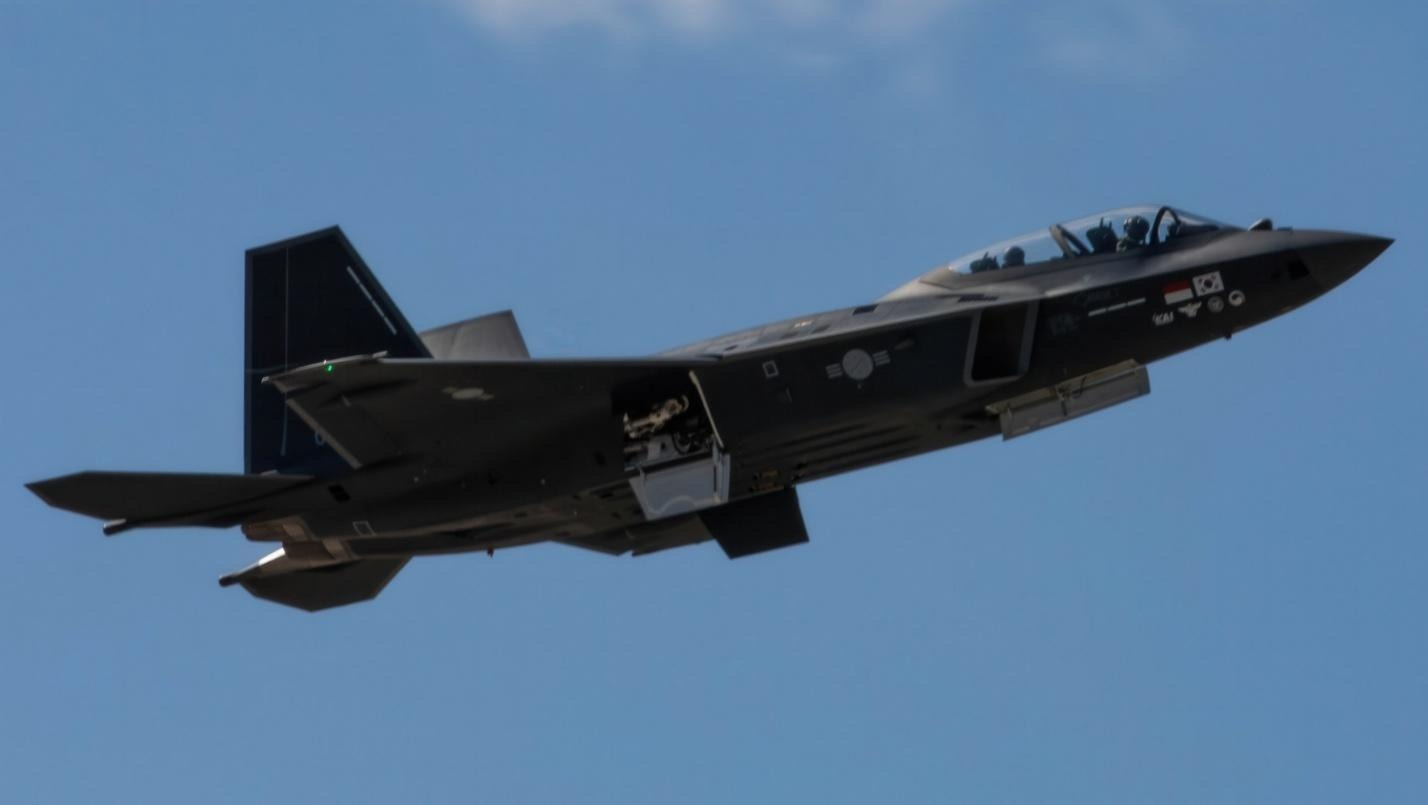
A South Korean Air Force KF-21, developed by Korea Aerospace Industries, performs an aerial demonstration at the Aerospace and Defense Exhibition in Seoul, South Korea, October 21, 2023 (U.S. Army)
Under the Hood of the IFF Systems and KF-21 Boramae
What really sets this system apart is that it’s a “drop-in replacement”—meaning the APX-127(V)1 slides right into place where the old gear used to sit. No need to rip out wiring or redesign the cockpit. For a program racing against the clock, that’s a lifesaver. It trims down the risks, keeps integration simple, and lets the team focus on flying and testing instead of endless refits.
This isn’t just a plug-and-play trick, either. The equipment carries the Mark XIIB certification and supports Mode 5 and Mode S—tech-speak for secure, encrypted communication and rock-solid compatibility with allied forces. It’s a leap forward, ensuring the fighter can keep pace with the best in the world and adapt as threats evolve.
The details matter, too. The system’s open architecture means software upgrades can happen without having to swap out hardware, keeping it ahead of new threats. It’s built tough against jamming and cyber-attacks. It is no small feat when identification systems are tempting targets for adversaries looking to sow confusion or sneak past defenses.
One more clever touch: passive acquisition channels. With features like ADS-B In, the jet isn’t just shouting questions into the void. It’s quietly listening to everything flying nearby, soaking up signals from civilian planes, drones, and anything else sharing the sky. It won’t solve every challenge, but in today’s crowded, unpredictable airspace, it’s a smart tool for keeping friend and foe straight.
When it comes to Boramae, people like to debate whether the KF-21 counts as a 4.5-generation fighter or if it’s edging into fifth-gen territory, depending on which features are on board. The real story, though, is that South Korea is turning blueprints into real jets; proving they can build advanced fighters, not just talk about them.
Let me give you a short rundown of the Boramae:
Manufacturer: Korea Aerospace Industries (KAI)
Country of Origin: South Korea
Type / Role: Multirole fighter
Generation: 4.5 (evolving to 5th-gen)
Status: In serial production (since 2024)
First Flight: 19 July 2022
Introduction / In Service Since: Planned 2026
Number Built: 6 prototypes; 40+ on order
Length: 16.9 m (55 ft 5 in)
Wingspan: 11.2 m (36 ft 9 in)
Height: 4.7 m (15 ft 5 in)
Wing Area: 46.5 m² (500 sq ft)
Empty Weight: 11,800 kg (26,000 lb)
Maximum Takeoff Weight (MTOW): 25,600 kg (56,400 lb)
Internal Weapons Bay: Planned (Block III)
External Hardpoints: 10
How Does IFF Integration Strengthen the Allied Formation?
The latest step forward for the KF-21 Boramae—securing a contract for a cutting-edge Identification Friend or Foe (IFF) system that meets Mode 5 and Mode S allied standards—is far more than a technical checkbox.
By bringing the AN/APX-127(V)1 onboard, Korea Aerospace Industries is making sure the KF-21 can tell friend from foe with precision in crowded skies, a must when flying alongside U.S. and allied forces. This modern IFF system slashes the risk of friendly fire, streamlines joint training, and supports encrypted, secure communications that fit right in with U.S. and NATO standards.
For America’s allies in the Indo-Pacific and beyond, this milestone means South Korea’s new fighter will slide smoothly into joint missions, strengthening collective deterrence against shared threats. It also shows that Seoul’s defense industry is coming into its own, building platforms that allies might want to buy, giving everyone more options than just the usual Western suppliers.
Of course, integrating these Western systems brings up new questions about supply chains, export rules, and how coalition networks will adapt as more nations bring the KF-21 into service. The way Korea navigates multinational exercises and export opportunities with this new level of interoperability will help shape how the region’s defense teams up in the future.
This Week in Aviation History
In December 1943, the P-51B made history by flying its first long-range escort mission, shepherding bombers all the way to the U-boat yards of Kiel, Germany. Outfitted with external fuel tanks, these Mustangs gave the Eighth Air Force the reach to protect their bombers during bold daylight raids deep into enemy territory.
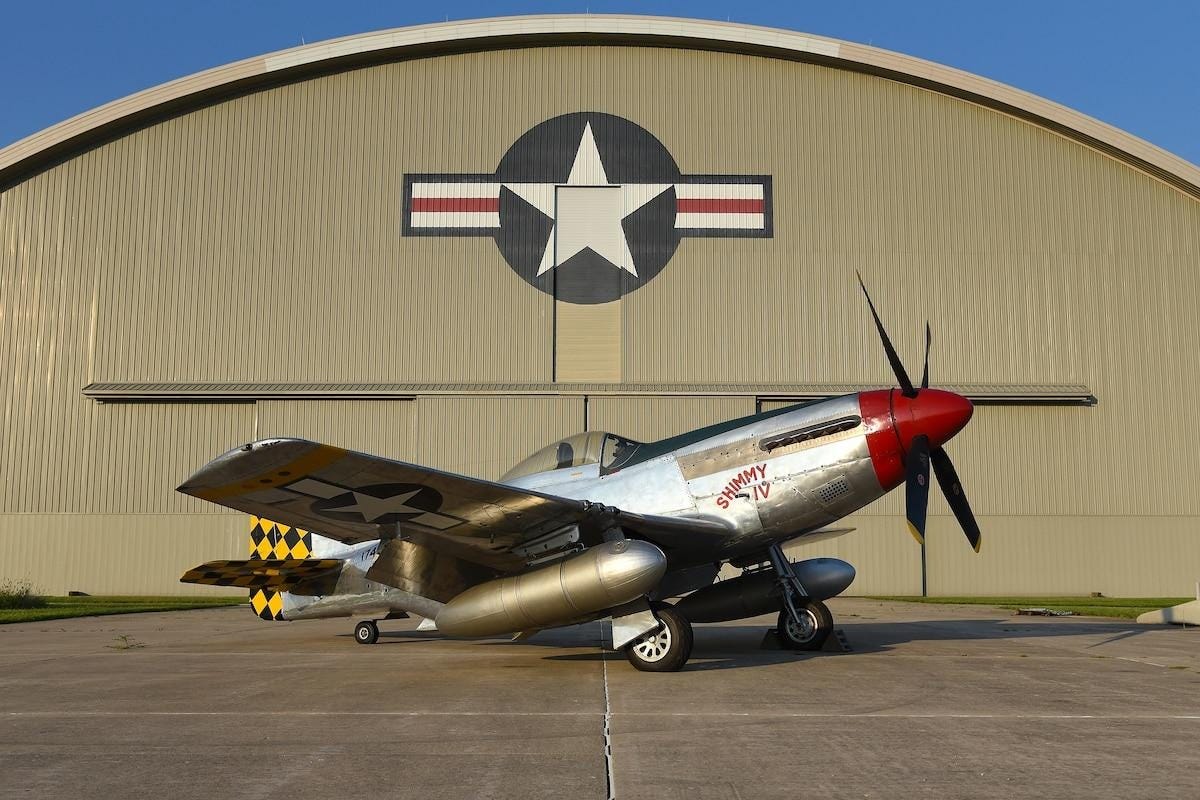
A view of the North American P-51D Mustang before restoration crews at the National Museum of the U.S. Air Force moved the aircraft into the WWII Gallery on Aug. 14, 2018. (US Air Force)
Racing Ahead: The P-51’s Unstoppable Ascent
Let me take you back to the early days of the Mustang’s journey. The A-36, a rugged offshoot of the original P-51, was the first variant to see action with the United States Army Air Force.
Outfitted with dive brakes and bomb racks, these Mustangs were purpose-built for pounding the ground and giving close support to the troops below. The Army ordered 500 of these in August 1942, and by September, the first A-36 took flight, soon heading off to equip squadrons in the Middle East.
Hot on its heels came the P-51A, or Mustang Mk II, packing a slightly different Allison engine and stretching its legs with a longer range and higher ceiling. But it was the quest for greater altitude performance that brought the real breakthrough. When engineers swapped in the British Rolls-Royce Merlin engines, the Mustang transformed.
Test flights proved the new powerplant delivered, and North American Aviation wasted no time fitting the Packard-built Merlin V-1650 into the P-51 airframe. The result—initially called the XP-78, then XP-51B—first flew in November 1942, blazing past expectations at 441 mph.
With its blend of speed, range, and firepower, the Merlin-powered Mustang became the stuff of legend. The P-51B and C variants, rolling out of Inglewood and Dallas factories, would serve in Britain with the Eighth Air Force, marking the dawn of the Mustang’s dominance in the European skies.
After its first long-range escort mission with bombers in December 1943, the Tenth Air Force in Burma and the Fifteenth in Italy would also welcome the P-51B and P-51C, expanding their legend across multiple theaters of war.
In January 1944, the Royal Air Force began welcoming their first Lend-Lease P-51Bs and Cs—redesignated as Mustang Mk III—into the fold. No. 19 Squadron at RAF Gravesend was the first to swap out their trusty Spitfire Mk IXs for this American newcomer.
The RAF, always quick to innovate, immediately set to work improving the Mustang’s rearward visibility by replacing the original sideways-opening canopy with a sliding hood, giving pilots a better view of the action behind.
Then came the P-51D, a game-changer with its bubble canopy and a reworked rear fuselage, powered by a muscular 1,695-horsepower Packard Merlin engine. She could hit 437 mph, climb to nearly 42,000 feet, and reach targets over a thousand miles away.
With six .50-caliber machine guns and the ability to carry bombs or rockets, the D-model became a legend in its own right. A tweak to the propeller turned the D into the P-51K, and the RAF dubbed these the Mustang Mk IV and Mk IVA.
Stateside, the U.S. Army Air Force was pushing the envelope with lightweight experiments—the XP-51F and XP-51G—testing new airframes, simpler structures, and lighter materials. These prototypes, first flown in 1944, shaved off precious pounds and pointed toward the future. Only a handful flew, but their innovations would ripple through the Mustang family.
The last wartime Mustang, the P-51H, soared for the first time in February 1945. With a 1,900-horsepower Merlin under the cowl, it could blister the sky at 487 mph. Armament and range remained formidable, keeping the Mustang a threat in any theater.
By the time the last Mustang rolled off the line, 15,576 had been built; a testament to an aircraft that refused to fade quietly into history.
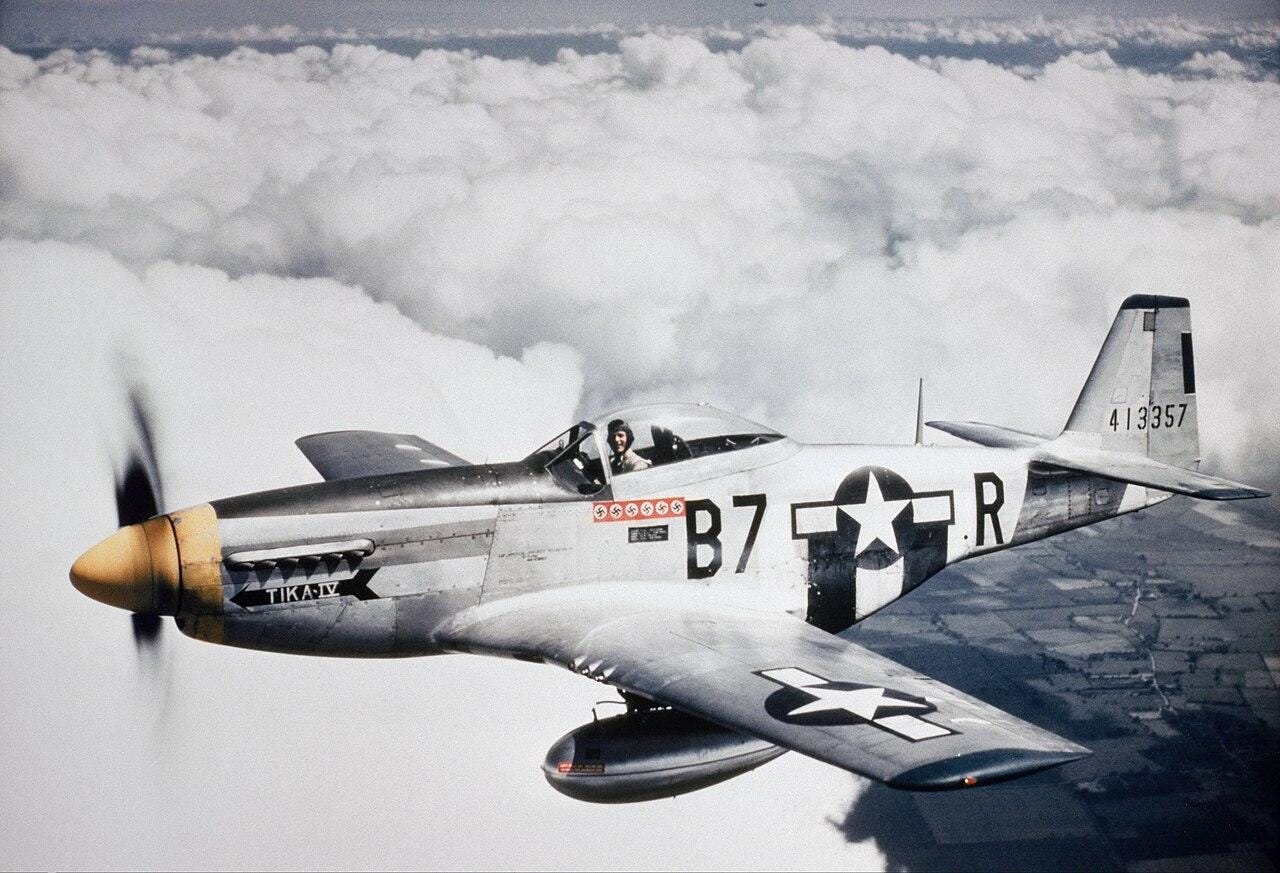
P-51D-5NA Mustang 44-13357; Lt Vernon Richards, Tika IV 8th AF / 374th FS / 361s t FG. (U.S. Airforce)
Insights from the Flight Deck: Features of P-51 Mustang
Let’s talk numbers, the kind every pilot likes to know before climbing into the cockpit. This Mustang was armed to the teeth with six .50-caliber machine guns and could unleash a storm of ten five-inch rockets or carry up to 2,000 pounds of bombs.
At its heart, a Packard-built Rolls-Royce Merlin V-1650 engine delivered 1,695 horsepower, pushing her to a blistering top speed of 437 miles per hour and a steady cruise at 275.
She could stretch her legs for 1,000 miles on a tank, soar up to 41,900 feet, and measured just over 37 feet from wingtip to wingtip, with a length of 32 feet, 3 inches, and a height of 13 feet, 8 inches. Fully loaded, she tipped the scales at 12,100 pounds. The serial number etched on her tail: 44-74936—a true thoroughbred built for the skies.
Mustang’s Lasting Contrail
The North American P-51 Mustang’s legacy isn’t just about its speed, sleek lines, or its tally of victories—it’s about how it transformed the very nature of air warfare. Before the Mustang took to the skies, Allied bombers ventured deep into enemy territory alone, paying a steep price in both machines and men for every mile flown.
The Mustang changed that story, marrying aerodynamic brilliance with long legs, giving bombers the escort they desperately needed from takeoff to target and safely home again.
But its true impact ran deeper than dogfights. The P-51 made sustained daylight bombing possible and hastened Allied air supremacy over Europe. More than just a formidable fighter, it taught a vital lesson: in airpower, endurance, flexibility, and teamwork matter just as much as raw speed or firepower. The Mustang solved a strategic puzzle that had haunted commanders for a long time.
That wisdom still shapes the skies. Today’s air forces chase range, resilience, and seamless coordination—not simply for the sake of technology, but because the Mustang’s story proved what’s at stake when those elements are missing.
In Case You Missed It
Star the New Year off right with a marathon on the F-35, rumor has it that if you watch to the end you’ll have a great year:
Photo Outlet
Every issue of Hangar Flying with Tog gets you a free image that I’ve taken at airshows:
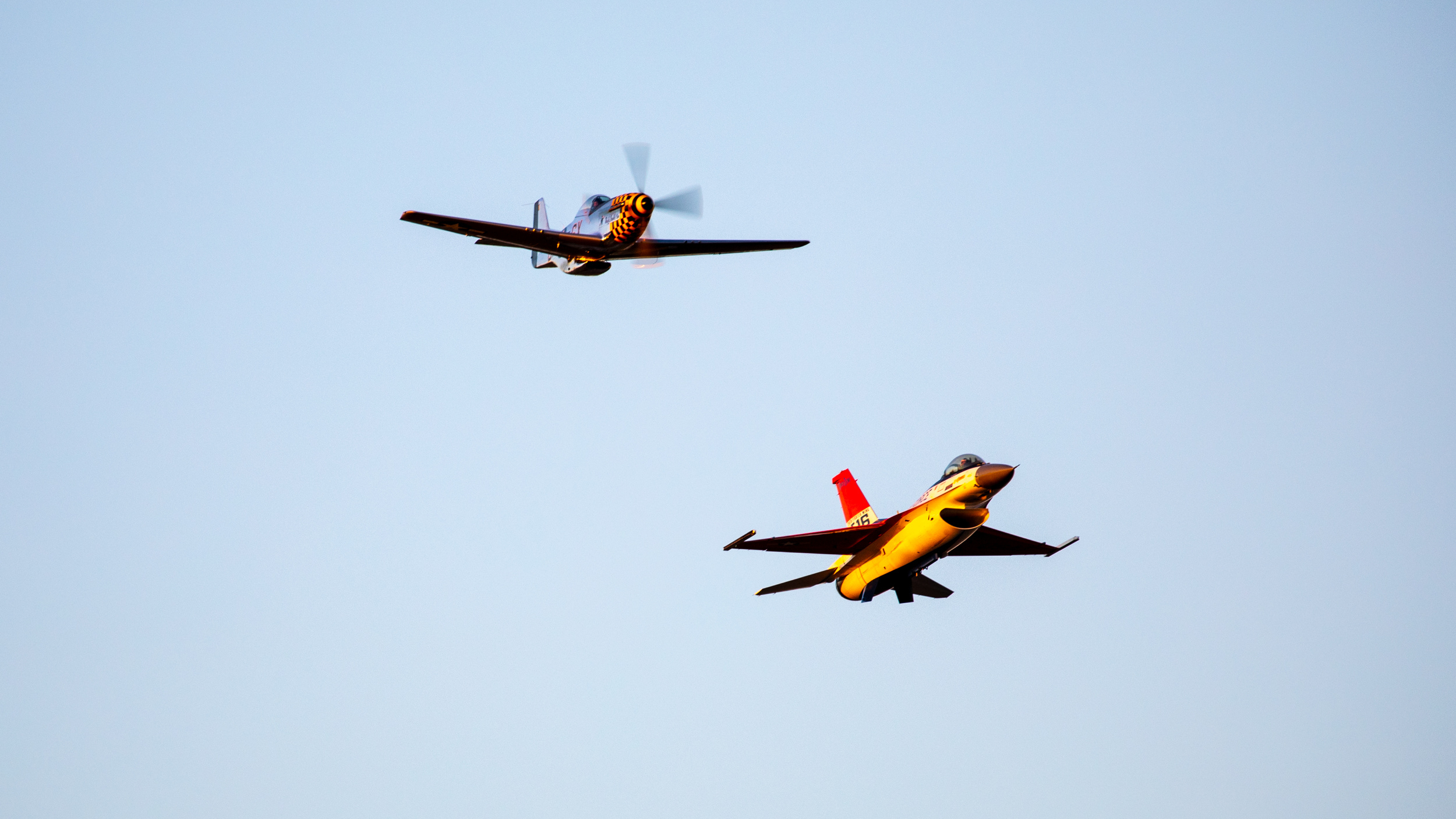
Feel free to use these photos however you like, if you choose to tag me, I am @pilotphotog on all social platforms. Thanks!
Post Flight Debrief
Like what you’re reading? Stay in the loop by signing up below—it’s quick, easy, and always free.
This newsletter will always be free for everyone, but if you want to go further, support the mission, and unlock bonus content like the Midweek Sortie, consider becoming a paid subscriber.
Your support keeps this flight crew flying—and I couldn’t do it without you.
– Tog