

Kamikaze Drones are Reshaping Warfare and the First Flight of the Hughes Model 369 Prototype
From LOH’s manned ‘eyes-at-contact’ to FPV’s ‘sensor-that-explodes,’ the throughline is the same: whoever compresses the kill chain fastest—and can afford to repeat it—reshapes the battlefield.
“If a missile and a drone had a baby, it’d be this.”
—Inside FPV
Mission Briefing
Loitering munitions burst into the spotlight during the 2020 Nagorno-Karabakh war, where Azerbaijan’s kamikaze drones took out Armenian tanks and air defenses from afar, slashing the cost and risk of classic air strikes.
The Russia-Ukraine war took this to the next level, with both sides unleashing swarms of affordable drones that knocked out expensive hardware and even choked off supply lines.
The lesson is clear: you don’t need the mightiest arsenal anymore. Victory now belongs to those who wield the smartest, most agile tools in the sky.
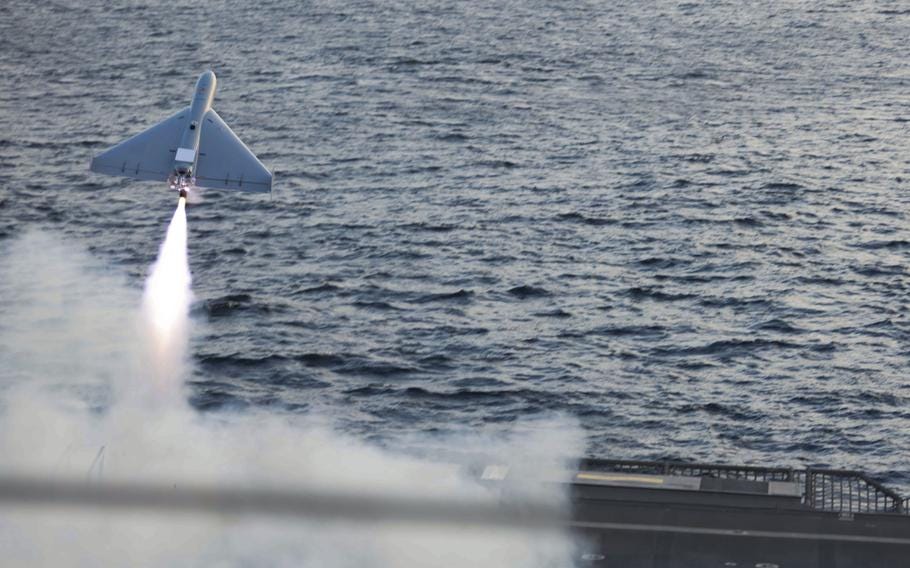
The Rise of Loitering Munitions and One-Way Attack Drones
Let’s clear the air about kamikaze drones, a term that paints with a broad brush but hides a world of technical nuance. In one corner, you have true “loitering munitions”—purpose-built weapons that launch, circle patiently over the battlefield, observe with a watchful eye, and, when the moment is right, dive for the kill.
In the other, you’ll find the first-person-view (FPV) contact drone: smaller, cheaper, flown by a human operator, and cranked out in workshops at lightning speed. Both are born from the same technological lineage, but their roles and realities are vastly different.
This isn’t just a matter of semantics; it’s at the heart of the confusion swirling through public debates and even military circles. Some see a drone and think of a reusable scout that returns home; others, a one-way missile.
But the truth is, loitering munitions live right on that boundary, blending the persistent surveillance and nimble cameras of drones with the single-use, explosive punch of a missile. The literature on the subject spotlights this hybrid nature, tracing how these tools are evolving from battlefield spotters into long-range weapons that can saturate an area with precision strikes.
The journey begins with the airframe. Tactical models, those meant for short-range, nimble work, run on electric motors. They’re quiet, hard to spot with heat sensors, and simple to keep running with just a few spare batteries.
Their bigger, long-range cousins trade stealth for stamina, employing tiny combustion engines that buzz louder but can stay aloft for hours. This single design choice shapes everything: how far they fly, how long they can wait, how much explosive they carry, and how easily they’re detected or jammed.
Take a common electric loitering munition like Russia’s Lancet-3. According to its maker, it cruises at 80 to 110 km/h (50–68 mph), can loiter for about 40 minutes, and delivers a 3 kg (6.6 lb) payload—all in a package weighing just 12 kg (26 lb). These aren’t speed demons; they’re patient hunters, meant to circle and wait for that perfect, high-value target to reveal itself.
The operating logic is simple yet deadly: see, decide, strike. With sensors that work day or night, the drone streams video back to an operator, who makes the final call before impact. Even when advanced electronics can track targets automatically, humans keep a finger on the trigger, able to abort if the situation suddenly changes.
The effect is anything but subtle; these weapons are modern in their optics and communications, but timeless in the devastation they deliver.
Yet, their Achilles heel isn’t in the warhead, but in the data link. FPV contact drones rely on radio signals—sometimes reaching just a handful of kilometers, sometimes stretching farther with the right gear and relays. But those signals are fragile, vulnerable to jamming, detection, and interception.
That’s the modern obsession: making these drones survive in a world thick with GPS jammers and electronic interference. Military designers pour resources into hardening antennas, filtering signals, and creating backup navigation modes.
The irony? That “cheap” kamikaze drone quickly racks up its own costs once it’s built to survive the electronic battlefield. In this new air war, the line between affordable and robust is razor-thin—and always shifting.
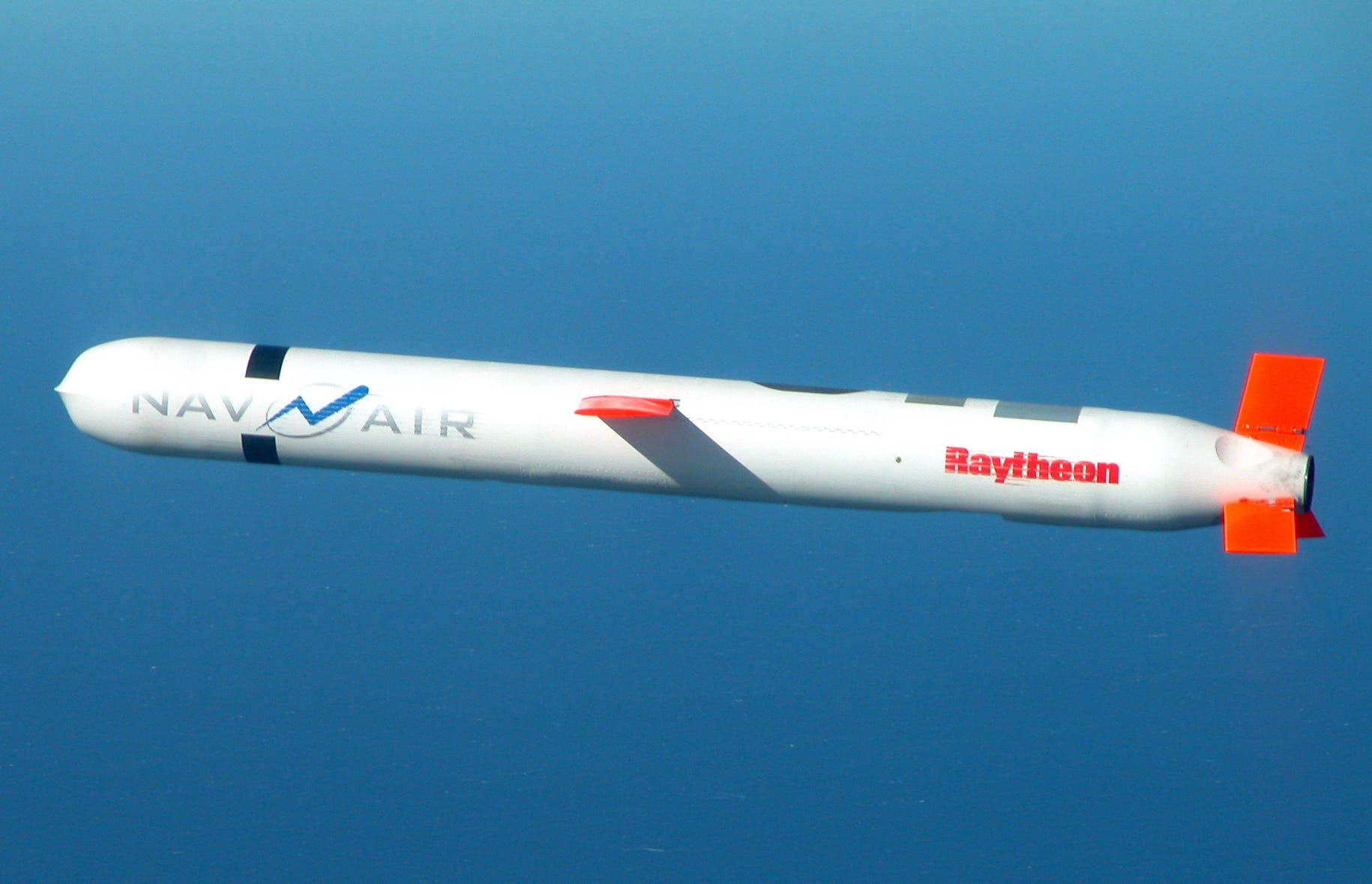
The Kinds of Kamikaze Drones that are Popular Today
Let’s climb into the world of kamikaze drones, where each model tells its own story on the battlefield. The first class dominating today’s conflicts are the micro-systems built for infantry. They are designed for close contact and rapid action.
The American Switchblade 300, from AeroVironment, is the gold standard here. Imagine a squad on the move: they carry this lightweight tube, launch the drone in seconds, and watch real-time video as it circles overhead, ready to strike. With about 15 minutes of endurance and a six-mile range, the Switchblade 300 gives infantry the power to turn a fleeting opportunity—a lone vehicle, a dug-in position—into a sudden, precise strike, no need to wait for artillery support. It’s also appealing in terms of cost. Congress pegs the price around $6,000 a shot, though full-system costs can be much higher, depending on support and procurement scale.
The next rung up the ladder are anti-tank and anti-radar munitions—tools built to break through harder targets like armored vehicles, artillery, and command posts. Russia’s Lancet-3 stands out here, carrying a 3 kg warhead and boasting a 40-minute flight time. At a cost of about $35,000, it’s cheap enough to be used in swarms, but accurate enough to destroy high-value assets.
Israel, a pioneer in this field, brings long experience with systems like the IAI Harop, which can loiter for up to nine hours and communicate two ways with its operator, and Elbit’s SkyStriker, capable of delivering heavier payloads over longer distances. These models carry a bigger price tag but offer greater range, better targeting, and true punch against fortified targets.
But the most strategic—and potentially game-changing—are the long-range “one-way” drones. Think of Russia’s Shahed-136/Geran-2 or the new European projects. These aren’t just for tactical skirmishes.
They’re designed to overwhelm defenses with dozens of simultaneous threats, each able to pinpoint infrastructure, depots, or power plants. France recently rolled out prototypes of its own, promising over 500 kilometers of range, speeds above 400 km/h, and payloads up to 40 kg; all signaling a shift toward mass-producible remote strike capability, not just rare, high-end missiles.
At the lower end, first-person-view (FPV) drones have become the most numerous. They aren’t marvels of engineering, but their strength lies in industrial agility: built from civilian parts, assembled in workshops, and constantly improved through hands-on experience.
Ukraine’s plan to buy 4.5 million FPV drones by 2025 for $2.6 billion shows how the battlefield is shifting toward mass production and adaptability.
What Does It Mean for the US and Its Allies?
Kamikaze drones, whether loitering munitions or swarms of inexpensive FPV “one-way” craft, are rewriting the rulebook for modern airpower. Suddenly, strike and reconnaissance missions that once demanded expensive jets and pilots can now be carried out by disposable machines costing anywhere from $500 to $50,000.
These drones can hunt tanks, artillery, radar, and supply lines, forcing defenders to scatter, hide, and spend far more to shoot them down than it costs to launch them. The battlefield tempo accelerates, and the economics of war shift dramatically.
For the U.S. and its allies, this revolution demands three things. First, scale, being able to deploy vast numbers of these attritable drones is as crucial as having a few high-end aircraft, which is why the Pentagon is racing to deliver capability “at speed and scale.”
Second, counter-UAS isn’t just a box to tick; it’s now a pillar of air defense, driving investments in everything from electronic warfare to lasers and guns. Third, as autonomy advances, ethical rules must evolve too, with organizations like the ICRC warning against fully autonomous systems targeting humans.
Ultimately, as cheap strike drones proliferate, victory will hinge not on a single platform, but on building a resilient, scalable kill-chain—and countering it—across the allied force.
This Week in Aviation History
Let’s wind back to February 27, 1963—a milestone in rotary aviation, marking the maiden flight of the Hughes Model 369 prototype, the ancestor of today’s legendary “Little Bird.” At first, she wore the Army’s YHO-6A designation, but when the Department of Defense introduced a unified naming system, she became the YOH-6A.
Hughes built five of these sleek, nimble machines, each powered by a 252-shaft-horsepower Allison T63-A-5A engine. Delivered to Fort Rucker, Alabama, these prototypes faced off against a field of contenders from Bell and Fairchild-Hiller, vying to become the Army’s next go-to scout and light utility helicopter, a true test of innovation and aviation prowess.
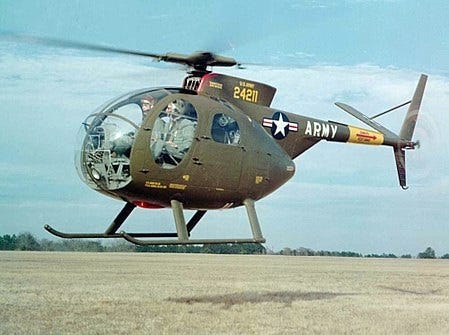
The Maiden Flight of the Little Bird’s Ancestor
Back to the early 1960s, the U.S. Army had a vision for a new breed of helicopter. Something light, nimble, and adaptable. They called it the Light Observation Helicopter, or LOH, and put out Technical Specification 153, inviting the nation’s best and brightest to answer the call.
Hughes Tool Company’s Aircraft Division stepped up with their Model 369, a sleek single-engine chopper with a four-bladed main rotor. This machine wasn’t just for the military, the Model 369 would evolve into the civilian Hughes 500, and later, the MD 500, a favorite among pilots around the world.
Twelve companies tossed their hats into the ring. The Army-Navy design board narrowed the field to Fairchild-Hiller and Bell, but soon, Hughes was back in the running.
The first Model 369 prototype took to the skies on February 27, 1963, initially wearing the Army’s YHO-6A label, before switching to YOH-6A under the new Department of Defense joint designation system. Hughes built five prototypes, each powered by a 252-shaft-horsepower Allison T63-A-5A engine, and delivered them to Fort Rucker, Alabama, for a showdown against Bell and Fairchild-Hiller’s entries.
As testing unfolded, Bell’s YOH-4, hampered by its underpowered engine, was eliminated. The contest narrowed to Hughes and Fairchild-Hiller. In May 1965, after a hard-fought competition, Hughes won the contract, earning an initial order for 714 helicopters, a number that soon ballooned to 1,300, with an option for 114 more.
The Hughes design didn’t include boosted controls, unlike Hiller’s OH-5A, which accounted for some of the price difference. Hughes’ bid came in at $19,860 per airframe (less engine), undercutting Hiller’s $29,415. The catch? Hughes priced them below production cost, reportedly losing over $100 million on 1,370 machines—all in the hope that long-term production would eventually turn a profit.
But the story didn’t end there. In 1968, Hughes bid to build another 2,700 airframes. This time, Stanley Hiller objected, accusing Hughes of playing dirty, and the Army reopened the bidding.
Hiller sat out, but Bell returned with its improved Model 206. In a final fly-off and sealed bid, Bell narrowly beat Hughes, offering $54,200 per airframe to Hughes’s $56,550. Legend has it that Howard Hughes, against the advice of his trusted confidant Jack Real, added an extra $3,000 to the bid at the last minute, and that small decision cost his company the contract.
And so, the OH-6 Cayuse—nicknamed the “Loach”—was born from fierce competition, engineering audacity, and more than a little high-stakes drama, leaving a mark on helicopter history that endures to this day.
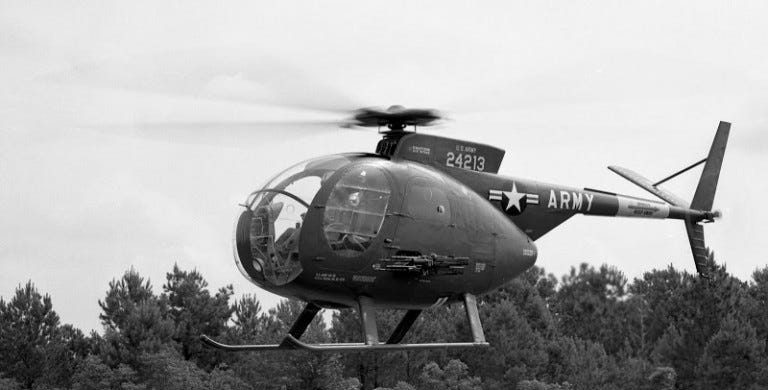
The Anatomy of the Loach
Climb into the cockpit of the YOH-6A, a light and agile two-seater flown by a single pilot—a machine built for speed, precision, and adaptability. Its four-bladed main rotor, spinning counter-clockwise from above, was a marvel of engineering: thin stainless steel straps flexed to allow each blade to flap and feather as needed, while hydraulic dampers kept the lead-lag motion in check.
Early tests featured blade cuffs designed to cut drag, but these were soon abandoned in favor of simplicity. A two-bladed, semi-rigid tail rotor sat on the left side of the tail boom, also spinning counter-clockwise, its advancing blade riding high.
Power came from a T63-A-5 turboshaft engine, set at a 45-degree angle behind the cabin; delivering 212 shaft horsepower for cruising and up to 250 for takeoff bursts. Later production models upgraded to the T63-A-5A, squeezing even more muscle from the compact frame.
Hughes built 1,420 of these Cayuse helicopters for the U.S. Army, a testament to their utility and toughness. The same airframe still lives on today, evolving into the AH-6C and MH-6 for military missions and the MD500E and MD530F for civilian pilots. If you’re ever at Fort Rucker, you can spot the historic Hughes YOH-6A 62-4213—an enduring symbol of rotary innovation.
The Legacy that the Loach Left Behind
The Hughes Model 369 prototype left a legacy that reshaped rotary aviation, showing the world that a small helicopter could play a strategic role thanks to its simplicity, agility, and endless adaptability.
From its maiden flight, the 369 championed a “less is more” approach; streamlined, lightweight, and easy to maintain, with a practical, safe rotor and drive system. This wasn’t just clever engineering; it was a blueprint for a machine that could be scaled, modified, and upgraded as missions evolved.
In Army hands, the 369’s descendants—the LOH “Loach” family—redefined tactical reconnaissance in the helicopter era. These nimble craft flew fast and low, hugging the terrain, scouting and marking enemy positions in real time, and putting critical intel in commanders’ hands within moments. The original 1963 prototype became the backbone of a legendary combat reputation.
Yet, the true mark of the Model 369 is in its lineage. Its compact, versatile design led to the civilian Hughes 500/MD 500, and inspired the “Little Bird,” beloved by special operations for its ability to land almost anywhere and adapt to any mission.
Decades of innovation trace back to this one prototype. It is a platform that proved speed, access, and adaptability would always rule the skies, both then and now.
In Case You Missed It
More about the LUCAS drone:
Photo Outlet
Every issue of Hangar Flying with Tog gets you a free image that I’ve taken at airshows:
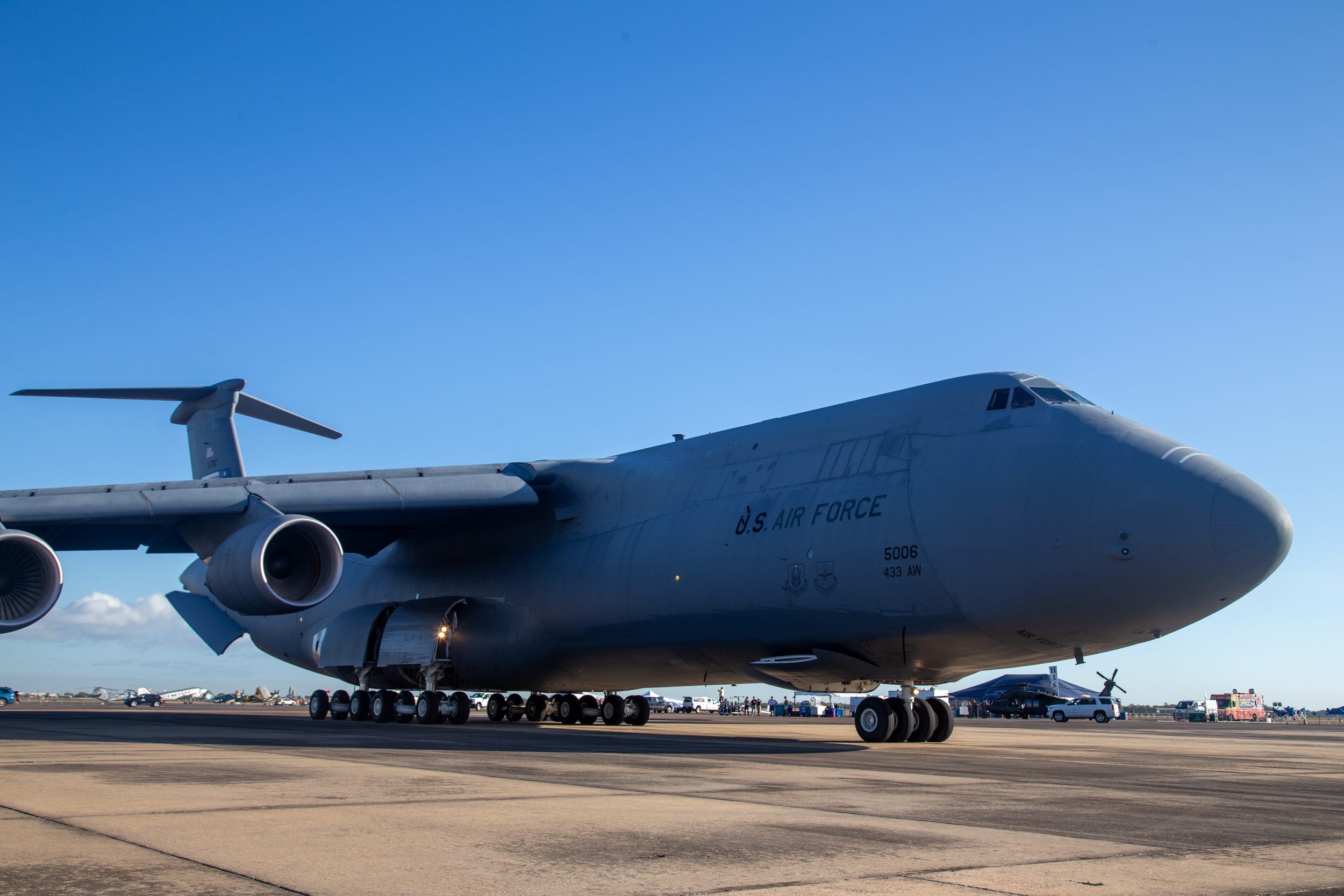
Feel free to use these photos however you like, if you choose to tag me, I am @pilotphotog on all social platforms. Thanks!
Post Flight Debrief
Like what you’re reading? Stay in the loop by signing up below—it’s quick, easy, and always free.
This newsletter will always be free for everyone, but if you want to go further, support the mission, and unlock bonus content like the Midweek Sortie, consider becoming a paid subscriber.
Your support keeps this flight crew flying—and I couldn’t do it without you.
– Tog