

An F-35 student’s first SEAD (Suppression of Enemy Air Defenses) sortie pits them against a dense, integrated air defense system to test how they manage a massive digital information flow. This means our wingmen are taught a culture of integrated autonomy, so that mutual support isn’t gone; it’s just evolved.
— Brig. Gen. David Berkland, commander of the 56th Fighter Wing
Mission Briefing
The 2026 Luke Days airshow was a spectacle worthy of the big screen, with the runway buzzing from a star-studded cast of aircraft and throngs of enthusiastic fans. But the real magic unfolded behind the scenes, where we got to slip behind the curtain and experience life with the legendary 56th Fighter Wing. Roaming the base felt like joining a band of high-flying storytellers, revealing the everyday choreography that keeps these aviators soaring.
Luke Forged The Lightning Pilots
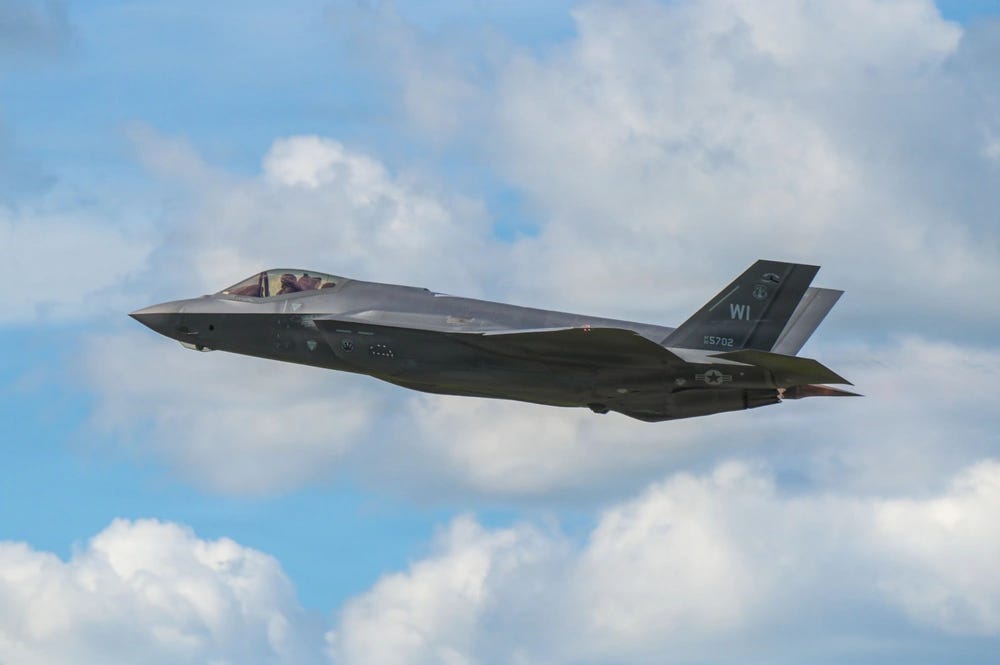
Since 1941, Luke Air Force Base has been writing its legend in the desert sky. A living, breathing chronicle of aviation. Imagine thousands of pilots, over 61,000 and counting, cutting their teeth at Luke, each with their own story, each one carving a contrail into the annals of military flight.
But the saga doesn’t stop there. Luke has grown from its World War II roots into the world’s beating heart for F-35A Lightning II training, a place where nearly three-quarters of all F-35 pilots worldwide earn their wings.
Step onto the tarmac and you’ll see a true global crossroads. Pilots from Belgium, Denmark, Italy, the Netherlands, Norway, and the U.S. all gather under the Arizona sun, swapping stories, sharing cockpit wisdom, and forging bonds that stretch across continents. This isn’t just a school. It’s a crucible where tomorrow’s fighter aces are born.
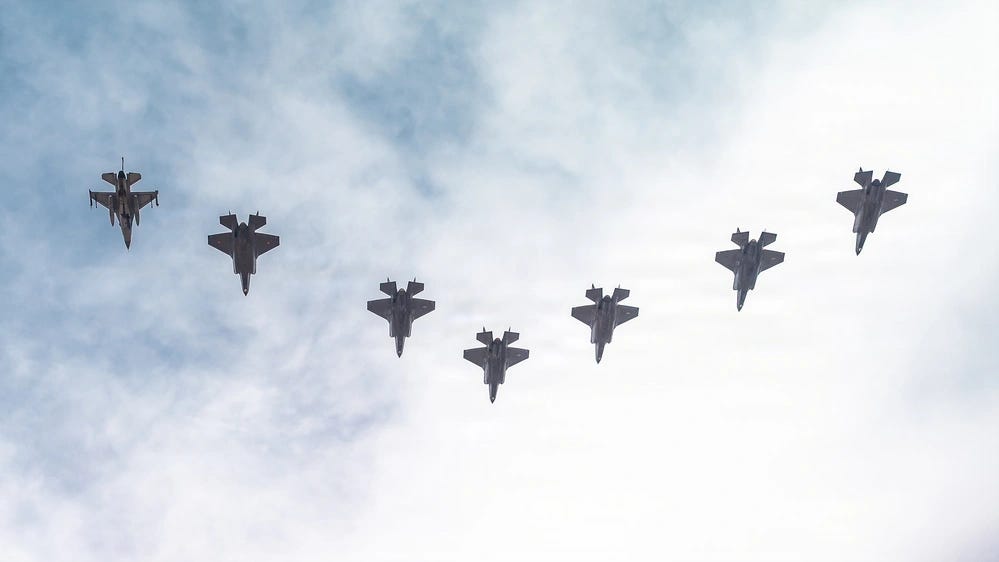
The 56th Fighter Wing, Luke’s main character, orchestrates this airborne ballet. Reporting up to the Nineteenth Air Force and, soon, Air Combat Command, the 56th runs seven squadrons of F-35A Lightning IIs, plus a squadron of F-16C/Ds dedicated to sharpening Singapore’s finest.
The mission is massive, the stakes are sky-high, and the legacy just keeps growing. At Luke, every sortie is another scene in an epic that started more than eighty years ago—and the credits aren’t rolling any time soon.
Inside The Luke AFB’s Training Mission
Luke Air Force Base didn’t just add more jets and squadrons, the evolution of its F-35 mission was as much about ground-breaking training as it was about hardware.
Picture this: by 2024, Luke’s “Flying Forward” playbook called for the world’s largest fleet of F-35 simulators. 32 high-tech pods, ready to launch pilots into every scenario you can imagine, all without leaving the ground.
Synthetic training isn’t just a buzzword here. It’s mission critical. With these new Modified Mission Rehearsal Trainers, pilots don virtual helmets and dive into missions where four, eight, even a dozen F-35s roll in, joined by digital wingmen from across the globe.
Maj. Shaun Lovett, the maestro of the 56th Training Squadron’s systems, put it best: now, students can tackle complex, integrated missions that would be impossible to stage in the real sky.
The magic and the challenge are weaving it all together. Jets, sims, instructors, partner nations, and logistics: every piece must click. That’s how Luke keeps churning out combat-ready F-35 pilots for America and its allies, one simulated dogfight at a time.
Below is the list of training Squadrons Assigned to the 56th Fighter Wing at Luke AFB:
61st FS “Top Dogs” – USAF, Australia (RAAF) – First F-35 squadron at Luke; RAAF training concluded 2020
62nd FS “Spikes” – USAF, Norway, Italy – F-35A Integrated training mission with Norway and Italy
63rd FS “Panthers” – USAF – Originally associated with Turkish participation
308th FS “Emerald Knights” – USAF, Netherlands, Denmark – Integrated training with Dutch and Danish pilots
309th FS “Wild Ducks” – USAF – F-35A training mission
310th FS “Top Hats” – USAF – F-35A training mission
312th FS “Scorpions” – Belgium – F-35A dedicated Belgium conversion unit
425th FS “Black Widows” – Republic of Singapore – Training of RSAF F-16C/D Block 52 pilots
Luke’s Lightning School for Allied Skies
Luke Air Force Base isn’t just another patch of tarmac in the Arizona desert. It’s where the future of airpower gets its wings. The 56th Fighter Wing, known across the globe as the world’s largest fighter wing, is the Air Force’s main launchpad for active-duty fighter pilot training.
But at Luke, the story is bigger than just flying: it’s about transforming rookies and veterans alike into masters of the F-35A Lightning II, a machine that’s more digital wolfpack than solo hunter.
Here, U.S. and allied pilots don’t just learn how to fly the Lightning II. They become fluent in a whole new combat language. The base is a buzzing crossroads, where squadrons from America and partner nations train side by side and learn to treat the F-35 as a networked force multiplier, not just a fighter jet.
For the U.S., Luke is a bridge from the F-16 era to the stealthy, sensor-driven age of the F-35, demanding new tech, new programs, and a sharper edge.
And for America’s allies, Luke is where the F-35 stops being a piece of hardware and starts becoming a shared culture, a place where pilots swap tactics, build trust, and lay the foundation for joint missions before the real shooting starts. This is why Luke’s influence stretches far beyond Arizona.
Its true mission? To forge a coalition of pilots ready to fight shoulder-to-shoulder, fully connected, in the skies of tomorrow.
This Week in Aviation History
Originally, liftoff was set for June 22, right after the much-anticipated Shuttle-Mir docking of STS-71. But when the Russian schedule hit a snag, NASA’s mission planners pulled a switcheroo—bumping Discovery’s STS-70 launch up to June 8 and putting Atlantis’s STS-71 in the wings for later that month. It was a fast-paced scramble, with teams hustling to get Discovery and her payloads ready to soar ahead of schedule.
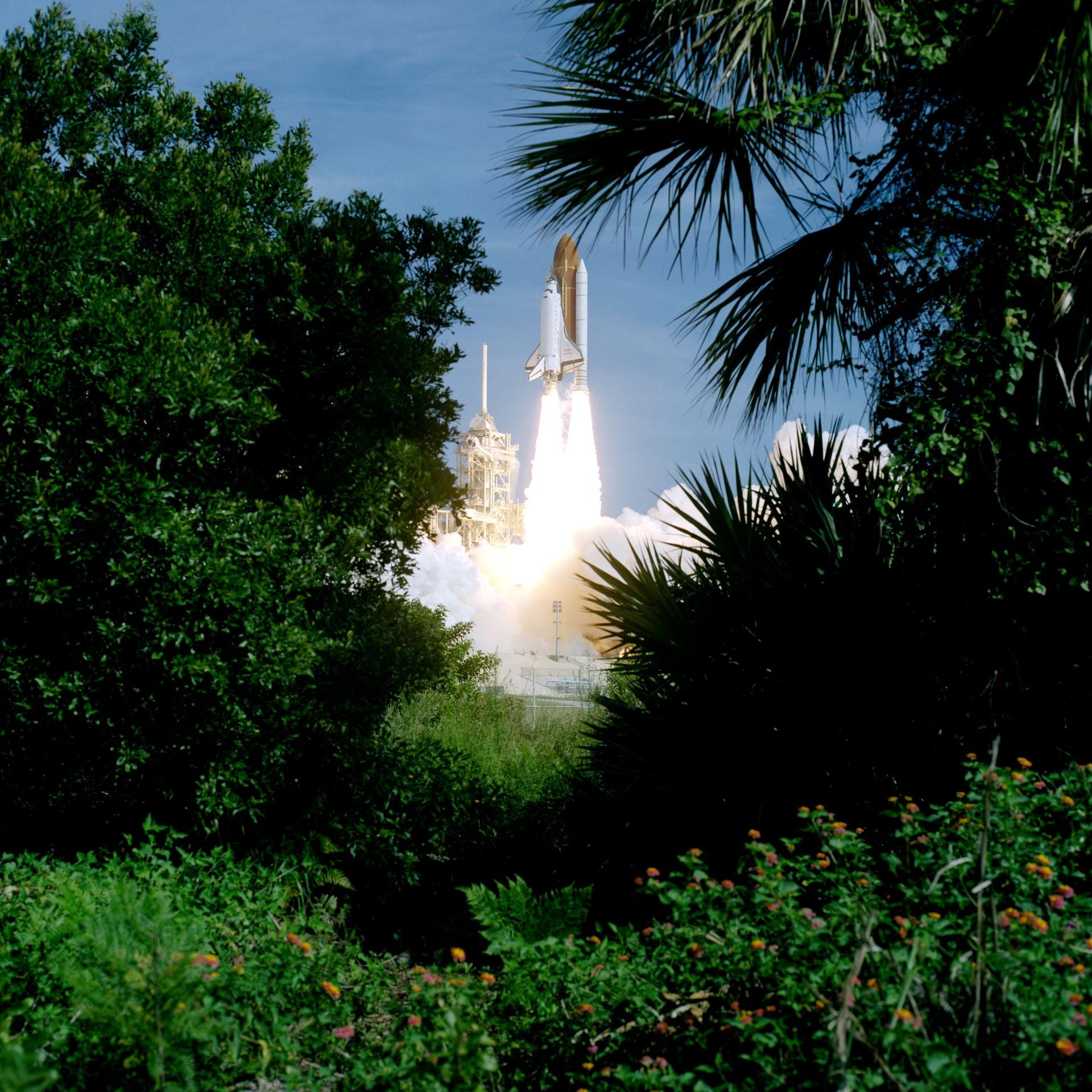
Deployed Tracking and Data Relay Satellite-G (TDRS-G).
Just when the countdown seemed on track, Memorial Day weekend threw mission planners a curveball. Thanks to a feisty flock of Northern Flicker woodpeckers at Pad 39B. These little troublemakers pecked nearly 200 holes into Discovery’s external tank foam, some as big as your fist, others just quick jabs and claw marks.
The repair crews gave it a shot right there at the pad, but the damage ran too deep, forcing the whole shuttle stack back to the Vehicle Assembly Building on June 8. Liftoff was rescheduled for July 13.
From there, the countdown to launch was nearly flawless, save for a 55-second pause at T-31 seconds so engineers could double-check the range safety system’s destruct signal. Meanwhile, the clock was ticking on a new milestone: just six days between Atlantis touching down after STS-71 and Discovery’s next liftoff, the fastest shuttle turnaround ever.
Post-flight checks brought a bit of déjà vu. Inspectors found a gas path in one of Discovery’s solid rocket motor joints, stretching right up to the primary O-ring—eerily similar to what Atlantis had after her last flight. These gas paths, small air pockets from how the nozzles are built, had shown up before, but this time, engineers noticed a faint heat effect on the O-ring, a first for the program.
Despite the woodpecker antics and engineering discoveries, Discovery’s crew stuck the landing on their main mission: deploying TDRS-G, a crucial communications satellite. After a textbook release, its booster fired twice to push TDRS-G into geosynchronous orbit, rounding out NASA’s network of advanced satellites.
With the heavy lifting done, the crew turned the shuttle into a flying science lab. They ran experiments on how microgravity affects plants, insects, and even cancer cells. One highlight: tobacco hornworms and daylilies helped scientists unravel how weightlessness changes growth and cell division.
The real showstopper? Cancer cells grown in the shuttle’s Johnson Space Center bioreactor thrived like never before, opening new frontiers for medical research right there in orbit.
STS 70’s Mission Highlights
STS-70 wasn’t just a trip around the globe. It was a science fair in orbit, packed with experiments that pushed the boundaries of what’s possible in microgravity.
The National Institutes of Health-R-2 suite took a close look at how weightlessness shapes the earliest stages of rodent life, from before birth right through development, offering clues about how gravity (or the lack of it) molds living things.
Meanwhile, the Protein Crystallization Facility hitched a ride for its eighth mission, chasing the holy grail of perfect protein crystals. Five flights had already delivered space-grown crystals good enough for X-ray analysis back on Earth.
Insulin crystals grown on earlier missions gave researchers the most detailed look ever at the life-saving protein, helping industry design new, longer-lasting insulin for diabetes patients. On STS-70, the spotlight shifted to alpha interferon crystals—a key weapon against hepatitis B and C.
The crew juggled other cutting-edge projects, too. Space Tissue Loss-B explored how microgravity impacts embryonic development, while the HERCULES geolocating system let astronauts tag Earth photos with pinpoint accuracy—once they mastered the tricky camera alignment.
The Microencapsulation in Space-B experiment, back for a second flight, aimed to craft purer, more abundant microencapsulated antibiotics, crucial for precise, slow-release treatments of stubborn wound infections.
Behind the scenes, Discovery hummed along with no major hiccups. This flight also debuted the new Block I main engine, sporting a high-pressure turbopump from Pratt & Whitney in the lead slot, a new chapter in shuttle propulsion.
Mission: TDRS-G
Space Shuttle: Discovery
Launch Pad: 39B
Launched: July 13, 1995 at 9:41:55.078 a.m. EDT
Landing Site: Kennedy Space Center, Florida
Landing: July 22, 1995 at 8:02 a.m. EDT
Runway: 33
Rollout Distance: 8,465 feet
Rollout Time: 57 seconds
Revolution: 143
Mission Duration: 8 days, 22 hours, 20 minutes, 5 seconds
Orbit Altitude: 160 nautical miles
Orbit Inclination: 28.45 degrees
Miles Traveled: 3.7 million
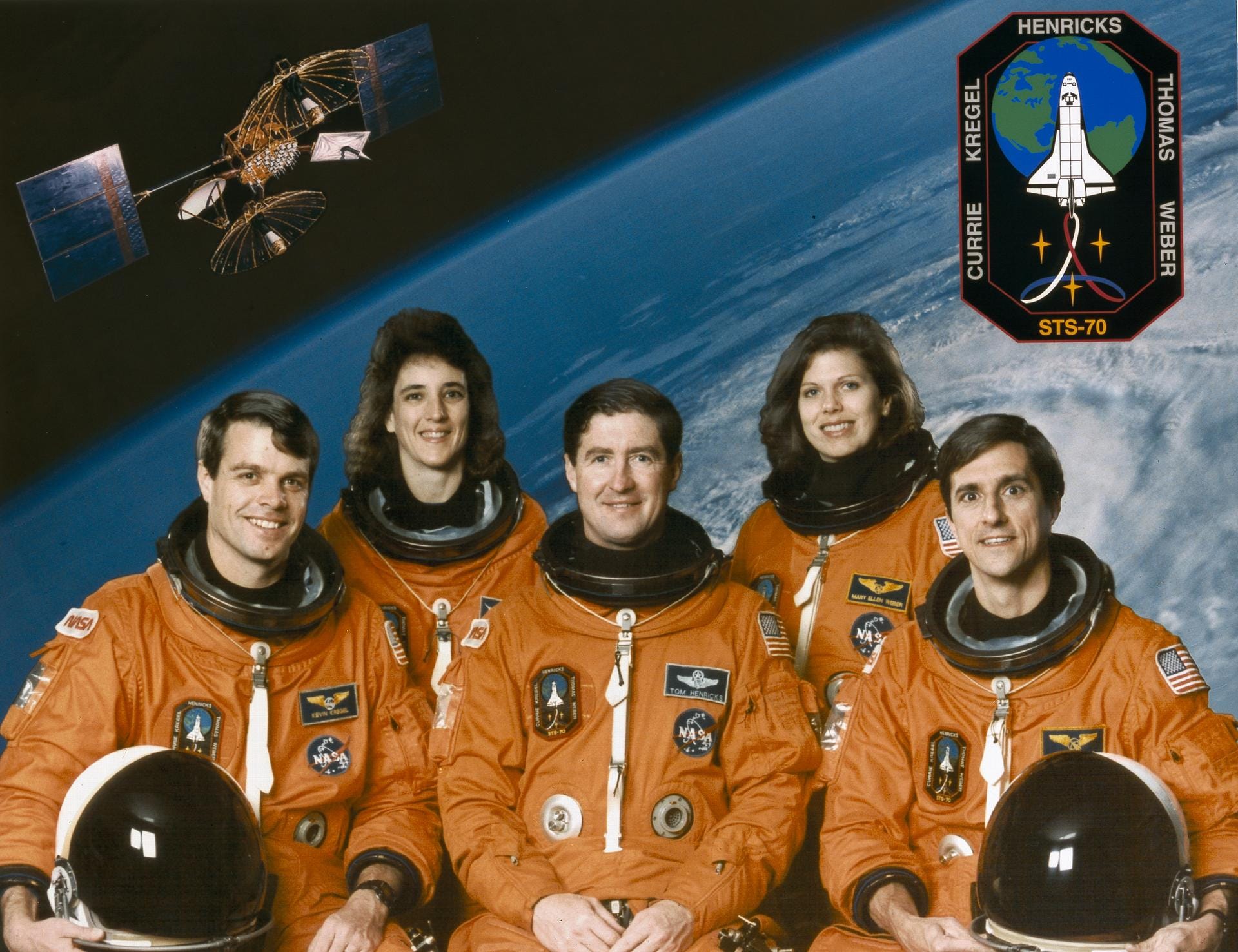
Crew
Terence T. Henricks, Commander
Kevin R. Kregel, Pilot
Nancy Jane Currie, Mission Specialist
Donald A. Thomas, Mission Specialist
Mary Ellen Weber, Mission Specialist
Discovery’s Signal Run Into Tomorrow
STS-70’s story isn’t one of headline-grabbing drama, but of quiet, essential connection. On July 13, 1995, Discovery thundered off the pad with a single, crucial job: deliver TDRS-G, the next link in NASA’s space communications chain.
With that satellite in place, future astronauts, scientists, and mission controllers could count on a stronger, steadier flow of information between Earth and orbit, a backbone for everything from Hubble snapshots to space station check-ins.
But the road to orbit had its share of turbulence. Discovery’s launch was famously put on hold when woodpeckers poked hundreds of holes in her tank insulation, a reminder that even in high-tech spaceflight, nature can throw a wrench in the works.
Once airborne, the crew nailed the satellite deployment and dove into a smorgasbord of experiments—medical, biological, tech demonstrations—showcasing the shuttle’s knack for multitasking and advancing science alongside infrastructure.
STS-70 also marked a step forward in shuttle evolution, featuring a newly upgraded main engine and refined orbital systems. The TDRS network itself would become the silent partner to countless missions, quietly relaying commands and discoveries back home.
From Discovery’s 1995 relay to today’s laser-fast, always-on links across the solar system, STS-70 proves that the real magic of spaceflight isn’t always in the spectacle. It’s in the invisible signals keeping every mission alive and connected.
In Case You Missed It
Photo Outlet
Every issue of Hangar Flying with Tog gets you a free image that I’ve taken at airshows:
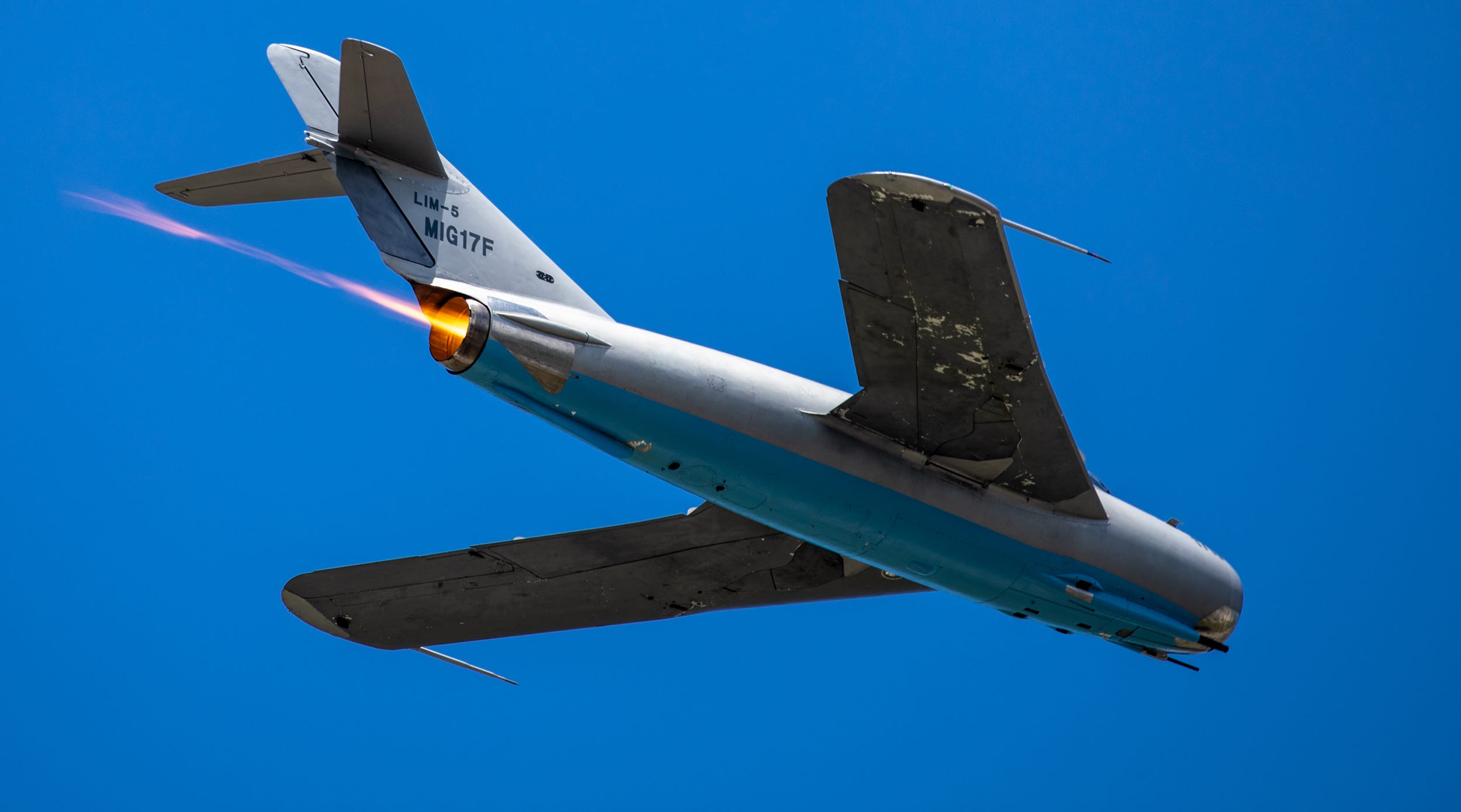
Feel free to use these photos however you like. If you choose to tag me, I am @pilotphotog on all social platforms. Thanks!
Post Flight Debrief
Like what you’re reading? Stay in the loop by signing up below—it’s quick, easy, and always free.
This newsletter will always be free for everyone, but if you want to go further, support the mission, and unlock bonus content like the Midweek Sortie, consider becoming a paid subscriber.
Your support keeps this flight crew flying—and I couldn’t do it without you.
– Tog