

“We flew hundreds of miles into Iran, escorting the B-2s the entire way.”
Lt. Col. Aaron Osborne, 34th Fighter Squadron commander.
Before we dive into stealth jets and fictional strike packages, it feels right to take a breath and look back. This week’s newsletter pairs two very different stories—one imagined in the shadows of modern airpower, the other carved painfully into our nation’s memory. As we unpack how F-35s spearheaded Operation Midnight Hammer, we also pause to honor the heroes lost on December 7, 1941, a day that reshaped America’s resolve and the very trajectory of military aviation. Never forget.
Mission Briefing
In the pre-dawn darkness of 2025, F-35s from Operation Midnight Hammer slipped through Iran’s defenses without a whisper. Their silent, deep-strike SEAD (Suppression of Enemy Air Defenses) run proved that no fortress is truly impenetrable in the era of stealth. This was the night surprise was redefined, and the rulebook for modern airpower got a bold, new chapter.
Rough Rider and Midnight Hammer: Beyond the Radar
A press release of 25 November 2025 disclosed details about when the Air Force finally peeled back the curtain on Operation Midnight Hammer. The headlines focused on the F-35 Lightning IIs, those sleek jets from the 388th and 419th Fighter Wings, just back from their CENTCOM (United States Central Command) deployment.
But the real tale started earlier, when the 34th Expeditionary Fighter Squadron got the call—Immediate Response Force, short notice, wheels up to a hush-hush spot somewhere in the Middle East. Once boots hit the ground, those aviators wasted no time, launching Agile Combat Employment ops that had them jumping between bases, never letting the enemy get a bead on them.
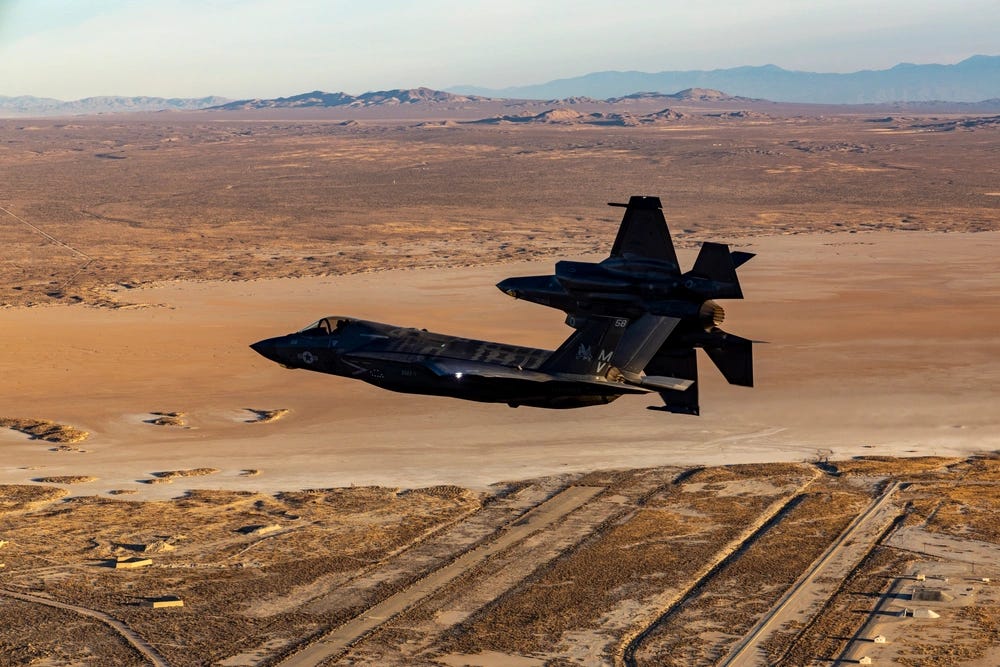
First up was Operation Rough Rider, a campaign to take the fight straight to the Houthis in Yemen. The 34th’s pilots rolled in, taking out air defenses, command centers, missile batteries—cutting the legs out from under the opposition.
But it was in June when things really hit high gear. The 34th was tapped to lead the way for a strike package, “kicking down the door” so B-2 Spirits could slip through. Their target: Iran’s underground nuclear sites at Fordo, Natanz, and Isfahan.
On June 22, the F-35s of the 388th Wing punched into Iranian airspace first, hunting enemy radars with their stealth and sensors. Suppression of Enemy Air Defenses—SEAD—was their bread and butter, and they cleared a path for the bombers that followed.
The weapons officer for the squadron ran the whole mission, guiding his formation hundreds of miles deep into contested airspace, never losing sight of the B-2s they were sworn to protect. That night, the F-35s didn’t just show up—they rewrote the rules of the game.
Invisible Wings: The B-2 Spirit’s Features
In the hush of that same night, B-2 bombers unleashed their payload—fourteen earth-shaking bombs—over Fordo, Natanz, and Isfahan, while F-22s prowled above, keeping the skies clear. F-35s guided the strike force out, slipping through darkness as the last American jets exited Iranian airspace.
Let’s break down the remarkable traits that define the B-2 Spirit.
Primary function: multi-role heavy bomber
Power plant: four General Electric F118-GE-100 engines
Thrust: 17,300 pounds each engine
Wingspan: 172 feet (52.12 meters)
Length: 69 feet (20.9 meters)
Height: 17 feet (5.1 meters)
Weight: 160,000 pounds (72,575 kilograms)
Maximum takeoff weight: 336,500 pounds (152,634 kilograms)
Fuel capacity: 167,000 pounds (75750 kilograms)
Payload: 40,000 pounds (18,144 kilograms)
Speed: high subsonic
Range: intercontinental
Ceiling: 50,000 feet (15,240 meters)
Armament: conventional or nuclear weapons
Crew: two pilots
The B-2 Spirit can slip through darkness like a whisper, its sleek silhouette almost invisible to radar. With its stealthy skin and smooth, swept wings, it can glide past even the sharpest enemy defenses, carrying enough firepower to rattle the most fortified targets.
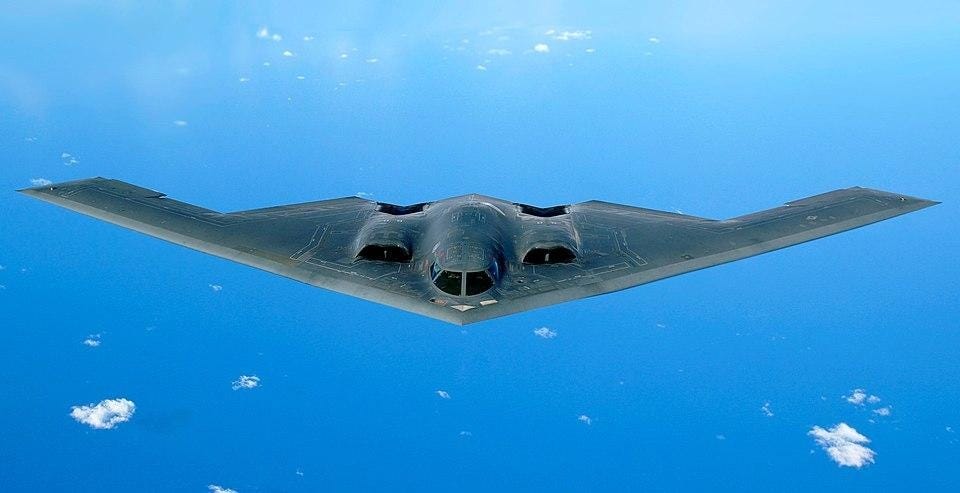
Onboard, pilots may ride high above the world. This aircraft’s shape and technology let it soar higher, see farther, and strike where others can’t, making it as much a deterrent as a weapon.
The B-2 Spirit is a master of vanishing acts, built to slip past eyes and ears alike. Its stealth isn’t just about radar—special coatings, composite materials, and that iconic flying-wing shape all help it disappear from heat sensors and other detectors.
Even the most advanced defenses struggle to spot it as it glides overhead. Some secrets behind its invisibility are still locked away, but every inch of the B-2 is designed to keep it hidden in plain sight. In the world of bombers, the B-2 is a ghost with teeth.
Keeping us and our allies primed for the fight
The strike hammered Iran’s nuclear sites, leaving its enrichment facilities crippled and progress stalled. Fordow and Natanz went dark, while Isfahan reeled from heavy damage—making any quick return to uranium enrichment difficult.
Even with the sites hit, the stockpiles of enriched uranium still cast a long shadow—if they’re hidden away, they’re not out of play. That’s why intelligence teams, diplomats, and security folks can’t just pack up and go home after the dust settles.
Folks who study these things say there’s only so much a strike like Midnight Hammer can accomplish before the risks—political, environmental, or regional—start to pile up. Taking out the rest could mean chasing even deeper, darker targets, and that’s a whole new level of danger. Nevertheless, Operation Midnight Hammer sent a clear message: the U.S. and its allies could reach deep beneath the earth, hitting even the most fortified targets.
For those watching from afar, it was proof that action would back up words when the stakes were high. In the aftermath, allies felt reassured, and adversaries had fresh reason to think twice.
This Week in Aviation History
The morning of 7 December, 1941, started like any other on Oahu. Still, the sky soon filled with the angry bunch of Imperial Japanese Navy aircraft—Pearl Harbor was about to become a name etched in every history book.
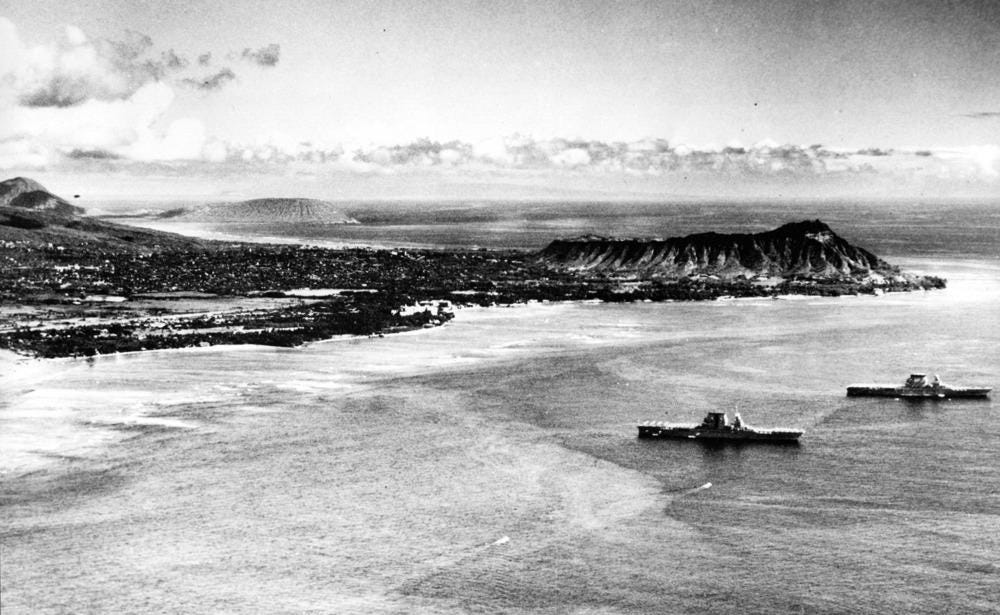
The Japanese came in low and fast, aiming to cripple the U.S. Pacific Fleet before it could even think about answering the call elsewhere—in the Philippines, Hong Kong, Singapore, and beyond. The first wave hit hard: bombs rained down on hangars and airfields across the island, while torpedoes sliced through the harbor’s calm water, zeroing in on the proud line of battleships.
In just five minutes, four of those giants—including the Oklahoma and Arizona—took devastating hits. Arizona’s fate was sealed when a bomb found her powder magazine; she erupted in a fireball, taking 1,177 souls with her to the bottom. An hour later, the second wave came screaming in—163 more aircraft, raining destruction. By the time the last engine faded, 21 ships were sunk or battered, nearly 200 planes lay twisted on the tarmac, and 2,403 Americans wouldn’t see another sunrise.
But even in chaos, grit found its moment. Messman Third Class Doris “Dorie” Miller, serving aboard the West Virginia, rushed through smoke and confusion to carry his wounded captain to safety, then manned a .50-caliber gun and fired back until the ammo ran dry—later earning the Navy Cross for bravery.
Out on the airfields, 2nd Lieutenants Kenneth Taylor and George Welch scrambled to their fighters, tuxedos and all, dodging strafing runs to take off under fire. They clawed into the sky, shooting down seven enemy planes and securing their own Distinguished Service Crosses.
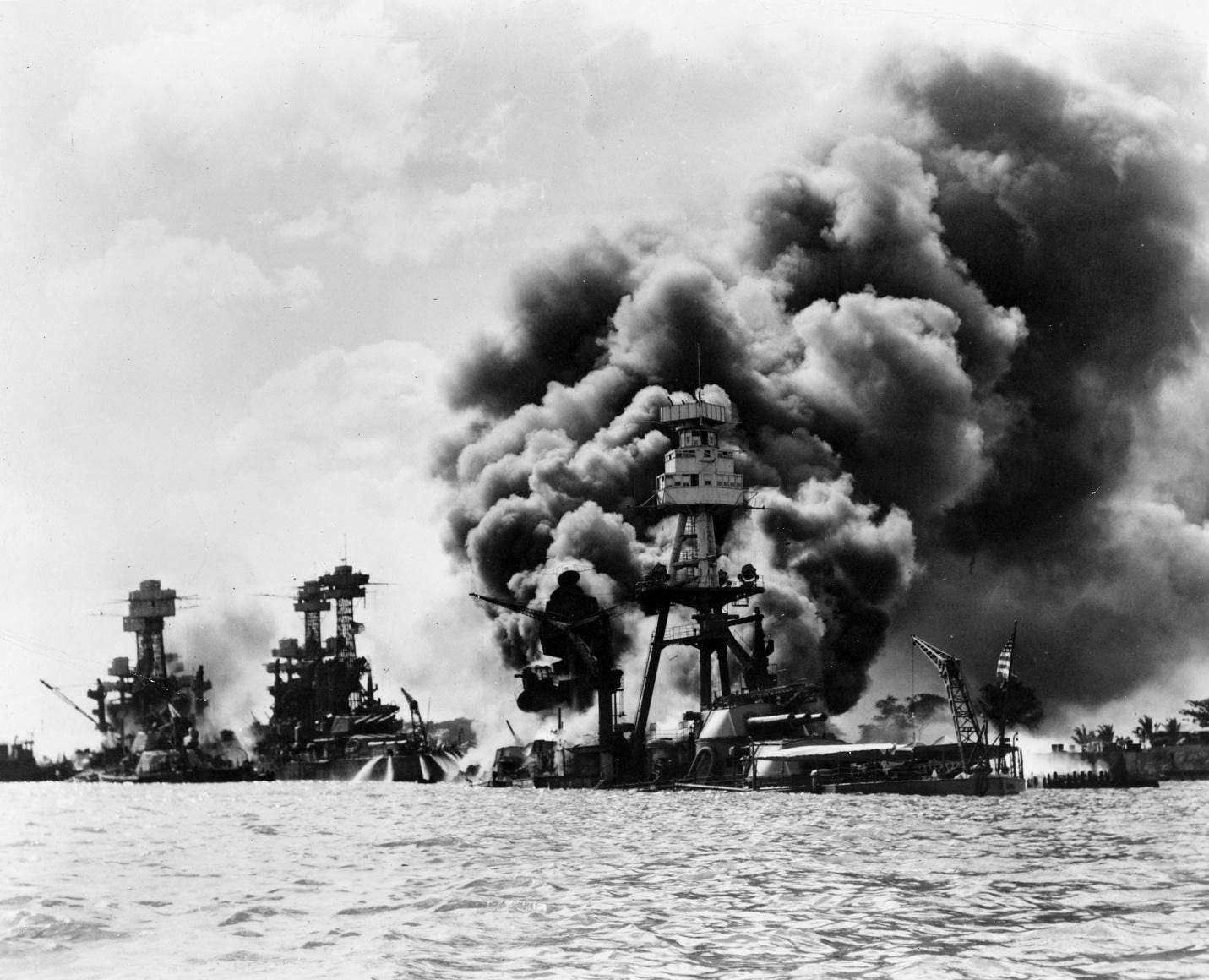
Pearl Harbor was battered but not broken. The carriers—those vital ships—were out at sea and untouched, setting the stage for payback and a new chapter in the Pacific. The attack was meant to cripple, but instead, it woke a sleeping giant and steeled a nation for the long fight ahead.
Pearl Harbor: A Gathering of Strength
Pearl Harbor found itself at the crossroads of America’s Pacific ambitions—a stage set for the unfolding drama of power and destiny.
Inside a congressional chamber, the air is thick with anticipation. Major General Schofield, his voice steady, declared before the House of Representatives that Pearl Harbor would be an ideal anchorage for a modern navy. Steve Twomey, the Pulitzer Prize-winning chronicler of these events, reminds us: in those days, a “modern navy” meant steel giants that ruled the waves—long before the sky belonged to airplanes.
The harbor itself, cradled by volcanic ridges and protected by a narrow, twisting entrance, was a fortress against hostile ships. Yet, as every aviator knows, strengths can become weaknesses. That same narrow approach would, in time, trap the fleet inside—a bottle with a single, perilous neck.
In the dawning years of the twentieth century, Pearl Harbor was less a stronghold than a lonely outpost, awaiting its moment. The Hawaiian islands offered no oil, no coal; every ton of fuel, every crate of supplies, had to make the long journey from the American West Coast. The Navy came and went, but few ships called this place home.
Then came a high-water mark for American naval dreams. President Theodore Roosevelt, ever the architect of power, dispatched the Great White Fleet—sixteen battleships gleaming in the sun—on their legendary circumnavigation in 1907. Among the young officers aboard sailed Husband Kimmel, destined for history’s spotlight as commander of the Pacific Fleet on that fateful December morning decades later.
Pearl Harbor grew in fits and starts. By 1911, dredges had deepened the channel enough for the USS California, a deep-draft ship, to make its cautious way inside. Soon followed a coaling station, Marine barracks, munitions magazines, a hospital, and a submarine base—a slow gathering of strength, one building at a time.
Around 1940—a storm brewing on the horizon, Japanese ambitions rising like distant thunder. Sensing the shifting winds, President Roosevelt took decisive action, sending nearly a hundred ships of the Pacific Fleet to anchor at Pearl Harbor, a bold signal to any watching adversary.
The harbor wasn’t just home to warships; its airfields buzzed with Army aircraft, most notably the formidable P-40 Warhawk. In those tense days, the P-40 stood as America’s best fighter, ready in numbers to defend the Pacific skies.
Below is the rundown of the P-40 aircraft that initiated a counterattack against the Japanese during that fateful day:
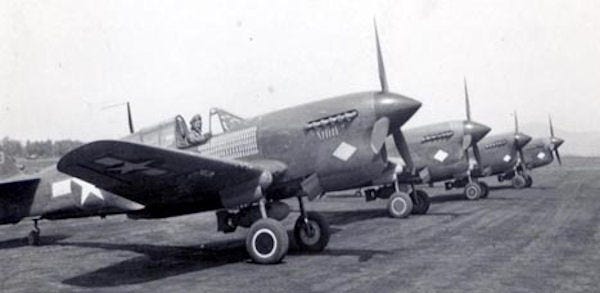
Armament: Six .50-cal. machine guns, 700 lbs. of bombs externally
Engine: Allison V-1710 of 1,150 hp
Maximum speed: 362 mph
Cruising speed: 235 mph
Range: 850 miles
Ceiling: 30,000 ft.
Span: 37 ft. 4 in.
Length: 31 ft. 9 in.
Height: 12 ft. 4 in.
Weight: 9,100 lbs. loaded
How Pearl Harbor Changed America’s Place in the World
The attack on Pearl Harbor marked an irreversible turning point for the United States. Before that fateful morning, the country stood firmly behind its borders, guided by a belief that staying out of distant conflicts was best for its people.
But when the smoke cleared over Oahu, isolationism was finished. America was thrust onto the world stage not only to fight in World War II but also to help shape what came after.
Following four years of conflict, the nation emerged as a founding force behind the United Nations and NATO, forever weaving itself into the fabric of global affairs. The war effort sparked a surge in economic activity, pulling the country out of the Great Depression and launching an era of prosperity. On the technological front, innovation soared—from faster aircraft and advanced ships to the dawn of nuclear weapons.
These advances didn’t just change the course of a war; they redefined what nations could achieve, and their influence can still be traced in the world today.
In Case You Missed It
The Raptor should have had 700 airframes produced:
Photo Outlet
Every issue of Hangar Flying with Tog gets you a free image that I’ve taken at airshows:
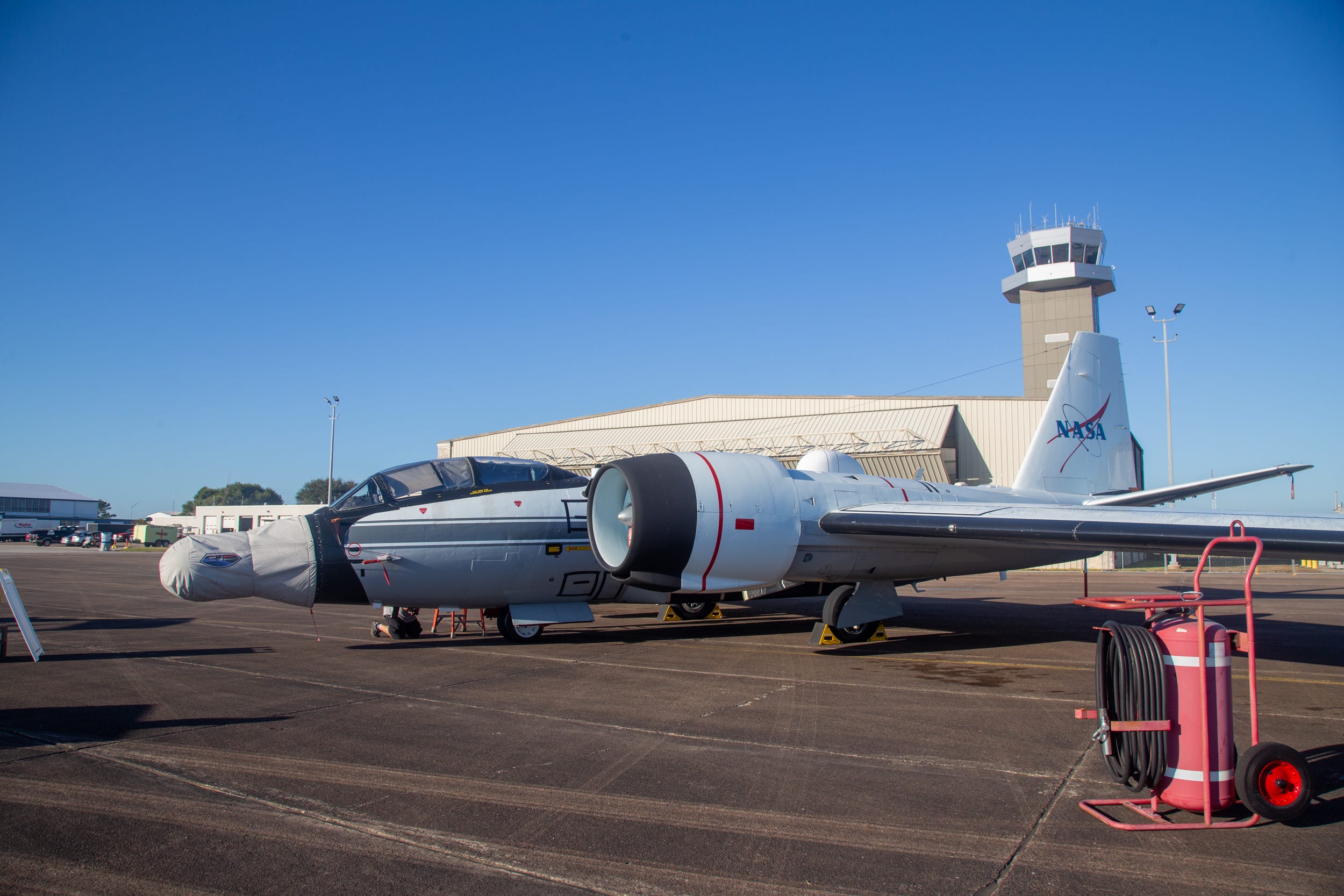
Feel free to use these photos however you like, if you choose to tag me, I am @pilotphotog on all social platforms. Thanks!
Post Flight Debrief
Like what you’re reading? Stay in the loop by signing up below—it’s quick, easy, and always free.
This newsletter will always be free for everyone, but if you want to go further, support the mission, and unlock bonus content like the Midweek Sortie, consider becoming a paid subscriber.
Your support keeps this flight crew flying—and I couldn’t do it without you.
– Tog
I'm fascinated by the incremental improvements that led to the F-35. It's an incredible transformation from the F-36 Sabre, to Boyd's dream--the F-16 Viper, to the F-35.
The plane is the WB-57 Canberra, it's kinda what came before the U2