

GBU 57’s Revival and Remembering Concorde’s Maiden Flight
Extreme technology lives or dies on constraints—political, industrial, and doctrinal—not just on what it can do on paper.
“This action is essential to restore operational readiness … and ensure Air Force Global Strike Command (AFGSC) possesses the necessary assets to support strategic contingency war plans for all Combatant Commands.”
—Quote from the Approval Notice
Mission Briefing
In the aftermath of the June 2025 strikes on Iranian nuclear sites like Fordow, the US Air Force has begun replenishing its stock of GBU-57 bunker busters. Boeing has secured a sole-source contract exceeding $100 million to produce new bombs and subassemblies, with deliveries of critical components expected to start in January 2028.
The move signals Washington’s determination to retain the unique ability to destroy hardened, deeply buried targets without nuclear escalation. Yet this decision also exposes a vulnerability: the industrial base is exceedingly narrow, production takes years, and only the B-2 Spirit can deliver these weapons. Even as this replenishment begins, the Air Force is already looking ahead, developing the Next-Generation Penetrator for future missions.
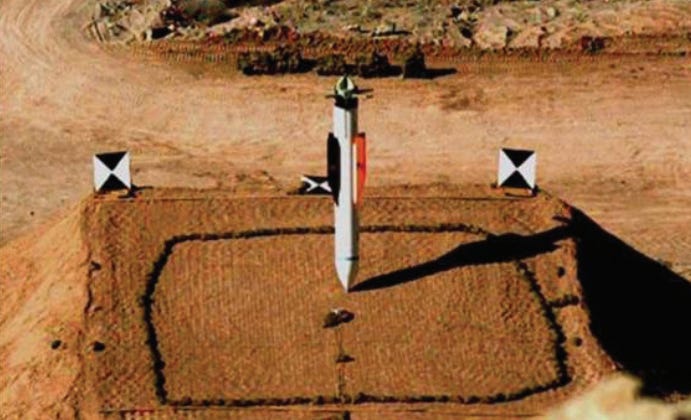
Spirit of the Deep Strike: Washington Revives the GBU-57
The choice to replenish the Massive Ordnance Penetrator isn’t just a logistical footnote. It’s a profound doctrinal signal. This isn’t about simply refilling the shelves; it’s about telling the world, and America’s own forces, that the ability to launch a conventional deep strike is every bit as vital as stealth technology or in-flight refueling.
The catalyst is plain: in June 2025, GBU-57s shattered targets at Iranian facilities like Fordow and Natanz, with reports pointing to fourteen warheads delivered by seven B-2 Spirits in a meticulously planned operation years in the making.
Awarding Boeing a sole-source contract for new bombs is hardly a surprise. It’s the only feasible path, given the GBU-57’s status as a specialized weapon built in limited numbers, tightly interwoven with an exclusive industrial and certification framework.
This isn’t a munition you churn out by the thousands. The GBU-57 is a rare breed, engineered for only the most formidable targets: command centers deep underground, fortified production sites, labyrinthine tunnels, and facilities buried in stone.
Its formidable size tells the story. Weighing in at 13,600 kilograms and stretching over six meters, the GBU-57 isn’t just a “big bomb”—it’s a kinetic spear, relying on sheer mass, velocity, and structural toughness to punch through layers of rock and reinforced concrete before unleashing its payload.
Public details are understandably guarded, with penetration rates depending on everything from impact angle to the density of the target’s defenses. Still, the numbers whispered in defense circles speak of tens of meters of reinforced material standing no chance. It is a class apart from conventional bunker busters.
But the GBU-57’s power shapes everything around it. Right now, only the B-2 Spirit can deliver this weapon, carrying it internally while cloaked in stealth, giving the U.S. a razor’s edge advantage against the most well-defended targets.
Yet this exclusivity comes at a cost: the entire “deep bunker” capability is tethered to a small, high-maintenance fleet that’s never fully on call. Possessing the bomb doesn’t always mean you can launch it. The realities of maintenance cycles, global posture, or competing missions can leave that punch on the sidelines when you need it most.
That’s why the conversation around the B-21 Raider’s development is so critical. The next-generation penetrator, already being discussed, is expected to be lighter—tailored for the B-21’s payload limits (with talk of just one bomb per aircraft, compared to B-2’s capacity for more).
Once again, the bomb and the bomber are locked in a dance, each shaping the evolution of the other as the Air Force prepares for the next era of deep strike.
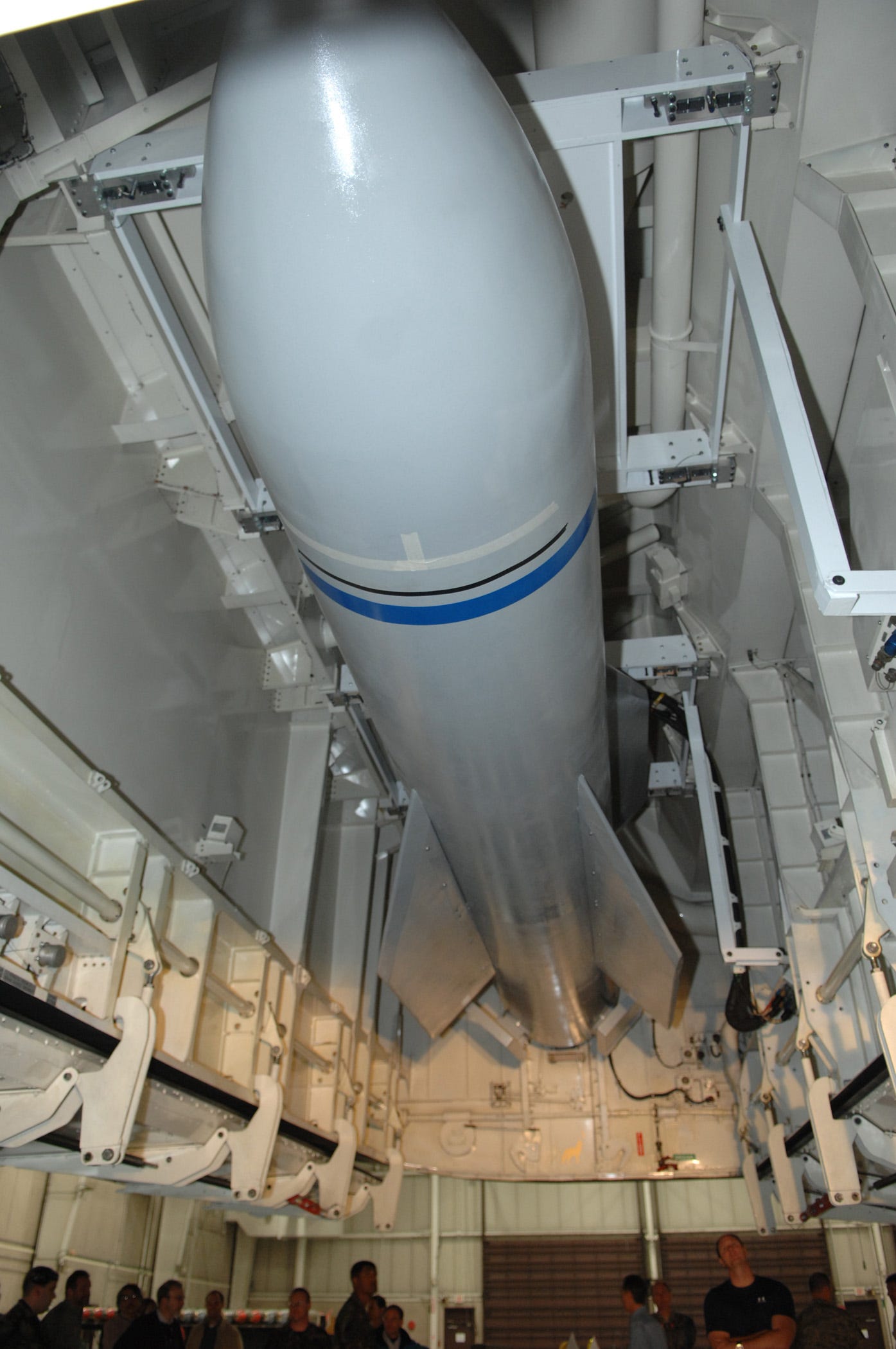
Beyond the Contract and Importance of Deep Strike Capability
The recent Boeing contract, at its heart, is more than a line item in a budget. It’s a window into the realities and vulnerabilities of modern munitions production.
The February 13 announcement speaks of a sole-source commitment exceeding $100 million, with tail kits and certain assemblies slated for delivery beginning January 2028. But behind those numbers are three clear lessons for anyone watching the future of American airpower.
First, rebuilding a stockpile is anything but swift. With a three-year gap between the GBU-57s expended in 2025 operations and the first new components expected by 2028, the timeline is dictated by more than bureaucracy.
Heavy munitions like these are custom-built in small batches, each one demanding rigorous quality controls and seamless integration with both aircraft and targeting systems. There’s simply no room for shortcuts when the stakes are this high.
Second, the fact that Boeing stands alone as the supplier isn’t just a policy choice. It’s a reflection of industrial dependence. The field is so specialized that putting the contract out for open bids would only have introduced further delays, since few companies have the data, expertise, or certifications required to even enter the game. The ecosystem for such a weapon is narrow, and the supply chain fragile.
Finally, while the price tag—over $100 million—catches headlines, it doesn’t tell the whole story. The actual number of weapons or kits remains undisclosed, and the true cost per unit is likely steep once guidance, explosives, testing, storage, and support are factored in.
But what’s unmistakable is the signal: this isn’t just a study or a placeholder. It’s a concrete move to restore and sustain a critical deep-strike capability for the Air Force, even as the industrial terrain grows more challenging.
Striking deep underground isn’t just an engineering flex. It’s a hard answer to how modern threats are built. Across the world, adversaries now hide their most vital operations beneath mountains of concrete and rock, betting on layers of protection and redundancy to shield them from attack.
Iran’s Fordow facility stands as the textbook example: a fortress designed to shrug off conventional firepower. That’s why heavy bunker-busting capability isn’t just another tool. It’s a strategic insurance policy, giving leaders an option that sits squarely between a warning shot and all-out escalation.
Even if such a weapon is used only once in a decade, its mere presence forces adversaries to rethink, spend more to dig deeper, and lose sleep over how to truly safeguard what matters most.
Why the GBU-57 Decision Strengthens U.S. and Allied Air Power?
Refilling the GBU-57 stockpile after its first combat use in June 2025 is more than a matter of replacing spent munitions; it’s a clear signal that the ability to strike deeply buried, hardened targets remains central to U.S. airpower strategy.
The Air Force’s $100-million-plus contract with Boeing to replace bombs used in Operation Midnight Hammer isn’t just about numbers. It’s about ensuring that strategic contingency plans stay credible and ready.
This move carries several implications for U.S. airpower. First, it underscores the enduring significance of stealth bombers. The GBU-57’s operational debut cements the B-2 as the go-to platform for the most challenging targets and accelerates the debate about how this unique capability will transfer to the B-21 era.
With the Next-Generation Penetrator (NGP) on the horizon, there’s already talk of lighter bombs to fit future platforms.
Second, it puts industrial resilience in the spotlight: replenishing low-volume, high-complexity weapons takes years, with supply chains and specialized manufacturing forming a fragile backbone that cannot be ramped up overnight.
Third, for U.S. allies, the message is strategic: conventional deep-strike options are critical for credible deterrence and alliance planning, even if only a handful of nations possess them.
Ultimately, the real lesson is that tomorrow’s airpower advantage won’t just rest on the size of a bomb, but on the ability to sustain rare, high-impact capabilities: ensuring both the force and the industry behind it are ready before the next crisis hits.
This Week in Aviation History
By February 1965, the race to the edge of the sound barrier was well underway—two Concorde prototypes were already taking shape, one beneath the hands of Aérospatiale in France and the other at the British Aircraft Corporation. On March 2, 1969, history stirred as Concorde 001 lifted gracefully from the runway in Toulouse, its maiden flight marking a bold new chapter in aviation’s pursuit of speed and elegance.
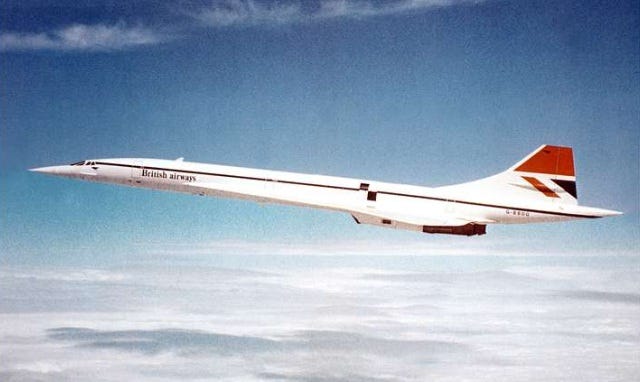
The Concorde’s Tragic Fate
The 1960s and ’70s marked a golden age of aviation. A time when the world seemed to shrink with every leap in technology. Jetliners were transforming travel, whisking passengers across continents in hours, and the Apollo astronauts planted their boots on the Moon in 1969, reminding everyone that the sky was no longer the limit. In the wake of these achievements, the era’s spirit of innovation and speed was unmistakable, as nations and aerospace giants vied for the next great milestone in flight.
In this high-stakes race for the future, Britain and France set their sights on an audacious goal: to build a passenger jet that could outrun the speed of sound.
The technical and financial hurdles were daunting, so the two countries forged a unique partnership, signing a bilateral treaty in 1962 and naming their project “Concorde”—a word that embodies both harmony and unity.
This was more than a name; it was a promise, a symbol of what could be accomplished when rivals became collaborators for the sake of progress.
By 1976, the dream had become reality. Concorde entered service with Air France and British Airways, instantly capturing the world’s imagination. Its needle-nose silhouette became a fixture on the tarmacs of London, Paris, and New York, ferrying the elite in unrivaled style.
Supersonic speed and luxury came at a steep price. A $12,000 for a round-trip ticket, a sum that would be over $66,000 in today’s dollars. Yet for the wealthy and famous, the Concorde’s allure was irresistible. Its legendary tagline, “Arrive Before You Leave,” was no exaggeration; the jet could cross the Atlantic so quickly that passengers landed in New York before their departure time in London or Paris.
Most Concorde flights traced a familiar arc between New York and London or Paris, but the jet did briefly stretch its wings to South America, Bahrain, and Singapore. These forays, though short-lived, hinted at a vision of global supersonic travel. It is a vision ultimately constrained by economics and geography.
The reality was sobering: only 20 Concordes were ever built, and none found homes outside the national airlines of France and Britain, both state-run at the time.
Why did this marvel of engineering meet such an abrupt end? The answers are as complex as the machine itself. Each flight guzzled over 6,700 gallons of fuel, burning through profits almost as quickly as it crossed the ocean.
The sonic boom—a thunderous shockwave produced when Concorde broke the sound barrier—meant its routes were mostly confined to open water, sparing cities from rattling windows but limiting destinations and revenue. Noise complaints and environmental concerns grew louder as the world became more attuned to the cost of progress.
Then came tragedy and turbulence. In 2000, a Concorde crash in France claimed the lives of everyone aboard, casting a shadow over the jet’s reputation. The aftermath of September 11, 2001, brought a sharp decline in international travel, and the economics of operating such a specialized fleet became impossible to justify.
On October 24, 2003, Concorde’s final flight marked the end of an era. Its legacy is not just the famous photograph of its rakish form slicing through the clouds, but a testament to human ambition. It is the drive to push boundaries, to chase speed and elegance, and to dream of a world drawn closer by the miracle of flight.
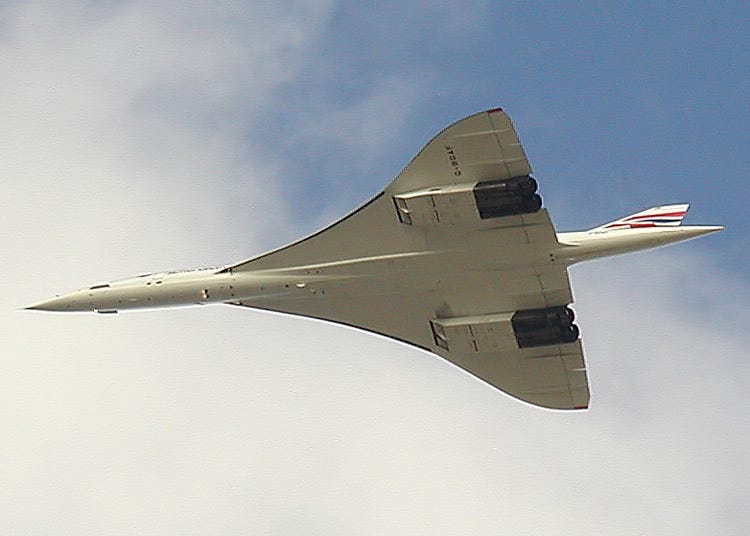
Incredible Features of this Supersonic Jet
Concorde was a vision brought to life. It is a sleek ogival delta-winged marvel powered by four Olympus engines, themselves descendants of the mighty Avro Vulcan bomber. Forged through a partnership between Rolls-Royce and SNECMA, these engines propelled Concorde into the stratosphere of aviation achievement.
The aircraft introduced the first analogue fly-by-wire flight control system in a commercial airliner, and its signature droop-nose—lowered for landing visibility—became iconic, hinting at the futuristic technology within.
What truly set Concorde apart was its astonishing performance. Cruising serenely at Mach 2.02—over 2,140 km/h (1,330 mph)—and soaring at an altitude of 60,000 feet, it left subsonic airliners far below, both literally and figuratively. Even its landing speed, a brisk 185 miles per hour, spoke of the relentless power under its wings.
Concorde pioneered a suite of technological breakthroughs. Its double-delta (ogival) wings and variable inlet ramps optimized airflow for high-speed flight, while “supercruise” capability meant it could sustain supersonic speeds without afterburners.
Thrust-by-wire engines; precursors to today’s FADEC-controlled powerplants; gave pilots unprecedented precision. The droop-nose, full-regime autopilot and autothrottle, and multifunction flight control surfaces all contributed to performance and safety.
Weight-saving and efficiency were paramount. The airframe was built mostly from aluminum, balancing strength, weight, and manufacturability. Higher speeds would have demanded heavier, exotic metals.
A high-pressure hydraulic system kept components light yet powerful, and “sculpture milling” carved parts from single alloy billets, reducing both weight and complexity. The aircraft relied on ground support for power, reflecting its premium service niche at major airports.
Behind the glamour, Concorde’s true legacy lies in the knowledge it gave birth to. Techniques and partnerships refined during its creation paved the way for the Airbus consortium, while SNECMA’s Concorde experience led directly to its partnership with General Electric and the creation of the world-renowned CFM56 engine series. Concorde was more than a supersonic transport.
It was a flying laboratory, shaping the future of aerospace far beyond its own legendary flights.
The Legacy of Supersonic Ambition
Concorde’s story is more than the tale of a retired jet. It’s the chapter where commercial aviation dared to outrun the very concept of time. For a fleeting era, schedules bowed to Mach 2, and the Atlantic became a mere dash as Concorde and her crews treated time zones like suggestions rather than boundaries.
But that blazing reputation came with hard truths: no speed could outpace the realities of cost, noise, and public acceptance. Its thunderous sonic boom and staggering operational expenses meant Concorde was largely tethered to transatlantic routes, a technological wonder soaring through a narrow corridor for an elite few.
Yet what truly endures from Concorde isn’t just the memory of supersonic luxury. It’s the trail of innovation it blazed. Air France views the program as a spark that ignited European aerospace, teaching hard lessons in design, manufacturing, and international teamwork.
NASA, too, looked to Concorde as the starting block for its High-Speed Research Program, measuring what a new generation must overcome; quieter engines, greener footprints, and broader accessibility.
In the end, Concorde didn’t just fly faster than any airliner before or since. It left behind a legacy of bold ambition and a checklist for the future, daring the current and the next generation to rewrite what’s possible in the sky.
In Case You Missed It
We are living in historic times:
Photo Outlet
Every issue of Hangar Flying with Tog gets you a free image that I’ve taken at airshows:
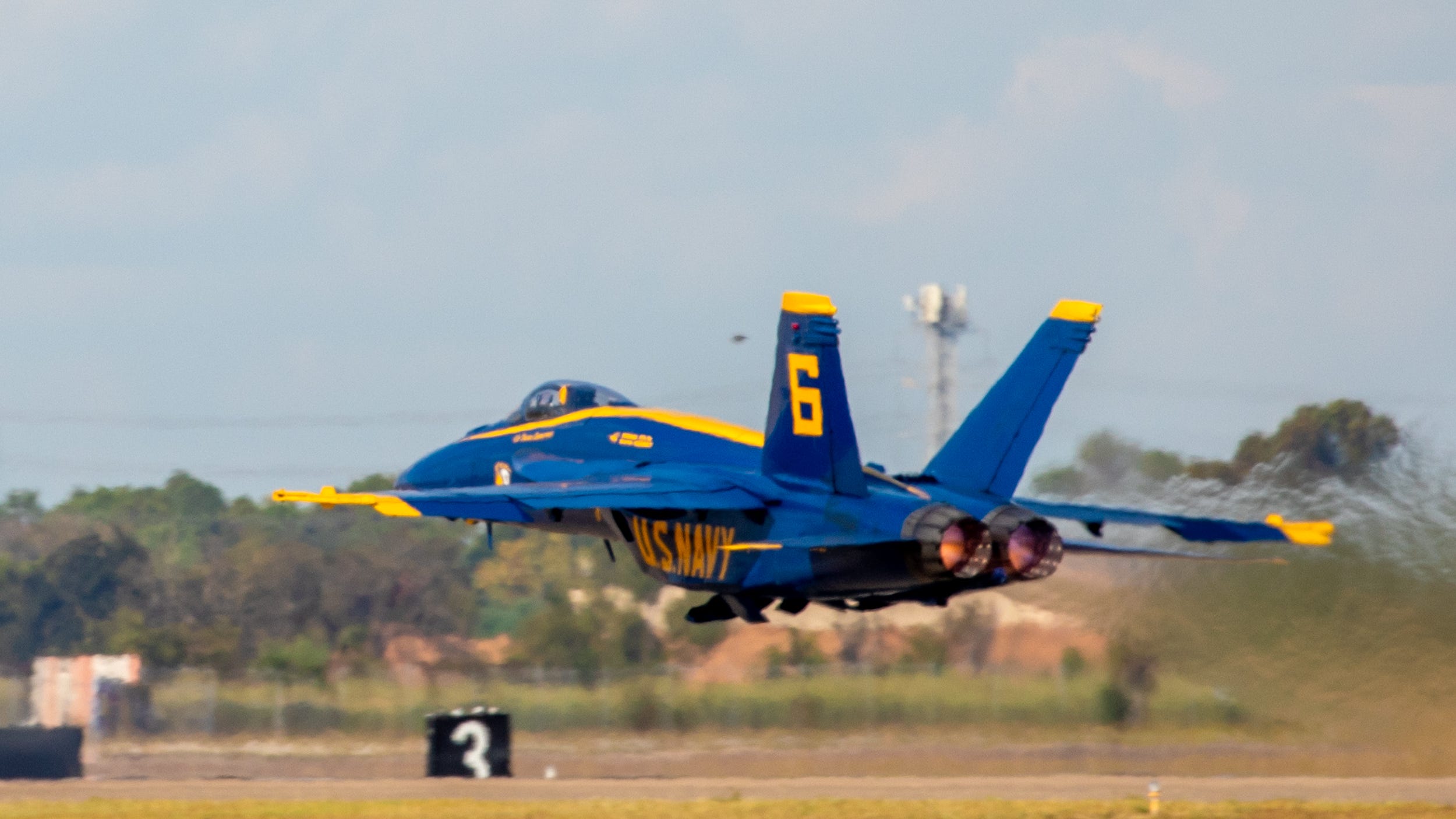
Feel free to use these photos however you like, if you choose to tag me, I am @pilotphotog on all social platforms. Thanks!
Post Flight Debrief
Like what you’re reading? Stay in the loop by signing up below—it’s quick, easy, and always free.
This newsletter will always be free for everyone, but if you want to go further, support the mission, and unlock bonus content like the Midweek Sortie, consider becoming a paid subscriber.
Your support keeps this flight crew flying—and I couldn’t do it without you.
– Tog