

From the Air Defense Command to Ghostrider: Legacies Reforged and Returned
History has a way of circling back—just like Air Defense Command returned in ’51, the 919th SOW’s revival with the AC-130J proves that old missions never truly vanish; they wait for the next call.

“Our Air Commandos are once again flying one of the most capable strike platforms in the world. The integration of the Reserve into the AC-130J enterprise ensures allows us to bring our deep operational experience to this platform as value-added mission partners.”
—Lt. Col. James Wilson, 919th Special Operations Wing
Mission Briefing
In October 2025, the air at Hurlburt Field vibrated with the deep, unmistakable rumble of the AC-130J Ghostrider as the 711th Special Operations Squadron eased her down the runway for that long-awaited flight. The scent of jet fuel hung heavy as floodlights gleamed off the gunship’s frame, and for the 919th SOW, the moment was more than just another sortie—it was a legacy rekindled after nearly thirty years.
From Spectre to Ghostrider: The 919th SOW’s Comeback
Back in the day, that unit flew the old AC-130A Spectre, carving out a reputation from ‘75 to ‘95 before hanging up the big guns for other missions. Now, with the AC-130J, they’re fielding the latest in AFSOC’s gunship family—sleek, bristling with tech, and ready for the modern fight.
The program was supposed to field 37 birds, but 31 will do, each one built for close air support, interdiction runs, and armed reconnaissance. The Ghostrider’s already showing promise for light-attack and surveillance work, especially as the Indo-Pacific heats up. In a world full of shifting threats, they’re back—right where the mission needs them.
The AC-130J flight wasn’t just about getting airborne again—it was the 919th SOW reclaiming its old gunship soul, picking up a mission they hadn’t flown in nearly three decades. But there’s more to it than nostalgia.
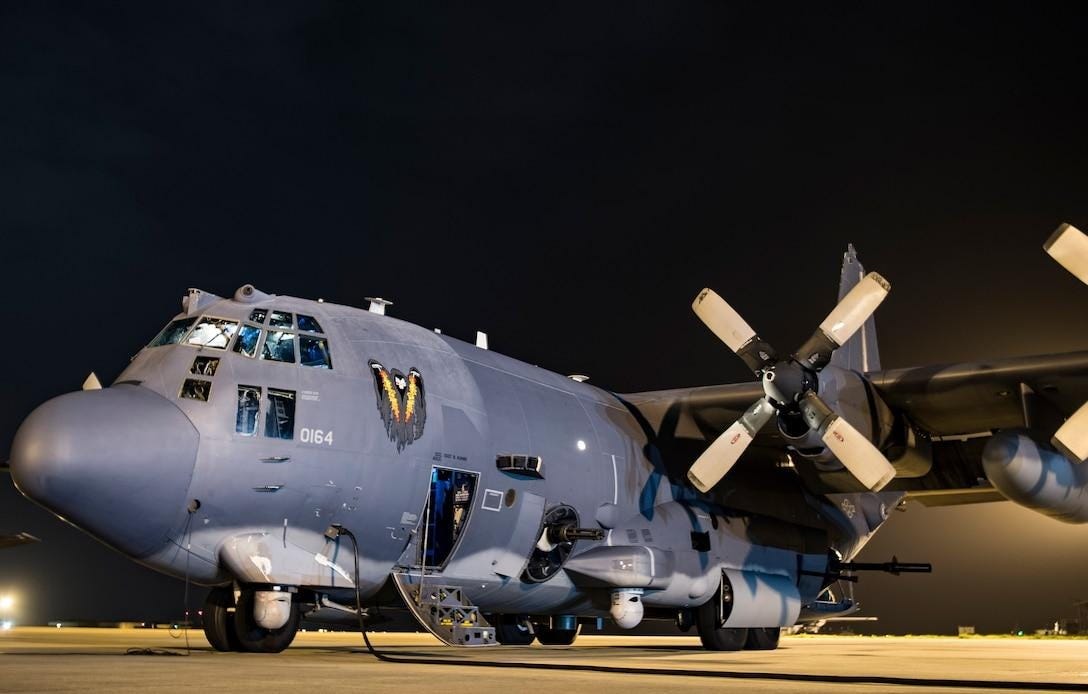
This time, you’ve got a Reserve squadron flying an Active Duty gunship, a real sign of how the Air Force is blending its teams—Reserve and Active Duty—into one tight-knit force. The AC-130J itself is a leap ahead, packing advanced sensors, precision-guided munitions, and the kind of flexible mission profile today’s battles demand.
In places where the fight is unpredictable and persistence is everything, having a bird that can hang in the sky for hours and deliver pinpoint fire makes all the difference. So, when that Ghostrider climbed out over Hurlburt, it means they are stepping back into the action and showing just how crucial the Reserve is on the front lines of special ops.
Insights from the Flight Deck
On November 18, 2025, the 919th Special Operations Wing’s press release didn’t just announce a mission—it captured the spirit of a legacy rekindled. For years, the gunship role had been woven into the very fabric of the formation’s identity. Now, after decades away from that calling, the first operational flight of the AC-130J Ghostrider marked a triumphant homecoming to its storied gunship roots.
But this wasn’t about reliving the past. The return to the Ghostrider was a bold step forward, proof that the 919th SOW was evolving right alongside the Air Force itself. The real story unfolded on the flight line, where a Ghostrider from the 1st Special Operations Wing—an active duty outfit—launched into the sky under the command of a Reserve crew from the 711th Special Operations Squadron.
That moment showcased Total Force Integration in action: active duty and Reserve airmen working shoulder to shoulder, blending experience, training, and commitment into a single, unstoppable team.
“The flight was both practical and symbolic: a visible demonstration that the Air Force Reserve is back flying gunships in an operational capacity and fully integrated with its Active Duty partners.”- Press Release Quote.
For a bit of background, the Ghostrider replaced not only the legendary AC-130A/H Spectres but also the Stinger II and Spooky gunships, streamlining the gunship legacy under one cutting-edge airframe.
By November 2022, the final Ghostrider landed at Cannon AFB, with Kirtland AFB soon becoming the training ground for new crews. The 711th SOS’s move to Hurlburt Field echoed history, as veterans of “Operation Just Cause” gathered to remember past missions. Today, the Ghostrider’s roles stretch from close air support to high-tech surveillance in evolving conflicts.
Let’s take a closer look at what this bird’s packing.
Contractor: Lockheed Martin
Power Plant: Four Rolls-Royce AE 2100D3 Turboprops
Thrust: 4,700 shaft horsepower per engine
Maximum Takeoff Weight: 164,000 lbs
Range: 3,000 miles; limited by crew duty day with air refueling
Wingspan: 132 feet 7 inches (39.7 meters)
Length: 97 feet 9 inches (29.3 meters)
Height: 39 feet 2 inches (11.9 meters)
Crew: 2 Pilots, 2 Combat Systems Officers, and 4 Special Mission Aviators
Armament: Precision Strike Package with 30mm and 105mm cannons and Standoff Precision Guided Munitions (i.e. GBU-39 Small Diameter Bomb, GBU-69 Small Glide Munition, AGM-114 Hellfire missile and AGM-176 Griffin missile)
Date Deployed: July 2019
Unit Cost: $165 million
Inventory: Active duty, 37 by FY24
Strengthening the US power and Allied Trust.
This flight wasn’t just a routine hop—it marked a leap forward in close-air support for America’s allies. The AC-130J Ghostrider, purpose-built for supporting ground troops, interdiction runs, and armed reconnaissance, proved its worth with deadly precision and the ability to hang in the sky for hours.
That’s exactly what allied forces need when the going gets tough or the battlefield is unpredictable. Take Exercise Balikatan, for instance: a U.S. Ghostrider joined up with the Philippine Air Force in the islands, working side by side to sharpen their teamwork and coordination. That’s more than just training—it’s proof that the U.S. brings serious firepower and know-how to the table, boosting the confidence and capability of partner nations.
Every time an advanced platform like the AC-130J shows up in joint operations, it sends a clear message: the U.S. is committed to its allies’ security and ready to meet any threat, especially as eyes turn toward the Indo-Pacific and the unpredictable world of asymmetric warfare.
As the Ghostrider settles back into the mission it once made its own, the real question is just how far these ripples will spread across the force. In the coming months, all eyes will be on how the AC-130J reshapes training, deployments, and the very future of precision support beneath contested skies.
This Week in Aviation History
In December 1948, behind closed doors and the low hum of typewriters, the Air Force quietly folded the Air Defense Command into the fresh-baked Continental Air Command. Once the homeland’s shield, ADC faded to the background—only to roar back as a central command just a few years down the line.
Shield Set Aside, Then Raised Again
The Air Force handed the keys to Continental Air Command—CONAC—rolling up both Tactical Air Command and Air Defense Command under a single roof. It made sense at the time: budgets were tight after the war, manpower was in short supply, and everyone was itching to streamline the new independent service.
Most of the reserve units fell under CONAC’s watch too, since they’d be called up for tactical or air defense work if things ever got hot. Air defense wasn’t exactly at the top of anyone’s list—at least not yet—so folding it into CONAC seemed efficient, a way to keep the engines running without burning extra fuel.
But as the Cold War’s chill set in and the world started feeling a whole lot less predictable, that calculation changed. Suddenly, the nation realized it needed a force with eyes on the skies full-time, leading to the resurrection of Air Defense Command as a major command in 1951—proof that priorities may shift. Still, the mission always finds its way back when it matters most.
Back in those first years after the war, air defense just didn’t seem like the top concern. That’s part of why Air Defense Command slipped quietly under CONAC’s umbrella—everyone figured peacetime meant the real heavy lifting could wait.
But then the world changed overnight. The Soviets lit off their first atomic bomb in ’49, and suddenly, those same leaders who’d shuffled ADC to the sidelines started seeing the sky in a whole new light. That blast made air defense a headline mission again and put Air Defense Command right back in the front row, just where it belonged.
The Shield Above: A Look at Air Defense Command
The story of Air Defense Command is a bit like watching the weather roll in—sometimes front and center, faded to the horizon, but always there when the stakes are highest. It all kicked off back on February 26, 1940, when the War Department drew up plans for a command whose job was simple in theory but daunting in practice: defend the American sky. For a spell, it answered to the First Army Commander, working out the puzzle of air defense while Europe’s war clouds built and the U.S. kept one wary eye on the horizon.
In those early days, air defense was split up among four big air districts, later the First, Second, Third, and Fourth Air Forces, each watching their corner of the country. But by 1944, with the enemy’s reach shrinking and the threat of a homeland air raid fading, the whole setup was quietly disbanded—no need, folks figured, to keep a standing watch when the skies seemed friendly.
For a while, there was nothing—no real air defense outfit at all. But as peace settled and new threats started brewing, the brass saw the writing on the wall. In 1946, they brought Air Defense Command back, this time as a major command in the Army Air Forces, tasked with keeping the continental skies safe in a world that was changing fast.
ADC became operational in March ’46, but the story didn’t stay steady. By late ’48, it was folded under Continental Air Command, then discontinued in mid-1950—just a blip, as it turned out. When the Cold War’s temperature spiked, the nation dusted off the old shield and reestablished ADC as a major command in January 1951. Through every twist and turn, Air Defense Command kept coming back, ready to answer the call whenever the sky darkened.
But the name changed with the times—on January 15, 1968, Air Defense Command took up the mantle of Aerospace Defense Command, reflecting a new era in which the threats weren’t just bombers but missiles and satellites skimming the upper edge of the atmosphere. The mission expanded, the radar screens grew brighter, and the scope of defense stretched out past the clouds.
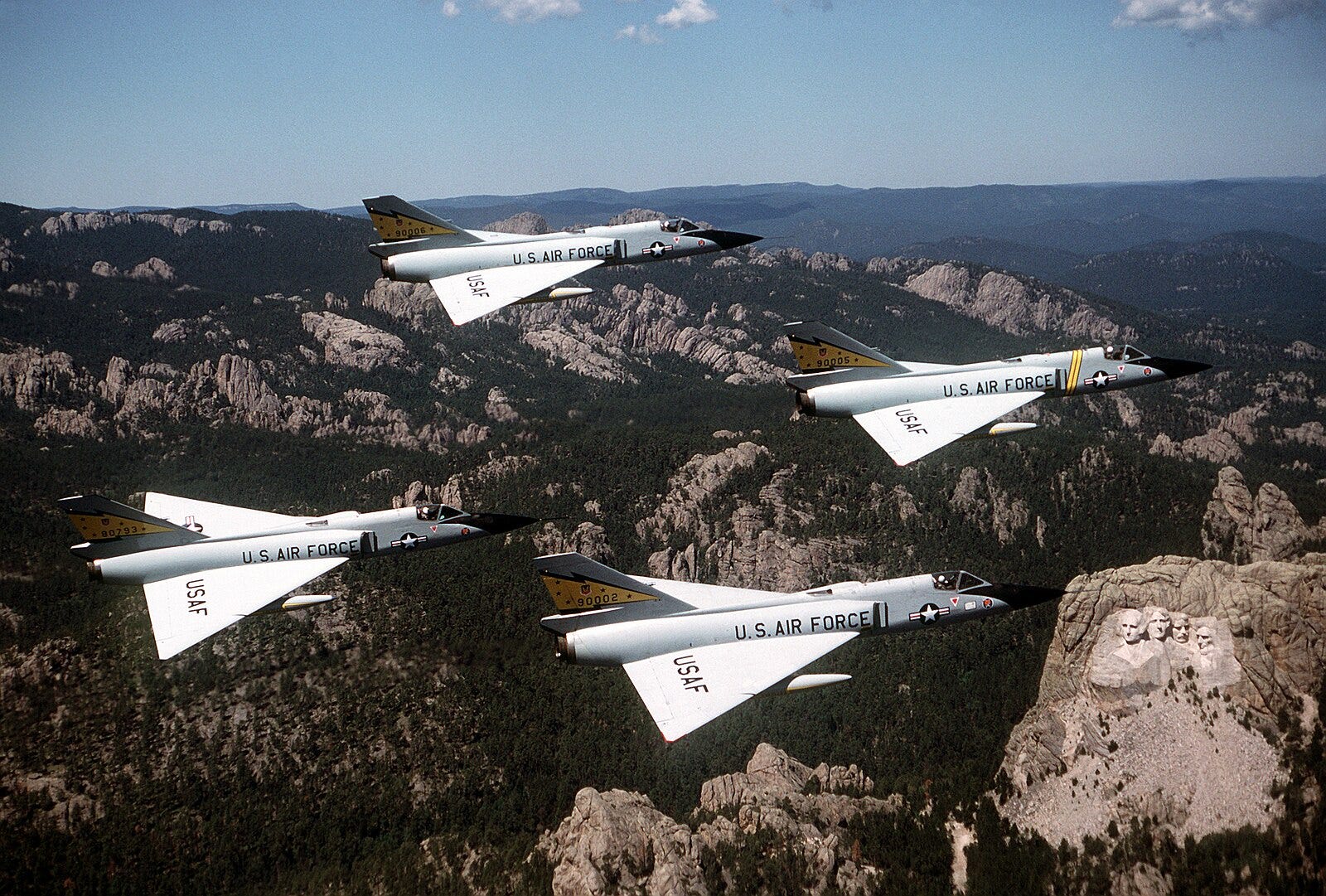
But even legends face sunset. On March 31, 1980, ADC was officially inactivated, its watch ended for now. Still, every old hand who stood those long shifts knows: the sky always remembers who kept it safe, and missions like that never truly fade.
Shield in the Sky: ADC’s Legacy Lives On
The Air Defense Command was more than just a headquarters—it was the beating heart of America’s shield, pulling together radar stations, fighter squadrons, and command centers coast to coast. When the nation needed eyes on the skies, ADC delivered, pushing for radar coverage up in the stormy Northeast, out through the rugged Northwest, and down into the deserts of New Mexico. They didn’t just watch; they acted, scrambling interceptors and running operations from their control centers, always ready for whatever threat might cross the horizon.
But the real leap was SAGE—the Semi-Automatic Ground Environment. When ADC headquarters put out that 300-page operational plan, it wasn’t just paperwork; it was the blueprint for the first truly integrated air defense system, spelling out every sensor, every fighter, every link in the chain. SAGE changed everything, setting the standard for how America would defend its skies.
Even after ADC was inactivated in March 1980, the mission didn’t vanish. Its duties were handed off to new commands—NORAD, TAC (which was later dissolved), and, eventually, Air Combat Command in 1992, which took up the fighter, bomber, reconnaissance, and battle management torch. Through every change in patch and name, that legacy carried on, always keeping a watchful eye on the horizon.
Air Defense Command may have changed names and faded from the org charts, but its fingerprints are all over today’s sky-watch. Every radar sweep, every scramble order, every modern command post owes a nod to ADC—a legacy that keeps the homeland covered, long after the patch came off.
In Case You Missed It
The Raptor should have reached 700 airframes:
Photo Outlet
Every issue of Hangar Flying with Tog gets you a free image that I’ve taken at airshows:
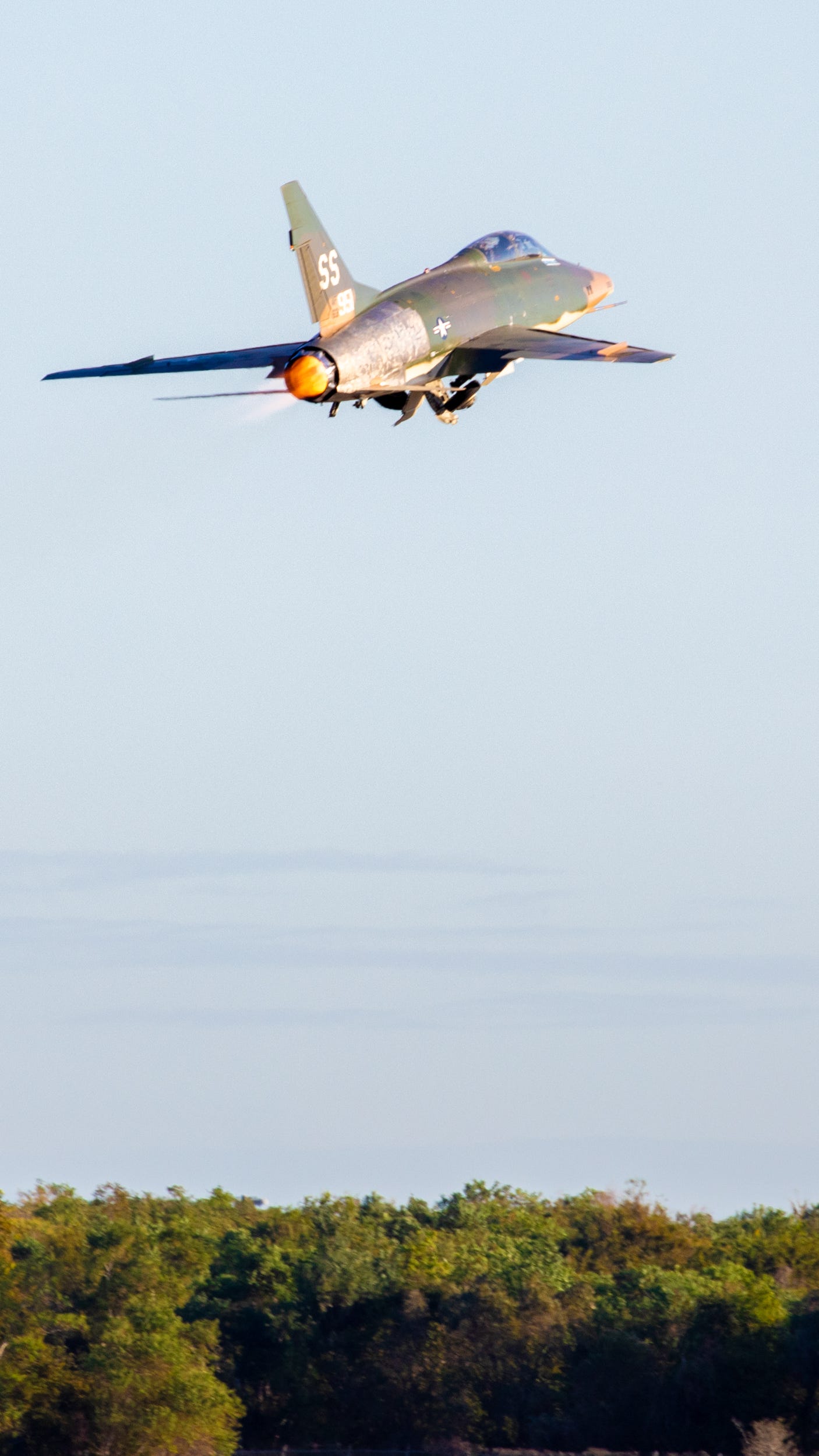
Feel free to use these photos however you like, if you choose to tag me, I am @pilotphotog on all social platforms. Thanks!
Post Flight Debrief
Like what you’re reading? Stay in the loop by signing up below—it’s quick, easy, and always free.
This newsletter will always be free for everyone, but if you want to go further, support the mission, and unlock bonus content like the Midweek Sortie, consider becoming a paid subscriber.
Your support keeps this flight crew flying—and I couldn’t do it without you.
– Tog