

“Late last night and early today, at my direction, the United States Armed Forces conducted an extraordinary military operation in the capital of Venezuela. Overwhelming American military power, air, land, and sea was used to launch a spectacular assault. And it was an assault like people have not seen since World War II.”
— U.S. President Donald J. Trump
Mission Briefing
At 2:01 a.m., a strike package of 150 aircraft thundered in from 20 bases scattered across land and sea, sweeping the skies to shield low-flying helicopters as they unleashed an assault force into the heart of Caracas—catching everyone off guard. Twenty-eight minutes later, the team soared away with Nicolás Maduro and Cilia Flores secured, heading straight for the USS Iwo Jima.
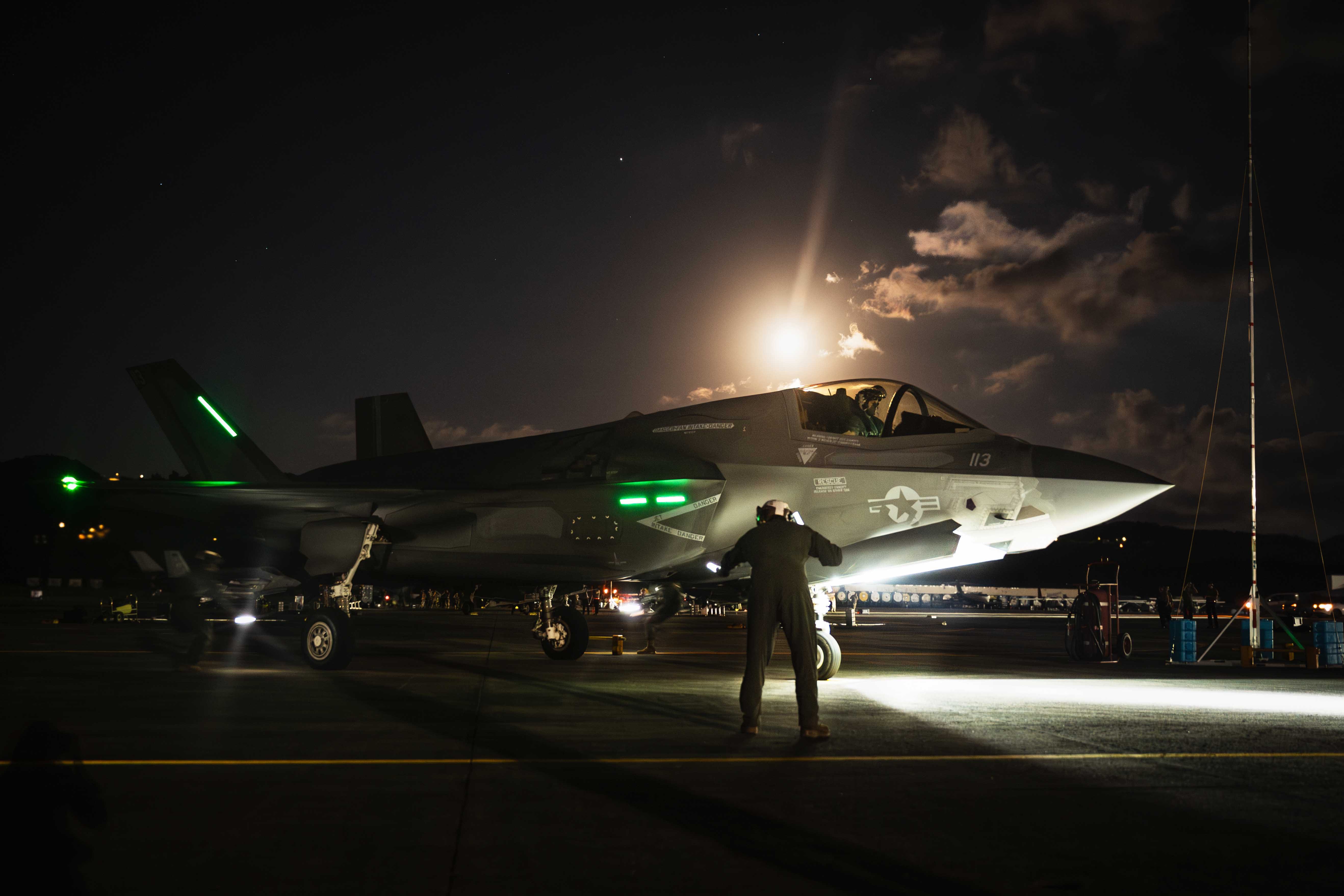
Inside the Caracas Air Plan
Let me tell you about Operation Absolute Resolve—a night when aviation wrote a bold new chapter. On 3 January 2026, the United States greenlights an “apprehension operation” meant to snatch Venezuelan President Nicolás Maduro right out of his capital and deliver him into U.S. custody.
This wasn’t just a military raid; it was a masterclass in joint power, with military, intelligence, and law enforcement all in the mix. Months of groundwork went into mapping Maduro’s every move—his habits, his routes, his patterns—until the planners knew his world better than he did.
But what truly sets this apart in the annals of airpower is the sheer scale and precision of the strike. Imagine 150 aircraft—F-22s, F-35s, F/A-18s, B-1 bombers, electronic attack jets, drones, and a swarm of helicopters—launching from 20 land and sea bases, all converging on Caracas in the dead of night.
Every jet, every rotor, every crew member choreographed down to the second. At exactly 2:01 a.m., the assault force touched down in the city’s heart, shielded by a wall of American airpower, and by 2:29 a.m., they were gone; Maduro and Cilia Flores in custody, en route to the USS Iwo Jima.
Not a single U.S. fatality, though some were wounded. All while commanders watched social media feeds live, treating every tweet and post as part of the operational landscape.
What makes this operation a watershed isn’t just the speed or the surprise, but the way aviation enabled an entire corridor, creating a bubble of safety for the assault team, and pulling off an extraction from the center of a hostile capital, all under the glare of a 21st-century information storm.
U.S. officials didn’t just claim a tactical win; they rolled out indictments, spoke openly of managing Venezuela’s future, and even signaled a new role for American oil companies. The message was unmistakable: this was airpower orchestrated for strategic, political effect.
Operation Absolute Resolve didn’t just push the envelope. It folded it into a new shape, showing the world that, with the right planning and integration, the U.S. could deliver shock, control, and outcome in the blink of an eye. That, my friend, is aviation at the tip of the spear.
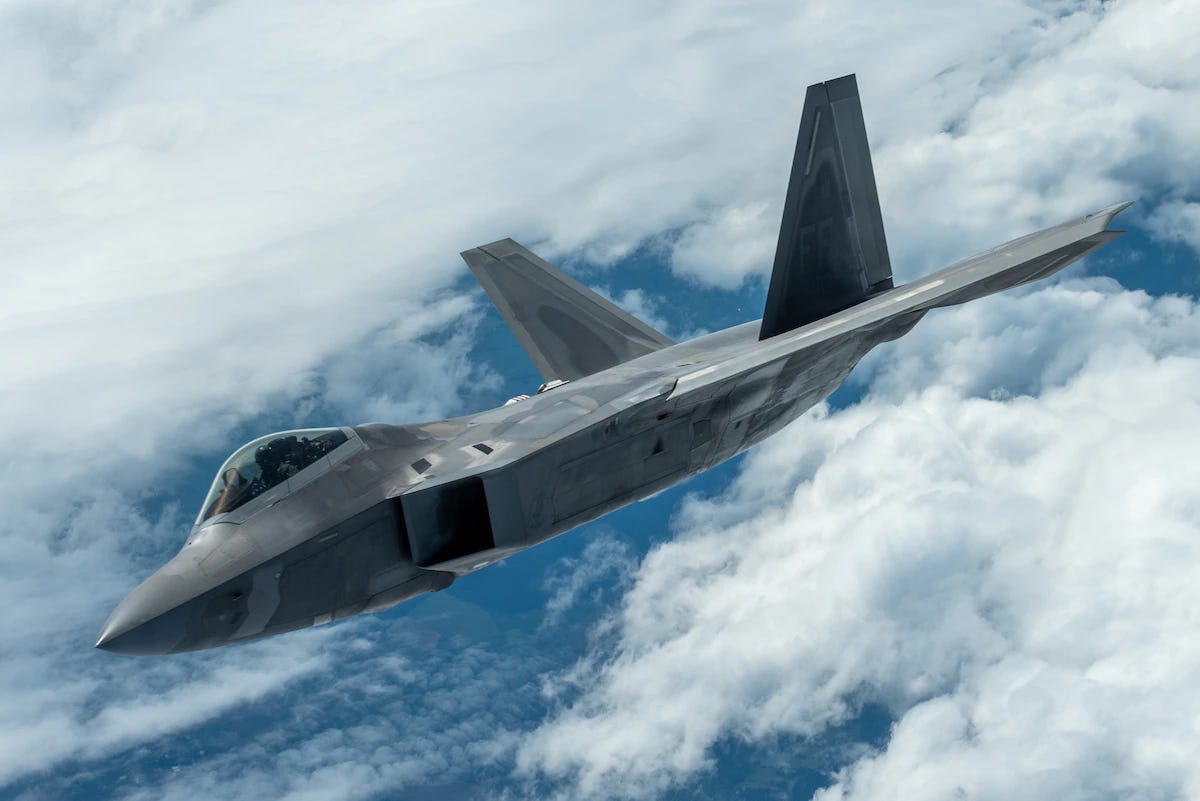
The EA-18 Growler and the F-22 Raptor Up Close
The Operation Absolute Resolve involved around 150 aircraft, including the F-22 Raptor, a Remotely Piloted Aircraft, F-35 Lightning lls, F/A-18 Super Hornets, EA-18 Growlers, and B-1 Lancers as well as at least one amphibious assault ship (Iwo Jima).
Let me share with you the rundown of the features of the Growler and the Raptor.
F-22 Raptor’s General characteristics
Primary function: air dominance, multi-role fighter
Contractor: Lockheed-Martin, Boeing
Power plant: two Pratt & Whitney F119-PW-100 turbofan engines with afterburners and two-dimensional thrust vectoring nozzles.
Thrust: 35,000-pound class (each engine)
Wingspan: 44 feet, 6 inches (13.6 meters)
Length: 62 feet, 1 inch (18.9 meters)
Height: 16 feet, 8 inches (5.1 meters)
Weight: 43,340 pounds (19,700 kilograms)
Maximum takeoff weight: 83,500 pounds (38,000 kilograms)
Fuel capacity: internal: 18,000 pounds (8,200 kilograms); with 2 external wing fuel tanks: 26,000 pounds (11,900 kilograms)
Payload: same as armament air-to-air or air-to-ground loadouts; with or without two external wing fuel tanks.
Speed: mach two class with supercruise capability
Range: more than 1,850 miles ferry range with two external wing fuel tanks (1,600 nautical miles)
Ceiling: above 50,000 feet (15 kilometers)
Armament: one M61A2 20-millimeter cannon with 480 rounds, internal side weapon bays carriage of two AIM-9 infrared (heat seeking) air-to-air missiles and internal main weapon bays carriage of six AIM-120 radar-guided air-to-air missiles (air-to-air loadout) or two 1,000-pound GBU-32 JDAMs and two AIM-120 radar-guided air-to-air missiles (air-to-ground loadout)
Crew: one
Unit cost: $143 million
Initial operating capability: December 2005
Inventory: total force, 183
EA-18G Growler’s Specifications
Primary Function: Airborne Electronic Attack
Contractor: The Boeing Company
Date Deployed: First flight in October 2004. Initial operational capability in September 2009 with first deployment for VAQ-132 in November 2010.
Unit Cost: $67 million
Propulsion: Two F414-GE-400 turbofan engines. 22,000 pounds (9,977 kg) static thrust per engine
Length: 60.2 feet (18.5 meters)
Height: 16 feet (4.87 meters)
Wingspan: 44.9 feet (13.68 meters)
Weight: Weight empty: 33,094 lbs; Recovery weight: 48,000 lbs
Ceiling: 50,000 feet
Range: Combat: 850+ nautical miles with two AIM-120, three ALQ-99 TJS, two AGM-88 HARM, two 480 gallon external fuel tanks
Crew: Two
Armament: Two AIM-120, two AGM-88 HARM, three ALQ-99 TJS
Allied Lesson: Integration Wins
This operation wasn’t just about snatching a high-value target. It was the U.S. showing it can quietly build a regional joint task force, quietly position major naval and air muscle, and then spring into action with surgical timing when the moment is right.
The whole thing was months in the making, a Caribbean buildup culminating in the creation of Joint Task Force Southern Spear, a war room designed for the kind of coordination that turns plans on a map into real, kinetic action.
For U.S. power, the headline isn’t just the hardware, but the ability to mass and integrate across domains. The arrival of the USS Gerald R. Ford in November was a clear signal, upping the tempo with more room for sorties, alongside the Iwo Jima Amphibious Ready Group, six destroyers, and two cruisers ready to unleash hundreds of missiles. They are all tied together by a special operations mothership.
That’s more than firepower. It’s orchestration: jammers, surveillance, strike aircraft, helicopters, and cyber teams all playing their part to disrupt and overwhelm defenses.
Allies watching this unfold will see the real magic was in the “how.” The operation hinged on sharp intelligence, solid ground partnerships, and tactical advantages; favorable weather, quiet routes, and timing that left no margin for error.
The message for any partner or ally is clear: success in the new era isn’t just about platforms, but about building networks and seizing those fleeting windows of opportunity.
The takeaway? The next big contest won’t begin at the target. It’ll start with whoever can build the right team, gather the best intel, and act first when the clock starts ticking.
This Week in Aviation History
16 January 1957 Operation POWER FLITE
On January 16, 1957, five B-52 Stratofortresses thundered off the runway at Castle Air Force Base, launching Operation POWER FLITE—a nonstop, globe-circling flight that would push the limits of airpower. Forty-five hours and nineteen minutes later, three of those bombers touched down at March Air Force Base, having carved a 24,325-mile path through the sky at a relentless 534 miles per hour, proving that no corner of the world was beyond reach.
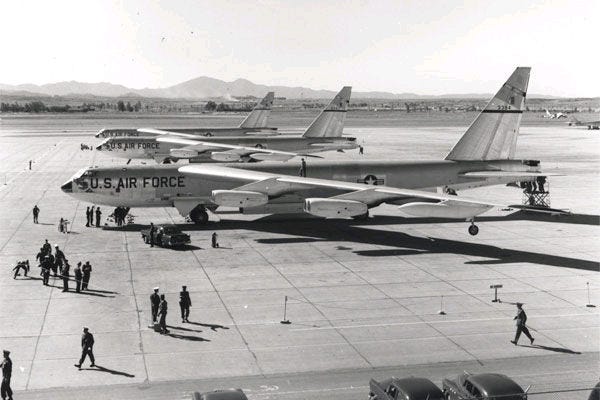
Inside the Operation POWER FLITE
Let me spin you a yarn about Lucky Lady III, the lead bird on Operation POWER FLITE. Up front was Lieutenant Colonel James H. Morris (a man who’d already made history as co-pilot aboard Lucky Lady II), the B-50 that circled the globe in ’49.
Riding with him this time was Major General Archie Old, Jr., boss of the 15th Air Force, adding a bit more brass to the cockpit. Out of five Stratofortresses that launched, three were primaries and two flew as spares, each with a nine-man crew; three pilots, two navigators, and a whole lot of skill packed into every seat.
Now, circling the world in a jet bomber wasn’t just point-and-shoot. Four inflight refuelings from more than a hundred KC-97 Stratotankers kept those B-52s airborne, engines roaring over oceans and continents.
Not everything went according to plan. La Victoria, one of the primaries, hit bad luck with ice in its refueling port and had to peel off to Goose Bay. Another, a spare, split from the formation as planned over North Africa and set down in England.
In the end, three B-52s made the full round-the-world run. General Curtis LeMay himself handed all 27 crew who completed the mission the Distinguished Flying Cross, and the wing took home the Mackay Trophy for the year’s most meritorious flight.
Lucky Lady III eventually retired to the Air Force museum, while her fellow travelers found their way to The Boneyard. Hollywood even gave the mission the big-screen treatment with “Bombers B-52.” The 93rd Bombardment Wing was the first to fly the mighty Stratofortress, an aircraft that needed six for a bombing run and eight for reconnaissance—proof that legends aren’t just born, they’re crewed.
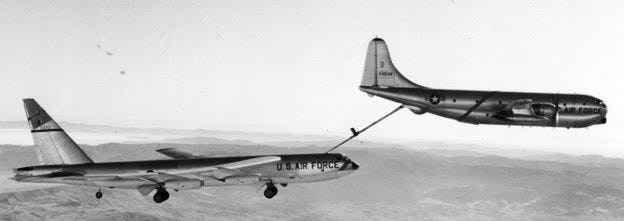
Under the Hood: Features of B-52 Stratofortress
The mighty B-52B Stratofortress, stretching nearly 157 feet from nose to tail and with a wingspan just shy of 185 feet, was no ordinary airplane. It stood over four stories tall, its high-mounted wings giving just enough clearance for the engines, which hung in pairs from pylons like clusters of thunder waiting to be unleashed.
Those wings, swept back at nearly 37 degrees, weren’t just for show. They gave the B-52 its unmistakable silhouette and let it slice through the sky with a predatory grace. She was a heavyweight contender, tipping the scales empty at more than 164,000 pounds, but able to bulk up to a staggering 420,000 pounds when fully loaded for takeoff.
The early models packed eight Pratt & Whitney J57 turbojets, grouped in four pods under the wings. Each engine, an engineering marvel in its own right, boasted sixteen compressor stages and three turbines, delivering up to 11,400 pounds of thrust with water injection. It is a real kick in the pants for those five-minute sprints. The engines themselves were over thirteen feet long and weighed more than two tons each.
At altitude, the B-52B would cruise at over 520 miles per hour; faster than most folks realize for a bomber her size. She could top out at 630 miles per hour and had a service ceiling above 48,000 feet when loaded with bombs, climbing even higher on a ferry mission. Range? With her tanks topped off, she could fly 7,400 miles, nearly a third of the way around the planet—and with inflight refueling, the world was truly within reach.
For defense, she packed a tail turret bristling with four .50-caliber machine guns, later swapped for 20mm cannons on some birds, spitting out more than 4,000 rounds per minute. And when it came to payload, the B-52B could haul 43,000 pounds of bombs—enough for 27 thousand-pounders, or, for strategic missions, nuclear warheads that could change the course of history.
Boeing built 744 Stratofortresses in all, rolling the last one out in Wichita in 1962. Even today, more than 70 B-52Hs are still flying—testament to the bomber’s legendary engineering and the enduring legacy of America’s long-range airpower.
Operation POWER FLITE’S Lasting Legacy
Today, the United States and its allies are once again navigating the skies of great power competition, where the art of deterrence—nuclear and conventional alike—has returned to center stage.
At the heart of this strategy stands the nuclear triad: submarine-launched ballistic missiles, land-based ICBMs, and the enduring B-52 bombers, whose presence signals both resolve and reach. These bombers, icons in their own right, form a critical leg of our nuclear posture, enabling extended deterrence that reassures allies and deters would-be aggressors.
The legacy of global reach isn’t just history. It’s a living mission. The POWER FLITE crews proved decades ago that America could answer aggression anywhere, anytime, and that standard endures.
Just last December, B-1 bombers from Ellsworth AFB joined South Korean and Japanese airmen in a show of force after North Korea’s missile launch over Japan. More recently, a B-52 from the 5th Bomb Wing, deployed to Guam, flew freedom of navigation missions over the South China Sea, flanked by Philippine fighters.
Each sortie, each formation, is a reminder that the spirit of POWER FLITE lives on—our aircrews still project strength across the globe, providing the shield of deterrence in a restless world.
In Case You Missed It
Photo Outlet
Every issue of Hangar Flying with Tog gets you a free image that I’ve taken at airshows:
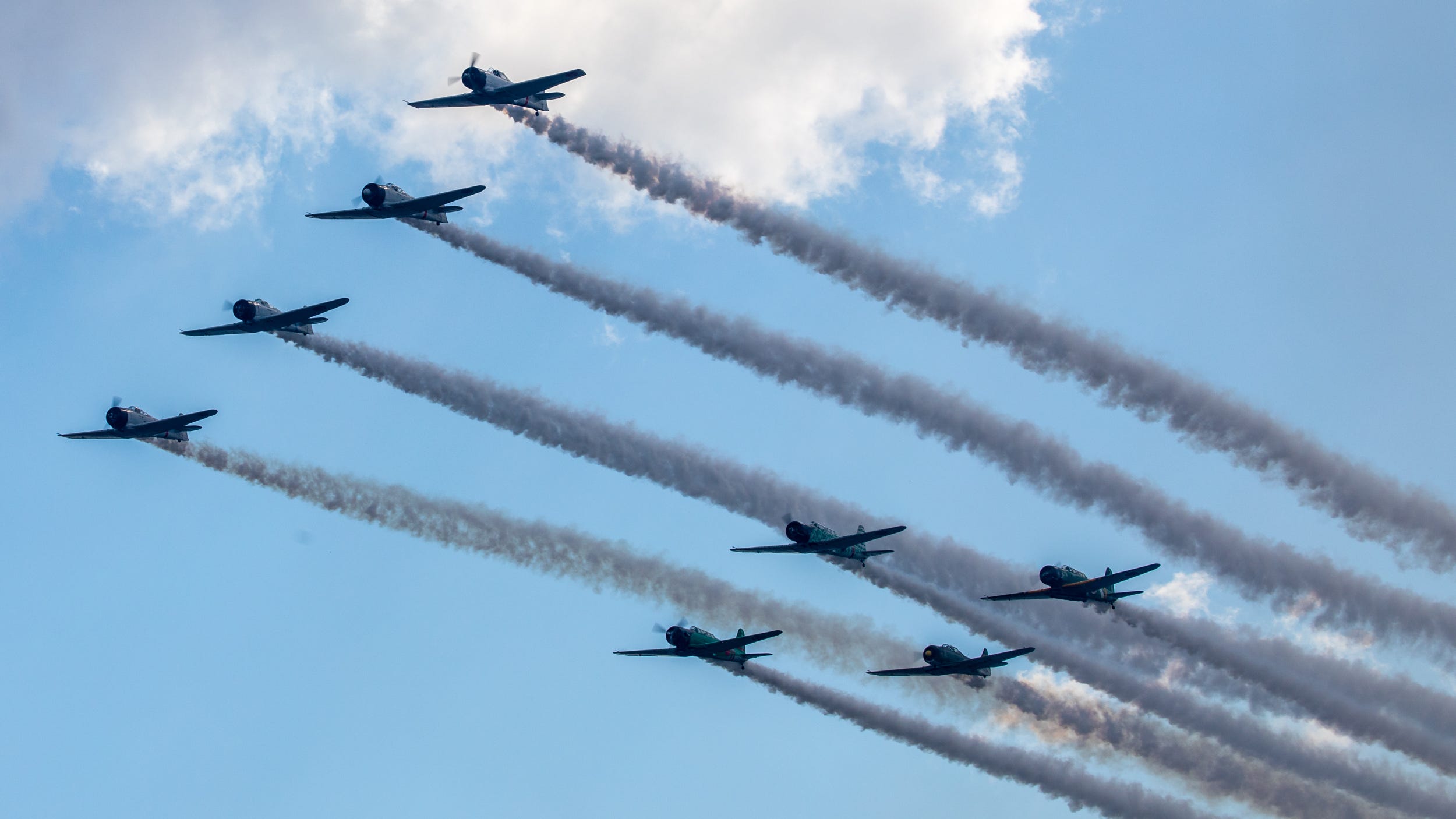
Feel free to use these photos however you like, if you choose to tag me, I am @pilotphotog on all social platforms. Thanks!
Post Flight Debrief
Like what you’re reading? Stay in the loop by signing up below—it’s quick, easy, and always free.
This newsletter will always be free for everyone, but if you want to go further, support the mission, and unlock bonus content like the Midweek Sortie, consider becoming a paid subscriber.
Your support keeps this flight crew flying—and I couldn’t do it without you.
– Tog