

F-35Bs Shot Down Hostile Drones Over Jordan and The Maiden Flight of B-45 Tornado
From B-45 jet bombers to F-35B stealth fighters, airpower evolves when new threats expose old assumptions.
I am deeply proud of the professionalism and bravery of our Armed Forces personnel who have in recent days, successfully taken action across the region to protect our allies and defend British interests.
—Defence Secretary John Healey MP
Mission Briefing
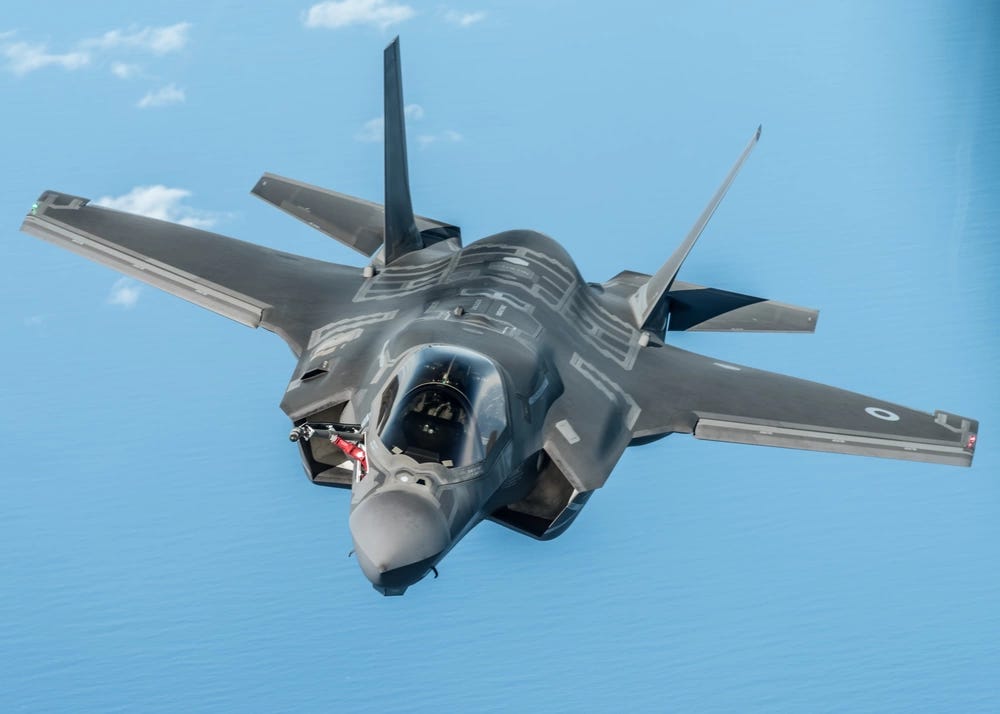
The UK Ministry of Defence has revealed that its F-35B Lightning stealth fighters intercepted and took down hostile drones over Jordan, moving swiftly to safeguard the skies. In response, new defensive measures are now being put in place to further protect RAF Akrotiri, underscoring the commitment to keeping allied airspace secure.
New Defences are Deployed for RAF Akrotiri
Amid mounting speculation and rising regional tensions, Prime Minister Keir Starmer took to social media just after 1600 UTC on 3 March 2026, to confirm what many in the British press had guessed: the Royal Navy is dispatching HMS Dragon, a Type 45 air defense destroyer, along with Wildcat helicopters equipped for counter-drone warfare, to shield Cyprus from further aerial threats.
The Ministry of Defence swiftly followed with an official statement, revealing that RAF F-35B Lightnings operating from Akrotiri had already intercepted and destroyed drones over Jordan—part of a larger effort since six F-35Bs were sent to the base last month.
Defence Secretary John Healey underscored the urgency: “We are moving quickly to further reinforce our defensive presence in the Eastern Mediterranean. HMS Dragon brings world-class air defence capability, and our Wildcat helicopters are armed with Martlet missiles to counter the growing drone threat.
I am deeply proud of the professionalism and bravery of our Armed Forces personnel who have in recent days, successfully taken action across the region to protect our allies and defend British interests.”
These F-35B engagements join a series of recent actions, including a Royal Air Force Typhoon from the UK-Qatar 12 Squadron downing an Iranian drone headed for Qatar, and a UK counter-drone unit in Iraq neutralizing threats to coalition airbases.
On 01 March, RAF Akrotiri itself was hit by a one-way drone—likely launched by Iran or a regional proxy—causing only minor damage, with several other drones stopped before reaching the base.
Despite criticism aimed at the government for not preventing the attack, it’s worth noting that even the most fortified sites in the region have struggled to intercept every threat. In response, the UK has bolstered Akrotiri with additional air defense radars and counter-UAS systems, though the full extent of these reinforcements remains undisclosed.
The Wildcat HMA2 helicopters, proven in previous carrier strike group operations, are set to join HMS Dragon. Possibly embarking as the destroyer sails past RNAS Yeovilton, or arriving sooner via strategic airlift.
The stage is set for a robust British defense posture, as the UK moves decisively to protect its interests and allies across the Eastern Mediterranean.
The Features of the HMS Dragon and the RAF’s F-35B Lightning
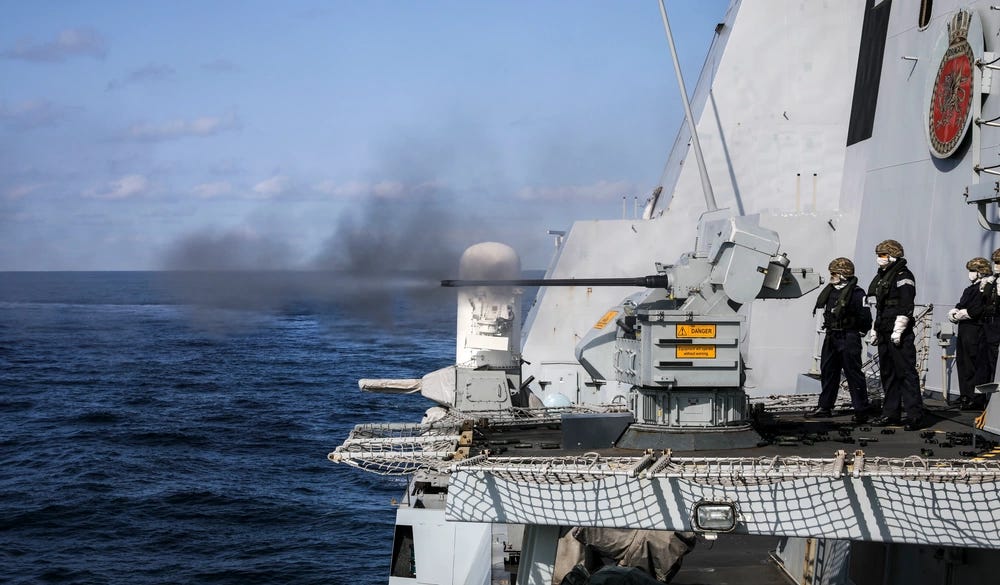
HMS Dragon, with the bold red Welsh dragon gracing her bow, cuts a distinctive figure among the world’s warships. It is a symbol of modern British naval power. She’s one of six Daring-class, Type 45 air defence destroyers, engineered for the threats of today and tomorrow.
While her name conjures images of raw destruction, HMS Dragon is as adaptable as she is fearsome: her missions range from intercepting pirates and defending against missile attacks to delivering vital humanitarian aid, all under the command of a 200-strong crew based out of Portsmouth.
The centerpiece of Dragon’s arsenal is the Sea Viper missile system: a technological predator capable of tracking, targeting, and destroying everything from drones to cruise missiles and fighter jets.
In just ten seconds, eight missiles can leap from her decks, and up to sixteen can be guided at once, striking targets over seventy miles away. Her radar, scanning out to 250 miles, tracks hundreds of threats at once, giving Dragon a watchful eye over sea and sky alike.
But she’s more than missiles. Dragon bristles with close-in weapons: Phalanx 20mm cannons for last-ditch defense, a 4.5-inch naval gun, 30mm auto-cannons, miniguns, and a battery of machine guns.
Her flight deck and hangar are ready to launch a Merlin helicopter: an all-weather hunter for maritime patrol, rescue, or offensive missions at a moment’s notice.
Overhead, the F-35B Lightning takes British airpower into the future. With stealth, advanced sensors, and mission systems, this short-takeoff-and-vertical-landing jet can fight air-to-air, strike ground targets, conduct electronic warfare, and share a live picture of the battle with other forces.
Whether launching from carriers or remote airstrips, Lightning brings the unseen edge to every fight; making the team of ship and aircraft a formidable force on today’s unpredictable front lines.
How Akrotiri Became the New Frontline of Allied Airpower
The UK’s swift move to confirm that RAF F-35B Lightnings shot down drones over Jordan—followed by deploying the formidable HMS Dragon and Wildcat helicopters with Martlet missiles to bolster RAF Akrotiri—signals a sea change in allied airpower: the defense of the base itself has returned to the front line.
No longer just a rear-area sanctuary, Akrotiri now stands as a vital node in the coalition’s Eastern Mediterranean network, a linchpin for U.S. and allied operations, refueling, intelligence gathering, and rapid strike response as regional tensions rise.
For the United States, this is burden-sharing brought to life. The UK’s reinforcement of Akrotiri helps shield not just the base, but the entire connective tissue of coalition airpower that holds deterrence together.
It’s a reminder that fifth-generation fighters aren’t just for stealthy strike missions. They’re now essential players in the counter-drone fight, their sensors, engagement discipline, and quick reaction ability strengthening the allied kill chain whenever drone threats surge.
Across the alliance, the lesson is clear: even the cheapest one-way drones can have outsized impact, disrupting operations and threatening runways unless partners layer their defenses; combining fighters in the air, ships like HMS Dragon with Sea Viper missiles at sea, helicopters, ground-based counter-UAS systems, and shared early warning.
Akrotiri’s defense is more than a local skirmish. It’s a rehearsal for a future where the alliance must ask itself a hard question: how many vital bases can truly be kept open when the skies are thick with drones and missiles?
This Week in Aviation History
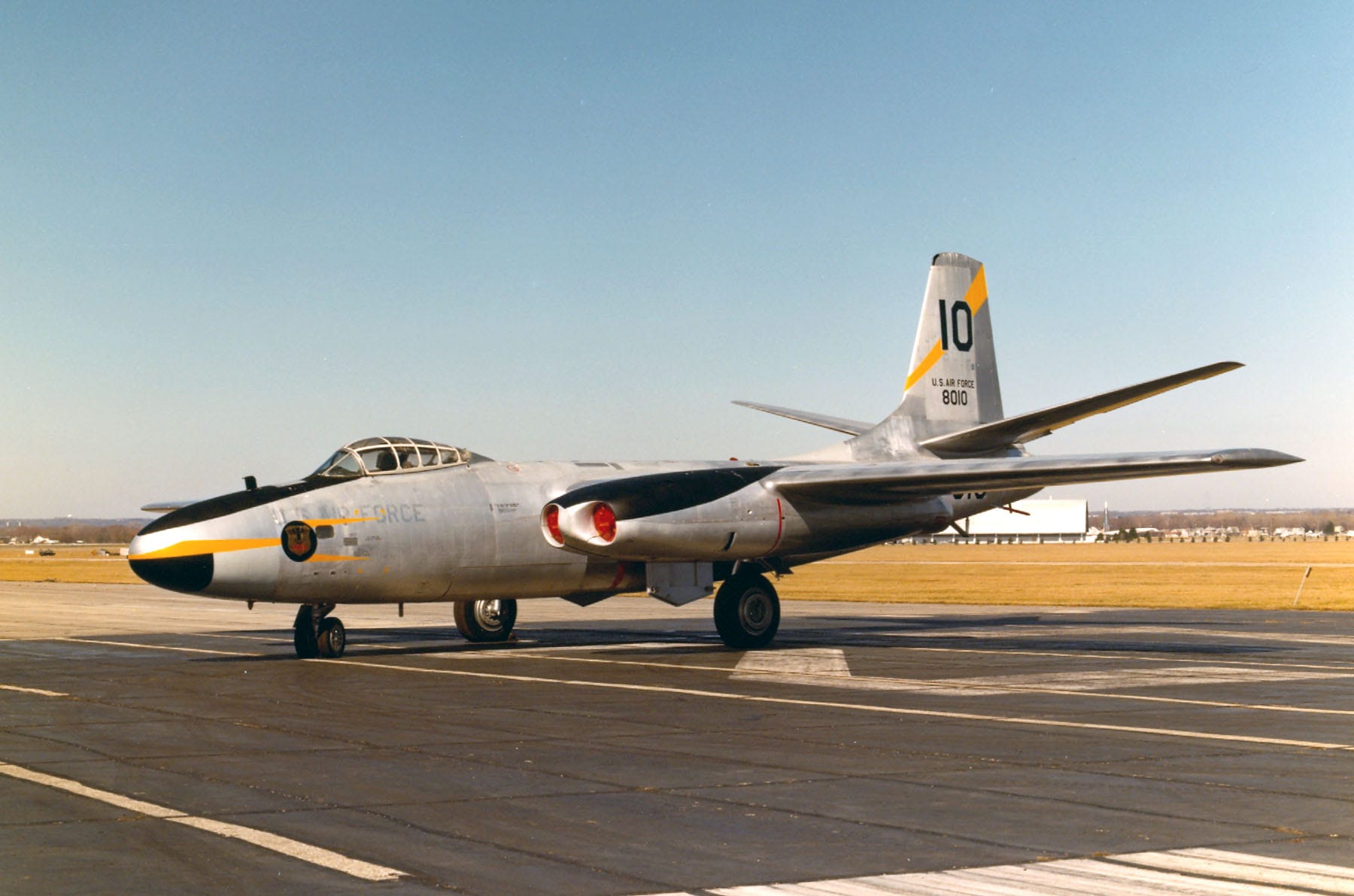
17 March 1947—a date that marked a turning point in the skies. That morning, the North American B-45 Tornado thundered aloft on its maiden flight, ushering in a new era for American airpower.
As the nation’s first operational jet bomber, the B-45 didn’t just break speed records. It broke new ground in how wars would be fought, carrying the torch for both bombing runs and high-stakes reconnaissance at the dawn of the Cold War. Its silhouette on the tarmac was more than metal and engines; it was a signal that the jet age had truly arrived.
The First Flight of the North American B-45 Tornado
As the final chapters of World War II unfolded, a new threat appeared on the horizon: Nazi Germany’s Arado 234 jet bomber. This sleek machine could outrun and outclimb any Allied fighter, signaling a leap in technology that sent shockwaves through American command.
The Luftwaffe’s Me 262 fighter had already proven itself a world-beater, and now the Arado 234 was rewriting the rules for bombing and reconnaissance. Britain answered with the Gloster Meteor, darting after V-1 flying bombs, while the U.S. fielded the Lockheed P-80 Shooting Star; too late for the European front, but destined for the skies over Korea.
Against this backdrop, the B-45 Tornado was born. From drawing board to runway, three years ticked by, and by the time the Tornado took flight, the world was already peering ahead to even faster bombers like the B-47 Stratojet and B-58 Hustler. Still, the B-45 earned its stripes.
In the Korean War, it flew both bombing and reconnaissance missions, slipping out mostly at night to avoid the lethal MiG-15s prowling the daylight skies. Later, the Tornado was upgraded to carry nuclear weapons, cementing its significance as the Cold War deepened.
Though retired in 1959 and soon eclipsed by faster, more advanced aircraft, the B-45 Tornado’s service was a bridge between eras—a jet that captured the urgency and innovation of its time, and proved that the race for the skies never truly ends.
The Anatomy of the B-45
With a top speed of 570 miles per hour and the ability to haul a 22,000-pound bomb load, the B-45 Tornado was a leap ahead. It is almost twice as fast as the B-29 Superfortress and able to carry a similar payload.
While the massive Convair B-36 “Peacemaker” could lift nearly 100,000 pounds, the B-45 traded brute strength for pure speed, and that made all the difference in the dawning jet age.
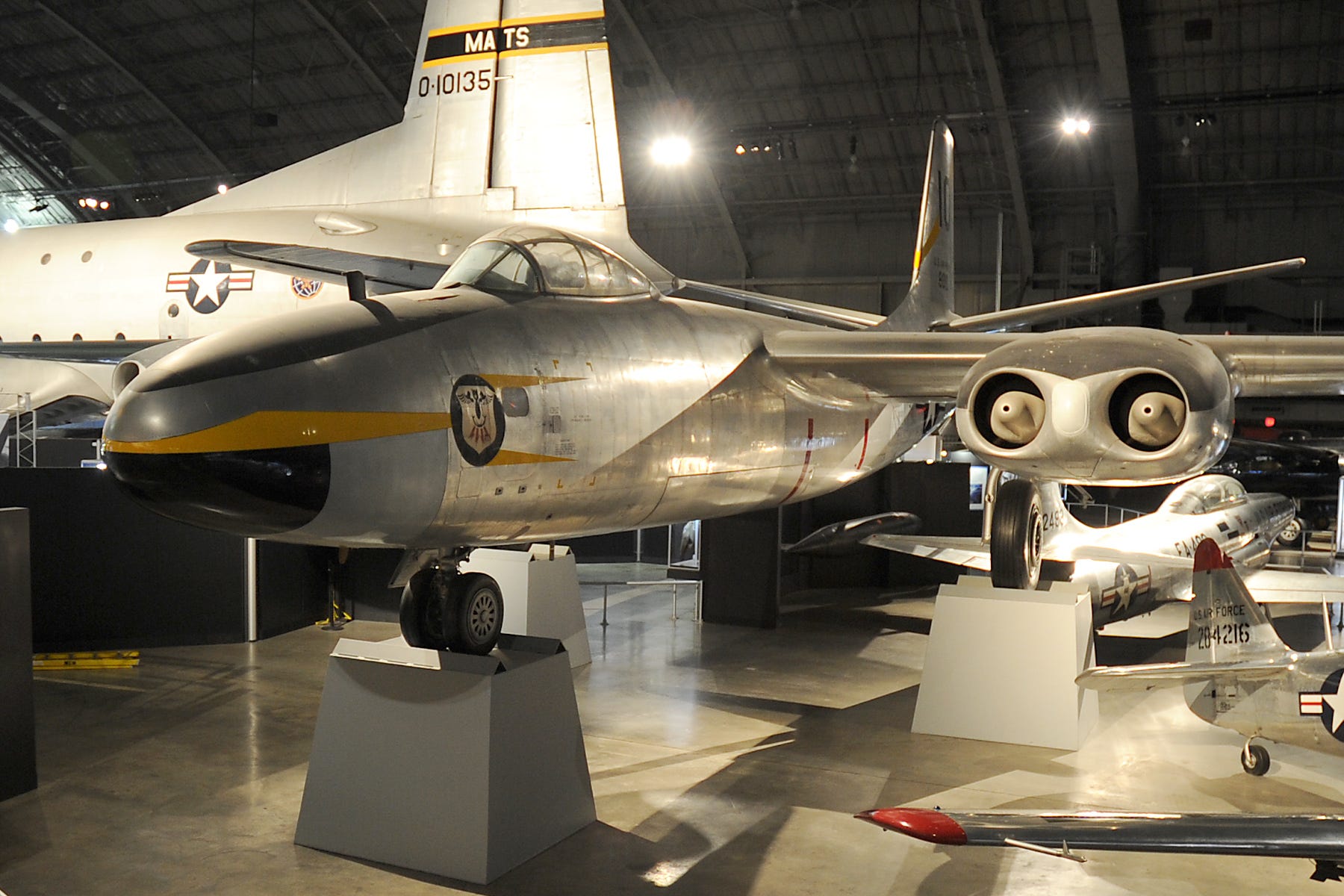
Armed with twin .50 caliber tail guns and crewed by four—a pilot, co-pilot, navigator/bombardier, and tail gunner—the Tornado was also the first jet bomber capable of aerial refueling, giving it a combat radius of 1,000 miles and the stamina to strike deep or slip away when it counted.
Stationed in Europe, the B-45 was ready for the unthinkable. It can deliver a nuclear payload right in the heart of the Cold War, standing as a silent deterrent against Soviet aggression.
Its silhouette, with straight wings and twin engine pods hanging from each side, looked dated even when new, but it soared above piston-engine fighters at altitudes up to 46,000 feet.
Only 143 were built, flown exclusively by the USAF and Britain’s RAF. And for a brief moment, the B-45 even found fame in Hollywood, appearing in films like War of the Worlds and Strategic Air Command; proof, perhaps, that legends can be both quiet and enduring.
TECHNICAL NOTES:
Armament: Two .50-cal. machine guns in the tail and 22,000 lbs. of bombs
Engines: Four General Electric J47s of 6,000 lbs. thrust each
Maximum speed: 570 mph
Range: 1,000 miles
Ceiling: 37,550 ft.
Span: 89 ft.
Length: 75 ft. 4 in.
Height: 25 ft. 2 in.
Weight: 110,000 lbs. maximum
The Tornado’s Enduring Flightpath
The true legacy of the B-45 Tornado is that it took jet bombers from blueprint to battle-ready, marking the moment when America’s airpower leapt from late-WWII dreams to Cold War realities.
The National Museum of the U.S. Air Force lists its many firsts: the first U.S. production four-engine jet bomber, the first jet to carry an atomic bomb, and—thanks to its RB-45 variant—the first multi-jet reconnaissance aircraft to refuel midair. These achievements didn’t just fill museum plaques; they shaped what strategic airpower would mean for the 1950s and beyond.
Combat quickly shaped the Tornado’s story. In Korea and the Far East, RB-45s proved the promise and peril of jet reconnaissance: fast and bold, but not invincible as enemy fighters and air defenses evolved. Pilots had to adapt, switching up tactics and timing, learning on the fly what it meant to survive in the new jet age.
That’s the enduring lesson of the B-45: real innovation isn’t finished at the rollout ceremony. The Tornado’s value came from how it grew under pressure: pioneering airframes, refueling in the sky, and a new way of thinking about basing and reconnaissance.
From the B-45’s first jet-powered leap to today’s stealth fighters, one truth remains: airpower endures only by evolving faster than the threats it faces.
In Case You Missed It
Photo Outlet
Every issue of Hangar Flying with Tog gets you a free image that I’ve taken at airshows:
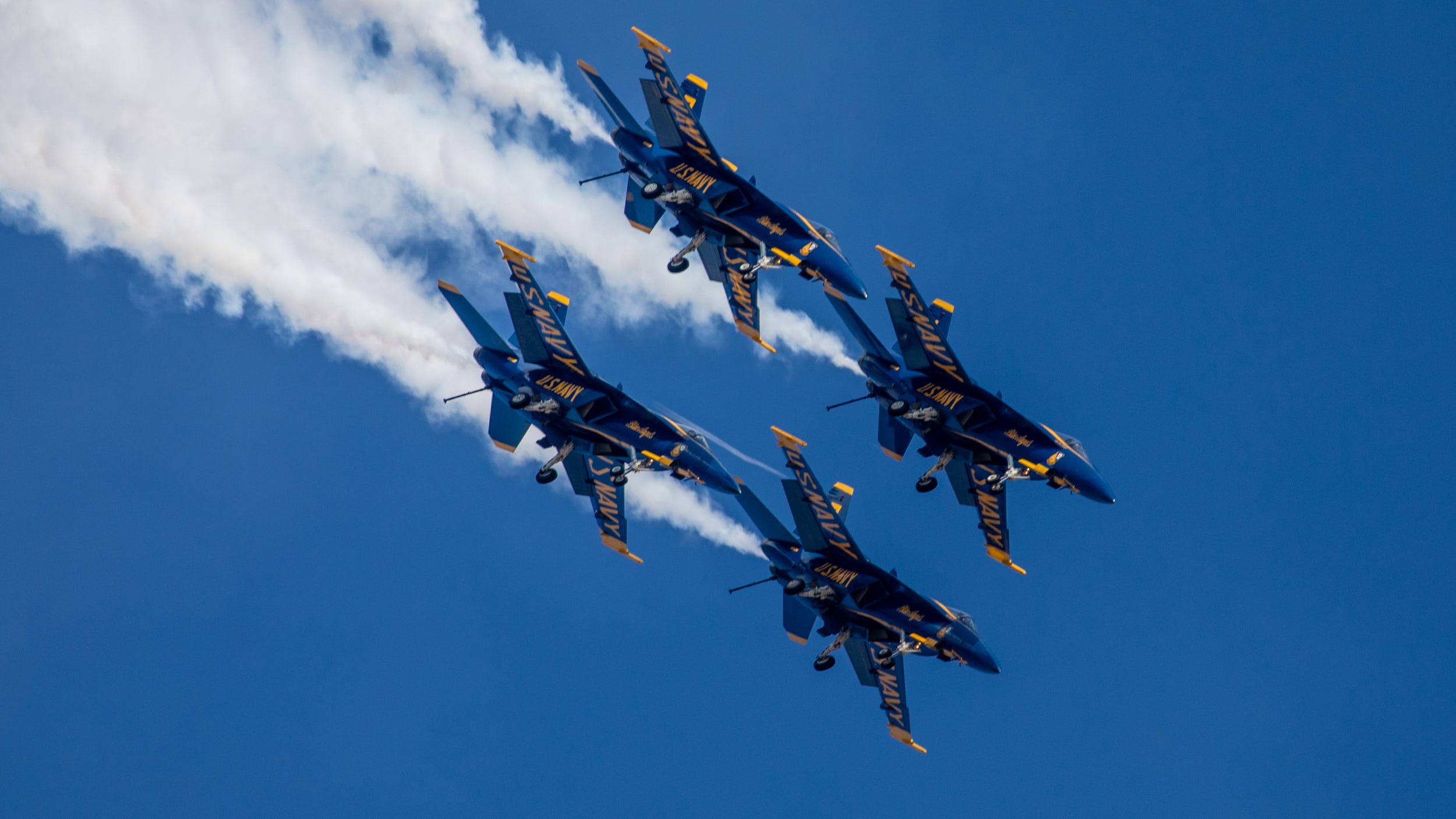
Feel free to use these photos however you like, if you choose to tag me, I am @pilotphotog on all social platforms. Thanks!
Post Flight Debrief
Like what you’re reading? Stay in the loop by signing up below—it’s quick, easy, and always free.
This newsletter will always be free for everyone, but if you want to go further, support the mission, and unlock bonus content like the Midweek Sortie, consider becoming a paid subscriber.
Your support keeps this flight crew flying—and I couldn’t do it without you.
– Tog