

F-14D Tomcat Might Come Back through the “Maverick Act,” and Memphis Belle completed its 25th combat mission during WWII
From the Memphis Belle to the F-14 Tomcat, some aircraft do more than survive combat — they become legends, museum icons, and movie stars.
The Maverick Act just passed the Senate, allowing the US Navy to transfer a trio of retired F-14D Tomcats and necessary spare parts to the U.S. Space and Rocket Center.
—@OSINTtechnical Twitter Post
Mission Briefing
With the Maverick Act cleared for takeoff, three U.S. Navy F-14D Tomcats are set to land at the Space and Rocket Center in Huntsville, Alabama—where, just maybe, one legendary bird might roar back to life and dance in the skies once more.
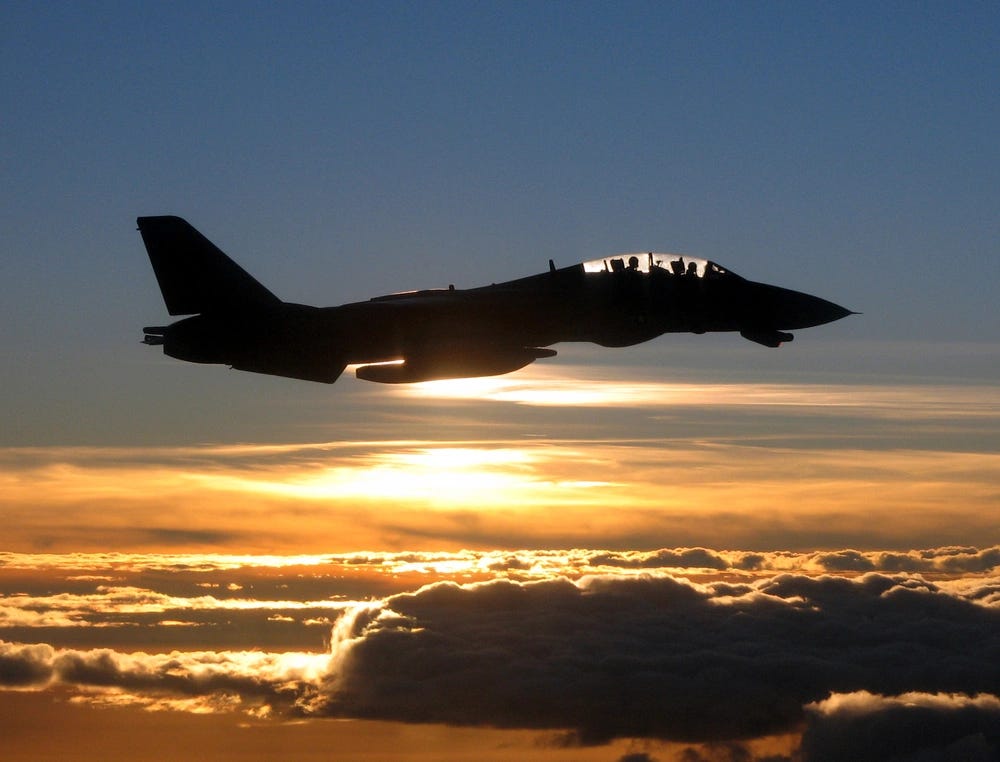
The Maverick Act
The Senate floor is silent, but the Maverick Act rockets through with unanimous consent. It is a rare moment of unity that kickstarts the next chapter of an American aviation legend.
Now, with the House preparing for its own vote as of May 4, all eyes are on Capitol Hill. If this bill clears its final hurdle, it’ll give the Secretary of the Navy the green light to hand over not one, not two, but three F-14D Tomcats to the U.S. Space and Rocket Center Commission in Huntsville, Alabama.
For those who haven’t strolled through its Saturn V shadows, the U.S. Space & Rocket Center is more than just a museum. It’s the largest shrine to space on this planet, a cathedral dedicated to the dreams of flight and exploration since 1970.
The bill doesn’t just talk in generalities either; it calls out the three Tomcats by name, or rather, by Bureau Number: 164341, 164602, and 159437. These are the chosen birds, set to trade carrier decks for museum floors.
But don’t expect these Tomcats to become warbirds again. The legislation is crystal clear: they’re grounded for good when it comes to combat. No missiles, no dogfights, no tricks up their wings. The Secretary of the Navy isn’t on the hook for any repairs or modifications, either. What comes with the jets is what you get, though the package does include a trove of manuals and any leftover spare parts the Navy can spare.
Here’s where the story takes a turn worthy of a Hollywood script. For the first time, there’s an official mention that one of these Tomcats could actually fly again. The Secretary will provide enough spare parts from existing Navy stock to potentially get one bird back in the air, or at least looking sharp in a static display. But if you’re picturing a team of Navy mechanics wrenching away, think again. From this point on, it’s all in the Commission’s hands.
They can seek out nonprofit partners. Think of what the Collings Foundation did for the F-4D Phantom, the only one of its kind still flying in the U.S., to restore, maintain, and even fly the Tomcat for airshows and commemorative events. The Navy’s role ends at the handoff; every dime, every bolt, every drop of sweat after that belongs to the Commission.
And in true aviator fashion, the bill makes it clear: no cost to Uncle Sam. Every expense—transfer, compliance checks, restoration, operation, maintenance—is on the Commission’s tab.
The price of preserving a legend? Worth every penny.
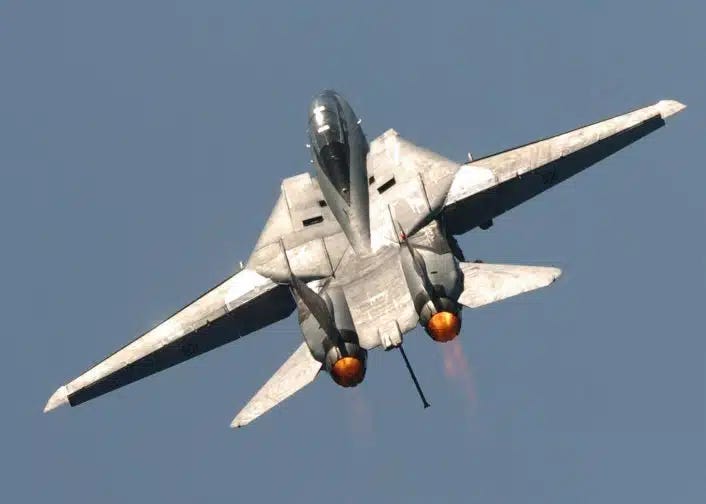
Tomcat: A Hollywood Icon
Picture this: the legendary F-14 Tomcat, wings folded and sun-bleached, slumbers beneath the desert sky. A relic fiercely protected by Uncle Sam. Ever since the U.S. Navy hung up its flight suit in 2006, getting near these cats—or their spare parts—has been like breaching Fort Knox. Washington’s kept a tight grip, making sure not a single bolt ends up in Iranian hands, the only other Tomcat pilots left in the world.
When those jets retired, crews stripped out vital organs before rolling them out to the boneyard. Anything left behind? Often crushed, melted, or lost to history. Bringing one of these beauties back to life isn’t just a matter of dusting off the sand.
It’s a Herculean feat. Deep, painstaking inspections would be just the start, with every rivet and wire tested before the FAA even thinks about giving a thumbs-up.
After two decades baking in the Mojave, the road to revival is long and paved with dollar signs. The Tomcat was never cheap to run, and with spare parts rarer than a clean flight suit after a dogfight, regular airshows are probably a pipe dream. Still, imagine the roar at a heritage flyby. Maybe, just maybe, that day will come, someday down the line.
Let us take a closer look at this legendary bird
Manufacturer:
Grumman Corporation
Type:
Carrier-based air superiority fighter
Crew:
Pilot and Radar Intercept Officer
Powerplant:
Two 27,800 lb. General Electric F110-GE-400 afterburning turbofans
Dimensions:
Length: 62 ft., 8 in.
Height: 16 ft.
Span (max spread): 64 ft., 1 in.
Weight:
Empty: 43,735 lb.
Gross: 74,350 lb.
Performance:
Max Speed: 1,544 mph at 40,000 ft.
Ceiling: 55,000 ft.
Armament:
One 20mm cannon; AIM-7 Sparrow; AIM-9 Sidewinder; AIM-54 Phoenix missiles
F-14 Tomcat: Ghosts of the Desert Hangar No More
The F-14D Tomcat, that wildcat of the carrier deck, might just roar back to life—but not as a warbird, not this time. Under the so-called MAVERICK Act, the U.S. isn’t gearing up to put the Tomcat back into combat, but to let it fly as a symbol, a living legend.
Word is, three F-14Ds could be handed over to the U.S. Space & Rocket Center Commission. One of them? Destined for a second act in the skies, thrilling crowds at airshows and remembrance flights; no missiles, just memories.
For America, this isn’t about muscle. It’s about meaning. The F-14D, the apex predator of Tomcats, sports twin engines, shape-shifting wings, and a cockpit built for two. Once, it prowled the fleet’s edge, ready to defend, with eyes on two dozen targets and the claws to strike six at once. The Smithsonian and the National Naval Aviation Museum call it a bridge, from Cold War standoffs to the last combat missions over Iraq in 2006.
So why bring one back? Because it’s living history. Seeing a Tomcat on the wing connects the next generation with the legends of the carrier deck, the grit of naval aviators, and the spirit of Top Gun.
In a world buzzing with digital distractions, a thundering flyby can still steal the show. If this all comes together, the F-14D will remind us: some stories don’t fade away. They take flight again, ready to inspire the future.
This Week in Aviation History
The Memphis Belle soared into legend, its crew embodying the grit and sacrifice of every bomber team that battled across the skies of Europe. They weren’t just flying missions. They were writing history, one harrowing sortie at a time. When the Belle touched down on American soil after its 25th mission, it became a living symbol of courage and hope for a world at war.
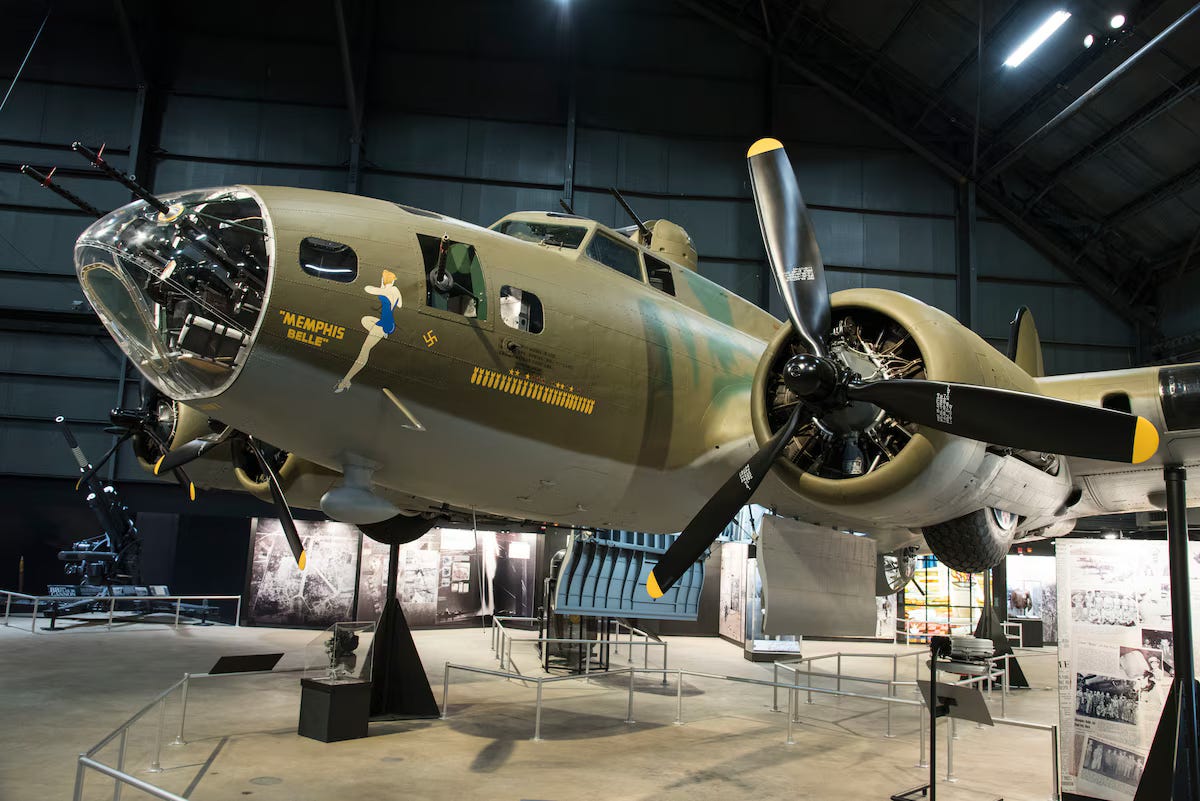
The Memphis Belle: An American Icon
The Memphis Belle was a B-17F heavy bomber flying out of Bassingbourn, England, with the 324th Bomb Squadron, 91st Bomb Group, right at the heart of the USAAF’s early bombing campaign over Europe.
From November ‘42 to May ‘43, the Belle and its crew braved flak and fighters on 25 missions, targeting enemy strongholds across Germany, France, and Belgium. But in true wartime fashion, things weren’t always by the book.
Sometimes the crew flew other B-17s, and sometimes other crews took the Belle into combat, so by the time the Belle’s crew hit their 25th, the plane itself had only logged 24; she completed her own 25th two days later with a different team aboard, and over fifty airmen would eventually have combat time in her storied fuselage.
The Memphis Belle’s crew was a snapshot of the Eighth Air Force. Young men aged 19 to 26, hailing from across America, including places like Washington, Indiana, Texas, and Connecticut.
Despite the legend, they didn’t always fly every sortie together; shifting assignments and the realities of war meant rotating in different copilots, top turret gunners, and waist gunners.
Names like Leviticus “Levi” Dillon, Eugene Adkins, Harold Loch, Bill Winchell, and E. Scott Miller all became part of the Belle’s narrative. Each mission was a gamble, a roll of the dice at 20,000 feet, and camaraderie was forged in the crucible of enemy skies.
As for her name, the Memphis Belle paid tribute to pilot Robert Morgan’s fiancée, Margaret Polk, from Memphis, Tennessee. It is a romance that made headlines but didn’t survive the war bond tour.
The Belle’s iconic nose art, inspired by a George Petty pin-up from Esquire magazine, was first painted stateside, then touched up and later repainted by the talented Col Tony Starcer at Bassingbourn, whose brushwork adorned several other 91st Bomb Group bombers and flight jackets.
In the grand, cinematic sweep of World War II aviation, the Memphis Belle wasn’t just a plane; she was a symbol. Her story woven from love, loss, and the courage of the crews who risked everything for each other.
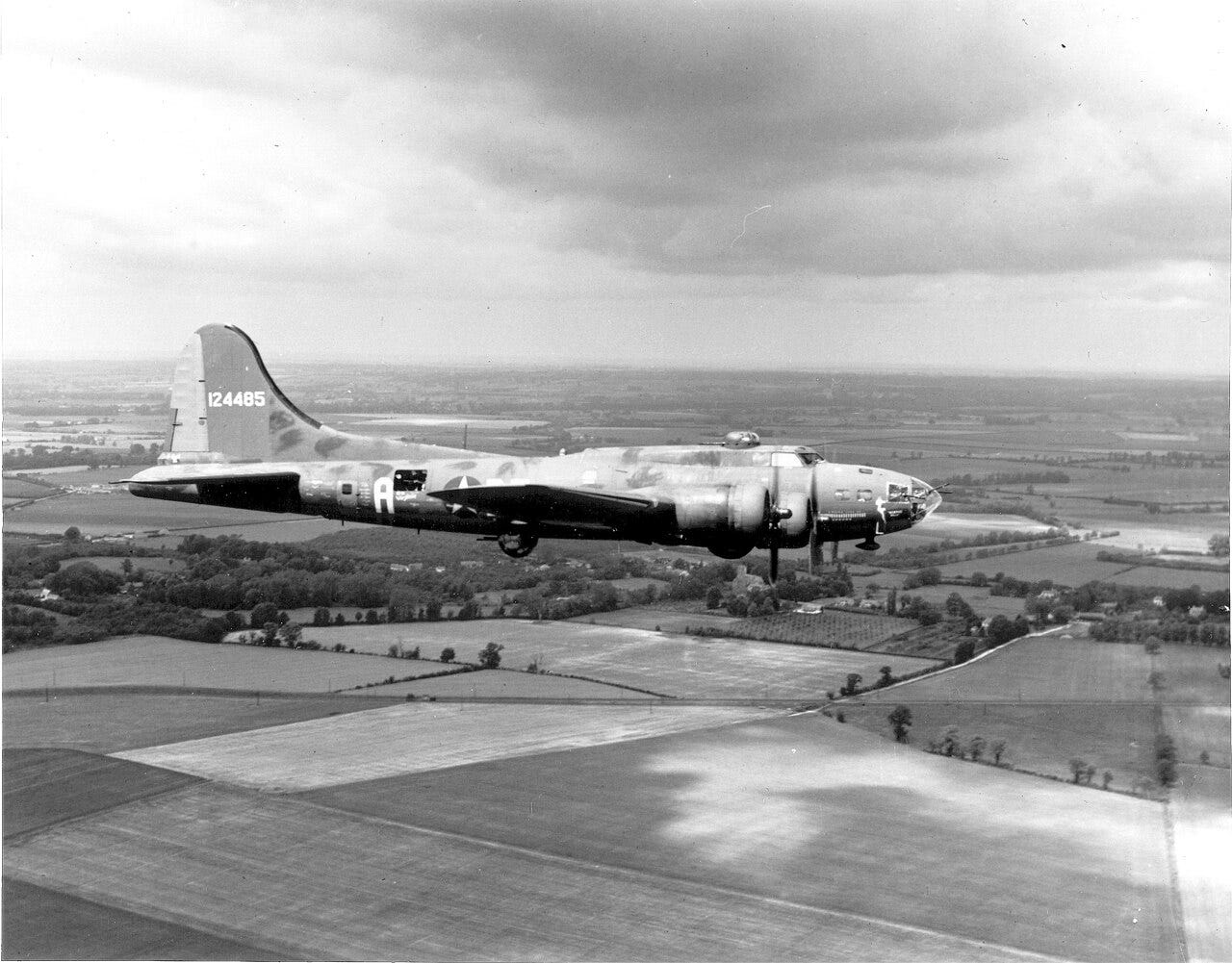
Fortress in the Sky: The B-17’s Battle-Ready Features Unveiled
The Boeing B-17 Flying Fortress carved its legend across every WWII combat zone, but it’s over the skies of Europe where its story truly soared. Alongside the B-24 Liberator, the B-17 became the backbone of America’s strategic bombing might, pounding German industry into submission.
Designed for high-altitude flying and speed, the Fortress bristled with guns, ready to fight its way through enemy defenses. Its advanced turbosupercharged engines let it haul bombs and crews up to 30,000 feet—a lofty perch for war. Powered turrets and flexible machine guns gave gunners a fighting chance, covering every angle as flak and fighters closed in.
Even though the prototype took to the skies back in 1935, there were only a handful of B-17s on hand when the U.S. entered the war in ‘41. That changed in a hurry: Boeing, Lockheed-Vega, and Douglas ramped up production, turning out thousands of Flying Fortresses.
The B-17F came first, fast and formidable, leading the charge in the early days of the bombing campaign. Later, the B-17G rolled off the lines, sporting a nose turret that made it even tougher in a head-on fight. By war’s end in May 1945, over 12,700 B-17s had been built, each one a testament to American industry and the courage of those who flew them.
TECHNICAL NOTES:
Crew: 10
Armament: Up to thirteen .50-cal machine guns and 8,000 lbs of bombs
Engines: Four 1,200 hp Wright R-1820-97 turbosupercharged radials
Maximum speed: 325 mph
Range: 2,800 miles
Combat radius: 600+ miles
Maximum ceiling: 37,500 ft
Empty weight: 35,728 lbs
Maximum gross weight: 48,720 lbs
Memphis Belle: An Enduring Call Sign for a Screen Icon
The Memphis Belle’s legend endures because it embodies not just the might of a B-17F Flying Fortress, but the raw survival, sacrifice, and humanity at the heart of World War II’s air war.
This bomber and her crew pulled off what seemed impossible: completing 25 grueling missions over Nazi-occupied Europe and making it home, when so many didn’t.
Braving relentless flak, enemy fighters, and the freezing, perilous altitudes, the Belle’s team became the first heavy bomber crew to finish their tour and fly back to the States, instantly turning them into symbols of hope and resilience.
The National Museum of the U.S. Air Force now calls the Belle and her crew timeless representatives of every man and woman who helped defeat Nazi Germany from the skies.
But the Memphis Belle’s journey didn’t end when the engines cooled. After combat, she toured America, rallying the home front and selling war bonds as a battered but unbroken icon.
Decades later, her story found new life in Hollywood’s “Memphis Belle,” introducing fresh eyes to the courage of young airmen facing one more dangerous mission.
Today, the real Belle sits proudly at the National Museum, more than just polished aluminum and rivets: a living memorial to the pilots, gunners, mechanics, and families forever changed by her legacy. She reminds us that planes can outgrow their blueprints and become vessels for a nation’s hopes, memories, and stories.
Each time we remember the Memphis Belle, we honor not just history’s machines, but the people whose lives they carried through war and into legend.
In Case You Missed It
What if the RAF had Tomcats? It almost happened:
Photo Outlet
Every issue of Hangar Flying with Tog gets you a free image that I’ve taken at airshows:
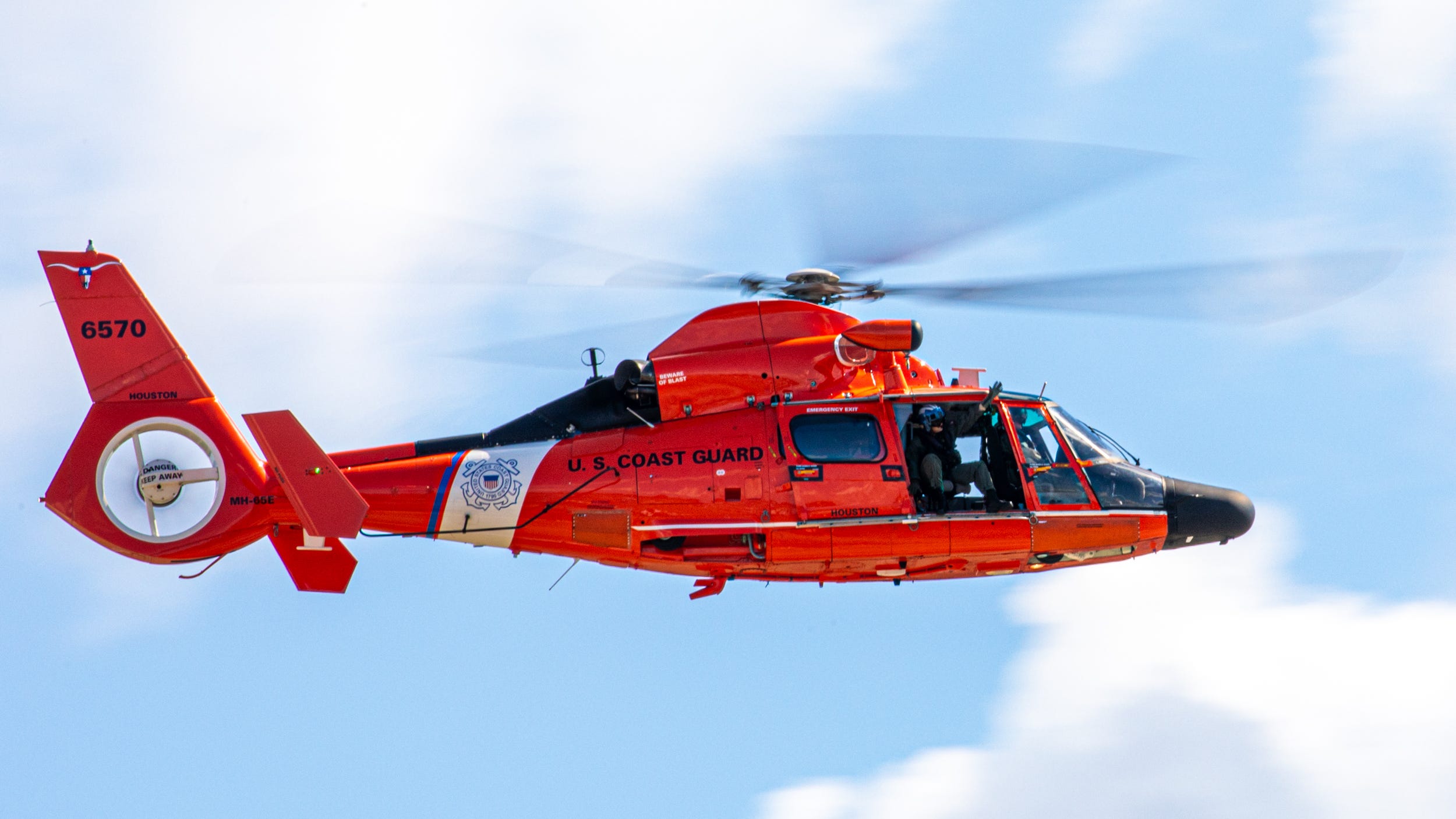
Feel free to use these photos however you like. If you choose to tag me, I am @pilotphotog on all social platforms. Thanks!
Post Flight Debrief
Like what you’re reading? Stay in the loop by signing up below—it’s quick, easy, and always free.
This newsletter will always be free for everyone, but if you want to go further, support the mission, and unlock bonus content like the Midweek Sortie, consider becoming a paid subscriber.
Your support keeps this flight crew flying—and I couldn’t do it without you.
– Tog
Hope the Maverick Act passes. Too bad we couldn't have done the same thing for the SR-71 Blackbird.