

Introducing Artemis III. Four astronauts. Three launches. Two dockings. One splashdown.
—NASA
Mission Briefing
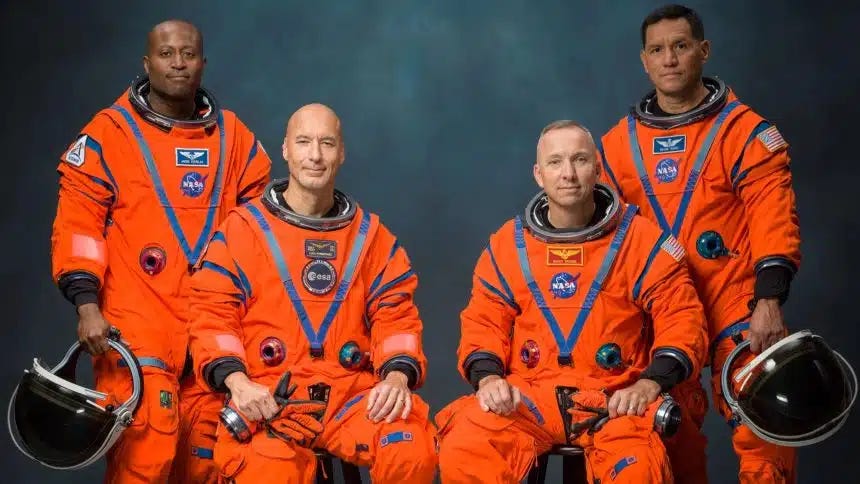
Luca Parmitano, Italy’s own astronaut, is about to take the pilot’s seat on Artemis III. With a grin and a nod to history, he’s carrying Europe’s dreams back to the Moon, because this time, the story isn’t just American, it’s universal.
The First European on Artemis’ Flight Deck
On 9 June 2026, beneath the big Texas sky at Johnson Space Center, they pulled back the curtain on the Artemis III crew and there he was. Luca Parmitano: Italian Air Force Colonel, test pilot, storyteller of the stratosphere, and now, the first European ever picked to pilot an Artemis mission. Parmitano joins a crew as international as the dreams that fuel this new lunar odyssey: Randy Bresnik at the helm as commander, with NASA’s Andre Douglas and Frank Rubio as mission specialists, and Bob Hines ready as backup.
This isn’t just a personal triumph. It’s a giant leap for Europe and a proud day for Italy, whose fingerprints have been on Artemis since the beginning, powering Orion with the European Service Module.
Parmitano has been stacking up flight hours and stories since his ESA selection in 2009, spending a cool 366 days off-planet, commanding the ISS, and handling six spacewalks, including one hair-raising EVA in 2013 when a water leak turned his helmet into a fishbowl, forcing a daring retreat and driving future safety upgrades.
Stateside, Parmitano’s been the voice in the capsule as CapCom, the calm in the chaos as an EVA instructor, and even splashed down off California during the Underway Recovery Test 12, rehearsing Artemis recovery ops.
Before all that, he flew the A-11 AMX in the Italian Air Force and earned his test pilot stripes at France’s EPNER, racking up 2,000 hours across 40 aircraft because why stick to one sky when you can have them all?
Artemis III isn’t just another mission: it’s the next chapter in a global story, with Parmitano at the stick and all of Europe along for the ride.
Why Parmitano Became Europe’s Artemis Standard-Bearer
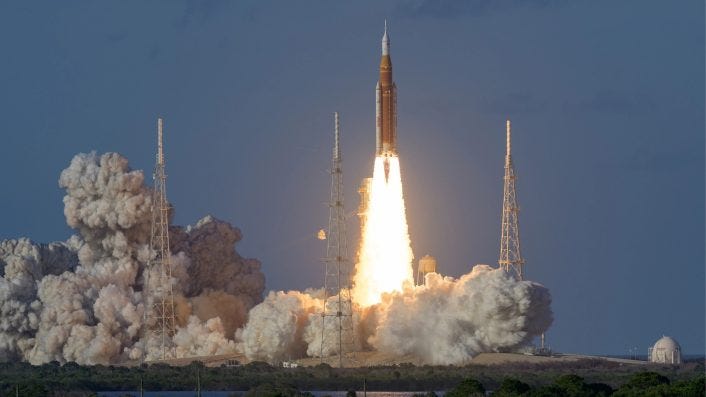
Parmitano’s Artemis III assignment isn’t just about one daring aviator. It’s the latest chapter in Europe’s grand adventure in space. This pick spotlights Europe’s deep commitment and investment in NASA’s lunar ambitions, building on decades of collaboration that started with the International Space Station.
The European Space Agency doubled down on Orion, delivering the European Service Module. Think of it as the powerhouse and lifeline for every Artemis journey. Crafted by Airbus Defence and Space, the ESM is more than a technical marvel. It’s one of Europe’s biggest offerings to Artemis and stands as a shining example of transatlantic teamwork in the cosmos.
But there’s more at play than rockets and modules. With lunar exploration now seen through a geopolitical lens, the Artemis program—modeled after the ISS partnership—has rallied a coalition of nations under the Artemis Accords, all signing on for a future of shared exploration beyond Earth.
Europe has stepped up as a top-tier contributor, offering both cutting-edge tech and serious funding muscle. Parmitano is just the first European astronaut to join the Artemis crew, and you can bet more are waiting in the wings for future missions.
Italy’s legacy in human spaceflight runs deep, and Parmitano’s journey is the latest spark in a long-burning fire. Back in 1964, Italy became only the third country to run its own launch site and the fifth to launch a satellite, San Marco 1, trailblazing before most nations had even left the ground.
Fast-forward a few decades, and Italian know-how, led by Thales Alenia Space Italia, helped build the backbone of the ISS: Harmony, Tranquility, the iconic Cupola, and the logistics modules that kept shuttles humming. That same expertise is now fueling the Artemis age.
Thales Alenia Space helped shape the Lunar Gateway’s key modules, like HALO and the I-Hab habitat for ESA. Even after Gateway was shelved, NASA and Italy inked a fresh deal to team up on the Moon base of tomorrow.
What you get is a rare thread of continuity: Italian engineering first kept astronauts thriving in low-Earth orbit, and soon those same hands will help humanity make camp on the lunar surface.
And with Parmitano now flying the flag on Artemis III, the story comes full circle—past, present, and future, all stitched together in one cinematic European odyssey to the Moon.
Artemis and the New Allied Spacefront
For the United States, Luca Parmitano’s assignment as Artemis III pilot is more than just picking a crew. It’s a bold declaration that the Artemis program is built on alliances.
By putting an Italian and European Space Agency ace in the cockpit, NASA is sending a clear message: the next great leap won’t just ride on American rockets, but on a coalition of trusted partners, shared tech, and mutual confidence.
For America’s allies, this is a moment to step out of the wings and onto the main stage. Europe isn’t just supplying modules and expertise anymore. Thanks to Parmitano, an allied astronaut is now part of Artemis’ operational core.
That shift matters, because going to the Moon and beyond will demand more than signatures on paper; it’ll hinge on nations trusting each other with navigation, docking, and the lives of their best aviators.
Italy’s presence is equally striking. Parmitano brings the swagger of a military pilot, the credibility of a veteran astronaut, and all the symbolism of European unity to a mission that dares to go past Earth’s front yard.
His selection tells Rome, Brussels, and Washington that space exploration is now a strategic language, blending science, diplomacy, defense, and national pride.
Artemis III isn’t just a mission to the Moon. It’s a rehearsal for how allied power will work in space for generations to come. The real headline isn’t who steps down the ladder first, but how America and its partners build the trust and infrastructure to stay.
This Week in Aviation History
STS-71 soared into history as America’s 100th human space launch, a rendezvous that brought the space shuttle and Mir together for the first time. When their hatches opened, the two ships fused into the largest spacecraft ever to orbit Earth—a true meeting of giants. For the Mir crew, it was all change: a handoff high above the clouds, and the shuttle as their chariot home.
From Cold War Rivalry to Orbital Formation
STS-71 wasn’t just another ride into space. It was the stuff legends are made of, the kind of mission that echoes through the hangars and across the tarmac.
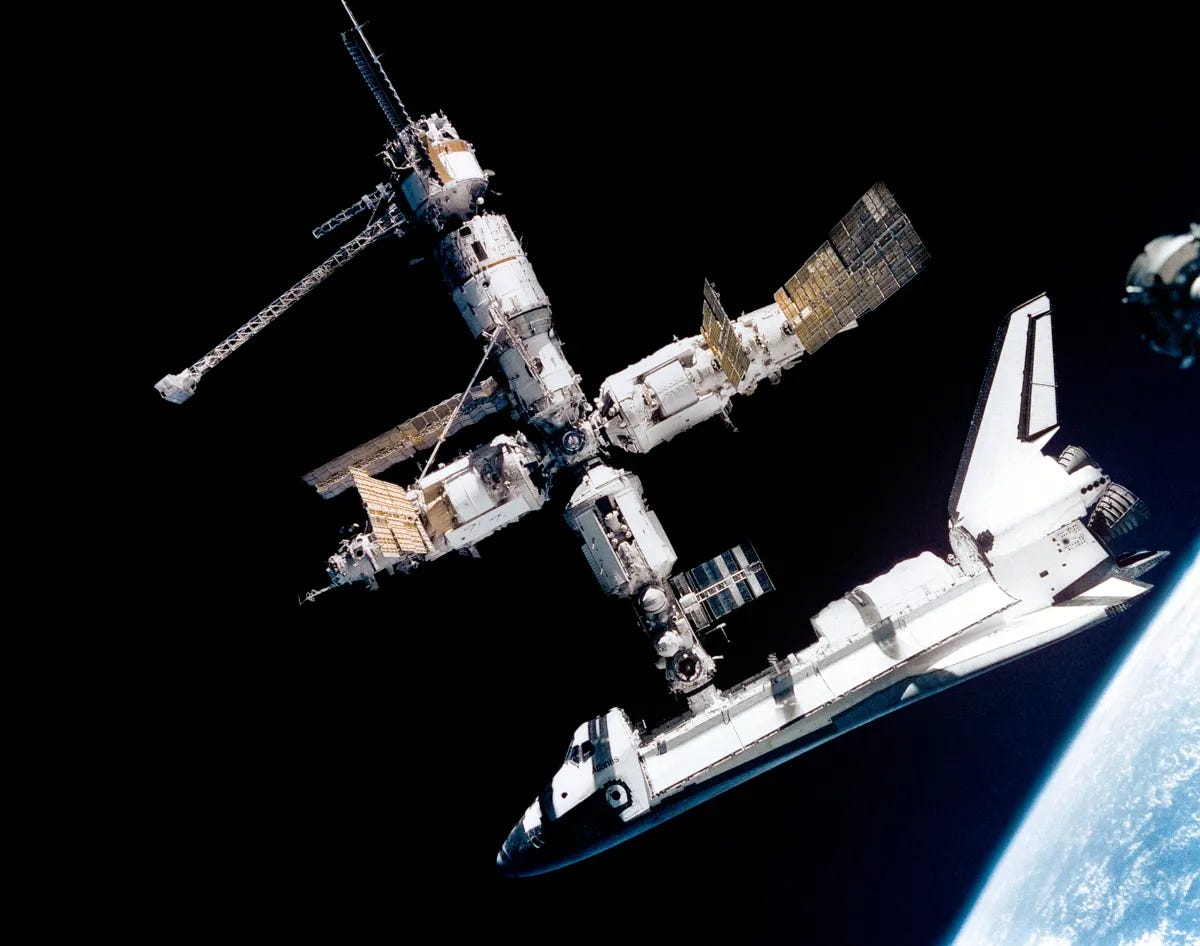
The 100th launch of an American crew from Cape Canaveral, and for the first time, a U.S. space shuttle set its sights on the Russian Mir station, the two giants of the sky coming together in a cosmic handshake.
It was the biggest spacecraft ever assembled in orbit, a flying fortress nearly half a million pounds strong, circling the planet over 200 miles up.
The docking itself was pure flight-school poetry. Atlantis, piloted by Gibson and his ace crew, approached Mir not from the obvious front, but from below along the R-bar, or Earth radius vector.
It’s a pilot’s approach: let gravity and orbital mechanics do most of the braking, cut down on fuel-thirsty jet firings, and keep everything smooth and steady. At about a half-mile out, Gibson took the stick, guiding Atlantis with the kind of hands you want at the controls when history’s watching.
The shuttle hovered 250 feet out, waiting for the green light from Houston and Moscow, then inched forward until just 30 feet separated American wings from Russian steel. Docking was spot-on.
Less than an inch off target, and not even half a degree out of alignment. The handshake happened 216 nautical miles above Lake Baikal, with the Orbiter Docking System locking Atlantis to Mir’s Krystall module like a glove.
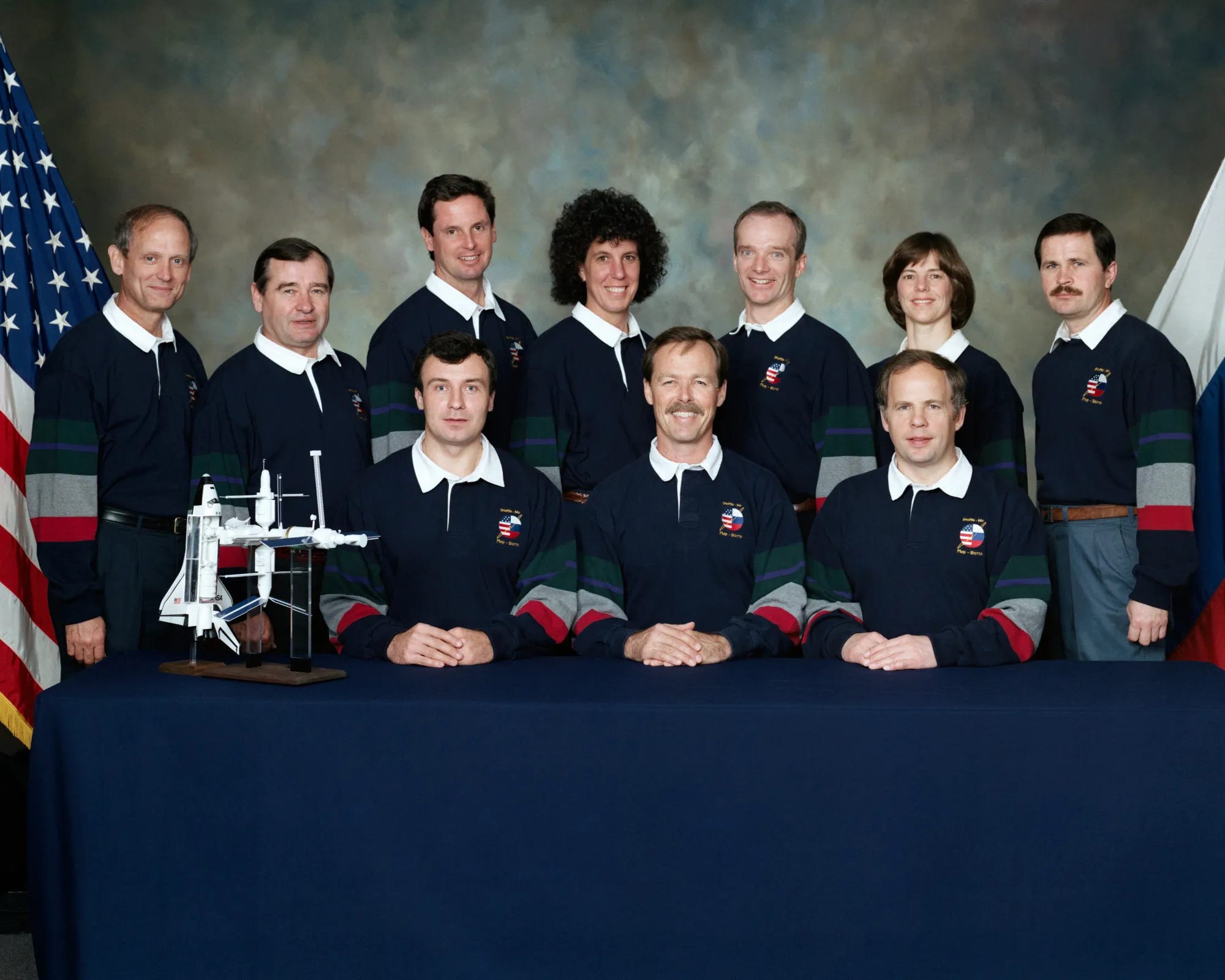
Once the hatches swung open, it was more than just an embrace between ships—it was the meeting of two crews, the passing of the torch as Mir 18 handed over to Mir 19.
For five days, the ship was alive with activity: American and Russian astronauts swapping gear, sharing experiments, and running biomedical tests in Spacelab. They poked and prodded every aspect of the human body—heart, lungs, metabolism, nerves, even the mind itself. Gathering samples from the Mir 18 crew, who were prepping for their return to gravity after over three months in orbit.
Between blood draws, breath samples, and a broken computer from Salyut-5, Atlantis was packed tight with the stuff of science and the makings of stories.
Atlantis didn’t just take; she gave, too. Over 1,000 pounds of water for Mir’s systems, custom tools for a solar array repair, and fresh oxygen and nitrogen to boost the station’s air.
When the time came to part ways, the undocking was a ballet in black sky: Mir 19 zipped away in their Soyuz to capture the moment on film as Atlantis slipped free, pirouetting back toward home.
Eight souls rode Atlantis back to Earth, tying the record for shuttle crew size, and the returning Mir 18 trio were stretched out in custom-made seats, easing their bodies into the pull of Earth’s gravity after a hundred days of floating.
Sure, there was a computer hiccup on the way, but nothing that could ground these sky legends. STS-71 wasn’t just a mission; it was a high-flying dance at the edge of the possible, where nations shook hands and the spirit of adventure soared.
The Flight Log of Shuttle-Mir
The launch was first set for late May, but the timeline drifted into June as the Russians prepped Mir for its big moment. Spacewalks to retool the station and the arrival of the Spektr module with American experiments onboard.
When June 23 finally rolled around, Florida’s stubborn storms and lightning kept the shuttle grounded, scrubbing tank fueling altogether. The next day, hopes were dashed again just nine minutes from liftoff as more foul weather closed the narrow launch window. Undeterred, the crew reset for June 27. This time, the stars—and the skies—aligned, and countdown ticked smoothly to liftoff.
Mission: First Shuttle-Mir Docking
Space Shuttle: Atlantis
Launch Pad: 39A
Launched: June 27, 1995, 3:32:19.044 p.m. EDT
Landing Site: Kennedy Space Center, Florida
Landing: July 7, 1995, 10:54:34 a.m. EDT
Runway: 15
Rollout Distance: 8,364 feet
Rollout Time: 51 seconds
Revolution: 153
Mission Duration: 9 days, 19 hours, 22 minutes, 17 seconds
Orbit Altitude: 170 nautical miles
Orbit Inclination: 51.6 degrees
Miles Traveled: 4.1 million
Crew
Robert L. Gibson, Commander
Charles J. Precourt, Pilot
Vladimir N. Dezhurov, Mission Specialist
Anatoliy Y. Solovyev, Mission Specialist
Norman E. Thagard, Mission Specialist
Gennadiy M. Strekalov, Mission Specialist
Gregory J. Harbaugh, Mission Specialist
Ellen S. Baker, Mission Specialist
Bonnie J. Dunbar, Mission Specialist
Nikolai M. Budarin, Mission Specialist
When Rivalry Learned to Fly in Formation
STS-71’s legacy is more than just the sight of Atlantis and Mir locked together above Earth. It’s a story of how space can transform competition into collaboration. Once, the U.S. and Russia raced to outdo each other in the great expanse; with STS-71, they joined hands in orbit, sharing risk, routines, and the daring spirit of exploration itself.
When Atlantis docked with Mir in 1995, it wasn’t just about the hardware, but about two teams learning to trust and rely on each other.
The mission became a dress rehearsal for the International Space Station era. Every docked maneuver, crew swap, experiment, and joint briefing was a lesson in international teamwork, revealing that conquering long-term spaceflight meant more than having the best rockets.
It meant blending patience, technical compatibility, and faith in your counterpart’s craftsmanship. STS-71 proved that survival and success in space is a team sport played on a global stage.
For NASA and its partners, that changed what it meant to explore. The new frontier would be reached by coalitions, not solo flights—sharing tools, logistics, and responsibility for every heartbeat on board.
Today, you see echoes of STS-71’s lessons in the global crews, international modules, and shared operations of the ISS and Artemis programs.
That’s why STS-71 is a turning point in the story of spaceflight. It is the moment when rivalry gave way to rendezvous, and the future of flying farther became something we do together.
In Case You Missed It
Photo Outlet
Every issue of Hangar Flying with Tog gets you a free image that I’ve taken at airshows:
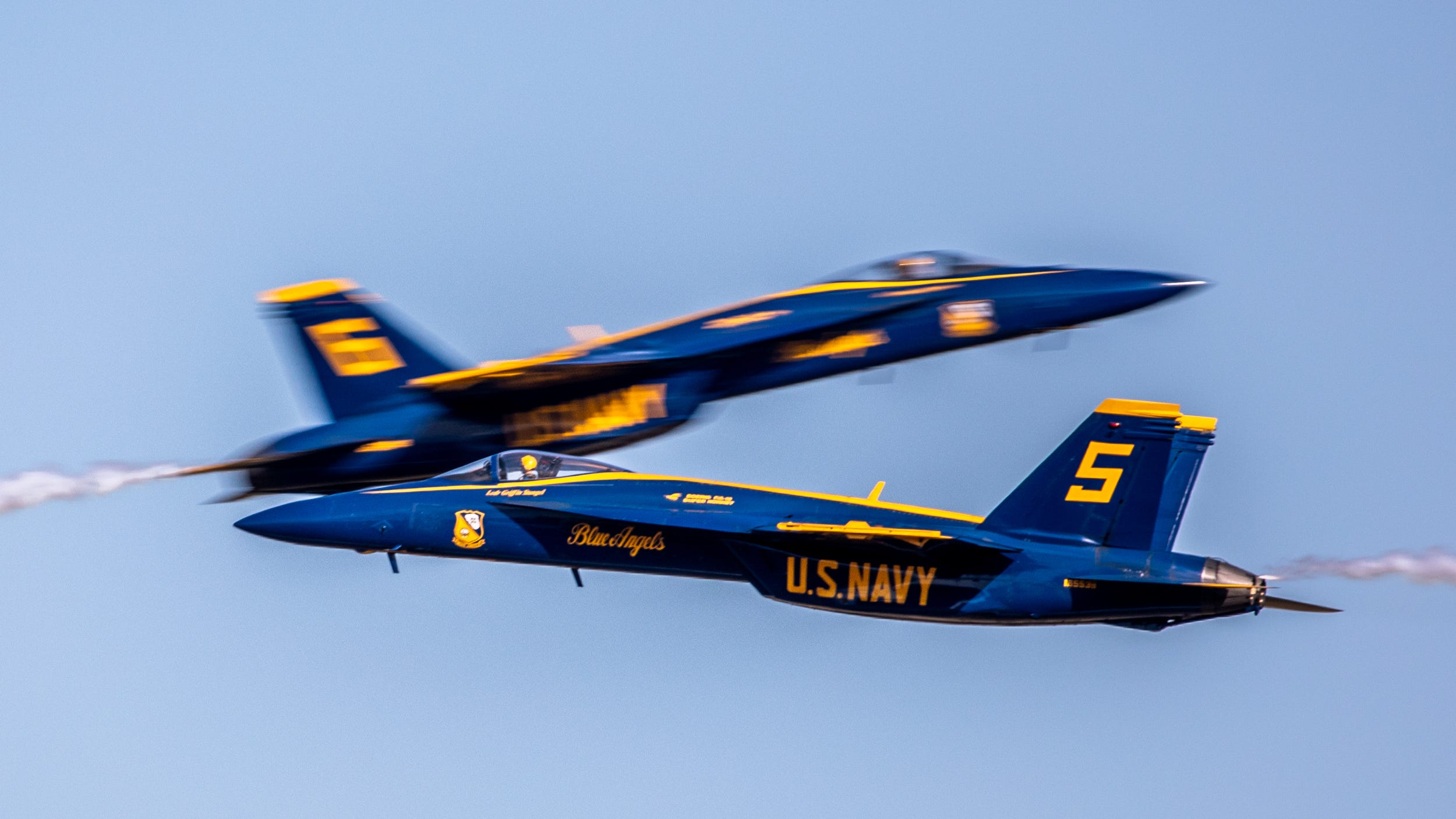
Feel free to use these photos however you like. If you choose to tag me, I am @pilotphotog on all social platforms. Thanks!
Post Flight Debrief
Like what you’re reading? Stay in the loop by signing up below—it’s quick, easy, and always free.
This newsletter will always be free for everyone, but if you want to go further, support the mission, and unlock bonus content like the Midweek Sortie, consider becoming a paid subscriber.
Your support keeps this flight crew flying—and I couldn’t do it without you.
– Tog