

Epic Fury on its Fourth Week and the Time when America entered the First World War
06 April 1917 is when America’s limited naval air arm was forced to grow by war; Epic Fury shows the modern version of that same impulse — air and sea power expanding as conflict demands more reach.
This is the final deployment for the 14th Fighter Squadron based at Misawa, Japan, as it prepares to retire its F-16s and transfer them to other units, including the 480th Fighter Squadron and the 77th Fighter Squadron.
—Babak Taghvaee - The Crisis Watch
Before we get started with this week’s newsletter, a quick note: I’ve been publishing this newsletter for 151 consecutive weeks (dating back to March 2023) and in that time the newsletter has come out every Tuesday morning. Not this week. As some of you may know, YouTube had demonetized my channel for “mass-produced” “inauthentic” content - this was clearly in error and I (along with my amazing viewers) fought the decision. We won. I am very thankful that it was overturned, and again - my incredible viewers (and readers) rose to the occasion and made a storm on X (Twitter) that got the attention of human reviewers. YouTube has been mass banning channels that are AI generated (a much needed task in my opinion) but it appears they were a little overzealous with their bans. Again, I am very happy to be reinstated, and the reason I am writing this here is because as you can imagine, my whole world and workflows were disrupted. I’m getting back into the routines, so rest assured that moving forward we will resume our regular posting schedule. Thanks for reading this and for reading this newsletter. Now you know.
-Tog
And now, onto this week’s newsletter:
Mission Briefing
Just four weeks after Epic Fury roared into action, the tempo in the skies and seas is only building. You’ve got F-16Cs slicing through the stratosphere, EA-18Gs and E-2Ds joining the fray, engines humming as they head for the heart of the Middle East. Out at sea, the USS Boxer Amphibious Ready Group cuts a determined wake, steel and resolve pushing through blue water. And on the ground, the rumor mill is alive: word is, the 82nd Airborne Division might be prepping for the call. The whole scene feels like the opening frames of a high-stakes reel, machines, men, and rumors all converging, the story unfolding with every passing hour.
More Assets are Deploying
Over the past few days, the air above us has gotten a whole lot busier. F-16CM Block 50 Fighting Falcons—what we call Vipers—have been streaking through the sky, joined by the Navy’s EA-18 Growlers and E-2D Hawkeyes.
Each one brings its own brand of power and purpose. Out at sea, the USS Boxer’s Amphibious Ready Group is pushing toward the Middle East, soon to rendezvous with the USS Tripoli’s group, which shipped out just last week.
You can feel the tension building—rumors swirl that the 82nd Airborne Division might be on alert, boots laced and gear packed, ready to move at a moment’s notice. The government hasn’t ruled out sending troops into Iran, but no green light yet.
The F-16s are coming in from all directions. Some launched out of Aviano and Spangdahlem in Europe, others from Shaw and McEntire back on the East Coast, and now, even Misawa Air Base in Japan has joined the dance. Those Misawa Vipers are on what could be their last overseas run; soon that base will switch over to the F-35 Lightning II.
Tanker issues delayed the Atlantic crossing, but nothing stops a determined aircrew; now, up to 24 jets are converging at Spangdahlem, arriving in waves. Some of those Vipers are already peeling off, bound for undisclosed airfields in the Middle East. Nobody’s saying exactly where, but you can bet they’ll be right where they’re needed most.
Meanwhile, six more Growlers lifted off from Oceana, Virginia, touched down in the Azores to refuel, then pressed on toward the fight, some loaded with state-of-the-art jamming pods. The whole operation feels like the opening act of a high-stakes air campaign; steel birds, restless seas, and every pilot waiting for the next call.
Fighter Jets are Not the Only Birds
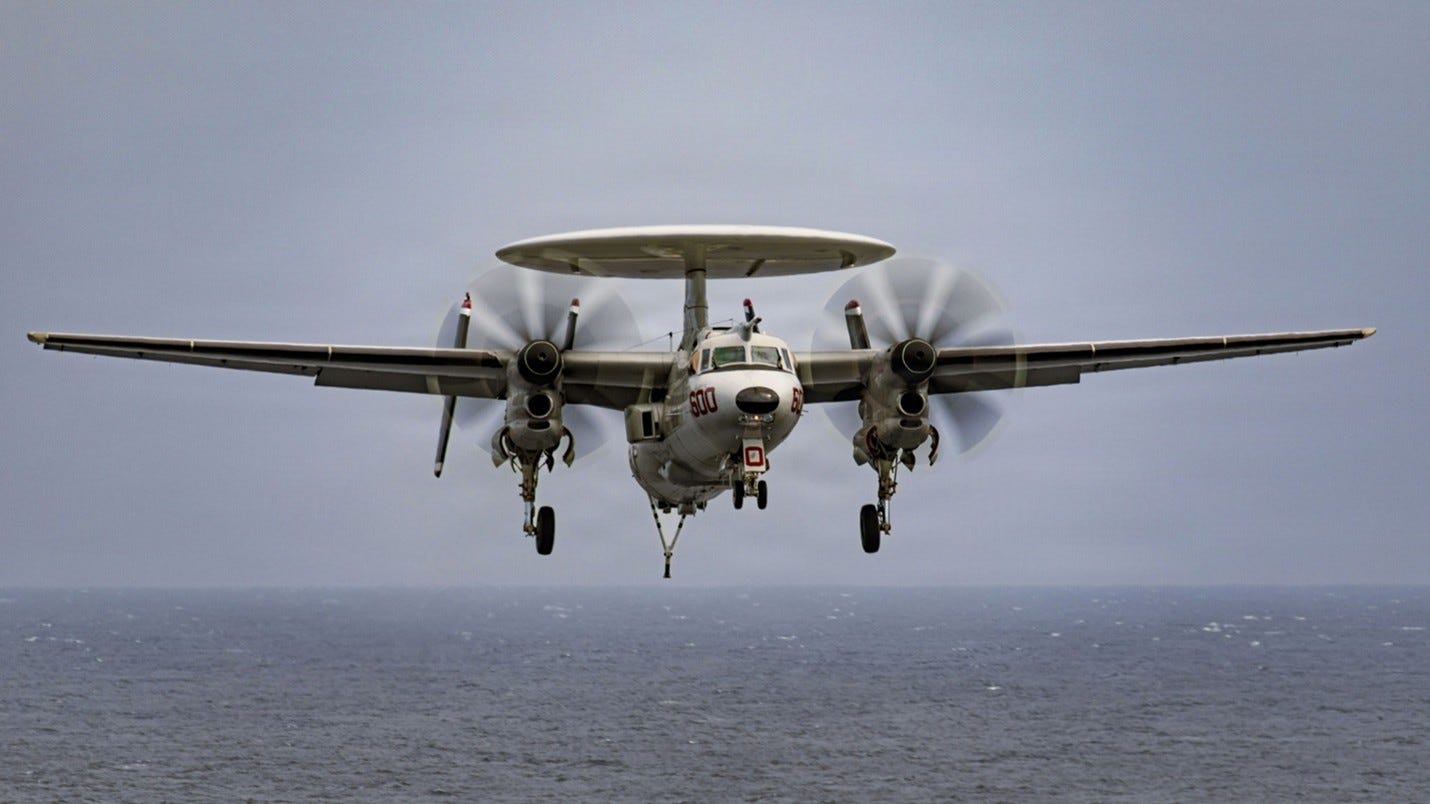
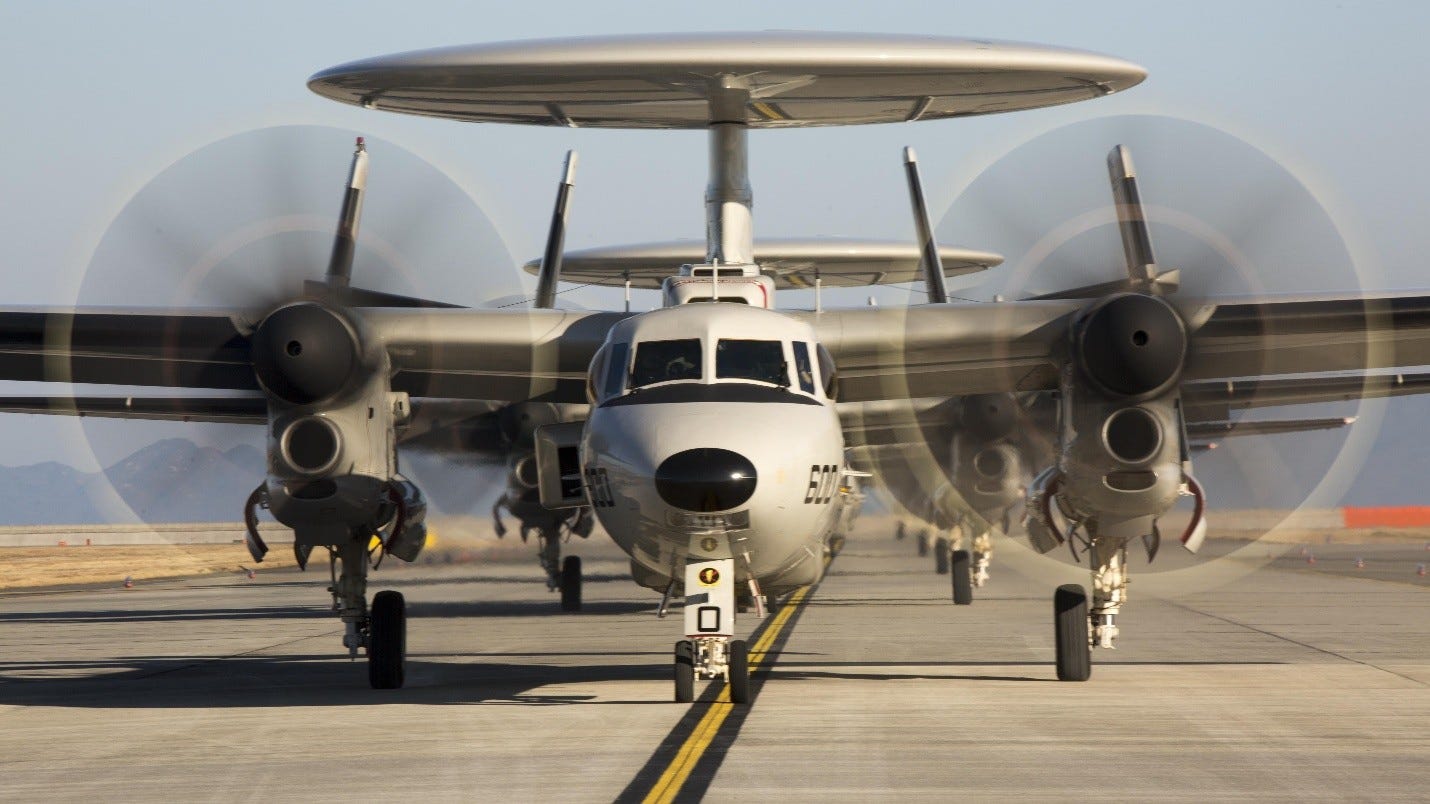
Fighter jets might steal the spotlight, but they’re not the only birds heading into the fray for Operation Epic Fury. Back on March 16, while the first Growlers took to the air, five E-2D Hawkeye early warning aircraft touched down at Lajes, their radomes gleaming against the Atlantic sky.
A few days later, the Hawkeyes lifted off again, bound for Aviano Air Base in Italy, before pressing on toward the Middle East. Their final destination? That’s still a bit of a mystery. Maybe they’ll join one of the Carrier Air Wings out at sea, or perhaps they’ll settle in with a land-based squadron.
These E-2Ds aren’t your average spotters. They come armed with cutting-edge AESA radar, the kind that can sniff out even the sneakiest threats—low-flying drones and cruise missiles that hug the earth to avoid detection.
Once in theater, the Hawkeyes will work alongside the Air Force’s E-3 Sentry AWACS, and just recently, the Royal Australian Air Force sent an E-7A Wedgetail to the mix. It’s a real gathering of airborne sentinels, each playing their part in the unfolding drama.
Let me share with you what’s under the hood of the Hawkeye
Overall Length: 57 ft. 8.75 in
Wing Area: 80 ft. 7 in
Weight (Empty): 40,484 lbs
Speed: 300+ kts
Ceiling: 37,000 ft.
Power Plant: Two Rolls-Royce T56-A-427A Turboprop engines (5100 shp each)
Sensors: Fully integrated open architecture system
Crew: five; two pilots, three mission systems operators with the option for the co-pilot to act as fourth mission systems operator.
Prime Contractor: Northrop Grumman
Holding the Line, Building the Strike Package
Four weeks into Operation Epic Fury, the tempo is still building. Every new wave of jets and warships heading out signals something loud and clear: this isn’t just a single punch thrown in the dark. Washington’s making it clear: this is a campaign built to last, with layers of protection and the muscle to ramp things up if the situation demands.
I’ve seen reports of more F-16Cs, EA-18G Growlers, and E-2D Hawkeyes streaming toward the Middle East, with the USS Boxer Amphibious Ready Group riding the waves nearby. For the U.S., these moves aren’t just about keeping the engines hot; they’re about flexibility, about having options.
The F-16s bring sheer numbers and quick reaction across scattered airfields; the Growlers are the ghosts in the electronic ether, jamming and hunting enemy radars; and the E-2Ds, perched high above, scan for threats that try to slip under the radar.
This isn’t only for America’s benefit. The buildup is a message to allies: the U.S. is all-in, not just with fighters and ships, but with the brains and tech that guide modern warfare. Australia’s already sent in an E-7A Wedgetail, showing it’s a team effort in the skies.
Operation Epic Fury isn’t just about hitting targets; it’s about keeping friends close, sending a warning to would-be troublemakers, and shaping the chessboard for whatever comes next. Whether these reinforcements stay as a shield or turn into a spear, they’ll set the tone for the next act in this unfolding drama.
This Week in Aviation History
April 1917: folks were already calling it the Great War, and with good reason. The fields of France and Russia were packed with millions of soldiers, locked in a deadly standoff where thousands fell every single day; even when no one was charging forward. Then came April 6th, when the United States stepped into the fray, throwing its lot in with France, Britain, Russia, and the rest of the Allies. They faced a formidable lineup: Germany, Austria-Hungary, the Ottoman Empire, and Bulgaria. All bracing for what would become a truly global fight.
Why did the US join the War?
President Woodrow Wilson had just been sworn in for his second term, having won over the American people with the promise, “He Kept Us Out of War.” Folks thought Wilson was a man too proud to send young Americans into the meat grinder that was Europe.
In fact, diplomats across the Atlantic called the United States “The Great Neutral,” and for a while, that title fit. American envoys worked tirelessly, hoping to broker peace as the trenches filled and the casualties mounted. But even a president can’t outrun the winds of war forever.
The first sign that the storm was coming was a note, hand-delivered by the German ambassador on January 31. “Unrestricted submarine warfare,” it read. No more warnings, no more safe passage—any ship, friend or foe, near Britain, France, Italy, or the Eastern Mediterranean was fair game for German U-boats.
Now, to us today, that might sound like just another piece of military strategy, but back then, it sent shockwaves through the American public. It was a move born of desperation. Germany needed to cut off Britain to win before their own resources ran dry. But to Americans, it was yet another sign of German aggression, the war machine grinding on, civilians and soldiers alike in its path.
Wilson was stunned. The very next day, he cut diplomatic ties with Germany, though he still held back from war. Then came the Zimmermann Telegram—a real cloak-and-dagger moment.
British intelligence intercepted a secret message from Germany’s foreign minister to its ambassador in Mexico, offering Texas, Arizona, and New Mexico in exchange for Mexico turning on the U.S. The news broke on February 28, and you could feel the mood shift. Americans were furious; the idea of foreign powers carving up their land was too much to bear. Wilson ordered American merchant ships to arm themselves.
March rolled in, and German U-boats made good on their threats, sending three U.S.-flagged ships to the bottom of the sea. The pressure mounted, and Wilson finally called Congress to a special session on April 2.
When he stepped up to the podium, he wasn’t the reluctant leader anymore. He was a man with purpose. “The world must be made safe for democracy,” he declared, pledging that America wasn’t after land, riches, or power. The fight was for liberty and the rights of mankind.
Four days later, Congress gave its answer. The declaration of war was signed, and the United States stepped into the storm, determined to tilt the balance in the name of freedom.
The Nation’s Defense Potential
At the dawn of the twentieth century, America was a sleeping giant; an industrial powerhouse ready to change the course of history. Picture this: by 1900, U.S. Steel alone was turning out more steel than the whole of Great Britain.
Henry Ford was cranking out Model Ts on assembly lines, making horse-and-buggy transportation look ancient overnight. Farms were getting machines, freeing up hands for the factories. America’s cities buzzed with a growing, literate workforce, mass production was in full swing, and railroads stitched the nation together; change was in the air, and the future looked unstoppable.
But when war erupted across the ocean, the United States military was still caught in another era. The Great War was industrialized carnage—millions in the trenches, millions more behind the lines, and factories churning out weapons day and night.
The U.S. Army, though, was tiny: just over 120,000 enlisted men and fewer than 6,000 officers, scattered from the Wild West to outposts in the Philippines and the Caribbean. Equipment was scarce—hardly any machine guns, no tanks, not much artillery, and barely any planes.
The National Guard was even more uneven, with old gear and patchy training. The Army hadn’t fought in big divisions since the Civil War, and few officers knew how to move or command massive units. The Navy, with 300 ships and 60,000 sailors, was respectable; but nothing like Britain’s Royal Navy.
So when war was declared in April 1917, no one really knew what role America would play. Yet the declaration itself marked something big: the moment America stepped onto the world stage, unprepared but determined. It would take time for U.S. military power to grow up. But when it did, it would help turn the tide of the war.
How World War I Changed Aviation
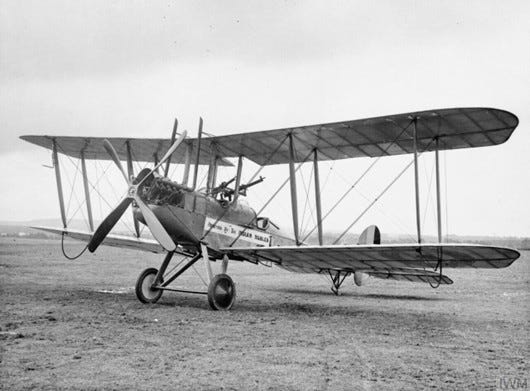
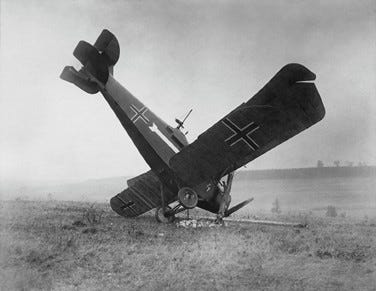
In 1914, flying meant braving the elements in open cockpits, clutching a paper map, and trusting your gut more than your gauges. But war has a way of speeding up progress. Soon, those flimsy scout planes evolved into fighters, bombers, and the first true air warriors. The big ideas of airpower—scouting, moving fast, hitting hard, and ruling the skies—were all born in that crucible.
For the United States, joining the fight in April 1917 was a leap into the unknown. With few planes and even fewer trained pilots, America was far from ready, but the moment marked a turning point.
The country learned fast, grew stronger, and began to project its power across oceans. World War I left two legacies: it transformed aviation from a daring experiment into a battlefield necessity, and it pushed America to the center of world affairs. Even today, when conflict flares, airpower and American resolve are still the keys to shaping war and forging peace.
In Case You Missed It
Photo Outlet
Every issue of Hangar Flying with Tog gets you a free image that I’ve taken at airshows:
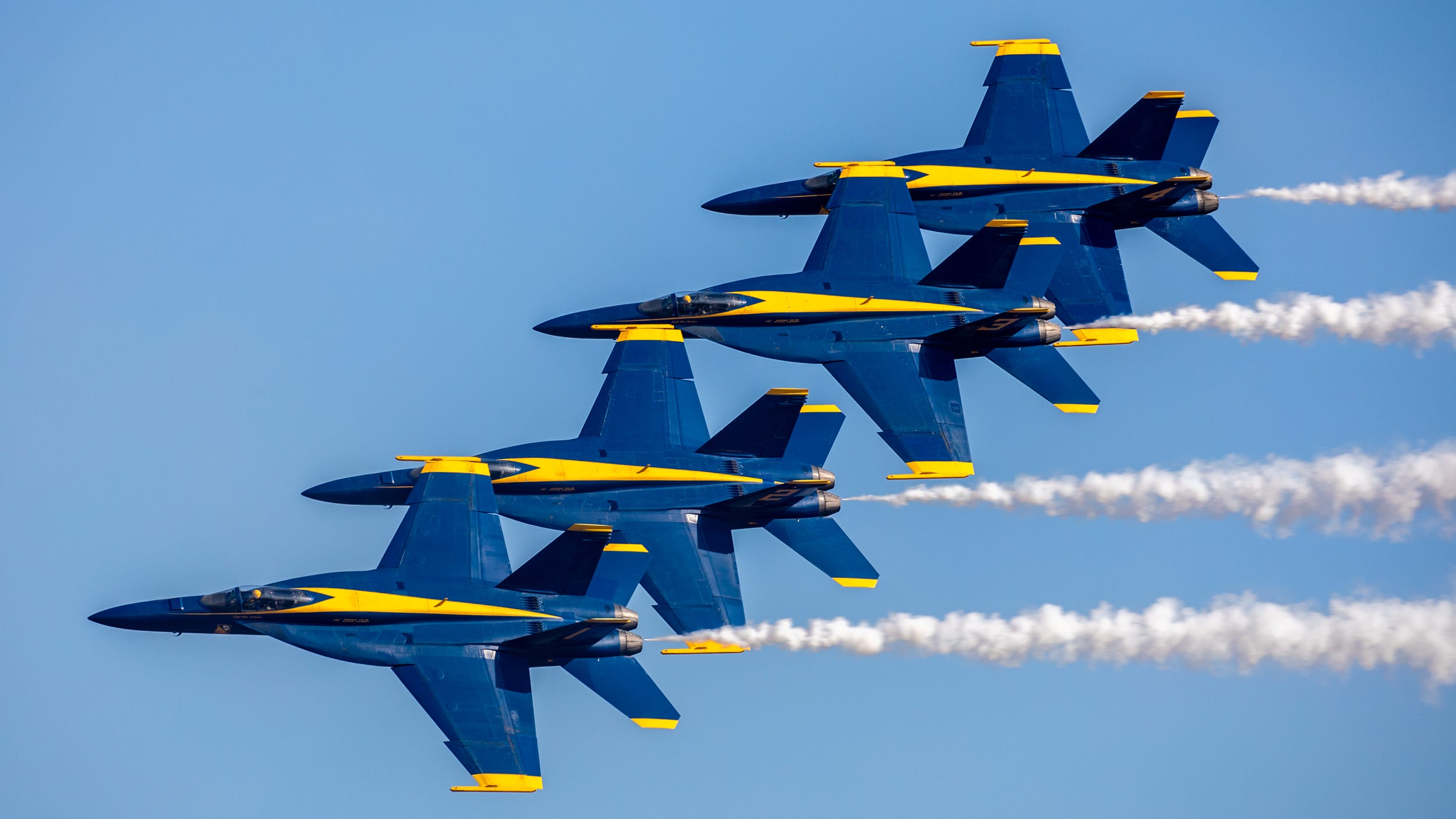
Feel free to use these photos however you like. If you choose to tag me, I am @pilotphotog on all social platforms. Thanks!
Post Flight Debrief
Like what you’re reading? Stay in the loop by signing up below—it’s quick, easy, and always free.
This newsletter will always be free for everyone, but if you want to go further, support the mission, and unlock bonus content like the Midweek Sortie, consider becoming a paid subscriber.
Your support keeps this flight crew flying—and I couldn’t do it without you.
– Tog
Keep up the good work man, everything you've put out is great so don't let anyone stop you man👊