

“Equipping our skilled warfighters faster with cutting-edge drone capabilities showcases U.S. military innovation and strength, which deters bad actors.”
—Adm. Brad Cooper, CENTCOM commander
Mission Briefing
In the hush of the Arizona desert, drones rise from secret test ranges—no pilots, no fanfare. Beyond the horizon, unseen eyes linger, marking targets. This isn’t a rehearsal; it’s the quiet arrival of a new era.
Beyond Sorties: U.S. Airpower Enters the One-Way Era
On December 3, 2025, in the heart of CENTCOM’s (US Central Command) command centers, a quiet but decisive shift takes place. Headlines or grand ceremonies didn’t mark it, but by a simple order from Secretary of War Pete Hegseth: speed up, innovate, and field a fleet of affordable drones, fast. That’s how Task Force Silent Sentry (TFSS) was born.
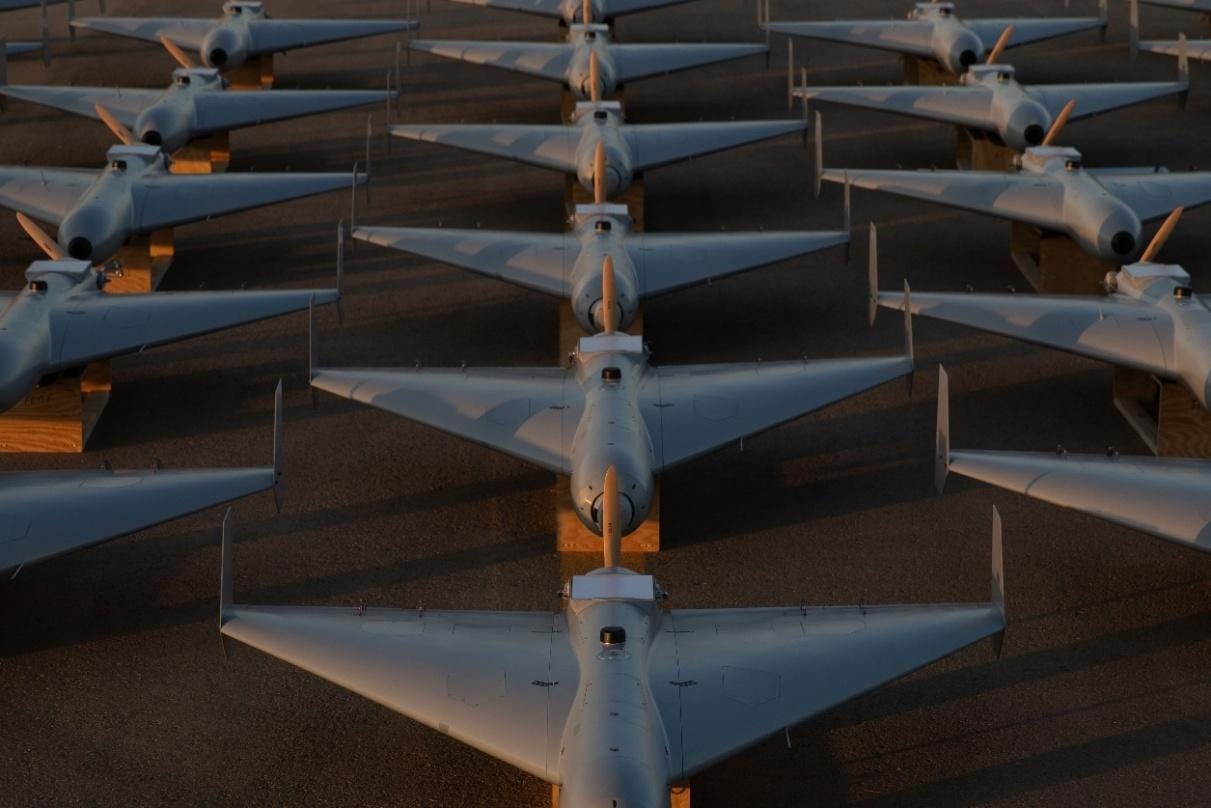
What sets TFSS apart isn’t just the hardware. Imagine a squadron made up entirely of autonomous, one-way attack drones. They’re not designed to return to base or to display in airshows. These are tools of precision and presence, meant to be used once and used well. The magic lies in their disposability and autonomy.
Pilots aren’t needed in the cockpit, and the cost? About $35,000 per bird—a fraction of what a traditional fighter jet demands.
But it’s not just about the drones themselves. TFSS is a melting pot, bringing together specialists from the Air Force, the Army, SOCCENT, and teams who have cut their teeth on unmanned systems.
Together, they form a test bed that doesn’t just theorize about the future of warfare. It puts it into practice. With little infrastructure, these teams can launch massed, low-cost strikes at a pace and scale we haven’t seen before.
Admiral Brad Cooper, the man at CENTCOM’s helm, put it succinctly: “We’re putting innovation at the service of deterrence.” He’s not wrong. The specifics: how many drones are out there, what exact missions they’re flying. Well, that’s kept close to the vest.
CENTCOM will only say it’s “a sufficient number to ensure a significant level of capability.” Translation: enough to make anyone thinking of mischief think twice.
Why disposable drones, though? Recent conflicts have taught us hard lessons. In Ukraine and Yemen, cheap kamikaze “Shahed” drones have punched far above their weight, overwhelming defenses and striking deep, often from makeshift launch sites.
The battlefield has changed. The U.S., with bases and interests scattered across the Middle East, now needs tools that can strike quickly, quietly, and affordably. LUCAS (Low-cost Unmanned Combat Attack System) drones, as they’re called, fit that bill perfectly.
There’s a message here too, aimed at adversaries and allies alike: the United States can now respond with speed, scale, and economy, without putting pilots at risk or straining the defense budget. Disposable drones mean fewer casualties, more flexibility, and a force that can adapt to an unpredictable world. In this new era, the sky remains a place of American ingenuity—just shaped by a different kind of wing.
Features of LUCAS: the Autonomous Assassin
The system making waves out here is called LUCAS—the Low-cost Unmanned Combat Attack System. Born in the Arizona workshops of SpektreWorks, LUCAS isn’t your average drone. Its design owes a debt to a captured Iranian Shahed-136, meticulously reverse engineered and reimagined by American hands. Some folks call it the FLM-136, but whatever the name, its mission is clear.
With an eight-foot wingspan, LUCAS is unassuming but cunning. Its architecture is stripped down for reliability and speed of production. These birds don’t need runways or hangars; they launch from catapults, rocket rails, or even the back of a truck, wherever the mission demands.
Fully autonomous, they’re built for persistence, able to roam far beyond the horizon to deliver a precise strike in a world where every second and every dollar matter.
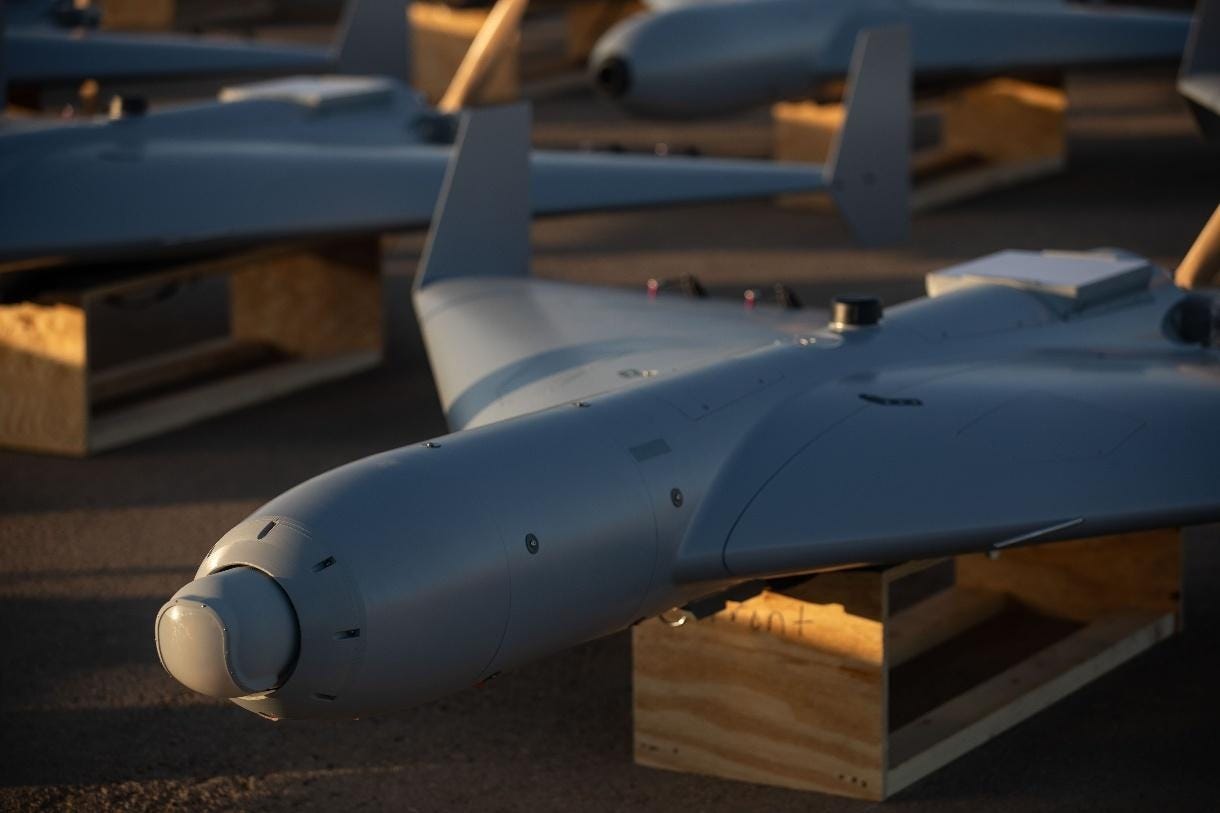
Here’s are some specs to illustrate what makes this machine stand out:
Propulsion: ICE
Endurance: 6 hrs
Cruise: 74 kt
Dash: 105 kt
Range: 444 nm
Ceiling: 15,000 ft
Wind: 35 knots
Wingspan: 8.2 ft
Length: 9.8 ft
Height: 1.5
Max Weight: 180 lbs.
Max Payload: 40 lbs.
Max Fuel: 73 lbs.
Keeping us and our allies primed for the fight
Today, the skies over the Middle East are a landscape where drones have become as common as sand and wind. For years, we’ve seen everything from silent recon birds to kamikaze machines streaking toward their marks. But now, with the arrival of a dedicated U.S. squadron of one-way attack drones, the rules of the game are being rewritten in real-time.
Suddenly, American forces can respond with a speed and precision once unimaginable. Striking targets without warning and doing so without the heavy lift of traditional logistics. No longer are we confined to the slow turns of observation platforms or the high stakes of manned sorties. Clearly, this shift represents a turning point in aerial doctrine
This new breed of drone, led by LUCAS and the minds behind Task Force Silent Sentry, brings a flexibility that our adversaries and even our allies cannot ignore.
Make no mistake, this is a message sent clear across the horizon: the United States isn’t satisfied with defending against drone threats. We’re here to set the standard, to dominate the skies. And you can bet others are watching. Rival states and regional actors will likely scramble to push their own drone programs into high gear, kicking off a new kind of arms race.
What we see with TFSS might just be a preview of what’s to come in other hotspots. The Indo-Pacific, Africa, anywhere America needs to project power swiftly and affordably. The era of relying solely on costly, crewed jets or even premium drones is giving way to a strategy built on numbers, adaptability, and relentless tempo.
Yet, as any seasoned aviator will tell you, every leap forward brings new turbulence. The path ahead is filled with tactical unknowns, ethical grey zones, and the ever-present risk of escalation.
This bold turn toward massed, disposable drones could reshape the battlefield soon or open doors we’ve only begun to imagine. LUCAS stands ready—silent, patient, and always within reach of the next challenge.
This Week in Aviation History
On 22 December 1964, over the sunbaked runways of Palmdale, California, Lockheed’s own Bob Gilliland slid into the cockpit of the world’s most secretive jet: the SR-71 Blackbird. On that maiden flight, the Blackbird tore through the sky, brushing the edge of Mach 3.4, cruising comfortably at Mach 3.2—a speed that left even the boldest imaginations reeling. For years to come, surface-to-air missiles would streak skyward in vain, as the Blackbird’s electronic wizardry and sheer velocity kept her untouchable, always just a heartbeat ahead of danger.
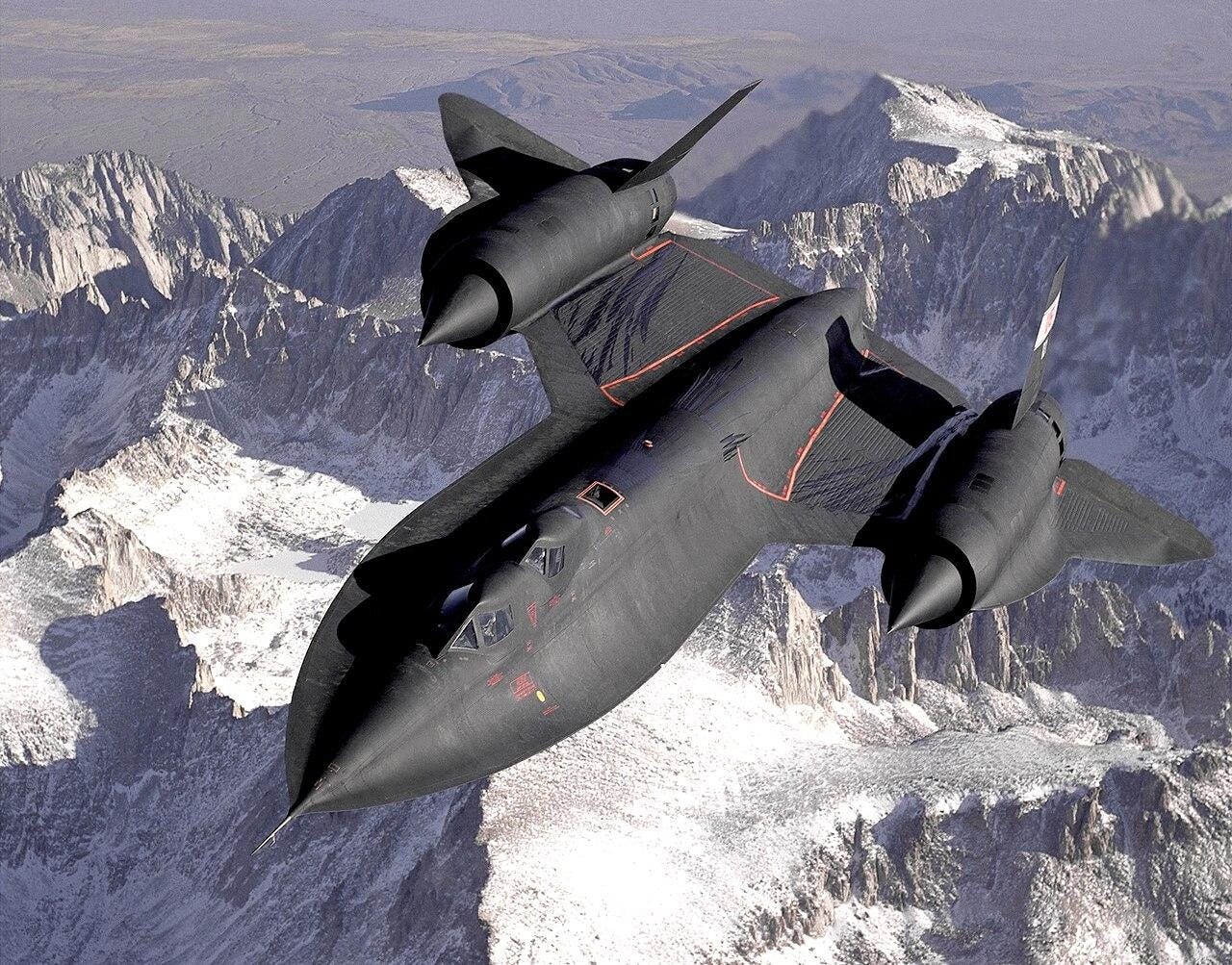
Blackbird: The Unrivaled Sentinel of the Cold War Skies
Back to the fevered heart of the Cold War, when the skies bristled with tension and secrets moved faster than the wind. The SR-71 Blackbird, that sleek, obsidian arrow, was born out of necessity. An evolution from the CIA’s A-12, but this time, with two seats and a hunger for even more intelligence.
She could match the A-12’s breathtaking speed and altitude but weighed a touch more thanks to her expanded camera and radar payloads, tucked neatly into modular nose and fuselage bays. Empty, she tipped the scales at 30 tons; fueled up, she carried a staggering 40 tons of jet fuel, ready to cross continents in a single breath. Only 32 of these legends ever rolled off the line, including the 29 SR-71As, a pair of two-seat SR-71Bs for training, and a one-of-a-kind SR-71C.
The Blackbird’s career spanned from her first operational service in January 1966 to her initial retirement in 1989, with a brief encore in the 1990s when global tensions flared again in the Middle East and on the Korean Peninsula. In all, twelve were lost to accidents, and tragically, one pilot paid the ultimate price, but never—never—did enemy fire claim a Blackbird. She was simply too fast, too clever, and always a step ahead.
Assigned to the 9th Strategic Reconnaissance Wing at Beale Air Force Base and scattered detachments around the globe, the Blackbird became an icon of American airpower. Even after her final Air Force missions in 1989, and a short-lived return to the skies in 1993, she lingered with NASA until 1999, her legend still casting a long shadow.
No reconnaissance platform before or since has flown so deep into the heart of danger with such impunity. The Blackbird’s engines—true marvels of air-breathing propulsion—pushed her faster than any jet before, setting records that still stand. Born from the urgent need to peer across the Iron Curtain after the U-2 incident, the SR-71 became not just an aircraft, but a symbol; a guardian angel at Mach 3, watching a world on edge.
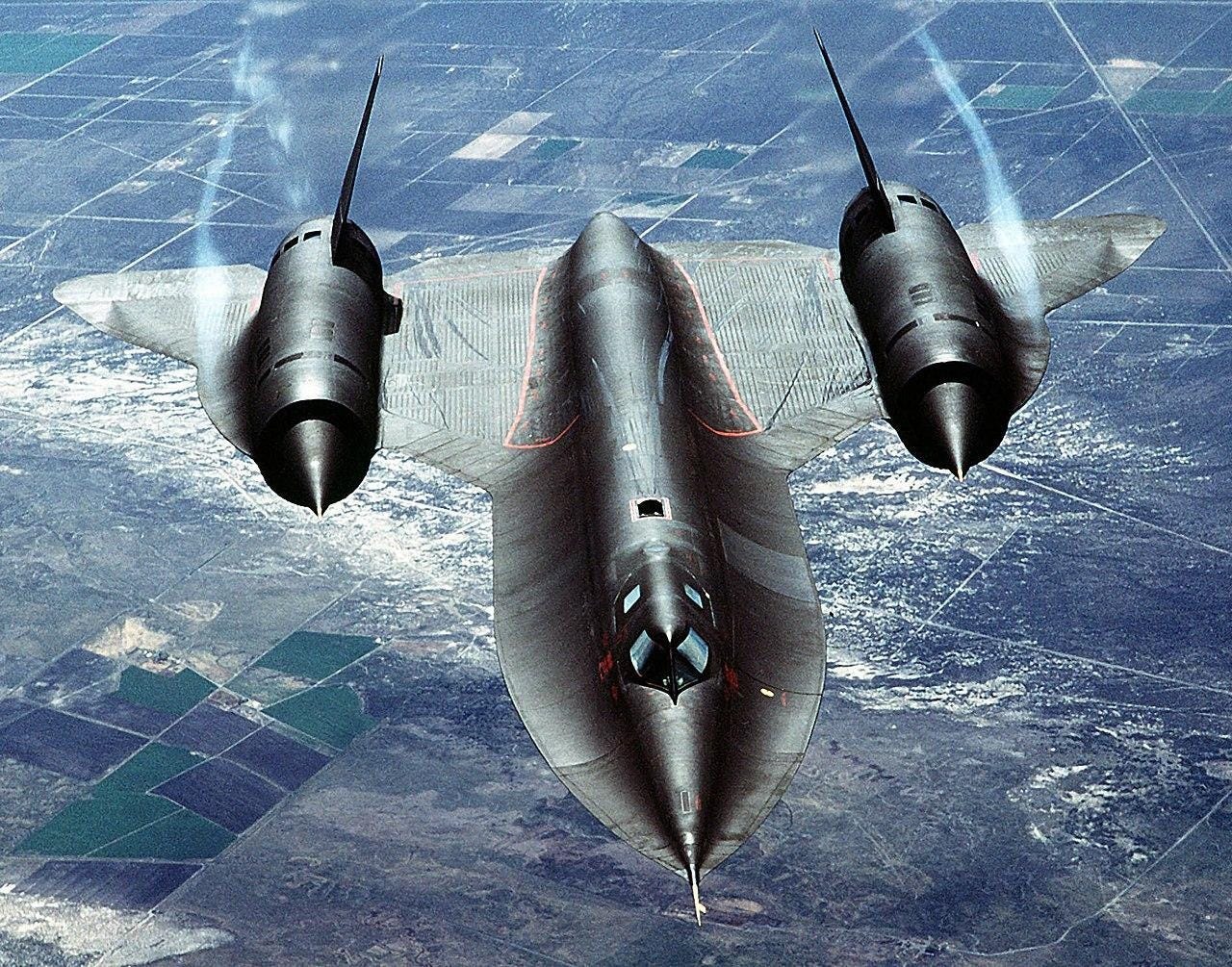
Engineered for Altitude: Inside the Blackbird’s Edge
Let’s peel back the metal skin and look at what made the Blackbird a true marvel of her age; under each wing sat a Pratt & Whitney J58 turbojet, a masterpiece of axial-flow engineering with afterburners that could summon 32,500 pounds of thrust apiece.
But here’s the astonishing part: at Mach 3, those engines themselves provided less than a fifth of the total push. The rest? That came from a stroke of genius; a movable, conical spike at the nose of each engine nacelle, sculpting the incoming air.
At those blistering speeds, much of the air bypassed the engines entirely, feeding straight into the afterburners and ejector nozzles, transforming the Blackbird into a kind of airborne ramjet—a hybrid creature of flight.
The airframe itself was more alchemy than ordinary construction, built almost entirely from titanium and rare alloys, able to shrug off temperatures climbing above 600 degrees Fahrenheit. This was no ordinary bird; she could hold Mach 3 for over an hour, her skin glowing with heat, making her an ideal laboratory for pushing the boundaries of flight and thermal endurance.
She measured 107 feet long, with a wingspan of just over 55 feet, and stood 18 and a half feet tall on the ramp; sleek and predatory. Fully loaded, the Blackbird tipped the scales at a hefty 140,000 pounds, half of which was dedicated to fuel, feeding those voracious engines. For control, she sported all-moving vertical fins above each nacelle and sophisticated elevons, granting her agility even at the edge of the atmosphere.
In the 1990s, NASA took the reins of four Blackbirds. Two became research workhorses, while the others supported the Air Force’s brief reactivation. SR-71A (61-7980) arrived at Dryden in 1990, serving as a testbed until her final flight in 1999.
Benchmark for Reconnaissance
Others cycled in and out of research, training, and reconnaissance, each one adding another chapter to the Blackbird’s storied flight log. Even as the Air Force closed her official book, the legend of the Blackbird soared on, a testament to what happens when engineering dreams take wing.
So, what fills the Blackbird’s contrail today? These days, the skies are crowded with unmanned eyes—drones like the nimble RQ-11 Raven, tirelessly gathering intel. Whispers swirl about Lockheed’s SR-72, a ghost said to chase Mach 6, but nothing concrete has pierced the clouds. When it comes to manned reconnaissance, though, the era of pilots shattering records seems to be fading.
The legacy of the SR-71 stands alone, a high-water mark that modern machines, for now, only admire from below. The Blackbird’s shadow still stretches long over the future of flight.
In Case You Missed It
Dogfighting may not be dead - but it could be on the back foot:
Photo Outlet
Every issue of Hangar Flying with Tog gets you a free image that I’ve taken at airshows:
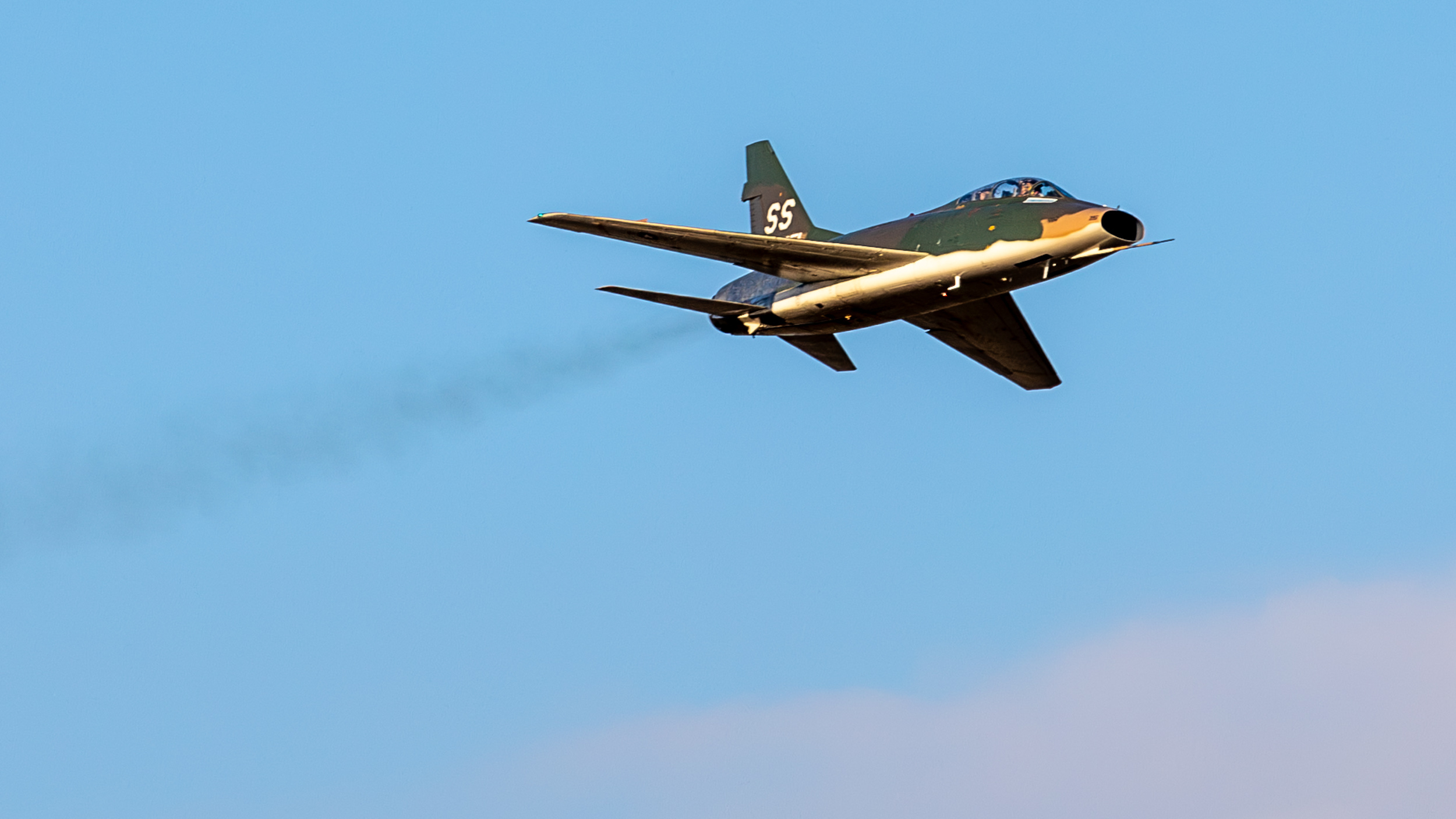
Feel free to use these photos however you like, if you choose to tag me, I am @pilotphotog on all social platforms. Thanks!
Post Flight Debrief
Like what you’re reading? Stay in the loop by signing up below—it’s quick, easy, and always free.
This newsletter will always be free for everyone, but if you want to go further, support the mission, and unlock bonus content like the Midweek Sortie, consider becoming a paid subscriber.
Your support keeps this flight crew flying—and I couldn’t do it without you.
– Tog