

The first phase of flight testing for the KC-46’s Remote Vision System 2.0 upgrade is complete, validating systems and confirming the performance of upgraded camera, control, and processing hardware aboard the KC-46 in real refueling conditions.
—Boeing Defense
Mission Briefing
Boeing just wrapped up the first round of trials on the KC-46’s RVS 2.0, putting those tough, high-def cameras and slick controls through their paces. The real adventure kicks off in 2027, when these upgrades go fleet-wide and the sky gets a little sharper for every pilot.
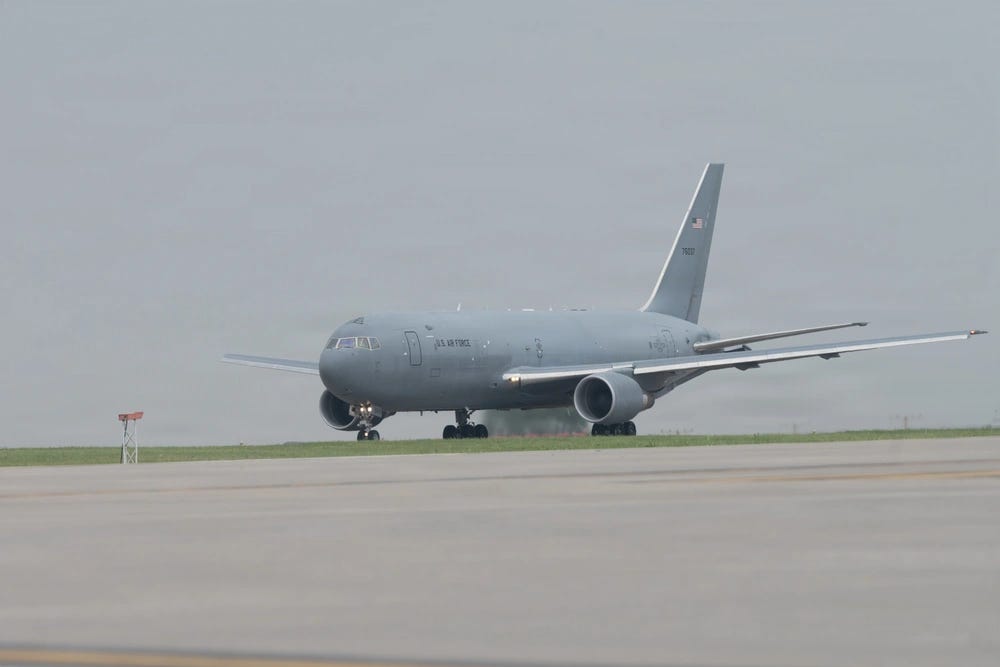
Boeing Advances KC-46A Remote Vision Upgrade
In the world of high-flying innovation and nail-biting test flights, the KC-46A Pegasus just marked a turning point in its turbulent journey.
On June 3rd, 2026, Boeing announced with a mix of relief and pride that it had wrapped up the first phase of flight tests for the much-debated Remote Vision System 2.0. It is a tech marvel that’s been both a lifeline and a headache for the Pegasus team.
For years, the RVS, essential for guiding the telescopic refueling boom, was plagued by blurry video feeds and light sensitivity that could turn refueling into a white-knuckle gamble.
But with this initial round of tests in the books, the stage is set for a full-force upgrade across the Air Force fleet, penciled in for 2027.
Boeing’s cinematic test footage showed the KC-46A’s refueling boom linking up midair with everything from a fellow Pegasus and a hulking C-17 Globemaster III to the nimble T-38 Talon, all under the watchful eye of the new ruggedized cameras.
Boeing’s press team didn’t hold back, touting the RVS 2.0’s ground-breaking optics: 4K Ultra HD, 3D immersive visuals, and hardware tough enough for whatever the skies throw at it.
The aim: give Airmen a crystal-clear, real-world view while they pull off the delicate ballet of midair refueling. This leap follows months of lab work and hands-on tinkering, not to mention crafting a next-level Aerial Refueling Operator Station.
Testing kicked off at Boeing’s Seattle home base and soon had the 418th Flight Test Squadron at Edwards Air Force Base joining in, especially for those challenging flights over the Mugu Sea Test Range, where sunlight plays tricks on even the best tech. The saga of the Pegasus and its new eyes in the sky is just getting started, and the next chapter promises to be dramatic.
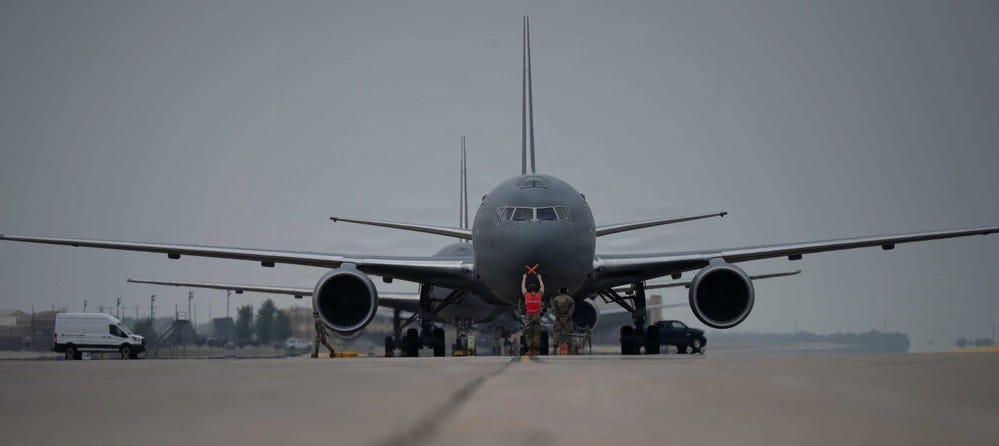
The Tanker Bird’s RVS and Other Issues
The saga of the KC-46A Pegasus continues to unfold as the U.S. Air Force, Boeing, and the Joint Program Office set their sights on a service-wide retrofit for the much-anticipated Remote Vision System 2.0 in 2027, just after it clears certification.
This is no small feat. The KC-46A is slated to take over from the iconic KC-135 Stratotanker, a workhorse of the skies for generations, with about 370 still flying missions. The Pegasus is destined to become the backbone of America’s aerial refueling fleet for decades to come, a futuristic torchbearer on the high-altitude highways.
By mid-May, the mood at Boeing and the Air Force was all hands on deck. The program, which had been fighting an uphill battle, launched a full-scale rescue mission. The goals were clear: get RVS 2.0 certified and retrofitted on schedule, reassign the earliest Pegasus builds to support the fleet right away, and roll out a temporary, performance-based logistics plan laser-focused on the refueling system and anything else that kept these birds grounded.
As of February 2026, Boeing had delivered 103 Pegasus jets to the Air Force, even as it wrestled with a laundry list of technical setbacks. At the very heart of the storm was the Remote Vision System: a technological leap that swapped the classic rear-facing window for a cutting-edge camera suite, letting boom operators refuel planes through video feeds rather than direct line of sight.
But the first versions of this system struggled with visibility and depth perception, especially in tricky lighting—night flights, dazzling sun, you name it. Image washout and visual distortions made refueling a tense, high-stakes affair, as the operators grappled with the risk of accidental strikes.
To bridge the gap, the Air Force fielded interim KC-46As with what’s been dubbed the RVS 1.5: a modest upgrade, but still not the leap forward everyone hoped for. The RVS 2.0, meanwhile, brings in a total of six cameras (two long-wave infrared, four visible spectrum) for an all-weather, all-lighting solution.
But even this upgrade ran the gauntlet of technical reviews and certification headaches, as Boeing tried to adapt commercial off-the-shelf hardware for military missions.
And the Pegasus’s challenges didn’t stop there. The refueling boom itself faced teething troubles, from actuator stiffness that made it tough to plug into certain jets, to nozzle-binding issues that sometimes left the boom stuck fast: costly headaches for crews and taxpayers alike.
Then, in February 2025, a new setback: deliveries halted after structural cracks were found in two KC-46As. Through it all, the vision remains. It is a new chapter for aerial refueling, with the Pegasus leading the charge, one upgrade at a time.
Eyes on the Boom: KC-46’s Quiet Fight for Allied Reach
The milestone reached with the KC-46A Pegasus’s Remote Vision System 2.0 is more than just a technical victory. It’s a pivotal chapter in the story of American and allied airpower.
While fighter jets, bombers, and sleek surveillance birds grab the headlines, it’s the tankers, like silent shepherds in the clouds, that really set the boundaries for how far our aircraft can roam and how fast they can answer the call.
With Boeing wrapping up the first phase of RVS 2.0 flight tests, one of the Pegasus program’s most glaring weak spots is finally getting patched.
Unlike the old-school tanker crews who peered through rear windows, today’s boom operators are glued to screens, guiding the refueling boom with the help of high-tech cameras. If those cameras can’t handle glare or depth, it’s not just a technical snag. It’s a question of safety and mission speed.
This matters now more than ever. As distances in the Pacific and elsewhere become strategic hurdles, a robust, reliable tanker fleet is the quiet force-multiplier. For America’s allies, it means smoother joint missions and the kind of coalition staying power that matters in a crisis. Japan’s already flying the Pegasus, and NATO partners lean on U.S. refueling know-how during tense patrols and exercises.
The real takeaway? Air dominance isn’t just about stealth or firepower. It’s about the unsung machines that keep everyone else in the fight. With RVS 2.0 on the rise, the Pegasus story is pivoting from problem child to unsung hero of the skies.
This Week in Aviation History
The GRAB II satellite tells a chapter from the dawn of space-age espionage, standing as one of America’s earliest forays into signals intelligence from orbit. Its predecessor, the first GRAB, rocketed skyward on 22 June 1960—just weeks after the drama of Gary Powers’ U-2 spy plane being shot down. In those tense days, the race for secrets had shifted from high-altitude wings to silent sentinels circling above the clouds.
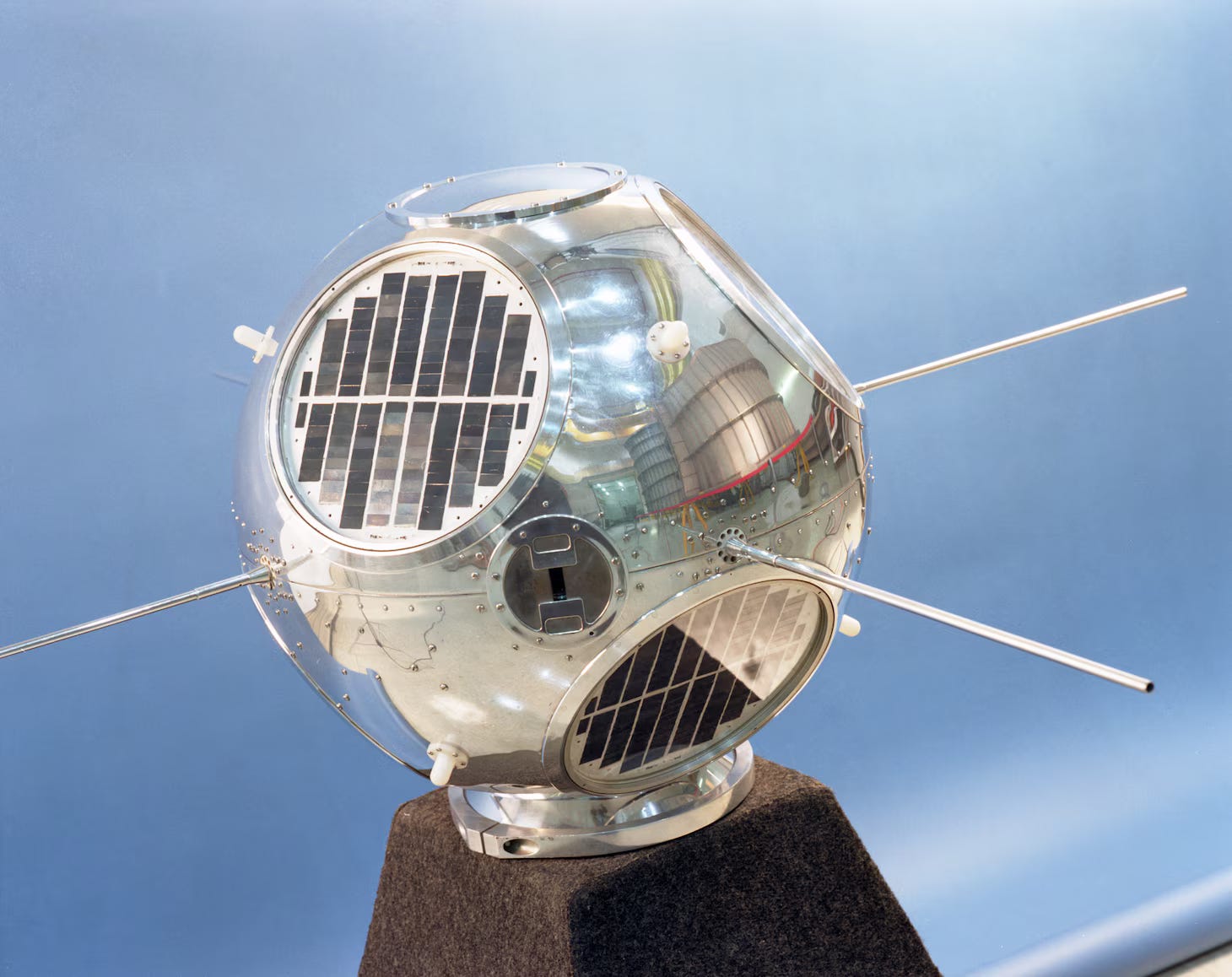
GRAB I, First Operational Intelligence Satellite
For nearly four decades, the story of the Galactic Radiation and Background (GRAB) satellite remained locked away in the vaults of military secrecy, only to be revealed by the Navy in 1998.
The program, originally dubbed “Tattletale,” earned its cryptic new name after its existence went public.
It all started when NRL scientist Reid Mayo, fresh off his breakthrough with radar detectors on submarine periscopes, pitched the bold idea that his periscope antenna could be just as effective in orbit.
Mayo took this vision to Howard Lorenzen, the mastermind behind the Navy’s countermeasures, who saw its promise and championed it up the chain in 1958.
The concept sprang to life in the tense days after a U.S. reconnaissance plane was shot down over the Soviet Union in June 1960. GRAB I hitched a ride atop a Navy Transit IIA satellite, slipping quietly into orbit.
From its perch 500 miles above Earth, GRAB I darted through the invisible webs of Soviet radar, picking up pulses and beaming the data down to hidden collection huts scattered across the globe.
Operators would carefully record the satellite’s transmissions onto magnetic tape, then rush the precious reels to the Naval Research Lab for evaluation. There, the data was copied and sent off to the NSA and Strategic Air Command for deep analysis and strategic insight.
GRAB I’s secret haul of Soviet air defense intelligence—impossible to gather by aircraft—became a game changer. By the time GRAB II launched in June 1961, the program was hitting its stride, delivering a torrent of invaluable radar intercepts.
The sheer volume of signals prompted the NSA to roll out new automated systems just to keep pace. Meanwhile, the Navy’s space wizards kept pushing the boundaries, laying the groundwork for tracking satellites and mastering the silent battles above the clouds.
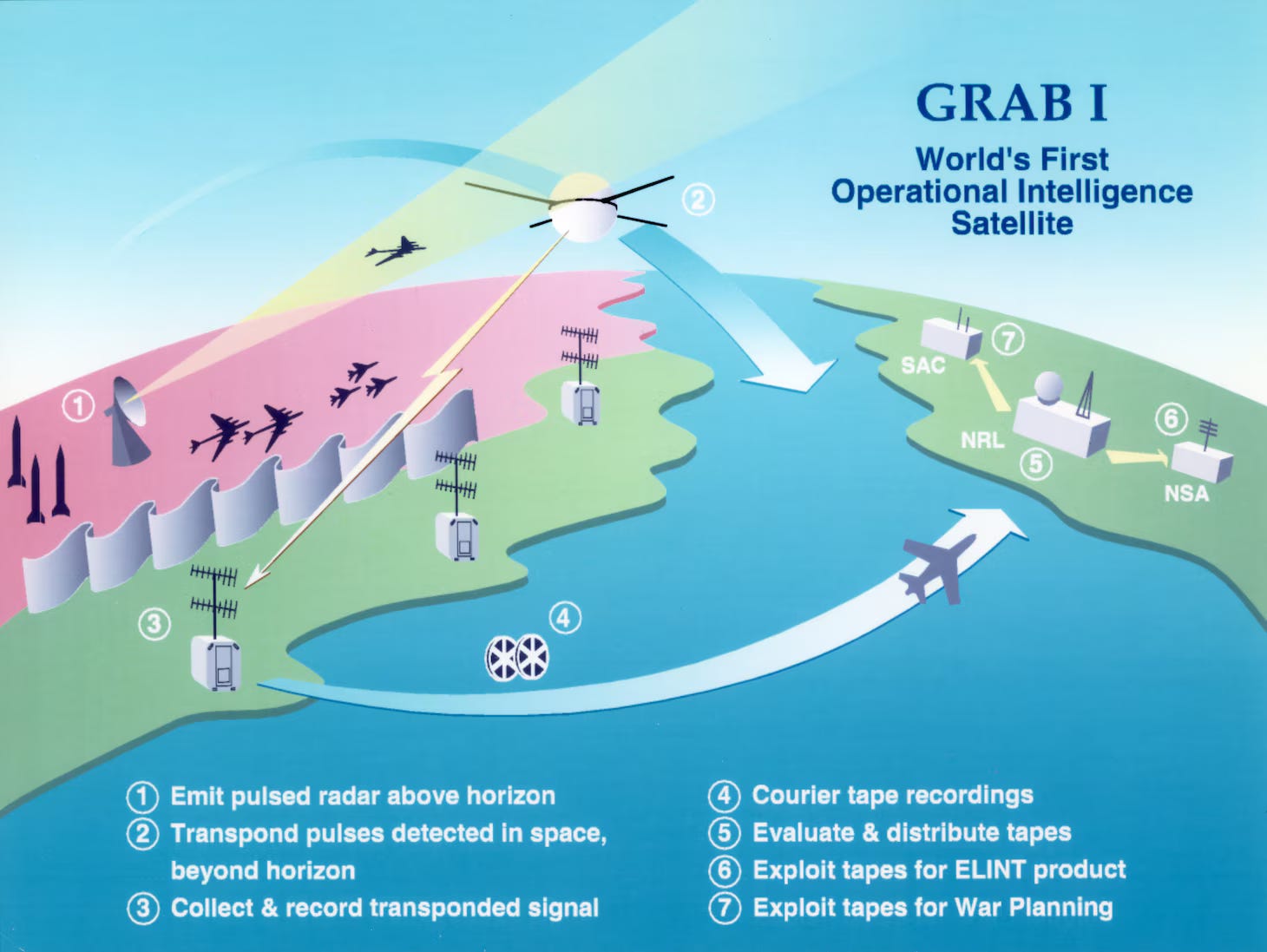
How GRAB Turned Space Into an Intelligence Frontier
The GRAB project was a game-changer, proving satellites could scoop up electronic intelligence on a scale that matched or even outclassed the ships, planes, and ground crews below; without risking a single life and at a fraction of the cost.
As GRAB quietly rewrote the rulebook, the National Reconnaissance Office (NRO) was formed in 1961 to corral all satellite and overflight spy missions, and by 1962, it had absorbed the Naval Research Lab’s pioneering ELINT satellite work.
Never content to rest on their laurels, the team at NRL took the momentum from GRAB and launched POPPY. It is the next-gen ELINT satellites designed to sniff out radar emissions on land and keep a stealthy eye on ocean traffic. POPPY ran as a key player in NRO’s signals intelligence arsenal, operating in the silent heights from 1962 to 1977.
Even today, the GRAB program’s spirit lives on at the U.S. Naval Research Laboratory, fueling fresh innovation and inspiring new generations of space engineers. As Chris Dwyer, head of the NRL Space Systems Division, says, the lab’s legacy in space science is a tapestry of firsts. GRAB is just one iconic thread in the Navy’s storied journey above the clouds.
The Satellite That Taught the Cold War to Listen
GRAB’s legacy kicks off with a quiet but seismic shift. It is a satellite proving, for the first time, that outer space could be a front-row seat for intelligence gathering. Launched in 1960, just as the world reeled from the U-2 incident, the Galactic Radiation and
Background satellite wore a public face of science, but its real mission was shrouded in secrecy. From hundreds of miles above, GRAB tuned in to Soviet radar signals and beamed that vital intel home, giving American analysts a way to study enemy air defenses without risking pilots over hostile skies.
But GRAB’s true breakthrough wasn’t just in hardware. It rewrote the playbook for reconnaissance itself. Until then, intelligence meant sending brave crews into danger zones by plane, ship, or on the ground.
GRAB showed that a compact spacecraft could quietly scan vast territories, lowering the risk for personnel and raising the bar for strategic insight.
This little satellite didn’t just collect secrets. It laid the groundwork for the next wave of U.S. space reconnaissance. Its success spun off into programs like POPPY and helped forge lasting ties among the Navy, NSA, CIA, Strategic Air Command, and the newly minted National Reconnaissance Office.
The information GRAB gathered lifted the veil on Soviet radar, deepened America’s electronic warfare playbook, and shaped preparations for future threats from the sky.
In the end, GRAB was more than just a satellite. It was the moment the Cold War learned to listen from above. Every modern spy satellite and space-based radar system still echoes that first, silent sentinel’s legacy.
In Case You Missed It
The ES-3A Shadow’s career was cut short:
Photo Outlet
Every issue of Hangar Flying with Tog gets you a free image that I’ve taken at airshows:
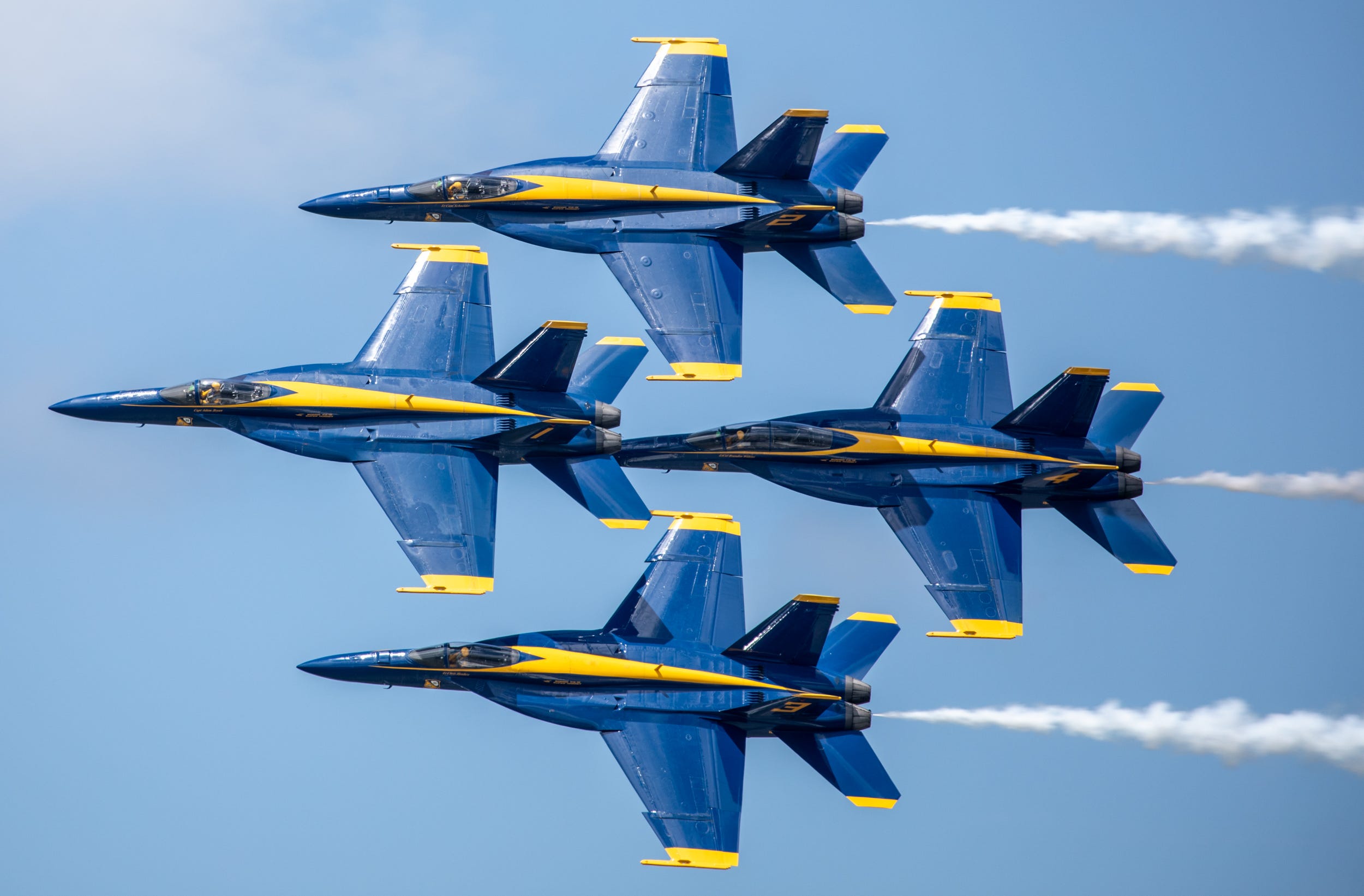
Feel free to use these photos however you like. If you choose to tag me, I am @pilotphotog on all social platforms. Thanks!
Post Flight Debrief
Like what you’re reading? Stay in the loop by signing up below—it’s quick, easy, and always free.
This newsletter will always be free for everyone, but if you want to go further, support the mission, and unlock bonus content like the Midweek Sortie, consider becoming a paid subscriber.
Your support keeps this flight crew flying—and I couldn’t do it without you.
– Tog