

B-21 Raider Spotted During Air-to-Air Refueling and Remembering the First Flight of the Lockheed CP-140 Aurora
From Arctic patrol lanes to stealth refueling tracks, the thread is strategic reach: aircraft built to endure, extend presence, and make distance a usable instrument of modern power.
I believe I captured a “first” today.
—Jarold Hamilton, Director of Photography CALLSIGN Magazine
Mission Briefing
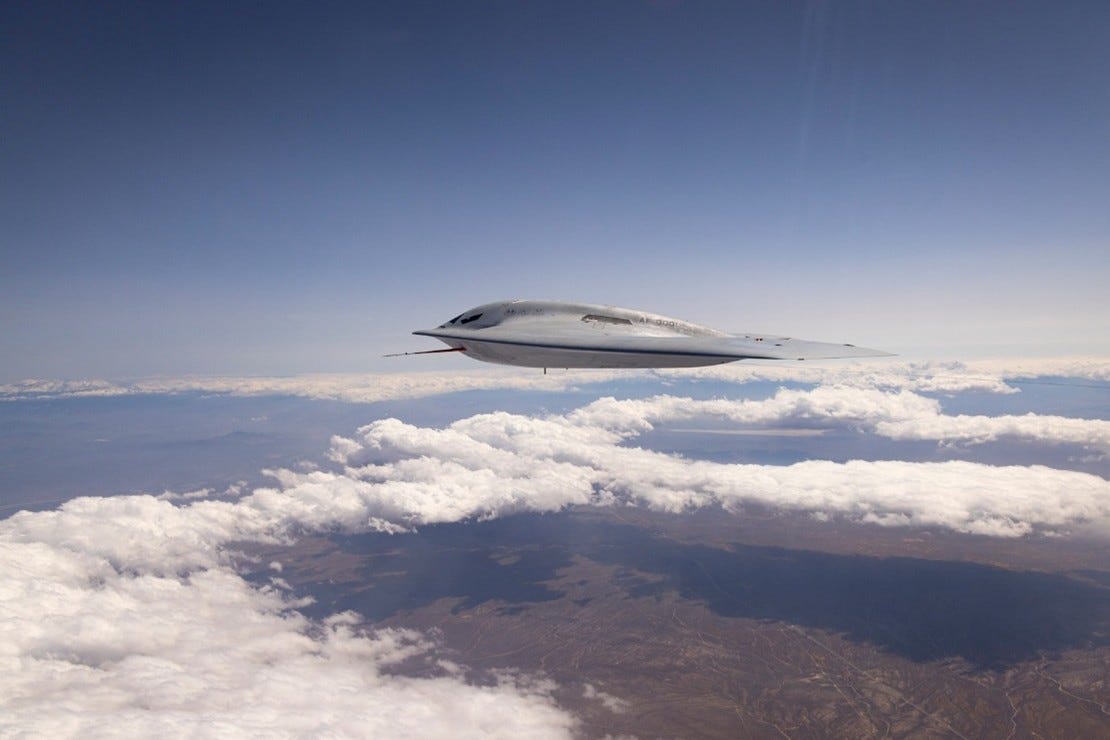
10 March 2026—high over the rugged stretches of Eastern California, the future of American airpower slipped into view. The Northrop Grumman B-21 Raider, still more rumor than routine, was seen tucked in behind a KC-135 Stratotanker, dancing through a five-and-a-half-hour aerial refueling mission.
For those lucky enough to be watching and quick enough with a camera, this was history in the making: the first Raider prototype, ghostly and poised, trailing the specially outfitted tanker from Edwards Air Force Base. Each frame captured by those photographers is more than a photo; it’s a glimpse of tomorrow’s legend, as the next generation of long-range strike quietly proves its mettle against the endless California sky.
Stealth Meets the Boom
Early spring over the Mojave Desert, and the horizon is alive with the drama of flight testing. In a moment that will linger in the memory of aviation enthusiasts, photographers caught the Northrop Grumman B-21 Raider refueling from a KC-135. Each frame a glimpse into the future of American airpower.
Among those behind the lens were Jarod Hamilton and Ian Recchio, their images capturing not just the legendary B-21, but the full tapestry of the mission: the ever-present F-16 chase plane, and a rare sight: a modified Douglas NC9D business jet, callsign N879AD, used by Raytheon as a testbed, weaving its own story into the day’s events.
The photos, taken at altitude over the Mojave, reveal striking details. Even with the compression of long lenses, the B-21’s size stands out alongside the tanker, hinting that this stealth bomber may be more imposing than earlier estimates suggested.
The KC-135, serial number #61-0320, wore the special NKC-135 designation—equipped for unique test support, and trackable online throughout the mission. Public data confirmed the refueling took place at FL230, or 23,000 feet, a stage set for over five hours of formation flying and fuel transfer.
This flight is more than a test. It’s a signal of rapid progress. The Air Force and Northrop Grumman are accelerating B-21 production, with Ellsworth Air Force Base in South Dakota preparing to welcome its first Raiders in 2027.
Construction crews are busy at Ellsworth, expanding runways and building the infrastructure that will support a new era of stealth. The work is so extensive, the base’s B-1B Lancers have temporarily relocated to Grand Forks.
Final assembly of the B-21 takes place in Palmdale, California, where its predecessor, the B-2 Spirit, first took shape. Multiple airframes are in production, and the program’s second prototype arrived at Edwards AFB in September 2025; stripped of the distinctive air data probe and trailing cone used on the first.
That orange-tipped probe is visible in the images from Hamilton and Recchio, confirming that the aircraft refueling over the Mojave was indeed the very first prototype, still wearing the tools of a test article.
For those watching the skies, these images are more than snapshots. They are a front-row seat to history in motion. A new stealth legend taking shape, one flight, one test, one refueling at a time.
What is the B-21 Raider?
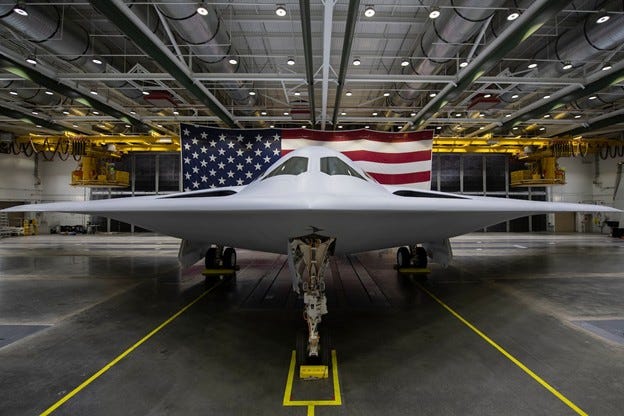
Step into the future of American airpower, and you’ll find the B-21 Raider waiting at the vanguard. This isn’t just another stealth bomber. It’s a dual-capable, penetrating strike aircraft, designed to slip through the world’s most sophisticated defenses and deliver either conventional or nuclear munitions.
When tomorrow’s threat environment demands the impossible, the Raider will answer, forming the backbone of an Air Force bomber fleet built on the enduring partnership of B-21s and B-52s.
But the B-21 is more than a bomber. It’s the centerpiece of a new family of long-range strike systems, seamlessly integrating intelligence, surveillance, electronic warfare, and advanced communications into its mission set.
Built to adapt, the Raider will accommodate both manned and unmanned operations, and wield a formidable arsenal of stand-off and direct-attack munitions.
At its core, the Raider is engineered for evolution. Its open systems architecture means future upgrades can be integrated with less risk; ensuring this aircraft will keep pace as adversaries adapt and the nature of conflict changes.
Guided by the Air Force Rapid Capabilities Office and developed by Northrop Grumman and a team of industry partners, the B-21’s journey began with the award of its engineering and manufacturing contract in October 2015.
Names like Pratt & Whitney, Collins Aerospace, and BAE Systems have all played a part in forging this next-generation bomber.
Ellsworth Air Force Base, South Dakota, will be the first to greet the Raider, its runways and training facilities already being prepared for the arrival of the fleet. The name itself is a tribute; an echo of the legendary Doolittle Raiders, who launched a daring strike against Japan in 1942, shifting the course of history and lifting Allied morale.
The B-21 carries that legacy forward as the first bomber of the 21st century, ready to write the next chapter in airpower’s story.
General Characteristics
Primary Function: Nuclear-capable, penetrating strike stealth bomber
Lead Command: Air Force Global Strike Command
Inventory: Minimum of 100 aircraft
Average Unit Procurement Cost (APUC): $550 million (base year 2010 dollars) / $639 million (base year 2019 dollars) / $692 million (base year 2022 dollars)
*APUC is the total costs of all procurement funding to include, aircraft flyaway costs, support equipment, training, spares, and engineering change orders divided by a minimum of 100 aircraft.
*Former Secretary of Defense Robert Gates directed B-21 Average Procurement Unit Cost as a key performance parameter as the best means to control costs.
Munitions: Nuclear and conventional
Operational: Mid-2020s
Beyond the Horizon: The B-21’s Refueled Promise
Aerial refueling is what transforms the B-21 from a promising stealth platform into a true strategic game-changer. On March 10, the Raider proved its mettle, taking on fuel from a specially modified KC-135 over California during a marathon five-and-a-half-hour sortie.
But this was more than just a technical milestone. The Air Force and Northrop Grumman are racing to deliver the first operational B-21 to Ellsworth AFB by 2027, signaling that the U.S. isn’t just fielding a new bomber, but is building the support network to let that bomber fly farther, loiter longer, and arrive with a menu of options.
For America, this is a message of credible reach. Each successful refueling brings the next-generation bomber force closer to true operational range.
For allies, it’s reassurance: American long-range strike is still anchored in survivability, robust logistics, and the power to project force across oceans and into the world’s toughest neighborhoods. A proven refueling envelope means missions can launch from safer distances, holding adversaries at risk even when the forward edge is under threat.
With conflict spreading in the Middle East—war with Iran, attacks on shipping, and worries over energy and trade; the symbolism of a refuelable B-21 grows sharper. It doesn’t mean escalation, but it does mean America has credible options, even if bases, ports, or sea lanes are pinched. That’s a signal allies in Europe, the Gulf, and Asia need as instability ripples through oil markets and alliance planning.
The deeper truth is this: the bombers that matter most will be the ones with range, stealth, and endurance woven together. In a world where crises leap borders, the aircraft that can launch from afar, survive, and keep allied reach alive. Those are the tools that shape tomorrow’s battlespace.
This Week in Aviation History
22 March 1979—a date when the cold expanse above the ocean welcomed a new sentinel. That day, the Lockheed CP-140 Aurora soared into the sky for the first time, charting a course that would define decades of maritime patrol excellence.
Born from the proven bones of the P-3 Orion yet outfitted with cutting-edge electronics, the Aurora quickly earned its reputation as a watchful guardian. With a reach of 5,000 nautical miles and a belly ready for a broad arsenal, this aircraft became the long-range eyes and striking arm of maritime operations, patrolling distant waters with quiet confidence and relentless purpose.
Aurora’s Maiden Flight
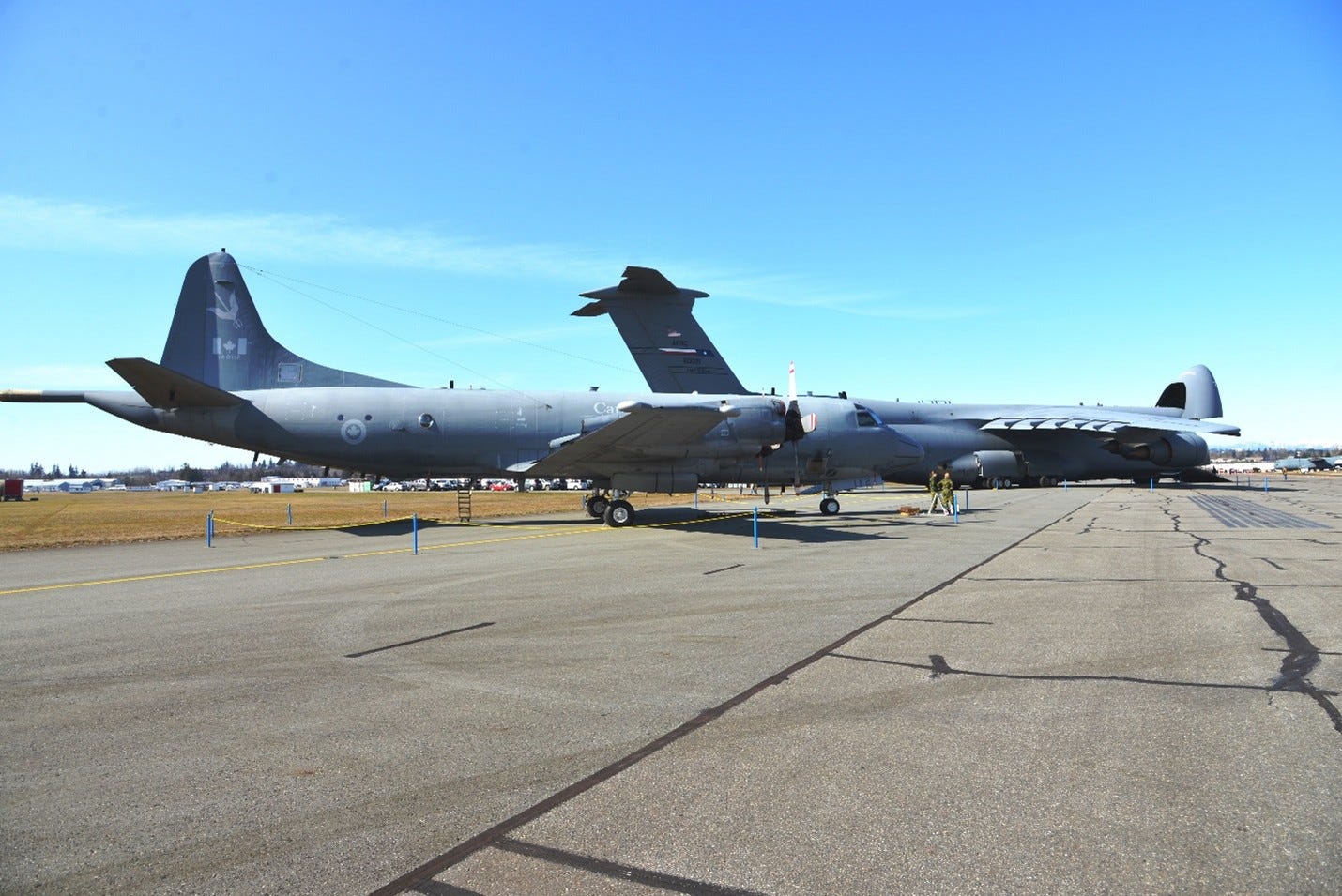
The CP-140 Aurora stands as a mainstay of the Royal Canadian Air Force’s maritime patrol fleet, a close cousin to the famed Lockheed P-3 Orion that has long served American squadrons.
Though their frames are nearly twins, the Aurora’s soul is different. Its nerves and senses drawn from the S-3 Viking, an aircraft whose advanced electronics suite gave it an edge in the hunt, long after the Viking’s own retirement from U.S. Navy and NASA service.
Beneath its wings and inside its belly, the Aurora carries more than just promise. Its internal weapons bay can host up to eight weapons, maxing out at a hefty 4,800 pounds, while ten wing-mounted hardpoints add another 2,450 pounds of punch.
The Aurora is as comfortable dropping Mk 46 Mod V torpedoes as it is unleashing conventional bombs, and with a minor tweak, it can even fire air-to-surface rockets. Add in flares, smoke markers, and signal chargers, and you’ve got an aircraft ready for any twist the mission throws its way.
Born for the Cold War, the Aurora was Canada’s answer to prowling Soviet submarines; an eye in the sky with teeth to match. Decades later, even as sleeker, jet-powered patrol planes join the world’s fleets, the Aurora keeps flying, loyal and effective.
When its watch finally ends, the CP-140 will be remembered for dogged reliability and the quiet confidence it brought to every patrol over restless seas.
Under the Hood of the Aurora
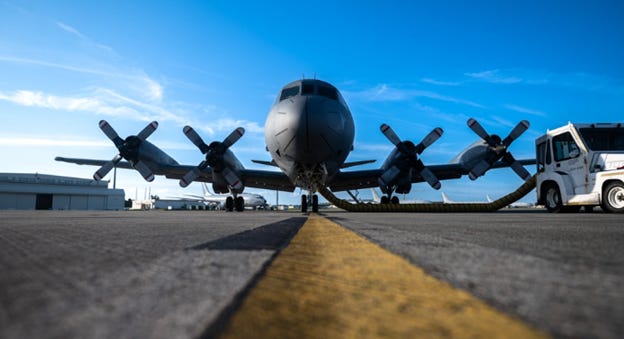
Step onto the flight line at Greenwood or Comox and you’ll meet a machine built for long-haul vigilance: the CP-140 Aurora. Crewed by two pilots, a flight engineer, and a team of up to ten mission specialists, the Aurora is purpose-built for the demands of extended patrol.
Its long fuselage stretches 116 feet, nearly 100 feet of wingspan reaching out to the horizon, every angle and twist of its NACA airfoils tuned for stability and endurance. This bird’s no lightweight: empty, she tips the scales at over 61,000 pounds, and when fully loaded for a mission, she can reach a mighty 142,000 pounds.
Power comes from four Allison T56-A-14 turboprops, each churning out over 4,500 horsepower and spinning broad, four-bladed Hamilton-Standard propellers.
These engines, a symphony of compressors and turbines, keep the Aurora flying at up to 395 knots, with a ceiling above 35,000 feet. With 9,200 gallons of fuel in her tanks, the Aurora can stretch her legs across 5,100 nautical miles; enough range to cross continents or patrol the remotest seas. Stationed 1,000 nautical miles from base, she can keep watch for more than eight hours at a time, a tireless sentinel above the waves.
Beneath that long fuselage, the Aurora carries eight Mark 46 Mod V torpedoes in her weapons bay, with ten underwing hardpoints for extra punch. Sonobuoys spill from her belly, hunting for hidden submarines, while the MAD boom on her tail sniffs out magnetic signatures lurking below.
Decades of upgrades, from the AIMP modernization to the ASLEP structural overhaul, have kept the Aurora sharp and ready, with service assured into the next decade.
From her first flight to her enduring watch, the Aurora remains a testament to Canadian ingenuity and aerial endurance; a cold warrior turned timeless guardian.
Aurora’s Legacy
The legacy of the CP-140 Aurora isn’t just measured in flight hours or decades of service. It’s the story of an aircraft that became the backbone of Canada’s airborne watch. First taking wing in 1979, the Aurora arrived as a Cold War sentinel, tasked with guarding the vast maritime approaches and asserting Canadian sovereignty from the Arctic to the Pacific.
But the Aurora’s true mark came from its ability to evolve. No longer just a sub hunter, it grew into Canada’s primary airborne intelligence, surveillance, and reconnaissance platform, supporting missions at sea, along the coasts, and deep inland—both at home and far abroad.
Through incremental modernization and structural renewal, the Aurora gained cutting-edge sensors, communications, and avionics, extending its relevance well into the 21st century.
This transformation allowed the Aurora to step far beyond its original brief, flying ISR missions over the Middle East and supporting international coalitions, while still keeping a vigilant eye on Canada’s own frontiers. In the end, the Aurora’s legacy is one of resilience and adaptation—a Cold War patrol aircraft reborn as a modern sentinel, bridging eras and missions with quiet confidence and enduring Canadian resolve.
In Case You Missed It
Photo Outlet
Every issue of Hangar Flying with Tog gets you a free image that I’ve taken at airshows:
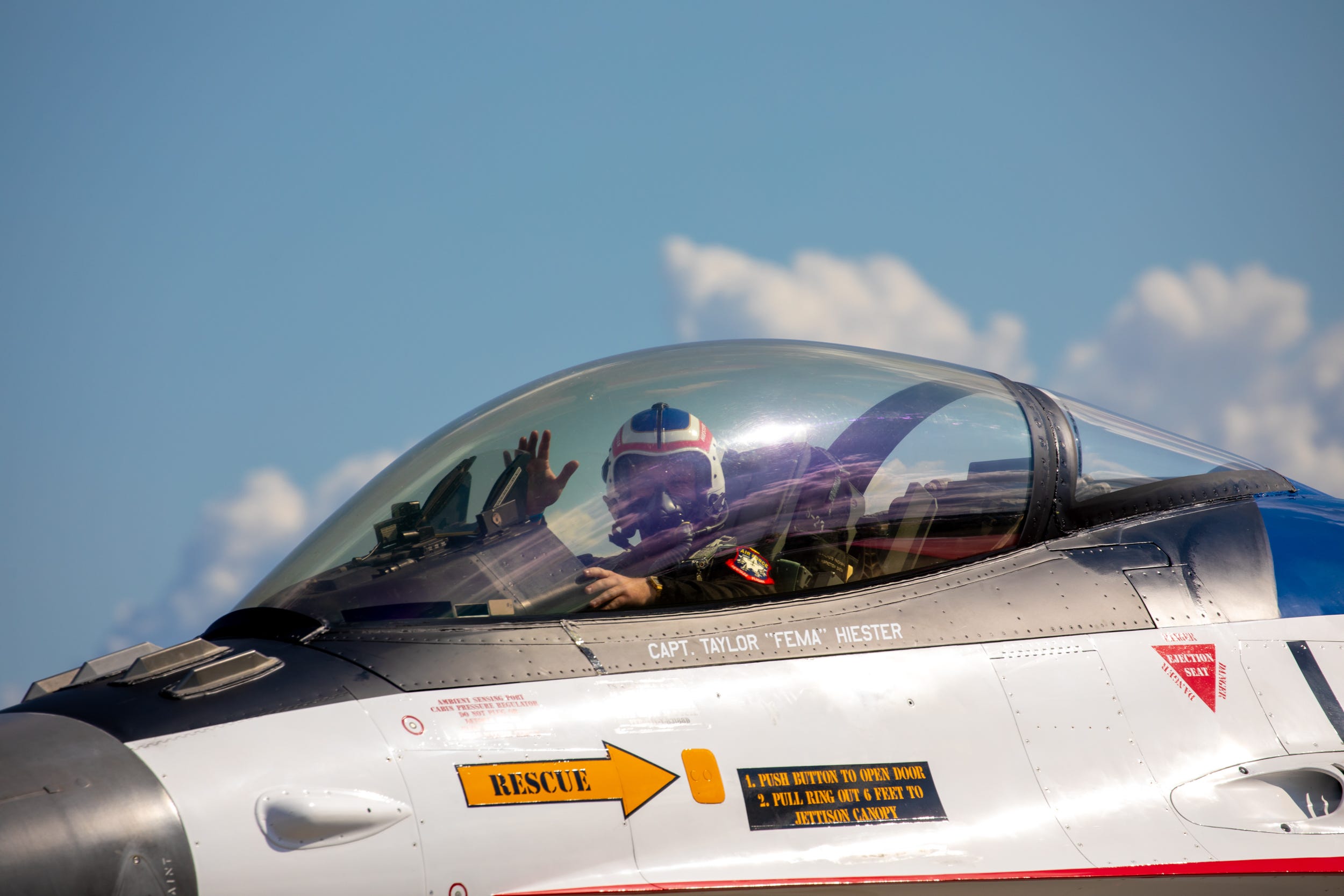
Feel free to use these photos however you like, if you choose to tag me, I am @pilotphotog on all social platforms. Thanks!
Post Flight Debrief
Like what you’re reading? Stay in the loop by signing up below—it’s quick, easy, and always free.
This newsletter will always be free for everyone, but if you want to go further, support the mission, and unlock bonus content like the Midweek Sortie, consider becoming a paid subscriber.
Your support keeps this flight crew flying—and I couldn’t do it without you.
– Tog