

“[This honed] their ability to communicate time-sensitive information with the B-52 aircrew flying overhead [the USAF] enhanced interoperability and strengthened relationships with partners in Africa.”
—Press Release Quote
Mission Briefing
The sky just recently played host to a grand chess match. B-1Bs launched from Misawa and B-52s roared out of Morón, weaving with allies from Europe to the Indian Ocean in perfectly timed find-fix-track-target maneuvers. Each mission carries a message as clear as afterburner thunder: U.S. airpower is a moving target, ready to appear where least expected. With B-1s still cutting across the Indo-Pacific and B-52s heading home from Europe, these flights prove one thing: deterrence today isn’t anchored to one runway.
Wings Across Continents: B-1s Roar as B-52s Wrap Up
The Spanish sun glinting off the wings of three B-52s as they taxi at Morón Air Base around November 2025, and the two-week Bomber Task Force Europe deployment, known as BTF Europe 26-1, is drawing to a close.
For half a month, these heavyweights from Barksdale’s 2nd Bomb Wing were more than just visitors. They were the centerpiece of a sweeping series of high-end training missions with partners and allies spanning three U.S. combat commands: Europe, Africa, and Central.
Each sortie was a masterclass in complexity, stitching together aircrews from across the globe in scenarios designed to test skills and build trust. They could almost feel the weight of the mission as callsigns like BARB 13 and CAGER 11, 12, and 13 echoed across the Atlantic—B-52s tracked by enthusiasts and adversaries alike, their presence impossible to ignore.
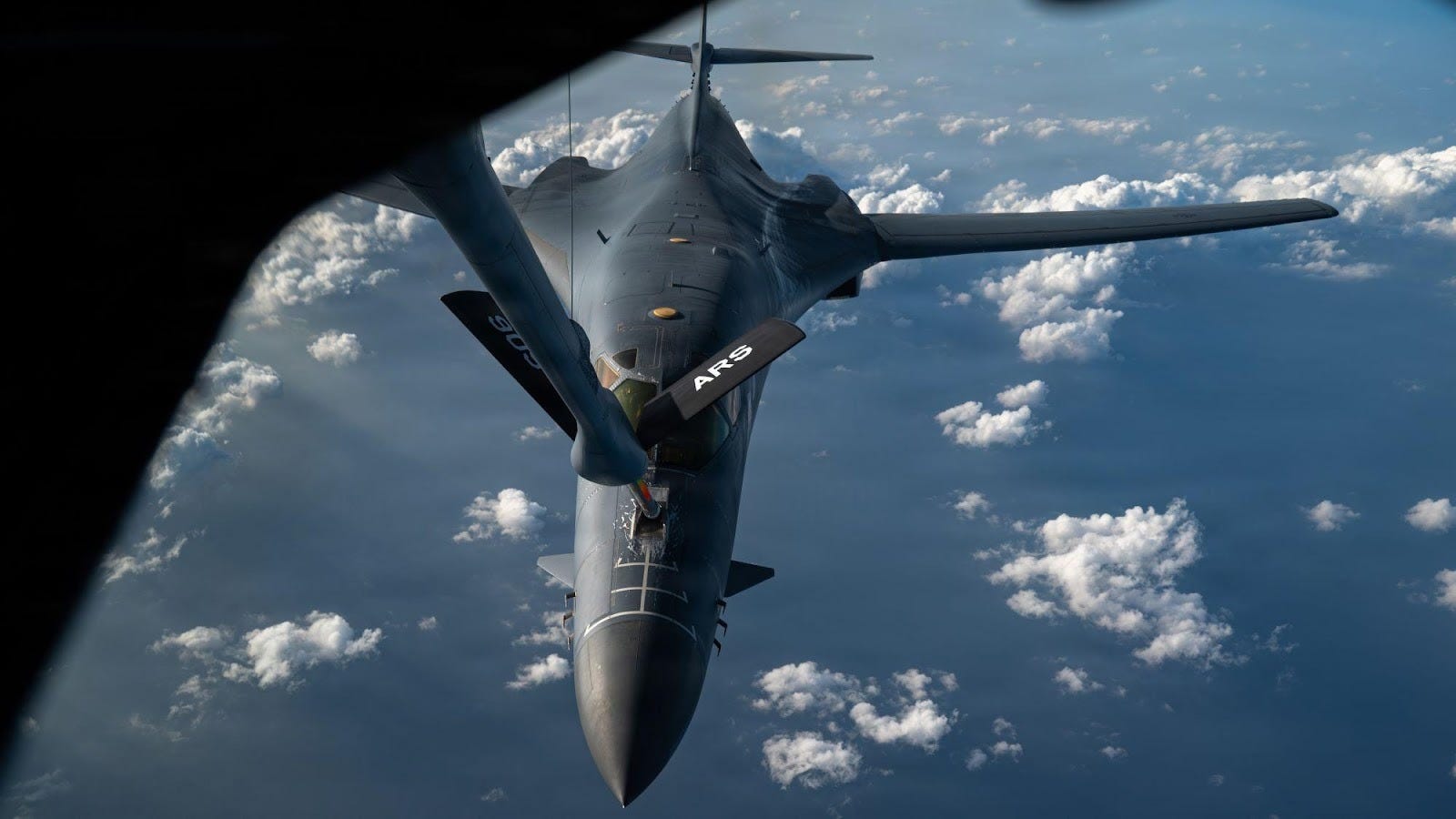
Meanwhile, far from Europe, the Indo-Pacific Command released images of a lone B-1B Lancer slicing through the sky over Diego Garcia, fueled by a pair of KC-135s. That November 12 mission was a quiet reminder that American bombers can show up anywhere, at any time.
And in the Pacific, the BONEs joined forces with Japanese F-2s and American F-35s, flying together in a display of teamwork and readiness that reached beyond tactics—it forged deeper partnerships. Refueling operations throughout these deployments proved the crew’s ability to “regenerate” in remote or unfamiliar locations, pushing the limits of reach and flexibility.
These Bomber Task Force runs aren’t just routine. They’re proof that U.S. airpower is always in motion, always ready, and always committed to defending the homeland and standing shoulder to shoulder with allies, no matter where the mission leads.
Unpacking the Bomber Task Force
Bomber Task Force deployments are high-stakes journeys, orchestrated by Air Force Global Strike Command, that send America’s most powerful bombers around the globe. These aren’t one-off flights because they’re regular, carefully planned missions that show the U.S. can bring airpower to any corner of the world, at any hour.
Whether it’s the mighty B-52 Stratofortress, the sleek B-1 Lancer, or the stealthy B-2 Spirit—and soon the next-generation B-21 Raider—these aircraft fly as a signal: America stands ready, shoulder to shoulder with allies, to deter threats and keep the peace. Some of these bombers carry the nation’s nuclear shield; all can wield conventional firepower.
Each deployment is different, but the purpose remains unchanged: to reassure friends, remind adversaries of what’s possible, and keep the global chessboard in balance. In the hands of skilled crews, these bombers become more than machines—they’re the backbone of a strategy built on strength, presence, and the promise that help, or a warning, can arrive from the sky when least expected.
Let’s take a closer look at what these birds are packing.
Boeing’s B-1B Lancer: “The Bone”
Function: Long-range, multi-role, heavy bomber
Power plant: Four General Electric F101-GE-102 turbofan engine with afterburner
Thrust: 30,000-plus pounds with afterburner, per engine
Wingspan:137 ft (41.8 m) extended forward, 79 ft (24.1 m) swept aft
Length: 146 ft (44.5 meters)
Height: 34 ft (10.4 meters)
Weight: Approximately 190,000 lbs (86,183 kg)
Max Takeoff Weight: 477,000 lbs (216,634 kg)
Fuel Capacity: 265,274 lbs (120,326 kg)
Payload: 75,000 lbs internal (34,019 kg), 50,000 lbs (22,679 kg)
Speed: 900-plus mph (Mach 1.2 at sea level)
Range: Intercontinental
Ceiling: More than 30,000 ft (9,144 m)
Crew: 4 (aircraft commander, copilot, and two weapon systems officers)
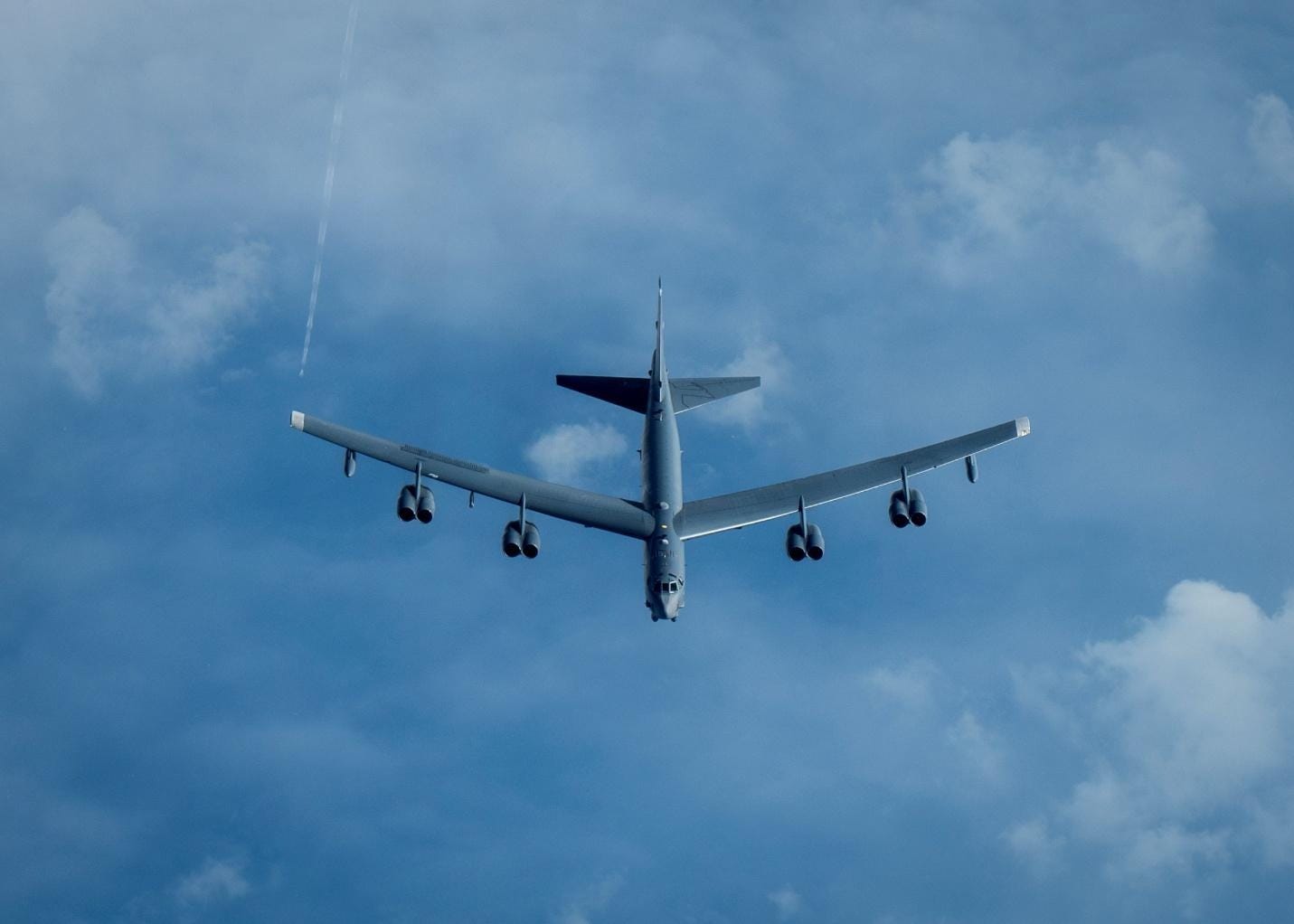
Boeing’s B-52H Stratofortress
Primary Function: Heavy bomber
Power plant: Eight Pratt & Whitney engines TF33-P-3/103 turbofan
Thrust: Each engine up to 17,000 pounds
Wingspan: 185 feet (56.4 meters)
Length: 159 feet, 4 inches (48.5 meters)
Height: 40 feet, 8 inches (12.4 meters)
Weight: Approximately 185,000 pounds (83,250 kilograms)
Maximum Takeoff Weight: 488,000 pounds (219,600 kilograms)
Fuel Capacity: 312,197 pounds (141,610 kilograms)
Payload: 70,000 pounds (31,500 kilograms)
Speed: 650 miles per hour (Mach 0.84)
Range: 8,800 miles (7,652 nautical miles)
Ceiling: 50,000 feet (15,151.5 meters)
Armament: Approximately 70,000 pounds (31,500 kilograms) mixed ordnance—bombs, mines and missiles. (Modified to carry air-launched cruise missiles)
Crew: Five (aircraft commander, pilot, radar navigator, navigator and electronic warfare officer)
Unit Cost: $84 million (fiscal 2012 constant dollars)
Initial operating capability: April 1952
Inventory: Active force, 58 (test, 4); ANG, 0; Reserve, 18
Keeping Our Force and Allies Ready for the Next Game
The Bomber Task Force mission is a game-changer for the Department of Defense. It is turning the world into a chessboard where U.S. bombers can be commanded and controlled at a moment’s notice. BTF missions are currently deepening bonds with allies and partners as American bombers flew alongside foreign squadrons.
For nations looking to the U.S. for assurance, these missions are a clear message: America stands ready to uphold security and international order. Every BTF mission is more than just a long flight; it’s a living demonstration of commitment, teamwork, and the kind of readiness that keeps both the U.S. and its friends sharp, confident, and prepared for the next game.
As the world grows more unpredictable, Bomber Task Force missions stand as proof that America and its allies are ready for whatever tomorrow brings. With each deployment, the legacy of global reach and steadfast partnership only grows stronger, lighting the way for the next generation of airpower.
This Week in Aviation History
December 8, 1941—First US fighter engagement of P-40s defending the Philippines
Under a dazzling, midday Philippine sky, blue and cloudless, with the sun casting sharp shadows across Clark Field, the American warbirds sat in precise formation, unaware of the danger closing in. At noon, the distant hum of engines gave way to chaos as Japanese Zeros swept down, their silver wings glinting in the sunlight, strafing the flight line. Almost at the same moment, the tranquil air over Iba Field to the west was shattered by another wave, marking a day that would alter the course of history.
When P-40s Fought Against Zeros
News of the attack on Pearl Harbor crackled through Luzon’s radios as the sky barely started to lighten. Within minutes, the radar at Iba Field picked up a formation of enemy aircraft, seventy-five miles out, barreling toward the fortress of Corregidor. The P-40 pilots scrambled into the morning air, hearts pounding, only to find empty skies.
By midmorning, the tension in the air was thick enough to taste. B-17s at Clark Field were ordered aloft. Better to risk the sky than be caught on the ground. Fighters from Clark and Nichols Fields raced to intercept, but the enemy veered east, dropping bombs on Baguio, Tarlac, and further afield. The dance continued: aircraft refueled, more radar blips appeared, and our fighters chased shadows out over the South China Sea.
Each time, the enemy slipped through. At 11:45, another formation swept down Lingayen Gulf. Orders flew, fighters to Clark Field, but somehow, they never arrived in time. Just past noon, the sky erupted. Japanese bombers from Formosa descended on Clark Field, turning proud bombers and fighters into twisted wrecks.
In the chaos, as bombs churned the runway, three P-40s from the 20th Pursuit Squadron clawed into the air. Joe Moore, Randall Keator, and Edwin Gilmore. Amid the smoke and fury, Keator became the first American in the Philippines to shoot down an enemy fighter, likely a Zero flown by Hirose Yoshio.
While some P-40s returned to Iba Field low on fuel, they arrived just as another attack began. Though they couldn’t stop the bombing, they denied the enemy the low-level strafing runs that had devastated Clark Field earlier.
As the sun dipped low, it was clear: the Japanese had delivered a staggering blow. The Far East Air Force was battered, its strength halved, the airfields in ruins, and nearly a hundred comrades lost. But even in defeat, the courage of those who flew that day was etched into the memory of the Philippine sky.
Insights from the Flight Deck: The P-40 Warhawk and B-17 Bombers
Just a year before war broke out, the skies over the Philippines were guarded by little more than relics such as old B-10s and B-18s, and those spunky open-cockpit P-26 “Peashooters.” Then, in 1941, a new breed arrived: the rugged P-40 fighters and the mighty B-17 bombers.
The old Philippine Department Air Force was reshaped into the Far East Air Force, split into Bomber and Interceptor commands, with big dreams of nearly 600 combat aircraft on the horizon. However, that vision was never quite materialized.
When the Japanese made their move on December 8th, the reality was far leaner. On Luzon, FEAF counted just 181 aircraft, around nineteen B-17s, ninety-one P-40s, and a patchwork of others. Yet these few planes carried a heavy weight. The B-17s could reach the very doorstep of Japan, and Formosa’s airfields were well within striking distance.
The P-40s, though no match for the Zero in a turning fight, were all that stood between the Japanese and complete air dominance. Over Luzon, it was these determined fighters who held the line.
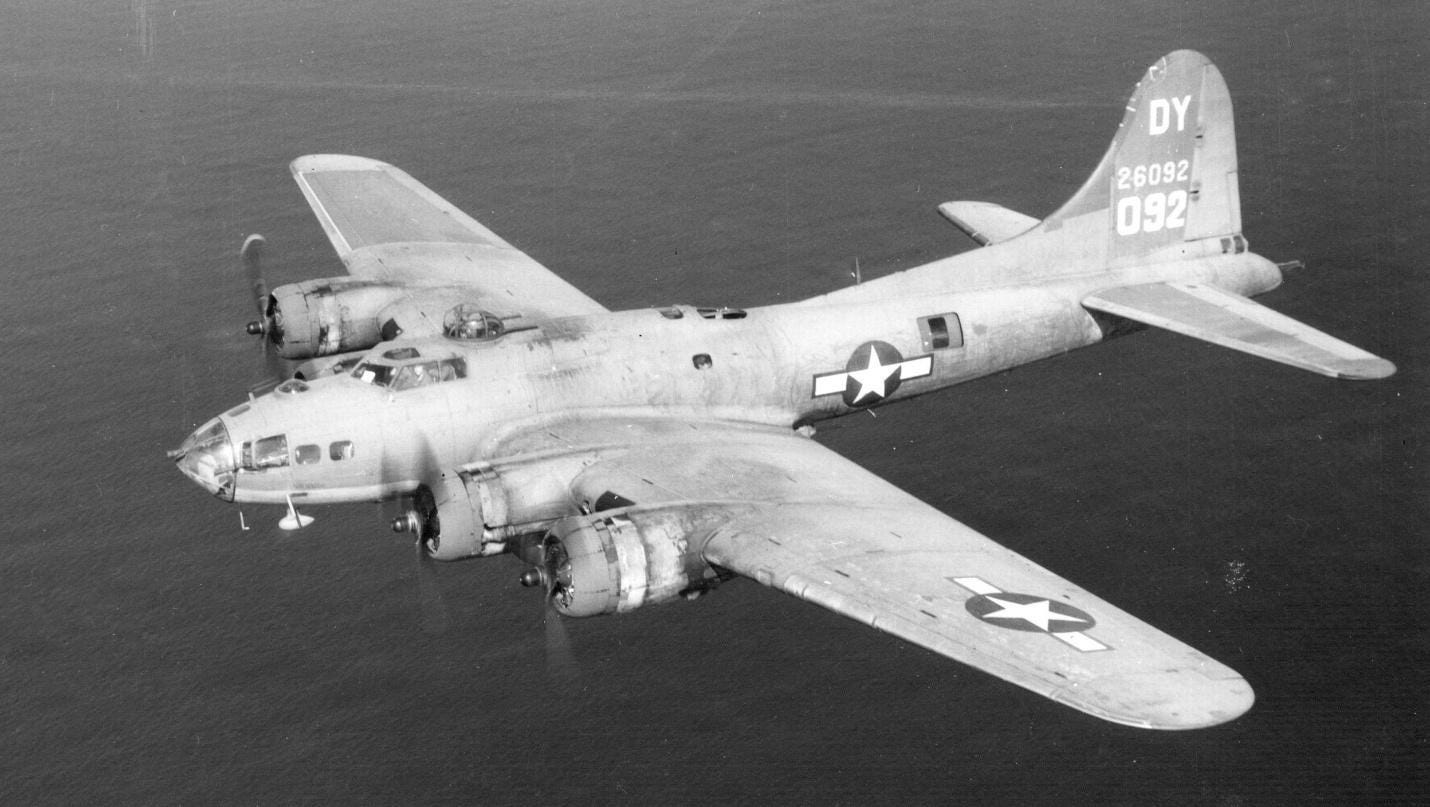
Let us take a closer look at the Warhawks and the Bombers
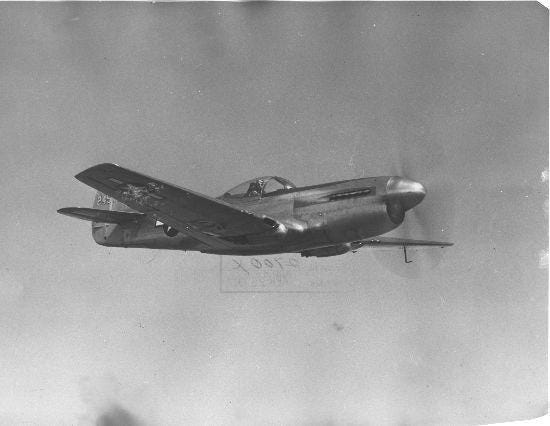
P-40 Warhawk Specifications
Armament: Six .50-cal. machine guns, 700 lbs. of bombs externally
Engine: Allison V-1710 of 1,150 hp
Maximum speed: 362 mph
Cruising speed: 235 mph
Range: 850 miles
Ceiling: 30,000 ft.
Span: 37 ft. 4 in.
Length: 31 ft. 9 in.
Height: 12 ft. 4 in.
Weight: 9,100 lbs. loaded
B-17 Flying Fortress Specifications
Crew: 10: Pilot, co-pilot, navigator, bombardier/nose gunner, flight engineer-top turret gunner, radio operator, waist gunners (2), ball turret gunner, tail gunner
Length: 74 ft 4 in
Wingspan: 103 ft 9 in
Height: 19 ft 1 in
Wing area: 1,420 ft²
Empty weight: 36,135 lb
Loaded weight: 54,000 lb
Max takeoff weight: 65,500 lb
Powerplant: 4× Wright R-1820-97 “Cyclone” turbo supercharged radial engines, 1,200 hp ea.
Guns: 13× M2 Browning .50 caliber (12.7 mm) machine guns in twin turrets, plus single dorsal, fore and aft beam positions (with optional extra nose armament fitted in glazed nose).
Bombs: Although it theoretically could carry 17,417 lb of bombs in F version blocks with wing racks or 12,800 lb in the G model with just the fuselage bomb bay, the B-17 rarely flew combat missions with more than 5,071 lb.
Legacy in the Sky
The legacy of December 8, 1941, is etched into the very sky over the Philippines. It is a day when a handful of determined aviators faced overwhelming odds and refused to yield. Even though the number of aircraft isn’t enough to defend an entire archipelago, the pilots and crews of the Far East Air Force knew the stakes.
The B-17s stood as a distant threat to Japan itself, while the P-40s—outmatched by the nimble Zeros—became the thin, stubborn line between hope and defeat.
On that day, courage wasn’t measured in victories, but in the willingness to fly, to fight, and to hold the line as long as possible. The airfields may have been battered, and the numbers thinned, but the spirit of those aviators would echo for generations. Their actions proved that resolve and duty could shine through the smoke of adversity, inspiring not just their fellow airmen but all who would later defend their nation from the sky.
The story of December 8 isn’t just about loss. It’s about the unbreakable will to resist, the lessons learned in the crucible of combat, and the enduring legacy of those who gave everything for a cause greater than themselves.
In Case You Missed It
Perhaps no other bomber represents Cold War ambition like the B-36 Peacemaker:
Photo Outlet
Every issue of Hangar Flying with Tog gets you a free image that I’ve taken at airshows:
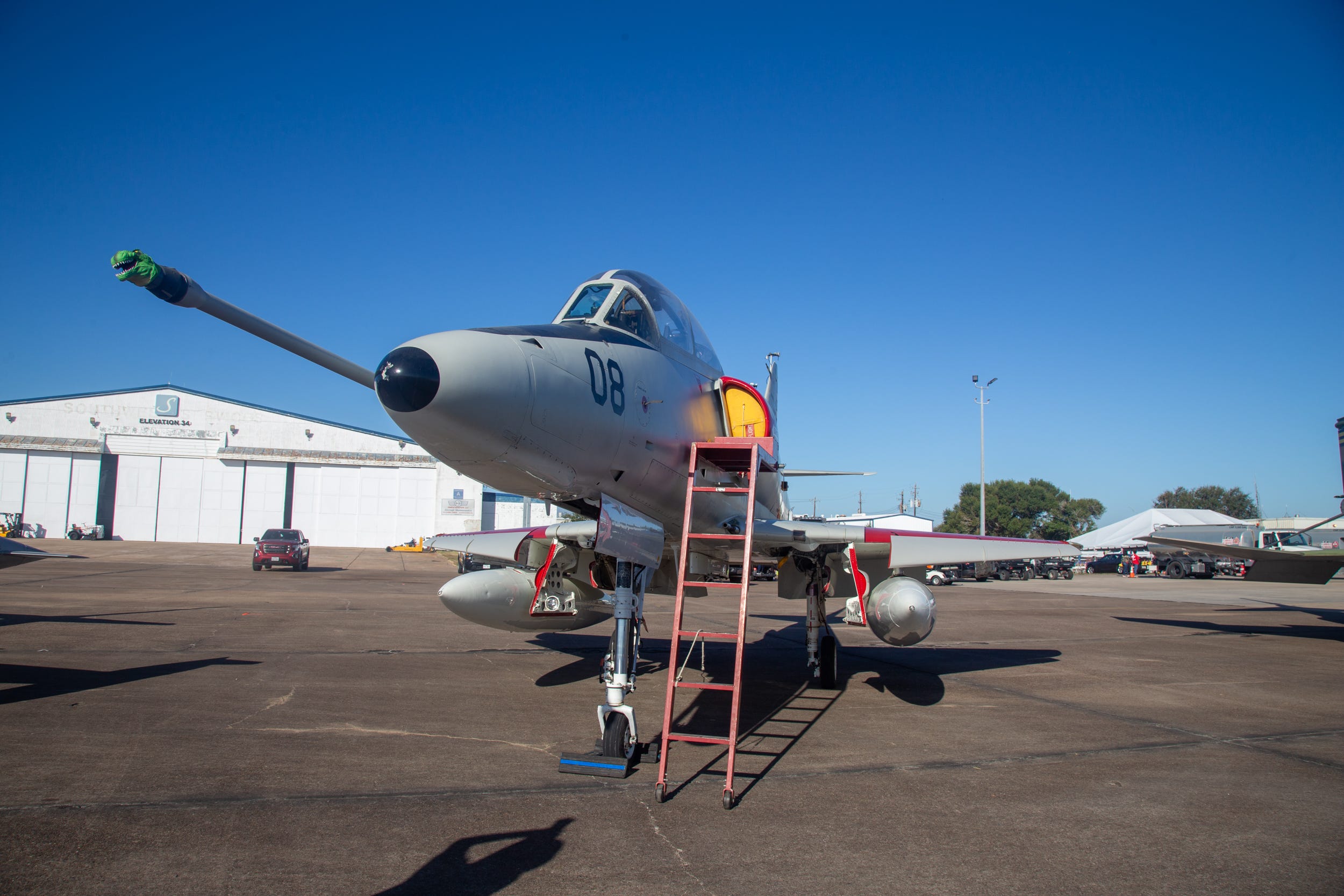
Feel free to use these photos however you like, if you choose to tag me, I am @pilotphotog on all social platforms. Thanks!
Post Flight Debrief
Like what you’re reading? Stay in the loop by signing up below—it’s quick, easy, and always free.
This newsletter will always be free for everyone, but if you want to go further, support the mission, and unlock bonus content like the Midweek Sortie, consider becoming a paid subscriber.
Your support keeps this flight crew flying—and I couldn’t do it without you.
– Tog