

APKWS Rockets Tested on MQ-9A Reaper and the Maiden Flight of North American YF-100A Super Sabre
From supersonic fighter-bomber to unmanned counter-drone hunter: airpower keeps adapting platforms to meet the threat of the moment.
In an effort to rapidly test and make new capabilities available to warfighters, U.S. Air Force and GA-ASI collaborate on demo of Advanced Precision Kill Weapon System using #MQ9A Reaper®.
—General Atomics Aeronautical Systems, Inc (GA-ASI)
Mission Briefing
Out in the Nevada desert, the MQ-9A Reaper took to the skies, loaded with APKWS laser-guided rockets. Pilots and crews watched as the bird unleashed its payload on both air and ground targets, marking another bold chapter in aviation testing.
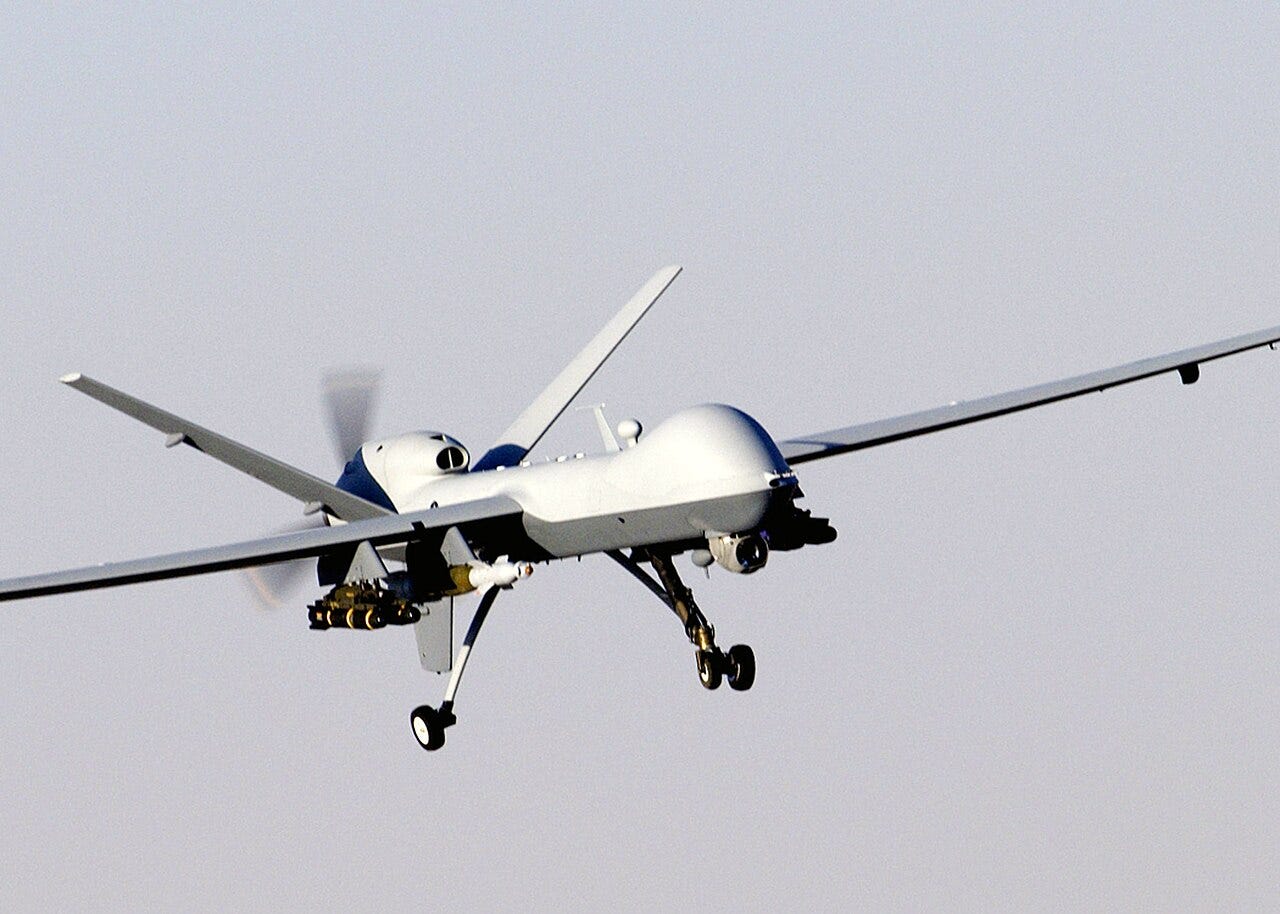
GA-ASI and U.S. Air Force Test APKWS Guided Rockets on the Reaper
Beneath the endless Nevada sky, where the desert heat shimmers and the horizon seems to go on forever, the MQ-9A Reaper made history. General Atomics Aeronautical Systems, in close partnership with the U.S. Air Force, put the legendary remotely piloted aircraft through its paces, this time armed with the Advanced Precision Kill Weapon System (APKWS) laser-guided rockets.
The setting was the iconic Nevada Test and Training Range, a proving ground where innovation meets the demands of modern warfare.
Over a series of flights cloaked in operational secrecy, test crews executed a ballet of advanced maneuvers, firing off rockets in a variety of shot profiles. Whether the target was in the air or hugging the desert floor, the MQ-9A crews (eyes sharp, hands steady) delivered every shot with precision. According to General Atomics, every launch was flawless, the kind of performance that turns test flights into legend.
Photos from the event showed the Reaper bristling with new hardware: a LAU-131 A/A pod loaded with inert AGR-20 rockets. While there was no word on the use of other ordnance, the message was clear: the Reaper is evolving, and fast.
The entire test program embodied rapid adaptation, moving from planning to live-fire testing in what felt like the blink of an eye. Whether this rush was due to an urgent operational need or simply the pace of progress, nobody’s saying. But out here, speed is survival.
GA-ASI President David R. Alexander summed up the spirit of the test: APKWS isn’t just another weapon. It’s a force multiplier. By integrating these laser-guided rockets, the Reaper gains the ability to carry more, strike smarter, and do it all at a fraction of the cost of traditional fighter jets. It’s proof that with the right collaboration, the gap between idea and reality can be closed in record time.
The MQ-9A’s new capabilities echo lessons learned from the Gray Eagle STOL platform, which last year used APKWS rockets to swat target drones from the sky. It’s all part of a broader push to give the Air Force more persistent, affordable, and versatile options for countering threats like one-way attack drones; without breaking the bank.
Compared to fighter jets, the Reaper can loiter over the battlefield for hours, ready to strike again and again, all while costing just a fraction to operate. For the Air Force, this means more coverage, fewer headaches, and a leap forward in staying power.
As the dust settles on another day at the range, one thing is clear: the MQ-9A Reaper is writing a new chapter in the story of airpower.
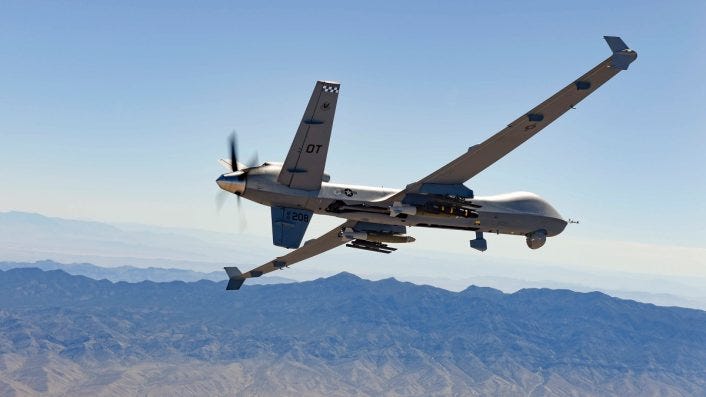
What is the APKWS?
The AGR-20, better known as the Advanced Precision Kill Weapon System II (APKWS II), is a shining example of old-school hardware meeting cutting-edge innovation. Born from the classic Hydra 70, an unguided rocket with roots stretching back to the folding-fin rockets of the late 1940s.
The APKWS II transforms a tried-and-true workhorse into a modern precision tool. Where these rockets once screamed over the battlefields of Korea and Vietnam with brute force, today they fly with pinpoint accuracy, guided by the beam of a laser.
The secret sauce? Engineers slipped a laser guidance section right between the rocket’s high-explosive warhead and its trusty Mk66 motor. It’s a clever bit of engineering: take a cheap, reliable rocket and give it brains without reinventing the wheel.
Now, instead of relying on heavy bombs or expensive missiles when a lighter touch will do, Air Force pilots can reach for APKWS II: delivering smart, low-collateral strikes at a fraction of the cost. When you don’t need the thunder of a JDAM or the punch of a Hellfire, APKWS II steps up.
Each guidance module hosts four foldable wings, each wing fitted with laser seeker optics boasting a wide field of view. This lets the APKWS II zero in on both still and moving targets, whether they’re hugging the ground or darting across the sky.
BAE Systems, the mastermind behind this upgrade, made sure the rocket’s transformation was seamless; no need to overhaul the aircraft or fire control systems. The only real change? A slightly longer rocket pod, the LAU-131 A/A, lets jets and helos sling more APKWS rounds downrange.
Perhaps the most cinematic twist is how these old Hydra rockets are now being eyed for air-to-air missions. With drone swarms and cheap enemy fliers on the rise, APKWS II offers a low-cost counterpunch.
Compare that to the million-dollar price tags on AMRAAMs or the hefty cost of Sidewinders, and it’s easy to see why commanders are excited. For the price of one missile, you can send dozens of APKWS II rounds skyward.
Sure, there are trade-offs: APKWS II doesn’t have the range or warhead size of the big missiles. But when the job is swatting drones or fending off saturation attacks, quantity and agility win the day. With seven APKWS II rockets packed into a single pod, American aviators are ready to meet the future—one laser-guided shot at a time.
How APKWS Rockets Could Redefine the Drone-Age Air War
The story of the APKWS rockets meeting the MQ-9A Reaper is a scene straight out of a modern war epic—a high desert sky, sunlight glinting off a drone’s wings, and ground crews prepping a payload that’s about to change the rules of the game.
Picture it: at the Nevada Test and Training Range, the Reaper, long known as a silent sentinel, now flexes new muscle. With Air Force crews at the controls, it fires off BAE’s APKWS (laser-guided rockets), the kind that give a humble 2.75-inch Hydra a precision punch. But this isn’t just about flashy tech. It’s about rewriting the script for air combat in the drone age.
Instead of relying on pricey, manned jets to chase down every threat, this test hints at a future where persistent, unmanned patrols handle the bulk of the work—swatting drones, intercepting suspicious craft, and saving the heavy hitters for when it really matters.
For U.S. allies staring down drone swarms or missile barrages, it’s a blueprint for survival: more shots in the magazine, less money out the door.
BAE’s kit turns simple rockets into smart hunters, capable of striking from the air, the ground, or even at other airborne targets. The Reaper’s transformation shows a cinematic shift: from lone-wolf fighters to layered teams—pilots, drones, and affordable guided weapons —choreographed for endurance and adaptability. This is the new air war, where teamwork and thriftiness win the day.
#ad — This issue of Hangar Flying with Tog is sponsored by Surfshark VPN.
In aviation, there’s a difference between being visible and being exposed. A fighter may need to be seen at the right moment—but it never wants to give away more than it has to.
The same idea applies online.
Surfshark VPN helps encrypt your internet connection, protect your browsing activity, and mask your location, giving you an added layer of privacy whether you’re at home, traveling, or using public Wi-Fi.
One feature I personally enjoy is CleanWeb. It helps cut down on the clutter by blocking ads, trackers, malware, and phishing attempts before they turn into a problem. For me, that means a cleaner, less distracting browsing experience—especially when I’m researching aircraft, digging through old sources, or working from a hotel or airport Wi-Fi connection.
Another feature worth checking out is Alternative ID, which lets you generate an alternate online identity and email address for sites where you may not want to hand over your real information. Think of it like not broadcasting your real callsign every time you taxi onto the internet.
Go to https://surfshark.com/flyingwithtog or use code FLYINGWITHTOG at checkout to get 4 extra months of Surfshark VPN.
This Week in Aviation History
After the legendary F-86 Sabre danced across Korean skies, its successor—the F-100—roared onto the scene as the first production jet ever to break the sound barrier in level flight, topping out at a blistering 760 mph. The adventure began on 25 May 1953, when the YF-100A prototype leapt into the California sky above Edwards Air Force Base, rewriting aviation history with a single flight.
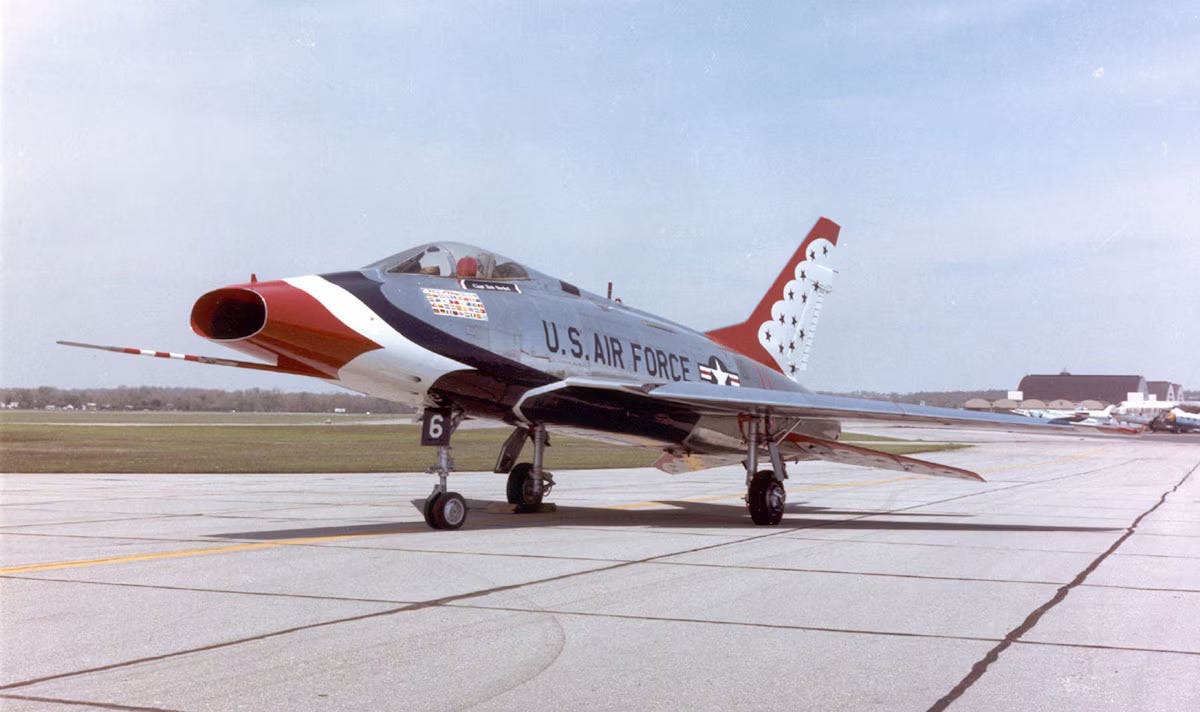
The First Supersonic Fighter
The North American F-100 Super Sabre, proudly nicknamed “The Hun,” earned its place as the world’s first supersonic fighter. With a bold 45-degree wing sweep and a roaring afterburning engine, the very first YF-100A prototype smashed past the sound barrier on its maiden voyage over Edwards Air Force Base on 25 May 1953.
The Hun started out as a pure day fighter, but she quickly adapted: later models sported wing-mounted munitions for ground attack and even carried nuclear arms, standing ready on alert in Europe for years. In Vietnam, the F-100 wasn’t just a player. It was a legend, flying more combat sorties than any other fixed-wing bird in the conflict, racking up an astonishing 360,283 missions.
Through it all, the Hun proved herself a war horse: tough, reliable, and always ready to deliver ground support when it mattered most, cementing a legacy that would last 45 years in service.
Yet, breaking the sound barrier came with a price. That daring 45-degree wing sweep—so crucial for supersonic flight—brought its own set of challenges.
Early A models had a stubby tail, which didn’t offer enough rudder authority at steep angles, and the aggressive wing design introduced adverse yaw. Imagine rolling left but feeling the jet resist, rolling the opposite way: an unexpected quirk that could catch even seasoned pilots off guard.
At high angles of attack, the downward aileron would drag, the upward one would slip through the air, and suddenly, the Hun would yaw away from your intended turn. The trick? Keep those ailerons centered under heavy Gs, and dance on the rudder pedals to coax the jet where you wanted her to go.
And then there was the infamous Sabre Dance. If a pilot pulled the nose too high on takeoff or landing, the wingtips could stall, the lift would surge forward, and the jet would pitch up uncontrollably; sometimes spinning out in a wild, unrecoverable dance.
One such harrowing Sabre Dance, flown by First Lieutenant Barty Brooks on January 10, 1956, was captured on film—an enduring, cautionary tale from the golden age of supersonic flight.
Even with all her quirks and demanding flight characteristics, the F-100 won the hearts of her pilots. They wore their ability to wring out every ounce of performance from the jet like a badge of honor, relishing the challenge and the thrill.
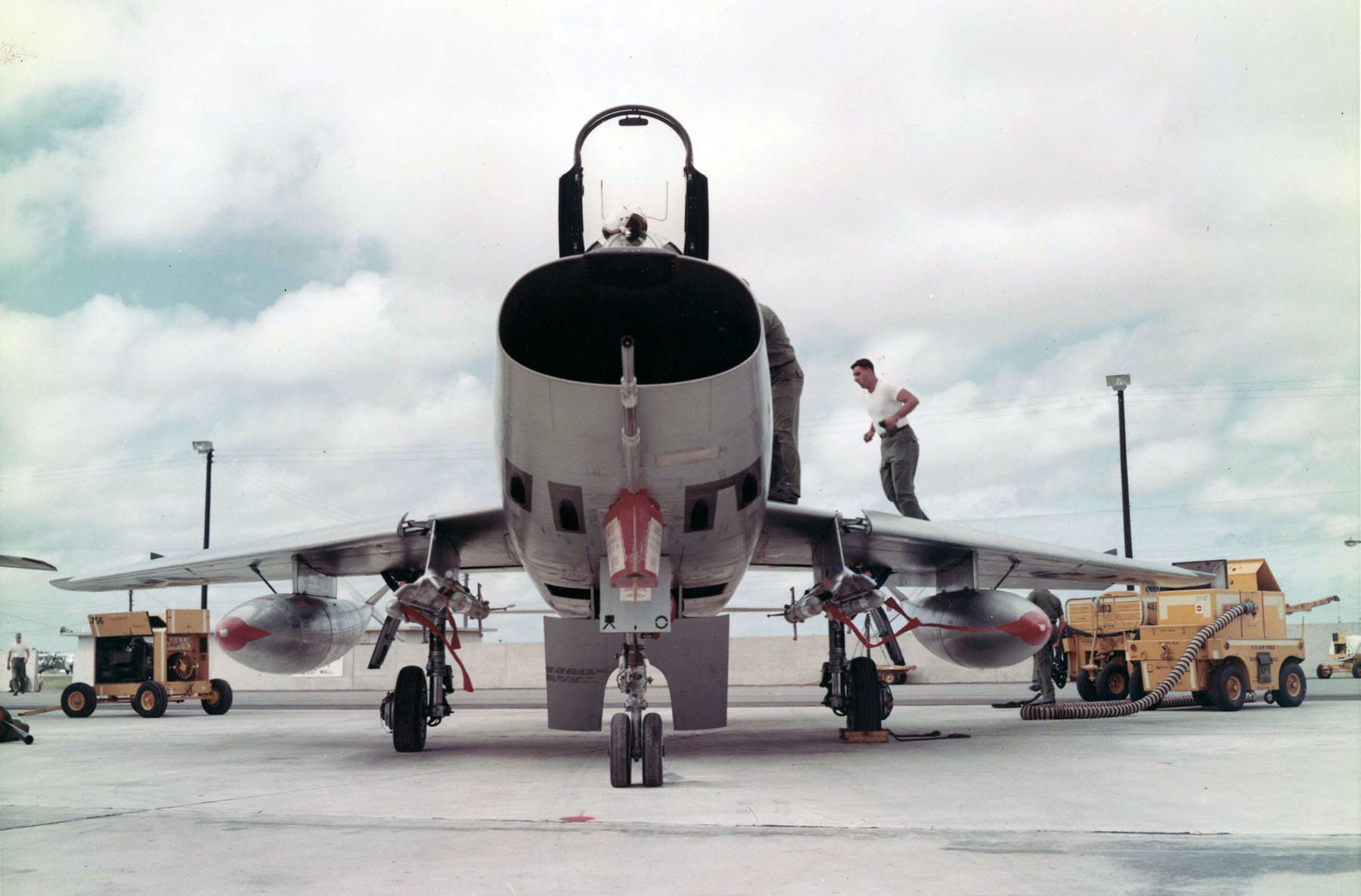
Under the Hood of the Widely-Produced Super-Sabre—F-100D
Step into the cockpit of the F-100D, the most prolific Super Sabre of them all, with over 1,200 of these fighter-bombers rolling off the line. Built as an upgrade over the F-100C, the D-model was purpose-built for ground attack, not dogfighting the enemy for control of the skies.
She kept the six underwing hardpoints from her predecessor, but swapped out the old gravity-drop pylons for forced ejection—kicking bombs and stores off her wings with a jolt when the time came to unleash hell.
To tame the jet’s wild side, designers beefed up her tailfin and rudder, adding a distinctive square bulge at the back to house a rear-facing radar warning antenna and the fuel dump pipe. Up front, the nose bristled with the AN/APR-25 radar receiver, ever on the lookout for trouble.
Inside the F-100D’s cockpit, the Minneapolis-Honeywell MB-3 autopilot was a game-changer. Now, a pilot could let the jet fly itself to the target, freeing up both hands for map reading or arming weapons; talk about multitasking at Mach speed.
Of course, when flying tight formation with a squadron, real pilots preferred to keep their hands on the stick. The D-model also boasted an improved low-altitude bombsite (LABS), ready to deliver serious firepower: whether conventional bombs or a suite of nuclear options like the Mk-7, Mk-38, or Mk-43. A typical loadout? Six 750-pounders or four 1,000-pound bombs, ready to rain down on the enemy.
Midway through production, the F-100D got even more teeth. Starting with the 184th airframe, Sidewinder air-to-air missiles joined the arsenal, making the Hun a threat to anything in the sky as well as on the ground.
That same milestone model added a centerline mount for “special stores”—Air Force speak for nuclear weapons. With these upgrades, the F-100D could carry a variety of nukes, with yields ranging from a single kiloton to a jaw-dropping ten megatons, depending on the mission.
The nuclear attack profile was a feat of aviation daring: approaching the target at treetop height and 500 mph, the pilot would yank the nose up in a high-G climb. The computer would handle the split-second bomb release, and with a maneuver like an Immelman, the pilot would flip out of harm’s way, firewalled afterburner roaring, racing for home at blistering speed.
The F-100’s Legend in the Skies
The F-100 Super Sabre, gleaming under the sun, roaring off the tarmac into a sky thick with Cold War tension. She wasn’t just the Air Force’s first supersonic fighter. She was the ticket to a new era, where speed met swagger and every mission felt like history in the making.
But the real legend of the “Hun” wasn’t born from headlines or airshow glory. It was written in the humid haze over Southeast Asia, as pilots strapped in, throttled up, and dove into the unknown. From 1964 to 1971, the F-100 flew more than 360,000 combat sorties; delivering close air support, dodging flak, and keeping ground troops alive. She was a workhorse, a lifeline, and sometimes a last hope.
The Super Sabre’s story didn’t end on the battlefield. She became a star with the Thunderbirds, streaking across continents and lighting up the imagination of crowds from Paris to Peoria. During the Cuban Missile Crisis, the F-100 was on the front line, ready for anything. And then came the daring Misty FAC missions—low, fast, and dangerous—where pilots like Dick Rutan etched their names into aviation folklore.
Sure, the F-100 had its flaws. But she taught a generation how to fly on the edge, adapt under fire, and trust their instincts at Mach speed. That’s a legacy worthy of the silver screen and the skies.
In Case You Missed It
Photo Outlet
Every issue of Hangar Flying with Tog gets you a free image that I’ve taken at airshows:
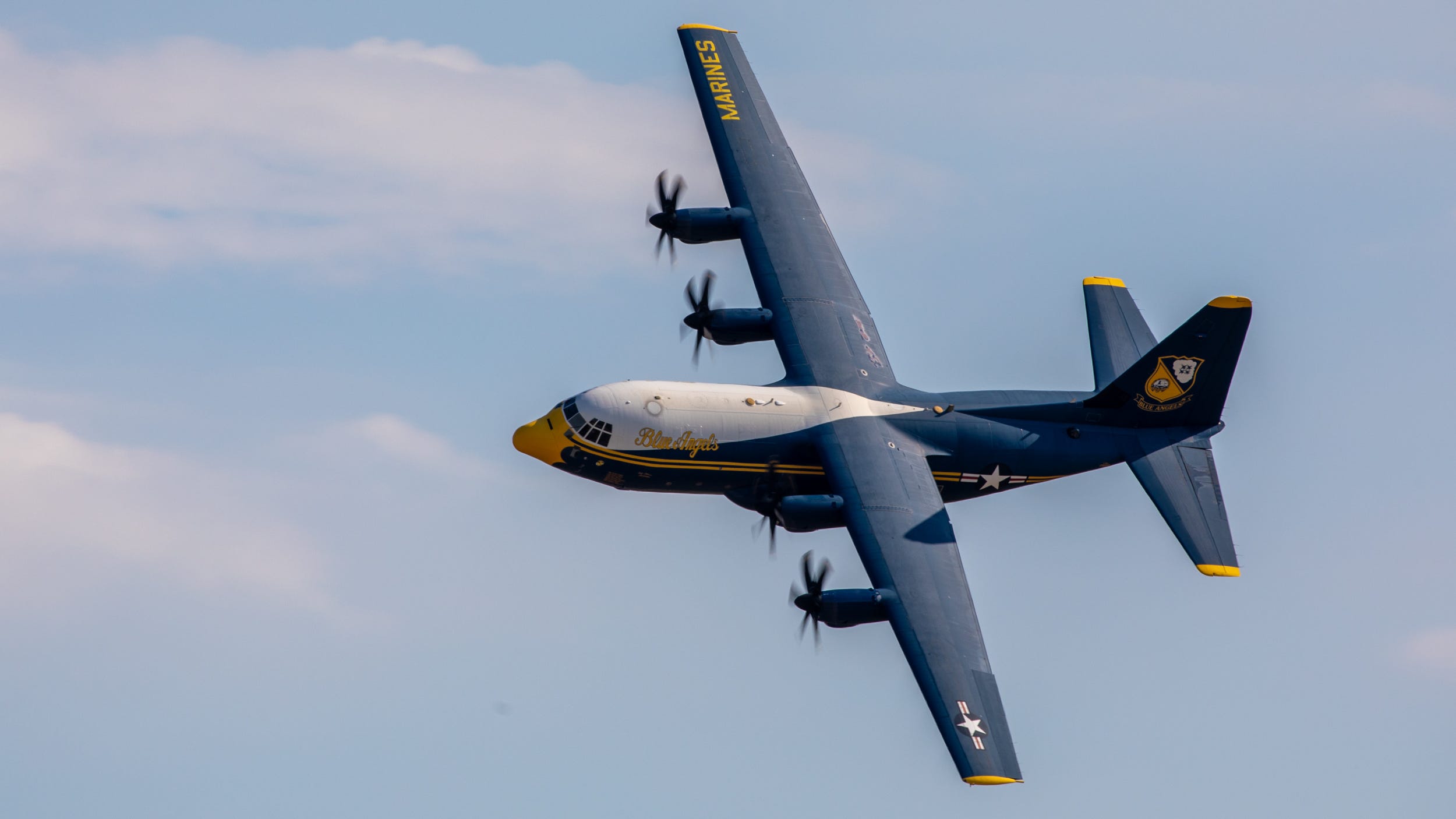
Feel free to use these photos however you like. If you choose to tag me, I am @pilotphotog on all social platforms. Thanks!
Post Flight Debrief
Like what you’re reading? Stay in the loop by signing up below—it’s quick, easy, and always free.
This newsletter will always be free for everyone, but if you want to go further, support the mission, and unlock bonus content like the Midweek Sortie, consider becoming a paid subscriber.
Your support keeps this flight crew flying—and I couldn’t do it without you.
– Tog