

A First Look at the Fury Fighter Drone and First Flight of the Prototype that became the Douglas AD / A-1 Skyraider
Even as aviation shifts from piston attack planes to autonomous fighters, one constant endures: human judgment remains central—guiding lethal decisions, managing risk, and defining mission success.
“We are following the same detailed approach used in every other aircraft developmental test program to validate structural performance, flight characteristics and safe separation.”
—Air Force Chief of Staff Gen. Ken Wilsbach
Mission Briefing
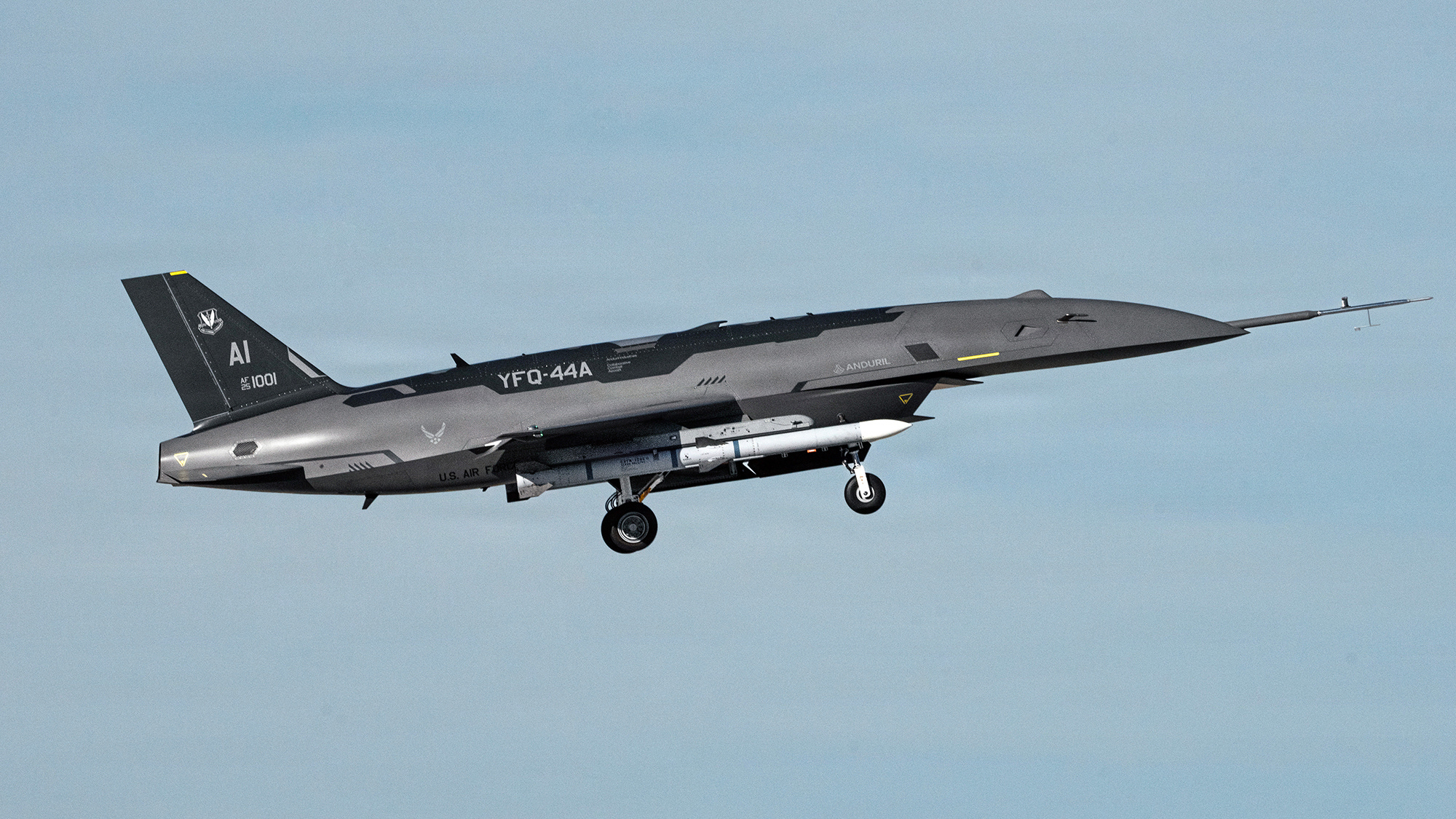
On 23 February 2026, the U.S. Air Force unveiled a striking image: Anduril’s YFQ-44A Fury, the latest fighter drone, soaring with an AIM-120 AMRAAM missile strapped beneath its wing. This wasn’t just a photo op. The Fury had just completed its first captive carry tests, proving it could shoulder the Air Force’s premier air-to-air missile. With this milestone, the Air Force officially launched the weapons integration phase for its next generation of collaborative combat aircraft.
The Fighter Drone that Carries an AMRAAM
The story of the YFQ-44A Fury reached a new milestone on 23 February 2026, when the Air Force pulled back the curtain and shared the first image of this sleek Anduril-built “fighter drone” carrying an AIM-120 AMRAAM missile.
This wasn’t just a photo op. It marked the Fury’s debut in captive carry evaluations, a crucial step in the weapons integration phase of the Collaborative Combat Aircraft (CCA) program.
In the California sun—most likely at Southern California Logistics Airport in Victorville, where the Fury first took flight a few months earlier—engineers and test pilots put the airframe through its paces with inert, non-explosive missiles slung beneath its wings.
These tests aren’t about spectacle; they’re about precision and safety. By using inert AMRAAMs, the team can measure aerodynamic performance, structural integrity, and safe separation in a controlled environment, ensuring that the Fury can handle the stresses of live weapons down the line. Every angle, every vibration, every load is meticulously analyzed, confirming that the drone and missile are a match made for the battlespace of tomorrow.
“We are following the same detailed approach used in every other aircraft developmental test program,” said Air Force Chief of Staff Gen. Ken Wilsbach. This means validating every aspect of performance, just as would be done for a new manned fighter. Safety comes first, and before the Fury or any CCA platform is cleared to carry live weapons, it must prove itself again and again on the test range.
At its heart, the CCA program is about more than hardware. It’s about a new era in human-machine teaming. These drones are being built to fly alongside piloted fighters as loyal wingmen, extending the reach, survivability, and punch of America’s airpower.
The vision is a force-multiplying network of autonomous systems that can sense, strike, and shield. All while keeping human pilots out of the most dangerous airspace. And no matter how smart the drone, a human operator still holds the final say over weapons release, ensuring command and accountability are never compromised.
While the Fury takes center stage in this phase of testing, the other CCA contender—the General Atomics YFQ-42A Dark Merlin—has yet to be pictured carrying a missile.
But the message is clear: the future of air combat is taking shape, one careful, calculated test flight at a time.
The Anatomy of the Fury Fighter
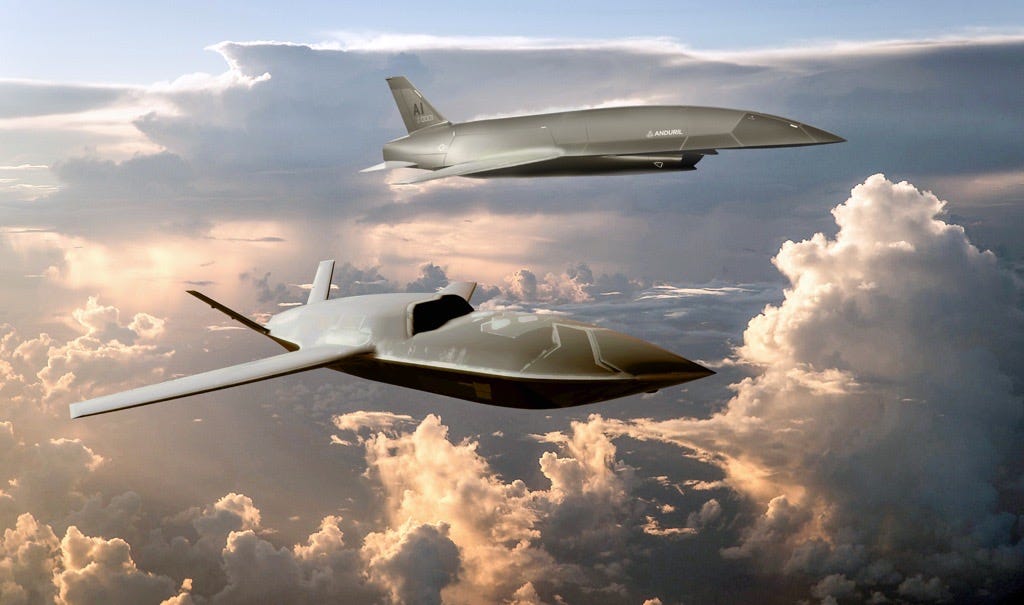
The YFQ-44A isn’t just another drone with a pilot hiding behind a screen. This is a leap into the new era of true autonomy in the skies. From its maiden taxi to every flight since, the Fury has operated semi-autonomously, not by remote control, but by executing its missions on its own terms.
There’s no stick and throttle, no hidden hand guiding its every move. Instead, Anduril’s innovation lets the aircraft follow a mission plan, adjust its own controls and throttle, and return to base with a single command; all while an operator oversees, ever vigilant but never directly flying the machine.
But this fighter drone wasn’t built to fly; it was engineered to win. The Collaborative Combat Aircraft (CCA) program isn’t about building remote-controlled aircraft. It’s about creating teammates for the high-end fight.
YFQ-44A’s onboard systems process vast amounts of data at combat speed, identifying targets, commanding weapon effects, and amplifying the lethality and survivability of every formation it joins.
On the ground, its software backbone handles maintenance and vehicle health, ensuring the Fury is always ready for action.
What makes the YFQ-44A revolutionary isn’t just its hardware, but its brain—the autonomy that turns it into a force multiplier. By weaving autonomy into every test and mission from day one, Anduril is tackling airpower’s toughest challenges head-on, learning faster and pushing the technology further.
In this new age, autonomy is the key to delivering affordable, scalable airpower and keeping the peace—making the YFQ-44A not just a machine, but a harbinger of the future’s air dominance.
How Fury Expands Allied Airpower
Seeing the YFQ-44A Fury carry an inert AIM-120 isn’t just a milestone—it’s the moment concept becomes reality in the journey from sketches to operational hardware.
This test isn’t combat, but it’s critical: the Air Force is proving that an uncrewed fighter can shoulder air-to-air missiles, manage the physical demands of external stores, and edge closer to real-world deployment. For allies and partners, it’s a clear signal—America is committed to building a distributed, risk-tolerant air force, moving beyond reliance on a shrinking fleet of costly, crewed jets.
Strategically, the message runs deeper. Collaborative Combat Aircraft are designed to fly in formation with manned fighters, expand missile capacity, and take on the most dangerous missions; so pilots don’t have to.
If this vision is realized, allied air forces will gain new strength from human-machine teams, modular upgrades, and affordable mass, multiplying combat power without breaking the bank on every new threat. Just as vital, the Air Force assures that humans remain in control of weapons release, grounding this bold future in familiar command and legal guardrails.
In the end, this isn’t just about a photograph. It’s a glimpse into the future of allied airpower, where speed in fielding trusted autonomous wingmen could tip the balance in tomorrow’s skies.
This Week in Aviation History
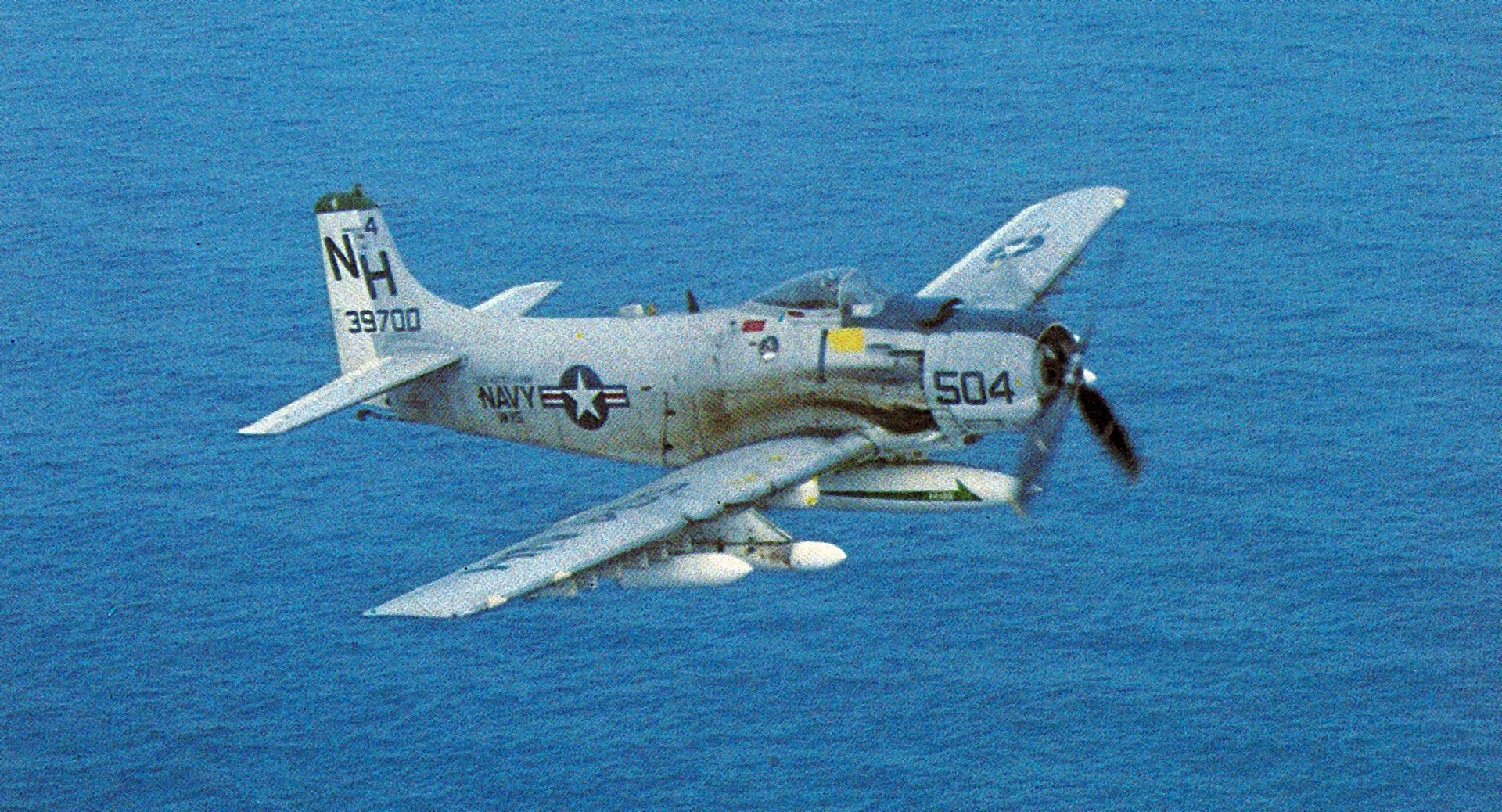
The aircraft that would become the legendary AD (A-1) Skyraider took to the skies for the first time on 11 March 1945. It quickly proved its worth in the Korean War, famously striking the Hwaechon Dam and excelling in both strike and close-air-support roles. Known as the AD for “Attack Douglas” until it was redesignated the A-1 in 1962, the Skyraider picked up the affectionate nickname “Able Dog.” Many aircrews also called it the “SPAD,” a nod to the rugged World War I fighter and a fitting tribute to its own reputation for toughness and reliability.
The Proud American Skyraider
The birth of the Skyraider is the stuff of aviation legend. It is a tale that began not in a factory, but in a Washington hotel room in July 1944. There, Douglas Company’s chief engineer Ed Heineman, chief designer Leo Devlin, and chief aerodynamicist Gene Root sketched out a design bold enough to catch the eye of Navy Bureau of Aeronautics officials.
So impressed were the Navy brass that they awarded Douglas a contract on the spot, with one caveat: Douglas had to deliver its prototypes on the same timeline as competitors who’d had a six-month head start.
Rising to the challenge, the Douglas team rolled out the first XBT2D-1 almost four months ahead of schedule. On March 1945, that prototype took its maiden flight, and by April 7th, it was turning heads at the Navy Proving Ground in Patuxent River, Maryland. Test pilots praised the aircraft as superior to any dive-bomber yet evaluated.
Within weeks, on May 5, the Navy gave the green light for full production. Due to a reorganization in naval aircraft designations, the new attack plane became the AD-1—soon to be known as the Skyraider.
Over the next twelve years, Douglas produced 3,180 Skyraiders in eight major models and no fewer than 37 different variants. The Skyraider’s versatility was unmatched: it served as a dive-bomber, electronic warfare platform, early warning radar system, target-towing tug, search and rescue lifeline, and even a nuclear delivery vehicle.
Though born into Navy service, the Skyraider’s reach extended across the globe, flying with the Marine Corps, Air Force, Vietnamese and French air arms, the British Royal Navy, and even the air forces of Cambodia, Chad, and the Central African Republic.
The end of World War II brought a pause in production, but the Skyraider’s story was just beginning. As new models and more powerful R-3350 engines emerged, the aircraft’s performance only improved.
By 1950, the AD-4 was rolling out of the factory; the most numerous of all Skyraider variants. One record-setting AD-4B from NAS Dallas lifted 14,941 pounds, besting even its own empty weight.
Skyraiders proved indispensable during the Korean War, flying close air support for Marines and cutting off North Korean resupply lines. Their ability to haul heavy ordnance, deliver pinpoint dive-bombing, and survive punishment in the skies made them legends among combat crews.
Pilots called the Skyraider “the best and most effective close-support aircraft in the world.” The AD-5, with its wide fuselage, side-by-side seating, and ample room for additional crew, became the most versatile variant of all; capable of handling missions from early warning to electronic warfare, and etching the Skyraider’s place in aviation history as a true “jack-of-all-trades.”
The Tough and Ever-Reliable “Spad”
The Navy set out to create a single aircraft capable of both dive-bombing and torpedo runs. It is a workhorse to replace specialized World War II attack planes.
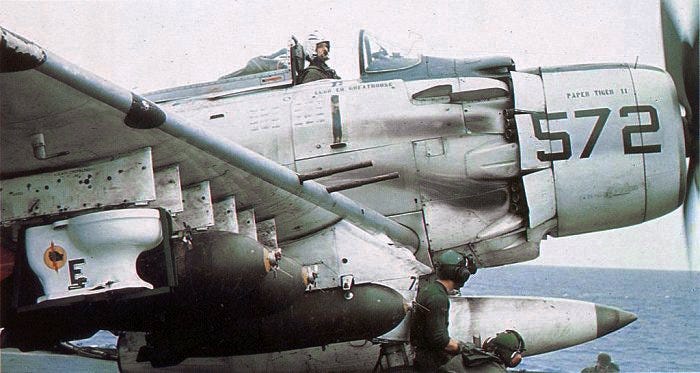
What Douglas delivered was no beauty queen: the Skyraider’s barrel-shaped fuselage and blunt lines looked more brute than ballerina. But what it lacked in elegance, it made up for in muscle, able to haul a staggering 8,000 pounds of ordnance; outclassing even the legendary B-17 Flying Fortress.
When the Skyraider first took flight, it offered pilots an unforgettable experience. “My first impression was that I was in for the ride of my life,” one aviator recalled, surrounded by the thunder and vibration of the mighty 3350 radial engine. “That first flight... was something to behold.”
Dubbed the “Able Dog” or “Spad,” the Skyraider earned its stripes over Korea, where it became a legend among attack pilots and ground troops alike. It hit everything from fortified bridges and power plants to the Hwachon Dam—famously using aerial torpedoes. The Skyraider’s versatility saw it modified for electronic countermeasures, night attacks, and more, adapting to every challenge Korea threw its way.
Even as jets began crowding carrier decks, the Skyraider remained a fixture. Some pilots trained for “Sandblower” nuclear missions; long, low-level flights that tested both machine and man, earning the nickname “Butt Busters.”
The A-4 Skyhawk eventually took over as the Navy’s primary attack aircraft, but Skyraiders still thundered off decks during Vietnam, flying the first retaliatory strikes after the Tonkin Gulf incident and braving ever-deadlier antiaircraft fire until 1968, when those risks finally grounded most attack variants.
Below is a quick rundown of the ever-reliable Spad.
TECHNICAL NOTES
Armament: Four 20 mm cannons and up to 10,000 lbs. of assorted bombs,
rockets, cluster munitions, gun pods, and flares
Engine: Wright R-3350-26WD Duplex-Cyclone of 2,700 hp
Cruising speed: 200 mph
Combat radius: 300 miles
First Flight, Lasting Impact: The Significance of the “Able Dog”
The legacy of the A-1H Skyraider is a testament to the idea that real combat value can’t be measured by speed or sleek lines alone. In the jungles and skies of Southeast Asia, this stout, old-school aircraft proved its worth with unmatched close air support and search-and-rescue escort missions.
Packing heavy firepower, flying low and precise, shrugging off damage, and lingering over the battlefield longer than any jet, the Skyraider became a lifeline for troops in need.
Over Vietnam, it flew more than 90,000 sorties; earning a place in history with two Medals of Honor and fourteen Air Force Crosses, the final chapter for single-engine, prop-driven attack planes in USAF combat.
But the Skyraider’s impact didn’t end when its engine finally cooled. Lessons learned from its heroic missions directly shaped the design and doctrine of the A-10 Thunderbolt II, the Air Force’s legendary “Warthog.” With straight wings, a rugged build, and a mission-first mentality, the A-10 carries the Skyraider’s torch; proving that survivability and persistent firepower never go out of style.
What endures most is the Skyraider’s lesson: in air combat, it’s the aircraft that can take punishment, stick with the mission, and deliver for those on the ground that earns its place in legend.
Even as aviation races ahead with new technology, the Skyraider stands as a reminder that true value is found in grit, endurance, and the ability to deliver when it matters most.
In Case You Missed It
Photo Outlet
Every issue of Hangar Flying with Tog gets you a free image that I’ve taken at airshows:
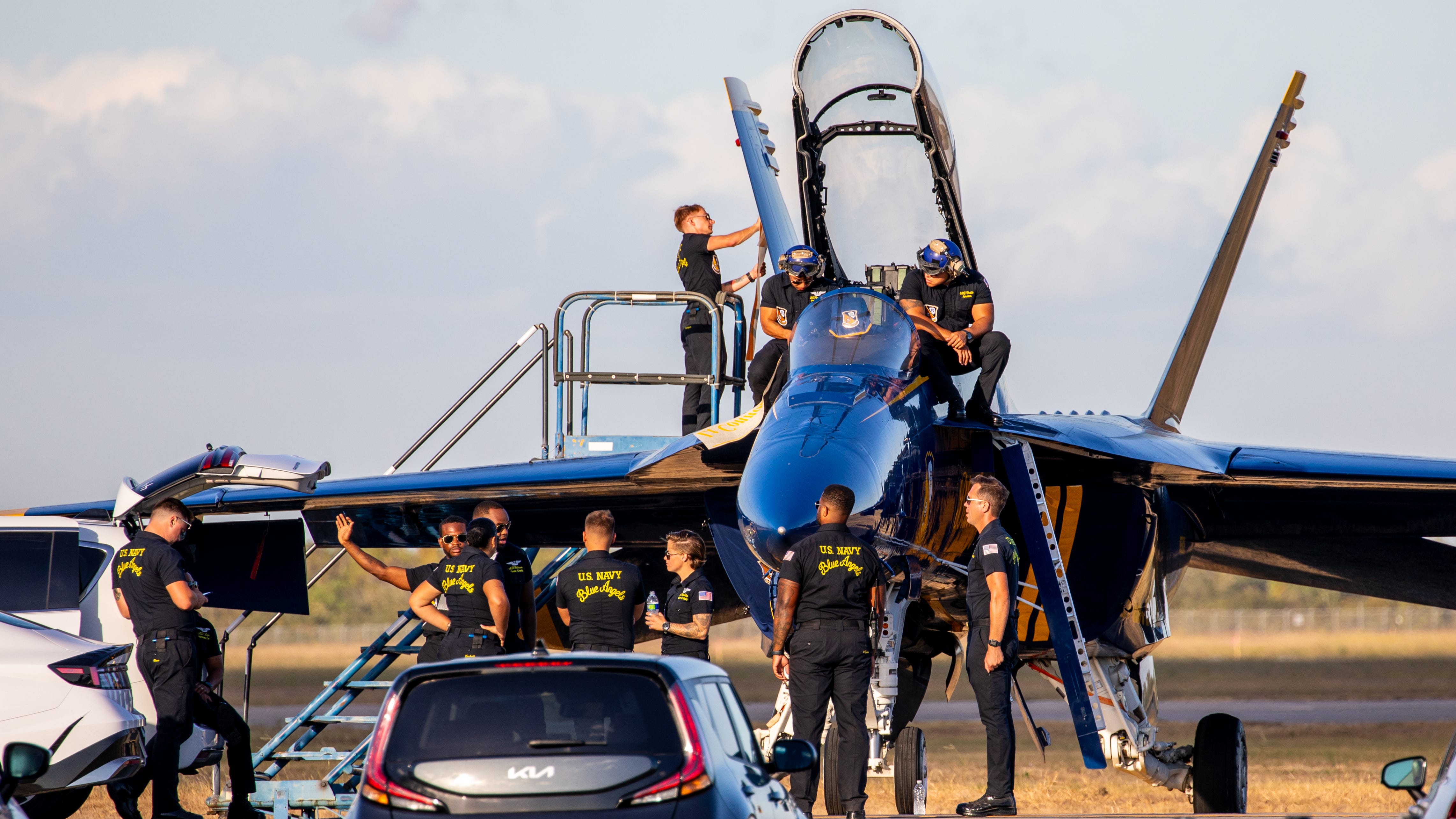
Feel free to use these photos however you like. If you choose to tag me, I am @pilotphotog on all social platforms. Thanks!
Post Flight Debrief
Like what you’re reading? Stay in the loop by signing up below—it’s quick, easy, and always free.
This newsletter will always be free for everyone, but if you want to go further, support the mission, and unlock bonus content like the Midweek Sortie, consider becoming a paid subscriber.
Your support keeps this flight crew flying—and I couldn’t do it without you.
– Tog