

“This operation is critical to preventing ISIS from inspiring terrorist plots and attacks against the U.S. homeland.”
—Adm. Brad Cooper, commander of CENTCOM
Greetings! One of the things I’m working on for the newsletter is to connect or relate the Mission Briefing and This Week in Aviation History sections - I feel that this may make each issue a little more interesting - comment below with your thoughts and feedback - thanks! And now, onto this week’s issue:
Mission Briefing
Beneath a bruised twilight sky in central Syria, A-10 “Warthogs” and their allied wingmen swept low over battered desert strongholds, loaded for retribution in an unending conflict. The desert trembled as Operation Hawkeye Strike unleashed a storm—over 70 ISIS-linked targets obliterated in a fiery answer to the recent deadly ambush on American forces. From command centers to hidden arsenals, more than a hundred precision strikes lit the night, sending a clear message: this was no isolated skirmish, but another fierce episode in a war with no finish line in sight.
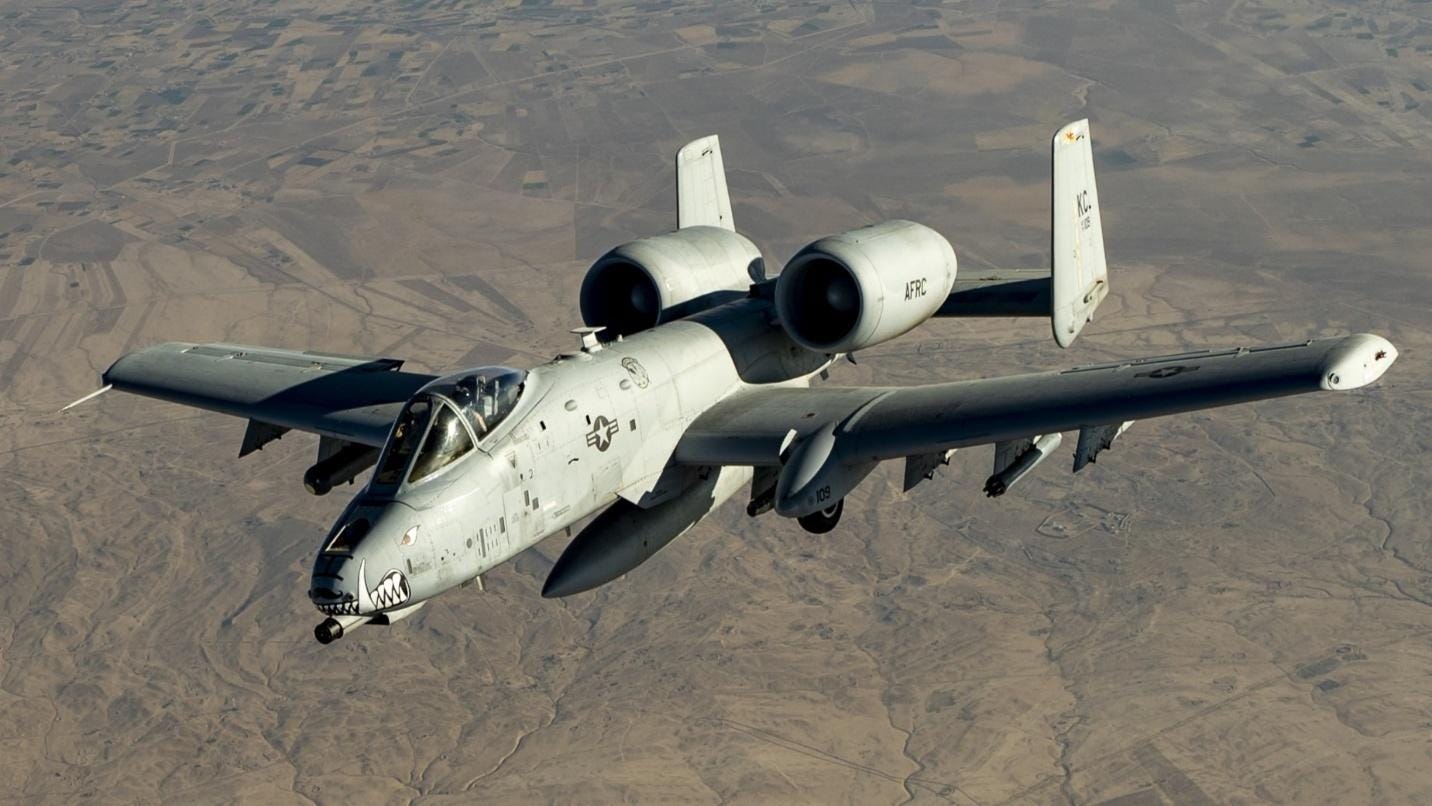
A U.S. Air Force A-10 Thunderbolt II flies a presence patrol over the U.S. Central Command area of responsibility, Jul. 23, 2025. (US Air Force)
CENTCOM Initiated the Operation Hawkeye Strike
After the loss of two U.S. soldiers and an interpreter on December 13, 2025, the U.S. military didn’t wait long to answer. Just six days later, under the inky cover of night, U.S. Central Command kicked off Operation Hawkeye Strike—a name chosen to honor the fallen soldiers from the Iowa Army National Guard, hailing from the proud Hawkeye State.
President Donald Trump, standing firm in his promise of justice, gave the green light, and Secretary of Defense Pete Hegseth made it clear: these strikes were a declaration of vengeance.
This wasn’t a lone wolf affair; it was a show of allied strength. Fighter jets, attack helicopters, and artillery from the U.S., joined by Jordanian aircraft, all moved as one. The A-10C Warthogs and F-15E Strike Eagles were bristling with Joint Direct Attack Munitions, while AH-64 Apaches rolled out with Hellfire missiles.
On the ground, HIMARS (High Mobility Artillery Rocket System), possibly loaded with ATACMS (Army Tactical Missile System), stood ready, all supported by the lift and refueling might of C-17s and KC-135s.
By dawn, more than 70 ISIS-linked targets across central Syria had been pounded by over a hundred precision weapons, turning enemy strongholds and weapons caches into smoking craters. Admiral Brad Cooper summed it up best: this operation was about stopping ISIS from plotting terror, both abroad and at home. Operation Hawkeye Strike stands as a fierce reminder; when Americans are threatened, the response is swift, united, and relentless.
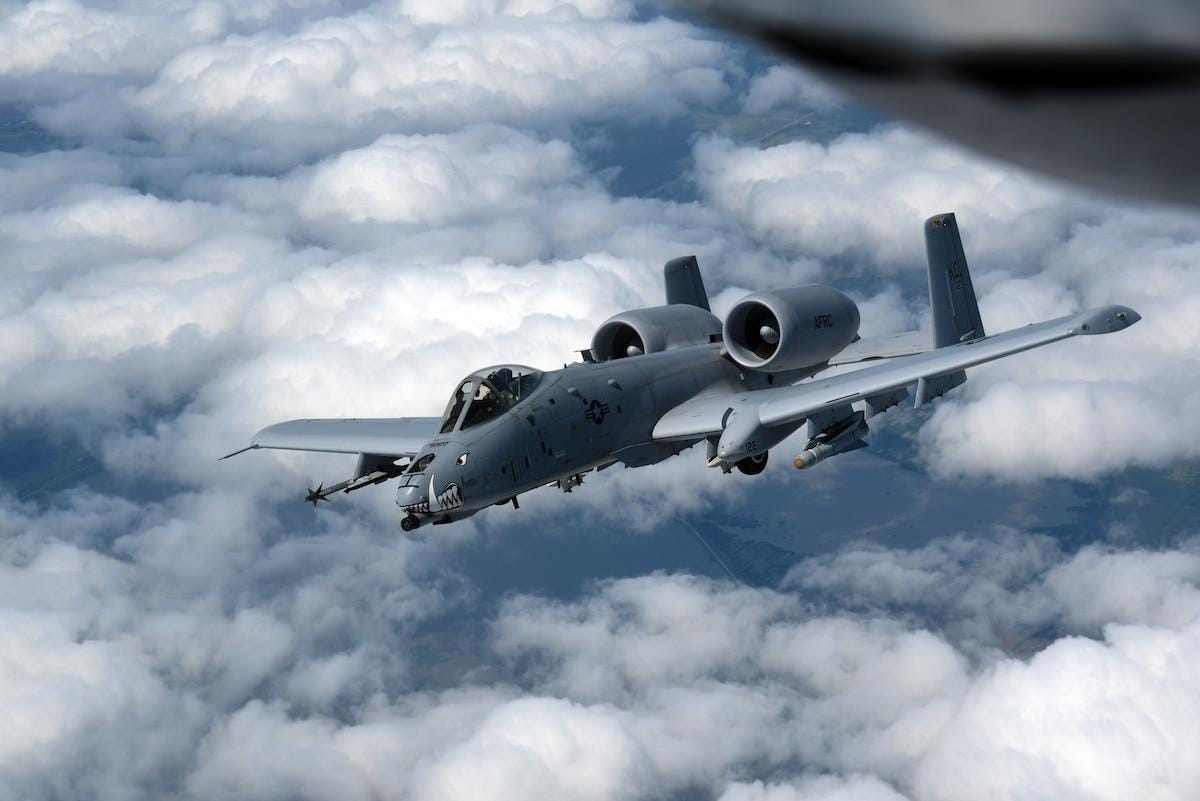
An A-10 Thunderbolt II assigned to Whiteman Air Force Base, Mo., departs after receiving fuel in the skies near the border of Iowa and Missouri, July 7, 2021. (US Air National Guard)
Under the Hood of the Thunderbolt II
Even as the Air Force moves to retire them, the A-10C Thunderbolt IIs led the charge in recent operations. After the attack on U.S. troops, these Warthogs were captured on social media, flying low and fierce, delivering unmistakable shows of force over the battlefield, proving once more why they’re legends in the sky.
Let me spotlight the features that keep her at the top of her game
Primary Function: A-10 -- close air support, airborne forward air control, combat search and rescue
Contractor: Fairchild Republic Co.
Power Plant: Two General Electric TF34-GE-100 turbofans
Thrust: 9,065 pounds each engine
Length: 53 feet, 4 inches (16.16 meters)
Height: 14 feet, 8 inches (4.42 meters)
Wingspan: 57 feet, 6 inches (17.42 meters)
Speed: 420 miles per hour (Mach 0.56)
Ceiling: 45,000 feet (13,636 meters)
Maximum Takeoff Weight: 51,000 pounds (22,950 kilograms)
Range: 800 miles (695 nautical miles)
Armament: One 30mm GAU-8/A seven-barrel Gatling gun; up to 16,000 pounds (7,200 kilograms) of mixed ordnance on eight under-wing and three under-fuselage pylon stations, including 500 pound (225 kilograms) Mk-82 and 2,000 pounds (900 kilograms) Mk-84 series low/high drag bombs, incendiary cluster bombs, combined effects munitions, mine dispensing munitions, AGM-65 Maverick missiles, laser-/GPS-guided bombs, unguided and laser-guided 2.75-inch (6.99 centimeters) rockets; infrared countermeasure flares; electronic countermeasure chaff; jammer pods; illumination flares and AIM-9 Sidewinder missiles.
Crew: One
Date Deployed: March 1976
Unit Cost: $9.8 million (fiscal 98 constant dollars)
Inventory: Total Force – approximately 281
Allied Wings, Common Fight
Operation Hawkeye Strike is a powerful reminder that U.S. air power isn’t just about speed and firepower—it’s about adaptability and staying relevant in today’s political and military landscape. CENTCOM pulled together a formidable mix for this mission: close-air support A-10s, F-15E Strike Eagles, AH-64 Apaches, HIMARS rocket systems, and allied jets all working in concert.
This wasn’t just about brute force; it was about delivering precision and maintaining a constant presence exactly where it mattered most. The A-10’s starring role proves its enduring worth on the battlefield, thanks in part to Congress’s determination to keep these close-support specialists flying in the face of retirement plans.
By combining these platforms, the operation showcased a true multidomain approach to counter-ISIS missions—deterring threats and keeping ground troops safer while leveraging the strengths of every aircraft and ally. Strategically, Hawkeye Strike sent a clear message: U.S. and coalition air power can still tip the scales, disrupt insurgent networks, and reassure partners, even as alliances and regional politics shift.
Looking forward, the balance between tried-and-true warbirds and cutting-edge technology will keep U.S. air power both effective today and ready for whatever tomorrow’s skies may bring.
This Week in Aviation History
In January 1944, a PB4Y “Liberator” from Patrol Bombing Squadron 103 (VB-103) tracked down and sent the German U-boat U-271 to the depths of the North Atlantic, west of Ireland. Not a single soul aboard the submarine survived that fateful encounter.
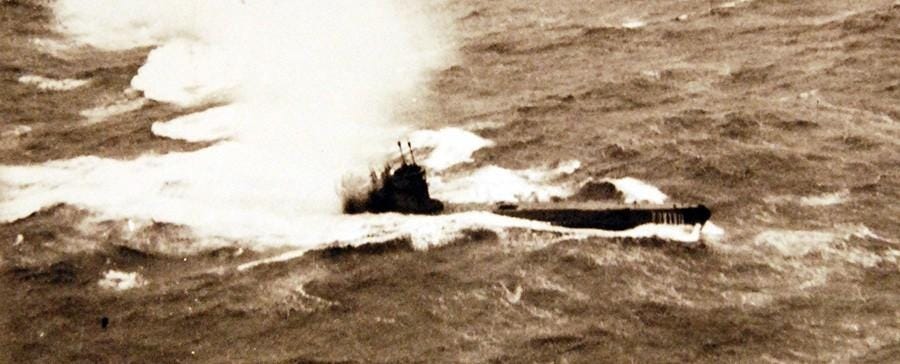
German submarine, U-271, under attack, January 1944 (U.S. Navy)
PB4Y-1 Liberator versus the German U-271
Let me take you back to the Bay of Biscay, 1943—a stretch of sea that had turned into a deadly bottleneck for German U-boats. By then, every boat moving between French bases like Lorient or Brest and their Atlantic patrol zones faced a new kind of gauntlet.
To recharge their batteries, they had to surface, and that’s when Allied patrol aircraft were waiting, engines rumbling just over the horizon. Losses began to mount with each crossing, making what was once routine into a perilous gamble.
The Germans’ first counter was doctrine: the “Fight Back Order” came down in May 1943, instructing U-boat crews to stay topside and engage attacking aircraft with gunfire, rather than crash-diving at the first sign of trouble.
To bolster this strategy, engineers outfitted U-boats with extra anti-aircraft guns, expanding their platforms—the so-called “wintergarten”—in the hopes that a curtain of 20mm and even experimental 37mm fire would keep the Allied bombers at bay.
But the Germans didn’t stop there. They fielded a handful of special U-flak boats, heavily armed Type VIICs, designed not to hunt ships, but to protect their own and set traps for unwary attackers. Torpedo loads and fuel were sacrificed for firepower, as these boats became floating ambushes.
The U-271 was one of a handful of German submarines transformed into “U-flak” boats—floating gun platforms meant to defend their fellow U-boats as they moved in and out of French Atlantic ports.
Armed to the teeth with extra anti-aircraft guns, these boats were designed as bait, hoping to draw Allied aircraft into deadly traps. For a brief window in late 1943, U-271 and her sister ships provided surface escort and AA cover, with U-271 herself guarding refueling operations north of the Azores that October.
But the advantage didn’t last long. Allied airmen quickly adapted their tactics, and by November, every U-flak was converted back into a standard attack boat. By then, regular U-boats had also received better anti-aircraft armament, making the specialized U-flaks obsolete.
The story of U-271 ended in tragedy in January 1944, when a PB4Y-1 Liberator from VB-103, piloted by Lieutenant George C. Enloe, caught her surfaced west of Limerick. Six depth charges rained down, sending the submarine stern-first to the ocean floor and claiming the lives of all 51 men aboard.
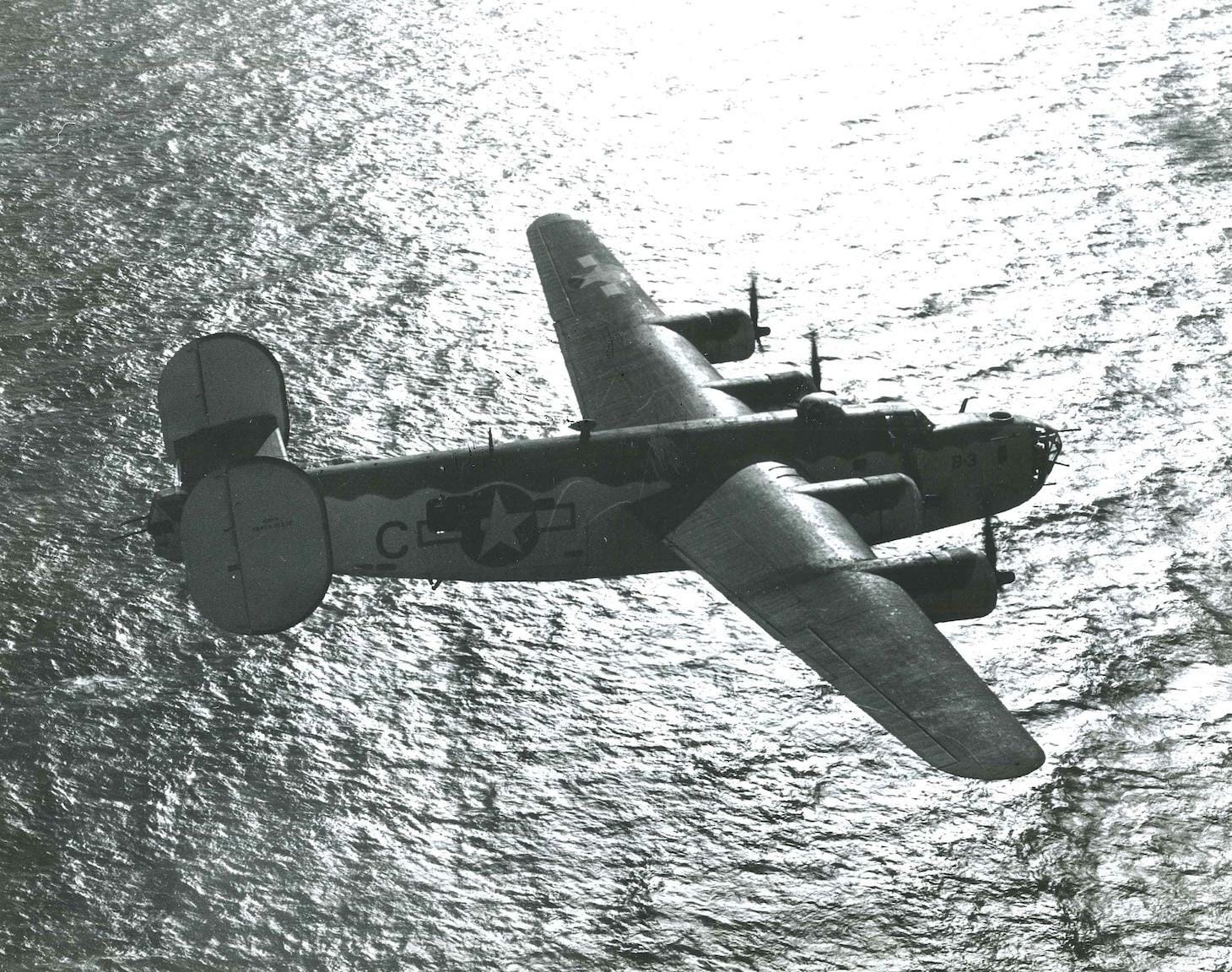
A PB4Y-1 “Liberator” airplane flies over the Bay of Biscay in November 1943. (US Navy)
Unveiling the Liberator’s “Killer” Features
Let me tell you about the PB4Y-1—a true workhorse of naval aviation and the Navy’s answer to the long-range patrol-bomber challenge. Born from the B-24 Liberator, this big bird was built for maritime patrol and anti-submarine warfare (ASW), scouring the vast Atlantic and Biscay regions for lurking U-boats.
The PB4Y-1 wasn’t just another bomber refitted for sea duty; it was a purpose-built sub-hunter. Its combination of impressive range, heavy payload, and specialized maritime gear made it an ideal fit for the job, able to sweep wide expanses of ocean and still pack a punch with bombs, depth charges, and mines. Bristling with .50-caliber guns, it could defend itself while hunting, breaking the so-called U-flak concept—German U-boats that fought back from the surface.
Aviation historian Hank Searls painted the PB4Y-1 vividly: a menacing, split-tailed beast squatting on massive tires, four engines slung low and thrumming with power. Weighing in at over thirty tons when loaded, its cockpit was a maze of controls—a real handful for any crew. Taxiing, it bobbed and rolled like a seaplane on glassy water, but unburdened, it leapt down the runway like a fighter. In skilled hands, it was steady and sure, though it could lumber like a boxcar or thump down like a tired truck in less experienced grips.
With a gross weight of 63,000 pounds, service ceiling of 31,000 feet, and a range stretching up to 3,260 miles, the PB4Y-1 was intimidating to outsiders but perfectly suited for bringing the war to German U-boats. Soon, Patrol Bombing Squadron VPB-103 would find themselves putting the big Liberator to the ultimate test over the unforgiving Atlantic.
The Liberator’s Incredible Legacy
The PB4Y-1 Liberator carved out a remarkable legacy over the Atlantic by shrinking the ocean’s shadows for lurking U-boats. As the Navy’s long-range patrol bomber, it had the endurance to linger far from shore, searching for submarines where they were most exposed—surfaced, charging batteries, or slipping through bottlenecks like the Bay of Biscay.
Navy archives are filled with images of these Liberators sweeping the Biscay and Atlantic for enemy subs. The sinking of U-271 in January 1944 stands as a vivid turning point: caught west of Ireland by a PB4Y from VB/VP-103, U-271 was sent to the bottom with all hands lost. The significance of that moment runs deep, highlighting how rapidly aircrews learned and evolved.
Just months earlier, U-271 had actually shot down a PB4Y-1 in June 1943, back when Germany urged U-boats to fight back with heavy anti-aircraft fire. But by the end of that year, even the U-flak experiment was being abandoned.
The story of the PB4Y-1 Liberator and U-271 reminds us that the edge in warfare often goes to those who adapt the quickest, both in the air and beneath the waves. Today, as technology and tactics continue to evolve, the lessons of that Atlantic battle still echo in the way modern forces hunt, defend, and survive.
In Case You Missed It
Photo Outlet
Every issue of Hangar Flying with Tog gets you a free image that I’ve taken at airshows:
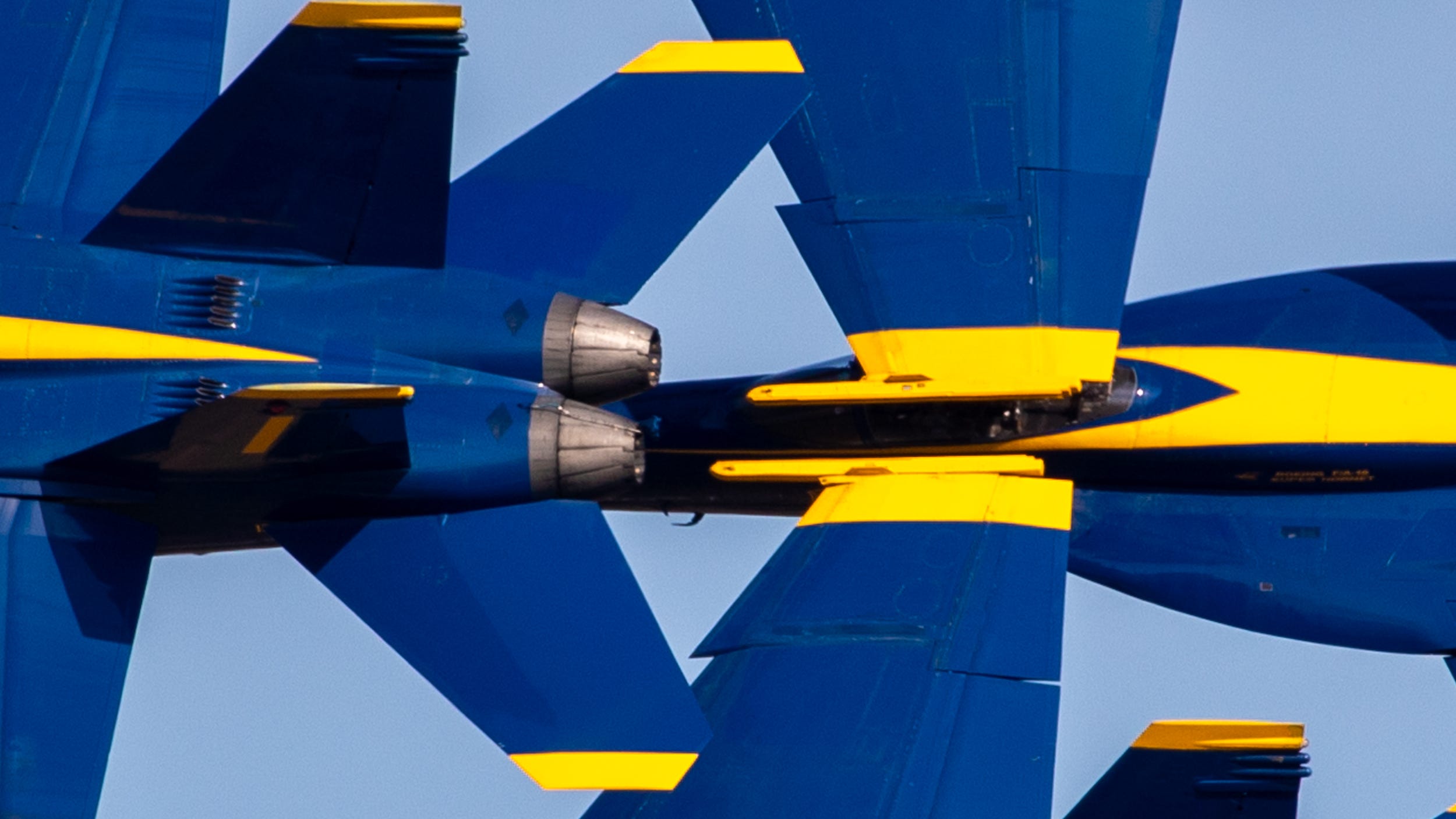
Feel free to use these photos however you like, if you choose to tag me, I am @pilotphotog on all social platforms. Thanks!
Post Flight Debrief
Like what you’re reading? Stay in the loop by signing up below—it’s quick, easy, and always free.
This newsletter will always be free for everyone, but if you want to go further, support the mission, and unlock bonus content like the Midweek Sortie, consider becoming a paid subscriber.
Your support keeps this flight crew flying—and I couldn’t do it without you.
– Tog