

“Beyond the food, tools, fishing gear, school supplies and gifts, you deliver something far more valuable: the spirit of compassion that defines this Christmas season.”
—Aren Palik, vice president of the Federated States of Micronesia
Mission Briefing
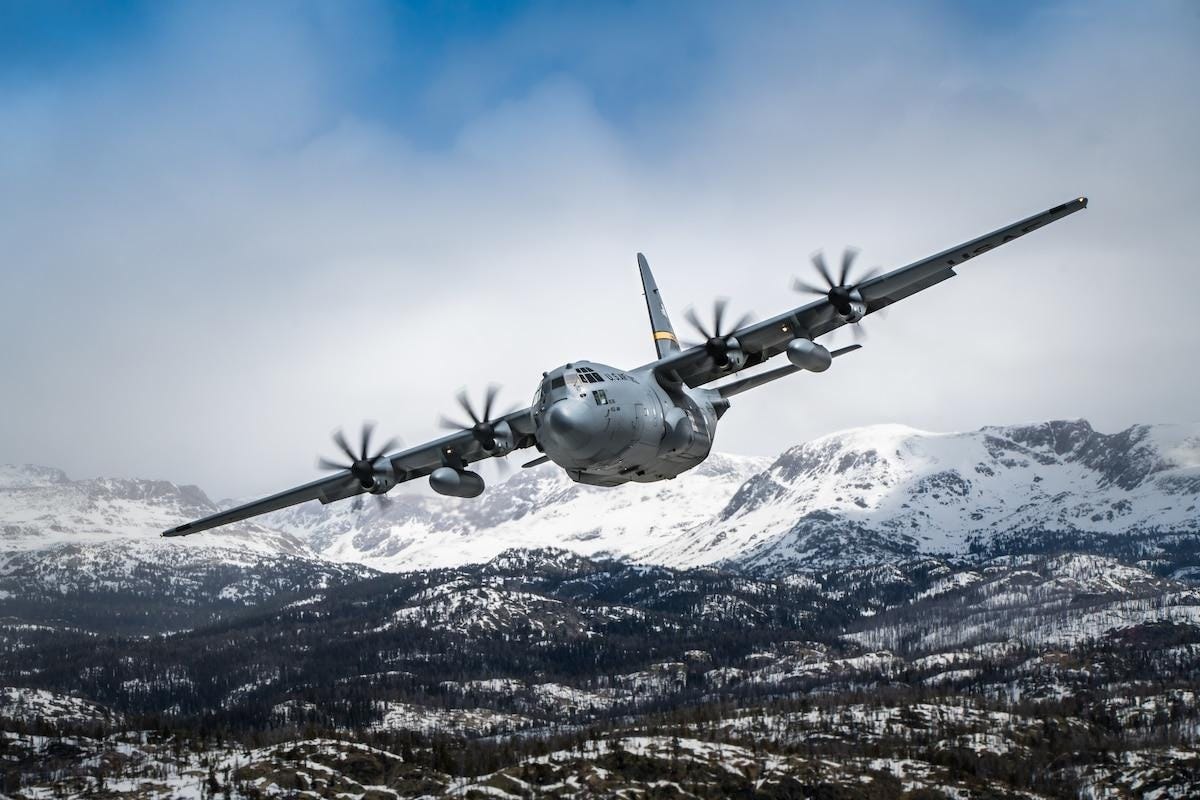
As dawn breaks over Andersen Air Force Base in Guam, the December sky buzzes with the might of C-130 Hercules, signaling the launch of Operation Christmas Drop on December 8, 2025. What started in 1952 as one B-29 crew’s impromptu act of kindness has become the Pacific’s longest-standing humanitarian airlift. Now, each year, these missions deliver more than supplies—they bring hope to hundreds of distant islands.
The Operation Christmas Drop in the Pacific Islands
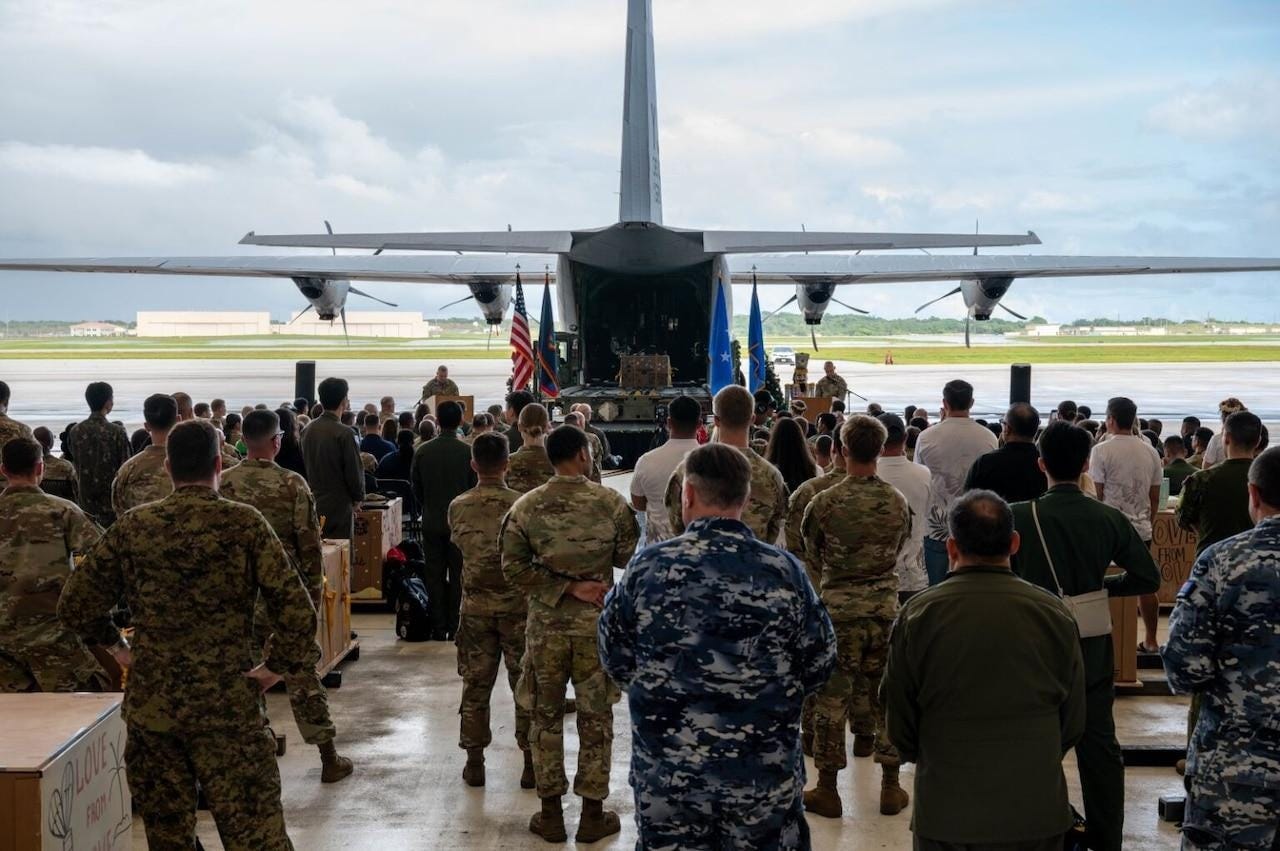
Out on the tarmac in Guam, leaders from the U.S. Air Force, allied nations, and local communities gathered under the rising sun for the storied “push ceremony,” officially kicking off Operation Christmas Drop 2025.
This year marks the 74th time crews have launched this mission. The War Department’s longest-running humanitarian airlift, tracing its roots back to 1952. It all began when an Air Force B-29, flying near Guam, saw islanders waving below and, on a whim, dropped a bundle of supplies—a simple gesture that has since grown into a powerful tradition.
As Aren Palik, vice president of the Federated States of Micronesia, put it, “Operation Christmas Drop delivers hope, connection, and the reassurance that, even across a vast ocean, we are one family.” The operation is more than logistics. It’s a promise kept year after year.
Over the coming days, U.S. and partner nation crews will send 270 supply bundles parachuting down to remote Pacific islands. Each delivery brings vital goods, but also keeps aircrews sharp, honing their low-level flying, precision airdrop, and coordination skills; training that ensures these aviators remain ready for any mission, anywhere, across the vast Indo-Pacific skies.
Airdrop Traditions: The Heart of Operation Christmas Drop
Every December, the skies over Micronesia witness something truly special. A fleet of U.S. Air Force C-130J Super Hercules, joined by allied partners, airdropped Christmas gifts to the most remote islands in the Pacific.
While Santa may still run his North Pole workshop, Andersen Air Force Base in Guam becomes the real-world base camp for this airborne holiday mission. Forget the reindeer; this sleigh runs on turboprop engines and teamwork.
The operation itself is charmingly straightforward. As crews fly overhead, they use ham radios to connect with villages below, lining up the drops with precision born from years of practice. They use methods such as Low-Cost Low Altitude (LCLA) air drops due to their efficiency and practicality.
No elves on the flight line, either. Just a devoted band of Airmen, Soldiers, Sailors, Marines, civilians, contractors, and families who, a week before the drop, gather to collect, sort, and pack the donations.
Volunteer riggers from Yokota and Andersen meticulously build the bundles—each packed with school supplies, clothes, rice, fishing gear, and plenty of toys for the island kids.
Operation Christmas Drop has grown into a true multinational affair. In 2015, the Japan Air Self-Defense Force and Royal Australian Air Force joined the mission, each sending a C-130 to fly alongside American crews. The Philippine Air Force climbed aboard in 2017, and by 2023, even the Royal Canadian Air Force was part of this airborne holiday tradition.
Let’s take a closer look under the hood of the C-130J Super Hercules, the main aircraft of this operation:
Primary Function: Global airlift
Contractor: Lockheed-Martin Aeronautics Company Power Plant:
C-130E: Four Allison T56-A-7 turboprops; 4,200 prop shaft horsepower
C-130H: Four Allison T56-A-15 turboprops; 4,591prop shaft horsepower
C-130J: Four Rolls-Royce AE 2100D3 turboprops; 4,700 horsepower
Length: C-130E/H/J: 97 feet, 9 inches (29.3 meters)
C-130J-30: 112 feet, 9 inches (34.69 meters)
Height: 38 feet, 10 inches (11. 9 meters)
Wingspan: 132 feet, 7 inches (39.7 meters)
Cargo Compartment:
C-130E/H/J: length, 41 feet (12.5 meters); width, 123 inches (meters); height, 9 feet (2.74 meters). Rear ramp: length, 119 inches (36.27 meters); width, 118.9 inches (3.02 meters)
C-130E/H/J-30: length, 56 feet (16.9 meters); width, 123 inches (3.12 meters); height, 9 feet (2.74 meters). Rear ramp: length, 119.9 inches (3.12 meters); width, 118.9 inches (36.24 meters)
Pacific Partners: US and Allies Soar for Relief
Teaming up with regional allies to execute LCLA drops isn’t just a show of skill. It’s the U.S. Air Force’s way of sharpening its edge for humanitarian relief and disaster response, all while anchoring stability across the Indo-Pacific. Operation Christmas Drop adds another layer, using Coast Humanitarian Air Drop (CHAD) techniques designed for the Pacific’s sprawling blue and scattered islands.
With CHAD and LCLA in their toolkit, American and allied crews can deliver life-saving aid with pinpoint precision, no matter how remote the need. It’s all powered by the generosity of folks who believe in this mission.
And as the world’s challenges evolve, so too will the Air Force’s commitment to reaching those who need help the most—no matter where the winds may carry them.
This Week in Aviation History
Back in 1952, a B-29 Superfortress crew flying high over Kapingamarangi, some 3,500 miles from Hawaii, spotted islanders waving from below. Moved by the moment and the holiday spirit, the crew bundled up supplies and sent them drifting down by parachute. That single gesture launched Operation Christmas Drop, a tradition that now delivers hope and necessities to the Pacific islands every year.
Parcels from the Sky: The Christmas Drop Story
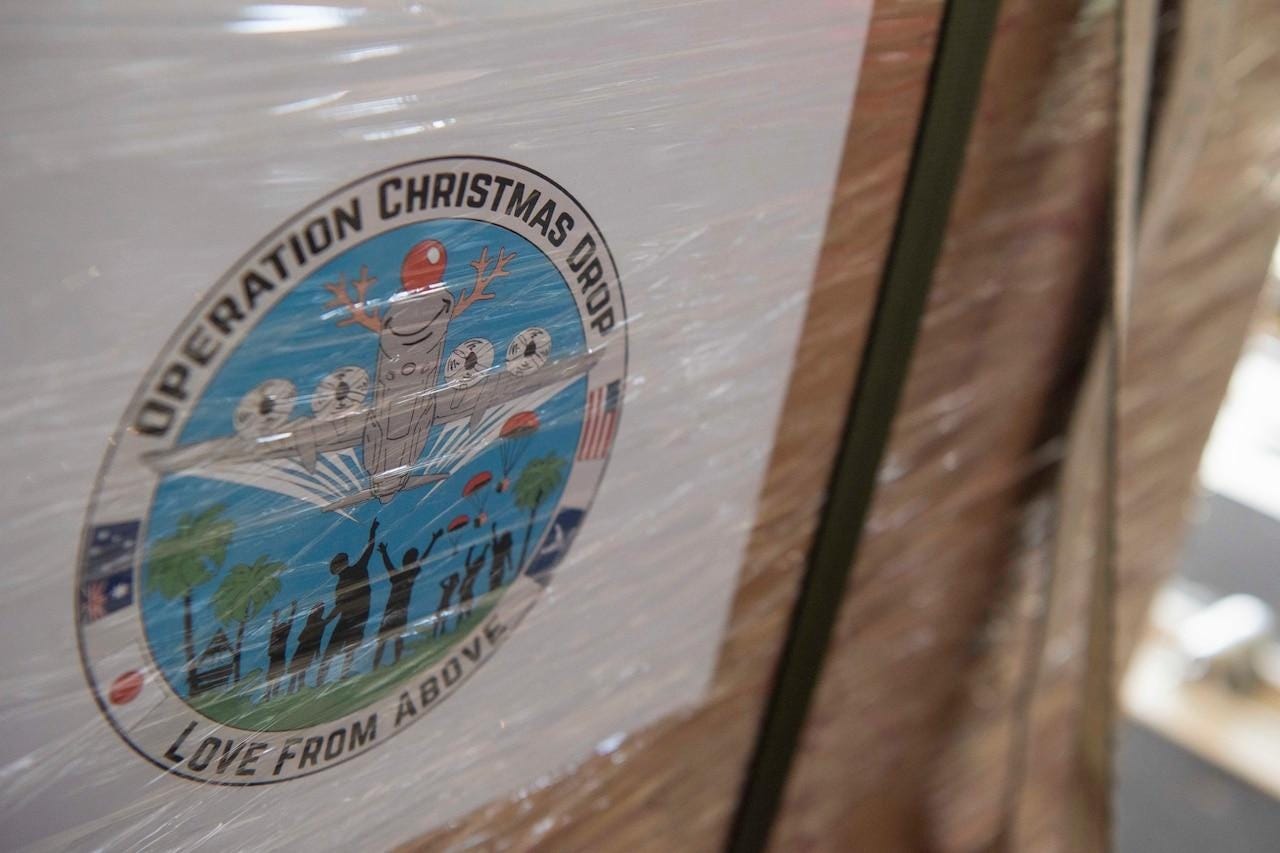
Operation Christmas Drop is more than just a holiday mission. It’s a feat of international teamwork and aviator spirit, run by Pacific Air Forces and their partners. At the heart of it all are the 374th Airlift Wing out of Yokota, the 36th Wing from Andersen in Guam, and the 734th Air Mobility Squadron, all working in sync with the University of Guam and the private Operation Christmas Drop organization, which rallies support and donations. Andersen AFB transforms into a bustling “base camp,” launching airlifts of donated goods to some of the most isolated islands in Micronesia.
Thanks to the Denton Program, private citizens and organizations get to hitch a ride for their humanitarian cargo on military flights. C-130J Super Hercules crews take to the skies, airdropping food, supplies, educational gear, and toys across the Federated States of Micronesia and the Republic of Palau—scattering hope across a region as vast as the continental U.S.
Months before the first bundle leaves the ground, volunteers are busy—designing drop-off boxes, drumming up donations from local shops, and neighbors. In the final countdown, military families and volunteers gather to collect, sort, and pack the goods. Riggers from Yokota and Andersen build sturdy boxes filled with everything from schoolbooks to rice and fishing gear.
Each Christmas Drop is more than a goodwill gesture. It’s a live-fire rehearsal for disaster response, with regional partners learning and refining lifesaving airdrop techniques. Aircrews use ham radios to coordinate with villages as they make their runs, gaining hands-on readiness training while delivering critical aid. In the end, 56 islands and 20,000 lives are touched, making it a win for everyone on both sides of the propellers.
B-29 Superfortress: The Original Transporter of Hope
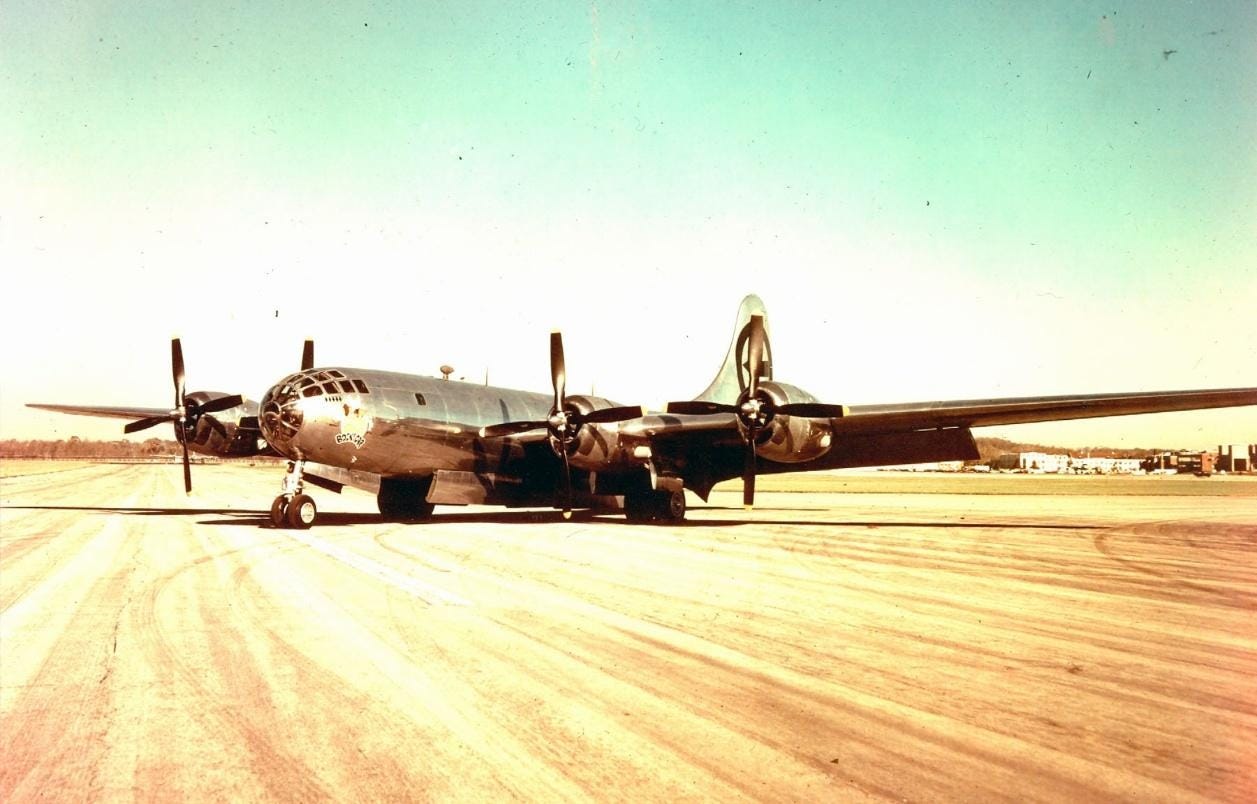
The Operation Christmas Drop started in 1952 when the B-29 Superfortress crew bundled up supplies and sent them drifting down by parachute for the Pacific Islanders.
The B-29 has four thunderous Wright R-3350 engines, each cranking out 2,200 horsepower, lifting this behemoth into the stratosphere. At full throttle, she could scream across the horizon at 357 miles per hour, or cruise comfortably at 220, all while carrying the weight of war over 3,700 miles without a pause.
Her wings stretched a staggering 141 feet, with a fuselage nearly a hundred feet long and standing almost 28 feet tall on the ramp; she was a giant. Fully loaded, the B-29 tipped the scales at a jaw-dropping 133,500 pounds.
But it wasn’t just her size that turned heads. She bristled with firepower: eight .50-caliber machine guns mounted in remote-controlled turrets keeping watch from every angle, plus two more .50-calibers and a formidable 20mm cannon guarding her tail.
At cruising altitude, the B-29 soared as high as 33,600 feet—well above the reach of many enemy fighters. She was an engineering marvel, a fortress in the sky, and a testament to the era’s relentless push for altitude, speed, and striking power.
The Enduring Legacy of Operation Christmas Drop
This operation started with a simple act of kindness that sparked an unbroken tradition. Year after year, what began as a spontaneous gesture has grown into the world’s longest-running humanitarian airlift.
Now, each December, the skies above Micronesia and the farthest reaches of the Pacific are alive with the rumble of cargo planes, their bellies packed with gifts, food, and essentials for families on remote islands.
But this mission is more than just a holiday delivery. It’s a testament to the spirit of service, international cooperation, and the power of a well-flown airdrop. Each bundle that drifts earthward is a lifeline, a promise kept, and a reminder that, no matter how scattered or isolated a community may be, someone out there is watching the horizon for them.
Operation Christmas Drop has inspired generations of aviators and allied partners, proving that sometimes the greatest missions aren’t measured in sorties or tonnage, but in hope delivered, year after year, on the wings of goodwill.
In Case You Missed It
That forward swept F-5 better known as the X-29:
Photo Outlet
Every issue of Hangar Flying with Tog gets you a free image that I’ve taken at airshows:
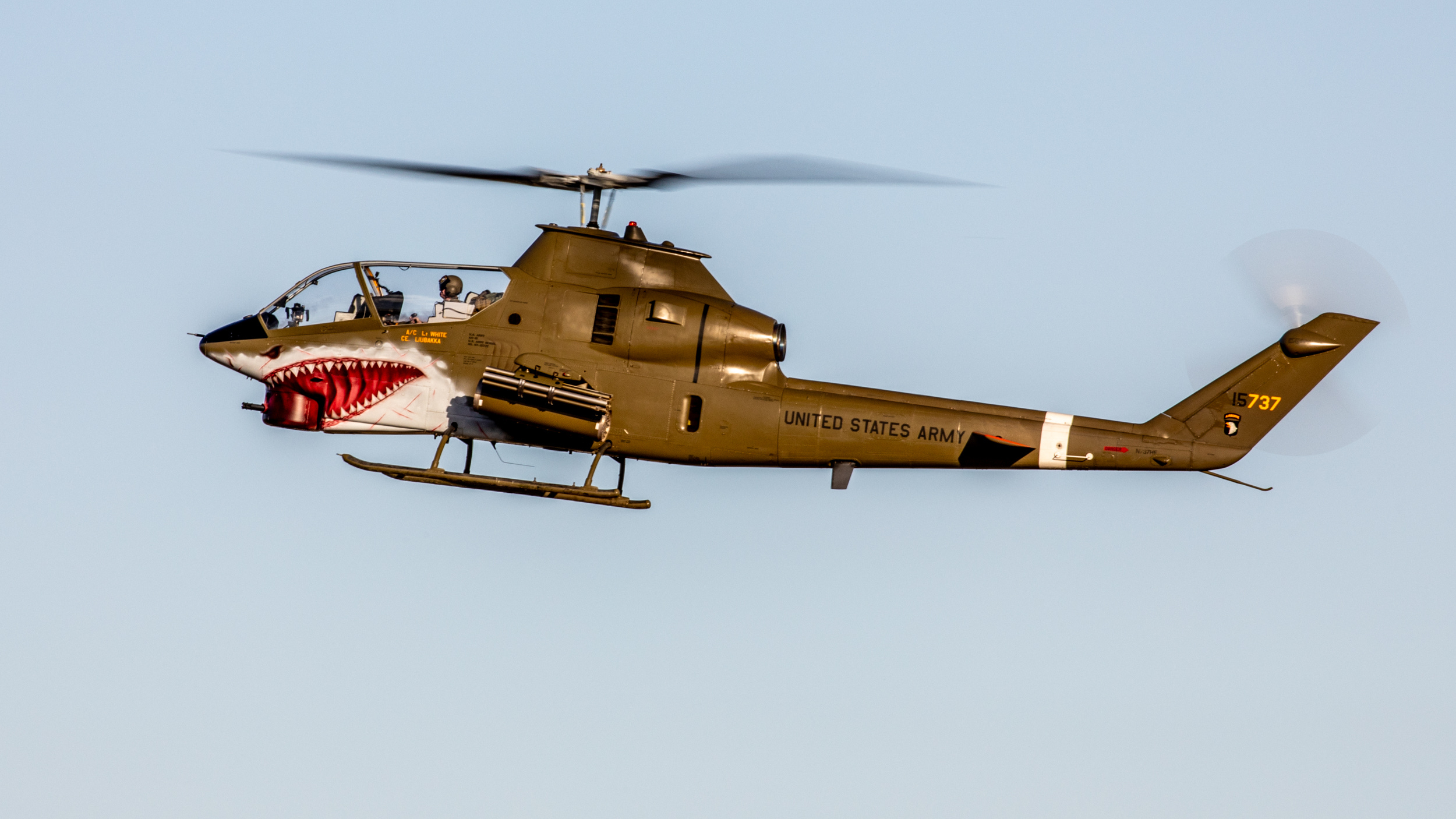
Feel free to use these photos however you like, if you choose to tag me, I am @pilotphotog on all social platforms. Thanks!
Post Flight Debrief
Like what you’re reading? Stay in the loop by signing up below—it’s quick, easy, and always free.
This newsletter will always be free for everyone, but if you want to go further, support the mission, and unlock bonus content like the Midweek Sortie, consider becoming a paid subscriber.
Your support keeps this flight crew flying—and I couldn’t do it without you.
– Tog